2020 Toyota Tundra vs 2021 Toyota Tacoma

Overview | |
MSRP$33,575 | MSRP$26,400 |
Listings511 | Listings2095 |
Ratings & Reviews | |
User Reviews | User Reviews |
Expert reviews5.3 out of 10 | Expert reviews6.5 out of 10 |
Pros
Cons
| Pros
Cons
|
2020 Toyota Tundra Reviews SummaryToyota hasn’t completely redesigned the Tundra full-size pickup truck since George W. Bush was the president of the United States. Let that sink in for a moment. What that means for you is that a 2020 Toyota Tundra should prove utterly bulletproof in terms of reliability. What this also means is that a 2020 Toyota Tundra is uncompetitive in numerous ways. | |
2021 Toyota Tacoma Reviews SummaryLast redesigned for the 2016 model year, The Tacoma once dominated midsize-truck sales. In recent years, though, it’s faced stronger competition from the Chevrolet Colorado/GMC Canyon twins, the Ford Ranger, and the Jeep Gladiator. A redesigned Nissan Frontier and heavily-updated Honda Ridgeline are also on the way. Meanwhile, the Tacoma enters the 2021 model year largely unchanged. The only updates are two new special editions—the Nightshade Edition and Trail Special Edition—and standard dual-zone automatic climate control on all V6 models. Pickup truck buyers tend to want choices, and Toyota delivers. The Tacoma is available with four-cylinder and six-cylinder engines, Access Cab and four-door Double Cab body styles, rear-wheel drive (RWD) or four-wheel drive (4WD), and six trim levels— SR, SR5, TRD Off Road, TRD Sport, Limited, and TRD Pro—plus the two special editions. Our test vehicle was a Tacoma TRD Pro Double Cab. The TRD Pro is the most off-road focused of the Tacoma models, so naturally, it gets standard 4WD drive. While Toyota does offer a more comfort-oriented Tacoma Limited model, the TRD Pro is also positioned at the top of the lineup. | |
No video found | |
Popular Features & Specs | |
Engine5.7L 381 hp V8 | Engine2.7L 159 hp I4 |
Drive Train4X2 | Drive Train4X2 |
Seating Capacity6 | Seating Capacity4 |
Horsepower381 hp @ 5600 rpm | Horsepower159 hp @ 5200 rpm |
MPG City13 | MPG City20 |
MPG Highway18 | MPG Highway23 |
Engine | |
Engine Name5.7L 381 hp V8 | Engine Name2.7L 159 hp I4 |
Torque401 lb-ft @ 3600 rpm | Torque180 lb-ft @ 3800 rpm |
Horsepower381 hp @ 5600 rpm | Horsepower159 hp @ 5200 rpm |
Drivetrain4X2 | Drivetrain4X2 |
Fuel Economy | |
MPG City13 | MPG City20 |
MPG Highway18 | MPG Highway23 |
Interior | |
Seating Capacity6 | Seating Capacity4 |
Safety | |
Front Crash Overall4 | Front Crash Overall4 |
Side Crash Overall5 | Side Crash Overall5 |
Dimensions & Capacity | |
Bed Length78.7 in | Bed Length73.7 in |
Curb Weight5170 lbs | Curb Weight3915 lbs |
Height76.0 in | Height70.6 in |
Length228.9 in | Length212.3 in |
Width79.9 in | Width74.4 in |
Wheelbase145.7 in | Wheelbase127.4 in |
Maximum Payload1730 lbs | Maximum Payload1685 lbs |
Number of doors4 | Number of doors4 |
Maximum Towing Capacity10200 lbs | Maximum Towing Capacity3500 lbs |
Standard Towing Capacity10200 lbs | Standard Towing Capacity |
Overview | ||
MSRP | $33,575 | $26,400 |
Listings | ||
Ratings & Reviews | ||
User reviews | ||
Expert reviews | 5.3 out of 10Read full review | 6.5 out of 10Read full review |
Pros & cons | Pros
Cons
| Pros
Cons
|
Summary | Toyota hasn’t completely redesigned the Tundra full-size pickup truck since George W. Bush was the president of the United States. Let that sink in for a moment. What that means for you is that a 2020 Toyota Tundra should prove utterly bulletproof in terms of reliability. What this also means is that a 2020 Toyota Tundra is uncompetitive in numerous ways. | Last redesigned for the 2016 model year, The Tacoma once dominated midsize-truck sales. In recent years, though, it’s faced stronger competition from the Chevrolet Colorado/GMC Canyon twins, the Ford Ranger, and the Jeep Gladiator. A redesigned Nissan Frontier and heavily-updated Honda Ridgeline are also on the way. Meanwhile, the Tacoma enters the 2021 model year largely unchanged. The only updates are two new special editions—the Nightshade Edition and Trail Special Edition—and standard dual-zone automatic climate control on all V6 models. Pickup truck buyers tend to want choices, and Toyota delivers. The Tacoma is available with four-cylinder and six-cylinder engines, Access Cab and four-door Double Cab body styles, rear-wheel drive (RWD) or four-wheel drive (4WD), and six trim levels— SR, SR5, TRD Off Road, TRD Sport, Limited, and TRD Pro—plus the two special editions. Our test vehicle was a Tacoma TRD Pro Double Cab. The TRD Pro is the most off-road focused of the Tacoma models, so naturally, it gets standard 4WD drive. While Toyota does offer a more comfort-oriented Tacoma Limited model, the TRD Pro is also positioned at the top of the lineup. |
Video | No video found | |
Popular Features & Specs | ||
Engine | 5.7L 381 hp V8 | 2.7L 159 hp I4 |
Drive Train | 4X2 | 4X2 |
Seating Capacity | 6 | 4 |
Horsepower | 381 hp @ 5600 rpm | 159 hp @ 5200 rpm |
MPG City | 13 | 20 |
MPG Highway | 18 | 23 |
Engine | ||
Engine Name | 5.7L 381 hp V8 | 2.7L 159 hp I4 |
Torque | 401 lb-ft @ 3600 rpm | 180 lb-ft @ 3800 rpm |
Horsepower | 381 hp @ 5600 rpm | 159 hp @ 5200 rpm |
Drivetrain | 4X2 | 4X2 |
Fuel Economy | ||
MPG City | 13 | 20 |
MPG Highway | 18 | 23 |
Interior | ||
Seating Capacity | 6 | 4 |
Safety | ||
Front Crash Overall | 4 | 4 |
Side Crash Overall | 5 | 5 |
Dimensions & Capacity | ||
Bed Length | 78.7 in | 73.7 in |
Curb Weight | 5170 lbs | 3915 lbs |
Height | 76.0 in | 70.6 in |
Length | 228.9 in | 212.3 in |
Width | 79.9 in | 74.4 in |
Wheelbase | 145.7 in | 127.4 in |
Maximum Payload | 1730 lbs | 1685 lbs |
Number of doors | 4 | 4 |
Maximum Towing Capacity | 10200 lbs | 3500 lbs |
Standard Towing Capacity | 10200 lbs | |
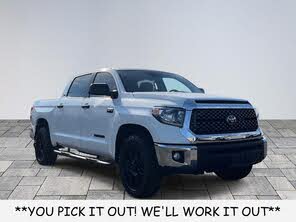
The 2020 Toyota Tundra was available in several trim levels: SR, SR5, Limited, TRD Pro, Platinum, and 1794 Edition. As one moved up the trim ladder, more luxury and plushness were added to the mix. The vehicle came in two cab styles, Double Cab and CrewMax, and depending on the cab and trim chosen, three different bed lengths were offered. Prices ranged from $33,425 to $52,930 before adding the destination charge or any options.
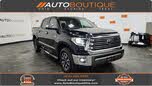
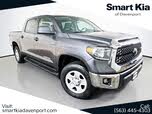
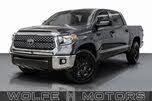
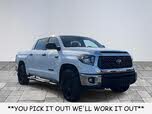
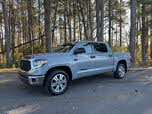
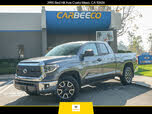
The Tundra TRD Pro CrewMax was the most expensive version, boasting 4-wheel drive (4WD). Painted in an exclusive Army Green color and equipped with black 18-inch forged aluminum wheels, the Tundra TRD Pro had a tough, military-grade appearance. However, the green might have quickly worn out its welcome, prompting buyers to consider other color options such as black, white, or gray, which also highlighted the good looks of the TRD Pro.
The interior of the TRD Pro featured black leather with red stitching and red “TRD Pro” embroidery. The Tundra’s design has aged well, but the use of industrial-grade plastic at higher price levels was hard to accept.
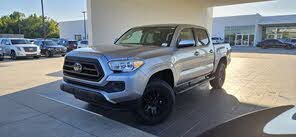
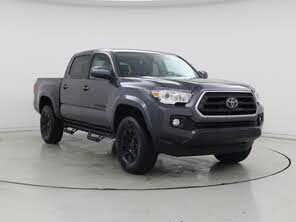
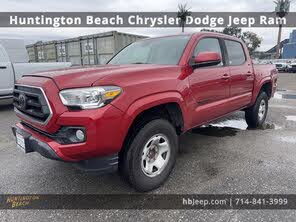
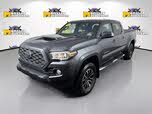
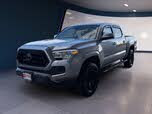
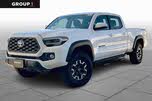
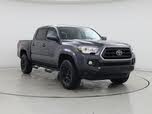
The 2021 Toyota Tacoma, on the other hand, epitomized the stereotypical pickup truck look with its boxy fender flares, tall hood, shield-like grille, and ruler-straight lines. This rugged aesthetic contrasted sharply with the more streamlined appearance of competitors like the Ford Ranger and General Motors midsize trucks. Unlike the exaggerated features of some larger trucks, including the Tundra, the Tacoma kept its design clean and straightforward.
Certain Tacoma models introduced unique styling features. The 2021 Trail Edition came with 16-inch TRD Off-Road alloy wheels, the grille from the Tacoma Limited, and exclusive color options. The Nightshade Edition featured blacked-out trim, while the TRD Pro showcased a model-specific grille with “Toyota” block lettering, blacked-out hood and fender flares, Rigid Industries LED fog lights, and an exclusive color for 2021—Lunar Rock.
The Tacoma stuck with a body-on-frame construction, advantageous for towing and off-road capabilities, although it typically penalized ride and handling. Toyota eliminated the basic two-door cab, offering only the Access Cab and Double Cab versions. Access Cab models had rear half doors, while Double Cab models featured four full-size doors, equating to a crew cab. Various bed lengths were available depending on the cab configuration.
The interior styling of the Tacoma matched its rugged exterior. The dashboard comprised chunky plastic elements, offering a durable look suitable for a base model. However, at higher price points like the TRD Pro’s $45,000 base price, the material quality seemed less justifiable, despite the model’s off-road focus.


The 2020 Toyota Tundra featured a single powertrain across all its models: a 5.7-liter V8 engine paired with a 6-speed automatic transmission. This robust system produced 381 horsepower at 5,600 rpm and 401 pound-feet of torque at 3,600 rpm. With a maximum towing capacity of 10,200 pounds and a payload capacity of up to 1,730 pounds, the Tundra, especially the SR Double Cab with rear-wheel drive (RWD), demonstrated strong performance metrics.
The Tundra offered an optional electronic shift-on-the-fly 4WD system on all trims except the TRD Pro, where it came standard. The TRD Pro went a step further with BBS forged aluminum wheels, heavy-duty Fox off-road shocks tuned by Toyota Racing Development (TRD), a stainless-steel TRD-tuned dual exhaust system, and an aluminum skid plate for underbody protection.
The TRD Pro’s exhaust system made the V8 sound sensational, though loud to bystanders. The powertrain showed robust strength and the transmission worked flawlessly. Steering, braking, and handling felt acceptable, given the truck’s nature, and the turning radius was impressively tight. The Tundra remained steady on straight, rural roads and Interstates, but wind noise was excessive at higher speeds. Gas mileage was less impressive, with the EPA rating the 4WD Tundra at 13 mpg city, 17 mpg highway, and 14 mpg combined.
By contrast, the 2021 Toyota Tacoma offered two powertrain options: a base 2.7-liter four-cylinder engine producing 159 horsepower and 180 pound-feet of torque, and an optional 3.5-liter V6 engine generating 278 hp and 265 lb-ft of torque. The V6 engine, running on the Atkinson cycle, featured Toyota's D4S fuel-injection system for improved fuel economy.
The four-cylinder engine paired solely with a six-speed automatic transmission, while the V6 offered both the same automatic and a six-speed manual transmission. The optional part-time 4WD drivetrain included low range and a standard electronic rear limited-slip differential, with the option for a fully locking rear diff. All Tacoma models featured coil-spring front suspension and leaf-spring rear suspension.
Building on this solid foundation, the TRD Off-Road model included features like a locking rear differential, upgraded Bilstein shocks, Multi-Terrain Select drive modes, and Crawl Control. The TRD Pro enhanced these features with Fox internal-bypass shocks, a 1-inch front lift, retuned rear suspension with progressive-rate leaf springs, a front skid plate, and wider wheels equipped with Goodyear Wrangler Kevlar-reinforced all-terrain tires.
Despite these off-road enhancements, on-road performance felt traditional: cornering required care, and braking needed advance planning. The V6 engine's acceleration was sluggish, partly due to the automatic transmission’s reluctance to shift. The TRD Pro’s exhaust sound was also underwhelming, creating an unattractive moan.
The Tacoma had a maximum towing capacity of 6,800 pounds and a maximum payload capacity of 1,685 pounds. However, achieving these maxima required specific configurations: the towing capacity applied to the Access Cab V6 RWD model, and the payload rating applied to the RWD Access Cab four-cylinder model.
The 2020 Toyota Tundra was built in Texas and featured an interior sized to match. The rear seating area of the CrewMax was spacious, offering ample room for passengers, including an expansive rear window that lowered the entire pane of glass to store behind the cab, which kids found particularly cool. Front leather-bound seats were large, supportive, and comfortable for long drives.
Storage solutions were abundant, although the glove compartment was surprisingly small. The backseat had limited practical storage options, with the rear seat cushions flipping up to create extra floor space but little available underneath. The Tundra’s bed was basic, offering a spray-in bedliner, tie-down hooks, and bed rails without additional storage features like those found in competitors.
The 2021 Toyota Tacoma, while offering a four-door cab, suffered from a lack of interior space. The Tacoma Double Cab had the worst rear headroom and legroom in its segment, and front headroom and legroom were also below average. The combination of limited headroom and a short windshield created a bunker-like feel, with the tall hood impairing forward visibility.
Rear seats folded up to reveal storage cubbies, providing a secure place for items you wouldn’t want to leave in the bed. Other in-cab storage was limited, though the Tacoma included a wireless charging pad. The Tacoma’s bed featured a standard rail system with tie-down cleats and an available 120-volt outlet, with the bed made from sheet-molded composite, a lightweight, rust-resistant alternative to steel.
The 2020 Toyota Tundra’s infotainment system, despite its dated design, featured modern software. Lower trim levels started with a 7-inch display, while higher trims upgraded to an 8-inch screen. The system included Bluetooth, Apple CarPlay, Android Auto, Amazon Alexa, satellite radio, USB media and charging ports, and free trial subscriptions to safety-related and WiFi connected services.
The Tundra TRD Pro had the top-tier version of the system with dynamic navigation, dynamic voice recognition, dynamic point-of-interest search, a full menu of connected services, and a 12-speaker JBL premium sound system. While the JBL speakers pleased bass enthusiasts, the system’s reliance on touchscreen buttons for radio presets might test drivers’ patience.
The 2021 Toyota Tacoma also came with a 7-inch touchscreen in the base SR trim, with higher trims featuring an 8-inch touchscreen. Standard features included Apple CarPlay, Android Auto, Amazon Alexa, Bluetooth, and SiriusXM satellite radio. An optional JBL audio system with a subwoofer was available on higher trims.
The Tacoma’s infotainment system was functional, featuring responsive touch controls and helpful shortcut buttons. However, the system’s graphics were plain, and it lacked advanced features beyond basic functions. The TRD Pro model included an optional Multi-Terrain Monitor surround-view camera system, useful for both off-road obstacles and parking maneuvers.
The 2020 Toyota Tundra faced challenges in safety ratings. While it came standard with Toyota Safety Sense and offered a blind-spot monitoring system with rear cross-traffic alert, its crash-test performance was subpar. According to the IIHS, the Tundra CrewMax received Marginal and Poor ratings in small-overlap, frontal-impact testing for the driver and front passenger, respectively. Its headlights were rated Marginal.
The NHTSA ratings were slightly better: side-impact protection rated 5 stars, frontal-impact protection rated 4 stars, and 4WD models received a 4-star rollover resistance rating (3-star for RWD models). However, these ratings haven’t seen a significant standards update since 2011.
The 2021 Toyota Tacoma fared better in safety ratings. The IIHS gave the Tacoma Double Cab top “Good” scores in most crash tests, with an “Acceptable” score for the passenger-side small overlap front test. Headlight ratings varied between “Good” and “Marginal,” but the Tacoma earned a “Superior” rating for front-crash prevention tech.
The NHTSA awarded both Tacoma cab configurations a four-star overall rating, with four stars in frontal and rollover crash testing, and five stars in side crash tests. Standard driver-assist features included forward-collision warning, automatic emergency braking, lane-departure warning, automatic high beams, and adaptive cruise control. The Ford Ranger offered additional safety features like lane-keep assist and trailer-enabled blind-spot monitoring.
CarGurus highlights
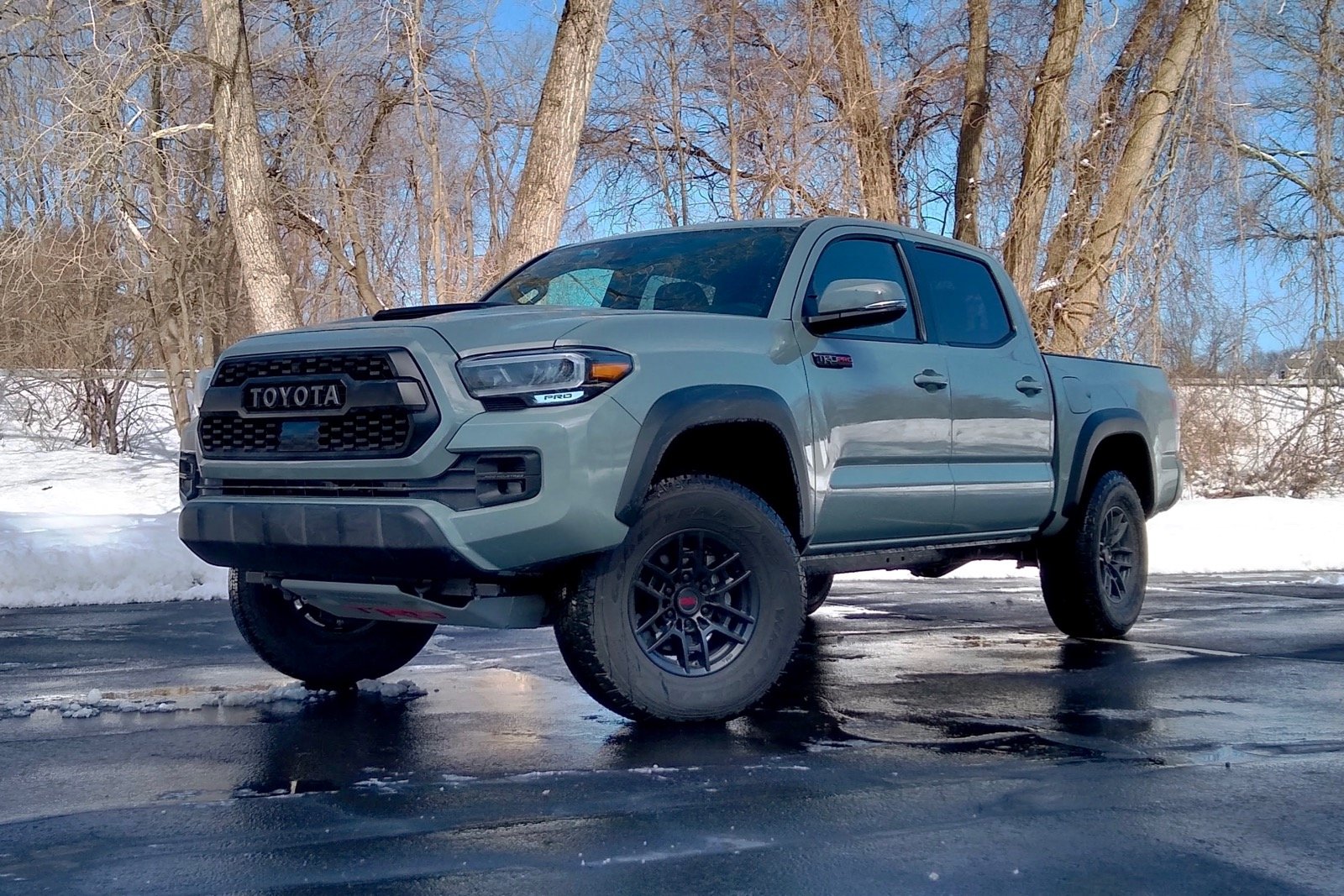
According to CarGurus experts, the overall rating for the 2020 Toyota Tundra was 5.3 out of 10, while the 2021 Toyota Tacoma scored 6.5 out of 10. Based on these ratings, the 2021 Toyota Tacoma offers a more well-rounded package with its advanced safety features, modern infotainment system, and off-road capabilities. Therefore, the Tacoma stands as the better choice for most consumers.
Choose the 2020 Toyota Tundra if:
- You need a full-size truck with a powerful V8 engine and a high towing capacity.
- You prioritize a spacious and comfortable interior, especially in the CrewMax configuration.
- You seek a durable truck capable of handling heavy-duty tasks and off-road adventures.




Choose the 2021 Toyota Tacoma if:
- You want a midsize truck with off-road capability, particularly in the TRD Pro or Off-Road trims.
- You appreciate modern infotainment features like Apple CarPlay, Android Auto, and a surround-view camera system.
- You prioritize advanced safety features and better safety ratings for both the driver and passengers.






CarGurus highlights
According to CarGurus experts, the overall rating for the 2020 Toyota Tundra was 5.3 out of 10, while the 2021 Toyota Tacoma scored 6.5 out of 10. Based on these ratings, the 2021 Toyota Tacoma offers a more well-rounded package with its advanced safety features, modern infotainment system, and off-road capabilities. Therefore, the Tacoma stands as the better choice for most consumers.
Choose the 2020 Toyota Tundra if:
Shop Now- You need a full-size truck with a powerful V8 engine and a high towing capacity.
- You prioritize a spacious and comfortable interior, especially in the CrewMax configuration.
- You seek a durable truck capable of handling heavy-duty tasks and off-road adventures.


Choose the 2021 Toyota Tacoma if:
Shop Now- You want a midsize truck with off-road capability, particularly in the TRD Pro or Off-Road trims.
- You appreciate modern infotainment features like Apple CarPlay, Android Auto, and a surround-view camera system.
- You prioritize advanced safety features and better safety ratings for both the driver and passengers.


By: CarGurus + AI
At CarGurus, our team of experienced automotive writers remain at the heart of our content operation, conducting hands-on car tests and writing insightful guides that are backed by years of industry experience. To complement this, we are harnessing AI to make our content offering more diverse and more helpful to shoppers than ever. To achieve this, our AI systems are based exclusively on CarGurus content, ratings and data, so that what we produce is both unique to CarGurus, and uniquely helpful to car shoppers.