2021 Ford F-150 vs 2022 Hyundai Santa Cruz
Overview | |
MSRP$29,290 | MSRP$24,440 |
Listings5747 | Listings538 |
Ratings & Reviews | |
User Reviews | User Reviews |
Expert reviews7.8 out of 10 | Expert reviews8.0 out of 10 |
Pros
Cons
| Pros
Cons
|
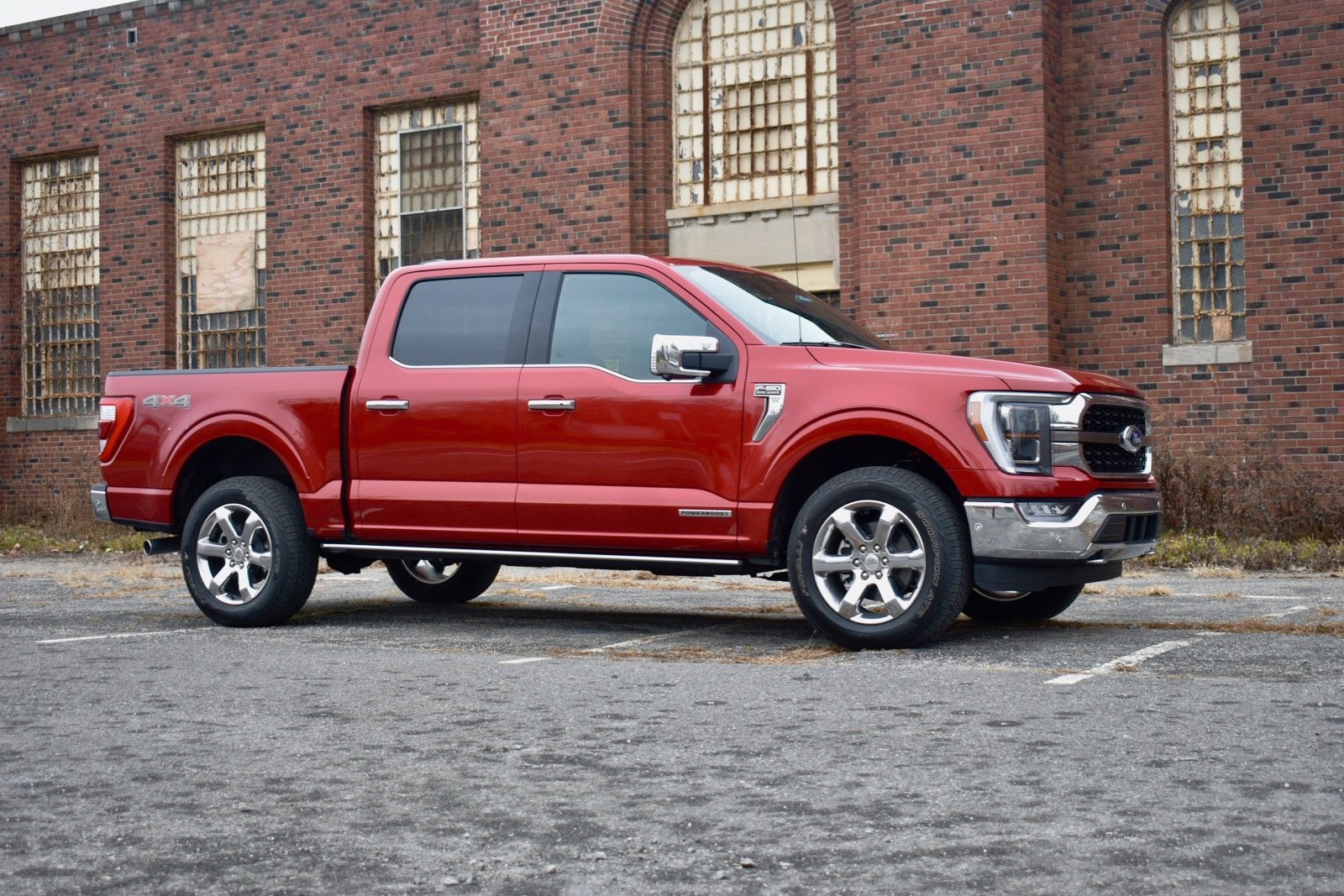
2021 Ford F-150 Reviews SummaryThe Ford F-Series pickup truck has been the bestselling vehicle in the United States for decades, so a lot is at stake with any redesign. The 2021 Ford F-150 plays it safe, with changes that are smaller in scope than the truck’s previous redesign (for the 2015 model year), but nonetheless significant. This latest redesign brought an updated version of the previous-generation truck’s bold styling, a revamped interior with more convenience features, and the new Sync 4 infotainment system, as well as an available PowerBoost hybrid powertrain. This is the first time Ford has offered an F-150 hybrid, and the PowerBoost is currently the only full-hybrid powertrain available in a full-size pickup truck. The F-150’s traditional rivals are the Chevrolet Silverado 1500/GMC Sierra 1500 twins and Ram 1500, along with the slower-selling Nissan Titan and Toyota Tundra. Ford offers a staggering array of options, including six trim levels (XL, XLT, Lariat, King Ranch, Platinum, and Limited), three cab configurations, three bed sizes, six powertrains, and the choice of rear-wheel drive (RWD) or four-wheel drive (4WD). Our test vehicle was an F-150 King Ranch with the SuperCrew cab, 4WD, and the PowerBoost hybrid powertrain. | |
2022 Hyundai Santa Cruz Reviews SummaryBeing a newbie in a given field means having to catch up to established leaders, but it can also bring a different perspective. Hyundai has never sold a pickup truck in the United States, and its first effort is unlike anything else on the market. The 2022 Hyundai Santa Cruz is the first truly compact pickup to be sold in the U.S. in over a decade, and unlike conventional body-on-frame pickups, it features car-like unibody construction. This packaging sacrifices some capability, but that’s beside the point. Hyundai didn’t design the Santa Cruz to compete directly with conventional trucks. It doesn’t even call the Santa Cruz a pickup; it prefers the term “sport adventure vehicle.” While it may win over some truck buyers who want a pickup that’s easier to park, the Santa Cruz will appeal mainly to new-car buyers who want to replace a sedan or crossover SUV with something a bit more rugged. To figure out where the Santa Cruz fits into the current automotive landscape, we spent a day driving it around on roads in and around its namesake California city. Hyundai also offers base SE, SEL Activity Package, and SEL Premium trim levels, but we sampled a range-topping Santa Cruz Limited model for this test drive. | |
Popular Features & Specs | |
Engine3.3L 290 hp V6 Flex Fuel Vehicle | Engine2.5L 191 hp I4 |
Drive Train4X2 | Drive TrainFWD |
Seating Capacity3 | Seating Capacity5 |
Horsepower | Horsepower191 hp @ 6100 rpm |
MPG City20 | MPG City21 |
MPG Highway24 | MPG Highway26 |
Engine | |
Engine Name3.3L 290 hp V6 Flex Fuel Vehicle | Engine Name2.5L 191 hp I4 |
Torque | Torque181 lb-ft @ 4000 rpm |
Horsepower | Horsepower191 hp @ 6100 rpm |
Drivetrain4X2 | DrivetrainFWD |
Fuel Economy | |
MPG City20 | MPG City21 |
MPG Highway24 | MPG Highway26 |
Interior | |
Seating Capacity3 | Seating Capacity5 |
Safety | |
Front Crash Overall5 | Front Crash Overall |
Side Crash Overall5 | Side Crash Overall |
Dimensions & Capacity | |
Bed Length78.9 in | Bed Length52.1 in |
Cargo Space8.8 cu ft | Cargo Space |
Curb Weight4025 lbs | Curb Weight3704 lbs |
Height75.6 in | Height66.7 in |
Length209.1 in | Length195.7 in |
Width95.7 in | Width75.0 in |
Wheelbase122.8 in | Wheelbase118.3 in |
Maximum Payload1985 lbs | Maximum Payload1906 lbs |
Number of doors2 | Number of doors4 |
Maximum Towing Capacity9100 lbs | Maximum Towing Capacity3500 lbs |
Standard Towing Capacity5000 lbs | Standard Towing Capacity |
Overview | ||
MSRP | $29,290 | $24,440 |
Listings | ||
Ratings & Reviews | ||
User reviews | ||
Expert reviews | 7.8 out of 10Read full review | 8.0 out of 10Read full review |
Pros & cons | Pros
Cons
| Pros
Cons
|
Summary | The Ford F-Series pickup truck has been the bestselling vehicle in the United States for decades, so a lot is at stake with any redesign. The 2021 Ford F-150 plays it safe, with changes that are smaller in scope than the truck’s previous redesign (for the 2015 model year), but nonetheless significant. This latest redesign brought an updated version of the previous-generation truck’s bold styling, a revamped interior with more convenience features, and the new Sync 4 infotainment system, as well as an available PowerBoost hybrid powertrain. This is the first time Ford has offered an F-150 hybrid, and the PowerBoost is currently the only full-hybrid powertrain available in a full-size pickup truck. The F-150’s traditional rivals are the Chevrolet Silverado 1500/GMC Sierra 1500 twins and Ram 1500, along with the slower-selling Nissan Titan and Toyota Tundra. Ford offers a staggering array of options, including six trim levels (XL, XLT, Lariat, King Ranch, Platinum, and Limited), three cab configurations, three bed sizes, six powertrains, and the choice of rear-wheel drive (RWD) or four-wheel drive (4WD). Our test vehicle was an F-150 King Ranch with the SuperCrew cab, 4WD, and the PowerBoost hybrid powertrain. | Being a newbie in a given field means having to catch up to established leaders, but it can also bring a different perspective. Hyundai has never sold a pickup truck in the United States, and its first effort is unlike anything else on the market. The 2022 Hyundai Santa Cruz is the first truly compact pickup to be sold in the U.S. in over a decade, and unlike conventional body-on-frame pickups, it features car-like unibody construction. This packaging sacrifices some capability, but that’s beside the point. Hyundai didn’t design the Santa Cruz to compete directly with conventional trucks. It doesn’t even call the Santa Cruz a pickup; it prefers the term “sport adventure vehicle.” While it may win over some truck buyers who want a pickup that’s easier to park, the Santa Cruz will appeal mainly to new-car buyers who want to replace a sedan or crossover SUV with something a bit more rugged. To figure out where the Santa Cruz fits into the current automotive landscape, we spent a day driving it around on roads in and around its namesake California city. Hyundai also offers base SE, SEL Activity Package, and SEL Premium trim levels, but we sampled a range-topping Santa Cruz Limited model for this test drive. |
Video | ||
Popular Features & Specs | ||
Engine | 3.3L 290 hp V6 Flex Fuel Vehicle | 2.5L 191 hp I4 |
Drive Train | 4X2 | FWD |
Seating Capacity | 3 | 5 |
Horsepower | 191 hp @ 6100 rpm | |
MPG City | 20 | 21 |
MPG Highway | 24 | 26 |
Engine | ||
Engine Name | 3.3L 290 hp V6 Flex Fuel Vehicle | 2.5L 191 hp I4 |
Torque | 181 lb-ft @ 4000 rpm | |
Horsepower | 191 hp @ 6100 rpm | |
Drivetrain | 4X2 | FWD |
Fuel Economy | ||
MPG City | 20 | 21 |
MPG Highway | 24 | 26 |
Interior | ||
Seating Capacity | 3 | 5 |
Safety | ||
Front Crash Overall | 5 | |
Side Crash Overall | 5 | |
Dimensions & Capacity | ||
Bed Length | 78.9 in | 52.1 in |
Cargo Space | 8.8 cu ft | |
Curb Weight | 4025 lbs | 3704 lbs |
Height | 75.6 in | 66.7 in |
Length | 209.1 in | 195.7 in |
Width | 95.7 in | 75.0 in |
Wheelbase | 122.8 in | 118.3 in |
Maximum Payload | 1985 lbs | 1906 lbs |
Number of doors | 2 | 4 |
Maximum Towing Capacity | 9100 lbs | 3500 lbs |
Standard Towing Capacity | 5000 lbs | |
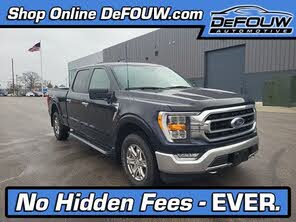
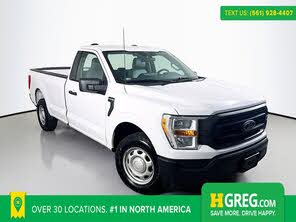
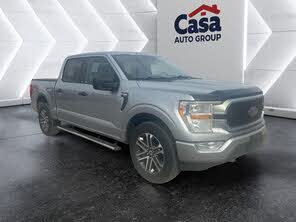
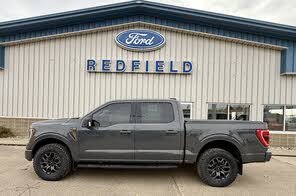
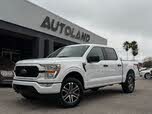
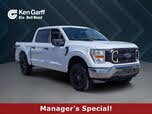
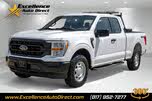
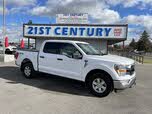
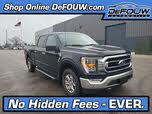
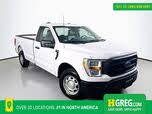
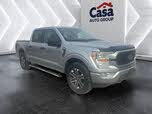
The 2021 Ford F-150 retained its iconic tough look with oversized wheel arches and a tall hood, reminiscent of its predecessors. However, it introduced a new front fascia with larger headlights and a rounder grille, offering 11 design options and new tailgate appliques. Ford emphasized improved aerodynamics with active grille shutters and an automatically-deploying air dam, aiming to enhance fuel efficiency. The aluminum bodywork, consistent with the previous generation, reduced weight, aiding in better fuel economy and increased payload capacity. Inside, the F-150 maintained its truck-like design with large angular air vents and a high center console. The interior varied from basic in the XL trim to luxurious in the King Ranch, Platinum, and Limited trims, with the King Ranch featuring leather upholstery and wood trim.
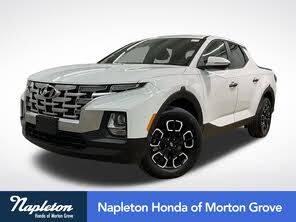
The 2022 Hyundai Santa Cruz, with its smaller footprint, evoked memories of mini trucks from the past but stood out with its unibody construction and unique styling. Measuring 195.7 inches in length, it was over a foot shorter than a Toyota Tacoma, yet nearly as wide. Its design resembled an SUV with a bed, featuring a toothy grille and blended headlights, similar to the Hyundai Tucson. The Santa Cruz offered 20-inch wheels for a bold look, with 18-inch options for off-roading. Inside, the design was straightforward, avoiding faux ruggedness. The materials were appropriate for its price range, and the air vents were neatly integrated into the dashboard. The Limited trim, while not overly fancy, was suitable for its adventurous intent.


The 2021 Ford F-150 offered a range of powertrains, mostly carried over from the previous generation. The base model featured a 3.3-liter V6 with 290 horsepower and 265 pound-feet of torque. A 5.0-liter V8 provided 400 hp and 410 lb-ft, while two twin-turbocharged EcoBoost V6 engines offered 325 hp and 400 lb-ft (2.7-liter) and 400 hp and 500 lb-ft (3.5-liter). A 3.0-liter turbodiesel V6 was also available, delivering 250 hp and 440 lb-ft. The new PowerBoost hybrid combined a 3.5-liter EcoBoost V6 with an electric motor, producing 430 hp and 570 lb-ft, making it the most powerful option. The F-150 excelled in payload and towing, with a maximum payload of 3,325 pounds and towing capacity of 14,000 pounds with the non-hybrid 3.5-liter EcoBoost V6. The hybrid offered a towing capacity of 12,700 pounds. The PowerBoost hybrid provided ample power, though the transition between electric and hybrid modes was not seamless.
The 2022 Hyundai Santa Cruz came with a 2.5-liter four-cylinder engine and an eight-speed dual-clutch automatic transmission. The base engine produced 191 horsepower and 181 pound-feet of torque, while the optional turbocharged engine delivered 281 hp and 311 lb-ft. The naturally aspirated version offered FWD or AWD, while the turbocharged engine was AWD only. The Santa Cruz's multi-link suspension provided a fun driving experience, with impressive ride quality and low cabin noise. The turbo engine offered sufficient power, though towing was not tested. The Santa Cruz had a maximum towing capacity of 3,500 pounds with the base engine and 5,000 pounds with the turbo, with a payload capacity of 1,906 pounds. While not ideal for serious off-roading, it offered 8.6 inches of ground clearance and AWD.
The 2021 Ford F-150 catered to those using their trucks as mobile offices, with features like a fold-flat shifter creating a work surface for a 15-inch laptop. Higher trims offered Max Recline Seats for resting. Storage was ample, with a large center-console bin and cupholders. The F-150 came in three cab configurations: two-door regular cab, SuperCab, and SuperCrew, with varying seating capacities. Bed sizes included 5.5-foot, 6.5-foot, and 8-foot options. Bed access was facilitated by power running boards and a fold-out step in the tailgate, which featured rulers and power opening/closing. The Pro Power Onboard system provided in-bed power outlets, with up to 7.2 kW output in the hybrid model.
The 2022 Hyundai Santa Cruz, while offering a decent payload capacity, had a small 52.1-inch bed, limiting its utility for larger items. Hyundai included features like a lockable tonneau cover, adjustable tailgate, tie-down points, and in-bed lighting and power outlet. The bed had indents for creating a shelf and storage compartments under the bed and rear seats. The Santa Cruz was available only in a four-door crew-cab configuration, seating five. Rear legroom was tight, but front-seat space was more generous. Storage was decent, with a center console and under-seat bin. Controls for heated and ventilated seats were well-placed, though touch pads for audio and climate control were less user-friendly.
The 2021 Ford F-150 featured the new Sync 4 infotainment system with wireless Apple CarPlay and Android Auto, and over-the-air updates. An 8-inch touchscreen was standard, with a 12-inch option available, paired with a 12-inch digital instrument cluster. The system had well-organized menus, and physical buttons for key functions. The F-150 also offered Pro Trailer Backup Assist, Trailer Reverse Guidance, and Dynamic Hitch Assist for easier towing, though these features were optional.
The 2022 Hyundai Santa Cruz came with a standard 8-inch touchscreen with wireless Apple CarPlay and Android Auto. Higher trims offered a 10.25-inch touchscreen, wireless charging, and a digital instrument cluster. The digital cluster displayed blind-spot images from the surround-view camera. The 10.25-inch touchscreen and cluster in the Limited trim were glare-resistant and responsive. Wireless charging and Hyundai’s digital-key feature were available, though the latter only worked with Android phones.
The 2021 Ford F-150 had not yet received full crash-test ratings from NHTSA and IIHS, but the IIHS gave a "good" rating for roof strength. Standard safety features included forward-collision warning, automatic emergency braking, and automatic high beams. Optional features included lane-keep assist, adaptive cruise control, and intersection assist. The F-150 was set to receive Active Drive Assist for highway driving, with a driver-facing camera for monitoring distraction.
The 2022 Hyundai Santa Cruz had not yet been rated by IIHS or NHTSA. Standard safety features included forward-collision warning, automatic emergency braking, lane-keeping assist, and a driver-attention monitor. Higher trims offered blind-spot monitoring, rear cross-traffic alert, and Highway Driving Assist, which combined adaptive cruise control with lane centering. Hyundai’s system performed comparably to others, handling acceleration and deceleration well but struggling with highway curves.
CarGurus highlights

According to CarGurus experts, the overall rating for the 2021 Ford F-150 is 7.8 out of 10, while the 2022 Hyundai Santa Cruz scores 8.0 out of 10. Based on these ratings, the Hyundai Santa Cruz is recommended for those seeking a modern, versatile vehicle with advanced technology and a unique design.
Choose the 2021 Ford F-150 if:
- You need a truck with a high towing and payload capacity.
- You prefer a variety of powertrain options, including a powerful hybrid.
- You want a full-size truck with advanced towing assistance features.



Choose the 2022 Hyundai Santa Cruz if:
- You desire a compact, stylish vehicle with SUV-like handling.
- You prioritize modern technology features, including a digital instrument cluster.
- You seek a versatile vehicle for recreational use rather than heavy-duty work.



CarGurus highlights
According to CarGurus experts, the overall rating for the 2021 Ford F-150 is 7.8 out of 10, while the 2022 Hyundai Santa Cruz scores 8.0 out of 10. Based on these ratings, the Hyundai Santa Cruz is recommended for those seeking a modern, versatile vehicle with advanced technology and a unique design.
Choose the 2021 Ford F-150 if:
Shop Now- You need a truck with a high towing and payload capacity.
- You prefer a variety of powertrain options, including a powerful hybrid.
- You want a full-size truck with advanced towing assistance features.


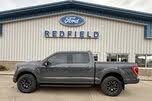
Choose the 2022 Hyundai Santa Cruz if:
Shop Now- You desire a compact, stylish vehicle with SUV-like handling.
- You prioritize modern technology features, including a digital instrument cluster.
- You seek a versatile vehicle for recreational use rather than heavy-duty work.



By: CarGurus + AI
At CarGurus, our team of experienced automotive writers remain at the heart of our content operation, conducting hands-on car tests and writing insightful guides that are backed by years of industry experience. To complement this, we are harnessing AI to make our content offering more diverse and more helpful to shoppers than ever. To achieve this, our AI systems are based exclusively on CarGurus content, ratings and data, so that what we produce is both unique to CarGurus, and uniquely helpful to car shoppers.