Land Rover Range Rover Velar vs Genesis GV70
Overview | |
MSRP$61,500 | MSRP$45,150 |
Listings325 | Listings172 |
Ratings & Reviews | |
User Reviews | User Reviews |
Expert reviews6.3 out of 10 | Expert reviews8.3 out of 10 |
Pros
Cons
| Pros
Cons
|
Reviews SummaryA luxury SUV with seating for five people, the 2024 Velar is one of four SUVs to wear Range Rover lettering across the leading edge of its hood. It slots into the lineup between the smaller Evoque and more capable Sport. This model year, the Velar receives several updates. They include design and comfort enhancements and several improvements to the standard infotainment system. Verdict: The changes to the 2024 Range Rover Velar result in an appealing, if flawed, alternative to the best-sellers in the segment, such as the BMW X5 and Mercedes-Benz GLE-Class. If the Velar had more natural and less frustrating technology, it could raise its profile in the midsize luxury SUV segment considerably. | |
Reviews SummaryVerdict: The GV70 offers style, impressive tech, and a well-executed electric variant. Launched as a 2022 model and thus still very fresh, the Genesis GV70 is the Korean luxury brand’s answer to the BMW X3, Mercedes-Benz GLC-Class, Lexus NX, Volvo XC60, and other small luxury crossover SUVs. The GV70 checks most of the boxes needed to compete in this segment while offering something the competition doesn’t: an all-electric powertrain option. | |
No video found | No video found |
Popular Features & Specs | |
Engine2.0L 247 hp I4 | Engine2.5L 300 hp I4 |
DrivetrainAWD | DrivetrainAWD |
Seating Capacity5 | Seating Capacity5 |
Horsepower247 hp @ 5000 rpm | Horsepower |
MPG City22 | MPG City22 |
MPG Highway26 | MPG Highway28 |
Engine | |
Engine Name2.0L 247 hp I4 | Engine Name2.5L 300 hp I4 |
Torque269 lb-ft @ 1300 rpm | Torque |
Horsepower247 hp @ 5000 rpm | Horsepower |
DrivetrainAWD | DrivetrainAWD |
Fuel Economy | |
MPG City22 | MPG City22 |
MPG Highway26 | MPG Highway28 |
Interior | |
Leather SeatsStandard | Leather Seats |
Seating Capacity5 | Seating Capacity5 |
Key Features | |
Navigation SystemStandard | Navigation SystemStandard |
Sunroof/MoonroofStandard | Sunroof/Moonroof |
Safety | |
Front Crash Overall | Front Crash Overall4 |
Side Crash Overall | Side Crash Overall5 |
Dimensions & Capacity | |
Cargo Space30.9 cu ft | Cargo Space28.9 cu ft |
Curb Weight4130 lbs | Curb Weight4167 lbs |
Height66.3 in | Height64.2 in |
Length188.9 in | Length185.6 in |
Width84.5 in | Width75.2 in |
Wheelbase113.0 in | Wheelbase113.2 in |
Maximum Payload1490 lbs | Maximum Payload1334 lbs |
Number of doors4 | Number of doors4 |
Maximum Towing Capacity5291 lbs | Maximum Towing Capacity3500 lbs |
Overview | ||
MSRP | $61,500 | $45,150 |
Listings | ||
Ratings & Reviews | ||
User reviews | ||
Expert reviews | 6.3 out of 10Read full review | 8.3 out of 10Read full review |
Pros & cons | Pros
Cons
| Pros
Cons
|
Summary | A luxury SUV with seating for five people, the 2024 Velar is one of four SUVs to wear Range Rover lettering across the leading edge of its hood. It slots into the lineup between the smaller Evoque and more capable Sport. This model year, the Velar receives several updates. They include design and comfort enhancements and several improvements to the standard infotainment system. Verdict: The changes to the 2024 Range Rover Velar result in an appealing, if flawed, alternative to the best-sellers in the segment, such as the BMW X5 and Mercedes-Benz GLE-Class. If the Velar had more natural and less frustrating technology, it could raise its profile in the midsize luxury SUV segment considerably. | Verdict: The GV70 offers style, impressive tech, and a well-executed electric variant. Launched as a 2022 model and thus still very fresh, the Genesis GV70 is the Korean luxury brand’s answer to the BMW X3, Mercedes-Benz GLC-Class, Lexus NX, Volvo XC60, and other small luxury crossover SUVs. The GV70 checks most of the boxes needed to compete in this segment while offering something the competition doesn’t: an all-electric powertrain option. |
Video | No video found | No video found |
Popular Features & Specs | ||
Engine | 2.0L 247 hp I4 | 2.5L 300 hp I4 |
Drivetrain | AWD | AWD |
Seating Capacity | 5 | 5 |
Horsepower | 247 hp @ 5000 rpm | |
MPG City | 22 | 22 |
MPG Highway | 26 | 28 |
Engine | ||
Engine Name | 2.0L 247 hp I4 | 2.5L 300 hp I4 |
Torque | 269 lb-ft @ 1300 rpm | |
Horsepower | 247 hp @ 5000 rpm | |
Drivetrain | AWD | AWD |
Fuel Economy | ||
MPG City | 22 | 22 |
MPG Highway | 26 | 28 |
Interior | ||
Leather Seats | Standard | |
Seating Capacity | 5 | 5 |
Key Features | ||
Navigation System | Standard | Standard |
Sunroof/Moonroof | Standard | |
Safety | ||
Front Crash Overall | 4 | |
Side Crash Overall | 5 | |
Dimensions & Capacity | ||
Cargo Space | 30.9 cu ft | 28.9 cu ft |
Curb Weight | 4130 lbs | 4167 lbs |
Height | 66.3 in | 64.2 in |
Length | 188.9 in | 185.6 in |
Width | 84.5 in | 75.2 in |
Wheelbase | 113.0 in | 113.2 in |
Maximum Payload | 1490 lbs | 1334 lbs |
Number of doors | 4 | 4 |
Maximum Towing Capacity | 5291 lbs | 3500 lbs |
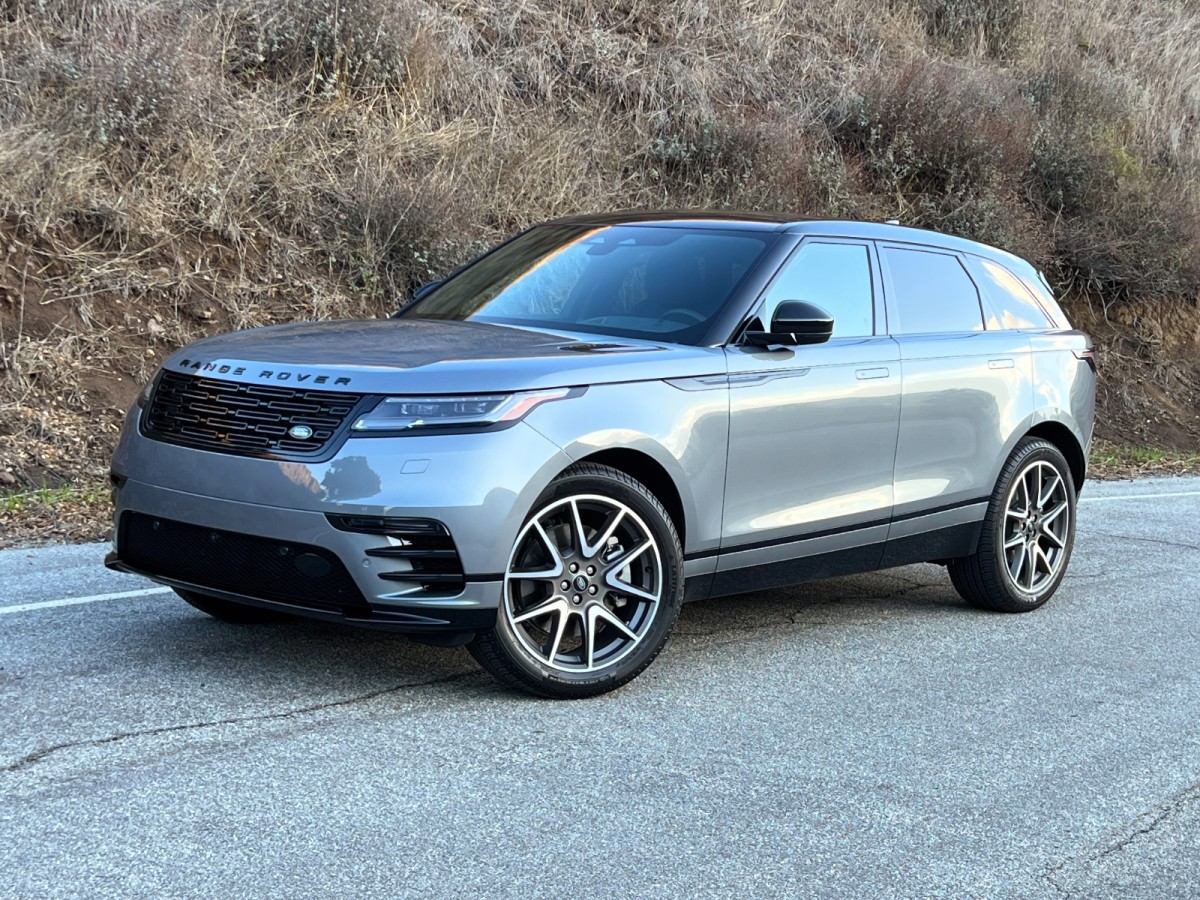
In the 2024 Land Rover Range Rover Velar, a “reductive” design philosophy guided the entire styling approach, both exterior and interior. This ethos aimed to strip away the unnecessary, to simplify and modernize both the look and functionality of the SUV. Introduced back in 2018, the Velar was the first Range Rover to adopt this philosophy, and the 2024 model saw further refinements.
For this model year, the Velar showcased a new grille, updated headlights and taillights, and fresh wheel options. The exterior detailing had also been enhanced. A newly designed rear bumper focused on emphasizing width over height, pairing with a full-length upper stop lamp that contributed to the SUV's lower and wider stance.
Inside the Velar, a significant change came in the form of a larger 11.4-inch touchscreen infotainment system, designed to appear as if it were floating in front of the dashboard. The revised center console eliminated traditional dials for climate control, volume, and other functions, making the touchscreen responsible for all these tasks.
The cabin still looked quite impressive, although some signs of substandard quality were noticeable. One misstep was the reliance on a natural voice recognition system that required an active subscription or an Amazon account to use Alexa. For consumers preferring animal-free upholstery, Land Rover offered a Kvadrat wool blend option. Also, the Cabin Air Purification Plus system with PM 2.5 filtration now included carbon dioxide monitoring, though the test vehicle didn’t come with these upgrades.
In terms of configuration, the test vehicle participated in the Dynamic SE trim, one notch above the base S variant. It boasted a more powerful turbocharged six-cylinder engine featuring mild-hybrid technology, along with various premium features like an expensive paint job, upgraded wheels, a Black Exterior Pack, and a Cold Climate Pack. Overall, the MSRP of this model reached $80,533, inclusive of a $1,275 destination charge.
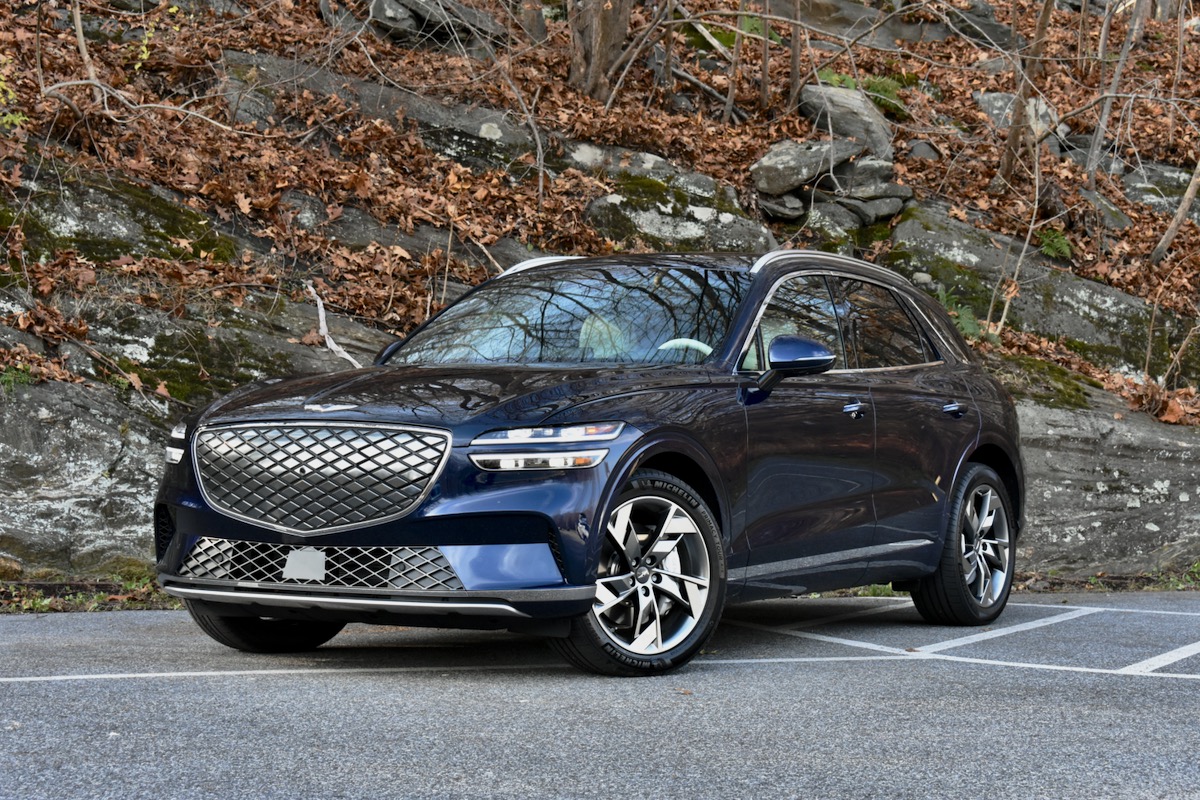
Conversely, the 2024 Genesis GV70 had its distinct appeal within the Genesis lineup. It carried some signature Genesis design elements such as split headlights and a large, shield-like grille, but the GV70 distinguished itself with a sleeker profile compared to its larger sibling, the GV80, without falling into the quirkiness of the smaller GV60. Notable details included its almost hatchback-like rear window profile, large round exhaust outlets on the gasoline-powered Sport Prestige trim, and distinctive 21-inch wheels, with 19-inch wheels as standard.
The GV70 excelled in striking a balance between size and luxury-car finesse, outshining competitors like the Audi Q5 and BMW X3 that seemed to aim for a bulkier look. The Porsche Macan’s attempt to upscale its car-specific cues to SUV proportions appeared mismatched, whereas the GV70's design successfully blended SUV presence with luxury branding.
The Electrified GV70 catered to EV enthusiasts who preferred a low-profile look. While the glitzy grille might appear flashy, it cleverly housed the charge port, facilitating straightforward charging. This design element often proved more practical than the positioning found in other EVs, which could demand tricky maneuvering to align with charging stations.
Inside, the GV70 stood out with a distinctive, luxurious interior. Available quilted Nappa leather upholstery and a panoramic sunroof offered traditional luxury touches, but the standout feature was the intricate detailing. For instance, the climate controls and other buttons were housed in an elliptical pod, and the rotary controller for the infotainment system had a design quirkiness evoking sci-fi aesthetics. The dashboard itself had a rounded, airplane wing-like cross-section, offering a unique visual appeal.


The 2024 Land Rover Range Rover Velar, particularly in the Dynamic SE trim tested, came with a turbocharged 3.0-liter inline six-cylinder engine paired with a 48-volt mild-hybrid system. This powertrain channeled a robust 394 horsepower between 5,500 rpm and 6,500 rpm and 406 lb-ft of torque between 2,000 rpm and 5,000 rpm. This model carried the P400 designation, whereas the less powerful Velar variants with a 2.0-liter turbo four-cylinder engine producing 247 horsepower bore the P250 label.
The P400 engine upgrade showed substantial benefits, notably bringing the Velar to 60 mph nearly two seconds faster than the P250. Despite a slight dip in efficiency—21 mpg combined compared to the P250's 23 mpg—the improved performance made the P400 more suitable for a luxury SUV of this caliber. During testing, the Velar averaged 19.5 mpg.
Performance was bolstered by an eight-speed automatic transmission driving all four wheels. The standard ground clearance was 8.4 inches, which could be increased to 9.9 inches with the optional air suspension. Depending on the suspension type, water fording capability varied from 20.9 inches to 22.8 inches.
The Velar came with standard Terrain Response driving modes, including Eco, Comfort, Grass-Gravel-Snow, Mud-Ruts, Sand, and Automatic modes. Our test vehicle also featured a Dynamic mode, refining on-pavement performance.
On mountain roads near Malibu, the Velar P400 demonstrated commendable athleticism, feeling more nimble and agile than its Range Rover Sport and full-size Range Rover counterparts. The adaptive damping suspension in Dynamic mode firmed up the ride, allowing for confident handling.
Highway driving in Comfort mode showcased the Velar’s quiet and comfortable ride with ample power for confident highway maneuvers. However, urban driving revealed a too-soft suspension in Comfort mode, leading to noticeable pitch and roll during acceleration and braking. Engaging Dynamic mode mitigated these issues somewhat, though it could result in unexpected power surges. Unfortunately, due to loan agreement constraints, off-roading tests weren’t conducted, although on paper, the Velar seemed equipped for competitive off-road performance.
For the 2024 Genesis GV70, powertrain options remained consistent. The gasoline GV70 came with a standard 2.0-liter turbocharged four-cylinder engine delivering 300 horsepower and 311 lb-ft of torque on premium fuel. An available 3.5-liter twin-turbo V6 produced 375 horsepower and 391 lb-ft of torque. Both engines paired with an eight-speed automatic transmission and standard all-wheel drive (AWD).
The Electrified GV70, featuring front and rear electric motors, produced a combined 429 horsepower and 516 lb-ft of torque, supported by a 77.4-kilowatt-hour battery pack. A "Boost Mode" offered a short-term power surge, raising output to 483 horsepower for ten seconds.
While the GV70 aimed to balance sporty driving with comfort, it fell short on both. Engaging Boost Mode in the Electrified GV70 or Sport+ mode in the V6 gasoline variant offered impressive straight-line acceleration, but the chassis setup couldn't keep up. The GV70 felt bulkier and less nimble than sportier rivals like the Acura RDX, BMW X3, or Porsche Macan.
In terms of ride comfort, the GV70 was relatively plush but could feel harsh over bumps and road imperfections. This suspension behavior didn't align with the GV70's aspirations, as it neither offered supreme luxury nor sporty dexterity, resting instead in a competent middle ground.
Specifically, the Electrified GV70 managed to avoid feeling more cumbersome than its gasoline counterpart, despite its heavier weight. It also featured convenient steering-wheel paddles for adjusting regenerative braking, providing flexibility from low-regeneration, mimicking a gasoline car, to high-regeneration for one-pedal driving. With its EPA-rated 236-mile range, the Electrified GV70 offered a solid alternative to the gasoline model without sacrificing driving enjoyment.
Approaching the Velar, the flush-mounted handles powered out for use, although they could be a bit hazardous if not careful, almost hitting the face when leaning in. Tall individuals found it somewhat challenging to get into the front seats due to angled windshield pillars and narrow entry space. Yet, once inside, the new-for-2024 seat cushions offered excellent comfort, and the 14-way power adjustable, heated leather front seats added to the luxurious experience. With the Cold Climate Pack, amenities like ventilated front seats, heated rear seats, a heated windshield, and a power-wash system for the headlights were included.
The test vehicle's interior, featuring a Cloud over Ebony theme with genuine wood veneers, generally felt premium, though some cheap plastic on lower door panels and an unstable driver's floor mat detracted from its high-quality image. Back-seat occupants benefited from an excellent backrest angle, good support, ample legroom, and air conditioning vents, complemented by a panoramic glass sunroof extending fully over the rear seats. Surprisingly, however, the rear doors lacked side window sunshades.
Storage within the cabin was adequate, with generous door panel bins that had a tendency for items to slide into unreachable depths. The panel covering the hidden wireless smartphone charger provided a tray for small items, albeit without a liner, potentially causing noise.
Opening the standard power liftgate revealed 30.9 cubic feet of cargo space, expandably up to 62.7 cubic feet with the 40/20/40-split folding rear seats down. Convenient touches included a netted storage area and hooks for hanging plastic grocery bags, but the Velar still had competition from the Genesis GV70 in terms of interior layout and functionality.
In the 2024 Genesis GV70, interior space was comparable to its rivals. Though the GV70 had slightly less headroom than the Audi Q5, BMW X3, and Mercedes-Benz GLC-Class, it was a minor tradeoff for its streamlined roofline. Front-seat legroom was a mixed bag, offering a bit more compared to the BMW and Mercedes but slightly less than the Audi. Second-row legroom showed small variations as well, with the GV70 offering a bit more than the X3 but a little less than both the Q5 and GLC.
Cargo capacity in the GV70 measured 28.9 cubic feet with the rear seats upright, superior to the Mercedes’ 21.9 cubic feet, slightly better than the BMW's 28.7, though trailing Audi's 29.5. When the seats were folded down, the GV70’s cargo space expanded to 56.9 cubic feet, falling short of the German rivals.
The Electrified GV70's interior space scarcely differed from its gasoline counterpart. First-row legroom remained unchanged, while second-row legroom decreased by 0.6 inch, and headroom reduced by 1 inch and 0.8 inch in the first and second rows, respectively. The cargo space showed a negligible difference of less than a cubic foot whether the rear seats were up or down.
A downside to the GV70's stylish design included limited small-item storage, squeezed by the orb-like infotainment controller, rotary shifter, and curvaceous dashboard. Nevertheless, the dedicated phone storage nook and rear-seat climate controls added practicality to the equation.
The Electrified GV70 also featured automatic side bolsters for the front seats, engaging in Sport mode during strong acceleration or cornering to securely hold occupants in place. While this feature was common in Mercedes-AMG performance cars, it was unusual in this price segment, offering a unique bonus for buyers.
The 2024 Velar saw a significant tech upgrade with the next-generation Pivi Pro infotainment system. Alongside the larger 11.4-inch touchscreen, this new system enabled over-the-air software updates, Amazon Alexa compatibility, and an improved user interface.
However, Pivi Pro added complexity, centralizing climate control, stereo volume, and window defrost/defog functions into a single screen, creating operational challenges. Although Land Rover claimed screen-side shortcut icons facilitated most tasks within two clicks, their small size and lack of a resting place for your hand made accurate selections difficult while driving.
Despite some ease-of-use improvements, driver distraction remained an issue with Pivi Pro. Features like Amazon Alexa, available through a connected services subscription, mitigated these problems somewhat, but test settings issues meant the system demanded an Amazon account before working properly. Fortunately, wireless Apple CarPlay and Android Auto offered an alternative interface.
Pivi Pro came with a standard 12.3-inch digital instrument panel, boasting configurable and driver-selectable themes. The Velar offered standard Meridian premium and optional Meridian high-fidelity sound systems, alongside a head-up display (HUD) and surround-view camera options. The HUD was particularly helpful, providing real-time status updates for the Velar's safety systems, although the test car lacked the surround-view camera, necessitating careful manual parking to avoid wheel damage.
The Genesis GV70's infotainment system, largely borrowed from Hyundai’s lineup, was simpler but effective. It featured a standard 14.5-inch touchscreen with wired Apple CarPlay and Android Auto connectivity. Lower trims had an 8-inch digital instrument cluster, whereas higher grades upgraded to a 12.3-inch unit with a nostalgic 3D effect for those who appreciated retro-futuristic styling. Additionally, a 12-inch head-up display and a 16-speaker Lexicon audio system were available.
The touchscreen layout was intuitive, with large tiles and easy reach for both driver and front-seat passenger. Alternatively, the rotary controller on the center console provided a tactile, high-quality interaction, comparable favorably to controllers found in BMW and Mercedes models.
Additional features included a fingerprint scanner for individual driver profiles and digital key functionality, enabling phone-based unlocking, starting, and driving capabilities.
Each 2024 Velar included a comprehensive suite of advanced driving assistance systems (ADAS). Most systems performed well, especially with the optional HUD, helping clarify the active status of features.
Adaptive cruise control came with a speed-limited function, preventing overspeeding, and a driver-set mode ignoring speed limits. Clearly marked LIM lettering on the steering wheel indicated when speed regulation was active, a transparency lacking in many European vehicles.
Other advanced features included Adaptive Cruise Control with Steer Assist, combining lane-centering with adaptive cruise for Level 2 semi-autonomous driving. Although adaptive cruise control regulated speed smoothly and accelerated promptly upon overtaking, Steer Assist often proved more hindrance than help, struggling with road bends and showing indecisive or erratic behavior. Ultimately, the less than satisfying Steer Assist added stress rather than relief during driving, making it preferable to deactivate.
For the 2024 Genesis GV70, the gasoline versions received the IIHS' Top Safety Pick+ award. The Electrified GV70 earned the same accolade for its 2023 model, with 2024 ratings pending. NHTSA grades showed four-star frontal and rollover crash-test ratings for gasoline models, with a five-star overall safety rating for the 2023 model. Ratings for the Electrified GV70 were not released.
Standard safety features across GV70 models included lane-keep assist, forward-collision warning, automatic emergency braking, rear cross-traffic alert, driver-attention monitor, parking assist sensors, and Highway Driving Assist. The latter combined adaptive cruise control with lane centering for highway driving.
The advanced Highway Driving Assist 2 added lane-change capability and blind-spot monitoring, though still required hands-on-wheel compliance unlike Lincoln Corsair's hands-free BlueCruise. Genesis also offered high-tech safety features like safe exit assist and a radar-based rear occupant alert system sensitive enough to detect the breathing of children or pets.
CarGurus highlights
According to CarGurus experts, the overall rating for the 2024 Land Rover Range Rover Velar is 6.3 out of 10, while the 2024 Genesis GV70 scores 8.3 out of 10. With a higher overall rating, the Genesis GV70 stands out as the better choice. It offers a more intuitive infotainment system, a unique yet practical interior, and top-notch safety ratings, providing a well-rounded, luxurious driving experience.
Choose the 2024 Land Rover Range Rover Velar if:
- You prioritize distinctive, modern luxury styling that emphasizes a minimalist, refined design.
- Off-road capability is a key consideration, with the Velar’s various Terrain Response modes offering versatile driving experiences.
- You seek high-tech, advanced driving assistance systems, particularly if adaptive cruise control and lane-keeping are crucial for your daily commute.


Choose the 2024 Genesis GV70 if:
- You value a high-quality, comfortable, and uniquely styled interior, with premium materials and attention to detail.
- An intuitive, user-friendly infotainment system with convenient features like a fingerprint scanner and digital key functionality is important to you.
- Safety is a top priority, supported by impressive IIHS ratings and a suite of advanced driver-assistance technologies.


CarGurus highlights
According to CarGurus experts, the overall rating for the 2024 Land Rover Range Rover Velar is 6.3 out of 10, while the 2024 Genesis GV70 scores 8.3 out of 10. With a higher overall rating, the Genesis GV70 stands out as the better choice. It offers a more intuitive infotainment system, a unique yet practical interior, and top-notch safety ratings, providing a well-rounded, luxurious driving experience.
Choose the 2024 Land Rover Range Rover Velar if:
Shop Now- You prioritize distinctive, modern luxury styling that emphasizes a minimalist, refined design.
- Off-road capability is a key consideration, with the Velar’s various Terrain Response modes offering versatile driving experiences.
- You seek high-tech, advanced driving assistance systems, particularly if adaptive cruise control and lane-keeping are crucial for your daily commute.
Choose the 2024 Genesis GV70 if:
Shop Now- You value a high-quality, comfortable, and uniquely styled interior, with premium materials and attention to detail.
- An intuitive, user-friendly infotainment system with convenient features like a fingerprint scanner and digital key functionality is important to you.
- Safety is a top priority, supported by impressive IIHS ratings and a suite of advanced driver-assistance technologies.

By: CarGurus + AI
At CarGurus, our team of experienced automotive writers remain at the heart of our content operation, conducting hands-on car tests and writing insightful guides that are backed by years of industry experience. To complement this, we are harnessing AI to make our content offering more diverse and more helpful to shoppers than ever. To achieve this, our AI systems are based exclusively on CarGurus content, ratings and data, so that what we produce is both unique to CarGurus, and uniquely helpful to car shoppers.

