2021 Honda HR-V vs 2021 Toyota RAV4

Overview | |
MSRP$26,350 | MSRP$21,220 |
Listings1831 | Listings467 |
Ratings & Reviews | |
User Reviews | User Reviews |
Expert reviews7.3 out of 10 | Expert reviews6.8 out of 10 |
Pros
Cons
| Pros
Cons
|
2021 Toyota RAV4 Reviews SummarySince its launch in 1997, the Toyota RAV4 has ridden a wave of crossover SUV popularity to become one of Toyota’s bestselling models. Introduced for the 2019 model year, the current-generation RAV4 tries to offer the rugged style of a traditional SUV, but underneath it’s still a car-based crossover pitched against the likes of the Ford Escape, Honda CR-V, Hyundai Tucson, Kia Sportage, Nissan Rogue, Subaru Forester, and Volkswagen Tiguan. Because it’s only in its third model year, this fifth-generation RAV4 doesn’t get many updates for 2021. The biggest news is the addition of the RAV4 Prime plug-in hybrid to the lineup, but that model actually went on sale last year. The only other changes are a new XLE Premium trim level for the RAV4 Hybrid, and a new front stainless steel front skid plate for the gasoline RAV4 TRD Off-Road model. Toyota offers compact SUV buyers more choices than most competitors. The RAV4 LE, XLE, XLE Premium, and Limited trim levels are available with hybrid and non-hybrid powertrains. Toyota also offers the gasoline-only RAV4 Adventure and TRD Off-Road trim levels, plus the RAV4 Hybrid XSE. The RAV4 Prime is also available in two trim levels—SE and XSE. We’ve covered the RAV4 Hybrid and RAV4 Prime in separate reviews, so this review will focus on the gasoline RAV4. Our test car was a RAV4 TRD Off-Road, which joined the lineup for the 2020 model year and is the first RAV4 model tuned by Toyota Racing Development, the automaker’s North American performance division. | |
2021 Honda HR-V Reviews SummaryThe 2021 Honda HR-V is the automaker’s smallest crossover SUV, sitting below the Honda CR-V in size and price. While Honda hasn’t updated the HR-V in some time, it remains worthy of consideration thanks to agile handling and impressive practicality for its size. Because while it’s billed as an SUV, the HR-V shares a platform with the discontinued Honda Fit hatchback. The HR-V is a bit bigger than that pint-sized wonder however, and adds features SUVs buyers want, such as a taller driving position and available all-wheel drive (AWD). Honda launched the HR-V for the 2016 model year, and added more tech features for 2019. While Honda has been pushing these updates, the subcompact crossover category has exploded, adding new entrants from the likes of Hyundai, Kia, and Toyota. The HR-V doesn’t receive any major updates for the 2021 model year, so we’re using our experience with past model years for this overview. The HR-V LX, Sport, EX, and EX-L trim levels carry over for 2021, but the HR-V Touring is no more. The only other changes are new wheel designs for the Sport, EX, and EX-L models, and added privacy glass for the HR-V Sport. | |
No video found | No video found |
Popular Features & Specs | |
Engine2.5L 203 hp I4 | Engine1.8L 141 hp I4 |
Drive TrainFWD | Drive TrainFWD |
Seating Capacity5 | Seating Capacity5 |
Horsepower | Horsepower141 hp @ 6500 rpm |
MPG City28 | MPG City28 |
MPG Highway35 | MPG Highway34 |
Engine | |
Engine Name2.5L 203 hp I4 | Engine Name1.8L 141 hp I4 |
Torque | Torque127 lb-ft @ 4300 rpm |
Horsepower | Horsepower141 hp @ 6500 rpm |
DrivetrainFWD | DrivetrainFWD |
Fuel Economy | |
MPG City28 | MPG City28 |
MPG Highway35 | MPG Highway34 |
Interior | |
Seating Capacity5 | Seating Capacity5 |
Safety | |
Front Crash Overall4 | Front Crash Overall4 |
Side Crash Overall5 | Side Crash Overall5 |
Dimensions & Capacity | |
Cargo Space37.6 cu ft | Cargo Space24.3 cu ft |
Curb Weight3370 lbs | Curb Weight2906 lbs |
Height67.0 in | Height63.2 in |
Length180.9 in | Length170.4 in |
Width73.0 in | Width69.8 in |
Wheelbase105.9 in | Wheelbase102.8 in |
Maximum Payload1240 lbs | Maximum Payload1095 lbs |
Number of doors4 | Number of doors4 |
Maximum Towing Capacity1500 lbs | Maximum Towing Capacity |
Overview | ||
MSRP | $26,350 | $21,220 |
Listings | ||
Ratings & Reviews | ||
User reviews | ||
Expert reviews | 7.3 out of 10Read full review | 6.8 out of 10Read full review |
Pros & cons | Pros
Cons
| Pros
Cons
|
Summary | Since its launch in 1997, the Toyota RAV4 has ridden a wave of crossover SUV popularity to become one of Toyota’s bestselling models. Introduced for the 2019 model year, the current-generation RAV4 tries to offer the rugged style of a traditional SUV, but underneath it’s still a car-based crossover pitched against the likes of the Ford Escape, Honda CR-V, Hyundai Tucson, Kia Sportage, Nissan Rogue, Subaru Forester, and Volkswagen Tiguan. Because it’s only in its third model year, this fifth-generation RAV4 doesn’t get many updates for 2021. The biggest news is the addition of the RAV4 Prime plug-in hybrid to the lineup, but that model actually went on sale last year. The only other changes are a new XLE Premium trim level for the RAV4 Hybrid, and a new front stainless steel front skid plate for the gasoline RAV4 TRD Off-Road model. Toyota offers compact SUV buyers more choices than most competitors. The RAV4 LE, XLE, XLE Premium, and Limited trim levels are available with hybrid and non-hybrid powertrains. Toyota also offers the gasoline-only RAV4 Adventure and TRD Off-Road trim levels, plus the RAV4 Hybrid XSE. The RAV4 Prime is also available in two trim levels—SE and XSE. We’ve covered the RAV4 Hybrid and RAV4 Prime in separate reviews, so this review will focus on the gasoline RAV4. Our test car was a RAV4 TRD Off-Road, which joined the lineup for the 2020 model year and is the first RAV4 model tuned by Toyota Racing Development, the automaker’s North American performance division. | The 2021 Honda HR-V is the automaker’s smallest crossover SUV, sitting below the Honda CR-V in size and price. While Honda hasn’t updated the HR-V in some time, it remains worthy of consideration thanks to agile handling and impressive practicality for its size. Because while it’s billed as an SUV, the HR-V shares a platform with the discontinued Honda Fit hatchback. The HR-V is a bit bigger than that pint-sized wonder however, and adds features SUVs buyers want, such as a taller driving position and available all-wheel drive (AWD). Honda launched the HR-V for the 2016 model year, and added more tech features for 2019. While Honda has been pushing these updates, the subcompact crossover category has exploded, adding new entrants from the likes of Hyundai, Kia, and Toyota. The HR-V doesn’t receive any major updates for the 2021 model year, so we’re using our experience with past model years for this overview. The HR-V LX, Sport, EX, and EX-L trim levels carry over for 2021, but the HR-V Touring is no more. The only other changes are new wheel designs for the Sport, EX, and EX-L models, and added privacy glass for the HR-V Sport. |
Video | No video found | No video found |
Popular Features & Specs | ||
Engine | 2.5L 203 hp I4 | 1.8L 141 hp I4 |
Drive Train | FWD | FWD |
Seating Capacity | 5 | 5 |
Horsepower | 141 hp @ 6500 rpm | |
MPG City | 28 | 28 |
MPG Highway | 35 | 34 |
Engine | ||
Engine Name | 2.5L 203 hp I4 | 1.8L 141 hp I4 |
Torque | 127 lb-ft @ 4300 rpm | |
Horsepower | 141 hp @ 6500 rpm | |
Drivetrain | FWD | FWD |
Fuel Economy | ||
MPG City | 28 | 28 |
MPG Highway | 35 | 34 |
Interior | ||
Seating Capacity | 5 | 5 |
Safety | ||
Front Crash Overall | 4 | 4 |
Side Crash Overall | 5 | 5 |
Dimensions & Capacity | ||
Cargo Space | 37.6 cu ft | 24.3 cu ft |
Curb Weight | 3370 lbs | 2906 lbs |
Height | 67.0 in | 63.2 in |
Length | 180.9 in | 170.4 in |
Width | 73.0 in | 69.8 in |
Wheelbase | 105.9 in | 102.8 in |
Maximum Payload | 1240 lbs | 1095 lbs |
Number of doors | 4 | 4 |
Maximum Towing Capacity | 1500 lbs | |
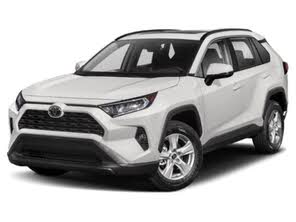
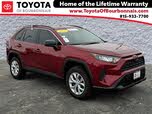
Toyota understood that one of the primary attractions for crossover buyers was styling, so they designed the 2021 RAV4 with a rugged exterior resembling a traditional SUV. The RAV4 featured boxy fender flares, chiseled taillights, and a scowling front end, offering a stark contrast to the more approachable look of previous RAV4 generations. This aggressive styling set it apart from other compact crossovers on the market.
Despite its rugged look, the RAV4 was built on the Toyota New Global Architecture (TNGA) platform, making it mechanically similar to other Toyota models like the Camry. Toyota did offer some options to further enhance the RAV4's gasoline models. For instance, the RAV4 Adventure model included an Ice Edge (white) roof, orange interior accents, and trim for a retro look. The TRD Off-Road model featured matte black 18-inch wheels, standard LED fog lights, dark gray exterior trim, red interior accents, and a front skid plate.
Inside, Toyota added some rugged styling touches to the RAV4, such as large rubberized knobs and door handles, which were both practical and distinctive. Material quality was good on lower trims but didn’t scale up with higher trims, as evidenced by the TRD Off-Road model's SofTex upholstery, which, according to Toyota, was lighter and more durable than leather. However, real leather wasn’t available, even on the highest RAV4 Limited trim.
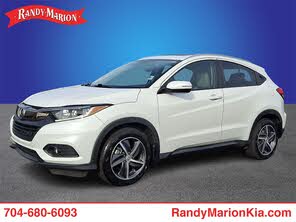
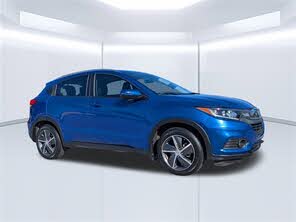
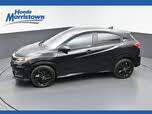
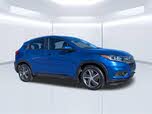
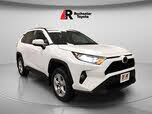
In contrast, the 2021 Honda HR-V had a softer, friendlier appearance compared to Honda's larger SUVs like the CR-V, Passport, and Pilot. The HR-V had distinctive styling elements, such as upper and lower window lines converging near the taillights, creating a triangular point that housed the rear door handles.
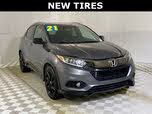
Most HR-V trim levels came with 17-inch alloy wheels, with the EX and EX-L models getting a machined finish, while the Sport models had matte-black 18-inch wheels and blacked-out trim. Fog lights were standard on all but the base LX trim.
The interior of the HR-V was fairly plain but functional. Material quality and fit and finish were commendable, although the HR-V wasn’t to be mistaken for a luxury vehicle. The EX and EX-L models included features like push-button start, automatic climate control, a moonroof, and heated front seats. Leather upholstery was exclusive to the EX-L trim.








The 2021 Toyota RAV4 came with a single engine option: a “Dynamic Force” 2.5-liter four-cylinder engine producing 203 horsepower and 184 pound-feet of torque. This engine was paired exclusively with an eight-speed automatic transmission and offered either front-wheel drive (FWD) or optional all-wheel drive (AWD). For those seeking more power, Toyota offered the 219-hp RAV4 Hybrid and the 302-hp RAV4 Prime plug-in hybrid.
Toyota claimed the Dynamic Force engine achieved 40% thermal efficiency, a level commonly found in racing engines, and its power peaked at 6,600 rpm with a redline of 6,750 rpm. However, the eight-speed automatic transmission often lagged, hesitating and taking its time to shift gears. The steering was responsive but lacked feedback, and the “Sport” driving mode only added weight to the steering without enhancing responsiveness.
The RAV4 was most comfortable on the highway, with impressively low cabin noise levels and a suspension that smoothed out road imperfections. Toyota focused on off-road capability for the RAV4 with Adventure and TRD Off-Road models featuring a torque-vectoring rear axle, 8.6 inches of ground clearance, specific suspension tuning, and Falken Wildpeak A/T Trail all-terrain tires. However, the RAV4 lacked the suspension articulation and approach, departure, and breakover angles needed for serious off-road trails.
Meanwhile, the 2021 Honda HR-V was powered by a 1.8-liter four-cylinder engine that produced 141 horsepower and 127 pound-feet of torque, paired with a continuously variable transmission (CVT). Paddle shifters were available on higher trim levels. The HR-V came standard with FWD, with optional AWD available for all trims.
The HR-V’s powertrain had not changed since previous models, leading to underwhelming performance during highway driving, further hindered by the CVT. Competitors offered more powerful engine options, like the Kia Seltos’ 175-hp 1.6-liter turbo-four and the Subaru Crosstrek’s 182-hp 2.5-liter boxer-four.
Despite its engine, the HR-V’s chassis provided an enjoyable driving experience on twisty roads and decent ride quality. However, its AWD system was only suitable for slippery roads, and it lacked the ground clearance and towing capabilities of traditional SUVs.
The 2021 Toyota RAV4 featured a tall, upright roof, providing ample headroom in both rows and good outward visibility. However, legroom was slightly behind many competitors. The front seats in the RAV4 TRD Off-Road were extremely comfortable, while the rear seats had flat, hard bottom cushions that could make long trips uncomfortable. The standard rear bench seat was 60/40 split-folding but didn't slide fore and aft like some competitors' seats. Cargo space was 37.6 cubic feet, above average but trailing behind the Honda CR-V. The RAV4 had a wide cargo aperture, but the cargo area's lip was higher than the CR-V’s.
Controls, including oversized knobs and steering-wheel controls, were easy to use even with gloves on. The center-console storage bin was large, and there was a smartphone holding space ahead of the shifter. However, this squeezed out console storage space, leaving limited room for cupholders or loose change.
In comparison, the 2021 Honda HR-V boasted impressive cargo space for its size, thanks to the “Magic Seat” 60/40 split-folding rear seat. With the seat folded down, the HR-V offered 58.8 cubic feet of cargo space (57.6 for AWD models). With the seat up, it provided 24.3 cubic feet (23.2 with AWD), surpassing competitors like the Chevrolet Trax, Hyundai Kona, and Subaru Crosstrek. However, the Kia Seltos and the 2022 Toyota Corolla Cross had more cargo capacity.
The HR-V ranked second only to the Subaru Crosstrek in overall passenger space, leading the segment in rear-seat legroom while front-seat legroom and front and rear headroom were average. Honda didn’t offer clever interior storage solutions, but the HR-V’s controls were sensibly designed, with large knobs for climate control and an audio volume knob. The narrow center console featured a large shift lever for simplicity and ease of use. A standard tilt-and-telescopic steering wheel made finding a comfortable driving position easier.
The 2021 Toyota RAV4 came with standard Apple CarPlay and Android Auto connectivity, Amazon Alexa compatibility, and SiriusXM satellite radio with a three-month free trial. Most trim levels had a 7-inch touchscreen, while Limited models had an 8-inch screen, and the RAV4 Prime could be equipped with a 9-inch screen. Up to five USB ports were available, and a JBL premium audio system was an option.
The infotainment system was user-friendly with a well-positioned touchscreen on top of the dashboard and shortcut buttons for key functions. However, it wasn’t very flashy, and the gasoline RAV4 didn’t offer the head-up display (HUD) available on the RAV4 Prime.
The 2021 Honda HR-V’s base LX model included standard Bluetooth, a 5-inch display screen, and a four-speaker audio system. To access real infotainment tech, buyers needed to upgrade to the Sport trim, which offered a 7-inch touchscreen with Apple CarPlay and Android Auto connectivity. The EX and EX-L models added SiriusXM satellite radio with a free trial.
The HR-V’s infotainment system was plain but functional, with previous usage showing it was easy to navigate. Two USB ports were located in a cubbyhole ahead of the shifter. However, the optional 7-inch touchscreen was relatively small, and Apple CarPlay and Android Auto were not standard on all trim levels.
The 2021 Toyota RAV4 earned a “Top Safety Pick” rating from the Insurance Institute for Highway Safety (IIHS), scoring top “Good” marks in all crash tests and the highest “Superior” rating for front-crash prevention tech. However, it missed the "Top Safety Pick+" rating due to mixed headlight scores. The National Highway Traffic Safety Administration (NHTSA) granted the RAV4 a five-star overall rating, with four stars in frontal and rollover crash tests, and five stars in side crash tests.
Standard Toyota Safety Sense 2.0 features included forward-collision warning with pedestrian detection, adaptive cruise control, lane-departure warning with steering assist, automatic high beams, road-sign recognition, and Lane Tracing Assist. Higher trims added blind-spot monitoring, rear cross-traffic alert, reverse automatic emergency braking, park assist, and a 360-degree camera system.
The 2021 Honda HR-V received top “Good” scores in all IIHS crash tests and the highest “Superior” rating for optional front-crash prevention tech. However, its headlights earned “Marginal” and “Poor” ratings, and the LATCH child-seat anchors earned an “Acceptable” rating. The NHTSA gave the HR-V a five-star overall rating, with five stars in side crash testing and four stars in frontal and rollover crash testing.
Honda Sensing safety features were available only on the EX and EX-L trims, including forward-collision warning, lane-departure warning, automatic emergency braking, Road Departure Mitigation, lane-keep assist, automatic high beams, adaptive cruise control, and Honda’s LaneWatch system. The federally mandated rearview camera had dynamic gridlines on higher trims.
CarGurus highlights

According to CarGurus experts, the overall rating for the 2021 Toyota RAV4 is 7.3 out of 10, while the 2021 Honda HR-V scores 6.8 out of 10. Based on these ratings, we recommend the 2021 Toyota RAV4 for its combination of rugged styling, off-road capabilities, and comprehensive safety features. While the Honda HR-V shines in cargo space and driving experience, the RAV4 offers a more well-rounded package overall.
Choose the 2021 Honda HR-V if:
- You’re looking for a friendly, approachable design distinct from traditional SUVs.
- Maximizing cargo space and rear-seat legroom are crucial for your needs.
- An enjoyable driving experience on twisty roads with decent ride quality is important to you.




Choose the 2021 Toyota RAV4 if:
- You want a crossover with rugged styling and a standout look comparable to traditional SUVs.
- You need a vehicle with impressive off-road capabilities, especially with the Adventure and TRD Off-Road trims.
- Advanced safety features and top safety ratings are high on your priority list.



CarGurus highlights
According to CarGurus experts, the overall rating for the 2021 Toyota RAV4 is 7.3 out of 10, while the 2021 Honda HR-V scores 6.8 out of 10. Based on these ratings, we recommend the 2021 Toyota RAV4 for its combination of rugged styling, off-road capabilities, and comprehensive safety features. While the Honda HR-V shines in cargo space and driving experience, the RAV4 offers a more well-rounded package overall.
Choose the 2021 Honda HR-V if:
Shop Now- You’re looking for a friendly, approachable design distinct from traditional SUVs.
- Maximizing cargo space and rear-seat legroom are crucial for your needs.
- An enjoyable driving experience on twisty roads with decent ride quality is important to you.





Choose the 2021 Toyota RAV4 if:
Shop Now- You want a crossover with rugged styling and a standout look comparable to traditional SUVs.
- You need a vehicle with impressive off-road capabilities, especially with the Adventure and TRD Off-Road trims.
- Advanced safety features and top safety ratings are high on your priority list.








By: CarGurus + AI
At CarGurus, our team of experienced automotive writers remain at the heart of our content operation, conducting hands-on car tests and writing insightful guides that are backed by years of industry experience. To complement this, we are harnessing AI to make our content offering more diverse and more helpful to shoppers than ever. To achieve this, our AI systems are based exclusively on CarGurus content, ratings and data, so that what we produce is both unique to CarGurus, and uniquely helpful to car shoppers.