2020 Nissan Rogue vs 2021 Honda HR-V
Overview | |
MSRP$25,490 | MSRP$21,220 |
Listings1138 | Listings473 |
Ratings & Reviews | |
User Reviews | User Reviews |
Expert reviews6.0 out of 10 | Expert reviews6.8 out of 10 |
Pros
Cons
| Pros
Cons
|
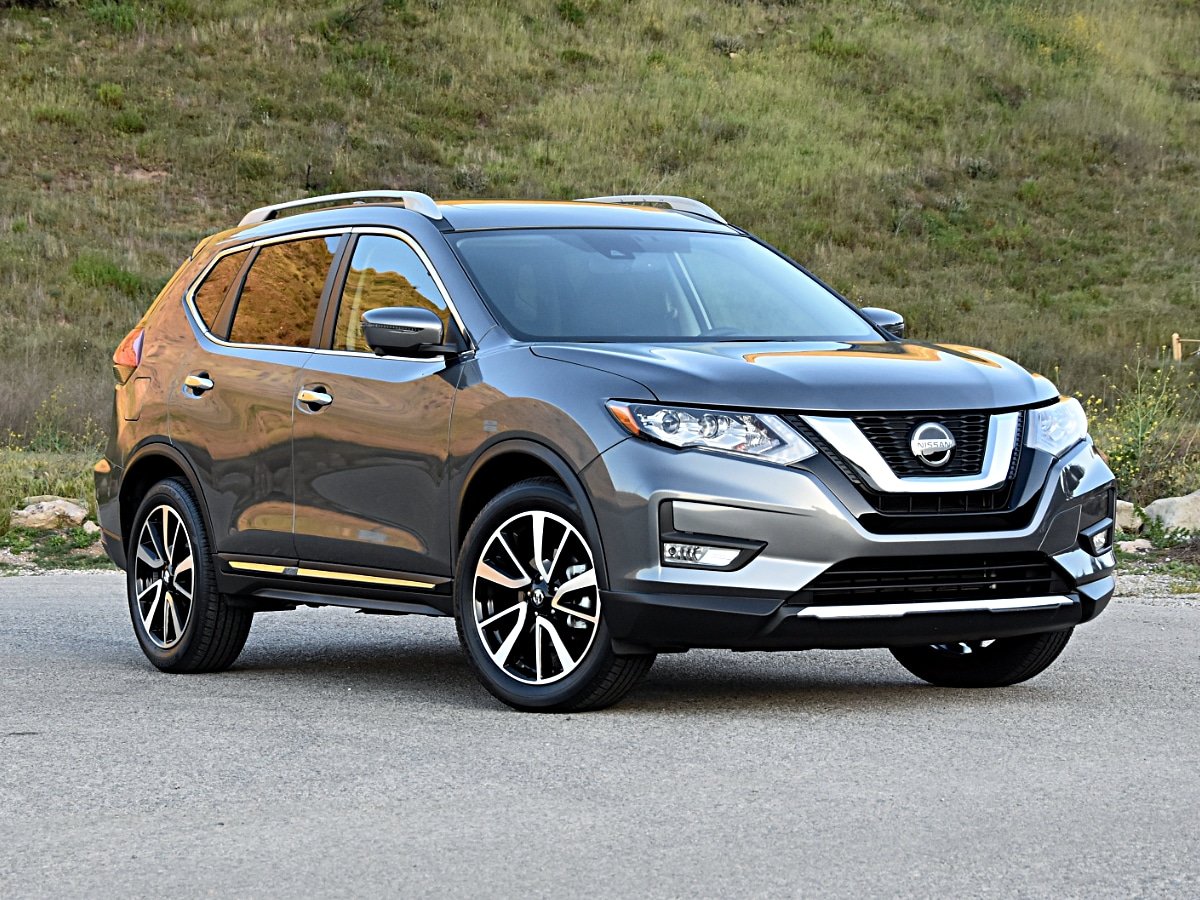
2020 Nissan Rogue Reviews SummaryNissan hasn’t redesigned the Rogue since 2014, but an all-new version of this SUV is coming for the 2021 model year. In the meantime, dealers will be eager to sell remaining stocks of the outgoing 2020 Nissan Rogue, and the deals on these new cars ought to be mighty juicy. Should you bite? Should you wait? Or should you shop for something else? The answers to these questions depend on who you are and what you value in a compact crossover SUV. | |
2021 Honda HR-V Reviews SummaryThe 2021 Honda HR-V is the automaker’s smallest crossover SUV, sitting below the Honda CR-V in size and price. While Honda hasn’t updated the HR-V in some time, it remains worthy of consideration thanks to agile handling and impressive practicality for its size. Because while it’s billed as an SUV, the HR-V shares a platform with the discontinued Honda Fit hatchback. The HR-V is a bit bigger than that pint-sized wonder however, and adds features SUVs buyers want, such as a taller driving position and available all-wheel drive (AWD). Honda launched the HR-V for the 2016 model year, and added more tech features for 2019. While Honda has been pushing these updates, the subcompact crossover category has exploded, adding new entrants from the likes of Hyundai, Kia, and Toyota. The HR-V doesn’t receive any major updates for the 2021 model year, so we’re using our experience with past model years for this overview. The HR-V LX, Sport, EX, and EX-L trim levels carry over for 2021, but the HR-V Touring is no more. The only other changes are new wheel designs for the Sport, EX, and EX-L models, and added privacy glass for the HR-V Sport. | |
No video found | No video found |
Popular Features & Specs | |
Engine2.5L 170 hp I4 | Engine1.8L 141 hp I4 |
Drive TrainFWD | Drive TrainFWD |
Seating Capacity5 | Seating Capacity5 |
Horsepower170 hp @ 6000 rpm | Horsepower141 hp @ 6500 rpm |
MPG City26 | MPG City28 |
MPG Highway33 | MPG Highway34 |
Engine | |
Engine Name2.5L 170 hp I4 | Engine Name1.8L 141 hp I4 |
Torque175 lb-ft @ 4400 rpm | Torque127 lb-ft @ 4300 rpm |
Horsepower170 hp @ 6000 rpm | Horsepower141 hp @ 6500 rpm |
DrivetrainFWD | DrivetrainFWD |
Fuel Economy | |
MPG City26 | MPG City28 |
MPG Highway33 | MPG Highway34 |
Interior | |
Seating Capacity5 | Seating Capacity5 |
Safety | |
Front Crash Overall4 | Front Crash Overall4 |
Side Crash Overall5 | Side Crash Overall5 |
Dimensions & Capacity | |
Cargo Space39.3 cu ft | Cargo Space24.3 cu ft |
Curb Weight3463 lbs | Curb Weight2906 lbs |
Height66.3 in | Height63.2 in |
Length184.5 in | Length170.4 in |
Width72.4 in | Width69.8 in |
Wheelbase106.5 in | Wheelbase102.8 in |
Maximum Payload1127 lbs | Maximum Payload1095 lbs |
Number of doors4 | Number of doors4 |
Overview | ||
MSRP | $25,490 | $21,220 |
Listings | ||
Ratings & Reviews | ||
User reviews | ||
Expert reviews | 6.0 out of 10Read full review | 6.8 out of 10Read full review |
Pros & cons | Pros
Cons
| Pros
Cons
|
Summary | Nissan hasn’t redesigned the Rogue since 2014, but an all-new version of this SUV is coming for the 2021 model year. In the meantime, dealers will be eager to sell remaining stocks of the outgoing 2020 Nissan Rogue, and the deals on these new cars ought to be mighty juicy. Should you bite? Should you wait? Or should you shop for something else? The answers to these questions depend on who you are and what you value in a compact crossover SUV. | The 2021 Honda HR-V is the automaker’s smallest crossover SUV, sitting below the Honda CR-V in size and price. While Honda hasn’t updated the HR-V in some time, it remains worthy of consideration thanks to agile handling and impressive practicality for its size. Because while it’s billed as an SUV, the HR-V shares a platform with the discontinued Honda Fit hatchback. The HR-V is a bit bigger than that pint-sized wonder however, and adds features SUVs buyers want, such as a taller driving position and available all-wheel drive (AWD). Honda launched the HR-V for the 2016 model year, and added more tech features for 2019. While Honda has been pushing these updates, the subcompact crossover category has exploded, adding new entrants from the likes of Hyundai, Kia, and Toyota. The HR-V doesn’t receive any major updates for the 2021 model year, so we’re using our experience with past model years for this overview. The HR-V LX, Sport, EX, and EX-L trim levels carry over for 2021, but the HR-V Touring is no more. The only other changes are new wheel designs for the Sport, EX, and EX-L models, and added privacy glass for the HR-V Sport. |
Video | No video found | No video found |
Popular Features & Specs | ||
Engine | 2.5L 170 hp I4 | 1.8L 141 hp I4 |
Drive Train | FWD | FWD |
Seating Capacity | 5 | 5 |
Horsepower | 170 hp @ 6000 rpm | 141 hp @ 6500 rpm |
MPG City | 26 | 28 |
MPG Highway | 33 | 34 |
Engine | ||
Engine Name | 2.5L 170 hp I4 | 1.8L 141 hp I4 |
Torque | 175 lb-ft @ 4400 rpm | 127 lb-ft @ 4300 rpm |
Horsepower | 170 hp @ 6000 rpm | 141 hp @ 6500 rpm |
Drivetrain | FWD | FWD |
Fuel Economy | ||
MPG City | 26 | 28 |
MPG Highway | 33 | 34 |
Interior | ||
Seating Capacity | 5 | 5 |
Safety | ||
Front Crash Overall | 4 | 4 |
Side Crash Overall | 5 | 5 |
Dimensions & Capacity | ||
Cargo Space | 39.3 cu ft | 24.3 cu ft |
Curb Weight | 3463 lbs | 2906 lbs |
Height | 66.3 in | 63.2 in |
Length | 184.5 in | 170.4 in |
Width | 72.4 in | 69.8 in |
Wheelbase | 106.5 in | 102.8 in |
Maximum Payload | 1127 lbs | 1095 lbs |
Number of doors | 4 | 4 |
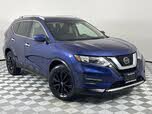
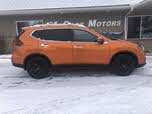
The 2020 Nissan Rogue, available in S, SV, and SL trim levels, offered a straightforward choice with a single engine and transmission combination, and the option of front-wheel drive (FWD) or all-wheel drive (AWD). The test car, an SL trim with front-drive, included the SL Premium Package, carpeted floor and cargo mats, and a first-aid kit, totaling $34,870 with destination charges. Despite its age, the Rogue maintained an attractive appearance, especially with the SL’s 19-inch aluminum wheels, though the V-Motion grille and fender swells were somewhat exaggerated.
Inside, the Rogue’s age was more noticeable. The waterfall control panel and rounded interior forms were outdated compared to modern designs favoring wide, horizontal, angular motifs. The plastic surfaces were unimpressive, but the padded sides of the center console were a thoughtful touch for driver comfort.
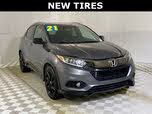
The 2021 Honda HR-V contrasted sharply with Honda’s larger SUVs, featuring a softer, friendlier appearance. Distinctive details included upper and lower window lines converging near the taillights, housing the rear door handles. Most trims had 17-inch alloy wheels, with the EX and EX-L featuring a machined finish, and the Sport models boasting matte-black 18-inch wheels and blacked-out trim. Fog lights were standard on all but the base LX trim.
The HR-V’s interior was plain but functional, with good material quality and fit and finish. EX and EX-L models included push-button start, automatic climate control, a moonroof, and heated front seats, with EX-L models adding leather upholstery. While not luxurious, the HR-V’s interior felt solid and well-constructed.








The 2020 Nissan Rogue featured a 170-horsepower 2.5-liter four-cylinder engine paired with a continuously variable automatic transmission (CVT). Weighing up to 3,671 pounds, the Rogue’s powertrain was adequate but not impressive. The CVT managed the power well, but the Rogue struggled during freeway acceleration, passing, and climbing grades, often responding with noise rather than action. The EPA estimated 29 mpg in combined driving for FWD models, but testing revealed a disappointing 24.9 mpg.
The Rogue’s ride and handling benefited from brake-induced technologies like Intelligent Trace Control and Active Ride Control, which improved cornering and ride smoothness. However, the Rogue SL’s 19-inch wheels and tires didn’t make it fun to drive. The electrically assisted steering was lifeless and heavy, the suspension lacked isolation, and the CVT drone was occasionally bothersome.
The 2021 Honda HR-V’s 1.8-liter four-cylinder engine produced 141 horsepower and 127 pound-feet of torque, paired with a CVT. AWD was available on all trims, with FWD standard. The powertrain remained unchanged from previous models, resulting in underwhelming highway performance and an ineffective CVT. Competitors offered more powerful engine options, such as the Kia Seltos’ 175-hp turbo-four and the Subaru Crosstrek’s 182-hp boxer-four.
Despite the engine’s shortcomings, the HR-V’s chassis provided a rewarding driving experience on twisty roads, living up to Honda’s reputation for fun cars. The ride quality was decent, but the HR-V’s AWD system was only suitable for slippery roads, and it lacked ground clearance and towing capability.
The 2020 Nissan Rogue’s interior comfort was challenging for taller drivers. The seats, though featuring Nissan’s Zero Gravity design and Quick Comfort heating, were somewhat undersized. Adjusting the driver’s seat for a tall driving position while accommodating 33-inch-inseam legs was difficult, making the Rogue less enjoyable to drive. Rear passengers, however, enjoyed high seat cushions, excellent thigh support, and a proper backrest angle, with a panoramic sunroof enhancing the view. Rear air conditioning vents and USB charging ports added to the comfort.
In-cabin storage was limited, with only the glove compartment offering significant space. However, the cargo area was spacious, with 39 cubic feet behind the back seat, underfloor storage compartments, and a standard Divide-n-Hide cargo management system.
The 2021 Honda HR-V excelled in cargo space, thanks to the “Magic Seat” 60/40 split-folding rear bench seat. Folding the seat down provided 58.8 cubic feet of cargo space (57.6 for AWD models), while leaving it up retained 24.3 cubic feet (23.2 for AWD). These figures surpassed many competitors, though the Kia Seltos and upcoming Toyota Corolla Cross offered more cargo space. The HR-V also led the segment in rear-seat legroom, though front-seat legroom and headroom were average.
Interior storage solutions were basic but functional, with sensibly-designed controls, large climate control knobs, and an audio volume knob. The narrow center console featured a large shift lever, which, while not space-efficient, was simple and easy to use. A standard tilt-and-telescopic steering wheel made finding the perfect driving position easier.
The 2020 Nissan Rogue’s infotainment system included Bluetooth connectivity, Apple CarPlay, Android Auto, and a hands-free text messaging assistant. Upgrades, depending on trim, included SiriusXM satellite radio, navigation with door-to-door assistance, a Bose premium sound system, and NissanConnect Services. Subscription-based NissanConnect Services offered features like Amazon Alexa, Google Assistant, remote engine start, and safe teen driver settings, with free trial periods ranging from six months to three years.
Despite the sophisticated features, the NissanConnect interface was outdated, with a 7-inch touchscreen that looked old-fashioned and responded slowly to inputs. The voice-recognition technology was also subpar, diminishing the overall tech experience.
The 2021 Honda HR-V’s base LX trim had standard Bluetooth, a 5-inch display screen, and a four-speaker audio system. Upgrading to the Sport trim added a 7-inch touchscreen with Apple CarPlay and Android Auto connectivity, while EX and EX-L models included SiriusXM satellite radio. The infotainment system was plain but functional, with two USB ports located conveniently ahead of the shifter.
However, the 7-inch touchscreen was relatively small, and many competitors offered Apple CarPlay and Android Auto as standard features across all trims. Honda’s decision to reserve these features for higher trims was a drawback.
The 2020 Nissan Rogue came with standard Safety Shield 360, which included forward-collision warning, automatic emergency braking, blind-spot monitoring, rear cross-traffic alert, lane departure warning, and automatic high-beam headlights. Additional features included Rear Door Alert and Tire Fill Alert. Optional safety features included a surround-view camera and ProPilot Assist adaptive cruise control with lane-centering capability. However, ProPilot Assist felt dated compared to newer systems from competitors.
The Rogue’s crash-test ratings reflected its age. The NHTSA gave it a 4-star overall rating, with a dismal 3-star rating for driver protection in frontal impacts. The IIHS noted issues with the Rogue’s headlights and front-passenger protection, preventing it from earning a Top Safety Pick designation.
The 2021 Honda HR-V received top “Good” scores in all IIHS crash tests and a “Superior” rating for its optional front-crash prevention tech. However, it received “Marginal” and “Poor” headlight ratings and an “Acceptable” rating for LATCH child-seat anchor ease of use. The NHTSA awarded the HR-V a five-star overall safety rating, with five stars in side crash testing and four stars in frontal and rollover crash testing.
Honda Sensing safety features were available only on the EX and EX-L trims, including forward-collision warning, lane-departure warning, automatic emergency braking, Road Departure Mitigation, lane-keep assist, automatic high beams, adaptive cruise control, and Honda’s LaneWatch. Higher trims also upgraded the rearview camera with dynamic gridlines.
CarGurus highlights

According to CarGurus experts, the overall rating for the 2020 Nissan Rogue is 6.0 out of 10, while the 2021 Honda HR-V scores 6.8 out of 10. Based on these ratings, the 2021 Honda HR-V is the better choice, offering a more enjoyable driving experience, better safety ratings, and superior cargo space.
Choose the 2020 Nissan Rogue if:
- You prioritize a spacious cargo area with versatile storage solutions.
- You value advanced driver-assistance systems as standard features.
- You prefer a vehicle with a more traditional SUV appearance.





Choose the 2021 Honda HR-V if:
- You need a subcompact crossover with excellent rear-seat legroom and cargo space.
- You enjoy a fun-to-drive chassis with decent ride quality.
- You want a vehicle with a solid safety rating and available advanced safety features.





CarGurus highlights
According to CarGurus experts, the overall rating for the 2020 Nissan Rogue is 6.0 out of 10, while the 2021 Honda HR-V scores 6.8 out of 10. Based on these ratings, the 2021 Honda HR-V is the better choice, offering a more enjoyable driving experience, better safety ratings, and superior cargo space.
Choose the 2020 Nissan Rogue if:
Shop Now- You prioritize a spacious cargo area with versatile storage solutions.
- You value advanced driver-assistance systems as standard features.
- You prefer a vehicle with a more traditional SUV appearance.






Choose the 2021 Honda HR-V if:
Shop Now- You need a subcompact crossover with excellent rear-seat legroom and cargo space.
- You enjoy a fun-to-drive chassis with decent ride quality.
- You want a vehicle with a solid safety rating and available advanced safety features.








By: CarGurus + AI
At CarGurus, our team of experienced automotive writers remain at the heart of our content operation, conducting hands-on car tests and writing insightful guides that are backed by years of industry experience. To complement this, we are harnessing AI to make our content offering more diverse and more helpful to shoppers than ever. To achieve this, our AI systems are based exclusively on CarGurus content, ratings and data, so that what we produce is both unique to CarGurus, and uniquely helpful to car shoppers.