2021 Nissan Rogue vs 2021 Ford Edge

Overview | |
MSRP$26,050 | MSRP$32,750 |
Listings2347 | Listings647 |
Ratings & Reviews | |
User Reviews | User Reviews |
Expert reviews9.0 out of 10 | Expert reviews7.2 out of 10 |
Pros
Cons
| Pros
Cons
|
2021 Nissan Rogue Reviews SummaryTo characterize the all-new 2021 Nissan Rogue as vital to the automaker's success is an understatement. Not only is the compact crossover SUV the best-selling Nissan in America, but it's also one of the best-selling vehicles in America. Strip out pickup trucks, and the Rogue sits near the top of the U.S. sales chart with its primary competitors, the Honda CR-V and Toyota RAV4. Imagine the pressure on Nissan designers, engineers, and product planners as they prepared the current Rogue's replacement! The good news is that the new Rogue is a better SUV in every way but one. | |
2021 Ford Edge Reviews SummaryThe Ford Edge proves that trends run in cycles. Launched in the early 2000s, the original Edge was one of the first midsize crossover SUVs, sporting car-like styling that sharply contrasted the more traditional-looking Ford Explorer of the time. However, new-car buyers realized they liked the roominess of three-row SUVs like the Explorer more, and interest in the two-row Edge waned. Now, however, car shoppers are once again eyeing two-row midsize SUVs, this time as an alternative to sedans. The Edge is now part of a growing market segment that includes the Chevrolet Blazer, Honda Passport, Hyundai Santa Fe, Jeep Grand Cherokee, Nissan Murano, and Volkswagen Atlas Cross Sport. Yet while market dynamics have changed, the Edge hasn’t. The current second-generation Edge dates back to the 2015 model year, and even a substantial update undertaken for the 2019 model year is quickly receding in the rearview mirror. The Edge now sits between the much newer Explorer and Ford Escape in the automaker's SUV-heavy lineup. Aside from some new tech features, the 2021 Ford Edge doesn’t get many significant changes, so we can evaluate it based on our experience with previous model years. As with the 2020 model year, trim levels include SE, SEL, ST-Line, Titanium, and ST. | |
No video found | |
Popular Features & Specs | |
Engine2.5L 181 hp I4 | Engine2.0L 250 hp I4 |
Drive TrainFWD | Drive TrainFWD |
Seating Capacity5 | Seating Capacity5 |
Horsepower181 hp @ 6000 rpm | Horsepower250 hp @ 5500 rpm |
MPG City27 | MPG City21 |
MPG Highway35 | MPG Highway29 |
Engine | |
Engine Name2.5L 181 hp I4 | Engine Name2.0L 250 hp I4 |
Torque181 lb-ft @ 3600 rpm | Torque280 lb-ft @ 3000 rpm |
Horsepower181 hp @ 6000 rpm | Horsepower250 hp @ 5500 rpm |
DrivetrainFWD | DrivetrainFWD |
Fuel Economy | |
MPG City27 | MPG City21 |
MPG Highway35 | MPG Highway29 |
Interior | |
Seating Capacity5 | Seating Capacity5 |
Safety | |
Front Crash Overall3 | Front Crash Overall5 |
Side Crash Overall5 | Side Crash Overall5 |
Dimensions & Capacity | |
Cargo Space31.6 cu ft | Cargo Space39.2 cu ft |
Curb Weight3371 lbs | Curb Weight3960 lbs |
Height66.5 in | Height68.3 in |
Length183.0 in | Length188.8 in |
Width72.4 in | Width85.8 in |
Wheelbase106.5 in | Wheelbase112.2 in |
Maximum Payload1115 lbs | Maximum Payload1310 lbs |
Number of doors4 | Number of doors4 |
Maximum Towing Capacity | Maximum Towing Capacity1500 lbs |
Overview | ||
MSRP | $26,050 | $32,750 |
Listings | ||
Ratings & Reviews | ||
User reviews | ||
Expert reviews | 9.0 out of 10Read full review | 7.2 out of 10Read full review |
Pros & cons | Pros
Cons
| Pros
Cons
|
Summary | To characterize the all-new 2021 Nissan Rogue as vital to the automaker's success is an understatement. Not only is the compact crossover SUV the best-selling Nissan in America, but it's also one of the best-selling vehicles in America. Strip out pickup trucks, and the Rogue sits near the top of the U.S. sales chart with its primary competitors, the Honda CR-V and Toyota RAV4. Imagine the pressure on Nissan designers, engineers, and product planners as they prepared the current Rogue's replacement! The good news is that the new Rogue is a better SUV in every way but one. | The Ford Edge proves that trends run in cycles. Launched in the early 2000s, the original Edge was one of the first midsize crossover SUVs, sporting car-like styling that sharply contrasted the more traditional-looking Ford Explorer of the time. However, new-car buyers realized they liked the roominess of three-row SUVs like the Explorer more, and interest in the two-row Edge waned. Now, however, car shoppers are once again eyeing two-row midsize SUVs, this time as an alternative to sedans. The Edge is now part of a growing market segment that includes the Chevrolet Blazer, Honda Passport, Hyundai Santa Fe, Jeep Grand Cherokee, Nissan Murano, and Volkswagen Atlas Cross Sport. Yet while market dynamics have changed, the Edge hasn’t. The current second-generation Edge dates back to the 2015 model year, and even a substantial update undertaken for the 2019 model year is quickly receding in the rearview mirror. The Edge now sits between the much newer Explorer and Ford Escape in the automaker's SUV-heavy lineup. Aside from some new tech features, the 2021 Ford Edge doesn’t get many significant changes, so we can evaluate it based on our experience with previous model years. As with the 2020 model year, trim levels include SE, SEL, ST-Line, Titanium, and ST. |
Video | No video found | |
Popular Features & Specs | ||
Engine | 2.5L 181 hp I4 | 2.0L 250 hp I4 |
Drive Train | FWD | FWD |
Seating Capacity | 5 | 5 |
Horsepower | 181 hp @ 6000 rpm | 250 hp @ 5500 rpm |
MPG City | 27 | 21 |
MPG Highway | 35 | 29 |
Engine | ||
Engine Name | 2.5L 181 hp I4 | 2.0L 250 hp I4 |
Torque | 181 lb-ft @ 3600 rpm | 280 lb-ft @ 3000 rpm |
Horsepower | 181 hp @ 6000 rpm | 250 hp @ 5500 rpm |
Drivetrain | FWD | FWD |
Fuel Economy | ||
MPG City | 27 | 21 |
MPG Highway | 35 | 29 |
Interior | ||
Seating Capacity | 5 | 5 |
Safety | ||
Front Crash Overall | 3 | 5 |
Side Crash Overall | 5 | 5 |
Dimensions & Capacity | ||
Cargo Space | 31.6 cu ft | 39.2 cu ft |
Curb Weight | 3371 lbs | 3960 lbs |
Height | 66.5 in | 68.3 in |
Length | 183.0 in | 188.8 in |
Width | 72.4 in | 85.8 in |
Wheelbase | 106.5 in | 112.2 in |
Maximum Payload | 1115 lbs | 1310 lbs |
Number of doors | 4 | 4 |
Maximum Towing Capacity | 1500 lbs | |
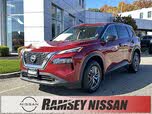
In 2021, the Nissan Rogue underwent a significant transformation featuring handsome new styling and a more technical appearance, making it resemble an SUV more than a car. The vehicle's bold, rugged look was accentuated by dark gray plastic cladding around its lower perimeter, with striking simulated skid plates and lower door protection. The SUV’s back bumper appeared particularly audacious to some. Clean LED lighting elements, a prominent V-Motion grille, and well-proportioned design added to the modern aesthetic. All trims came with aluminum wheels up to 19 inches in diameter, and optional two-tone paint with a black roof treatment enhanced its custom look appeal.
The 2021 Rogue came in four versions: the entry-level Rogue S ($25,650), the popular Rogue SV ($27,340), the luxurious Rogue SL ($32,000), and the upscale Rogue Platinum ($35,430), offering semi-aniline quilted leather and other high-end amenities. The Rogue SL test vehicle added the Premium Package, extra-cost paint, floor mats, and a cargo area protection package, bringing the total to $35,195, including destination charges.
The Rogue’s interior featured an Almond color leather interior and a standard panoramic glass sunroof, creating a light and bright space. Soft-touch surfaces, appealing simulated wood trim, and fabric-wrapped windshield pillars elevated the cabin's quality. Controls were logically arranged, and the Platinum trim offered contrast stitching and ambient lighting for a luxurious feel. Despite the nostalgic appearance of the climate control panel numbers resembling an old-school digital clock from the '80s, it included modern tech like wireless Apple CarPlay.
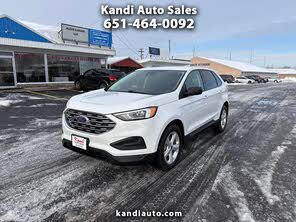
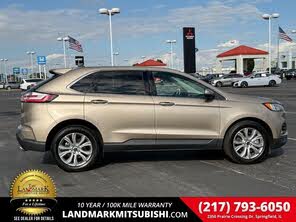
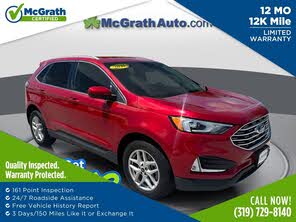
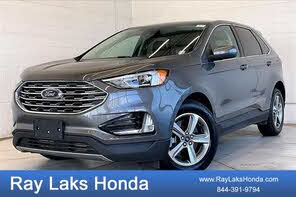
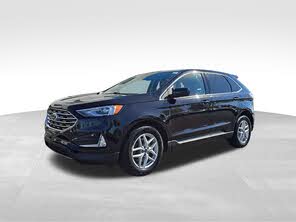
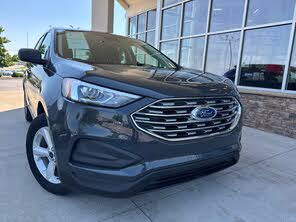
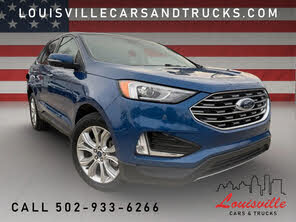
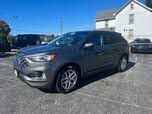
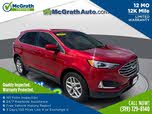
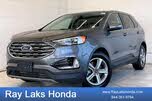
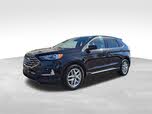
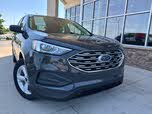
In contrast, the 2021 Ford Edge retained much of its aesthetic since its 2019 refresh, aligning its exterior with contemporary designs. The refresh worked well, offering a cleaner look than competitors like the Chevy Blazer and Hyundai Santa Fe. The Edge Titanium models showcased more chrome, while the sporty Edge ST came with a blacked-out grille, 20-inch wheels, and a body kit. Additionally, the ST-Line had the ST's exterior styling minus performance upgrades and cost.
The Edge's interior showed signs of aging with a design that seemed less modern, despite attempts to accommodate new features like a larger touchscreen. The Titanium trim provided leather upholstery, while the ST offered sporty seats and a leather-wrapped steering wheel with contrast stitching.


The 2021 Nissan Rogue, while stylish, had a noticeable shortfall in power. Weighing nearly 3,500 pounds, its sole engine was a 2.5-liter four-cylinder producing 181 horsepower and 181 pound-feet of torque. This power was adequate for daily driving, with a continuously variable transmission (CVT) that performed decently, mimicking a traditional automatic through programmed ratios and even offering paddle shifters.
Designed for adventuring, the Rogue’s AWD feature, 8.2 inches of ground clearance, and new driving modes like Snow and Off-Road made it suitable for light off-road use, though the naturally-aspirated engine felt underpowered in such scenarios. Nissan hinted at the future possibility of a more powerful turbocharged engine, similar to the one in the Altima and Infiniti QX50. Fuel economy wasn’t the Rogue’s strong suit either, with the tested model getting 27.5 mpg, slightly short of its EPA rating of 29 mpg.
The Rogue rode on a new, sturdy architecture with strut front and multi-link rear suspension, providing a smooth and predictable driving experience. Its advanced steering system and several control systems enhanced ride quality. Nevertheless, the 2021 Rogue begged for a more powerful engine to complement its refined dynamics.
On the other hand, the 2021 Ford Edge had more robust engine options. Most models featured a 2.0-liter turbocharged EcoBoost four-cylinder engine generating 250 horsepower and 275 pound-feet of torque, paired with an eight-speed automatic transmission and optional AWD. This engine provided a decent blend of power and efficiency, though it occasionally felt sluggish.
The performance-oriented Edge ST, with its twin-turbo 2.7-liter V6 producing 335 hp and 380 lb-ft of torque, truly distinguished itself. Equipped with standard AWD, an eight-speed automatic, and a specialized suspension, the ST impressed with its dynamic capabilities and a decent towing capacity of up to 4,525 pounds. The base and AWD four-cylinder models offered respectable towing capacities of around 4,000 pounds, though they fell short of competitors like the Honda Passport and VW Atlas Cross Sport, which towed up to 5,000 pounds.
The 2021 Nissan Rogue excelled in interior comfort with its innovative Zero Gravity seats designed to reduce fatigue and muscle strain, significantly enhancing driving comfort. The seats varied in material from cloth in the base S trim to premium leather in the Platinum trim, with power adjustment, heating options, and triple-zone climate control in higher trims. Despite lacking ventilated seats, the Rogue’s climate control system, rear air vents, and sunshades ensured a comfortable cabin experience.
Offering improved rear-seat headroom and legroom, the Rogue provided easier access with nearly 90-degree-opening rear doors and a rear seat configuration accommodating three child safety seats. Enhanced sound insulation and thoughtful storage solutions like the electronic shifter’s storage tray and large door-panel pockets added to the convenience. The hands-free power liftgate, available in higher trims, revealed a cargo space of 31.6 to 36.5 cubic feet (depending on the trim level), expandable to 74.1 cubic feet with the rear seats folded.
Similarly, the 2021 Ford Edge retained its competitiveness in interior space despite its age. Boasting the most rear-seat headroom in its class and second-best legroom, it ensured comfort for tall passengers. The Edge’s cargo space was substantial, offering 39.2 cubic feet with rear seats up and 73.4 cubic feet when folded. Higher trims included a foot-activated power liftgate, adding convenience.
Although the Edge featured Ford’s practical rotary shift knob designed to save console space, the narrow console and difficult-to-reach storage nook limited its usability. Nonetheless, the Edge’s practical design generally served its purpose for family use.
The 2021 Nissan Rogue featured a competitive infotainment system. Starting from the base S trim, it included an 8-inch touchscreen, Bluetooth, SiriusXM satellite radio, Apple CarPlay, and Android Auto, plus six months of Nissan Concierge Personal Assistant. The SV and SL trims added features like NissanConnect Services, a WiFi hotspot, Amazon Alexa, and Google Assistant integration. Higher trims brought a larger 9-inch touchscreen, door-to-door navigation, wireless Apple CarPlay, and a Bose premium audio system.
The Platinum trim topped it off with wireless smartphone charging, a 12.3-inch digital instrument cluster, and a 10.8-inch head-up display.
For 2021, the Ford Edge updated its tech with the latest Sync 4 infotainment system featuring a 12-inch touchscreen and standard wireless Apple CarPlay/Android Auto. Standard amenities included Bluetooth, SiriusXM with 360L satellite radio, and a built-in WiFi hotspot. The Edge ST, with its Bang & Olufsen 12-speaker audio system, offered superior sound quality.
The addition of four USB ports, including a new USB-C port in the rear, complemented the tech suite. Sync 4’s user-friendly design and straightforward menus made the system accessible and easy to use.
Safety was a cornerstone for the 2021 Nissan Rogue. Nissan equipped it with a suite of advanced driving assistance systems (ADAS), collectively known as Nissan Safety Shield 360. It included features common in modern vehicles, such as automatic emergency braking with pedestrian detection and lane-departure warning, with the added benefit of a blind-spot warning system. This approach was particularly effective, providing a significant advantage over competitors.
The Rogue also featured ten airbags, a driver monitoring system, and a rear-seat reminder. The SV trim and above came with ProPilot Assist, incorporating adaptive cruise control and lane-centering. Higher trims offered an upgraded version with Navi-link technology that adjusted speed based on navigation data. Although crash-test results were pending at the time, Nissan’s focus on safety engineering positioned the Rogue favorably.
The 2021 Ford Edge earned an IIHS “Top Safety Pick” with top scores in most crash tests, though it received “Acceptable” ratings for LATCH ease of use and headlight performance. The NHTSA awarded it a five-star overall safety rating, with four stars in rollover crash tests.
Standard safety features under Ford Co-Pilot360 included automatic high beams, blind-spot monitoring, lane-keep assist, forward-collision warning, automatic emergency braking, and rear parking sensors. Adaptive cruise control with stop-and-go and evasive steering assist was standard on higher trims, enhancing the Edge’s safety credentials.
CarGurus highlights
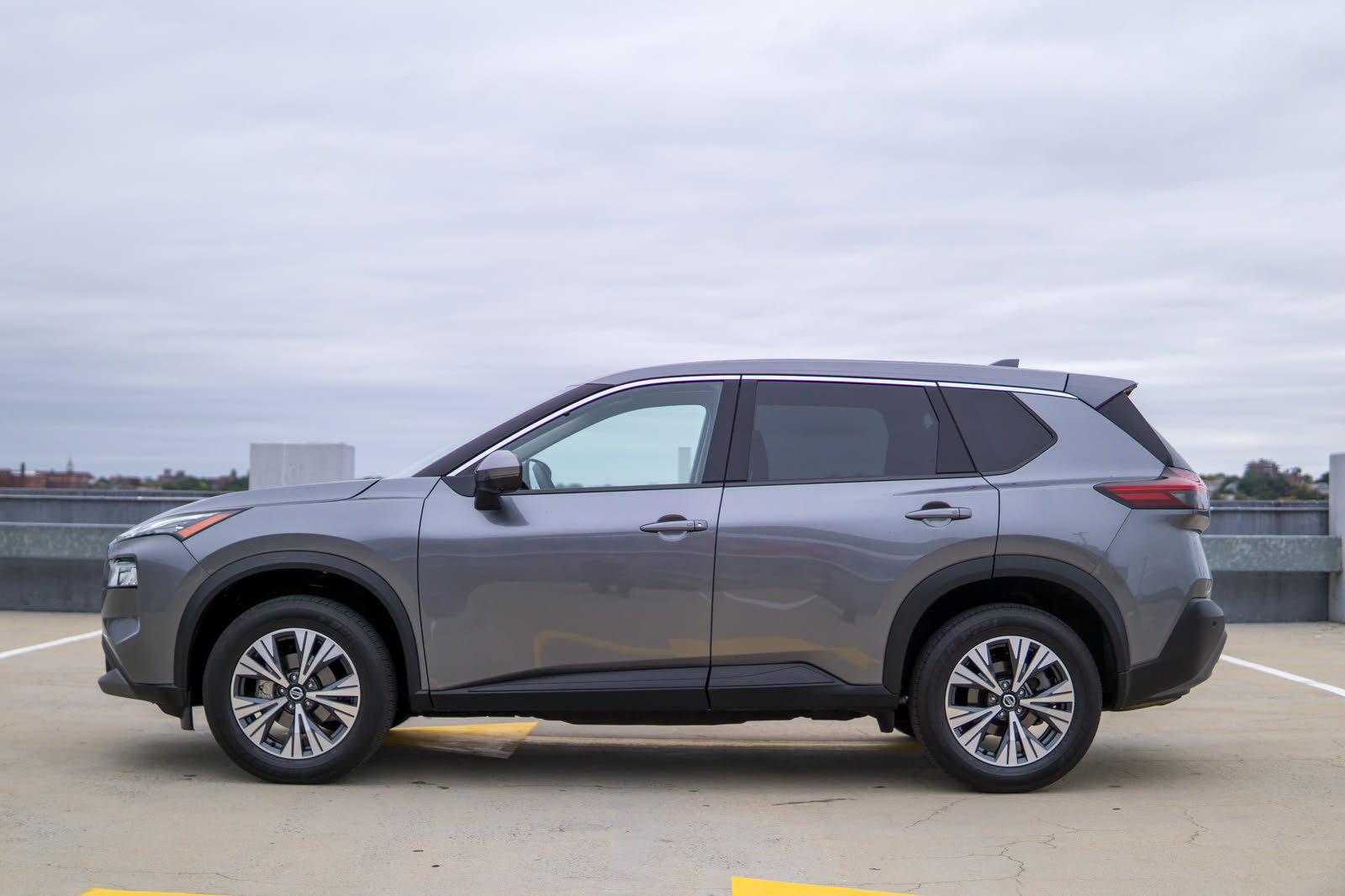
According to CarGurus experts, the overall rating for 2021 Nissan Rogue is 9.0 out of 10, while the 2021 Ford Edge scores 7.2 out of 10. The 2021 Nissan Rogue emerges as the clear winner in this comparison. Its modern styling, comfortable and well-appointed interior, comprehensive safety suite, and advanced technology make it a strong choice for consumers. While the Ford Edge offers robust performance options and competitive cargo space, it falls short in areas like interior design freshness and overall technology integration. For a well-rounded and highly rated SUV, the 2021 Nissan Rogue takes the win.
Choose the 2021 Nissan Rogue if:
- You value a stylish, modern SUV with a high-quality interior and advanced comfort features.
- You prioritize comprehensive safety features including a highly effective blind-spot warning system.
- You seek a technologically rich experience with options like wireless Apple CarPlay and a digital instrument cluster.




Choose the 2021 Ford Edge if:
- You need a midsize SUV with robust engine options, including a high-performance ST variant.
- You require ample cargo space and rear-seat comfort, making it ideal for families.
- You appreciate up-to-date infotainment technology like Sync 4 with a large touchscreen and wireless connectivity options.


CarGurus highlights
According to CarGurus experts, the overall rating for 2021 Nissan Rogue is 9.0 out of 10, while the 2021 Ford Edge scores 7.2 out of 10. The 2021 Nissan Rogue emerges as the clear winner in this comparison. Its modern styling, comfortable and well-appointed interior, comprehensive safety suite, and advanced technology make it a strong choice for consumers. While the Ford Edge offers robust performance options and competitive cargo space, it falls short in areas like interior design freshness and overall technology integration. For a well-rounded and highly rated SUV, the 2021 Nissan Rogue takes the win.
Choose the 2021 Nissan Rogue if:
Shop Now- You value a stylish, modern SUV with a high-quality interior and advanced comfort features.
- You prioritize comprehensive safety features including a highly effective blind-spot warning system.
- You seek a technologically rich experience with options like wireless Apple CarPlay and a digital instrument cluster.




Choose the 2021 Ford Edge if:
Shop Now- You need a midsize SUV with robust engine options, including a high-performance ST variant.
- You require ample cargo space and rear-seat comfort, making it ideal for families.
- You appreciate up-to-date infotainment technology like Sync 4 with a large touchscreen and wireless connectivity options.





By: CarGurus + AI
At CarGurus, our team of experienced automotive writers remain at the heart of our content operation, conducting hands-on car tests and writing insightful guides that are backed by years of industry experience. To complement this, we are harnessing AI to make our content offering more diverse and more helpful to shoppers than ever. To achieve this, our AI systems are based exclusively on CarGurus content, ratings and data, so that what we produce is both unique to CarGurus, and uniquely helpful to car shoppers.