2021 Toyota Sienna vs 2020 Ford Edge

Overview | |
MSRP$31,100 | MSRP$34,460 |
Listings1104 | Listings632 |
Ratings & Reviews | |
User Reviews | User Reviews |
Expert reviews8.0 out of 10 | Expert reviews8.3 out of 10 |
Pros
Cons
| Pros
Cons
|
2020 Ford Edge Reviews SummaryThe Ford Edge isn’t exactly memorable, which isn’t a bad thing. It isn’t a good thing either. Cars can be remembered for attractive design, fun driving dynamics, or being a solid value. They can also be remembered in a negative light for a polarizing design, poor build quality, or being unsafe to the point of scandal. But the 2020 Ford Edge is just... there. It is a midsize two-row SUV that doesn’t offend, but also doesn’t “wow.” But just as critically, the Edge is getting long in the tooth. In the SUV segment, constant iteration is necessary for survival, and the Edge is in need of a redesign. But in lieu of new blood, Ford has done well to keep the Edge fitted with the latest infotainment and safety technology. It also offers a performance variant, called the Edge ST. This is something that you won’t find in the Edge’s competitors, the Nissan Murano and Honda Passport. But is it enough to keep the Edge relevant against its more contemporary rivals? Read on to find out. | |
2021 Toyota Sienna Reviews SummaryToyota’s minivan got a major makeover for 2021, now entering its fourth generation of production since debuting as a 1997 model. For the first time, the Sienna gets a hybrid gasoline-electric powertrain, and not only that—it’s standard equipment. The Sienna Hybrid is built on the Toyota New Global Architecture (TNGA-K) platform, shared with the Highlander and other current Toyota models. | |
No video found | |
Popular Features & Specs | |
Engine2.0L 250 hp I4 | Engine2.5L 245 hp I4 Hybrid |
Drive TrainFWD | Drive TrainFWD |
Seating Capacity5 | Seating Capacity8 |
Horsepower250 hp @ 5500 rpm | Horsepower |
EV Battery Capacity | EV Battery Capacity1.9 kWh |
MPG City21 | MPG City36 |
MPG Highway29 | MPG Highway36 |
Engine | |
Engine Name2.0L 250 hp I4 | Engine Name2.5L 245 hp I4 Hybrid |
Torque280 lb-ft @ 3000 rpm | Torque |
Horsepower250 hp @ 5500 rpm | Horsepower |
DrivetrainFWD | DrivetrainFWD |
Fuel Economy | |
EV Battery Capacity | EV Battery Capacity1.9 kWh |
MPG City21 | MPG City36 |
MPG Highway29 | MPG Highway36 |
Interior | |
Seating Capacity5 | Seating Capacity8 |
Safety | |
Front Crash Overall5 | Front Crash Overall4 |
Side Crash Overall5 | Side Crash Overall5 |
Dimensions & Capacity | |
Cargo Space39.2 cu ft | Cargo Space33.5 cu ft |
Curb Weight4027 lbs | Curb Weight4610 lbs |
Height68.3 in | Height68.5 in |
Length188.8 in | Length203.7 in |
Width85.8 in | Width78.5 in |
Wheelbase112.2 in | Wheelbase120.5 in |
Maximum Payload1243 lbs | Maximum Payload1560 lbs |
Number of doors4 | Number of doors4 |
Maximum Towing Capacity1500 lbs | Maximum Towing Capacity3500 lbs |
Overview | ||
MSRP | $31,100 | $34,460 |
Listings | ||
Ratings & Reviews | ||
User reviews | ||
Expert reviews | 8.0 out of 10Read full review | 8.3 out of 10Read full review |
Pros & cons | Pros
Cons
| Pros
Cons
|
Summary | The Ford Edge isn’t exactly memorable, which isn’t a bad thing. It isn’t a good thing either. Cars can be remembered for attractive design, fun driving dynamics, or being a solid value. They can also be remembered in a negative light for a polarizing design, poor build quality, or being unsafe to the point of scandal. But the 2020 Ford Edge is just... there. It is a midsize two-row SUV that doesn’t offend, but also doesn’t “wow.” But just as critically, the Edge is getting long in the tooth. In the SUV segment, constant iteration is necessary for survival, and the Edge is in need of a redesign. But in lieu of new blood, Ford has done well to keep the Edge fitted with the latest infotainment and safety technology. It also offers a performance variant, called the Edge ST. This is something that you won’t find in the Edge’s competitors, the Nissan Murano and Honda Passport. But is it enough to keep the Edge relevant against its more contemporary rivals? Read on to find out. | Toyota’s minivan got a major makeover for 2021, now entering its fourth generation of production since debuting as a 1997 model. For the first time, the Sienna gets a hybrid gasoline-electric powertrain, and not only that—it’s standard equipment. The Sienna Hybrid is built on the Toyota New Global Architecture (TNGA-K) platform, shared with the Highlander and other current Toyota models. |
Video | No video found | |
Popular Features & Specs | ||
Engine | 2.0L 250 hp I4 | 2.5L 245 hp I4 Hybrid |
Drive Train | FWD | FWD |
Seating Capacity | 5 | 8 |
Horsepower | 250 hp @ 5500 rpm | |
EV Battery Capacity | 1.9 kWh | |
MPG City | 21 | 36 |
MPG Highway | 29 | 36 |
Engine | ||
Engine Name | 2.0L 250 hp I4 | 2.5L 245 hp I4 Hybrid |
Torque | 280 lb-ft @ 3000 rpm | |
Horsepower | 250 hp @ 5500 rpm | |
Drivetrain | FWD | FWD |
Fuel Economy | ||
EV Battery Capacity | 1.9 kWh | |
MPG City | 21 | 36 |
MPG Highway | 29 | 36 |
Interior | ||
Seating Capacity | 5 | 8 |
Safety | ||
Front Crash Overall | 5 | 4 |
Side Crash Overall | 5 | 5 |
Dimensions & Capacity | ||
Cargo Space | 39.2 cu ft | 33.5 cu ft |
Curb Weight | 4027 lbs | 4610 lbs |
Height | 68.3 in | 68.5 in |
Length | 188.8 in | 203.7 in |
Width | 85.8 in | 78.5 in |
Wheelbase | 112.2 in | 120.5 in |
Maximum Payload | 1243 lbs | 1560 lbs |
Number of doors | 4 | 4 |
Maximum Towing Capacity | 1500 lbs | 3500 lbs |
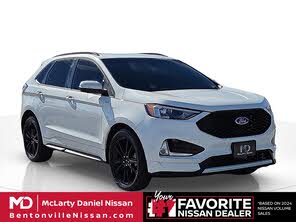
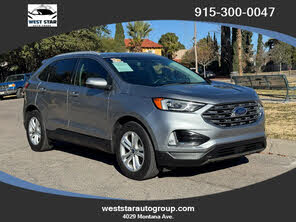
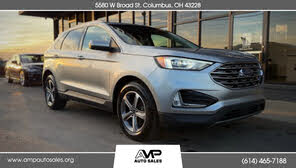
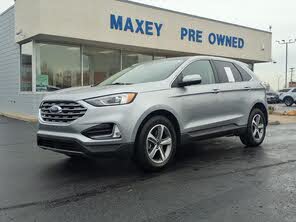
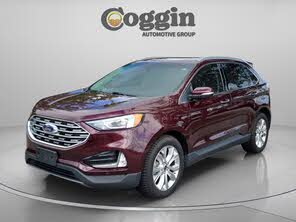
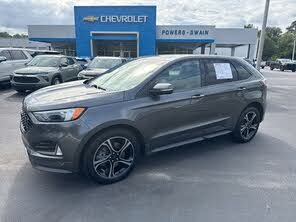
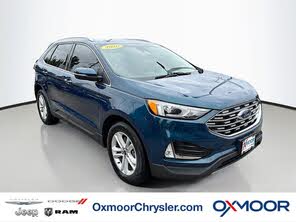
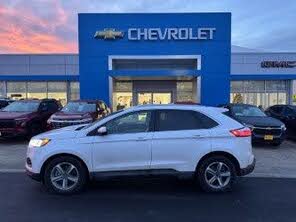
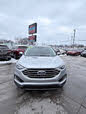
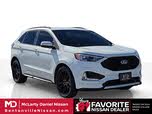
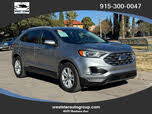
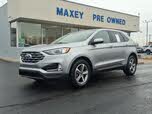
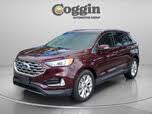
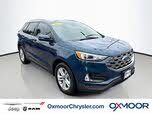
The 2020 Ford Edge, introduced in 2006, was based on the Ford Fusion sedan platform, offering a car-like ride and ample cabin space. The second generation, launched in 2015, received a styling update in 2019, which carried over to 2020. This update gave the Edge a crossover version of the Fusion's look, with angular headlights and a large trapezoidal grille. Inside, the layout remained largely unchanged since 2015, with some updates in 2019. The center console featured small, awkwardly arranged climate and radio controls, and a contemporary rotary shifter. The cabin quality was decent, with soft-touch materials and solid fit-and-finish, but the heavy use of hard plastics detracted from the overall feel.
The Edge was available in SE, SEL, Titanium, and ST trims. The SE trim included a 10-way power-adjustable driver’s seat, satellite radio, WiFi hotspot, two USB ports, and remote keyless entry, along with Ford’s SYNC 3 infotainment system. The SEL trim added features like LED fog lights, heated side mirrors, and synthetic leather upholstery. The Titanium trim offered 19-inch wheels, genuine leather upholstery, and a B&O 12-speaker premium sound system. The ST trim, the performance variant, included a more powerful engine, standard AWD, and sportier styling.
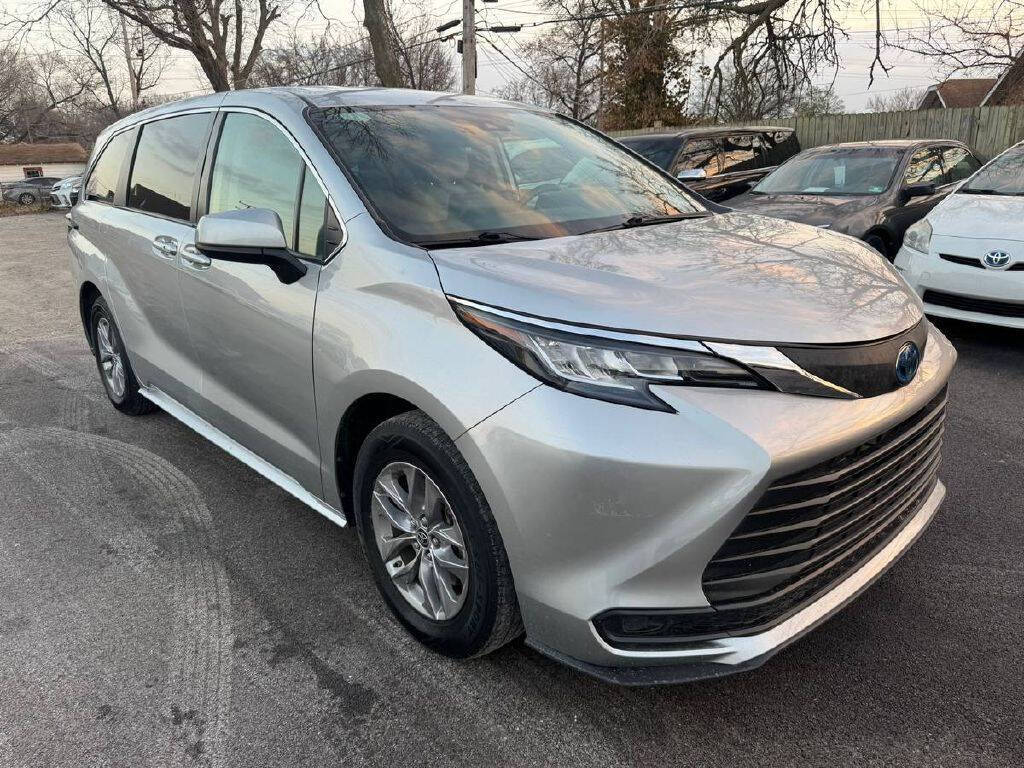
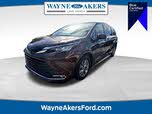
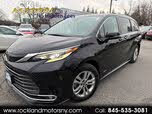
The 2021 Toyota Sienna Hybrid aimed to change the perception of minivans with a more SUV-like appearance. It featured a wide grille, sleek LED headlamp arrays, and an assertive stance. The sliding side doors were re-engineered for a sculpted look, and alloy wheels ranging from 17 to 20 inches filled the arches. The rear design included a large window, maintaining a wide and low look. The exterior fit and finish were superb, reflecting Toyota's quality standards.
Inside, the Sienna emphasized width with horizontal lines, offering a higher seating position than a sedan. The dashboard was simple and uncluttered, with controls clustered below the infotainment screen. The center console featured a gear selector lever, cup holders, and a large storage compartment. The second and third rows were comfortable for adults, with the second row sliding fore and aft for maximum utility. The materials and surfaces throughout the cabin had a good feel, and the leather-wrapped steering wheel added a touch of luxury.


The 2020 Ford Edge came standard with a 2.0-liter turbocharged four-cylinder engine, producing 250 horsepower and 275 pound-feet of torque. This engine provided solid low-end acceleration, making it suitable for city driving, though it struggled at higher speeds. The Edge's suspension was designed for American roads, absorbing potholes with ease while maintaining a refined and engaging drive.
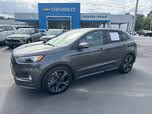
The sporty Edge ST trim featured a 2.7-liter EcoBoost V6 engine, delivering 335 horsepower and 380 pound-feet of torque. This engine, paired with standard AWD, offered impressive acceleration and handling. The ST trim included a Sport mode, enhancing throttle response and transmission mapping, and an available ST Performance Brake Package with unique wheels, summer performance tires, and upgraded brakes.
The 2021 Toyota Sienna Hybrid, Toyota's first hybrid minivan, combined a 2.5-liter four-cylinder engine with two electric motors, producing 243 horsepower. FWD was standard, with AWD available on all trims. The AWD system used a separate electric motor for the rear wheels, simplifying the design. The Sienna's CVT provided smooth and efficient power delivery, though it lacked the punch of a conventional transmission. Four selectable drive modes (Normal, EV, Eco, and Sport) allowed for some customization of the driving experience.
Handling was significantly improved over the previous Sienna, with new front suspension and independent rear trailing arm suspension. The Sienna Hybrid offered a comfortable and composed ride, with minimal body roll. The big news was its impressive fuel economy, with FWD models achieving 36 mpg city, 36 mpg highway, and 36 mpg combined, while AWD models were rated at 35/36/35 mpg combined.
The 2020 Ford Edge excelled in cabin layout, offering a commanding view of the road and ample storage compartments. The second-row seats provided plenty of head- and legroom without needing to move the front seats. The Edge offered 39.2 cubic feet of cargo space behind the rear seats, expanding to 73.4 cubic feet with the rear seats folded. The SEL and Titanium trims included a hands-free foot-activated power rear liftgate.
The 2021 Toyota Sienna Hybrid prioritized convenience, with a standard third-row 60/40-split bench that stored away easily. The second row slid up to 25 inches, facilitating access to the third row. The cabin featured 16 cupholders (15 with the spare tire option) and ample storage cubbies. The Sienna could carry a full four-by-eight sheet of plywood with the tailgate closed, offering 33.5 cubic feet of cargo space behind the third row, 75.2 cubic feet behind the second row, and 101.0 cubic feet behind the first row. The hybrid battery was cleverly tucked under the front seats, preserving cargo space.
The 2020 Ford Edge came standard with the SYNC 3 infotainment system, featuring an 8-inch touchscreen, Apple CarPlay, Android Auto, and Amazon Alexa integration. The system was user-friendly, with a row of icons at the bottom and a home button for easy navigation. Optional features included a voice-activated navigation system with SiriusXM Traffic and Travel Link, and a dual rear-seat entertainment system.
The 2021 Toyota Sienna Hybrid included a nine-inch touchscreen with Apple CarPlay, Android Auto, Amazon Alexa, and SiriusXM. Connectivity features included Safety Connect, Remote Connect, Service Connect, and AT&T WiFi Connect. Higher trims offered Qi-compatible charging, a 1500-watt inverter, and a Premium Audio + JBL package with 12 speakers. A rear-seat entertainment system with an 11.6-inch display was available, and the driver benefited from a color multi-information display and an optional 10-inch Head-Up Display.
The 2020 Ford Edge featured a full array of airbags, AdvanceTrac traction control, and a tire pressure monitoring system. The Ford Co-Pilot360 safety system included automatic emergency braking, forward collision warning, lane departure warning, automatic high beams, and blind-spot monitoring. The SEL trim offered the Co-Pilot360 Assist+ package with adaptive cruise control and active lane centering. The Edge received a "Top Safety Pick" rating from IIHS and a five-star overall safety rating from NHTSA.
The 2021 Toyota Sienna Hybrid came with Toyota Safety Sense 2.0, including dynamic radar cruise control, lane-tracing assist, pre-collision system, lane-departure alert, automatic high beams, and road sign assist. The Star Safety System included enhanced vehicle stability control, traction control, anti-lock brakes, electronic brake-force distribution, brake assist, and smart stop technology. The Sienna had 10 airbags, LATCH connectors, a rear-seat reminder system, and a tire pressure monitoring system. Crash-test ratings for the 2021 Sienna were not yet available, but the 2020 model received high marks from IIHS and NHTSA.
CarGurus highlights
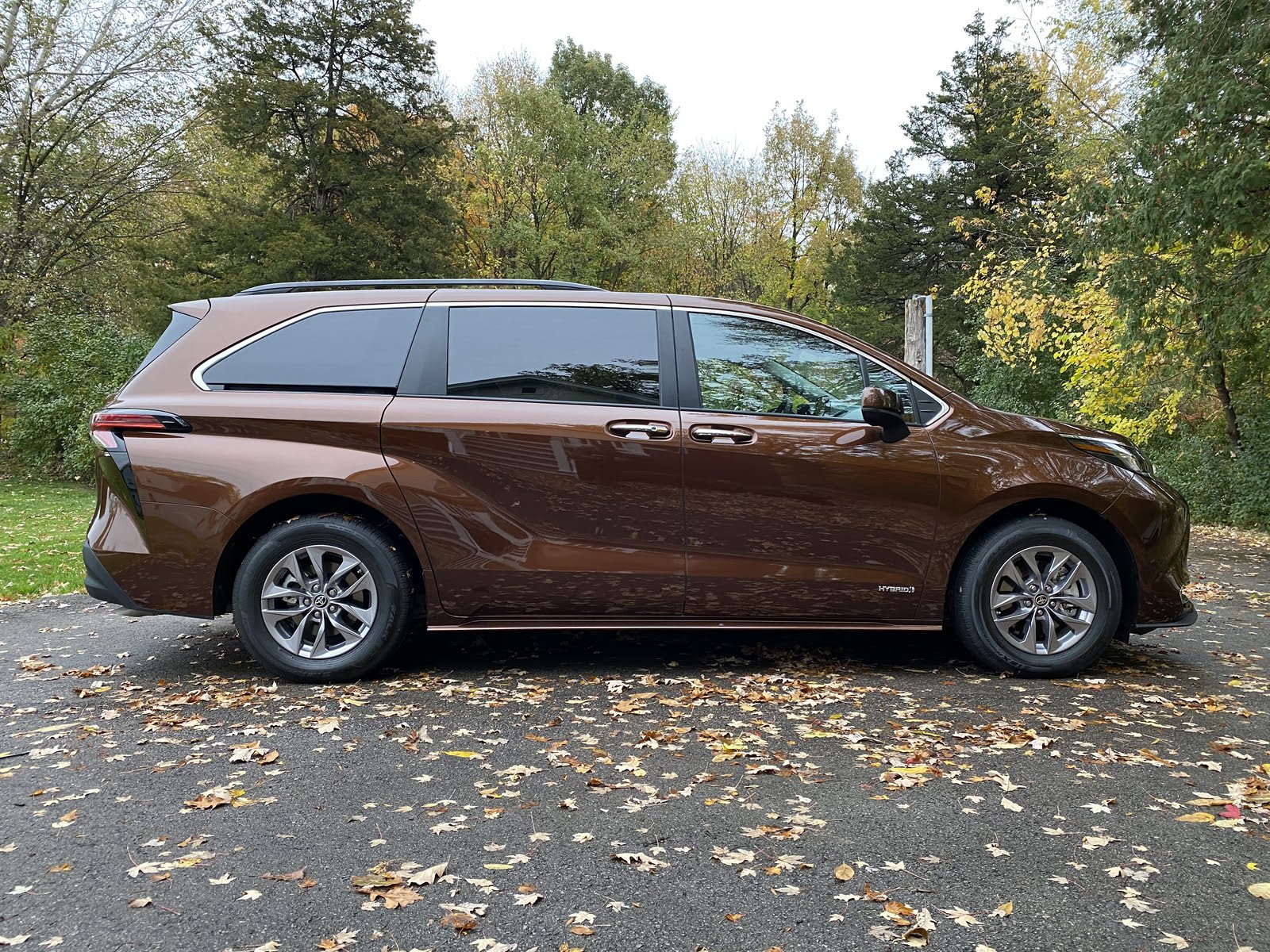
According to CarGurus experts, the overall rating for the 2020 Ford Edge is 8.0 out of 10, while the 2021 Toyota Sienna scores 8.3 out of 10. Based on these ratings, the 2021 Toyota Sienna is the recommended choice, offering superior fuel economy, advanced safety features, and versatile interior space.
Choose the 2021 Toyota Sienna if:
- You want a hybrid minivan with excellent fuel economy.
- You need a versatile interior with a sliding second row and ample cargo space.
- You prioritize advanced safety features and driver assistance systems.





Choose the 2020 Ford Edge if:
- You prefer a more powerful engine option with the sporty ST trim.
- You value a user-friendly infotainment system with standard Apple CarPlay and Android Auto.
- You need a spacious two-row SUV with ample cargo space.

CarGurus highlights
According to CarGurus experts, the overall rating for the 2020 Ford Edge is 8.0 out of 10, while the 2021 Toyota Sienna scores 8.3 out of 10. Based on these ratings, the 2021 Toyota Sienna is the recommended choice, offering superior fuel economy, advanced safety features, and versatile interior space.
Choose the 2021 Toyota Sienna if:
Shop Now- You want a hybrid minivan with excellent fuel economy.
- You need a versatile interior with a sliding second row and ample cargo space.
- You prioritize advanced safety features and driver assistance systems.





Choose the 2020 Ford Edge if:
Shop Now- You prefer a more powerful engine option with the sporty ST trim.
- You value a user-friendly infotainment system with standard Apple CarPlay and Android Auto.
- You need a spacious two-row SUV with ample cargo space.



By: CarGurus + AI
At CarGurus, our team of experienced automotive writers remain at the heart of our content operation, conducting hands-on car tests and writing insightful guides that are backed by years of industry experience. To complement this, we are harnessing AI to make our content offering more diverse and more helpful to shoppers than ever. To achieve this, our AI systems are based exclusively on CarGurus content, ratings and data, so that what we produce is both unique to CarGurus, and uniquely helpful to car shoppers.