2021 Nissan Rogue vs 2020 Lincoln Aviator
Overview | |
MSRP$51,100 | MSRP$26,050 |
Listings591 | Listings2468 |
Ratings & Reviews | |
User Reviews | User Reviews |
Expert reviews8.2 out of 10 | Expert reviews9.0 out of 10 |
Pros
Cons
| Pros
Cons
|
2020 Lincoln Aviator Reviews SummaryThe heyday for Lincoln was more than a half-century ago. Those postwar years of prosperity and optimism were the perfect time for cars like the Continental and others. They delivered comfort and luxury, wrapped in midcentury modern styling. Even as recently as the 1990s, Lincoln was still a popular brand, riding the SUV craze with its Navigator. But after the turn of the century, Lincoln lost its ability to create new designs and looked inward and backward. Sure, retro-themed cars like the redesigned Mustang, PT Cruiser, and Chevy HHR had turned some heads, but none of those came from luxury brands. The BMWs and Mercedes of the world were all looking forward and pushing the envelope for contemporary automotive design. Meanwhile, Lincoln offered the MKX, which was based on the Ford Edge and featured ’66 Continental styling. Neat in a vacuum, but off-base compared to the modern luxury market. This experimental phase with various retro looks coincided with the move to the MK-# alphabet-soup naming convention and big improvements in the Ford lineup, where top-end trims of the Fusion overlapped with an entry-level trim of the MKZ. The combination left Lincoln a confusing, anonymous afterthought in the modern luxury game. But Lincoln is finally ready to change all that. It has a new cohesive design language, its focus is once again on luxury, and the three-letter naming convention that never meant anything to anyone other than Lincoln marketers is gone. The brand led with the 2017 Continental and 2018 Navigator, which are each impressive in their own right. But the company's lineup is growing and now includes the all-new 2020 Lincoln Aviator. Named after a luxury variant of the 2002-2005 Ford Explorer, this new Aviator is also based on the contemporary Explorer platform, but it's a luxury vehicle in its own right. Much of the success of the Lincoln brand may hinge on this midsize, 3-row luxury SUV, so you need to consider its competition, such as the Audi Q7, Infiniti QX60, and all-new Cadillac XT6. Read on to learn if Lincoln’s take on luxury will stand out in a crowded competitive field. | |
2021 Nissan Rogue Reviews SummaryTo characterize the all-new 2021 Nissan Rogue as vital to the automaker's success is an understatement. Not only is the compact crossover SUV the best-selling Nissan in America, but it's also one of the best-selling vehicles in America. Strip out pickup trucks, and the Rogue sits near the top of the U.S. sales chart with its primary competitors, the Honda CR-V and Toyota RAV4. Imagine the pressure on Nissan designers, engineers, and product planners as they prepared the current Rogue's replacement! The good news is that the new Rogue is a better SUV in every way but one. | |
Popular Features & Specs | |
Engine3.0L 400 hp V6 | Engine2.5L 181 hp I4 |
Drive TrainRWD | Drive TrainFWD |
Seating Capacity7 | Seating Capacity5 |
Horsepower | Horsepower181 hp @ 6000 rpm |
MPG City18 | MPG City27 |
MPG Highway26 | MPG Highway35 |
Engine | |
Engine Name3.0L 400 hp V6 | Engine Name2.5L 181 hp I4 |
Torque | Torque181 lb-ft @ 3600 rpm |
Horsepower | Horsepower181 hp @ 6000 rpm |
DrivetrainRWD | DrivetrainFWD |
Fuel Economy | |
MPG City18 | MPG City27 |
MPG Highway26 | MPG Highway35 |
Interior | |
Seating Capacity7 | Seating Capacity5 |
Safety | |
Front Crash Overall5 | Front Crash Overall3 |
Side Crash Overall5 | Side Crash Overall5 |
Dimensions & Capacity | |
Cargo Space18.3 cu ft | Cargo Space31.6 cu ft |
Curb Weight4764 lbs | Curb Weight3371 lbs |
Height69.8 in | Height66.5 in |
Length199.3 in | Length183.0 in |
Width89.9 in | Width72.4 in |
Wheelbase119.1 in | Wheelbase106.5 in |
Maximum Payload | Maximum Payload1115 lbs |
Number of doors4 | Number of doors4 |
Overview | ||
MSRP | $51,100 | $26,050 |
Listings | ||
Ratings & Reviews | ||
User reviews | ||
Expert reviews | 8.2 out of 10Read full review | 9.0 out of 10Read full review |
Pros & cons | Pros
Cons
| Pros
Cons
|
Summary | The heyday for Lincoln was more than a half-century ago. Those postwar years of prosperity and optimism were the perfect time for cars like the Continental and others. They delivered comfort and luxury, wrapped in midcentury modern styling. Even as recently as the 1990s, Lincoln was still a popular brand, riding the SUV craze with its Navigator. But after the turn of the century, Lincoln lost its ability to create new designs and looked inward and backward. Sure, retro-themed cars like the redesigned Mustang, PT Cruiser, and Chevy HHR had turned some heads, but none of those came from luxury brands. The BMWs and Mercedes of the world were all looking forward and pushing the envelope for contemporary automotive design. Meanwhile, Lincoln offered the MKX, which was based on the Ford Edge and featured ’66 Continental styling. Neat in a vacuum, but off-base compared to the modern luxury market. This experimental phase with various retro looks coincided with the move to the MK-# alphabet-soup naming convention and big improvements in the Ford lineup, where top-end trims of the Fusion overlapped with an entry-level trim of the MKZ. The combination left Lincoln a confusing, anonymous afterthought in the modern luxury game. But Lincoln is finally ready to change all that. It has a new cohesive design language, its focus is once again on luxury, and the three-letter naming convention that never meant anything to anyone other than Lincoln marketers is gone. The brand led with the 2017 Continental and 2018 Navigator, which are each impressive in their own right. But the company's lineup is growing and now includes the all-new 2020 Lincoln Aviator. Named after a luxury variant of the 2002-2005 Ford Explorer, this new Aviator is also based on the contemporary Explorer platform, but it's a luxury vehicle in its own right. Much of the success of the Lincoln brand may hinge on this midsize, 3-row luxury SUV, so you need to consider its competition, such as the Audi Q7, Infiniti QX60, and all-new Cadillac XT6. Read on to learn if Lincoln’s take on luxury will stand out in a crowded competitive field. | To characterize the all-new 2021 Nissan Rogue as vital to the automaker's success is an understatement. Not only is the compact crossover SUV the best-selling Nissan in America, but it's also one of the best-selling vehicles in America. Strip out pickup trucks, and the Rogue sits near the top of the U.S. sales chart with its primary competitors, the Honda CR-V and Toyota RAV4. Imagine the pressure on Nissan designers, engineers, and product planners as they prepared the current Rogue's replacement! The good news is that the new Rogue is a better SUV in every way but one. |
Video | ||
Popular Features & Specs | ||
Engine | 3.0L 400 hp V6 | 2.5L 181 hp I4 |
Drive Train | RWD | FWD |
Seating Capacity | 7 | 5 |
Horsepower | 181 hp @ 6000 rpm | |
MPG City | 18 | 27 |
MPG Highway | 26 | 35 |
Engine | ||
Engine Name | 3.0L 400 hp V6 | 2.5L 181 hp I4 |
Torque | 181 lb-ft @ 3600 rpm | |
Horsepower | 181 hp @ 6000 rpm | |
Drivetrain | RWD | FWD |
Fuel Economy | ||
MPG City | 18 | 27 |
MPG Highway | 26 | 35 |
Interior | ||
Seating Capacity | 7 | 5 |
Safety | ||
Front Crash Overall | 5 | 3 |
Side Crash Overall | 5 | 5 |
Dimensions & Capacity | ||
Cargo Space | 18.3 cu ft | 31.6 cu ft |
Curb Weight | 4764 lbs | 3371 lbs |
Height | 69.8 in | 66.5 in |
Length | 199.3 in | 183.0 in |
Width | 89.9 in | 72.4 in |
Wheelbase | 119.1 in | 106.5 in |
Maximum Payload | 1115 lbs | |
Number of doors | 4 | 4 |
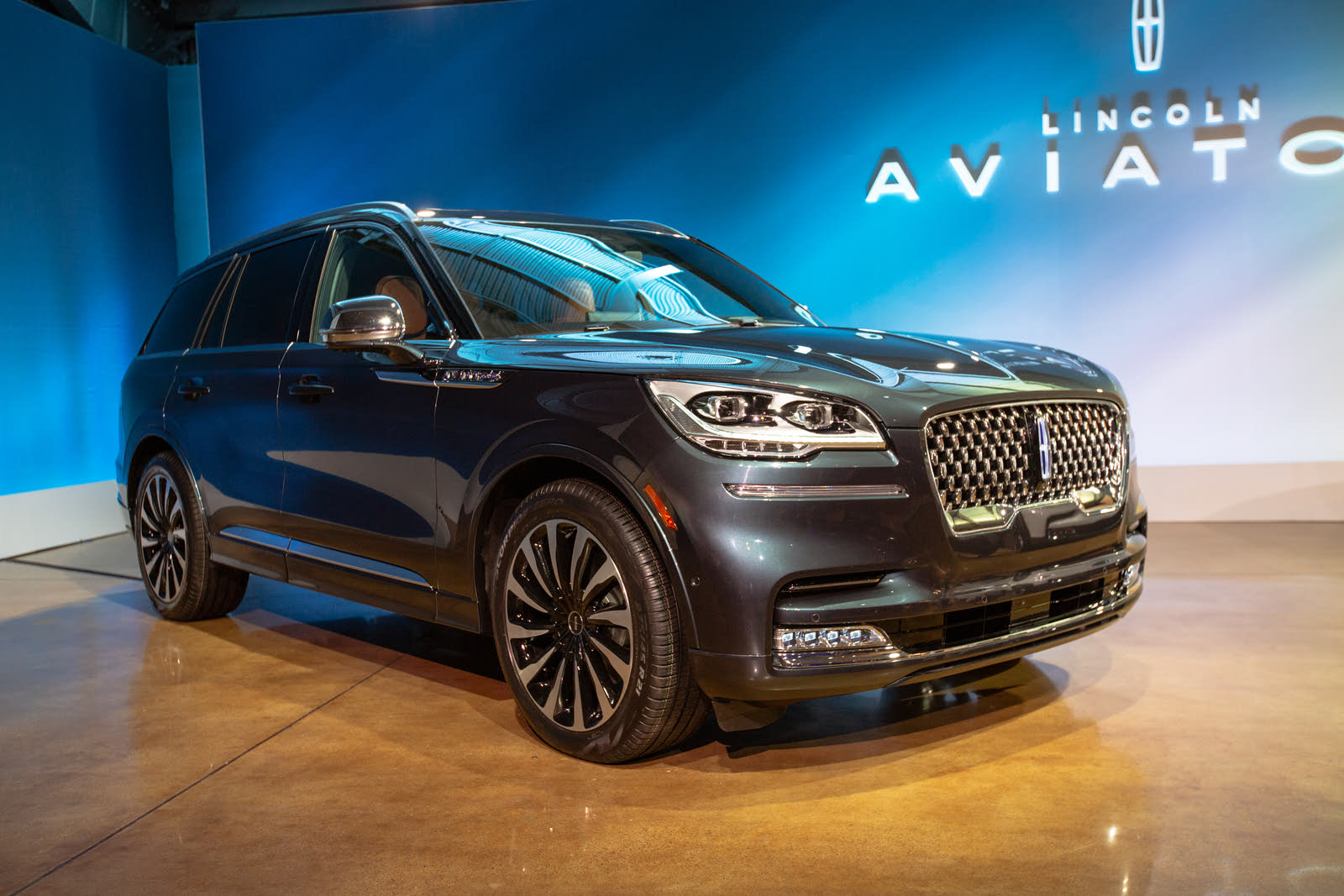
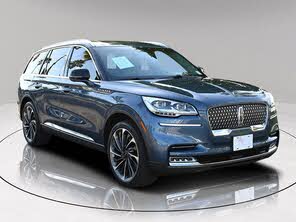
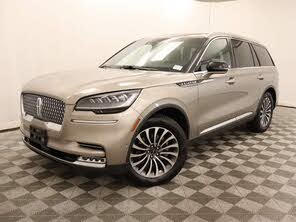
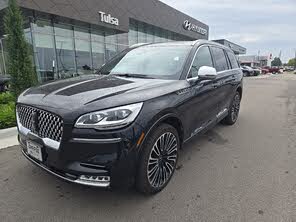
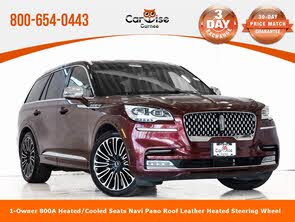
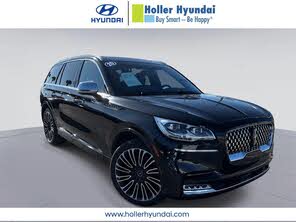
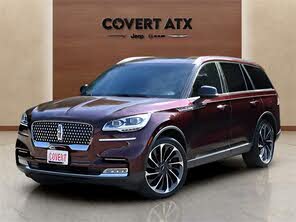
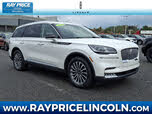
The 2020 Lincoln Aviator had a distinct place in Lincoln’s lineup, positioned below the giant Navigator but above the compact MKC, which was replaced by the Lincoln Corsair. Lincoln's return to using real names over alphabet-soup nomenclature marked a positive shift from copying imports to embracing their brand identity. The Aviator displayed a unified design language consistent across Lincoln sedans, crossovers, and SUVs, characterized by elegant headlights and an upright chrome grille. Its slightly tapered roofline offered an elongated look, complemented by a low, wide beltline that gave it a somewhat boat-like appearance.
Inside, the Aviator's cabin was a feast for the senses, boasting a flowing design with soft-touch materials and selective brightwork. The seats were elegant but sturdy, and the shifter buttons were designed to resemble piano keys. Soft-touch materials covered nearly every surface, from the dash to the door panels, and even the sides of the center console, indicating a deep commitment to luxury. The massive panoramic moonroof and unique warning jingles recorded by the Detroit Symphony Orchestra were standout touches, showing Lincoln's holistic approach to luxury.
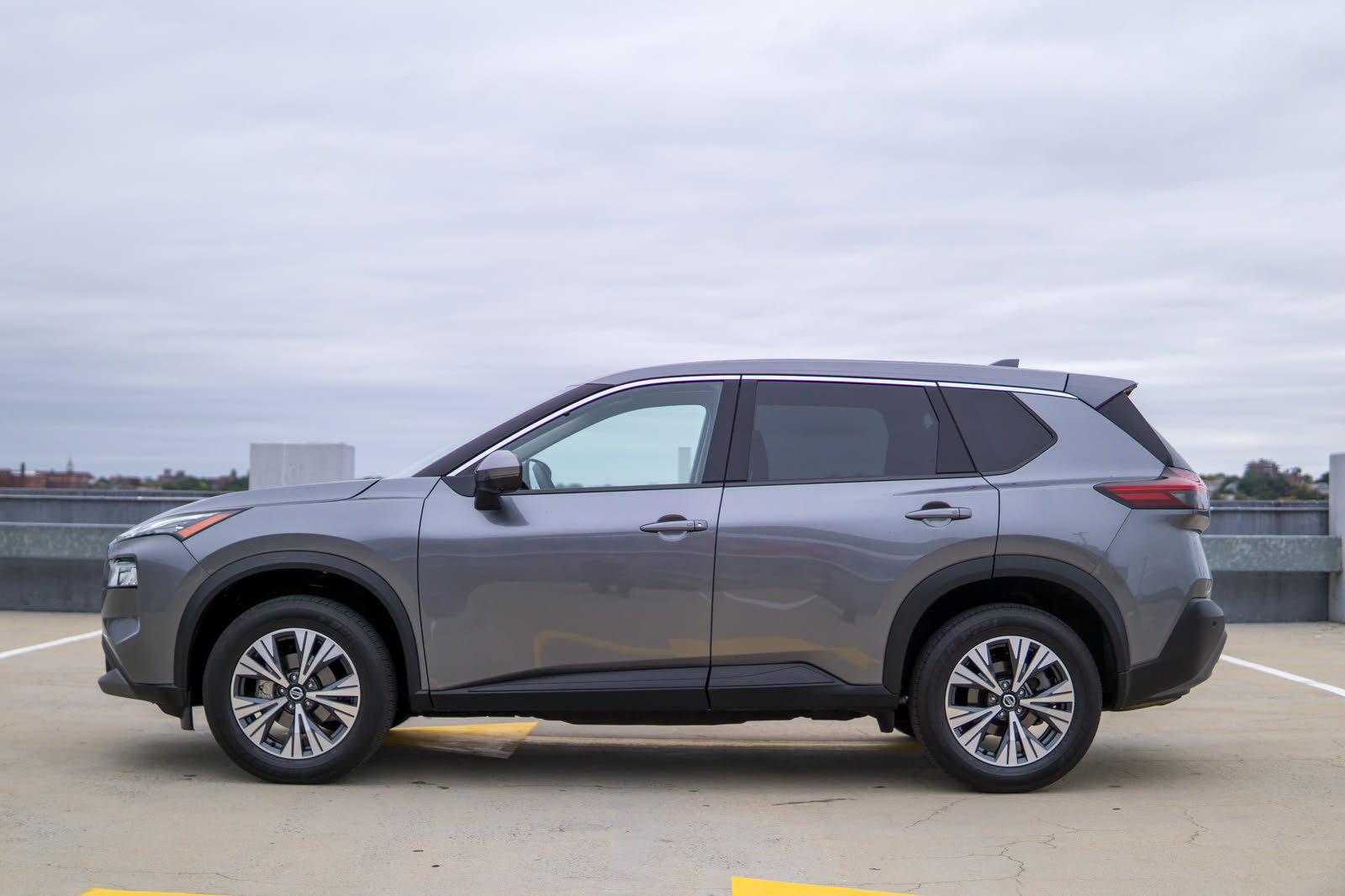
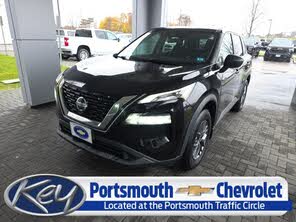
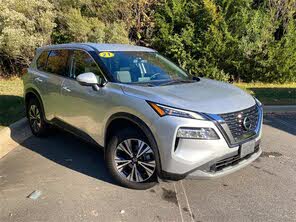
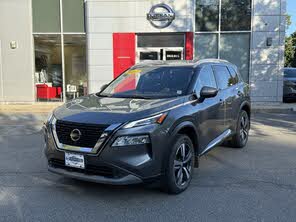
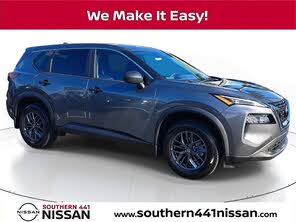
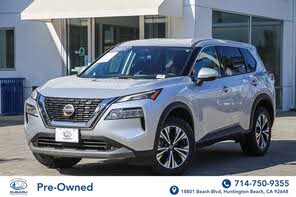
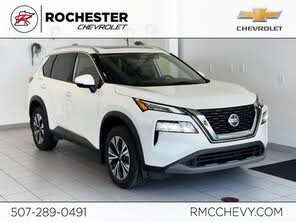
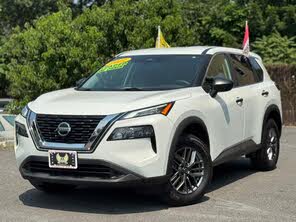
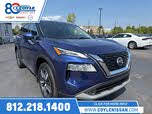
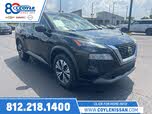
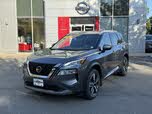
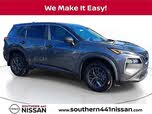
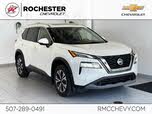
In contrast, the 2021 Nissan Rogue sported a handsome new technical appearance, crafted to look more like an SUV than a car. Dark gray plastic cladding emphasized its rugged aesthetics, and bold simulated skid plates adorned the lower perimeter. Clean LED lighting elements and a prominent V-Motion grille contributed to its modern look, with aluminum wheels up to 19 inches in diameter as standard. A striking optional two-tone paint with a black roof added a custom flair.
The Rogue offered four trims: S, SV, SL, and Platinum, with each trim upgrading in features and luxury. Our test vehicle, the Rogue SL, showcased an Almond color leather interior and a panoramic glass sunroof. The interior was bright and roomy, highlighted by abundant soft-touch surfaces and simulated wood trim. While resembling a family-friendly SUV, the Platinum trim stood out with quilted semi-aniline leather and ambient lighting, offering a genuinely upscale feel.


The 2020 Lincoln Aviator came standard with a robust twin-turbocharged 3.0-liter V6 engine, producing 400 horsepower and 415 pound-feet of torque, shared with powerhouses like the Explorer and Expedition. The Grand Touring trim took it further, combining the turbo V6 with a 100-hp electric motor, resulting in a hefty 494 hp and 630 lb-ft of torque. Both powertrains utilized a 10-speed automatic transmission, with RWD or AWD options. The Aviator's acceleration was impressive, with both setups reaching 0-60 mph in roughly 4 seconds.
The Grand Touring's plug-in hybrid system excelled in conserving fuel and providing smooth acceleration by using electric power at low speeds. The Aviator offered an "Excite" drive mode for more dynamic driving, though it remained a 5,600-pound SUV. Fuel economy for the standard RWD Aviator was 18 mpg city, 26 highway, and 21 combined, while the AWD version fell slightly. The PHEV achieved a combined 23 mpg, with a 21-mile electric-only range and 56 MPGe combined.
On the other hand, the 2021 Nissan Rogue was powered by a direct-injected 2.5-liter four-cylinder engine, generating 181 horsepower and 181 pound-feet of torque. Weighing nearly 3,500 pounds, this output was adequate for daily driving. The continuously variable transmission (CVT) performed well, mimicking traditional automatic behavior with programmed ratios and paddle shifters.
Despite adequate power for daily use, the Rogue bossed some adventure DNA. With AWD, 8.2 inches of ground clearance, and new drive modes like Snow and Off-Road, it handled light off-road scenarios competently. During our test drive, the front-wheel-drive Rogue SL achieved 27.5 mpg, slightly below its EPA rating. Nissan hinted at a more powerful turbo variant likely in the future, potentially using the Altima's VC-Turbo engine.
The Rogue's new architecture, using 35% high-strength steel, made for a robust ride. New systems like Intelligent Trace Control and Active Ride Control enhanced handling, and the improved steering, thanks to electric assist relocation and a quicker ratio, resulted in predictable and smooth driving dynamics.
Lincoln’s Aviator, with its three rows, put it in competition with luxury SUVs like the Audi Q7 and Mercedes-Benz GLE. We didn't test the base second-row bench, but the optional captain’s chairs were fantastic. The power-closing third row was adequate for adults on short trips and better suited for kids. With the second and third rows down, the Aviator offered 77 cubic feet of cargo space, comparable to the Cadillac XT6. However, the Aviator's design features, like the door handles and seat controls, were overly complicated at times.
Nissan’s Rogue impressed with its Zero Gravity seat designs, aimed at reducing fatigue and strain, which varied in effectiveness but were quite comfortable. Upgraded trim levels improved seat materials from cloth in S trim to premium leather in Platinum trim. Features like Quick Comfort heated seats, a heated steering wheel, and heated rear seats were available, although ventilated seats were not.
The Rogue’s rear seats provided ample headroom and legroom, and the back doors opened to nearly 90 degrees for easier access. With LATCH anchors and a rear-seat reminder system, it was geared towards families. Nissan also enhanced the Rogue's interior noise insulation for a quieter drive. Practical storage solutions included a space-saving electronic shifter and generously sized panel pockets.
Comparing cargo capacities, the Aviator's 77 cubic feet slightly overshadowed the Rogue's maximum of 74.1 cubic feet, though the Rogue’s storage remained generous for its segment. Additionally, with a power rear liftgate and Divide-N-Hide system, the Rogue offered versatile cargo management.
The 2020 Lincoln Aviator came equipped with the Sync 3 infotainment system and a 10.1-inch touchscreen, favoring a landscape layout. This design ensured that Apple CarPlay and Android Auto were displayed across the entire screen for an optimal user experience. The fully digital instrument panel and a massive head-up display provided comprehensive yet unobtrusive information.
In comparison, Nissan's 2021 Rogue featured competitive infotainment, with the entry-level S trim including an 8-inch touchscreen, Bluetooth, SiriusXM, Apple CarPlay, and Android Auto. Moving up to SV or SL trims added NissanConnect Services, a WiFi hotspot, and voice assistant integrations. The SL Premium Package and Platinum trim introduced a larger 9-inch display, real-time traffic navigation, wireless Apple CarPlay, and a Bose premium audio system.
In the Platinum trim, the Rogue also featured wireless smartphone charging, a 12.3-inch digital instrument cluster, and a head-up display. Despite the usability of the system, the small knobs and buttons presented minor challenges.
The 2020 Lincoln Aviator came with a comprehensive suite of safety features, including front and side airbags, traction control, and tire pressure monitoring. Its Lincoln Co-Pilot360 suite included advanced driver-assistance systems like forward-collision avoidance, lane-departure warning, adaptive cruise control, and automatic high beams. Blind-spot monitoring and a head-up display were among the additional safety features.
The 2021 Nissan Rogue also prioritized safety. Nissan equipped all trims with their Safety Shield 360, offering advanced safety features such as automatic emergency braking with pedestrian detection, lane-departure warning, and blind-spot warning with rear cross-traffic alert. It also featured ten airbags, a driver monitoring system, and a rear-seat reminder system. The SV trim added adaptive cruise control, an improved ProPilot Assist system, and a surround-view camera. SL Premium and Platinum trims further enhanced these systems with Navi-link technology for adaptive driving.
CarGurus highlights
According to CarGurus experts, the overall rating for the 2020 Lincoln Aviator was 8.2 out of 10, while the 2021 Nissan Rogue scored 9.0 out of 10. The clear winner based on CarGurus ratings is the 2021 Nissan Rogue. While the Lincoln Aviator offers a luxurious, powerful ride and spacious interior, the Nissan Rogue excels in safety, fuel efficiency, modern design, and family-friendly features. For those prioritizing a contemporary, reliable, and smartly-appointed SUV, the 2021 Nissan Rogue stands out as the superior choice.
Choose the 2021 Nissan Rogue if:
- You prioritize cutting-edge safety technology with features like Safety Shield 360 and ProPilot Assist for a secure driving experience.
- Comfortable and family-friendly interior with Zero Gravity seats, ample rear headroom, and versatile cargo space appeal to you.
- A modern, sleek SUV design with customizable two-tone paint options and a high-tech infotainment system is what you seek.

Choose the 2020 Lincoln Aviator if:
- You desire a powerful and refined driving experience with robust twin-turbo V6 performance, or an advanced PHEV option.
- Luxury touches like a panoramic moonroof, symphony-recorded warning jingles, and plush, soft-touch materials matter to you.
- A spacious interior with three-row seating and a generous 77 cubic feet of cargo space is essential.




CarGurus highlights
According to CarGurus experts, the overall rating for the 2020 Lincoln Aviator was 8.2 out of 10, while the 2021 Nissan Rogue scored 9.0 out of 10. The clear winner based on CarGurus ratings is the 2021 Nissan Rogue. While the Lincoln Aviator offers a luxurious, powerful ride and spacious interior, the Nissan Rogue excels in safety, fuel efficiency, modern design, and family-friendly features. For those prioritizing a contemporary, reliable, and smartly-appointed SUV, the 2021 Nissan Rogue stands out as the superior choice.
Choose the 2021 Nissan Rogue if:
Shop Now- You prioritize cutting-edge safety technology with features like Safety Shield 360 and ProPilot Assist for a secure driving experience.
- Comfortable and family-friendly interior with Zero Gravity seats, ample rear headroom, and versatile cargo space appeal to you.
- A modern, sleek SUV design with customizable two-tone paint options and a high-tech infotainment system is what you seek.




Choose the 2020 Lincoln Aviator if:
Shop Now- You desire a powerful and refined driving experience with robust twin-turbo V6 performance, or an advanced PHEV option.
- Luxury touches like a panoramic moonroof, symphony-recorded warning jingles, and plush, soft-touch materials matter to you.
- A spacious interior with three-row seating and a generous 77 cubic feet of cargo space is essential.










By: CarGurus + AI
At CarGurus, our team of experienced automotive writers remain at the heart of our content operation, conducting hands-on car tests and writing insightful guides that are backed by years of industry experience. To complement this, we are harnessing AI to make our content offering more diverse and more helpful to shoppers than ever. To achieve this, our AI systems are based exclusively on CarGurus content, ratings and data, so that what we produce is both unique to CarGurus, and uniquely helpful to car shoppers.