2020 Toyota Tundra vs 2021 Nissan Titan

Overview | |
MSRP$33,575 | MSRP$36,950 |
Listings511 | Listings563 |
Ratings & Reviews | |
User Reviews | User Reviews |
Expert reviews5.3 out of 10 | Expert reviews8.2 out of 10 |
Pros
Cons
| Pros
Cons
|
2020 Toyota Tundra Reviews SummaryToyota hasn’t completely redesigned the Tundra full-size pickup truck since George W. Bush was the president of the United States. Let that sink in for a moment. What that means for you is that a 2020 Toyota Tundra should prove utterly bulletproof in terms of reliability. What this also means is that a 2020 Toyota Tundra is uncompetitive in numerous ways. | |
2021 Nissan Titan Reviews SummaryThe full-size pickup truck market is extremely competitive. There are brand loyalists left and right who will swear up and down that they won’t buy a Nissan truck. But there’s plenty of reason to give the Titan a test drive. | |
No video found | No video found |
Popular Features & Specs | |
Engine5.7L 381 hp V8 | Engine5.6L 400 hp V8 |
Drive Train4X2 | Drive Train4X2 |
Seating Capacity6 | Seating Capacity6 |
Horsepower381 hp @ 5600 rpm | Horsepower400 hp @ 5800 rpm |
MPG City13 | MPG City16 |
MPG Highway18 | MPG Highway21 |
Engine | |
Engine Name5.7L 381 hp V8 | Engine Name5.6L 400 hp V8 |
Torque401 lb-ft @ 3600 rpm | Torque413 lb-ft @ 4000 rpm |
Horsepower381 hp @ 5600 rpm | Horsepower400 hp @ 5800 rpm |
Drivetrain4X2 | Drivetrain4X2 |
Fuel Economy | |
MPG City13 | MPG City16 |
MPG Highway18 | MPG Highway21 |
Interior | |
Seating Capacity6 | Seating Capacity6 |
Safety | |
Front Crash Overall4 | Front Crash Overall |
Side Crash Overall5 | Side Crash Overall |
Dimensions & Capacity | |
Bed Length78.7 in | Bed Length78.7 in |
Curb Weight5170 lbs | Curb Weight5539 lbs |
Height76.0 in | Height75.1 in |
Length228.9 in | Length228.2 in |
Width79.9 in | Width79.5 in |
Wheelbase145.7 in | Wheelbase139.8 in |
Maximum Payload1730 lbs | Maximum Payload1600 lbs |
Number of doors4 | Number of doors4 |
Maximum Towing Capacity10200 lbs | Maximum Towing Capacity9310 lbs |
Standard Towing Capacity10200 lbs | Standard Towing Capacity |
Overview | ||
MSRP | $33,575 | $36,950 |
Listings | ||
Ratings & Reviews | ||
User reviews | ||
Expert reviews | 5.3 out of 10Read full review | 8.2 out of 10Read full review |
Pros & cons | Pros
Cons
| Pros
Cons
|
Summary | Toyota hasn’t completely redesigned the Tundra full-size pickup truck since George W. Bush was the president of the United States. Let that sink in for a moment. What that means for you is that a 2020 Toyota Tundra should prove utterly bulletproof in terms of reliability. What this also means is that a 2020 Toyota Tundra is uncompetitive in numerous ways. | The full-size pickup truck market is extremely competitive. There are brand loyalists left and right who will swear up and down that they won’t buy a Nissan truck. But there’s plenty of reason to give the Titan a test drive. |
Video | No video found | No video found |
Popular Features & Specs | ||
Engine | 5.7L 381 hp V8 | 5.6L 400 hp V8 |
Drive Train | 4X2 | 4X2 |
Seating Capacity | 6 | 6 |
Horsepower | 381 hp @ 5600 rpm | 400 hp @ 5800 rpm |
MPG City | 13 | 16 |
MPG Highway | 18 | 21 |
Engine | ||
Engine Name | 5.7L 381 hp V8 | 5.6L 400 hp V8 |
Torque | 401 lb-ft @ 3600 rpm | 413 lb-ft @ 4000 rpm |
Horsepower | 381 hp @ 5600 rpm | 400 hp @ 5800 rpm |
Drivetrain | 4X2 | 4X2 |
Fuel Economy | ||
MPG City | 13 | 16 |
MPG Highway | 18 | 21 |
Interior | ||
Seating Capacity | 6 | 6 |
Safety | ||
Front Crash Overall | 4 | |
Side Crash Overall | 5 | |
Dimensions & Capacity | ||
Bed Length | 78.7 in | 78.7 in |
Curb Weight | 5170 lbs | 5539 lbs |
Height | 76.0 in | 75.1 in |
Length | 228.9 in | 228.2 in |
Width | 79.9 in | 79.5 in |
Wheelbase | 145.7 in | 139.8 in |
Maximum Payload | 1730 lbs | 1600 lbs |
Number of doors | 4 | 4 |
Maximum Towing Capacity | 10200 lbs | 9310 lbs |
Standard Towing Capacity | 10200 lbs | |
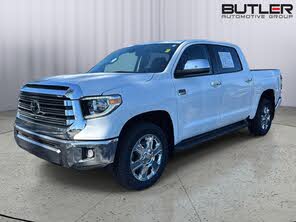
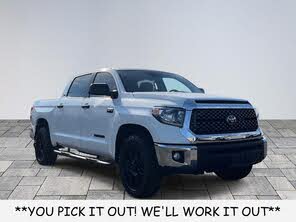
The 2020 Toyota Tundra came in various trims including SR, SR5, Limited, TRD Pro, Platinum, and 1794 Edition. Each step up in the trim line added an extra layer of finery and luxury. Buyers had the choice between two cab styles: Double Cab and CrewMax, with three bed lengths available depending on the selected configuration. Starting prices ranged from $33,425 and rose to $52,930, excluding destination charges or optional features.
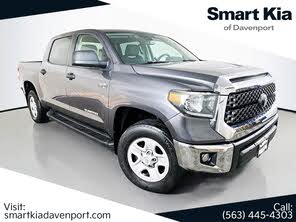
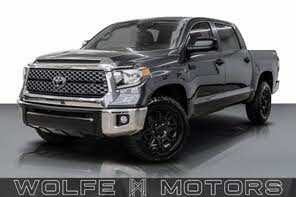
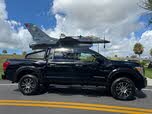
The test model for review was the most lavish variant, the Tundra TRD Pro CrewMax with 4WD. Encased in a new Army Green paint, this model boasted black 18-inch forged aluminum wheels, giving it a rugged, military-esque persona. However, the green color had the potential to become tiresome over time, leading one to prefer more conventional hues like black, white, or gray.
Inside, the TRD Pro was furnished exclusively with black leather, accentuated with red stitching and “TRD Pro” embroidery. Though the interior design aged gracefully, it was dominated by industrial-grade plastic, which felt out of place given the truck’s higher price range.
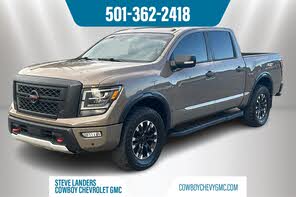
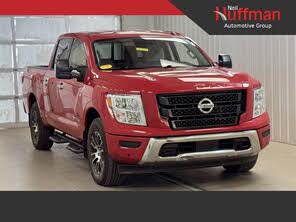
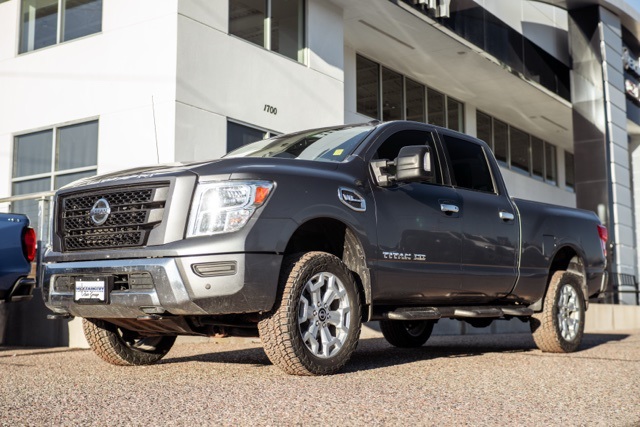
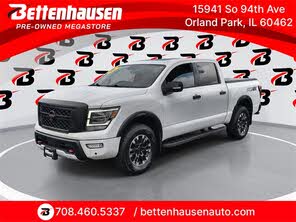
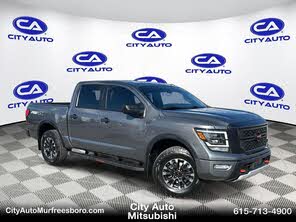
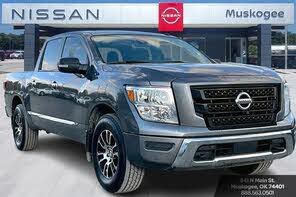
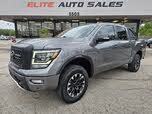
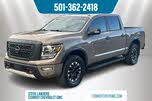
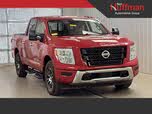
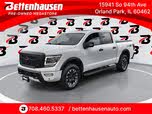
For the 2021 Nissan Titan, it retained its updated design from 2020. The Titan was available in three King Cab grades and five Crew Cab trims. Each of the Titan’s five variants (S, SL, SV, Pro-4X, and Platinum Reserve) offered distinct styling both inside and out. The base Titan S and SV had dark grilles while the SL featured a bright chrome grille, and the Platinum Reserve flaunted a satin chrome grille. The Pro-4X stood out with a black grille accented by a lava-red Nissan logo and tow hooks in the same striking color, giving it a character-rich appearance.
As part of its refresh, the Titan received new headlights improving light output by 120% compared to 2019, along with optional LED fog lights enhancing visibility by 15%. For the bed lighting, the Titan offered four separate LED sources, a significant improvement over older trucks with a single flooding light. The rear was equipped with LED taillights and bespoke tailgate designs varying across trims.
The Titan Crew Cab had a 5.5-foot bed, whereas the King Cab featured a 6.5-foot bed. The Utili-track Bed Channel System allowed for ease in securing equipment, complemented by a standard spray-in bedliner, a 100-volt power outlet, and a damped tailgate. Nissan offered seven exterior color choices, with the Pro-4X flaunting the unique and appealing brown Baja Storm.
Inside, the Titan received substantial updates with a modern center stack highlighted by a big infotainment screen and ample piano-black trim, significantly enhancing its aesthetic compared to the Tundra. Despite a dated steering wheel design, the overall interior was attractive, more user-friendly, and seemed to outshine the Tundra’s older cabin.


Every 2020 Toyota Tundra was powered by a reliable 5.7-liter V8 engine paired with a 6-speed automatic transmission, producing 381 horsepower at 5,600 rpm and 401 pound-feet of torque at 3,600 rpm. Its maximum towing capacity was listed at 10,200 pounds, accompanied by a 1,730 lbs. payload capacity, but these figures only applied if one opted for the SR Double Cab with RWD. From there, the ratings diminished.
An optional electronic shift-on-the-fly 4WD system was available on all trims, with the TRD Pro featuring it as standard. The TRD Pro was finely tuned for off-road conditions, equipped with BBS forged aluminum wheels, heavy-duty Fox off-road shocks, a stainless steel dual exhaust system, and an aluminum skid plate for protection.
The Tundra’s V8 engine delivered a thrilling sound, though it could become irksome for bystanders. Power delivery was robust, and its transmission flawless, ensuring smooth driving without significant complaints regarding steering or braking. The truck’s notably tight turning radius facilitated easier U-turns, fitting its massive size well in different environments.
However, the Tundra struggled with noise at highway speeds and exhibited less fuel efficiency, achieving only 13 mpg in the city, 17 mpg on highways, and 14 mpg combined. Over a week without towing or hauling, the observed fuel economy was 14.3 mpg, benefiting from its standard 38-gallon fuel tank.
The 2021 Nissan Titan, meanwhile, was powered solely by a 5.6-liter V8 engine, outputting 400 horsepower and 413 pound-feet of torque with premium fuel. Coupled with a nine-speed automatic transmission, the Titan offered smooth shifts, particularly in low and high gears, though it lagged somewhat mid-range. Its acceleration was commendable for a truck, though no match for sports vehicles.
Interestingly, the Titan lacked engine start/stop functionality, potentially compromising fuel efficiency but eliminating the disconnected feel of powertrain startups at red lights. Both RWD and 4WD models achieved similar fuel efficiency, estimated at 18 mpg combined, with slight variances between city and highway driving.
In practical terms, the Titan hauled up to 1,600 pounds with RWD and 1,680 pounds with 4WD, with maximum towing capacities of 9,310 pounds and 9,260 pounds, respectively. The Pro-4X model boasted enhanced off-road capabilities with specialized equipment like hill-descent control and an electronically locking rear differential, making it competitive, albeit not superior to more specialized trucks like the Ram 1500 TRX and Ford Raptor.
The 2020 Toyota Tundra possessed a generous interior, built in Texas, akin to the size of the state itself. Its CrewMax cab modeled notable rear seat space appreciated by younger passengers, and the power rear window was a hit. However, the rear bench was relatively flat, and limited in practical storage solutions, even though the front seats were supportive and comfortable over long distances.
Storage in the Tundra was generally plentiful, except the glove compartment which was surprisingly small. The truck’s bed was utilitarian with basic features, eschewing specialized storage solutions found in competitors like Ram or Ford.
In contrast, the 2021 Nissan Titan provided both comfort and functionality with its thoughtful interior design. A front bench seat allowed seating for up to six occupants, with available bucket seats reducing this to five. Nissan’s Zero Gravity seats offered superior comfort, though petite drivers might find seat adjustments challenging.
The Titan’s spacious interior and covered storage spaces, including a dedicated smartphone holder and ample center console room, were practical for long trips. Optional panoramic moonroof and power-sliding rear window contributed to a pleasant cabin experience. Grab handles and rear seatback features enhanced the ease of use, making the Titan’s interior layout user-friendly.
While appearing antiquated, the 2020 Toyota Tundra’s infotainment system was equipped with contemporary features. Lower trims had a 7-inch screen, whereas higher trims like TRD Pro featured an 8-inch display. All versions included Bluetooth, Apple CarPlay, Android Auto, Amazon Alexa, satellite radio, and more. The TRD Pro took it a step further with dynamic navigation, voice recognition, and a premium JBL sound system known for its bass output.
Physical controls around the display aided usability, even though virtual buttons for radio presets posed challenges due to their small size. Unfortunately, the Tundra lagged behind competitors in integrated towing technology, only offering a reversing camera in this regard.
Conversely, the 2021 Nissan Titan showcased a more modern tech suite with a standard 9.0-inch WXGA resolution touchscreen, Apple CarPlay, Android Auto, Bluetooth, multiple USB ports, and satellite radio. Navigation and various other features were available, supported by a WiFi hotspot for up to seven devices. The infotainment system was responsive, though its graphics were not as cutting-edge as other models in the segment.
Moreover, the Titan’s driver information display was larger and more informative compared to rivals. The available NissanConnect system added live assistant services through Nissan Concierge. An upgraded Fender Premium Audio System was also offered, providing high-quality sound in both Crew Cab and King Cab models.
Safety was an area of concern for the 2020 Toyota Tundra. While equipped with Toyota Safety Sense and additional options like blind-spot monitoring, its crash-test performance was less than stellar. According to the IIHS, the Tundra received mediocre ratings in newer safety tests, scoring marginal for driver-side small overlap frontal impact and poor for the front passenger. Headlight performance was also rated marginal.
The NHTSA’s ratings were somewhat more favorable, granting the Tundra 5 stars in side-impact protection and 4 stars in frontal-impact and 4WD rollover resistance, with a lower 3-star rating for RWD rollover resistance.
In comparison, the 2021 Nissan Titan came standard with Nissan Safety Shield 360, a comprehensive array of safety features including automatic emergency braking, blind-spot monitoring, rear cross-traffic alert, lane-departure warning, high beam assist, and rear automatic braking—a class-exclusive feature. Enhanced safety technology like an Around View Monitor, adaptive cruise control, driver-alertness monitor, and traffic-sign recognition was also available.
Nissan’s confidence in the Titan’s durability was reflected in its five-year/100,000-mile bumper-to-bumper warranty, the most extensive in the truck market.
CarGurus highlights

According to CarGurus experts, the overall rating for the 2020 Toyota Tundra was 5.3 out of 10, while the 2021 Nissan Titan scored 8.2 out of 10. Considering these ratings, the 2021 Nissan Titan emerges as the clear recommendation. It offers a well-rounded package with advanced technology, better fuel efficiency, comprehensive safety features, and an overall modern aesthetic that outstrips the older, less efficient, and technologically dated Toyota Tundra. The Titan is more likely to meet the diverse needs of contemporary truck buyers, making it the better choice in this comparison.
Choose the 2020 Toyota Tundra if:
- You appreciate a rugged and simplistic truck design without frills.
- Off-road capability in a well-equipped, durable model like the TRD Pro is a priority.
- You value a proven, durable powertrain and solid build quality.




Choose the 2021 Nissan Titan if:
- Advanced interior comfort and technology, along with contemporary design, are important to you.
- Superior standard safety features and a comprehensive warranty appeal to your needs.
- Better fuel efficiency and strong towing capabilities are what you’re looking for in a full-sized truck.


CarGurus highlights
According to CarGurus experts, the overall rating for the 2020 Toyota Tundra was 5.3 out of 10, while the 2021 Nissan Titan scored 8.2 out of 10. Considering these ratings, the 2021 Nissan Titan emerges as the clear recommendation. It offers a well-rounded package with advanced technology, better fuel efficiency, comprehensive safety features, and an overall modern aesthetic that outstrips the older, less efficient, and technologically dated Toyota Tundra. The Titan is more likely to meet the diverse needs of contemporary truck buyers, making it the better choice in this comparison.
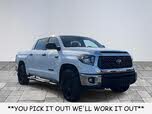
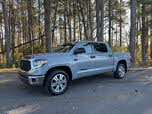
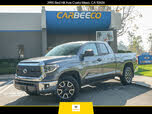
Choose the 2020 Toyota Tundra if:
Shop Now- You appreciate a rugged and simplistic truck design without frills.
- Off-road capability in a well-equipped, durable model like the TRD Pro is a priority.
- You value a proven, durable powertrain and solid build quality.


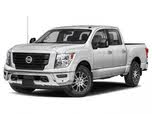
Choose the 2021 Nissan Titan if:
Shop Now- Advanced interior comfort and technology, along with contemporary design, are important to you.
- Superior standard safety features and a comprehensive warranty appeal to your needs.
- Better fuel efficiency and strong towing capabilities are what you’re looking for in a full-sized truck.


By: CarGurus + AI
At CarGurus, our team of experienced automotive writers remain at the heart of our content operation, conducting hands-on car tests and writing insightful guides that are backed by years of industry experience. To complement this, we are harnessing AI to make our content offering more diverse and more helpful to shoppers than ever. To achieve this, our AI systems are based exclusively on CarGurus content, ratings and data, so that what we produce is both unique to CarGurus, and uniquely helpful to car shoppers.