Considering an EV? Here's Every Electric Car Brand in the US
We’ve arrived at the tipping point where it’s probably easier to list the manufacturers that don’t make an electric car rather than those that do. It’s amazing to consider that it was only 15 model years or so ago when you could first purchase an electric vehicle (EV) from a mass-market automaker in the United States.
In the intervening years, at least three startup car manufacturers have emerged, one of which sells over 300,000 zero-emissions cars a year. That alone is incredible. Twenty-five years ago, most experts in the industry would’ve told you that the introduction of an all-new independent auto manufacturer in the US market was all but impossible.
In that short span of time, the variety of [electric vehicles](https://www.cargurus.com/lpo/electric-cars"CarGurus Electric Cars hub") offered has exploded. In 2011, there was only one choice: the frugal, economy-focused Nissan Leaf.
Today, there is a variety of electric luxury cars, pickup trucks, and SUVs – and we still have the Nissan Leaf. The only thing missing at this point is a pure sports car, and that’s coming in the very near future. This roundup of electric car companies is very much a moving target. Every few months, new EVs emerge from traditional brands, as well as upstarts in the industry, hoping to disrupt the status quo.
For now, we’ll keep this list to makers of passenger vehicles that anyone with cash or a decent credit score can purchase, either now or in the next year or two.

Acura
Acura’s first all-electric vehicle, the ZDX, is based on General Motors' Ultium platform. It features luxurious amenities, a sleek design, and promises a range of just over 300 miles. The ZDX is built on GM’s Ultium platform, and it comes in rear-wheel-drive or all-wheel-drive configurations.
Base A-Spec RWD models come with a single motor with 358 horsepower and 313 miles of range; the more powerful AWD version adds a second motor for 490 total horsepower and 304 miles of range, while a range-topping Type S model is also AWD but packs 500 horsepower, 278 miles of range, an air suspension with adaptive dampers, 22-inch alloy wheels, and Brembo brakes.
Audi
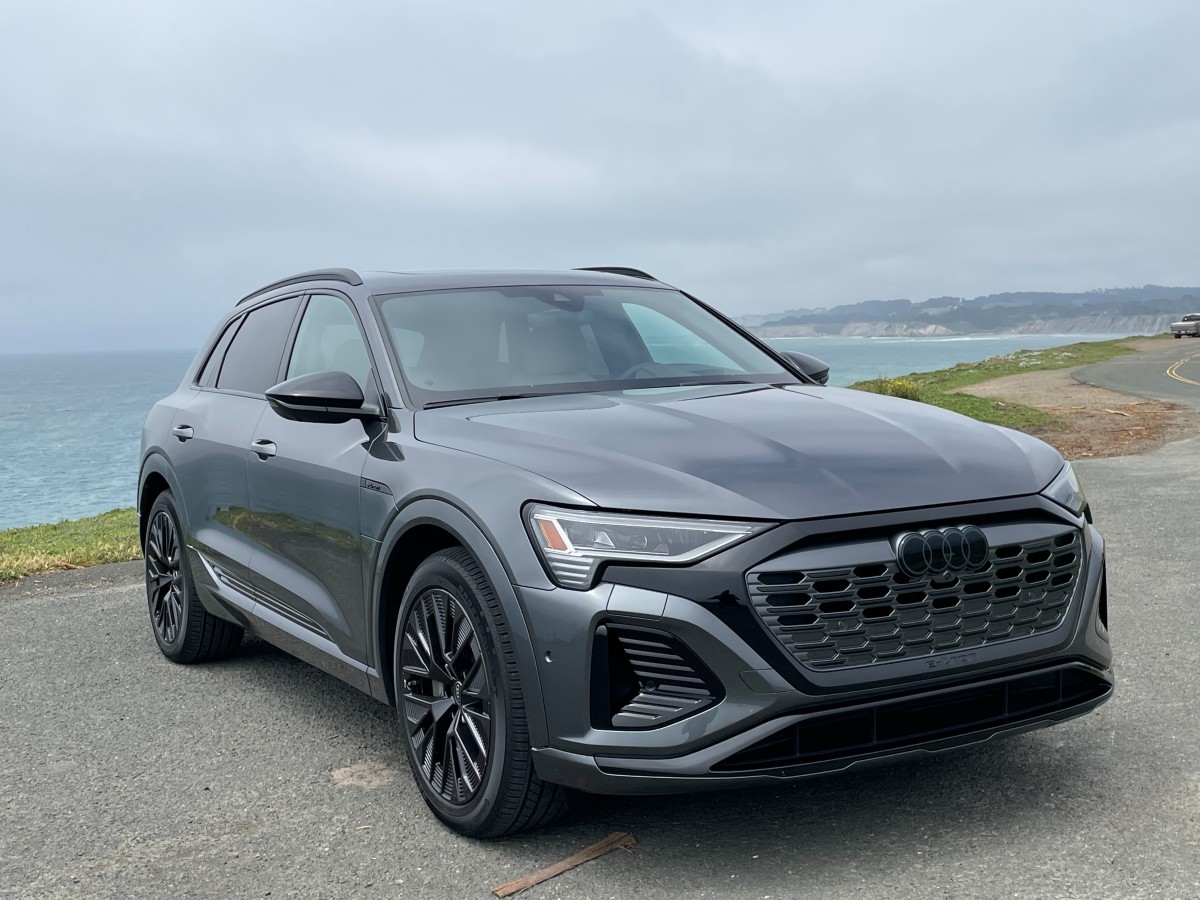
Audi is leading the charge for luxury EVs, all of which fall under the ‘e-tron’ family name, which can be confusing considering, until 2024, one of the models was just named “e-tron.” For a relatively small manufacturer, Audi has a surprising number fully electric models in the current model year, though some of those “models” are really just variations on a body style.
At the high-end, there are the swoopy, low-slung e-tron GT and RS e-tron GT based on the Porsche Taycan platform. These premium sedans can accelerate to 60 in about 3 seconds in RS trim, and deliver about 250 miles of range. While range is limited compared to its competitors, the etron GT's are incredibly fast charging, able to charge from 5% to 80% in 22.5 minutes.
The Q8 e-tron, formerly known as just "e-tron", is getting a little long in the tooth in 2024. First launched in 2019, the Q8 e-tron was refreshed in 2022 with some minor improvements. Range is competitive at up to 285 miles, and charging has been improved, now able to hit 170kW speeds.
More recently, the brand introduced the Q6 e-tron, which offers dual-motor AWD versions across its trims. The base Q6 e-tron 55 delivers 396 hp and 488 lb-ft of torque, with a range of up to 375 miles. The higher-performance SQ6 e-tron produces 510 hp and 553 lb-ft of torque. The Q6 is built on the new PPE platform, which supports 800-volt charging architecture, allowing ultra-fast charging at speeds up to 270 kW, enabling an 80% recharge in about 20 minutes.
Rounding out the e-tron family is the Q4 e-tron, a compact luxury crossover based on the MEB platform (shared with the VW ID.4). Launched for the 2022 model year, the Q4 e-tron is available either in rear-wheel-drive or all-wheel-drive, and has a driving range of up to 288 miles. The Sportback version is perfect for those looking for a design-forward coupe crossover EV.
BMW
It’s easy to forget how early BMW jumped into the EV marketplace. Offered between 2014 and 2021, the i3 was a tiny, B-segment supermini that looked, performed, and handled as if were no relation whatsoever to any other BMW available. The original i3 had a 60-Ah battery with an 81-mile range, which buyers could supplement with a gas-fired “range extender.” That car is gone now, but it was a rolling testbed for BMW, providing a lot of research and development for the automaker’s current and future lineup.
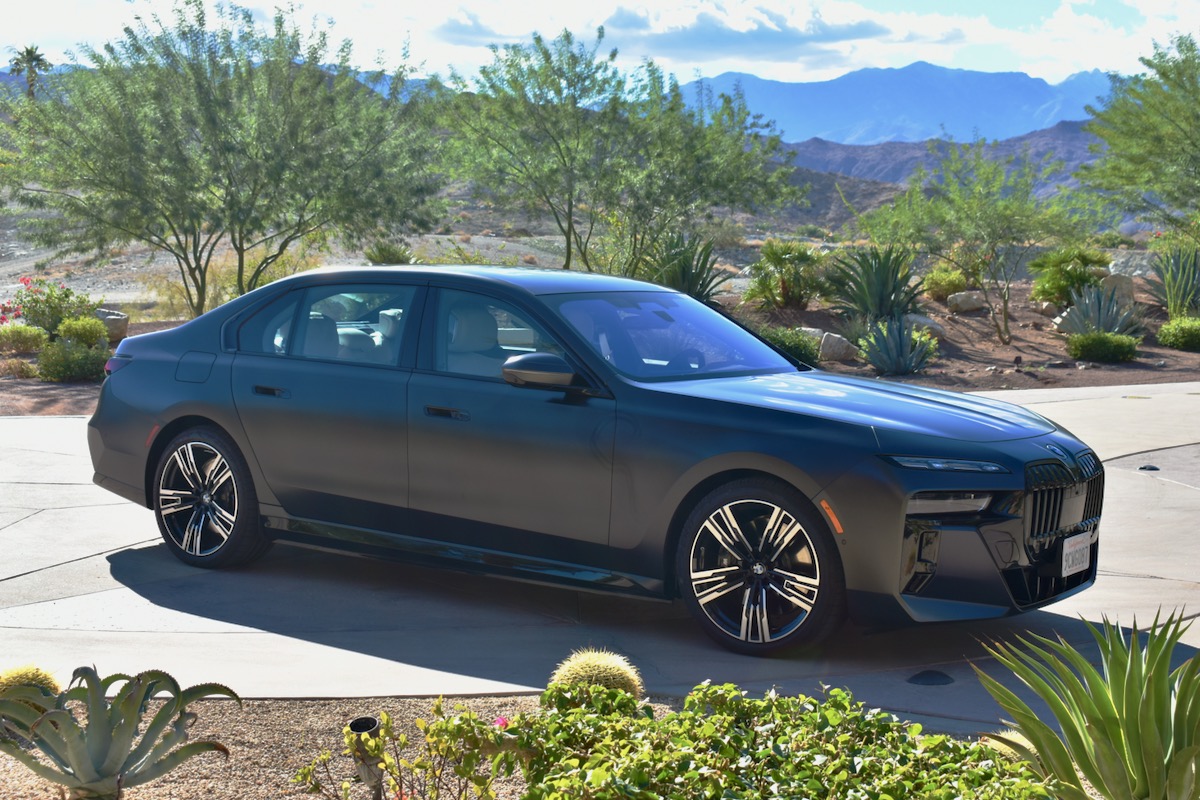
Current BMW EVs include the long-range i4, i5, i7 sedans and iX crossover.
The i4 is currently available as the i4 edrive35, edrive40, or i4 M50, which are competitively priced with 4 Series internal combustion engine counterparts. In M50 trim, the i4 packs 536 horsepower and can sprint to 60 miles per hour in only 3.7 seconds. Sitting inside, or form the outside, the i4 is almost identical to its ICE-powered sibling, other than a lack of engine noises.
Slotting between the i4 and i7 in BMW's electric sedan lineup is the new i5. The i5 eDrive40 features a single rear-mounted motor with 335 hp and 317 lb-ft of torque, achieving a 0–60 mph time of 5.7 seconds and a range of around 300 miles. The i5 M60 xDrive has dual motors with a combined output of 590 hp and 605 lb-ft of torque, with a range of 256 miles and a 0–60 mph time of just 3.7 seconds.
The i7 starts at almost $120,000, about $25k over the price of an ICE-powered 7 Series. In range topping M60 form the i7 provides a lot of grunt, and a luxurious experience for rear seat passengers.
The BMW iX Sports Activity Vehicle starts at $87,250, about $10,000 more than you’d spend for an X7, for a crossover about the same size as an X5. A dual-motor all-wheel drive systems produces up to 610 hp in M60 trim, but the less powerful 516 hp xDrive50 model has a better driving range of up to 309 miles.
Cadillac
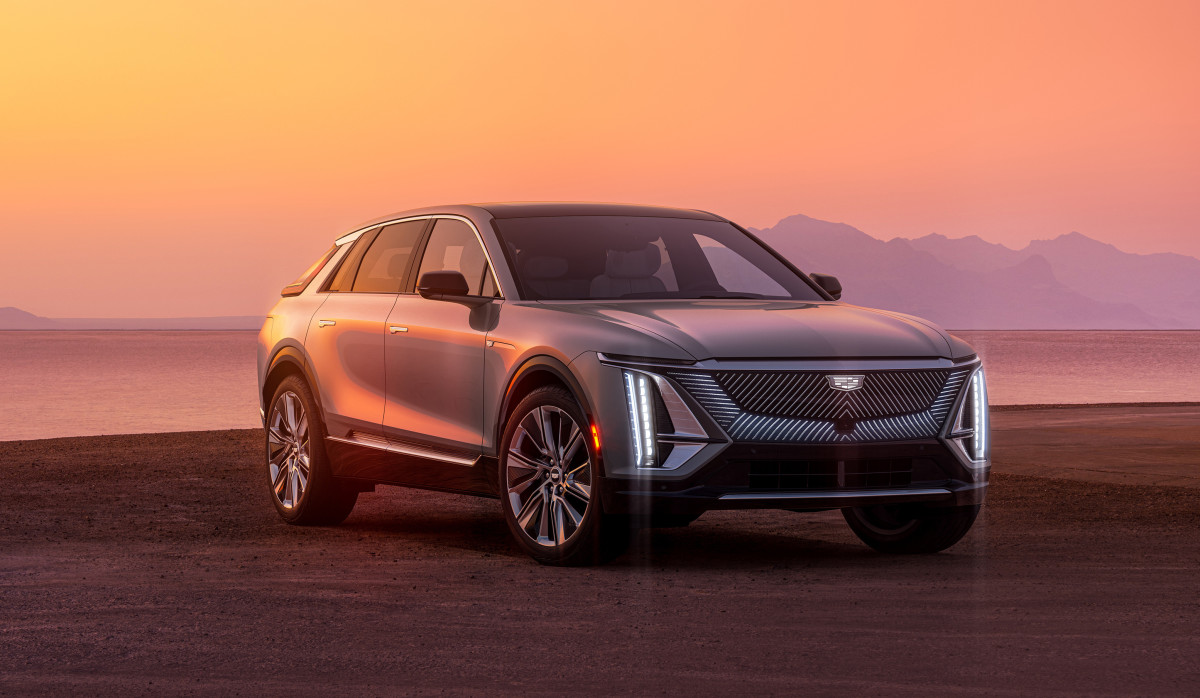
Cadillac’s first EV, the Cadillac Lyriq, was introduced for the 2023 model year. Built on GM’s BEV3 platform, the Lyriq is a luxury mid-size crossover with over 300 miles of range from a 100kWh battery pack. Standard features include GM’s Supercruise active driving suite and a 19-speaker stereo.
For the 2025 model year, Cadillac is adding two more electric vehicles to its lineup: the Escalade IQ and the Optiq.
The Escalade IQ is the electric version of Cadillac’s iconic luxury SUV. With a massive 200kWh battery, the Escalade IQ is rated at 460 miles of range. Inside, drivers will find a luxurious 7-passenger cabin and a massive 55” display stretching across the dash. Prices will start from $127,700.
The Optiq will be Cadillac’s entry-level EV, based on the same platform as the Equinox EV. Stylish design on the outside, and packed with technology on the inside, the Optiq looks to be an interesting package with standard Supercruise, 300 horsepower and 300 miles of range. Prices will start from $52,895.
Chevrolet
Known initially for its Volt plug-in hybrid and its Bolt all-electric compact hatchback, Chevy's EV attention has now shifted to crossovers, trucks, and yes, Corvettes.
The biggest news (literally) is the Silverado EV, a ground-up reinvention of the pickup truck, this time electrified.
It's built on GM’s Ultium battery platform, which it shares with other GM electric models. The Silverado EV is designed to compete with other electric trucks like the Ford F-150 Lightning and Rivian R1T, offering impressive capabilities and cutting-edge technology.
The Silverado EV features two powertrain options. The base WT (Work Truck) version comes with dual motors delivering 510 hp and 615 lb-ft of torque, with an estimated range of up to 450 miles on a full charge. The higher-end RST model offers 754 hp and 785 lb-ft of torque, capable of reaching 0-60 mph in under 4.5 seconds.
The RST version also includes a towing capacity of up to 10,000 pounds and a payload capacity of around 1,300 pounds. New trims announced for the 2025 model year include a lower-priced WT Standard Range, and a mid-level LT Extended Range, which looks to be the sweet spot in the lineup.
Key features include DC fast charging at up to 350 kW speeds, which can add 100 miles of range in just 10 minutes. The Silverado EV also comes with a large 17-inch infotainment screen, advanced Super Cruise driver-assistance technology, and a unique "Multi-Flex Midgate" that extends the bed length for larger cargo. The truck offers up to 10.2 kW of power through its PowerBase charging system, allowing owners to power tools or even another EV.
The new Blazer EV comes in several trims, including a high-performance SS version. The Blazer EV SS features dual motors producing up to 557 hp and 648 lb-ft of torque, offering an estimated range of 290 miles. The RS and LT trims offer around 293 to 320 miles of range, depending on configuration.
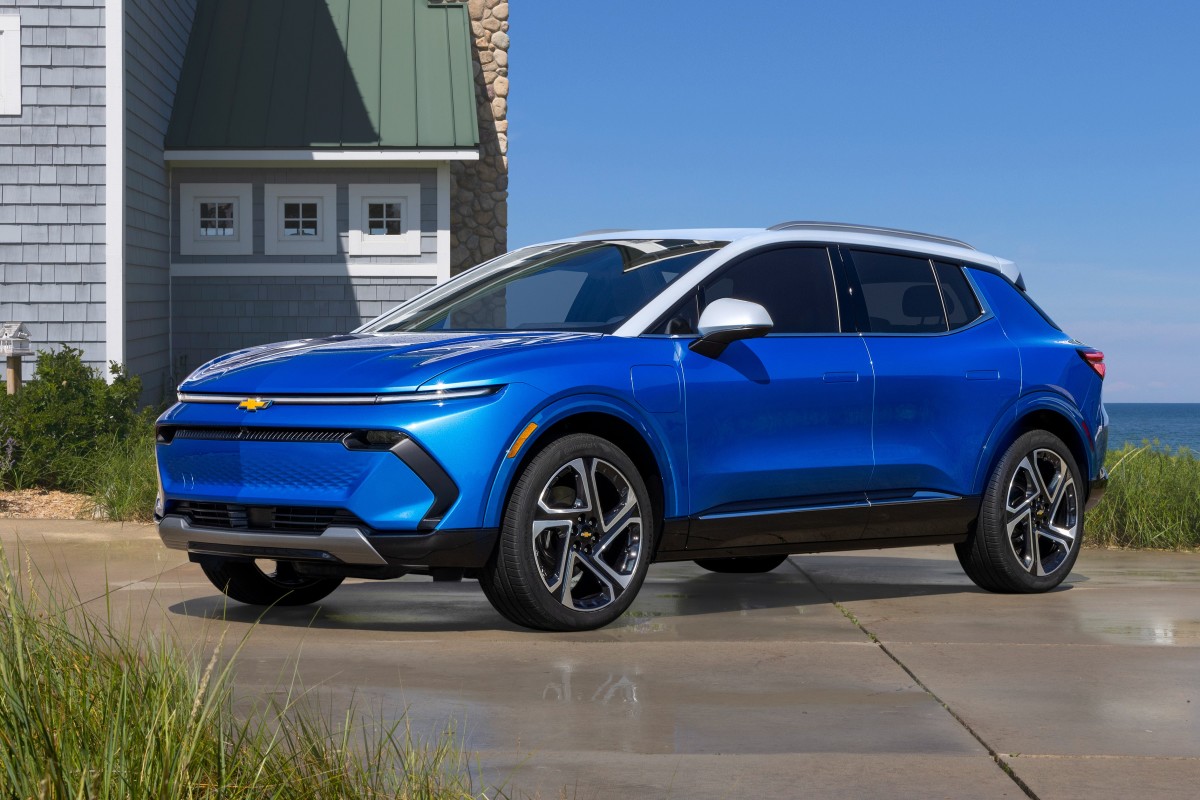
Moving down the electric Chevy lineup, we find the Equinox EV. The base Equinox EV comes with a single FWD motor producing 210 hp, while AWD versions have dual motors producing 290 hp. Range estimates vary, with the base model offering 250 miles, and higher trims offering up to 300 miles.
And are you ready for an electric Corvette?
The Chevrolet Corvette E-Ray is the first hybrid version of the iconic Corvette and blends the brand's traditional performance with electric power. Unlike a fully electric vehicle, the E-Ray is a hybrid, utilizing a combination of a 6.2-liter LT2 V8 engine paired with an electric motor.
The V8 makes 495 hp and 470 lb-ft of torque, powering the rear wheels, while the front-mounted electric motor adds another 160 hp and 125 lb-ft of torque to the front wheels. This gives the E-Ray a total system output of 655 hp and makes it the first Corvette with all-wheel drive.
Performance figures are impressive, with a 0-60 mph time of just 2.5 seconds, making it one of the quickest Corvettes ever. Thanks to the E-Ray's small 1.9 kWh battery, you can pull off brief electric-only driving at low speeds, though its primary function is to enhance performance rather than provide extended EV range.
Ford
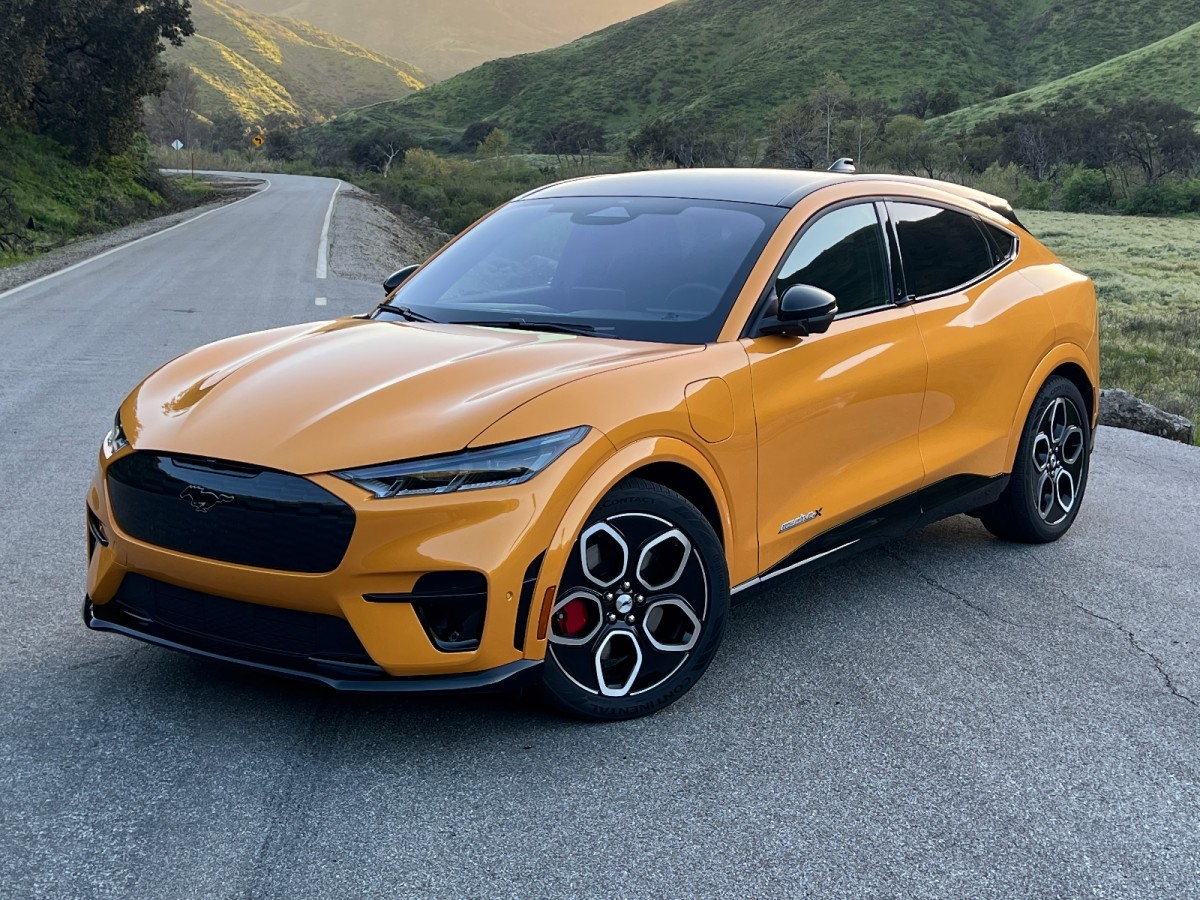
The Blue Oval has more experience with EVs than one might imagine, and it's putting it to use on production vehicles like the Ford Mustang Mach-E and the Ford F-150 Lightning, a strategy that helps ease the introduction of EV propulsion by introducing it to existing nameplates. We said we weren’t going to cover commercial vehicles, but the Ford E-Transit van also has passenger potential, so we'll include it.
The Mustang Mach-E is a great alternative to a Tesla Model Y. In base trim, the ride can be a little rough; stepping up to the GT adds adaptive MagneRide shocks for a smoother ride and impressive performance with 480 hp and up to 700 lb-ft of torque. For 2025 Ford is adding the Rally trim to the lineup for rally-inspired performance. With off-road tires, a lifted suspension, and underbody shilding, the Mach-E Rally is perfect for storming down dirt roads.
The F-150 Lightning is a familiar full-size truck with an electric powertrain. Towing and hauling capacity is comparable to the gas-powered version. The Lightning is also the fastest F-150 available, able to accelerate to 60 mph in under four seconds when equipped with the larger 131-kWh extended range battery pack.
Search for Ford Mustang Mach-E
See all
Genesis
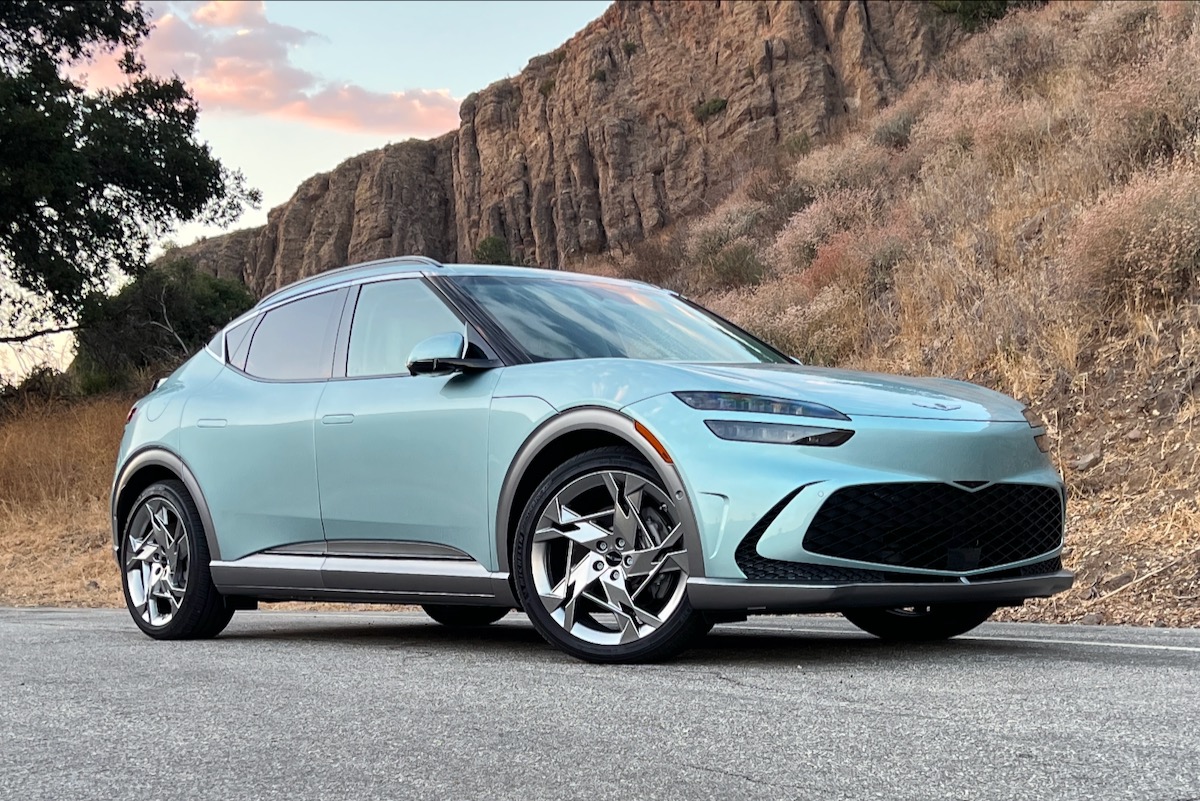
Hyundai’s premium brand has been making a lot of waves recently with its beautifully futuristic exterior and interior styling. Until 2023, the Genesis lineup was powered exclusively by ICEs, but that changed with the all-new GV60, and it continues with electrified versions of the G80 and GV70.
The former is built on the same underpinnings as the brilliant Hyundai Ioniq 5 and Kia EV6, but the latter two paint a more telling picture of Genesis’ future. The company’s decision to electrify its existing core models has us thinking that it’ll be an all-EV brand before too long.
GMC
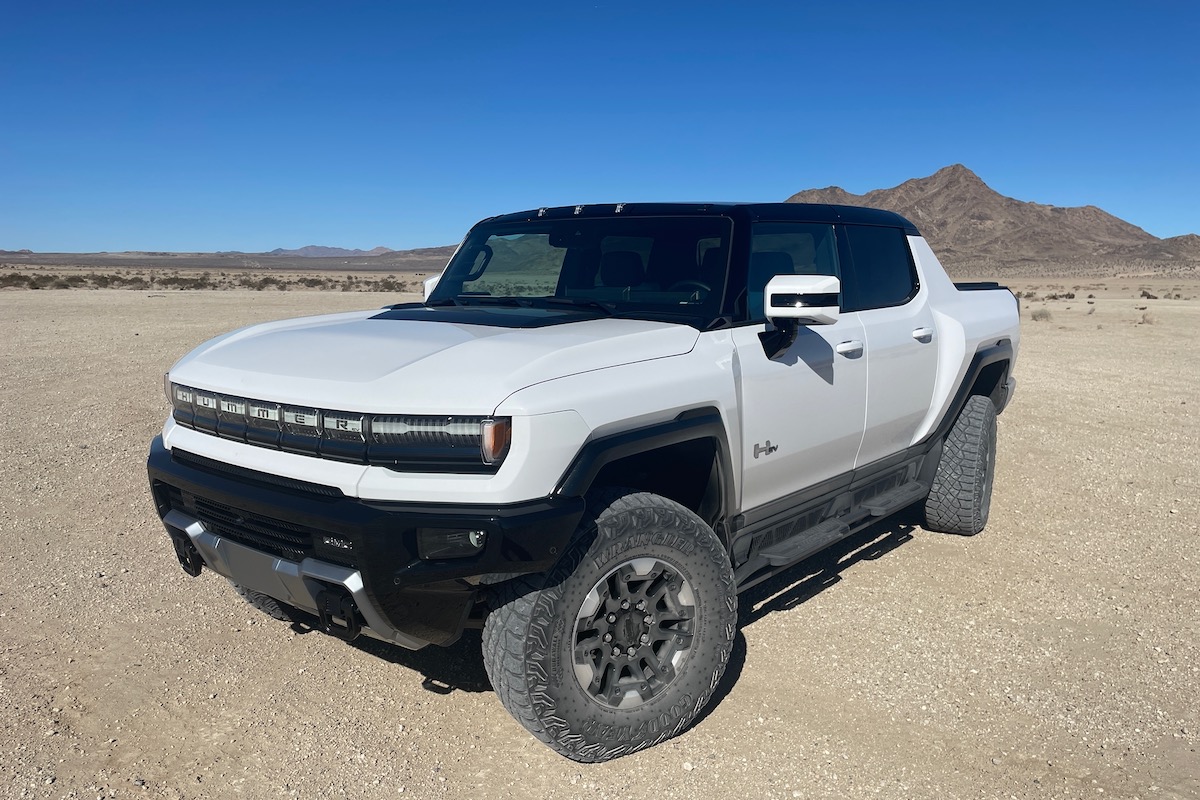
Hummer used to be its own brand, but today, it’s a model under the GMC brand. If there was ever a vehicle that needed a credibility makeover, it’s Hummer, which was nearly synonymous with the gas-guzzling excess of the pre-2008 economic meltdown era.
The GMC Hummer product line includes the Hummer EV Pickup—which is first out of the gate later this year—and the Hummer EVSUV, which is expected to arrive next year.
The exciting thing about the GMC Hummer EVs is the promise that they represent for off-road SUVs in the future. These aren’t just off-road vehicles with capability to match SUVs powered by internal combustion. These are vehicles that can do things better.
Thanks to the lack of a transmission, transfer case, and differential, these EVs can pivot their wheels in all directions to provide superior maneuverability, and they also have ground clearance that no ICE-powered vehicle can currently deliver.
Meanwhile, the Sierra EV is GMC’s premium, all-electric take on the full-size pickup, also built on GM’s Ultium platform and sharing much of its technology with the Silverado EV. The Sierra EV aims for luxury and capability, especially in its top Denali Edition 1 trim, which offers high-end finishes and advanced technology.
The Sierra EV Denali Edition 1 features dual motors providing 754 hp and 785 lb-ft of torque, delivering a 0-60 mph time of around 4.5 seconds. It has a driving range of about 400 miles on a full charge, and like the Silverado, it supports 350 kW DC fast charging, allowing for quick recharges of up to 100 miles in 10 minutes.
The Sierra EV’s towing capacity is up to 9,500 pounds, and it also includes a versatile bed with GMC’s MultiPro Tailgate, allowing for enhanced cargo flexibility. Inside, the Denali Edition 1 boasts a premium cabin with a large 16.8-inch touchscreen, a heads-up display, and Super Cruise hands-free driving technology. The truck also offers the Power Station Pro feature, capable of delivering 10.2 kW of power, which can be used for powering tools, appliances, or even another EV.
Search for GMC Hummer EV Pickup
See all
Honda
Desperately seeking to solve the fact that it's a rare automaker that doesn't offer at least one EV in its lineup, Honda turned to General Motors for a quick solve while it works on its own models due later this decade.
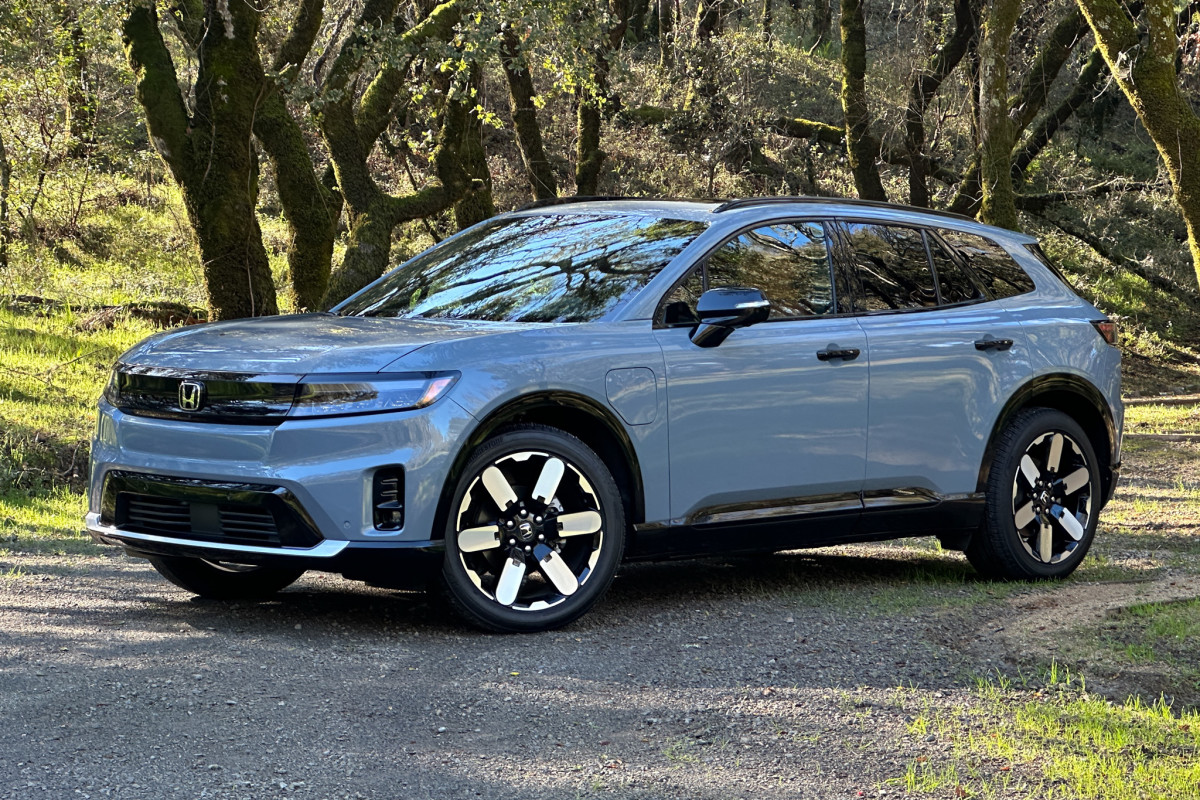
The result of its GM collab is the Prologue, an all-electric compact crossover uses the Ultium platform seen in the Chevy Equinox EV and others. In Honda guise, a single-motor version makes 212 horsepower and has 296 miles of range; a dual-motor AWD version jumps up to 288 horsepower and down to 273 miles of range.
The Prologue has a sleek, modern design with a spacious, tech-forward interior. It includes a large infotainment display, digital driver’s display, and advanced driver-assistance systems. Positioned as a mid-size SUV, the Prologue aims to offer practicality and electric mobility for families while reflecting Honda’s shift toward electrification.
Hyundai
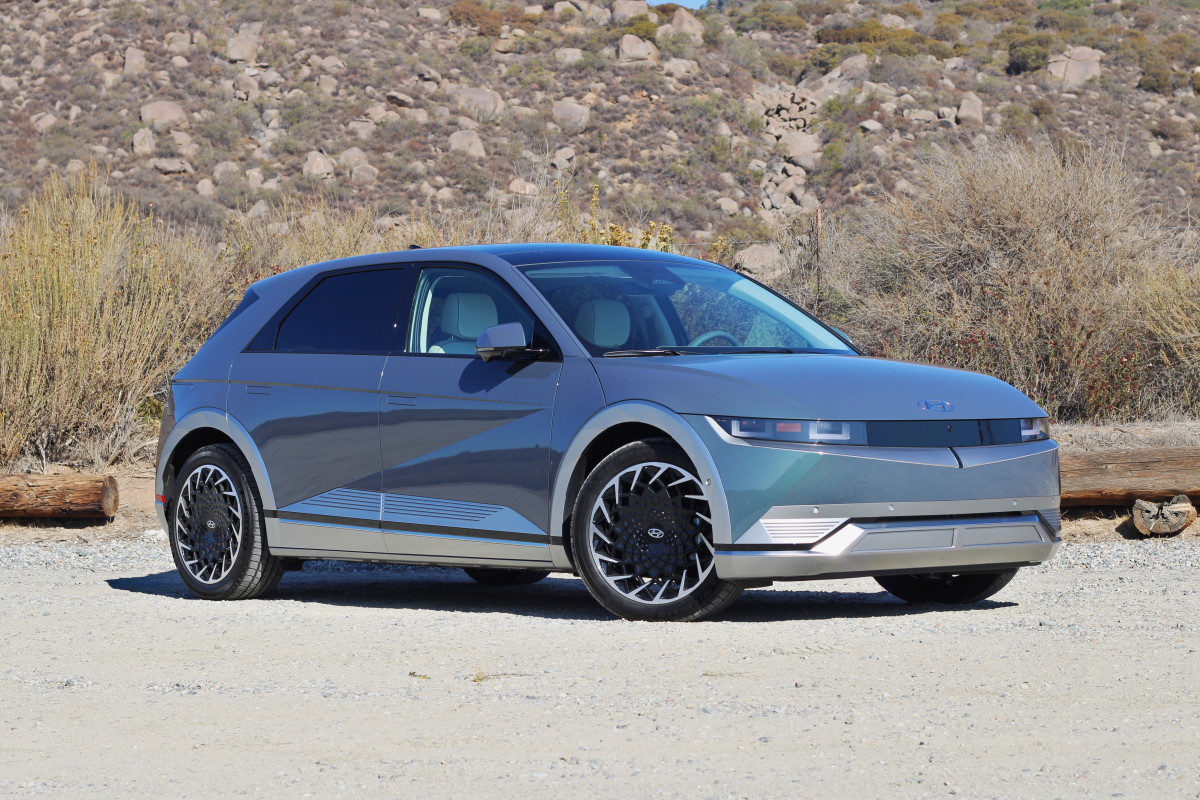
It appears that for the short term, Hyundai will brand most of its current and upcoming EVs with the Ioniq nameplate. We’ve driven the Ioniq 5, and if you haven’t seen the video review that Matt Smith conducted, you should. It’s a terrific vehicle with retro-futuristic styling that grabs more attention than a Tesla at this point.
For the 2025 model year, Hyundai released the Ioniq 5 N, a high-performance version of it’s funky electric crossover. A dual-motor all-wheel drive powertrain delivers up to 641 hp and 568 lb-ft of torque, propelling the N to 60-mph in 3.25 seconds. Hyundai went to great lengths to make the N hilarious fun; you sit low in heavily bolstered sport seats, and its N Grin Shift mode lets you “shift” fake gears and bounce off a synthetic “rev-limiter”. Add in big Brembo brakes and a track tuned suspension, the Ioniq 5 N is a blast to drive.
Hyundai also offers an Ioniq 6and will soon offer a larger Ioniq 7 SUV, the latter arriving immenently. The Ioniq 6 takes the Ioniq 5 recipe and adds a sleek fast-back sedan body in place of the 5's SUV shape. In rear-wheel-drive form, the Ioniq 6 provides an impressive driving range of up to 342 miles.
If you are looking for a smaller, more affordable EV: the Hyundai Kona Electric is an excellent choice. Almost indistinguishable from its ICE counterparts, the Kona Electric is practical and pleasant to drive.
Jaguar
It’s hard to figure out what’s going on at Jaguar. The company has seen sales growth in only six model years since 2005, and in 2021, it sold only 17,149 cars in the US. Porsche sells 70,000 vehicles a year now. Compared to that, Jaguar is barely in business.
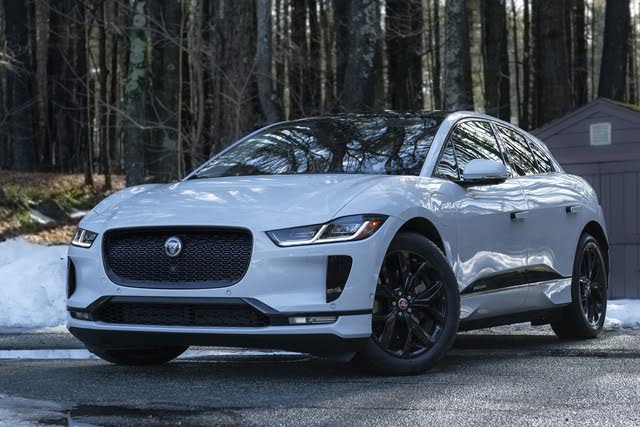
Nevertheless, Jaguar was early into the luxury EV market with the i-Pace, which is a deceptively fast, hilariously fun-to-drive crossover. It’s never managed to sell a lot, peaking at 16,457 back in 2020 worldwide, which is a shame, because it’s truly a wonderful vehicle.
Jaguar says it plans to build nothing but EVs by 2025, but it almost simultaneously announced the scuttling of a planned all-electric XJ replacement, so who knows what to expect at this point?
Kia
Prior to the current crop of EVs with serious range, Kia built our favorite electric vehicle on an existing platform: The since-discontinued Kia Soul EV. It looked like any other Soul, modified with a funky “grille” since it no longer needed airflow through a radiator. But when you stepped on the accelerator, the Soul EV leapt out of the blocks as if a jockey had put the spurs to it.
The Soul EV’s spiritual successor is the Kia Niro EV. An electric version of the Kia Niro which is also offered with a gas or hybrid powertrain. An added bonus of this shared platform is that the electric version looks the same as the ICE version. With a torquey electric motor, the Niro EV is surprisingly fun to drive and practical.
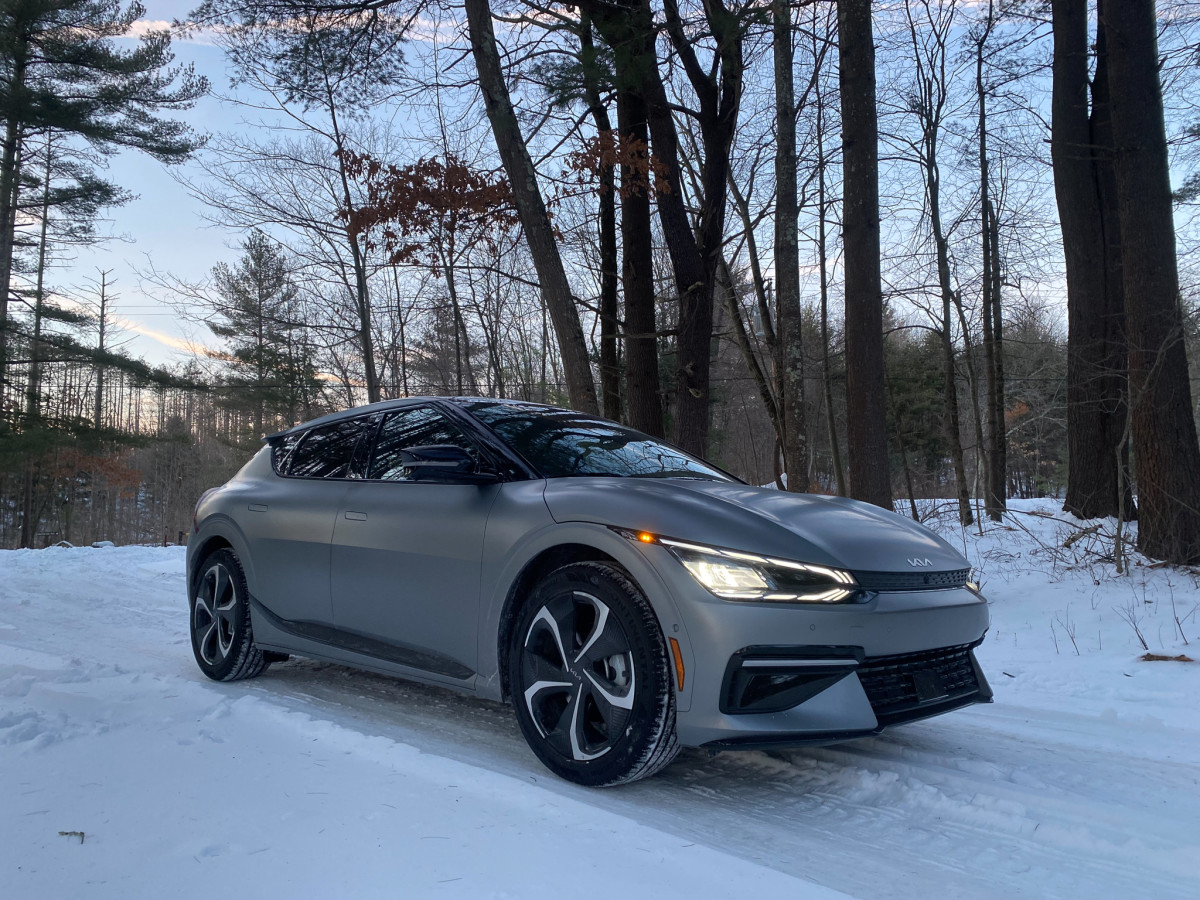
The Soul EV laid the groundwork for the current Kia EV6, which shares its platform with the Hyundai Ioniq 5. The EV6 feels like the sportier “touring car” to the Ioniq 5’s crossover SUV, and it really looks like the future.
You could’ve seen this car in a film like Minority Report, and you would’ve thought its design was a little too far from reality at the time. Its swoopy styling hides a generously scaled interior that is immediately familiar (if you’ve ever been inside a Kia before) and a preview of what we might expect a conventional car to look like in the near future.
Meanwhile, Kia's larger, EV9 three-row all-electric crossover is another homerun as the first large 3-row electric crossover from a major automaker. It represents the brand’s flagship EV model, offering both bold design and advanced technology. Built on Hyundai-Kia's E-GMP platform (the same platform used by the EV6 and Hyundai Ioniq 5), the EV9 combines practicality with cutting-edge electrification.
The EV9 is available in both rear-wheel-drive (RWD) and all-wheel-drive (AWD) configurations. The RWD model features a single electric motor producing around 201 hp and 258 lb-ft of torque, while the dual-motor AWD version delivers 379 hp and 516 lb-ft of torque, allowing it to accelerate from 0-60 mph in approximately 5 seconds.
One of the EV9’s key strengths is its range, offering up to 300 miles on a full charge with its larger 99.8 kWh battery pack. It supports ultra-fast 800-volt charging, allowing the battery to charge from 10% to 80% in around 20-25 minutes using a DC fast charger.
Inside, the EV9 offers a spacious and tech-forward cabin with available seating for seven passengers. The interior includes a large dual-display infotainment system, high-quality materials, and a variety of advanced driver-assistance systems likeKia’s Highway Driving Assist and Smart Cruise Control. The EV9 also includes vehicle-to-load (V2L) capabilities, enabling it to power external devices and appliances.
Lexus
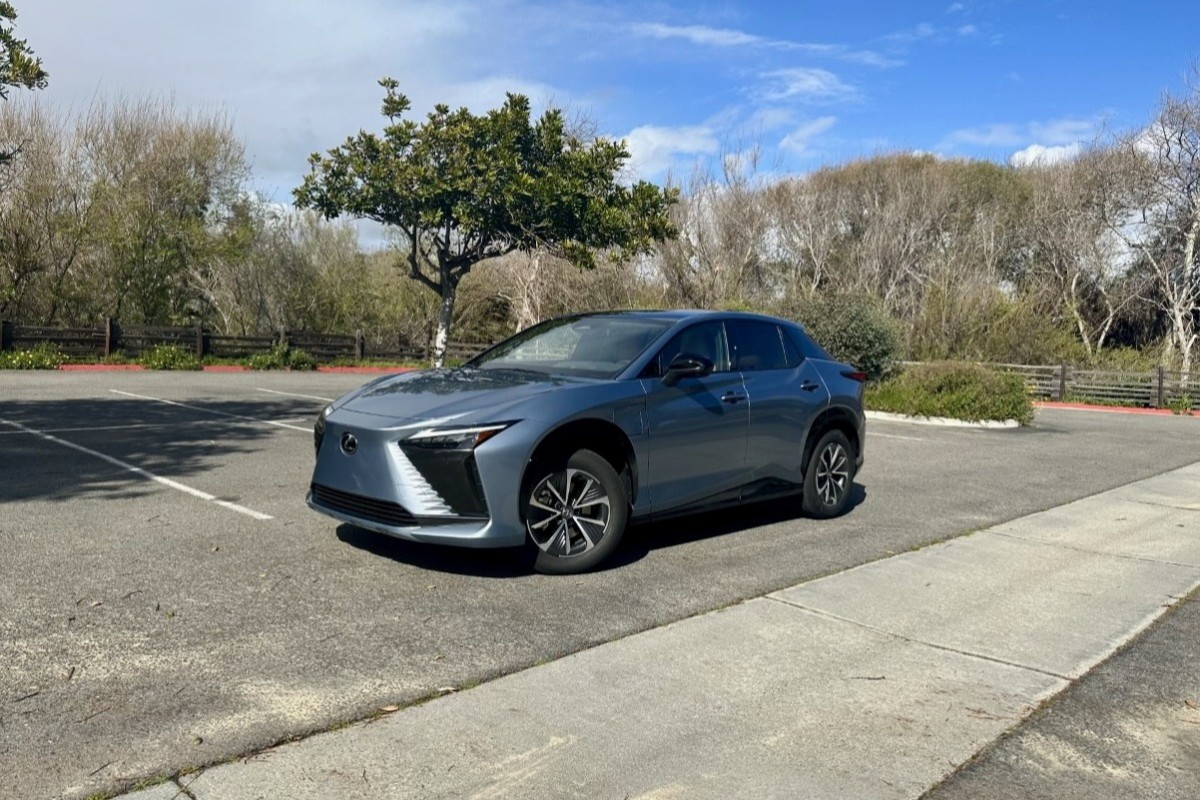
Lexus has one fully battery-electric vehicle on sale today. The Lexus RZ is a small crossover with standard all-wheel drive, a 220-mile driving range, and an optional yoke-style steering wheel. That last detail certainly sets the RZ apart from the crowd, although it shares many of its underpinnings with the Toyota Bz4X and the Subaru Solterra.
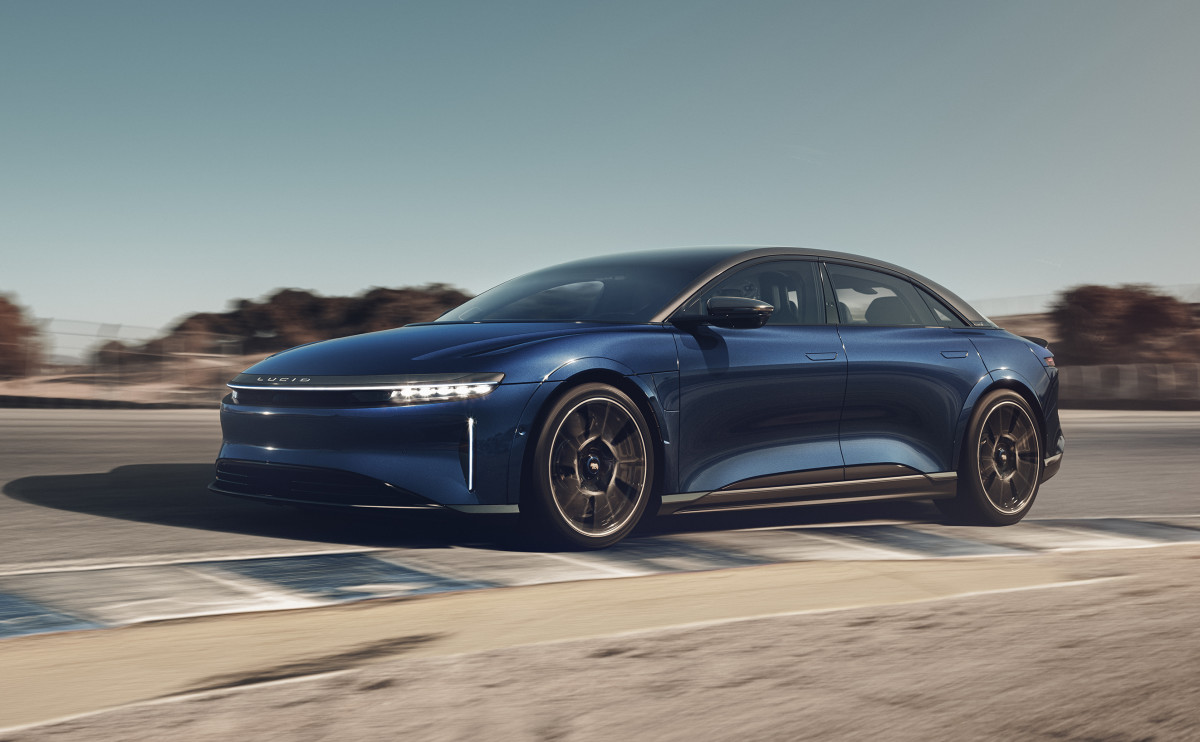
Lucid
Lucid started life as battery manufacturer Atieva, which was in the business of providing battery and battery electric vehicle (BEV) platforms to other manufacturers. But the money isn’t in being a supplier, it’s in building your own car.
Its first model, the Lucid Air, is a luxury electric sedan that has quickly gained recognition for its blend of cutting-edge technology, impressive performance, and exceptional range. Built to compete directly with high-end EV sedans like the Tesla Model S and Mercedes-Benz EQS, the Lucid Air offers several iterations, each delivering different power outputs, features, and range capabilities. All Lucid Air models feature a sleek, futuristic design with a spacious, high-tech interior.
The base model, the Air Pure, features a single motor with rear-wheel drive (RWD), producing 480 hp. It has an estimated range of around 410 miles. There is also a dual-motor, all-wheel-drive (AWD) option, providing enhanced performance with similar range figures.
The Touring comes with dual motors, providing AWD and producing 620 hp. It offers an estimated range of 425 miles, thanks to its efficient battery technology. This version balances luxury, performance, and range, making it a mid-tier option in the lineup.
The Grand Touring steps up the performance with dual motors, producing 819 hp. It has an impressive range of up to 516 miles, making it one of the longest-range electric cars on the market. The Grand Touring can accelerate from 0-60 mph in just 3 seconds and supports ultra-fast 900V charging, allowing it to add significant range in minutes.
Finally, at the top of the heap is the Lucid Air Sapphire, the ultimate performance version of the Air, featuring a tri-motor setup that delivers over 1,200 hp. This version is designed for extreme speed and acceleration, with a 0-60 mph time in under 2 seconds, making it one of the fastest production cars in the world. The range is slightly lower than the Grand Touring, but still substantial considering the performance of this vehicle.
Next up will be the Gravity, a large, three-row luxury crossover based on the same platform as the Air. The Gravity will be a luxury electric SUV with seating for up to seven passengers, offering a combination of high performance, long range, and advanced technology.
A Touring model will be the initial base version, offering 620 horsepower, while a Grand Touring version promises 1,050 horses, and a range-topping Sapphire version could go as high as 1,200 horsepower or more. Later, a Pure trim is expected at the bottom of the range, offering 480 horsepower.
The Gravity will come equipped with Lucid’s advanced driver-assistance systems, ultra-fast charging capabilities, and a large, luxurious interior with a focus on cutting-edge infotainment systems. The SUV will also offer versatile configurations with optional third-row seating.
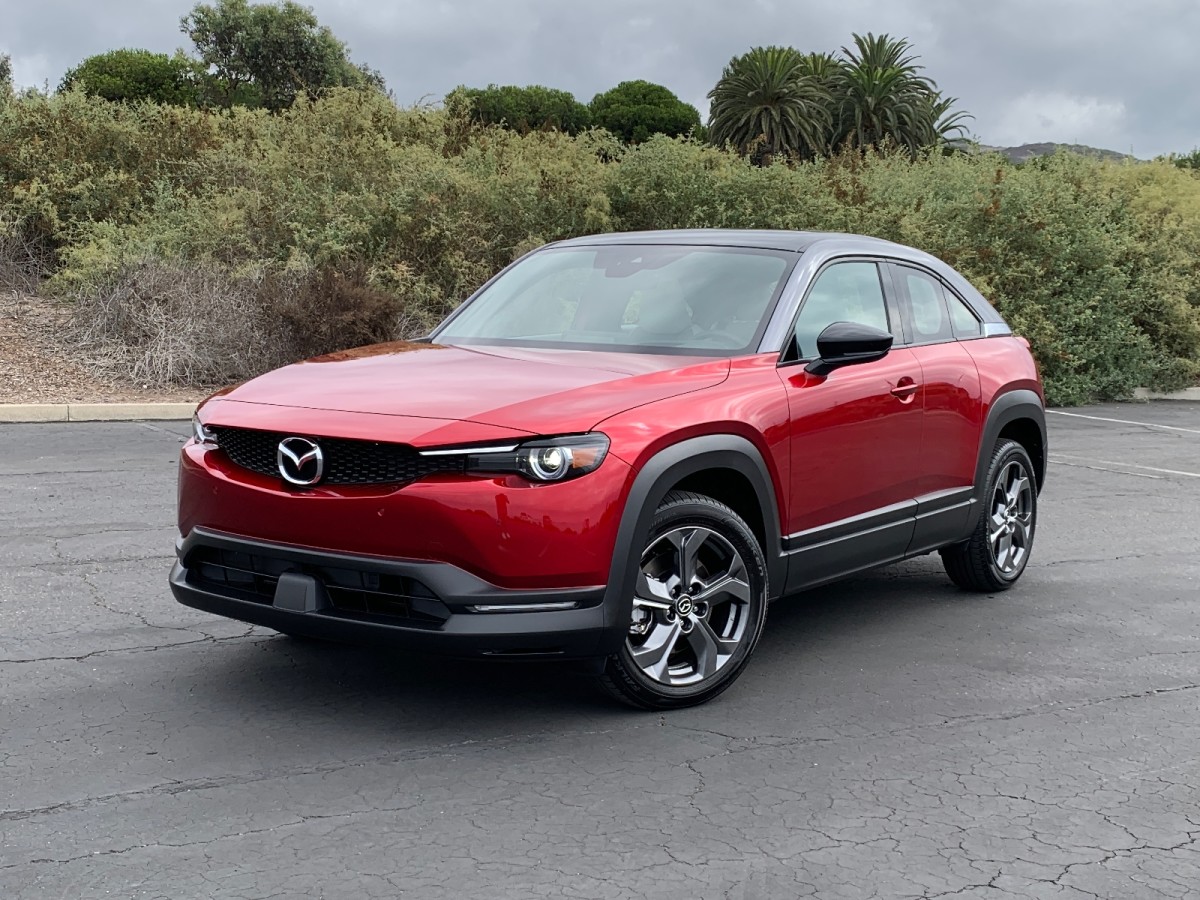
Mazda
Mazda is—comparatively speaking—a tiny manufacturer. When all of the other manufacturers were delivering hybrids, Mazda never did, because it just didn’t have the R&D facilities of a company like Toyota or Honda.
It’s sort of the same situation now with EV production. Mazda introduced its first EV, the MX-30, for the 2022 model year, and we had that Robin Williams moment from Jumanji when it did: What year is it, if a manufacturer introduces an electric vehicle with a range limited to 100 miles? Mazda does plan to offer its EV crossover with a range extender, but it’s powered by a Wankel rotary engine, which has never in its history been particularly fuel-efficient or reliable.
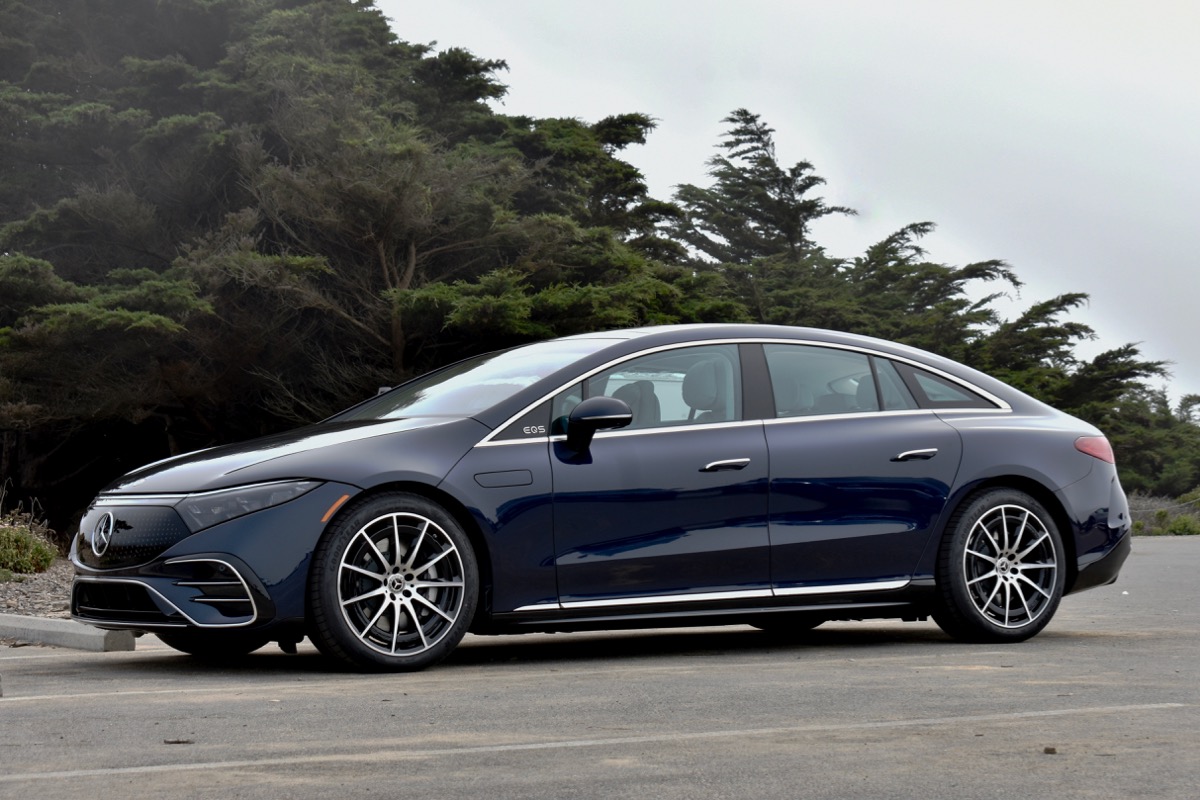
Mercedes-Benz
The three-pointed star has an entire slate of electric vehicles entering the market, all carrying the “EQ” prefix in the model name.
The EQS is essentially an S-Class with an EV powertrain and an incredibly aerodynamic shape. Also available in SUV form, the EQS is an electric SUV unlike any other. The EQE isn’t an E-Class exactly, but rather a “mid-size sedan with E-Class lineage.” If you need more ground clearance and cargo space, the EQE SUV is a great option, with GLE-Class lineage. The EQB is billed as an “all-terrain, all-electric SUV with optional seating for seven.”
Perhaps most exciting is the EQG, an all-electric version of Mercedes' iconic G-Wagen. Officially known as the G580 with EQ Technology, the EQG features four individual electric motors, one for each wheel. Combined, they make a total of 579 horsepower and 859 pound-feet of torque; range is expected to be in the 240-mile neighborhood.
DC fast-charging will juice the SUV from 10 percent battery to 80 percent in just over half an hour and of course, the luxe features and immense off-road prowess of its gas counterpart will carry over to this electrified version.
Search for Mercedes-Benz EQS
See all
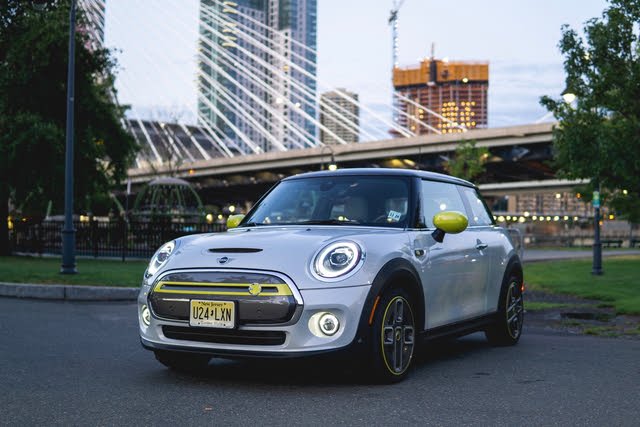
MINI
BMW’s entry-level brand has offered a Mini Cooper SE for quite a while now, but is saddled with a maximum range of 110 miles, making it non-competitive among the current class of EVs. We will see an new generation in 2025, with more power and more range.
An electric version of the Countryman has been announced for 2025. Like the Cooper SE, range will not be quite as limited with 212 miles from a 65kWh battery. With 300 horsepower from an all-wheel-drive dual-motor drive train: we are expecting the same Mini driving dynamics we know and love. Prices start at $45,200.
Nissan
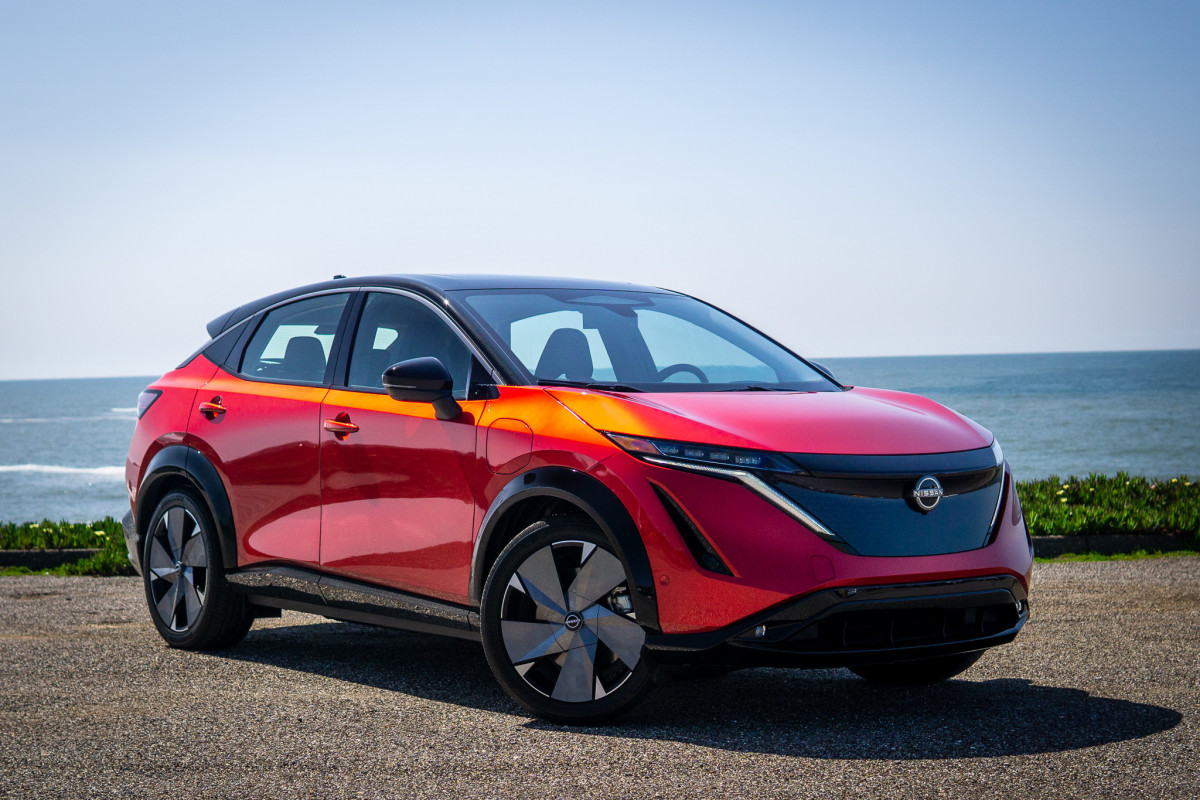
Nissan is the grand dame of major market EV production. Before Tesla, before Hyundai, before General Motors, Nissan introduced the Leaf, and it demonstrated the potential of what an EV could be. A recent J.D. Power survey suggested that people who had vague interest in EVs suddenly experienced a 33 percent leap in their interest level by just getting a ride in the passenger seat of an EV. That was our experience with the Leaf when we first drove it: In an instant, it showed how great the experience of owning an EV could be.
Sadly, it took Nissan quite a while to capitalize on its early entry into the marketplace; the company has sat rather idly by as most other manufacturers have developed EVs on more mainstream platforms that the econobox Leaf. The Nissan Ariya—which arrived for the 2023 model year—competes directly against the Mustang Mach-E and the Tesla Model Y. Nissan also says it’s developing an additional eight global EVs but there’s little word on which—if any—of those we’ll see here in the U.S.
Polestar
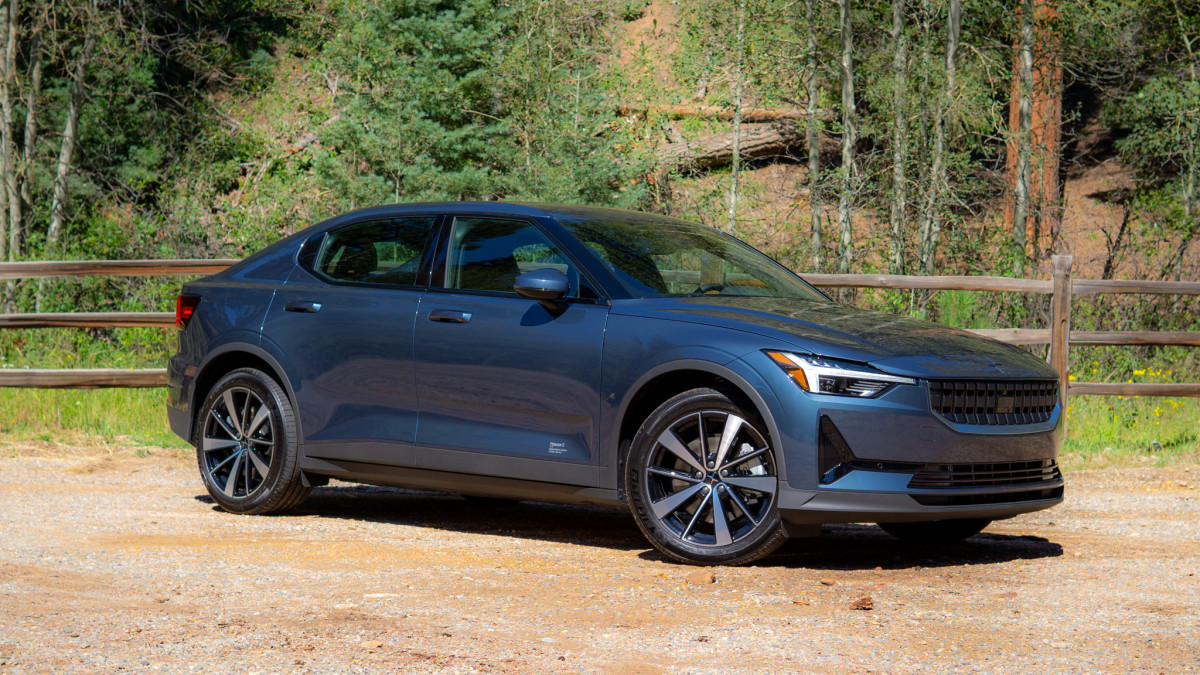
Polestar is weird. It’s owned by Geely, which also owns Volvo. Volvo makes EVs that aren’t Polestars. Polestar makes EVs that look like Volvos. You figure it out.
At the moment, Polestar offers the Polestar 2, sort of a Mustang Mach-E-esque hatchback. We had a relatively positive experience when we tested a 2022 Polestar 2, and we've heard positive things from Polestar 2 owners, though some have mentioned fairly significant range reduction with winter tires in cold temperatures.
Meanwhile, the Polestar 3 is the brand’s first electric SUV, offering dual motors and AWD. The standard model delivers 489 hp and 620 lb-ft of torque, while the performance version boosts the output to 517 hp and 671 lb-ft of torque. It features a 111 kWh battery, providing an estimated range of up to 300 miles.
Built on the same platform as the Volvo EX90, the Polestar 3 focuses on combining luxury and performance. Thus, it's equipped with advanced driver-assistance systems (including LiDAR for autonomous driving features), a large 14.5-inch touchscreen, and high-end materials like wool and vegan-friendly upholstery. It supports fast charging, allowing for a 10-80% charge in about 30 minutes.
Porsche
There was a time when nobody thought anyone would ever buy an SUV with a Porsche shield on the hood. That was 100 percent incorrect. Anyone who tells you that people won’t buy a Porsche powered by electricity is going to be just as wrong.
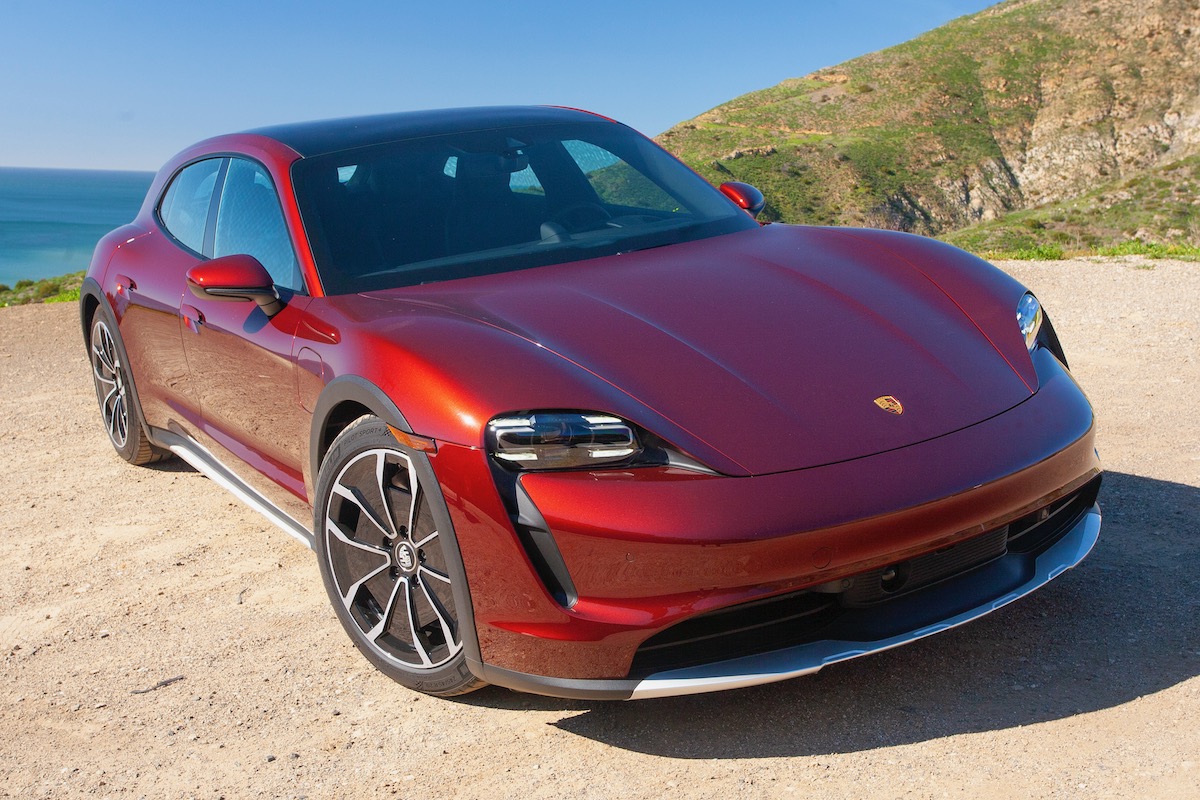
Both of the vehicles you can buy now and in the very near future—the Porsche Taycan and the new Macan EV—are going to find buyers who have been loyal to the brand, or are waiting for just this opportunity. Will Porsche offer a true EV sports car? There’s no official word at the moment about the rumored electric only next generation Boxster and Cayman.
For now, Porsche fans must be content with the Taycan and Macan, both of which saw updates recently.
The Macan is all-new for the 2025 model year and is now an all-electric model. It sports a 95 kWh battery and offers DC fast-charging up to 270 kW.
The Macan comes in rear-wheel-drive in base form (355 horsepower from a single motor), while the rest of the lineup (4, 4S, and Turbo models) are all-wheel-drive and dual-motor and between 402 and 630 horsepower.
The Taycan, meanwhile, was refined for 2025, gaining most noticably sleeker exterior features; but the real changes lie under the sulty sheetmetal.
The Taycan Turbo S sees a power increase to 938 horsepower, cutting its 0-60 mph time to 2.3 seconds, making it the most powerful production Porsche. The base Taycan improves to 4.5 seconds for 0-60 mph acceleration.
An optional Performance Battery Plus now offers 105 kWh, boosting range. Peak charging power increased to 320 kW, reducing 10-80% charging time to approximately 18 minutes under optimal conditions.
Exterior updates include a reworked front bumper and modified headlights for better aerodynamics. Standard interior features now include a heated steering wheel, ambient lighting, and power-folding mirrors. The infotainment system is enhanced with deeper Apple CarPlay integration and an In-Car Video function for streaming.
All Taycan models now come with standard air suspension, improving ride comfort and handling. An optional Porsche Active Ride system further enhances body control.
Prices have increased across the lineup, with the base Taycan starting at $101,395, and the Turbo S at $211,895.
Rivian
The Rivian story is kind of parallel to Lucid. It’s been a long road to get these vehicles produced, and there’s been no shortage of enthusiasm for their arrival.
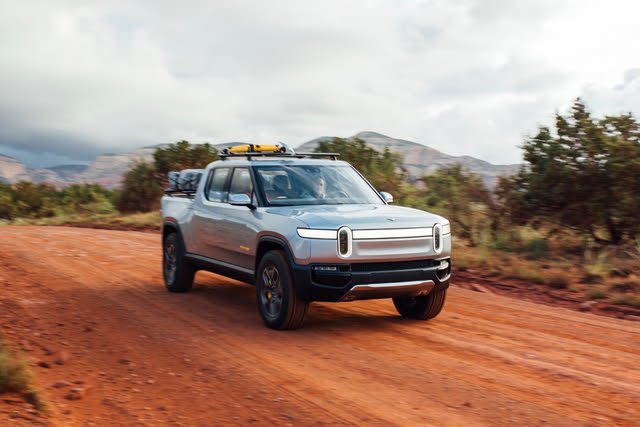
R1Ts are great-looking trucks that look bigger in photos than they are. Think more along the size of a Ford Ranger than an F-150, which should indicate why Ford and Chevrolet opted to electrify their full-size trucks before messing around with something smaller.
The Rivian R1S SUV follows that trend of good looks, offering three rows of space and a can-do exterior attitude, plus a healthy dash of comfort and amenities inside.
Rivian recently introduced several updates for both models for the 2024 model year, enhancing performance, range, and technology.
A dual-motor powertrain option on both the R1T and R1S provides AWD with motors on each axle, offering either 533 hp and 610 lb-ft of torque, or 665 hp and 829 lb-ft of torque.
These dual-motor versions are more affordable and offer longer range than the tri- or quad-motor variants, making them a popular choice for those who don’t need the extreme speed or off-road capability of the tri- and quad-motor versions.
Both the R1T and R1S received range improvements for 2024, depending on the battery pack and powertrain configuration. The base model now has around 270 miles of range, the dual motor offers up to 350 miles, while the Max Pack promises over 400 miles of range.
The quad-motor versions are only available with the Max battery pack and deliver up to 340 miles of range. With four electric motors (one for each wheel) the Quad Motor Max is rated at 1,234 hp, and will be able to accelerate from 0-60 mph in just 2.5 seconds.
Other updates included new user interfaces and software updates, additional drive models, advanced driver assistance, new exterior color options and wheel designs, and -- critically based on negative feedback from owners and the press -- changes to the adaptive air suspension that improve the vehicles’ ride comfort and handling, both on-road and off-road. The air suspension can still raise and lower the vehicle for off-road situations, but the tuning has been refined to make daily driving smoother.
Subaru
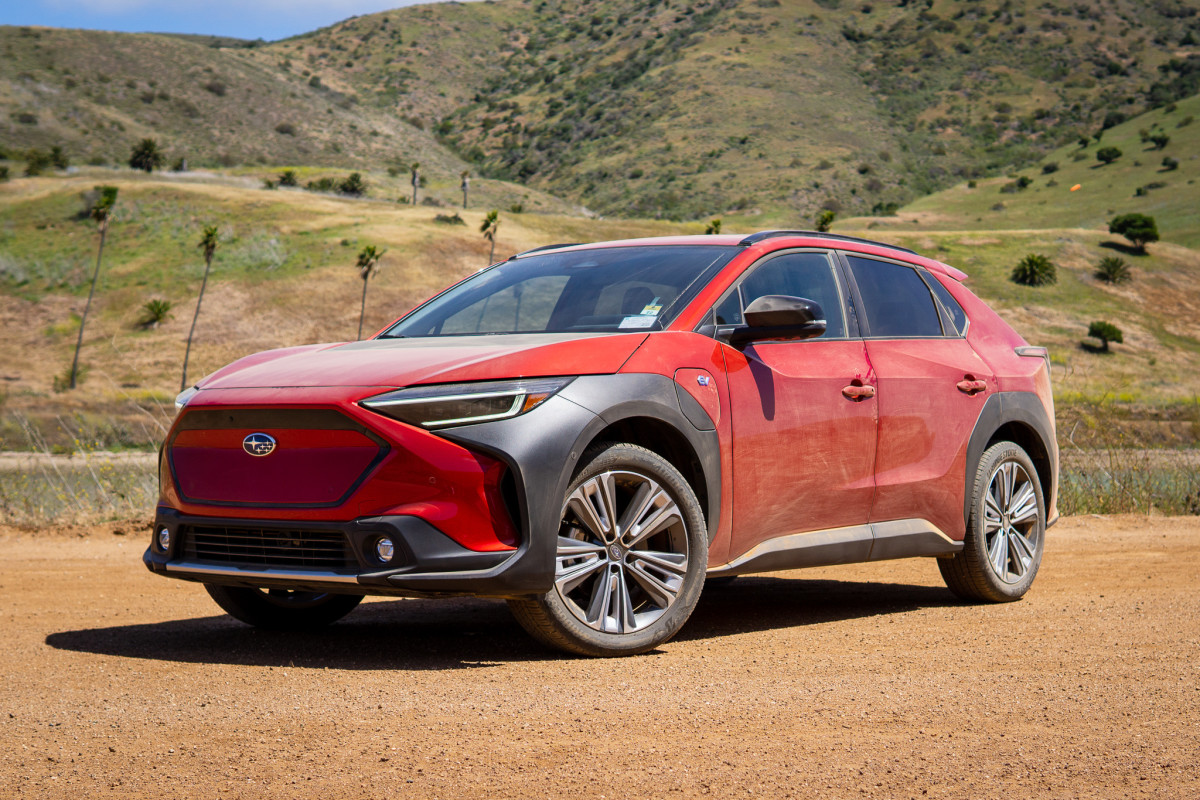
It’s sort of sad that the Subaru Crosstrek PHEV was never rolled out across the country. Nevertheless, it provided Subaru with a small base of knowledge about what its customers—who tend to prioritize all-wheel drive, performance, and support for an outdoorsy lifestyle—seem to want in an electric vehicle.
Subaru partnered with Toyota to create the Solterra, which is similar in almost all respects to the Toyota bZ4x crossover. We actually got to experience the Solterra off-road and it’s shockingly (pardon the pun) competent in rugged terrain. You wouldn’t want to cross the Rubicon with it, but it certainly held its own in rough trails on Catalina Island.
Tesla
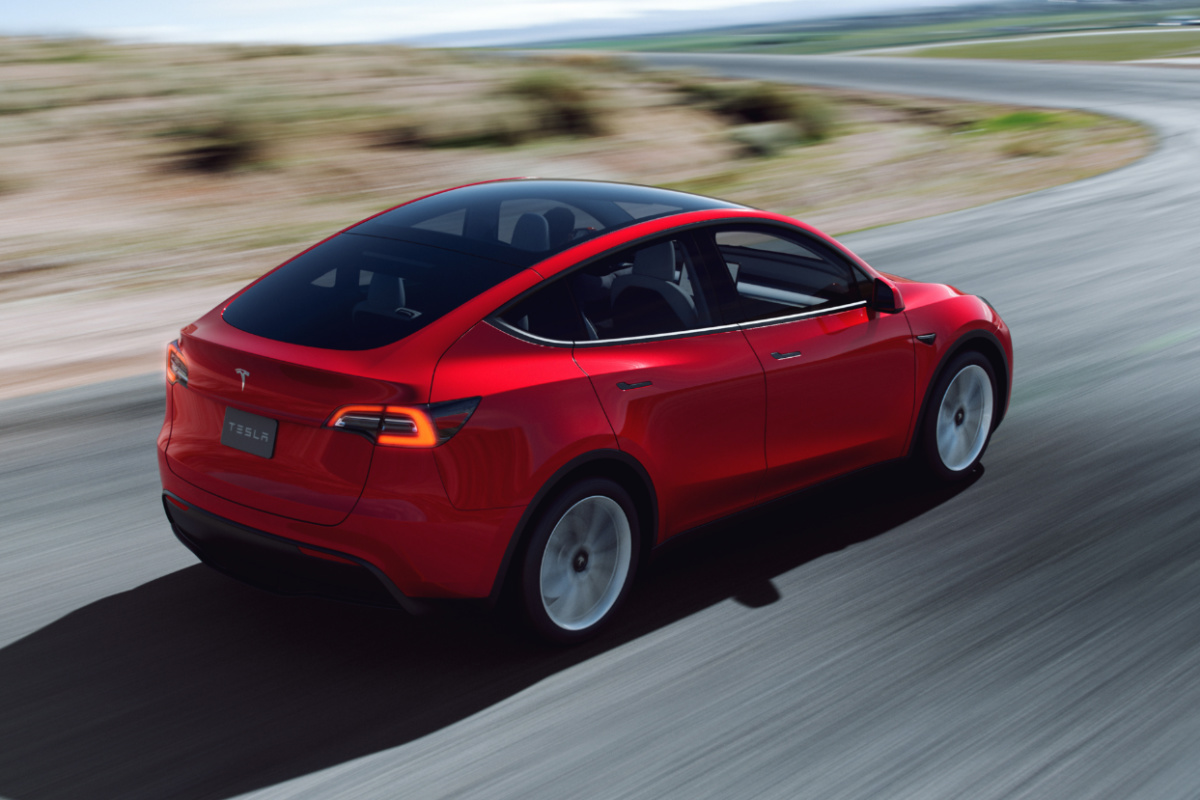
Tesla is the 800-pound gorilla in the room, responsible not only for reshaping the idea of what an EV could be, but also for radically transforming how they are sold. It’s incredible to realize that Tesla had delivered nothing other than a converted Lotus Elise prior to 2014, and yet the company now reliably sells 300,000 cars a year.
Those cars currently in production are the Tesla Model 3, the Model Y, the Model S, and the Model X.
After years of delays, the Cybertruck finally arrived, offering single, dual, or tri-motor configurations. The tri-motor version offers up to 1,020 hp, allowing for a 0–60 mph time of under 2.9 seconds and a range of over 500 miles. The dual-motor version will have a range of around 300 miles, with a towing capacity of up to 10,000 lbs.
Tesla also gave its Model 3 a long-overdue makeover, giving it a more streamlined look at the front and back of the sedan, plus giving it a small bump in range, redesigning the dashboard, adding a new eight-inch rear display for rear-seat passengers, making the cabin quieter for occupants, and adding more premium materials throughout the cabin. Similar updates are expected for the Model Y in 2025.
The Model S, Tesla’s flagship sedan, was refreshed in 2021 and introduced the new Plaid trim. The Model S Plaid is one of the fastest cars on the road today. Its tri-motor powertrain produces 1,020 hp, rocketing the Plaid to 60 mph in 1.99 seconds.
The Model X, with its futuristic falcon wing doors, was also refreshed in 2021 like its platform-mate the Model S. In Plaid trim with 1,020 hp, the Model X is only slightly slower than the sedan, sprinting to 60 mph in 2.5 seconds.
Toyota
As we mentioned with Lexus, Toyota purposely dragged its feet in EV production. It has been offering the Mirai hydrogen fuel cell vehicle, but only in California, since hydrogen elsewhere is still a pipe dream. If infrastructure is what’s keeping EVs from showing up in more driveways across America, hydrogen has no hope in the next 25 years.
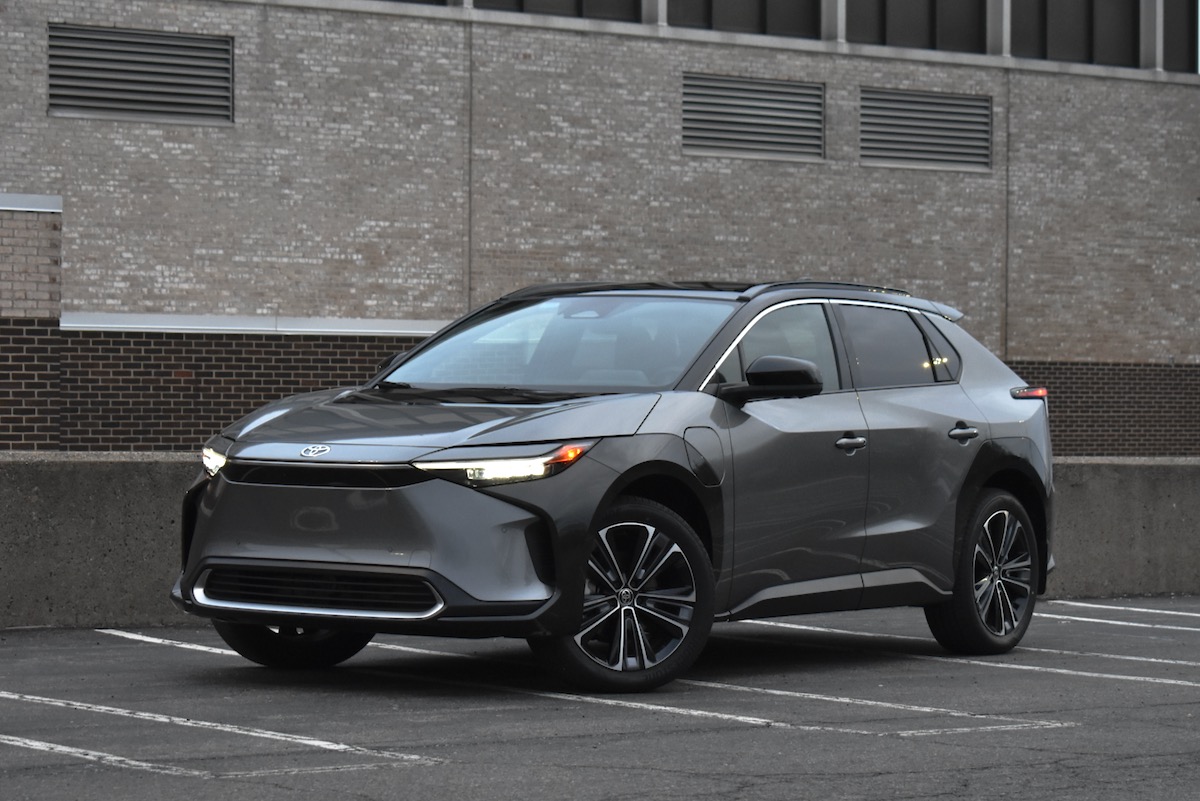
In 2022, Toyota debuted the bZ4x, an all-wheel-drive crossover with a 230-mile range. It’s a good-looking crossover that really works to normalize what an EV can be.
VinFast
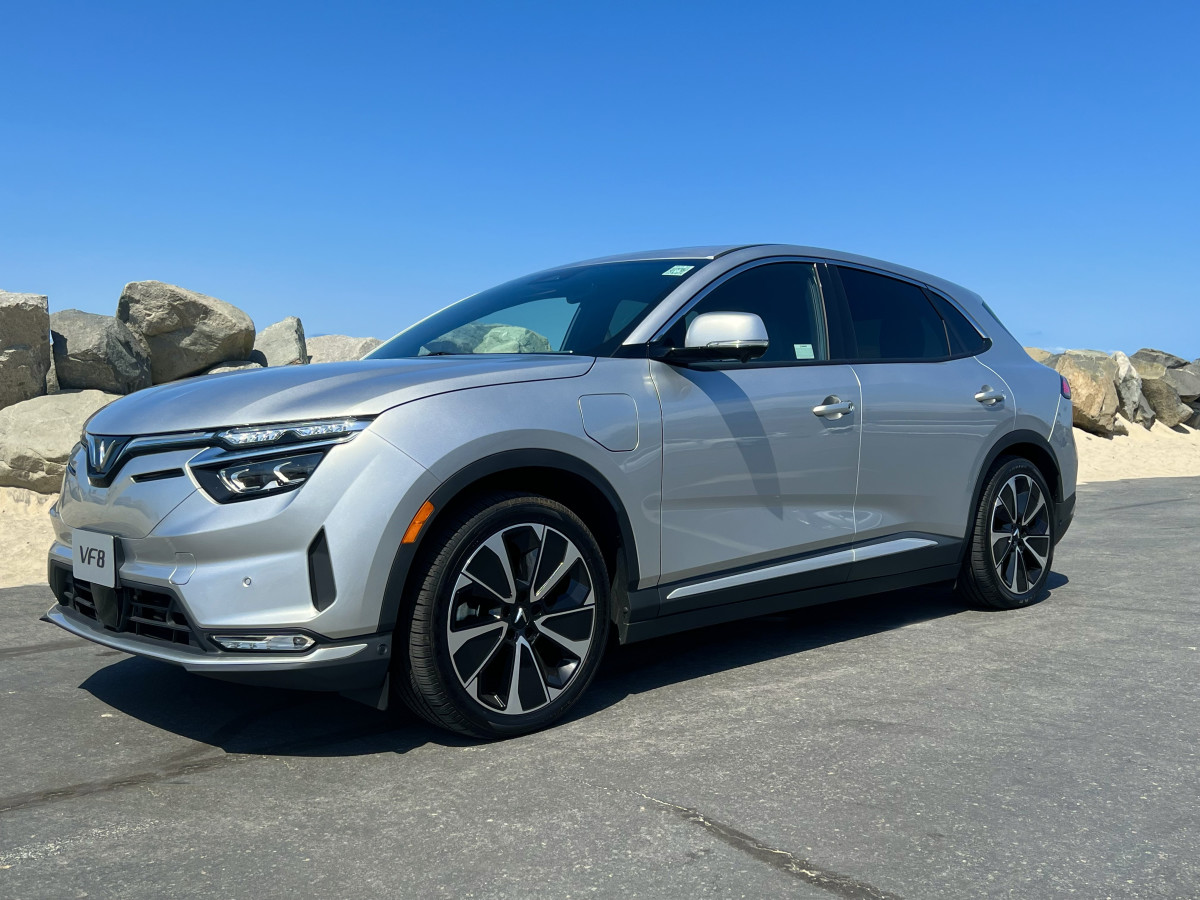
This Vietnamese automaker recently entered the U.S. market with its VF8 all-electric SUV. The VF8 is a midsize SUV that focuses on affordability, long-range, and a subscription-based battery option.
The VF8 features two electric motors producing 402 hp and 457 lb-ft of torque. It’s available with AWD and offers an estimated range of 292 miles on a full charge, depending on the battery pack and configuration.
Volkswagen
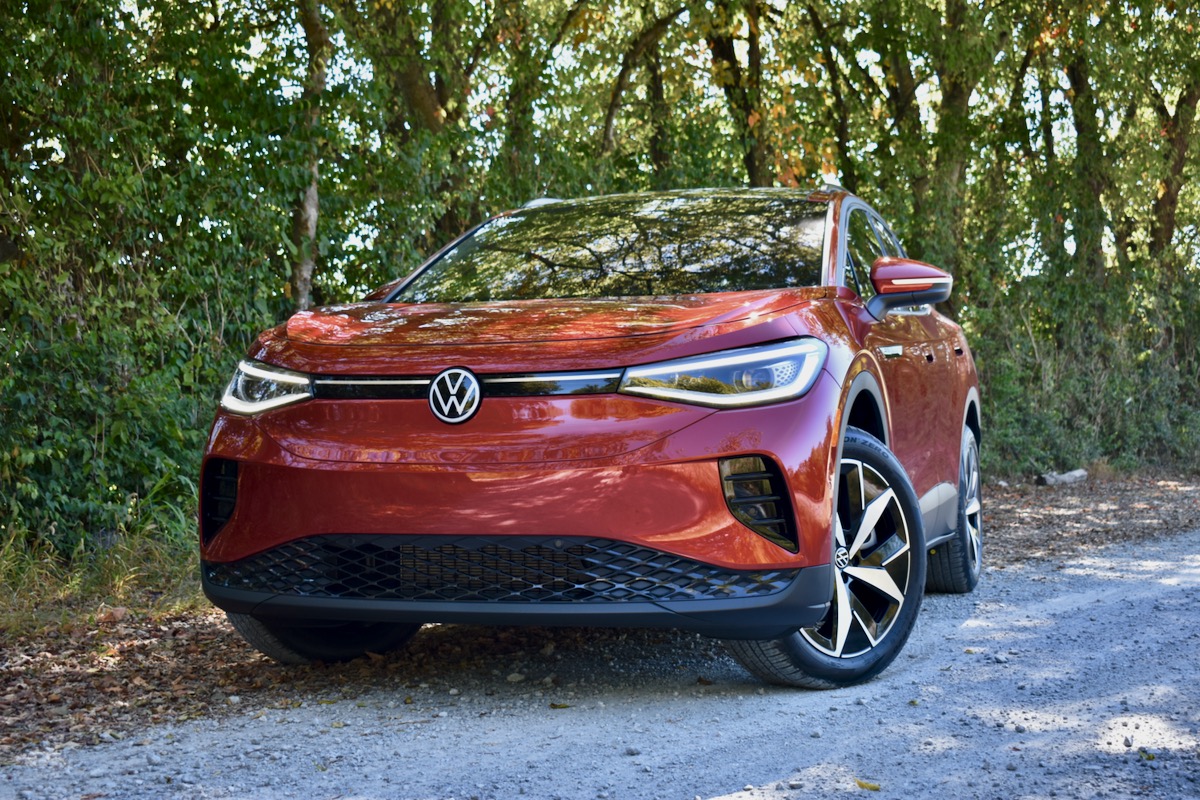
As we hinted in the Audi section above, “Dieselgate” completely tarnished the VW brand, but it seems to have come back with a new commitment to delivering clean vehicles. Volkswagen invested a billion Euros in converting its Emden plant to produce 1.2 million EVs a year, and the company is also building a $2.2 billion Trinity EV plant near its sprawling Wolfsburg facility.
Currently, the brand offers the ID.3, but not here in the United States. We’ve been seeing plenty of ID.4 SUVs on the streets, though.
We’re also interested in the ID.Buzz, the long, long, long-awaited successor to the VW microbus that VW has been hinting at for nearly a quarter of a century.
Due on sale in late 2024, this 'don't-call-it-a-minivan-minivan' features a dual-motor all-wheel-drive (AWD) setup producing around 330 hp. This is an upgrade over the European single-motor variant, making the U.S. model more powerful and better suited for varied driving conditions. It comes with an 82 kWh battery and around 260 miles of range on a full charge. DC fast-charging will offer up to 170 kW, allowing it to charge from 10% to 80% in roughly 30 minutes.
Volvo
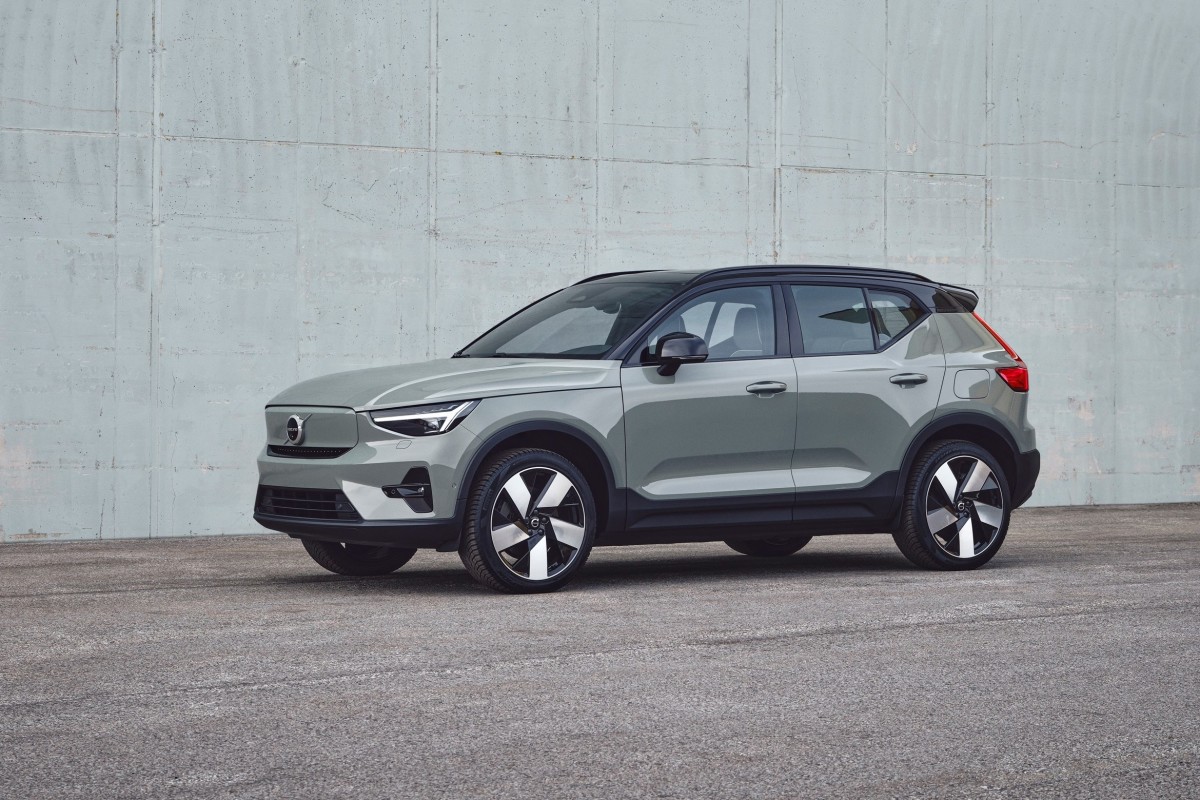
Volvo proper—as opposed to the Polestar brand produced by the same parent—has an electrified version of the Volvo XC40 available right now. Called the XC40 Recharge, it’s good for 208 miles of range. You can also buy a C40 Recharge, which is akin to the Sportback sloped roof crossovers from Audi.
But the big news is the addition of the EX90 and EX30 models to Volvo's all-electric lineup.
The Volvo EX90 is Volvo’s flagship all-electric luxury SUV, set to debut in 2024. It features dual-motor all-wheel drive (AWD), delivering up to 496 hp and an estimated 300 miles of range. Built on a new electric platform, it offers advanced safety features like LiDAR and driver-assistance systems, emphasizing Volvo’s focus on safety. It has a premium, spacious interior with sustainable materials, a large infotainment screen, and supports ultra-fast charging, reaching 80% in around 30 minutes.
The smaller EX30, meanwhile, is a compact, entry-level electric SUV designed for urban environments. It offers single- and dual-motor configurations, with power outputs ranging from 268 hp (RWD) to 422 hp (AWD). The EX30 delivers up to 275 miles of range and supports fast charging, reaching 80% in about 26 minutes. It combines Volvo’s signature safety features with a minimalist, tech-focused interior, making it an affordable, small EV option.
Potential Industry-Shifters... or Vaporware?
Ultra-expensive one-off manufacturers like Aspark, which offers a $3 million vehicle of which about 10 will be extant in the United States, is one of those companies that could be a real player in a few years—or it could cease to exist. Fisker falls into this category, too, since its current reservations are all fleet-based.
There are other not-quite-ready-for-primetime vehicles from manufacturers like Bollinger and Canoo, and we’ll be keeping an eye on those as news breaks. Similarly, Faraday took preorders in early 2022, but the company is currently under subpoena by the SEC and a preliminary request for information by the DOJ.
Manufacturers like Byton—which was founded by former execs from BMW and Nissan—also have vehicles in the pipeline, but they don’t seem to be quite ready for the US marketplace and all the hurdles it puts in the way of US availability.
China is widely adopting electric vehicles and has quickly become a global leader in manufacturing EVs. Chinese automakers like BYD, Great Wall and NIO are exploring the American market. As of May 2024, additional tariffs have been implemented on Chinese-made electric vehicles, meaning we likely won’t see these brands on the road anytime soon.
The Best Used Electric Cars
The Best Hybrid Cars
The Best Gas Mileage SUVs
Read More CarGurus Tips and Advice


