2021 Hyundai Venue vs 2021 Toyota RAV4

Overview | |
MSRP$26,350 | MSRP$18,750 |
Listings2032 | Listings192 |
Ratings & Reviews | |
User Reviews | User Reviews |
Expert reviews7.3 out of 10 | Expert reviews7.3 out of 10 |
Pros
Cons
| Pros
Cons
|
2021 Toyota RAV4 Reviews SummarySince its launch in 1997, the Toyota RAV4 has ridden a wave of crossover SUV popularity to become one of Toyota’s bestselling models. Introduced for the 2019 model year, the current-generation RAV4 tries to offer the rugged style of a traditional SUV, but underneath it’s still a car-based crossover pitched against the likes of the Ford Escape, Honda CR-V, Hyundai Tucson, Kia Sportage, Nissan Rogue, Subaru Forester, and Volkswagen Tiguan. Because it’s only in its third model year, this fifth-generation RAV4 doesn’t get many updates for 2021. The biggest news is the addition of the RAV4 Prime plug-in hybrid to the lineup, but that model actually went on sale last year. The only other changes are a new XLE Premium trim level for the RAV4 Hybrid, and a new front stainless steel front skid plate for the gasoline RAV4 TRD Off-Road model. Toyota offers compact SUV buyers more choices than most competitors. The RAV4 LE, XLE, XLE Premium, and Limited trim levels are available with hybrid and non-hybrid powertrains. Toyota also offers the gasoline-only RAV4 Adventure and TRD Off-Road trim levels, plus the RAV4 Hybrid XSE. The RAV4 Prime is also available in two trim levels—SE and XSE. We’ve covered the RAV4 Hybrid and RAV4 Prime in separate reviews, so this review will focus on the gasoline RAV4. Our test car was a RAV4 TRD Off-Road, which joined the lineup for the 2020 model year and is the first RAV4 model tuned by Toyota Racing Development, the automaker’s North American performance division. | |
2021 Hyundai Venue Reviews SummaryThis is the future of basic transportation. Shoppers are shifting from sedans and hatchbacks to crossovers and SUVs, but the bigger the car, the bigger the price tag. Enter the Hyundai Venue. Roughly the same shape as a typical crossover, but impossibly small, the Venue offers the look and feel of a crossover while maintaining the footprint (and, very nearly, the price) of a hatchback. | |
No video found | |
Popular Features & Specs | |
Engine2.5L 203 hp I4 | Engine1.6L 121 hp I4 |
Drive TrainFWD | Drive TrainFWD |
Seating Capacity5 | Seating Capacity5 |
Horsepower | Horsepower121 hp @ 6300 rpm |
MPG City28 | MPG City30 |
MPG Highway35 | MPG Highway33 |
Engine | |
Engine Name2.5L 203 hp I4 | Engine Name1.6L 121 hp I4 |
Torque | Torque113 lb-ft @ 4500 rpm |
Horsepower | Horsepower121 hp @ 6300 rpm |
DrivetrainFWD | DrivetrainFWD |
Fuel Economy | |
MPG City28 | MPG City30 |
MPG Highway35 | MPG Highway33 |
Interior | |
Seating Capacity5 | Seating Capacity5 |
Safety | |
Front Crash Overall4 | Front Crash Overall4 |
Side Crash Overall5 | Side Crash Overall5 |
Dimensions & Capacity | |
Cargo Space37.6 cu ft | Cargo Space18.7 cu ft |
Curb Weight3370 lbs | Curb Weight2612 lbs |
Height67.0 in | Height61.6 in |
Length180.9 in | Length159.0 in |
Width73.0 in | Width69.7 in |
Wheelbase105.9 in | Wheelbase99.2 in |
Maximum Payload1240 lbs | Maximum Payload1158 lbs |
Number of doors4 | Number of doors4 |
Maximum Towing Capacity1500 lbs | Maximum Towing Capacity |
Overview | ||
MSRP | $26,350 | $18,750 |
Listings | ||
Ratings & Reviews | ||
User reviews | ||
Expert reviews | 7.3 out of 10Read full review | 7.3 out of 10Read full review |
Pros & cons | Pros
Cons
| Pros
Cons
|
Summary | Since its launch in 1997, the Toyota RAV4 has ridden a wave of crossover SUV popularity to become one of Toyota’s bestselling models. Introduced for the 2019 model year, the current-generation RAV4 tries to offer the rugged style of a traditional SUV, but underneath it’s still a car-based crossover pitched against the likes of the Ford Escape, Honda CR-V, Hyundai Tucson, Kia Sportage, Nissan Rogue, Subaru Forester, and Volkswagen Tiguan. Because it’s only in its third model year, this fifth-generation RAV4 doesn’t get many updates for 2021. The biggest news is the addition of the RAV4 Prime plug-in hybrid to the lineup, but that model actually went on sale last year. The only other changes are a new XLE Premium trim level for the RAV4 Hybrid, and a new front stainless steel front skid plate for the gasoline RAV4 TRD Off-Road model. Toyota offers compact SUV buyers more choices than most competitors. The RAV4 LE, XLE, XLE Premium, and Limited trim levels are available with hybrid and non-hybrid powertrains. Toyota also offers the gasoline-only RAV4 Adventure and TRD Off-Road trim levels, plus the RAV4 Hybrid XSE. The RAV4 Prime is also available in two trim levels—SE and XSE. We’ve covered the RAV4 Hybrid and RAV4 Prime in separate reviews, so this review will focus on the gasoline RAV4. Our test car was a RAV4 TRD Off-Road, which joined the lineup for the 2020 model year and is the first RAV4 model tuned by Toyota Racing Development, the automaker’s North American performance division. | This is the future of basic transportation. Shoppers are shifting from sedans and hatchbacks to crossovers and SUVs, but the bigger the car, the bigger the price tag. Enter the Hyundai Venue. Roughly the same shape as a typical crossover, but impossibly small, the Venue offers the look and feel of a crossover while maintaining the footprint (and, very nearly, the price) of a hatchback. |
Video | No video found | |
Popular Features & Specs | ||
Engine | 2.5L 203 hp I4 | 1.6L 121 hp I4 |
Drive Train | FWD | FWD |
Seating Capacity | 5 | 5 |
Horsepower | 121 hp @ 6300 rpm | |
MPG City | 28 | 30 |
MPG Highway | 35 | 33 |
Engine | ||
Engine Name | 2.5L 203 hp I4 | 1.6L 121 hp I4 |
Torque | 113 lb-ft @ 4500 rpm | |
Horsepower | 121 hp @ 6300 rpm | |
Drivetrain | FWD | FWD |
Fuel Economy | ||
MPG City | 28 | 30 |
MPG Highway | 35 | 33 |
Interior | ||
Seating Capacity | 5 | 5 |
Safety | ||
Front Crash Overall | 4 | 4 |
Side Crash Overall | 5 | 5 |
Dimensions & Capacity | ||
Cargo Space | 37.6 cu ft | 18.7 cu ft |
Curb Weight | 3370 lbs | 2612 lbs |
Height | 67.0 in | 61.6 in |
Length | 180.9 in | 159.0 in |
Width | 73.0 in | 69.7 in |
Wheelbase | 105.9 in | 99.2 in |
Maximum Payload | 1240 lbs | 1158 lbs |
Number of doors | 4 | 4 |
Maximum Towing Capacity | 1500 lbs | |
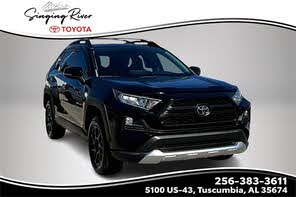
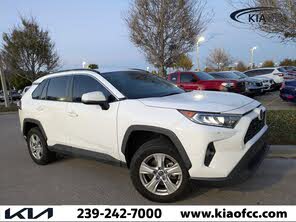
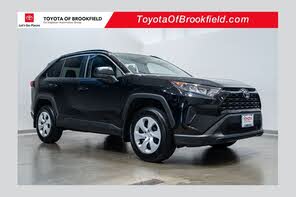
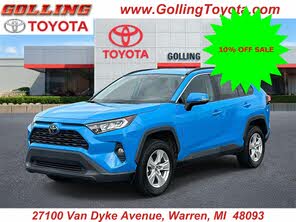
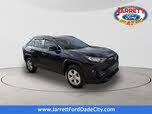
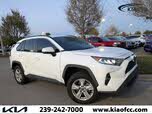
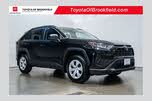
The 2021 Toyota RAV4 presented a rugged exterior reminiscent of a traditional SUV, with boxy fender flares, chiseled taillights, and a scowling front end that sharply contrasted with previous generations. This aggressive styling helped the RAV4 stand out in the compact crossover market, giving it a more adventurous appearance. Despite its bold exterior, the RAV4 was built on the Toyota New Global Architecture (TNGA) platform, which it shared with other Toyota models like the Camry and Sienna. This platform provided a solid foundation, but the mechanical components were more aligned with a conventional vehicle than an off-road SUV. The RAV4 offered various trims, such as the Adventure and TRD Off-Road, which added unique styling elements and features to enhance its rugged appeal.
In contrast, the 2021 Hyundai Venue was a stylish little crossover that seemed designed to remain timeless. Its upright stance, horizontal roofline, and steeply dropping tailgate gave it a distinctive look that belied its small size. The Venue's grille was appropriately sized, drawing attention without overwhelming the design. The exterior updates from the 2020 model included replacing the 15-inch steel wheels with alloys and standardizing 17-inch alloys on higher trims. The top-line Denim trim offered a fashion-forward style with a unique paint job and white roof, while the SEL trim provided excellent value with standard features previously part of an extra-cost package. Inside, the Venue's cabin was simple yet modern, with plenty of light and a greenhouse-like feel, despite the use of inexpensive materials.


The 2021 Toyota RAV4 was equipped with a "Dynamic Force" 2.5-liter four-cylinder engine, producing 203 horsepower and 184 pound-feet of torque. This engine was paired with an eight-speed automatic transmission, offering standard front-wheel drive and optional all-wheel drive. The engine achieved 40% thermal efficiency, a level typically found in racing engines, and delivered impressive output for a naturally aspirated four-cylinder. However, the transmission struggled to keep up, and the steering lacked feel, resulting in a less dynamic driving experience. The RAV4 offered off-road capabilities with the Adventure and TRD Off-Road models, featuring a torque-vectoring rear axle, 8.6 inches of ground clearance, and a 3,500-pound towing capacity. Despite these features, the RAV4's off-road performance was limited by its lack of suspension articulation and shallow approach angles.
The 2021 Hyundai Venue featured a 1.6-liter four-cylinder engine, delivering 121 horsepower and 113 pound-feet of torque. This small, economical engine was paired with a continuously variable automatic transmission (CVT) and front-wheel drive, with no all-wheel drive option. The Venue's lightweight design allowed it to move sprightly in lower-speed areas, despite its modest power output. The Venue's performance was comparable to competitors like the Nissan Kicks, Ford EcoSport, and Toyota C-HR, although it was smaller and lighter. The Venue's driving experience was adequate for its size, but it lacked the power and confidence for highway driving.
The 2021 Toyota RAV4 offered a tall, upright roof that provided ample headroom in both rows and good outward visibility. However, legroom was slightly behind competitors, and the rear seats were flat and hard, making long trips uncomfortable. The RAV4 featured a 60/40 split-folding rear seat, but it didn't slide like those in the Ford Escape or Nissan Rogue. Cargo space was above average at 37.6 cubic feet with the rear seats in place, but still behind the Honda CR-V. The interior included oversized knobs and steering-wheel controls, but storage space on the console was limited.
The 2021 Hyundai Venue provided plenty of headroom and legroom in the front seats, with decent storage space. The center console's bin was small, but there were trays for small items. The Venue's back seat was tighter, with limited legroom for adults, but ample headroom. Cargo space was limited, with 18.7 cubic feet with the back seat in place and 31.9 cubic feet with it down, lagging behind competitors like the Nissan Kicks and Ford EcoSport. The Venue offered a little extra ground clearance, but its cargo capacity was not its strong suit.
The 2021 Toyota RAV4 came standard with Apple CarPlay, Android Auto, Amazon Alexa compatibility, and SiriusXM satellite radio. Most trims featured a 7-inch touchscreen, while the Limited model had an 8-inch screen. The infotainment system was user-friendly, with a well-positioned touchscreen and easy-to-read graphics. However, it lacked the flashiness of some competitors and did not offer a head-up display on the gasoline model.
The 2021 Hyundai Venue boasted an 8-inch touchscreen with high resolution and quick swipe functionality. The interface was designed for simplicity, with physical buttons for quick access to media sources and settings. The Venue's infotainment system included Bluetooth, Apple CarPlay, and Android Auto as standard features. The system allowed for driver profiles with customized radio presets, appealing to families with multiple drivers. The Venue's infotainment was well-executed, offering a user-friendly experience.
The 2021 Toyota RAV4 received a "Top Safety Pick" rating from the IIHS, with top scores in crash tests and front-crash prevention tech. However, it missed the highest rating due to mixed headlight scores. The NHTSA awarded the RAV4 a five-star overall rating, with four stars in frontal and rollover crash tests. The RAV4 came with Toyota Safety Sense 2.0, including features like forward-collision warning, adaptive cruise control, and lane-departure warning. Higher trims added blind-spot monitoring and a 360-degree camera system.
The 2021 Hyundai Venue offered standard safety features like automatic emergency braking, lane-keeping assist, and driver-attention warning. The SEL and Denim trims added blind-spot monitoring with rear cross-traffic alert. The Venue's safety features were seamlessly integrated, avoiding distracting alerts. In crash tests, the Venue received four out of five stars in front collision and rollover tests from the NHTSA.
CarGurus highlights

According to CarGurus experts, the overall rating for the 2021 Toyota RAV4 is 7.3 out of 10, while the 2021 Hyundai Venue scores 7.3 out of 10. Both vehicles offer unique strengths, but the RAV4's off-road capabilities, safety features, and rugged design make it a more versatile choice for those seeking adventure and practicality.
Choose the 2021 Hyundai Venue if:
- You seek a stylish, compact crossover with a modern design.
- You want a user-friendly infotainment system with customizable features.
- You prefer a budget-friendly vehicle with standard safety features.






Choose the 2021 Toyota RAV4 if:
- You prioritize off-road capabilities and towing capacity.
- You want a vehicle with a rugged, adventurous exterior design.
- You value a comprehensive suite of safety features and high safety ratings.




CarGurus highlights
According to CarGurus experts, the overall rating for the 2021 Toyota RAV4 is 7.3 out of 10, while the 2021 Hyundai Venue scores 7.3 out of 10. Both vehicles offer unique strengths, but the RAV4's off-road capabilities, safety features, and rugged design make it a more versatile choice for those seeking adventure and practicality.
Choose the 2021 Hyundai Venue if:
Shop Now- You seek a stylish, compact crossover with a modern design.
- You want a user-friendly infotainment system with customizable features.
- You prefer a budget-friendly vehicle with standard safety features.










Choose the 2021 Toyota RAV4 if:
Shop Now- You prioritize off-road capabilities and towing capacity.
- You want a vehicle with a rugged, adventurous exterior design.
- You value a comprehensive suite of safety features and high safety ratings.








By: CarGurus + AI
At CarGurus, our team of experienced automotive writers remain at the heart of our content operation, conducting hands-on car tests and writing insightful guides that are backed by years of industry experience. To complement this, we are harnessing AI to make our content offering more diverse and more helpful to shoppers than ever. To achieve this, our AI systems are based exclusively on CarGurus content, ratings and data, so that what we produce is both unique to CarGurus, and uniquely helpful to car shoppers.