2021 Ford Bronco vs 2021 Toyota 4Runner
Overview | |
MSRP$28,500 | MSRP$36,765 |
Listings984 | Listings1127 |
Ratings & Reviews | |
User Reviews | User Reviews |
Expert reviews8.0 out of 10 | Expert reviews6.2 out of 10 |
Pros
Cons
| Pros
Cons
|
2021 Ford Bronco Reviews SummaryFollowing a 30-year run and a 25-year layoff, the Ford Bronco bucks back into the 2021 corral. With a sharp focus on off-road capability and a soft focus on comfort, the new Bronco offers two available powertrains, a choice of manual or automatic transmissions, standard four-wheel drive, clever engineering, and bold styling. | |
2021 Toyota 4Runner Reviews SummaryDespite its design age, poor fuel economy, rough ride, iffy handling, and marginal safety ratings, the current-generation Toyota 4Runner remains a popular choice in a midsize SUV. Why? Its reputation for reliability and resale value, coupled with its undeniable utility, rugged image, and go-anywhere and do-anything capability, are the selling points. And if that's why you want a 2021 Toyota 4Runner, it won't disappoint you as long as you accept its shortcomings. | |
No video found | |
Popular Features & Specs | |
Engine2.3L 275 hp I4 | Engine4.0L 270 hp V6 |
Drive Train4X4 | Drive Train4X2 |
Seating Capacity4 | Seating Capacity7 |
Horsepower275 hp @ 5500 rpm | Horsepower270 hp @ 5600 rpm |
MPG City20 | MPG City16 |
MPG Highway22 | MPG Highway19 |
Engine | |
Engine Name2.3L 275 hp I4 | Engine Name4.0L 270 hp V6 |
Torque315 lb-ft @ 3000 rpm | Torque278 lb-ft @ 4400 rpm |
Horsepower275 hp @ 5500 rpm | Horsepower270 hp @ 5600 rpm |
Drivetrain4X4 | Drivetrain4X2 |
Fuel Economy | |
MPG City20 | MPG City16 |
MPG Highway22 | MPG Highway19 |
Interior | |
Seating Capacity4 | Seating Capacity7 |
Safety | |
Front Crash Overall | Front Crash Overall4 |
Side Crash Overall | Side Crash Overall5 |
Dimensions & Capacity | |
Cargo Space23.6 cu ft | Cargo Space47.2 cu ft |
Curb Weight4319 lbs | Curb Weight4400 lbs |
Height71.9 in | Height71.5 in |
Length173.7 in | Length190.2 in |
Width86.2 in | Width75.8 in |
Wheelbase100.4 in | Wheelbase109.8 in |
Maximum Payload | Maximum Payload1700 lbs |
Number of doors2 | Number of doors4 |
Maximum Towing Capacity | Maximum Towing Capacity5000 lbs |
Standard Towing Capacity | Standard Towing Capacity5000 lbs |
Overview | ||
MSRP | $28,500 | $36,765 |
Listings | ||
Ratings & Reviews | ||
User reviews | ||
Expert reviews | 8.0 out of 10Read full review | 6.2 out of 10Read full review |
Pros & cons | Pros
Cons
| Pros
Cons
|
Summary | Following a 30-year run and a 25-year layoff, the Ford Bronco bucks back into the 2021 corral. With a sharp focus on off-road capability and a soft focus on comfort, the new Bronco offers two available powertrains, a choice of manual or automatic transmissions, standard four-wheel drive, clever engineering, and bold styling. | Despite its design age, poor fuel economy, rough ride, iffy handling, and marginal safety ratings, the current-generation Toyota 4Runner remains a popular choice in a midsize SUV. Why? Its reputation for reliability and resale value, coupled with its undeniable utility, rugged image, and go-anywhere and do-anything capability, are the selling points. And if that's why you want a 2021 Toyota 4Runner, it won't disappoint you as long as you accept its shortcomings. |
Video | No video found | |
Popular Features & Specs | ||
Engine | 2.3L 275 hp I4 | 4.0L 270 hp V6 |
Drive Train | 4X4 | 4X2 |
Seating Capacity | 4 | 7 |
Horsepower | 275 hp @ 5500 rpm | 270 hp @ 5600 rpm |
MPG City | 20 | 16 |
MPG Highway | 22 | 19 |
Engine | ||
Engine Name | 2.3L 275 hp I4 | 4.0L 270 hp V6 |
Torque | 315 lb-ft @ 3000 rpm | 278 lb-ft @ 4400 rpm |
Horsepower | 275 hp @ 5500 rpm | 270 hp @ 5600 rpm |
Drivetrain | 4X4 | 4X2 |
Fuel Economy | ||
MPG City | 20 | 16 |
MPG Highway | 22 | 19 |
Interior | ||
Seating Capacity | 4 | 7 |
Safety | ||
Front Crash Overall | 4 | |
Side Crash Overall | 5 | |
Dimensions & Capacity | ||
Cargo Space | 23.6 cu ft | 47.2 cu ft |
Curb Weight | 4319 lbs | 4400 lbs |
Height | 71.9 in | 71.5 in |
Length | 173.7 in | 190.2 in |
Width | 86.2 in | 75.8 in |
Wheelbase | 100.4 in | 109.8 in |
Maximum Payload | 1700 lbs | |
Number of doors | 2 | 4 |
Maximum Towing Capacity | 5000 lbs | |
Standard Towing Capacity | 5000 lbs | |
The 2021 Ford Bronco had been eagerly anticipated since Ford began teasing it with the Bronco Concept vehicle back in 2004. This anticipation reached a fever pitch with the release of the 2021 Ford Bronco Sport, a compact crossover SUV built on the Ford Escape platform, featuring standard all-wheel drive and adventure-centric design elements.
The Ford Bronco originally debuted in 1966 and saw five generations of production until it ceased in 1996. Over those 30 years, the Bronco built a solid reputation for off-road capability and became a favorite for customization.
The 2021 Ford Bronco drew heavily from its original model, embodying the idea of “Retrofuturism,” which updates classic designs with modern technology, powertrains, materials, and aesthetic flourishes. This approach succeeded wildly with the Mustang and Challenger and had mixed results with others like the Chrysler PT Cruiser. However, it appeared to work wonderfully for the Bronco.
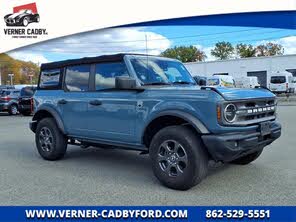
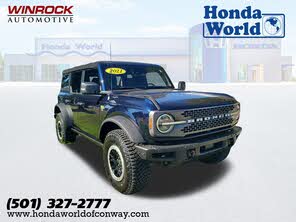
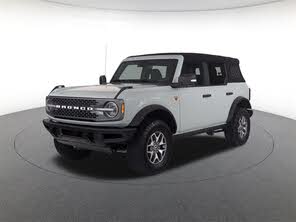
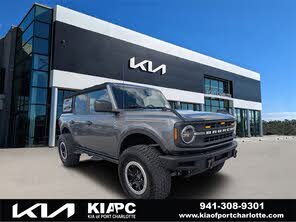
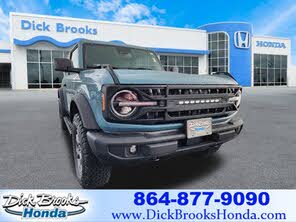
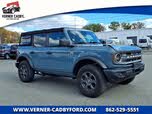
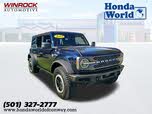
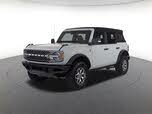
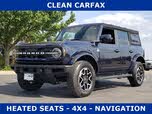
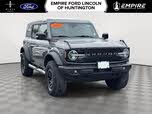
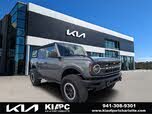
With its large single-piece grille flanked by round headlights and bold "B-R-O-N-C-O" lettering, the new Bronco's front end immediately caught the eye. The hood sported modest bulges and removable off-road sights at the corners. Its body sides were relatively flat and simple, accented by applied fender flares. Standard 32-inch tires could be upgraded to 35-inch ones with the Sasquatch package. The Bronco offered a variety of wheel choices, from 16-inch steel to 18-inch aluminum, with beadlock-capable options.
In the rear, the full-size spare tire mounted on a swinging rack provided access to the side-hinged half-tailgate and flip-up back glass, harking back to a more old-school design. Available as two-door and four-door configurations, the Bronco's wheelbases and lengths varied, ranging from 100.4 inches for the two-door to 116.1 inches for the four-door, resulting in lengths of approximately 173.7-190.5 inches. Its height ranged from 71.9-75.3 inches, and width from 75.9-79.3 inches, depending on trim.
You could outfit the Bronco with a black soft-top or a modular removable hardtop. Eleven paint colors, including eye-catching options like Rapid Red Metallic Tinted Clearcoat, Antimatter Blue, and Area 51, were available.
The Bronco’s interior exuded a retro feel through its styling and proportions, complemented by modern technology. The dashboard, digitally scanned from the original, featured a central color touchscreen (8-inch standard, 12-inch available) and a digital instrument cluster. The interior utilized rugged materials, reinforcing heavy-use points with metal and grippy rubber, while stretchy mesh door pockets provided practical storage solutions. The second-row seats were comfortable, accessible, and spacious in the four-door model, making the Bronco suitable for passengers.
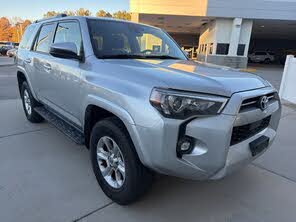
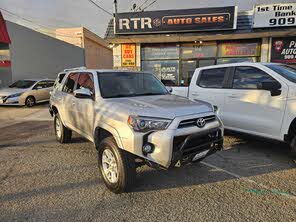
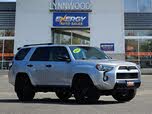
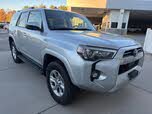
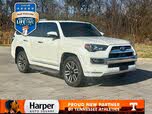
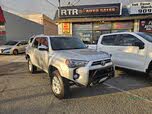
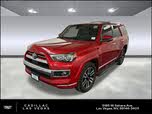
Conversely, the 2021 Toyota 4Runner, redesigned 12 years ago, had maintained a consistent design over time. Toyota updated it periodically, but the core appearance remained largely unchanged. The 4Runner's two-box body, flared fenders, and trapezoidal wheel arches gave it a balanced, timeless look coupled with undeniable utility, though it was not considered particularly attractive.
Available in SR5, TRD Off-Road, Limited, and TRD Pro trims, each with their own special editions, the 4Runner’s pricing ranged from $36,950 for an SR5 to $50,570 for a TRD Pro. The Trail Special Edition, on the more affordable end, included dark gray TRD Off-Road wheels, a Yakima RoadWarrior rooftop cargo basket, black cloth upholstery with tan stitching, all-weather floor mats, a sliding rear cargo tray, and a custom-made 40-quart cooler.
The 4Runner’s interior was functional but basic, with hard plastics dominating the design. Despite this, the seating was comfortable and supportive, with plenty of legroom and convenience features like air conditioning vents and USB charging ports. The 4Runner’s cargo area featured a sliding deck capable of holding 440 pounds, maximizing usability despite its bulk. Cargo space measured up to 47.2 cubic feet behind the rear seats and 89.7 cubic feet with the back seats folded down.


The 2021 Ford Bronco offered two engine choices. The base engine was a turbocharged 2.3-liter inline-four that produced 270 horsepower and 310 lb-ft of torque, paired with a seven-speed manual transmission that included a crawler gear. The optional engine was a twin-turbocharged 2.7-liter V6 that delivered 310 horsepower and 400 lb-ft of torque, available with a 10-speed automatic transmission (which was also optional for the 2.3-liter engine). All models came standard with four-wheel drive (4WD).
On-road performance revealed the Bronco's off-road roots, notably when driving a four-door First Edition model, which wore the 35-inch tires from the Sasquatch package. These tires ensured off-road capability at the expense of a noisier, less refined ride on pavement. The 2.7-liter engine, coupled with the 10-speed automatic in the First Edition, felt well-matched to the Bronco, delivering smooth and responsive power.
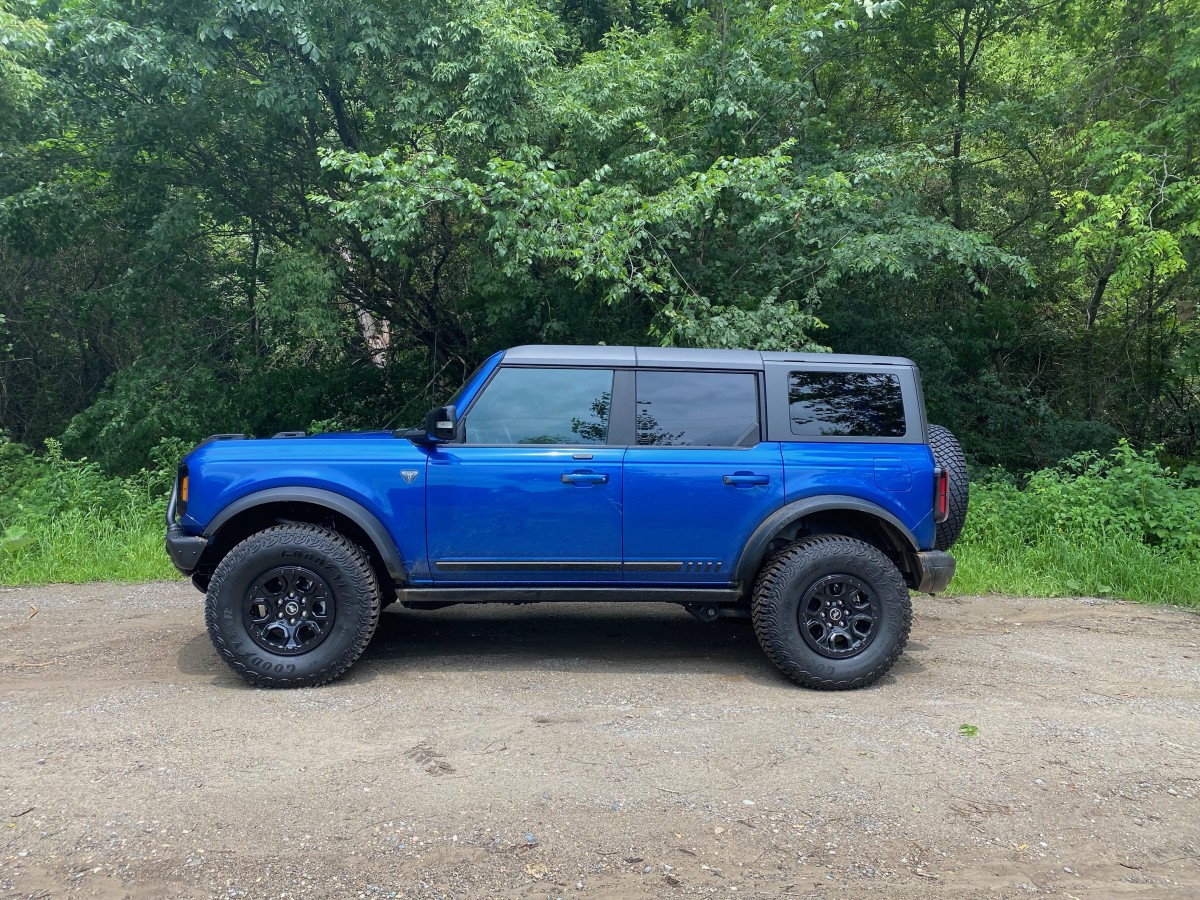
Off-roading near Holly, Michigan, in predominantly wet and muddy conditions showcased the Bronco's extraordinary capability. The short-wheelbase, two-door base model with the optional 2.7-liter engine and 10-speed automatic transmission handled a variety of off-road conditions with ease, demonstrating its balance, traction, and overall off-road prowess. Advanced off-roading technologies complemented the vehicle’s physical attributes, making it user-friendly for both novice and experienced off-roaders.
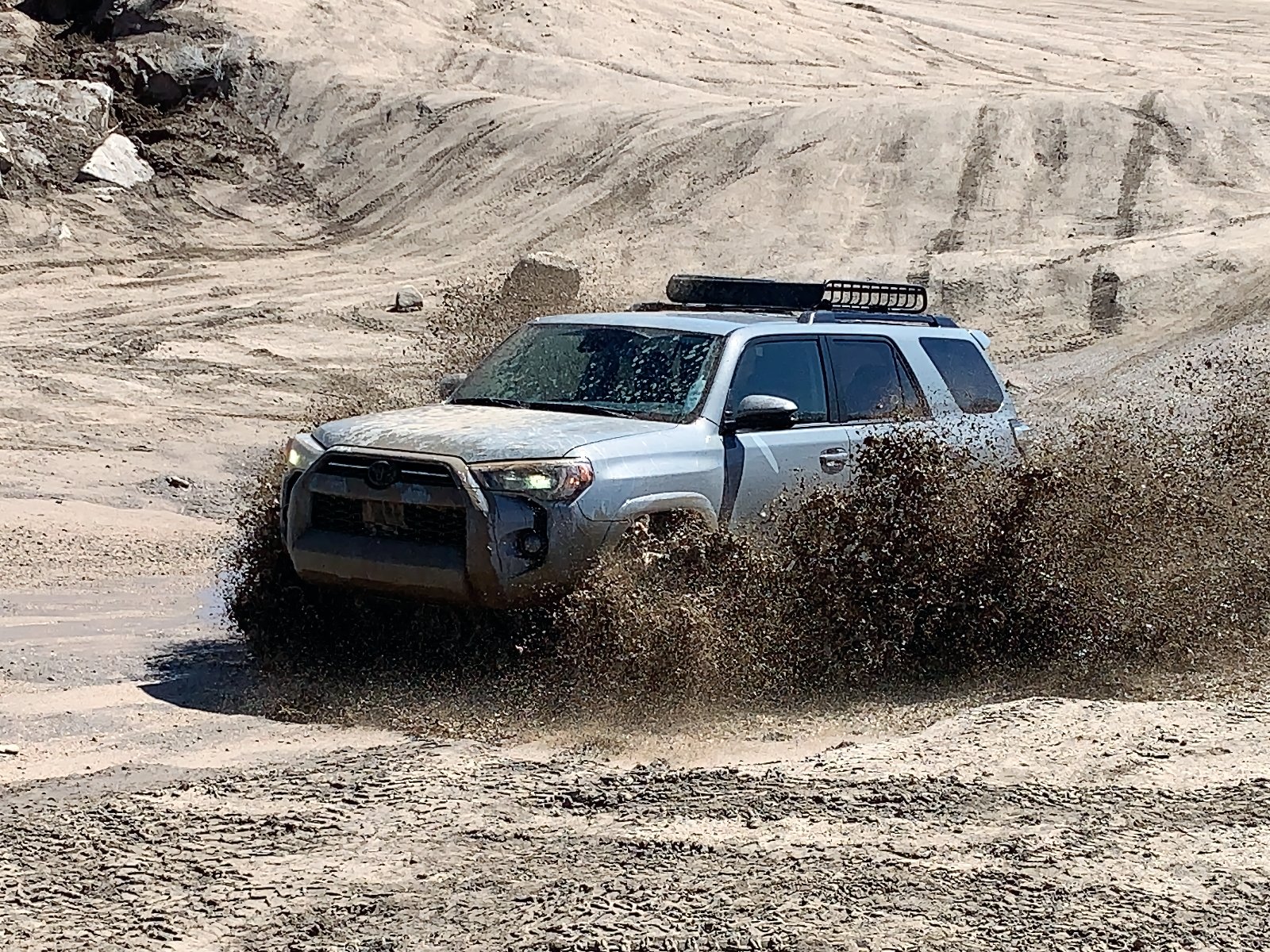
In contrast, the 2021 Toyota 4Runner, driven at Hungry Valley State Vehicular Recreational Area, demonstrated its off-road capability through its standard off-road traction control system, A-Trac. This system helped the 4Runner tackle challenging terrain, such as rocks and mud, seamlessly.
Every 4Runner model came equipped with a 4.0-liter V6 engine that produced 270 horsepower and 278 lb-ft of torque, mated to a five-speed automatic transmission. The rear-wheel drive was standard, with the option to manually shift into part-time 4WD. Despite its off-road excellence, on-road performance painted a different picture. The 4Runner felt slow, heavy, and clunky, with difficult steering and braking. In city driving, it demanded a significant effort to ensure smooth handling.
Fuel efficiency wasn’t a strong point, either. The EPA rated the 4Runner at 17 mpg combined, and test conditions yielded an average of 16.8 mpg. However, the 4Runner's off-road characteristics remained appealing, albeit at the cost of daily urban comfort.
Ford prided itself on the Bronco’s modularity, allowing owners to easily remove and store doors with dedicated protective bags and clear labels for each door. This thoughtful design extended to features like easily replaceable fenders and bumpers, and the one-piece grille. The Bronco’s cargo capacity varied based on configuration, with the two-door offering adequate space and the four-door providing ample room for adventure gear.
The Bronco’s interior was designed for convenience and functionality during off-road expeditions. Features like trail sights on the hood for tie-downs and durable, rubberized controls in the cabin underscored this. Heavy-duty switches for auxiliary equipment and accessible control buttons ensured ease of use without taking eyes off the trail.
The Toyota 4Runner’s interior, despite its aging design, offered comfort and practicality. Higher ground clearance could be challenging for shorter passengers to manage, but once inside, the seating proved supportive with ample legroom. The 4Runner’s available sliding cargo deck held up to 440 pounds, making it suitable for rugged and recreational use.
Depending on configuration, the 4Runner boasted a cargo capacity of up to 47.2 cubic feet behind the rear seats, expandable to 89.7 cubic feet with the seats folded down. The physical structure of the 4Runner invited outdoor activities, from its roof rack to the versatile cargo deck.
The Ford Bronco employed Ford’s SYNC 4 infotainment system, featuring an 8-inch touchscreen standard, with an upgrade to a 12-inch screen available in higher trims. The system supported enhanced voice recognition, along with optional upgrades like a B&O sound system, voice-activated navigation, and wireless device charging. The Bronco also included a novel G.O.A.T. system for off-road terrain control, making it easy to navigate various challenging conditions.
In contrast, the Toyota 4Runner Trail Special Edition adopted an old-school approach, equipped with traditional technology. It included an 8-inch touchscreen infotainment system supporting Bluetooth, Apple CarPlay, Android Auto, Amazon Alexa, and SiriusXM. Despite its simplicity, the system provided effective voice recognition and navigation, especially on off-road trails. The physical buttons and knobs made it easy for glove-clad hands to operate the system during outdoor activities. Advanced features like 120-volt power outlets added convenience for camping and other adventures.
Safety in the Ford Bronco scaled with its trim levels. The Base model came with essential airbags, while higher trims like Big Bend and Black Diamond included the Mid Package, adding features like Ford Co-Pilot 360 with pre-collision assist, blind-spot information, and lane-keeping systems. The High Package offered further enhancements like a 360-degree camera and forward-sensing system. Its side curtain airbags incorporated advanced sensors for optimal deployment during off-road maneuvers. As of the time of review, neither the NHTSA nor the IIHS had released crash-test ratings for the Bronco.
The Toyota 4Runner featured Toyota Safety Sense P (TSS-P), comprising adaptive cruise control, forward-collision warning, automatic emergency braking, lane departure warning, and automatic high-beams. However, it lacked blind-spot warning and rear cross-traffic alert, which were notable omissions. The 4Runner’s safety scores included a three-star rollover resistance rating from NHTSA and a top roof-crush rating of "Good" from the IIHS. However, its performance in small overlap frontal impacts and frontal crash ratings were less impressive, reflecting its older design.
CarGurus highlights
According to CarGurus experts, the overall rating for the 2021 Ford Bronco is 8.0 out of 10, while the 2021 Toyota 4Runner scores 6.2 out of 10. Based on these ratings, the 2021 Ford Bronco is the recommended choice for those seeking a blend of modern versatility, off-road prowess, and innovative features. The Bronco's higher rating reflects its contemporary design, advanced technology, and the thoughtfulness in addressing off-road needs while maintaining everyday usability.
Choose the 2021 Ford Bronco if:
- You prioritize advanced off-road capabilities with contemporary technologies and modular features.
- You want a mix of classic aesthetics and modern functionalities in a vehicle.
- You appreciate thoughtful design elements like easily removable doors and durable, adventure-ready materials.



Choose the 2021 Toyota 4Runner if:
- You value a tested and proven off-road vehicle that has maintained efficacy over many years.
- You need a functional, reliable SUV with a simple, robust design.
- You often require ample cargo space, both inside and on the roof, for various outdoor activities.




CarGurus highlights
According to CarGurus experts, the overall rating for the 2021 Ford Bronco is 8.0 out of 10, while the 2021 Toyota 4Runner scores 6.2 out of 10. Based on these ratings, the 2021 Ford Bronco is the recommended choice for those seeking a blend of modern versatility, off-road prowess, and innovative features. The Bronco's higher rating reflects its contemporary design, advanced technology, and the thoughtfulness in addressing off-road needs while maintaining everyday usability.
Choose the 2021 Ford Bronco if:
Shop Now- You prioritize advanced off-road capabilities with contemporary technologies and modular features.
- You want a mix of classic aesthetics and modern functionalities in a vehicle.
- You appreciate thoughtful design elements like easily removable doors and durable, adventure-ready materials.



Choose the 2021 Toyota 4Runner if:
Shop Now- You value a tested and proven off-road vehicle that has maintained efficacy over many years.
- You need a functional, reliable SUV with a simple, robust design.
- You often require ample cargo space, both inside and on the roof, for various outdoor activities.





By: CarGurus + AI
At CarGurus, our team of experienced automotive writers remain at the heart of our content operation, conducting hands-on car tests and writing insightful guides that are backed by years of industry experience. To complement this, we are harnessing AI to make our content offering more diverse and more helpful to shoppers than ever. To achieve this, our AI systems are based exclusively on CarGurus content, ratings and data, so that what we produce is both unique to CarGurus, and uniquely helpful to car shoppers.