2021 Toyota 4Runner vs 2020 Lincoln Navigator
Overview | |
MSRP$76,185 | MSRP$36,765 |
Listings293 | Listings1127 |
Ratings & Reviews | |
User Reviews | User Reviews |
Expert reviews8.2 out of 10 | Expert reviews6.2 out of 10 |
Pros
Cons
| Pros
Cons
|
2020 Lincoln Navigator Reviews SummaryFrom an impressive customer care program to a lineup of luxury vehicles focused on catering to and coddling its clients, Lincoln is carving a niche for itself in a space the automaker has referred to as “quiet luxury.” With the discontinuation of both the Continental and MKZ sedans after the 2020 model year, Lincoln will now rely on a lineup of four SUVs to continue its quest for success. Of those SUVs, the 2020 Lincoln Navigator is the flagship setting the course for the future. | |
2021 Toyota 4Runner Reviews SummaryDespite its design age, poor fuel economy, rough ride, iffy handling, and marginal safety ratings, the current-generation Toyota 4Runner remains a popular choice in a midsize SUV. Why? Its reputation for reliability and resale value, coupled with its undeniable utility, rugged image, and go-anywhere and do-anything capability, are the selling points. And if that's why you want a 2021 Toyota 4Runner, it won't disappoint you as long as you accept its shortcomings. | |
No video found | No video found |
Popular Features & Specs | |
Engine3.5L 450 hp V6 | Engine4.0L 270 hp V6 |
Drive Train4X2 | Drive Train4X2 |
Seating Capacity8 | Seating Capacity7 |
Horsepower450 hp @ 5500 rpm | Horsepower270 hp @ 5600 rpm |
MPG City16 | MPG City16 |
MPG Highway22 | MPG Highway19 |
Engine | |
Engine Name3.5L 450 hp V6 | Engine Name4.0L 270 hp V6 |
Torque510 lb-ft @ 3000 rpm | Torque278 lb-ft @ 4400 rpm |
Horsepower450 hp @ 5500 rpm | Horsepower270 hp @ 5600 rpm |
Drivetrain4X2 | Drivetrain4X2 |
Fuel Economy | |
MPG City16 | MPG City16 |
MPG Highway22 | MPG Highway19 |
Interior | |
Leather SeatsStandard | Leather Seats |
Seating Capacity8 | Seating Capacity7 |
Key Features | |
Navigation SystemStandard | Navigation System |
Safety | |
Front Crash Overall5 | Front Crash Overall4 |
Side Crash Overall5 | Side Crash Overall5 |
Dimensions & Capacity | |
Cargo Space20.9 cu ft | Cargo Space47.2 cu ft |
Curb Weight5673 lbs | Curb Weight4400 lbs |
Height76.4 in | Height71.5 in |
Length210.0 in | Length190.2 in |
Width93.8 in | Width75.8 in |
Wheelbase122.5 in | Wheelbase109.8 in |
Maximum Payload1620 lbs | Maximum Payload1700 lbs |
Number of doors4 | Number of doors4 |
Maximum Towing Capacity8600 lbs | Maximum Towing Capacity5000 lbs |
Standard Towing Capacity6200 lbs | Standard Towing Capacity5000 lbs |
Overview | ||
MSRP | $76,185 | $36,765 |
Listings | ||
Ratings & Reviews | ||
User reviews | ||
Expert reviews | 8.2 out of 10Read full review | 6.2 out of 10Read full review |
Pros & cons | Pros
Cons
| Pros
Cons
|
Summary | From an impressive customer care program to a lineup of luxury vehicles focused on catering to and coddling its clients, Lincoln is carving a niche for itself in a space the automaker has referred to as “quiet luxury.” With the discontinuation of both the Continental and MKZ sedans after the 2020 model year, Lincoln will now rely on a lineup of four SUVs to continue its quest for success. Of those SUVs, the 2020 Lincoln Navigator is the flagship setting the course for the future. | Despite its design age, poor fuel economy, rough ride, iffy handling, and marginal safety ratings, the current-generation Toyota 4Runner remains a popular choice in a midsize SUV. Why? Its reputation for reliability and resale value, coupled with its undeniable utility, rugged image, and go-anywhere and do-anything capability, are the selling points. And if that's why you want a 2021 Toyota 4Runner, it won't disappoint you as long as you accept its shortcomings. |
Video | No video found | No video found |
Popular Features & Specs | ||
Engine | 3.5L 450 hp V6 | 4.0L 270 hp V6 |
Drive Train | 4X2 | 4X2 |
Seating Capacity | 8 | 7 |
Horsepower | 450 hp @ 5500 rpm | 270 hp @ 5600 rpm |
MPG City | 16 | 16 |
MPG Highway | 22 | 19 |
Engine | ||
Engine Name | 3.5L 450 hp V6 | 4.0L 270 hp V6 |
Torque | 510 lb-ft @ 3000 rpm | 278 lb-ft @ 4400 rpm |
Horsepower | 450 hp @ 5500 rpm | 270 hp @ 5600 rpm |
Drivetrain | 4X2 | 4X2 |
Fuel Economy | ||
MPG City | 16 | 16 |
MPG Highway | 22 | 19 |
Interior | ||
Leather Seats | Standard | |
Seating Capacity | 8 | 7 |
Key Features | ||
Navigation System | Standard | |
Safety | ||
Front Crash Overall | 5 | 4 |
Side Crash Overall | 5 | 5 |
Dimensions & Capacity | ||
Cargo Space | 20.9 cu ft | 47.2 cu ft |
Curb Weight | 5673 lbs | 4400 lbs |
Height | 76.4 in | 71.5 in |
Length | 210.0 in | 190.2 in |
Width | 93.8 in | 75.8 in |
Wheelbase | 122.5 in | 109.8 in |
Maximum Payload | 1620 lbs | 1700 lbs |
Number of doors | 4 | 4 |
Maximum Towing Capacity | 8600 lbs | 5000 lbs |
Standard Towing Capacity | 6200 lbs | 5000 lbs |
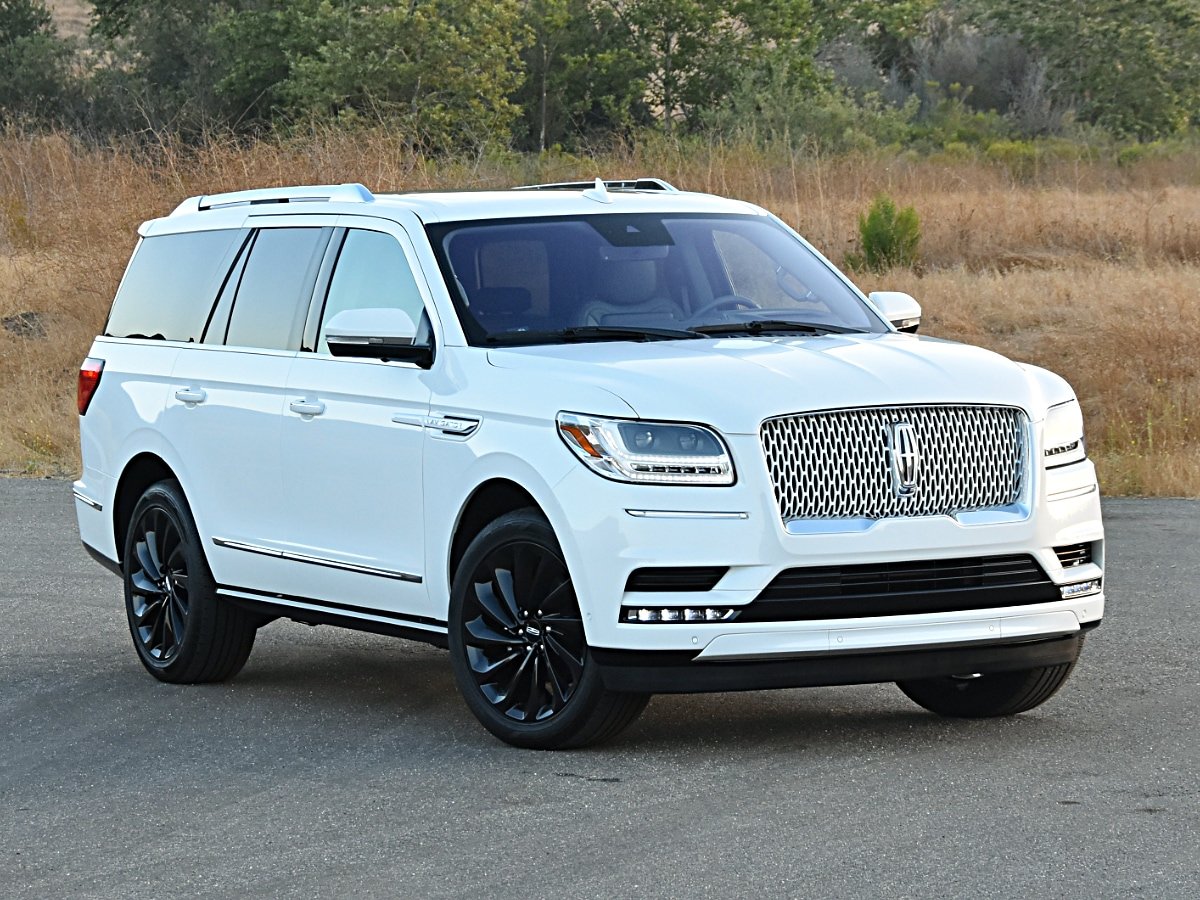
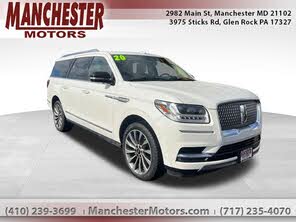
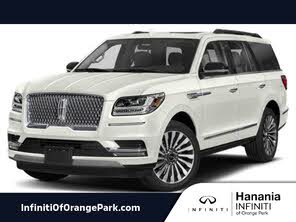
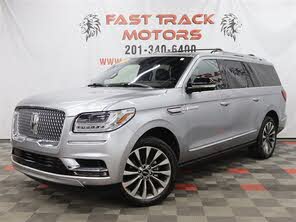
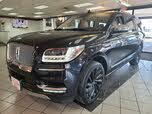
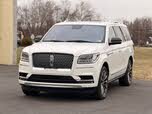
The 2020 Lincoln Navigator, sharing its platform with the Ford Expedition, distinguished itself with unique front and rear styling elements and the Lincoln Embrace lighting system that sequentially illuminated the SUV to welcome its owner. The Navigator featured a lattice-type grille insert mimicking the Lincoln star logo, an illuminated star in the center, fender vents with simulated exposed front door hinges, and full-width taillights. Black roof pillars, except those framing the windshield, gave the Navigator’s glass a wraparound appearance. The new Reserve Monochromatic Package added a custom look with body-color grille and side mirror enhancements, combined with 22-inch black-painted wheels.
The test vehicle, a standard-length Navigator Reserve with 4WD, extra-cost paint, and both the Luxury and Reserve Monochromatic option packages, was priced at $92,385, including the $1,295 destination charge. The Dark Slate leather interior, thanks to the Luxury Package, included Lincoln’s 30-way Perfect Position front seats with heating, ventilation, and massaging functions. The dashboard featured mid-century modern styling cues, digital instrumentation, a 10-inch infotainment touchscreen, and piano-key transmission controls. A panoramic glass roof bathed the interior in natural light, and high-quality materials were used throughout, making the Navigator a convincingly luxurious flagship SUV.
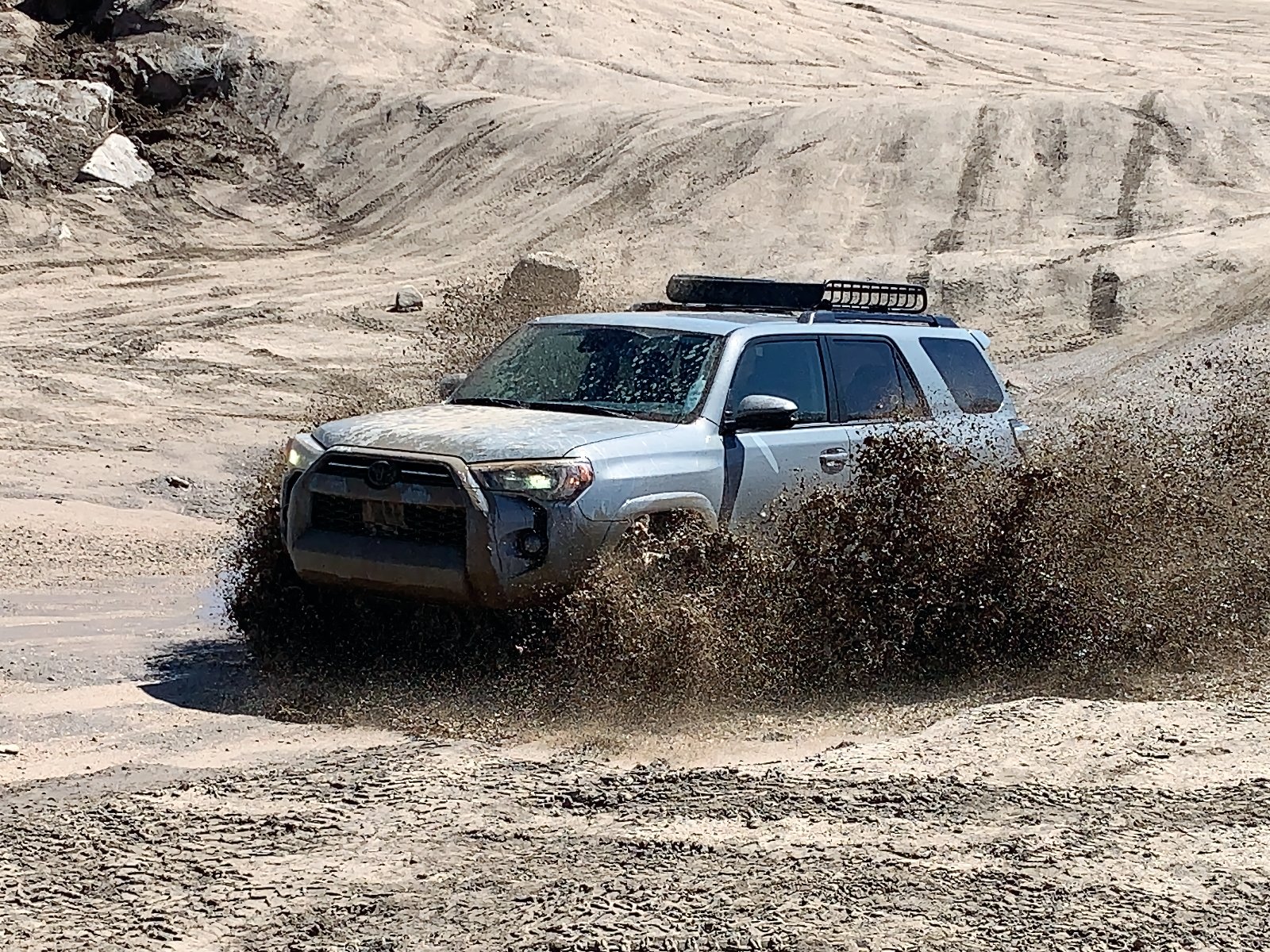
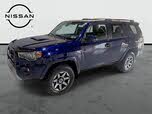
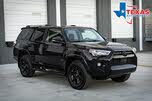
The 2021 Toyota 4Runner, last redesigned 12 years ago, maintained its rugged charm despite its age. Most versions adopted a gape-mouthed and angry visage, with the chrome-festooned 4Runner Limited being a notable exception. The two-box body with flared fenders and trapezoidal wheel arches broadcasted balanced proportions, timeless styling, and undeniable utility. The 4Runner was like a good tool, and good tools didn't require frequent redesigns. Toyota offered the 4Runner in SR5, TRD Off-Road, Limited, and TRD Pro trim levels, with special editions like the Trail Special Edition, Venture Special Edition, and Nightshade Special Edition.
The test vehicle, a new-for-2021 Trail Special Edition, was priced at $38,565 MSRP for the RWD model, with 4WD adding another $1,875. The total price, including the premium audio upgrade, cargo cover, and TRD front skid plate, came to $43,729, including the $1,175 destination charge. Toyota planned to build only 4,000 examples of the Trail Special Edition, which came in white, black, Cement (gray), and Army Green paint colors. It featured black cloth upholstery with tan stitching, all-weather floor mats, a sliding rear cargo tray, and an exclusive custom-made 40-quart cooler.


The 2020 Lincoln Navigator came with a single engine choice: a twin-turbocharged 3.5-liter V6 engine generating 450 horsepower and 510 lb-ft of torque. This was 50 more horses and 30 more lb-ft of torque than the most powerful version of the Ford Expedition. A 10-speed automatic transmission transferred power to the rear wheels unless upgraded to four-wheel drive. Multiple Lincoln Drive Modes tailored the powertrain to specific driving situations, including Conserve, Normal, Excite, Slippery, Deep Conditions, and Slow Climb with the optional towing package. The maximum towing capacity was 8,700 pounds with rear-wheel drive and 8,300 pounds with four-wheel drive.
Acceleration from the twin-turbo V6 was strong, with a subtle engine note from the driver’s seat. The Navigator averaged 16.4 mpg on the testing loop, with the EPA estimating 18 mpg in combined driving. The SUV’s 22-inch wheels and 285/45 tires caused impact harshness over imperfect pavement, especially in Excite mode. However, the Navigator’s body motion control was excellent, lending a hint of athleticism. Around town, the Navigator felt huge, but a tight turning radius, parking assist system, and numerous camera views helped maneuverability. The SUV also offered an automatic hold function for heavy traffic.
The 2021 Toyota 4Runner, with its 4.0-liter V6 engine making 270 horsepower at 5,600 rpm and 278 pound-feet of torque at 4,400 rpm, was equipped with a five-speed automatic transmission powering the rear wheels unless manually shifted into 4-Hi or 4-Lo. The Trail Special Edition did not offer automatic 4WD, and the maximum tow rating was 5,000 pounds. The 4Runner felt slow, heavy, and clunky on pavement, with challenging steering and braking. However, in off-road conditions, the 4Runner excelled, tackling mud, hills, and ruts with ease. The A-Trac off-road traction control system proved beneficial in challenging conditions.
The 4Runner averaged 16.8 mpg during a week of testing, including off-roading, with the EPA estimating 17 mpg in combined driving and 19 mpg on the highway. The SUV’s truck-like driving characteristics added to its charm, but whether one could live with them daily was a personal decision.
Entering the 2020 Lincoln Navigator required climbing up into the SUV, akin to ascending a short flight of stairs, though available power running boards helped. Once inside, passengers found plenty of room to stretch out in comfort. The test vehicle’s 30-way Perfect Position front seats, part of the optional Luxury Package, were exceptionally comfortable, though finding the perfect settings took time. The second row offered a choice between a three-person bench or two-passenger captain’s chairs, with the latter option including a large center console with audio system controls. Triple-zone climate control ensured comfort across all three rows, and the test vehicle had heated rear seat cushions.
The Navigator’s third-row seat provided ample legroom and thigh support, making it comfortable for most passengers. Cargo volumes were class-leading, with the standard-length model offering 19.3 cubic feet behind the third row, 57.5 cubic feet behind the second row, and a maximum of 103.3 cubic feet. The longer Navigator L increased these measurements to 34.3, 73.3, and 120.2 cubic feet, respectively.
The 2021 Toyota 4Runner sat high off the ground, posing a challenge for shorter passengers without running boards. Once inside, the 4Runner offered remarkable comfort, with supportive front and rear seats. The back seat provided generous legroom, good visibility, air conditioning vents, and USB charging ports. The sunroof, power windows, and lowerable rear tailgate glass created an open-air feeling similar to a Jeep Wrangler. The test vehicle did not have the optional third-row seat but featured a sliding cargo deck holding up to 440 pounds, which could be useful depending on one’s lifestyle.
Cargo space varied based on configuration, with up to 47.2 cubic feet behind the back seat and 89.7 cubic feet with the rear seat folded down. The Trail Special Edition’s big roof rack added to the available storage space, making it suitable for various adventures. Interior storage was decent, too.
The 2020 Lincoln Navigator’s Sync 3 infotainment system was the least impressive piece of technology, taking time to load content. However, it provided Apple CarPlay, Android Auto, Lincoln Connect services with a 4G LTE WiFi hotspot, 911 Assist, a Lincoln Way smartphone and smartwatch app, and wireless device charging. "Phone As A Key" technology allowed the smartphone to function as the vehicle key. The voice recognition system worked reasonably well but was not as advanced as some competitors. The Reserve’s Luxury Package included a 20-speaker Revel Ultima audio system with three listening profiles, with Stereo being the preferred option.
Additional technologies included a surround-view camera system and a head-up display. The test vehicle did not have the optional Lincoln Play rear-seat entertainment system, which featured dual 10-inch displays, wireless headphones, Slingbox access, Roku media streaming, and compatibility with Apple and Android devices.
The 2021 Toyota 4Runner Trail Special Edition, positioned low on the trim ladder, did not come with much technology. It included a windshield wiper de-icer system and a 120-volt 100W/400W AC power outlet in the cargo area. The standard 8-inch touchscreen infotainment system featured Bluetooth, Apple CarPlay, Android Auto, Amazon Alexa compatibility, SiriusXM satellite radio, and five USB ports. It also came with a year of free Safety Connect subscription services and a three-month/2-GB trial of WiFi Connect.
The premium audio upgrade added dynamic navigation, dynamic point-of-interest search, dynamic voice recognition, and a one-year subscription to Destination Assist concierge services. The voice recognition technology was effective, and the navigation map included main trails at Hungry Valley. Physical shortcut buttons and volume and tuning knobs made the system easy to use, even with gloves. The 8-inch screen might have been small, but the functionality compensated for it.
The 2020 Lincoln Navigator came with the standard Lincoln Co-Pilot360 collection of advanced driving assistance systems (ADAS), including forward-collision warning with pedestrian detection, automatic emergency braking, lane-departure warning with lane-keeping assistance, a blind-spot warning system with trailer coverage, a rear cross-traffic warning system, and automatic high-beam headlights. The Reserve trim added adaptive cruise control with stop-and-go capability. The Navigator’s adaptive cruise control operated with refinement, and the lane-keeping assistance system was subtle yet effective. The lane-departure warning system produced a vibration in the steering wheel, though it was hard to detect at normal sensitivity.
The Navigator’s nearly three-ton curb weight contributed to its safety in collisions. It received a five-star overall safety rating from the National Highway Traffic Safety Administration (NHTSA), though the rollover resistance rating for RWD models was just three stars. The Insurance Institute for Highway Safety (IIHS) had not tested the 2020 model.
The 2021 Toyota 4Runner came with Toyota Safety Sense P (TSS-P), which included adaptive cruise control, forward-collision warning, automatic forward emergency braking, lane departure warning, and automatic high-beam headlights. However, it lacked a blind-spot warning system with rear cross-traffic warning. The NHTSA gave the 4Runner a three-star rollover resistance rating, but the IIHS rated its roof crush strength as "Good." The IIHS also rated the 4Runner’s protection for the driver in a small overlap frontal-impact collision as Marginal, and the NHTSA gave the front passenger protection a three-star rating in a frontal-impact crash.
CarGurus highlights
According to CarGurus experts, the overall rating for the 2020 Lincoln Navigator is 8.2 out of 10, while the 2021 Toyota 4Runner scores 6.2 out of 10. Based on these ratings, the 2020 Lincoln Navigator is the clear choice for those seeking a luxurious, powerful, and safe SUV. The 2021 Toyota 4Runner, while rugged and reliable, falls short in comparison to the Navigator’s overall excellence.
Choose the 2021 Toyota 4Runner if:
- You require a rugged, off-road-capable SUV with proven durability.
- You prefer a simpler, more utilitarian interior with practical features.
- You want a vehicle with a reputation for long-term reliability and longevity.



Choose the 2020 Lincoln Navigator if:
- You prioritize a luxurious and spacious interior with high-quality materials.
- You need a powerful engine with strong towing capabilities.
- You value advanced safety features and a high overall safety rating.


CarGurus highlights
According to CarGurus experts, the overall rating for the 2020 Lincoln Navigator is 8.2 out of 10, while the 2021 Toyota 4Runner scores 6.2 out of 10. Based on these ratings, the 2020 Lincoln Navigator is the clear choice for those seeking a luxurious, powerful, and safe SUV. The 2021 Toyota 4Runner, while rugged and reliable, falls short in comparison to the Navigator’s overall excellence.
Choose the 2021 Toyota 4Runner if:
Shop Now- You require a rugged, off-road-capable SUV with proven durability.
- You prefer a simpler, more utilitarian interior with practical features.
- You want a vehicle with a reputation for long-term reliability and longevity.








Choose the 2020 Lincoln Navigator if:
Shop Now- You prioritize a luxurious and spacious interior with high-quality materials.
- You need a powerful engine with strong towing capabilities.
- You value advanced safety features and a high overall safety rating.







By: CarGurus + AI
At CarGurus, our team of experienced automotive writers remain at the heart of our content operation, conducting hands-on car tests and writing insightful guides that are backed by years of industry experience. To complement this, we are harnessing AI to make our content offering more diverse and more helpful to shoppers than ever. To achieve this, our AI systems are based exclusively on CarGurus content, ratings and data, so that what we produce is both unique to CarGurus, and uniquely helpful to car shoppers.