2021 Toyota 4Runner vs 2020 Volkswagen Tiguan
Overview | |
MSRP$24,945 | MSRP$36,765 |
Listings907 | Listings1321 |
Ratings & Reviews | |
User Reviews | User Reviews |
Expert reviews7.7 out of 10 | Expert reviews6.2 out of 10 |
Pros
Cons
| Pros
Cons
|
2020 Volkswagen Tiguan Reviews SummaryThe Volkswagen Tiguan is one of only two compact crossover SUV’s that currently offer third-row seating. (And the other is the hopelessly outdated Mitsubishi Outlander.) To fit the extra pair of surprisingly spacious seats, VW made the Tiguan much larger than average for its competitive set—which suits a vehicle that fills big shoes in VW dealerships. With five trim levels and prices that stretch from just under $26,000 to a bit over $40,000, the Tiguan is the German brand’s best-selling vehicle in the U.S. | |
2021 Toyota 4Runner Reviews SummaryDespite its design age, poor fuel economy, rough ride, iffy handling, and marginal safety ratings, the current-generation Toyota 4Runner remains a popular choice in a midsize SUV. Why? Its reputation for reliability and resale value, coupled with its undeniable utility, rugged image, and go-anywhere and do-anything capability, are the selling points. And if that's why you want a 2021 Toyota 4Runner, it won't disappoint you as long as you accept its shortcomings. | |
No video found | No video found |
Popular Features & Specs | |
Engine2.0L 184 hp I4 | Engine4.0L 270 hp V6 |
Drive TrainFWD | Drive Train4X2 |
Seating Capacity7 | Seating Capacity7 |
Horsepower184 hp @ 4400 rpm | Horsepower270 hp @ 5600 rpm |
MPG City22 | MPG City16 |
MPG Highway29 | MPG Highway19 |
Engine | |
Engine Name2.0L 184 hp I4 | Engine Name4.0L 270 hp V6 |
Torque221 lb-ft @ 1600 rpm | Torque278 lb-ft @ 4400 rpm |
Horsepower184 hp @ 4400 rpm | Horsepower270 hp @ 5600 rpm |
DrivetrainFWD | Drivetrain4X2 |
Fuel Economy | |
MPG City22 | MPG City16 |
MPG Highway29 | MPG Highway19 |
Interior | |
Seating Capacity7 | Seating Capacity7 |
Safety | |
Front Crash Overall4 | Front Crash Overall4 |
Side Crash Overall5 | Side Crash Overall5 |
Dimensions & Capacity | |
Cargo Space12.0 cu ft | Cargo Space47.2 cu ft |
Curb Weight3757 lbs | Curb Weight4400 lbs |
Height66.3 in | Height71.5 in |
Length185.1 in | Length190.2 in |
Width72.4 in | Width75.8 in |
Wheelbase109.8 in | Wheelbase109.8 in |
Maximum Payload1124 lbs | Maximum Payload1700 lbs |
Number of doors4 | Number of doors4 |
Maximum Towing Capacity1500 lbs | Maximum Towing Capacity5000 lbs |
Standard Towing Capacity | Standard Towing Capacity5000 lbs |
Overview | ||
MSRP | $24,945 | $36,765 |
Listings | ||
Ratings & Reviews | ||
User reviews | ||
Expert reviews | 7.7 out of 10Read full review | 6.2 out of 10Read full review |
Pros & cons | Pros
Cons
| Pros
Cons
|
Summary | The Volkswagen Tiguan is one of only two compact crossover SUV’s that currently offer third-row seating. (And the other is the hopelessly outdated Mitsubishi Outlander.) To fit the extra pair of surprisingly spacious seats, VW made the Tiguan much larger than average for its competitive set—which suits a vehicle that fills big shoes in VW dealerships. With five trim levels and prices that stretch from just under $26,000 to a bit over $40,000, the Tiguan is the German brand’s best-selling vehicle in the U.S. | Despite its design age, poor fuel economy, rough ride, iffy handling, and marginal safety ratings, the current-generation Toyota 4Runner remains a popular choice in a midsize SUV. Why? Its reputation for reliability and resale value, coupled with its undeniable utility, rugged image, and go-anywhere and do-anything capability, are the selling points. And if that's why you want a 2021 Toyota 4Runner, it won't disappoint you as long as you accept its shortcomings. |
Video | No video found | No video found |
Popular Features & Specs | ||
Engine | 2.0L 184 hp I4 | 4.0L 270 hp V6 |
Drive Train | FWD | 4X2 |
Seating Capacity | 7 | 7 |
Horsepower | 184 hp @ 4400 rpm | 270 hp @ 5600 rpm |
MPG City | 22 | 16 |
MPG Highway | 29 | 19 |
Engine | ||
Engine Name | 2.0L 184 hp I4 | 4.0L 270 hp V6 |
Torque | 221 lb-ft @ 1600 rpm | 278 lb-ft @ 4400 rpm |
Horsepower | 184 hp @ 4400 rpm | 270 hp @ 5600 rpm |
Drivetrain | FWD | 4X2 |
Fuel Economy | ||
MPG City | 22 | 16 |
MPG Highway | 29 | 19 |
Interior | ||
Seating Capacity | 7 | 7 |
Safety | ||
Front Crash Overall | 4 | 4 |
Side Crash Overall | 5 | 5 |
Dimensions & Capacity | ||
Cargo Space | 12.0 cu ft | 47.2 cu ft |
Curb Weight | 3757 lbs | 4400 lbs |
Height | 66.3 in | 71.5 in |
Length | 185.1 in | 190.2 in |
Width | 72.4 in | 75.8 in |
Wheelbase | 109.8 in | 109.8 in |
Maximum Payload | 1124 lbs | 1700 lbs |
Number of doors | 4 | 4 |
Maximum Towing Capacity | 1500 lbs | 5000 lbs |
Standard Towing Capacity | 5000 lbs | |
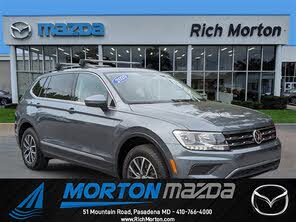
Volkswagen completely overhauled the Tiguan for the 2018 model year, introducing an all-new second generation of its compact crossover SUV. The redesign addressed the original Tiguan’s biggest shortcoming—its diminutive size—and aimed to make it more competitively priced against rivals like the Honda CR-V and Toyota RAV4. The result was a vehicle that maintained a stylish and conservatively German exterior, though some cost-cutting measures were evident upon closer inspection.
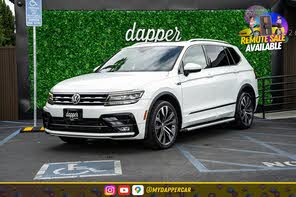
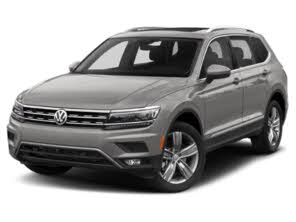
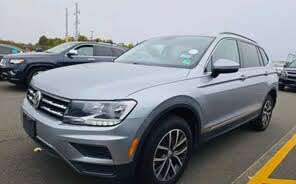
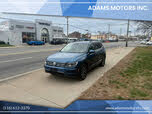
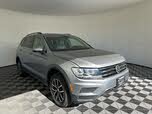
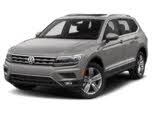
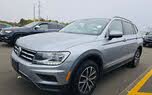
The Tiguan's exterior featured clean and simple lines, with Volkswagen's new flat logo adorning a horizontal grille that connected the headlights. The design was straightforward and lacked any adventurous or aggressive elements, which had its own appeal. Inside, however, the Tiguan's interior was plain, with dull surfaces and hard black plastic. While the optional digital dashboard and glass-covered touchscreen infotainment system were highlights, the overall cockpit design felt uninspired compared to Volkswagen's past standards.
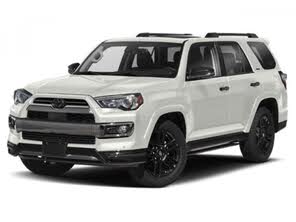
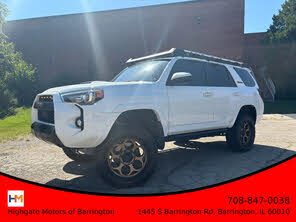
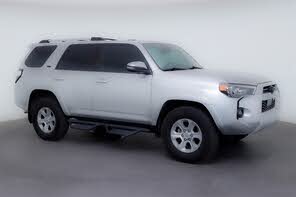
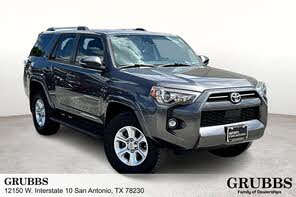
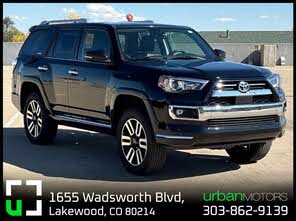
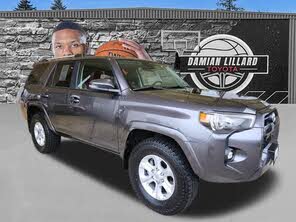
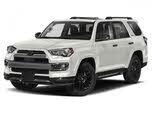
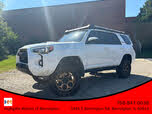
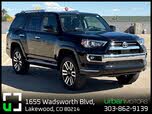
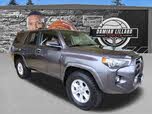
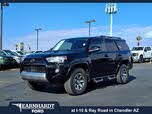
Toyota last redesigned the 4Runner 12 years ago, and while it received updates over the years, the core design remained largely unchanged. This meant that a used 4Runner was quite similar to a new one, minus some of the latest infotainment and safety technologies. The 4Runner's design was not particularly attractive, with most versions adopting a gape-mouthed and angry visage, except for the chrome-festooned Limited model. Despite this, the two-box body with flared fenders and trapezoidal wheel arches gave it balanced proportions, timeless styling, and undeniable utility.
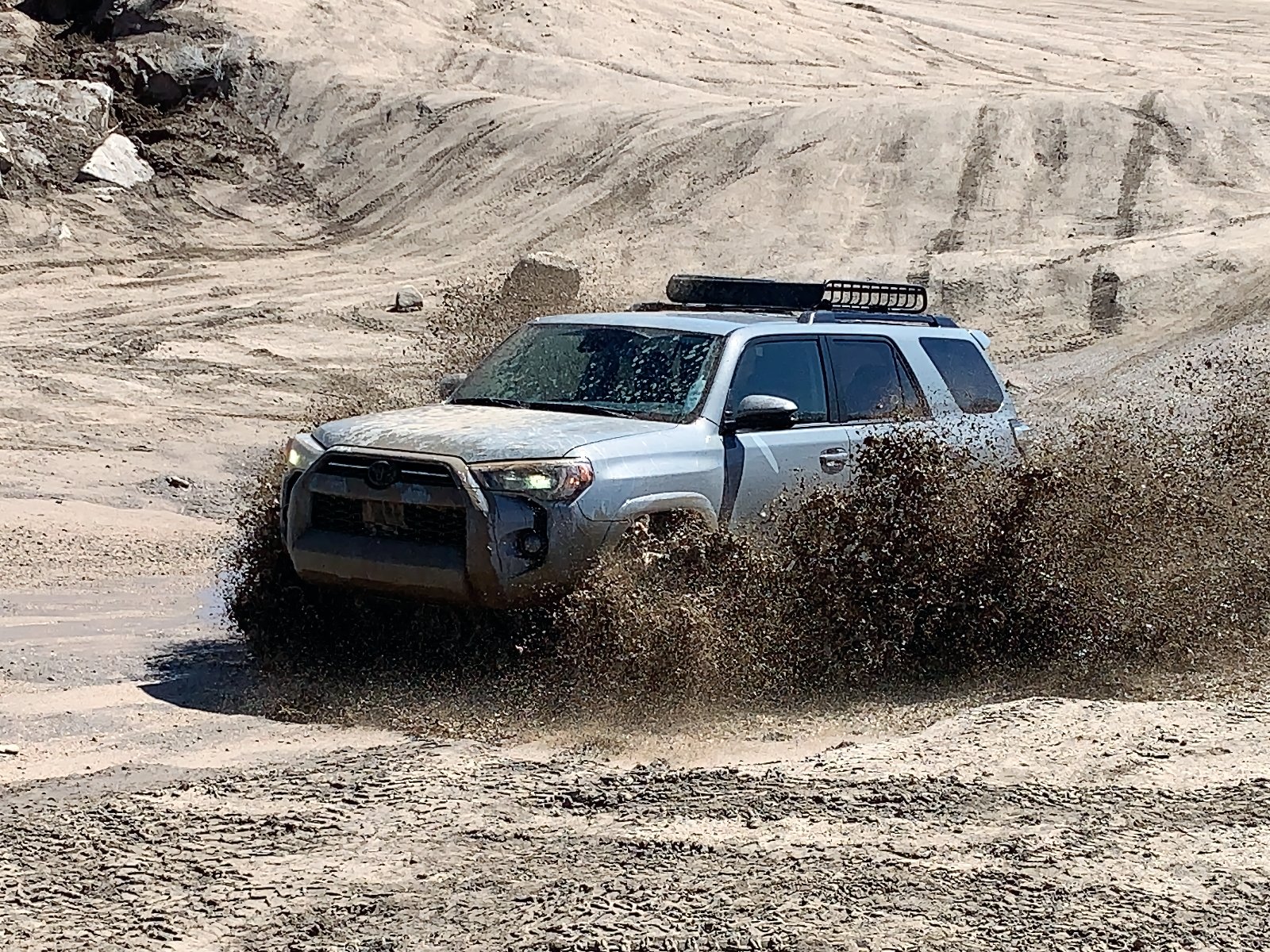
The 4Runner was offered in various trims, including SR5, TRD Off-Road, Limited, and TRD Pro, with special editions like the Trail Special Edition, Venture Special Edition, and Nightshade Special Edition. Pricing ranged from $36,950 for the SR5 with rear-wheel drive to $50,570 for the TRD Pro with four-wheel drive. The Trail Special Edition, priced at $38,565 for the RWD model, added features like a premium audio upgrade, cargo cover, and TRD front skid plate, bringing the total price to $43,729. Toyota planned to build only 4,000 examples of this edition, which came in white, black, Cement (gray), and Army Green paint colors, and included a Yakima RoadWarrior rooftop cargo basket.
Inside, the Trail Special Edition featured black cloth upholstery with tan stitching, all-weather floor mats, a sliding rear cargo tray, and an exclusive custom-made 40-quart cooler. The interior was dominated by hard plastic, which was easy to clean and in line with the SUV's rugged mission. The dashboard was old-school, with big knobs, buttons, and manual air conditioning. The 4Runner also required a traditional key to start, adding to its charm. These qualities made the 4Runner a simple, durable vehicle that could be driven for decades, provided gasoline stations remained available.


All Tiguans were powered by Volkswagen’s signature turbocharged 2.0-liter four-cylinder engine, producing 184 horsepower and 221 pound-feet of torque. This engine drove either the front or all four wheels through an eight-speed automatic transmission. The Tiguan's powertrain offered a snappy throttle response with minimal turbo lag, but it was only moderately quick, especially when fully loaded. The Tiguan's curb weight ranged from 3,757 pounds for the front-wheel-drive model to 3,847 pounds for the all-wheel-drive version, making it heavier than competitors like the Honda CR-V.
The Tiguan's engine was relatively quiet, with a deep and refined sound at high revs. The cabin was well-insulated from wind noise, making it a quiet highway cruiser, though some road noise could filter through on rough surfaces. The Tiguan's handling was impacted by its larger size and longer wheelbase, making it less nimble than some competitors. The suspension was soft, providing a comfortable ride even on rough roads. While the Tiguan was not the most fun-to-drive compact crossover, it offered a good balance of size and practicality.
The 2021 Toyota 4Runner was equipped with a 4.0-liter V6 engine producing 270 horsepower and 278 pound-feet of torque, paired with a five-speed automatic transmission. The 4Runner's part-time four-wheel-drive system required manual shifting into 4-Hi or 4-Lo. The Trail Special Edition did not offer automatic 4WD. The 4Runner had a maximum tow rating of 5,000 pounds.
In off-road conditions, the 4Runner excelled, thanks to features like A-Trac, which braked spinning wheels to provide power to those in contact with the ground. The 4Runner tackled mud, hills, and ruts with ease, and higher trims offered additional off-road features like a locking rear differential, Multi-Terrain Select, and Crawl Control. However, on pavement, the 4Runner felt slow, heavy, and clunky, with unrefined steering and braking. Its truck-like driving characteristics were part of its charm, but they made it less suitable for daily suburban driving. The 4Runner's fuel economy was poor, averaging 16.8 mpg during testing, with an EPA rating of 17 mpg combined.
The 2020 Volkswagen Tiguan offered practicality with its versatile seating arrangement. The second row of seats could slide up to seven inches fore and aft, making the third row more usable. While the third row was not spacious, it provided enough legroom for shorter adults and was comfortable for kids. Front-drive Tiguans came standard with the third row, while all-wheel-drive models had it as a $595 option.
The Tiguan's third-row seats were roomier than those in many larger vehicles, and access was convenient thanks to a simple latch mechanism. The split second-row seats folded flat, providing 65.7 cubic feet of cargo space with the third row collapsed. Two-row Tiguans offered 73.5 cubic feet of cargo space, more than competitors like the Ford Escape and Toyota RAV4, but slightly less than the Honda CR-V. The Tiguan's front seats were spacious, with plenty of hip and shoulder room, and the abundant glass and seating position made it feel larger than it was.
The 2021 Toyota 4Runner sat high off the ground, which could be challenging for shorter individuals to climb aboard without running boards. Once inside, the 4Runner offered comfortable seating with proper support in both the front and rear. The back seat provided generous legroom, good visibility, air conditioning vents, and USB charging ports. The 4Runner's sunroof, power windows, and lowerable rear tailgate glass created an open-air feeling similar to a Jeep Wrangler.
A third-row seat was available, but the test vehicle came with a sliding cargo deck that could hold up to 440 pounds. This feature took up some cargo volume but was useful for various activities. The 4Runner's back bumper served as a convenient place to sit for changing or relaxing. Depending on the configuration, cargo space measured up to 47.2 cubic feet behind the back seat and 89.7 cubic feet with the rear seat folded down. The Trail Special Edition's roof rack added to its storage capacity, making it suitable for adventures.
The 2020 Volkswagen Tiguan featured the MIB II infotainment system, which was set to be replaced by MIB3 the following year. Despite this, the current system was one of the best on the market. The base S trim had a 6.5-inch touchscreen display, while SE and higher trims featured an 8-inch capacitive touchscreen with a glass surface, bright colors, and a responsive processor. The Tiguan S had a single USB-C port, while higher trims had two USB-A ports in the front and one in the second row. A wireless charging pad was available on trims above S.
VW’s Digital Cockpit, available on top SEL trims, was a fully digital instrument panel that could be customized and reconfigured, including a panoramic map display. This feature helped VW stay ahead of competitors, and standard equipment included Apple CarPlay, Android Auto, Bluetooth connectivity, and a WiFi hotspot.
The 2021 Toyota 4Runner Trail Special Edition did not come with much technology due to its lower trim level. However, it included a windshield wiper de-icer system and a 120-volt AC power outlet in the cargo area. The 4Runner had a standard 8-inch touchscreen infotainment system with Bluetooth, Apple CarPlay, Android Auto, Amazon Alexa compatibility, SiriusXM satellite radio, and five USB ports. It also came with a year of free Safety Connect subscription services and a three-month trial of WiFi Connect.
The test vehicle's premium audio upgrade added dynamic navigation, dynamic point-of-interest search, and dynamic voice recognition, free for the first three years. It also included a one-year subscription to Destination Assist concierge services. The infotainment system's software was sophisticated, with effective voice recognition and navigation maps that included main trails at Hungry Valley. Physical shortcut buttons and knobs made the system easy to use, even with gloves.
For the 2020 model year, Volkswagen improved the Tiguan’s standard safety package by adding forward-collision warning with automatic emergency braking, blind spot monitoring, and rear cross-traffic alert to all models. However, features like adaptive cruise control with lane-keeping assistance and LED headlights with automatic high beams were reserved for the top SEL trim. VW equipped all Tiguan models with Car-Net, a telematics package that connected the vehicle to an owner’s smartphone or watch through an app, offering features like remote locking and unlocking, status checks, and vehicle location.
The National Highway Traffic Safety Administration (NHTSA) had not crash-tested the Tiguan, but the Insurance Institute for Highway Safety (IIHS) rated it a Top Safety Pick for top-of-the-line SEL Premium models with LED headlights. Most Tiguans, however, were equipped with halogen headlights, which the IIHS rated poor.
Toyota Safety Sense P (TSS-P) was standard on the 2021 Toyota 4Runner, including adaptive cruise control, forward-collision warning, automatic forward emergency braking, lane departure warning, and automatic high-beam headlights. However, the 4Runner did not offer a blind-spot warning system with rear cross-traffic warning. The NHTSA gave the 4Runner a three-star rollover resistance rating and a three-star rating for front passenger protection in a frontal-impact crash. The IIHS rated the 4Runner's roof crush strength as "Good" but gave its protection for the driver in a small overlap frontal-impact collision a "Marginal" rating.
CarGurus highlights

According to CarGurus experts, the overall rating for the 2020 Volkswagen Tiguan is 7.7 out of 10, while the 2021 Toyota 4Runner scores 6.2 out of 10. Based on these ratings, the 2020 Volkswagen Tiguan is the better choice for most consumers, offering a more modern design, advanced technology, and a versatile interior. The 2021 Toyota 4Runner excels in off-road capability and durability but falls short in terms of everyday comfort and technology.
Choose the 2021 Toyota 4Runner if:
- You require a rugged and capable off-road vehicle with excellent off-road features.
- You value a durable and long-lasting SUV with a simple, old-school design.
- You need ample cargo space and a vehicle suitable for outdoor adventures.



Choose the 2020 Volkswagen Tiguan if:
- You prioritize a modern and stylish design with a spacious interior.
- You want advanced infotainment features and a customizable digital cockpit.
- You need a versatile seating arrangement with a practical third row.





CarGurus highlights
According to CarGurus experts, the overall rating for the 2020 Volkswagen Tiguan is 7.7 out of 10, while the 2021 Toyota 4Runner scores 6.2 out of 10. Based on these ratings, the 2020 Volkswagen Tiguan is the better choice for most consumers, offering a more modern design, advanced technology, and a versatile interior. The 2021 Toyota 4Runner excels in off-road capability and durability but falls short in terms of everyday comfort and technology.
Choose the 2021 Toyota 4Runner if:
Shop Now- You require a rugged and capable off-road vehicle with excellent off-road features.
- You value a durable and long-lasting SUV with a simple, old-school design.
- You need ample cargo space and a vehicle suitable for outdoor adventures.


Choose the 2020 Volkswagen Tiguan if:
Shop Now- You prioritize a modern and stylish design with a spacious interior.
- You want advanced infotainment features and a customizable digital cockpit.
- You need a versatile seating arrangement with a practical third row.






By: CarGurus + AI
At CarGurus, our team of experienced automotive writers remain at the heart of our content operation, conducting hands-on car tests and writing insightful guides that are backed by years of industry experience. To complement this, we are harnessing AI to make our content offering more diverse and more helpful to shoppers than ever. To achieve this, our AI systems are based exclusively on CarGurus content, ratings and data, so that what we produce is both unique to CarGurus, and uniquely helpful to car shoppers.