2021 Toyota Sienna vs 2020 Toyota 4Runner

Overview | |
MSRP$36,120 | MSRP$34,460 |
Listings776 | Listings627 |
Ratings & Reviews | |
User Reviews | User Reviews |
Expert reviews6.8 out of 10 | Expert reviews8.3 out of 10 |
Pros
Cons
| Pros
Cons
|
2020 Toyota 4Runner Reviews SummaryEven in its expensive Limited trim, the Toyota 4Runner remains clearly purpose-built for tackling terrain. Whether on a dusty cow path or snowy mountain road, the 4Runner looks most in its element when its outside the typical car’s comfort zone. For 2020, Toyota keeps enough chrome and leather available to market the 4Runner as a rough-and-tumble luxury alternative, but shoppers considering one had better have a real need for 4-wheel drive. | |
2021 Toyota Sienna Reviews SummaryToyota’s minivan got a major makeover for 2021, now entering its fourth generation of production since debuting as a 1997 model. For the first time, the Sienna gets a hybrid gasoline-electric powertrain, and not only that—it’s standard equipment. The Sienna Hybrid is built on the Toyota New Global Architecture (TNGA-K) platform, shared with the Highlander and other current Toyota models. | |
No video found | |
Popular Features & Specs | |
Engine4.0L 270 hp V6 | Engine2.5L 245 hp I4 Hybrid |
Drive Train4X2 | Drive TrainFWD |
Seating Capacity7 | Seating Capacity8 |
Horsepower270 hp @ 5600 rpm | Horsepower |
EV Battery Capacity | EV Battery Capacity1.9 kWh |
MPG City16 | MPG City36 |
MPG Highway19 | MPG Highway36 |
Engine | |
Engine Name4.0L 270 hp V6 | Engine Name2.5L 245 hp I4 Hybrid |
Torque278 lb-ft @ 4400 rpm | Torque |
Horsepower270 hp @ 5600 rpm | Horsepower |
Drivetrain4X2 | DrivetrainFWD |
Fuel Economy | |
EV Battery Capacity | EV Battery Capacity1.9 kWh |
MPG City16 | MPG City36 |
MPG Highway19 | MPG Highway36 |
Interior | |
Seating Capacity7 | Seating Capacity8 |
Safety | |
Front Crash Overall4 | Front Crash Overall4 |
Side Crash Overall5 | Side Crash Overall5 |
Dimensions & Capacity | |
Cargo Space47.2 cu ft | Cargo Space33.5 cu ft |
Curb Weight4400 lbs | Curb Weight4610 lbs |
Height71.5 in | Height68.5 in |
Length190.2 in | Length203.7 in |
Width75.8 in | Width78.5 in |
Wheelbase109.8 in | Wheelbase120.5 in |
Maximum Payload1700 lbs | Maximum Payload1560 lbs |
Number of doors4 | Number of doors4 |
Maximum Towing Capacity5000 lbs | Maximum Towing Capacity3500 lbs |
Standard Towing Capacity5000 lbs | Standard Towing Capacity |
Overview | ||
MSRP | $36,120 | $34,460 |
Listings | ||
Ratings & Reviews | ||
User reviews | ||
Expert reviews | 6.8 out of 10Read full review | 8.3 out of 10Read full review |
Pros & cons | Pros
Cons
| Pros
Cons
|
Summary | Even in its expensive Limited trim, the Toyota 4Runner remains clearly purpose-built for tackling terrain. Whether on a dusty cow path or snowy mountain road, the 4Runner looks most in its element when its outside the typical car’s comfort zone. For 2020, Toyota keeps enough chrome and leather available to market the 4Runner as a rough-and-tumble luxury alternative, but shoppers considering one had better have a real need for 4-wheel drive. | Toyota’s minivan got a major makeover for 2021, now entering its fourth generation of production since debuting as a 1997 model. For the first time, the Sienna gets a hybrid gasoline-electric powertrain, and not only that—it’s standard equipment. The Sienna Hybrid is built on the Toyota New Global Architecture (TNGA-K) platform, shared with the Highlander and other current Toyota models. |
Video | No video found | |
Popular Features & Specs | ||
Engine | 4.0L 270 hp V6 | 2.5L 245 hp I4 Hybrid |
Drive Train | 4X2 | FWD |
Seating Capacity | 7 | 8 |
Horsepower | 270 hp @ 5600 rpm | |
EV Battery Capacity | 1.9 kWh | |
MPG City | 16 | 36 |
MPG Highway | 19 | 36 |
Engine | ||
Engine Name | 4.0L 270 hp V6 | 2.5L 245 hp I4 Hybrid |
Torque | 278 lb-ft @ 4400 rpm | |
Horsepower | 270 hp @ 5600 rpm | |
Drivetrain | 4X2 | FWD |
Fuel Economy | ||
EV Battery Capacity | 1.9 kWh | |
MPG City | 16 | 36 |
MPG Highway | 19 | 36 |
Interior | ||
Seating Capacity | 7 | 8 |
Safety | ||
Front Crash Overall | 4 | 4 |
Side Crash Overall | 5 | 5 |
Dimensions & Capacity | ||
Cargo Space | 47.2 cu ft | 33.5 cu ft |
Curb Weight | 4400 lbs | 4610 lbs |
Height | 71.5 in | 68.5 in |
Length | 190.2 in | 203.7 in |
Width | 75.8 in | 78.5 in |
Wheelbase | 109.8 in | 120.5 in |
Maximum Payload | 1700 lbs | 1560 lbs |
Number of doors | 4 | 4 |
Maximum Towing Capacity | 5000 lbs | 3500 lbs |
Standard Towing Capacity | 5000 lbs | |
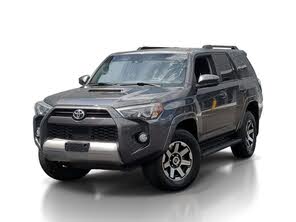
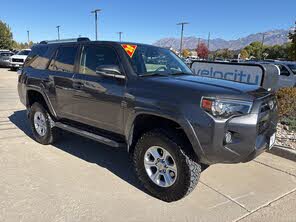
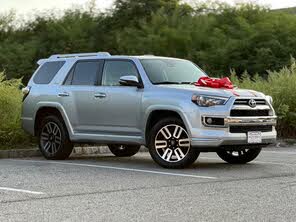
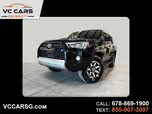
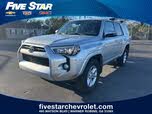
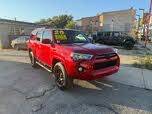
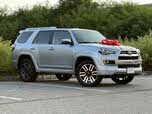
The 2020 Toyota 4Runner was characterized by its tall slab sides, high beltline, and short overhangs, contributing to its timeless design. Its utilitarian attitude was reminiscent of an XJ Jeep Cherokee, with flared wheel wells accommodating bulky off-road tires and short overhangs allowing it to tackle steep pitches. The hood scoop, a non-functional element, was one of the few visual cues denoting its off-road-focused TRD trim. The front end featured small, angular headlights, with twin body-color bars on most trims, while the TRD Pro had blacked-out accents. The Limited trim boasted bright chrome accents. The trim lineup included SR5, SR5 Premium, TRD Off-Road, TRD Off-Road Premium, TRD Pro, and Limited, with the Nightshade Special Edition and Venture Special Edition adding a stealth aesthetic. The Limited trim, aimed at comfort, featured leather upholstery and an 8-inch touchscreen, though it retained a utilitarian feel with plenty of plastic and a seating position designed for off-roading.
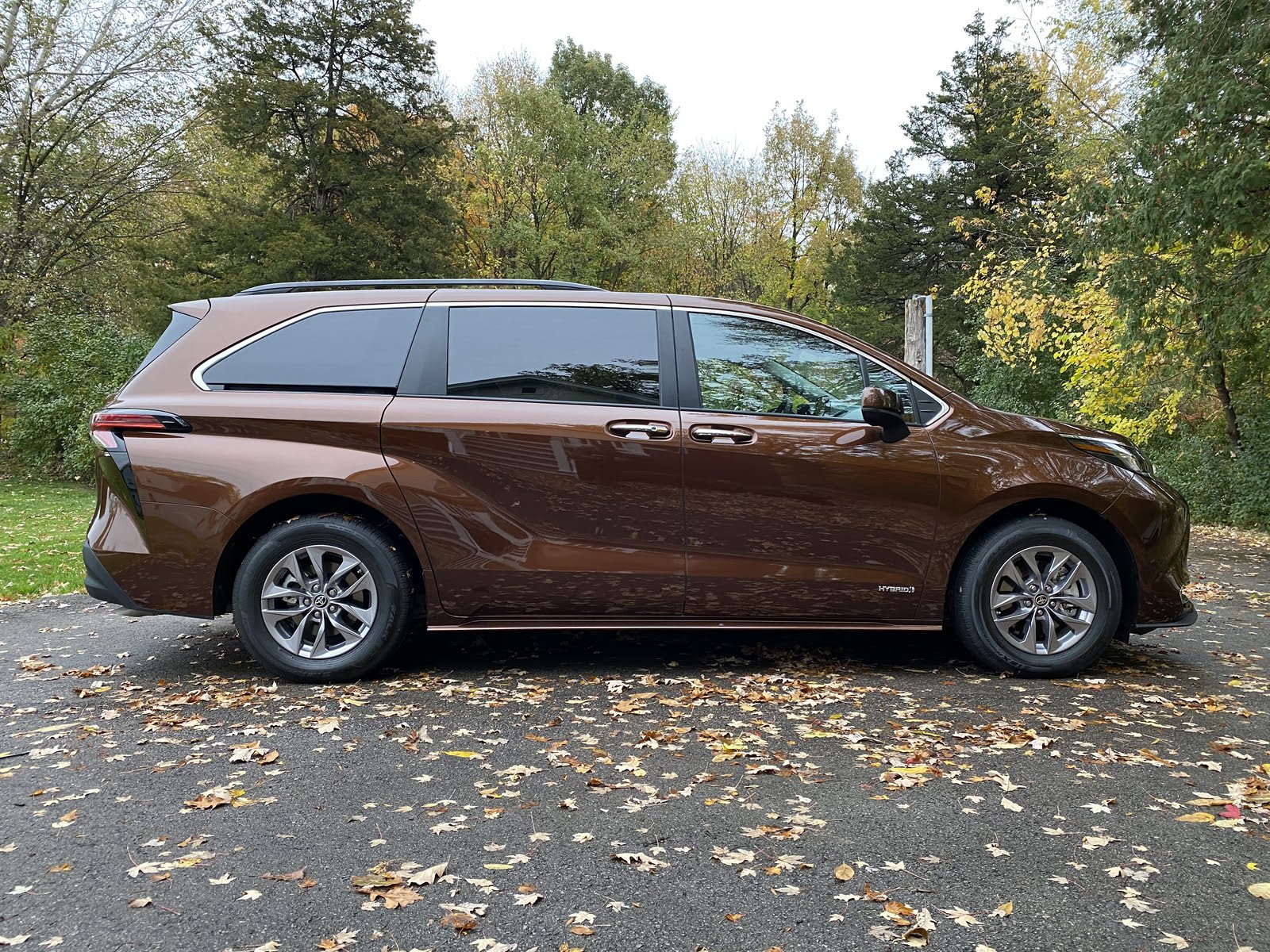
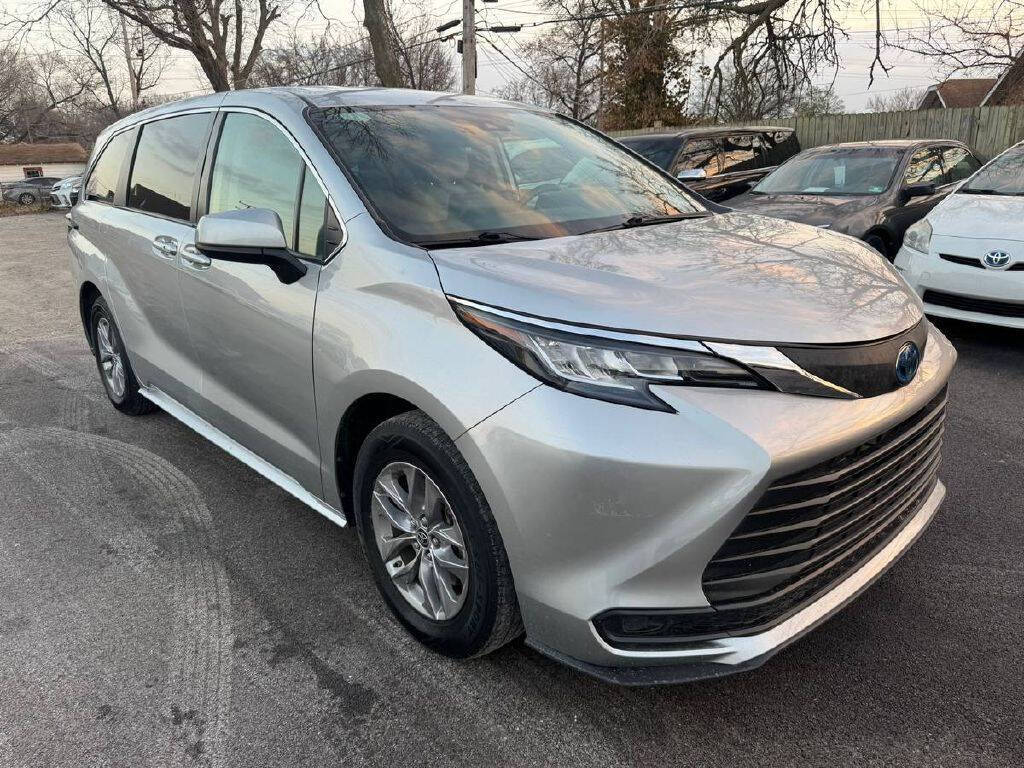
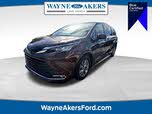
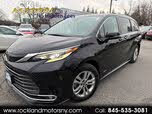
The 2021 Toyota Sienna Hybrid aimed to redefine minivan aesthetics with a more SUV-like appearance. Its wide grille and LED headlamp arrays gave it a sleek look, while the sculpted sliding side doors and assertive stance added to its appeal. Alloy wheels ranging from 17 to 20 inches filled the arches, enhancing its visual presence. The interior emphasized width with horizontal lines, offering a higher seating position than a sedan. The dashboard was simple and uncluttered, with controls clustered on the center stack. The center console featured a gear selector lever, cup holders, and a storage compartment, forming a bridge between the dash and storage. The second and third rows were comfortable for adults, with the second row sliding fore and aft for maximum utility and comfort.


The 2020 Toyota 4Runner featured a 4-liter V6 engine with a 5-speed automatic transmission, delivering 270 horsepower and 278 pound-feet of torque. This engine was not designed for efficiency but for durability and off-road capability, offering a towing capacity of up to 5,000 pounds. The 4Runner's fuel economy was poor, with EPA estimates of 16 mpg city, 19 highway, and 17 combined. Its body-on-frame construction and advanced traction systems like CRAWL control and Multi-Terrain Select made it excel off-road. The 4Runner's full-time 4WD system was better suited for maintaining forward progress, while the part-time system in TRD models handled more challenging terrains.
The 2021 Toyota Sienna Hybrid combined a 2.5-liter four-cylinder engine with two electric motors, producing 243 horsepower. It offered front-wheel drive as standard, with all-wheel drive available on all trims. The Sienna used an electronically controlled CVT, which prioritized fuel efficiency over throttle response. It featured four selectable drive modes: Normal, EV, Eco, and Sport. The Sienna's handling improved significantly with new TNGA front suspension and independent rear trailing arm suspension. Its EPA fuel economy was impressive, with FWD models achieving 36 mpg city, highway, and combined, while AWD models were rated at 35/36/35 mpg.
The 2020 Toyota 4Runner offered excellent outward visibility and a relatively tidy turning radius of 18 feet, 7 inches. Its interior featured large, chunky knobs for HVAC and stereo controls, with an 8-inch touchscreen and steering wheel controls. The tall seating position provided a commanding view, though power-retractable running boards were necessary for easier access. The 4Runner offered an optional third row of seats, best suited for short and occasional use, with limited legroom and comfort.
The 2021 Toyota Sienna excelled in convenience functions, with a standard third row and a second row that slid up to 25 inches for easy access. The cabin featured 16 cupholders and ample storage space. The Sienna could carry a full four-by-eight sheet of plywood with the tailgate closed, offering 33.5 cubic feet of cargo space behind the third row, 75.2 cubic feet behind the second row, and 101.0 cubic feet behind the first row. Its hybrid battery was cleverly tucked under the front seats, preserving cargo space. Power-operated sliding doors and tailgate responded to kick motions, enhancing family-friendliness.
The 2020 Toyota 4Runner featured an 8-inch touchscreen infotainment system with Apple CarPlay and Android Auto compatibility. It included Amazon Alexa, Bluetooth connectivity, and various subscription services. However, the onboard navigation system was less intuitive than smartphone-based systems. While the 4Runner had advanced off-road features, its technology offerings lagged behind competitors.
The 2021 Toyota Sienna boasted a nine-inch touchscreen with Apple CarPlay, Android Auto, and Amazon Alexa. It offered a range of connectivity options, including Safety Connect, Remote Connect, and WiFi Connect. Higher trims featured a Premium Audio + JBL package with 12 speakers and a rear-seat entertainment system. The driver enjoyed a color multi-information display and, in Platinum trims, a 10-inch Head-Up Display. A digital rearview mirror was available, enhancing visibility when the cabin was full.
The 2020 Toyota 4Runner came equipped with Toyota Safety Sense P, including adaptive cruise control, lane-departure alert, pre-collision system with pedestrian detection, and automatic high beams. It had eight standard airbags and received a four-star overall rating from NHTSA, though it scored lower in rollover tests. The IIHS rated it "Good" in most crash tests, with a "Marginal" score in the small overlap front: driver-side test.
The 2021 Toyota Sienna featured Toyota Safety Sense 2.0, with dynamic radar cruise control, lane-tracing assist, and more. It included the Star Safety System and 10 airbags, with LATCH connectors for child seats. A rear-seat reminder system and tire pressure monitoring system were standard. While 2021 crash-test ratings were pending, the 2020 Sienna received favorable ratings from IIHS and a five-star overall rating from NHTSA.
CarGurus highlights
According to CarGurus experts, the overall rating for the 2020 Toyota 4Runner is 6.8 out of 10, while the 2021 Toyota Sienna scores 8.3 out of 10. Based on these ratings, the 2021 Toyota Sienna is the recommended choice, offering superior technology, safety features, and fuel efficiency, making it a more versatile and family-friendly option.
Choose the 2021 Toyota Sienna if:
- You value fuel efficiency and hybrid technology.
- You need a family-friendly vehicle with ample cargo space and convenience features.
- You want a minivan with advanced safety and technology offerings.





Choose the 2020 Toyota 4Runner if:
- You prioritize off-road capability and rugged performance.
- You need a vehicle with a high towing capacity.
- You prefer a traditional SUV design with a commanding seating position.






CarGurus highlights
According to CarGurus experts, the overall rating for the 2020 Toyota 4Runner is 6.8 out of 10, while the 2021 Toyota Sienna scores 8.3 out of 10. Based on these ratings, the 2021 Toyota Sienna is the recommended choice, offering superior technology, safety features, and fuel efficiency, making it a more versatile and family-friendly option.
Choose the 2021 Toyota Sienna if:
Shop Now- You value fuel efficiency and hybrid technology.
- You need a family-friendly vehicle with ample cargo space and convenience features.
- You want a minivan with advanced safety and technology offerings.





Choose the 2020 Toyota 4Runner if:
Shop Now- You prioritize off-road capability and rugged performance.
- You need a vehicle with a high towing capacity.
- You prefer a traditional SUV design with a commanding seating position.






By: CarGurus + AI
At CarGurus, our team of experienced automotive writers remain at the heart of our content operation, conducting hands-on car tests and writing insightful guides that are backed by years of industry experience. To complement this, we are harnessing AI to make our content offering more diverse and more helpful to shoppers than ever. To achieve this, our AI systems are based exclusively on CarGurus content, ratings and data, so that what we produce is both unique to CarGurus, and uniquely helpful to car shoppers.