2020 Honda CR-V vs 2021 Volkswagen Tiguan
Overview | |
MSRP$25,150 | MSRP$25,245 |
Listings1674 | Listings1325 |
Ratings & Reviews | |
User Reviews | User Reviews |
Expert reviews7.5 out of 10 | Expert reviews7.3 out of 10 |
Pros
Cons
| Pros
Cons
|
2020 Honda CR-V Reviews SummaryHonda’s compact SUV has been satisfying buyers for more than two decades, with more than five million CR-V’s sold. Such a legacy means the CR-V has long had its wrinkles smoothed out into a comfortable and capable crossover package that’s only downside may be its sheer inoffensiveness. This year’s model gets engine and safety upgrades, which improve fuel economy and help to make Honda’s bestseller an even better value. | |
2021 Volkswagen Tiguan Reviews SummaryYou may have noticed that crossover SUVs are popular. Among them, compact models dominate, having essentially replaced the traditional midsize sedan in American driveways. Offering room for five people, available all-wheel drive (AWD), and more cargo than any family car, they are the preferred method of transportation for a broad cross section of new vehicle buyers. But that’s not the only explanation for the runaway success of the 2021 Volkswagen Tiguan. | |
No video found | No video found |
Popular Features & Specs | |
Engine1.5L 190 hp I4 | Engine2.0L 184 hp I4 |
Drive TrainFWD | Drive TrainFWD |
Seating Capacity5 | Seating Capacity7 |
Horsepower190 hp @ 5600 rpm | Horsepower184 hp @ 4400 rpm |
MPG City28 | MPG City23 |
MPG Highway34 | MPG Highway29 |
Engine | |
Engine Name1.5L 190 hp I4 | Engine Name2.0L 184 hp I4 |
Torque179 lb-ft @ 2000 rpm | Torque221 lb-ft @ 1600 rpm |
Horsepower190 hp @ 5600 rpm | Horsepower184 hp @ 4400 rpm |
DrivetrainFWD | DrivetrainFWD |
Fuel Economy | |
MPG City28 | MPG City23 |
MPG Highway34 | MPG Highway29 |
Interior | |
Seating Capacity5 | Seating Capacity7 |
Safety | |
Front Crash Overall5 | Front Crash Overall4 |
Side Crash Overall5 | Side Crash Overall5 |
Dimensions & Capacity | |
Cargo Space39.2 cu ft | Cargo Space12.0 cu ft |
Curb Weight3337 lbs | Curb Weight3735 lbs |
Height66.1 in | Height66.3 in |
Length182.1 in | Length185.1 in |
Width73.0 in | Width72.4 in |
Wheelbase104.8 in | Wheelbase109.8 in |
Maximum Payload1358 lbs | Maximum Payload1146 lbs |
Number of doors4 | Number of doors4 |
Maximum Towing Capacity1500 lbs | Maximum Towing Capacity1500 lbs |
Overview | ||
MSRP | $25,150 | $25,245 |
Listings | ||
Ratings & Reviews | ||
User reviews | ||
Expert reviews | 7.5 out of 10Read full review | 7.3 out of 10Read full review |
Pros & cons | Pros
Cons
| Pros
Cons
|
Summary | Honda’s compact SUV has been satisfying buyers for more than two decades, with more than five million CR-V’s sold. Such a legacy means the CR-V has long had its wrinkles smoothed out into a comfortable and capable crossover package that’s only downside may be its sheer inoffensiveness. This year’s model gets engine and safety upgrades, which improve fuel economy and help to make Honda’s bestseller an even better value. | You may have noticed that crossover SUVs are popular. Among them, compact models dominate, having essentially replaced the traditional midsize sedan in American driveways. Offering room for five people, available all-wheel drive (AWD), and more cargo than any family car, they are the preferred method of transportation for a broad cross section of new vehicle buyers. But that’s not the only explanation for the runaway success of the 2021 Volkswagen Tiguan. |
Video | No video found | No video found |
Popular Features & Specs | ||
Engine | 1.5L 190 hp I4 | 2.0L 184 hp I4 |
Drive Train | FWD | FWD |
Seating Capacity | 5 | 7 |
Horsepower | 190 hp @ 5600 rpm | 184 hp @ 4400 rpm |
MPG City | 28 | 23 |
MPG Highway | 34 | 29 |
Engine | ||
Engine Name | 1.5L 190 hp I4 | 2.0L 184 hp I4 |
Torque | 179 lb-ft @ 2000 rpm | 221 lb-ft @ 1600 rpm |
Horsepower | 190 hp @ 5600 rpm | 184 hp @ 4400 rpm |
Drivetrain | FWD | FWD |
Fuel Economy | ||
MPG City | 28 | 23 |
MPG Highway | 34 | 29 |
Interior | ||
Seating Capacity | 5 | 7 |
Safety | ||
Front Crash Overall | 5 | 4 |
Side Crash Overall | 5 | 5 |
Dimensions & Capacity | ||
Cargo Space | 39.2 cu ft | 12.0 cu ft |
Curb Weight | 3337 lbs | 3735 lbs |
Height | 66.1 in | 66.3 in |
Length | 182.1 in | 185.1 in |
Width | 73.0 in | 72.4 in |
Wheelbase | 104.8 in | 109.8 in |
Maximum Payload | 1358 lbs | 1146 lbs |
Number of doors | 4 | 4 |
Maximum Towing Capacity | 1500 lbs | 1500 lbs |
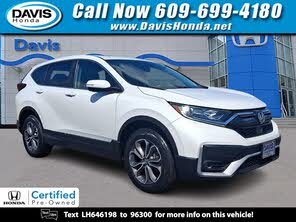
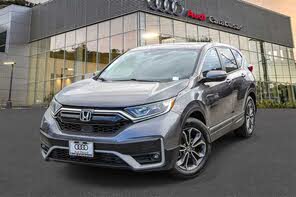
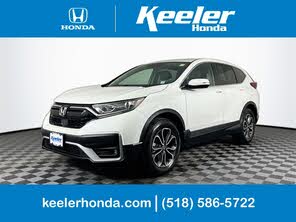
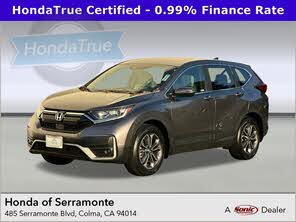
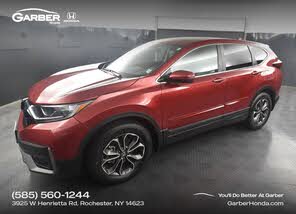
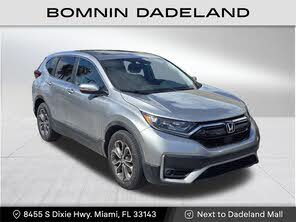
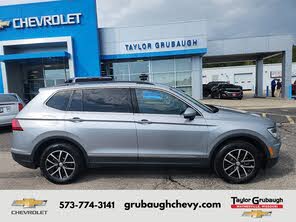
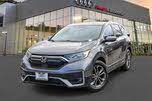
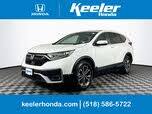
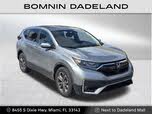
The 2020 Honda CR-V, part of Honda’s fifth generation of compact crossovers, had a design that was both familiar and fun. Its exterior featured curvy, car-like lines with a family resemblance to Honda’s sedan lineup, giving it a station wagon-like appearance rather than a traditional SUV look. Inside, the CR-V’s interior was a mix of textures and materials, with upscale touches like wood-look trim and leather upholstery in higher trims clashing with some low-quality plastics. This reminded drivers that even the pricier CR-V models were still upgrades of a commodity car rather than true premium products.
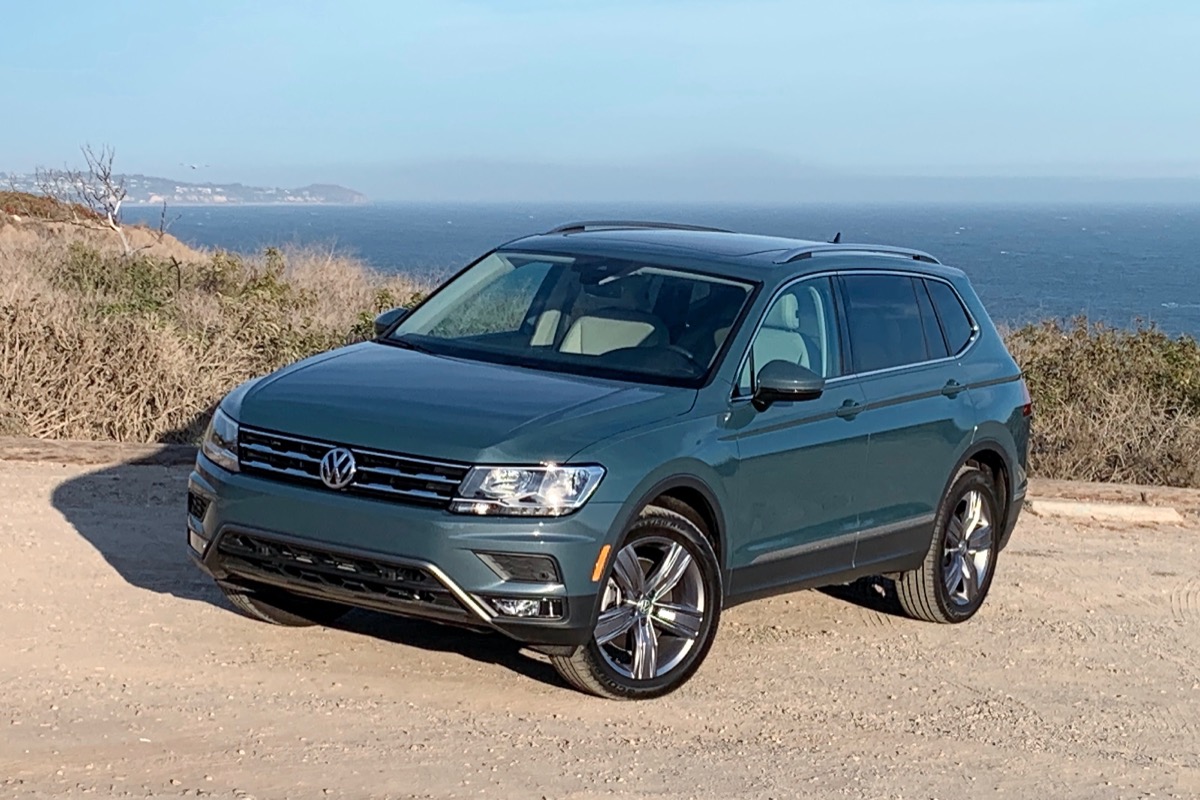
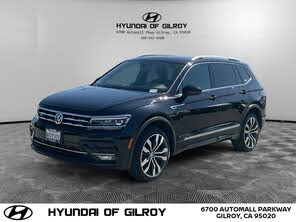
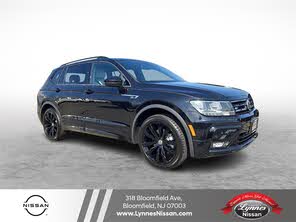
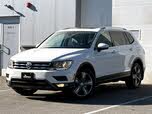
In contrast, the 2021 Volkswagen Tiguan boasted clean lines and balanced proportions, offering a conservative, upscale, and timeless aesthetic. It was large for its class, nearly matching the interior space of a Hyundai Santa Fe or Kia Sorento. The Tiguan’s upsizing resulted in a roomy and accommodating interior, with plenty of space for four people and an optional third-row seat expanding capacity to seven, though the third row was best suited for children. The interior featured modern geometric forms and a no-nonsense control layout, with shiny detailing and a flush touchscreen infotainment system, though it had more hard plastic than an Audi and somewhat flimsy steering wheel stalks.


The 2020 Honda CR-V came equipped with a 1.5-liter turbocharged engine producing 190 horsepower and 179 pound-feet of torque, paired with a continuously variable automatic transmission (CVT). This powertrain replaced the previous 2.4-liter engine, simplifying the lineup. The turbo four-cylinder engine provided a good balance of power and efficiency, with the CVT offering a smooth driving experience, especially in Sport mode. The CR-V’s car-like demeanor extended to its road manners, with nimble handling and a firm yet comfortable chassis. Its low curb weight of 3,337 pounds for the FWD LX model contributed to its excellent fuel economy, with FWD models rated at 30 mpg combined and AWD models at 29 mpg.
The 2021 Volkswagen Tiguan featured a turbocharged 2.0-liter four-cylinder engine generating 184 horsepower and 221 pound-feet of torque, paired with an eight-speed automatic transmission. The 4Motion AWD system was a $1,400 option on most models and standard on the SEL Premium R-Line. While the powertrain was adequate, it suffered from turbocharger lag, making the engine feel breathless during passing maneuvers or when extra power was needed. The Tiguan’s nearly 4,000-pound curb weight contributed to this perception of lethargy. The EPA rated the Tiguan at 25 mpg combined for FWD models and 24 mpg for AWD models, though real-world testing showed an average of 22.6 mpg for the AWD version. Despite these drawbacks, the Tiguan offered a pleasurable driving experience with light, responsive steering, a compliant ride, and nimble handling, though it struggled with sharper speed bumps and railroad tracks.
The 2020 Honda CR-V excelled in interior space and clever storage solutions. Its cabin was roomy, with good head- and legroom for both the driver and passengers. The CR-V’s excellent seating position and low cowl provided great front visibility. The cargo compartment was spacious, matching the Tiguan in volume despite the CR-V being three inches shorter. The center console featured a deep well with a sliding cover, inspired by the Honda Odyssey minivan, and the rear had a two-position load floor for maximizing cargo space or creating a flat floor with the rear seats folded, offering a total of 75.8 cubic feet of cargo space.
The 2021 Volkswagen Tiguan prioritized comfort with large doors, tall seating hip points, and a wide range of adjustments for the front seats. The V-Tex leatherette upholstery and dual-zone climate control system added to the comfort. The back seat provided excellent support, generous legroom, and foot space, with air conditioning vents and USB charging ports for passengers. The Tiguan’s 40/20/40-split folding rear seat allowed for carrying long items and four passengers simultaneously. Cargo volume varied depending on the presence of the third-row seat, ranging from 33 to 37.6 cubic feet behind the second row and 65.7 to 73.5 cubic feet with the rear seats folded.
The 2020 Honda CR-V’s infotainment system showed its age, with a 5-inch screen in the base LX trim offering limited features like Bluetooth connectivity and Pandora compatibility. Higher trims had a 7-inch touchscreen, which still felt small compared to the Tiguan’s 8-inch screen. The CR-V’s system lacked hard buttons, making it challenging to operate, and even Apple CarPlay and Android Auto felt tacked on. However, the CR-V did offer plenty of USB ports in the EX trim and above, with two in the front and two high-powered ports in the backseat. The Touring trim added a wireless phone charger for 2020.
The 2021 Volkswagen Tiguan introduced the MIB3 infotainment system starting with the SE trim, featuring an 8-inch touchscreen, faster processing, and an expanded offering of features and services. These included wireless Apple CarPlay and Android Auto, WiFi for up to four devices, SiriusXM 360L satellite radio, Amazon Alexa compatibility, and a long list of Car-Net connected services. The Tiguan’s MIB3 system was an improvement, though it had some quirks and the voice recognition technology was lacking. The SEL Premium R-Line trim featured a nine-speaker Fender premium audio system, while other trims had a six-speaker system that struggled with bass-heavy music. The SEL and SEL Premium R-Line also included Volkswagen Digital Cockpit instrumentation.
The 2020 Honda CR-V came standard with the “Honda Sensing” system, which included forward-collision warning with automatic emergency braking and pedestrian detection, road-departure mitigation, and adaptive cruise control with lane-keeping assist. Automatic high beams were also standard, with blind-spot monitoring and cross-traffic monitoring available on EX trims and above. The CR-V earned a five-star rating from the National Highway Traffic Safety Administration (NHTSA) and a Top Safety Pick designation from the Insurance Institute for Highway Safety (IIHS), though only the Touring trim had LED headlights that performed well in testing.
The 2021 Volkswagen Tiguan featured the IQ Drive collection of advanced driving assistance systems, including forward-collision warning, pedestrian detection, automatic emergency braking, blind-spot monitoring, and rear cross-traffic alert. SE trim and above added adaptive cruise control, while the SEL included lane-departure warning with lane-keep assist and the SEL Premium R-Line had automatic high-beam headlights. The Tiguan’s parking sensors and reversing camera provided additional safety, with the SEL Premium R-Line offering a top-down surround-view camera. The Tiguan earned a Top Safety Pick rating from the IIHS for the SEL and SEL Premium R-Line trims, though NHTSA had not published complete crash-test results.
CarGurus highlights
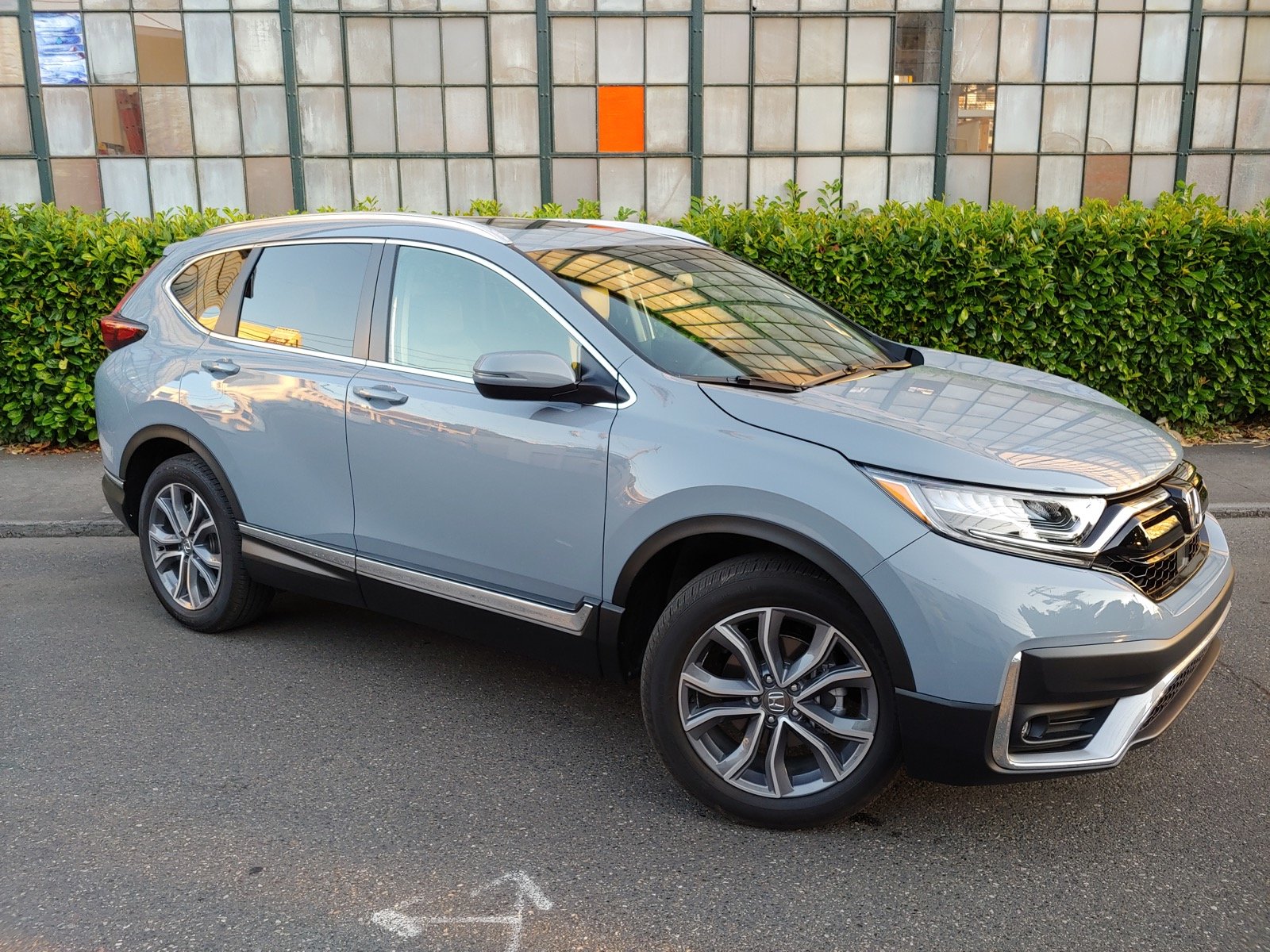
According to CarGurus experts, the overall rating for the 2020 Honda CR-V is 7.5 out of 10, while the 2021 Volkswagen Tiguan scores 7.3 out of 10. Based on these ratings, the 2020 Honda CR-V is the better choice, offering a more balanced combination of performance, interior space, and safety features.
Choose the 2020 Honda CR-V if:
- You prioritize fuel efficiency and nimble handling.
- You need a spacious and cleverly designed interior with excellent cargo capacity.
- You value a comprehensive suite of standard safety features.


Choose the 2021 Volkswagen Tiguan if:
- You prefer a conservative, upscale design with a roomy interior.
- You want advanced infotainment features like wireless Apple CarPlay and Android Auto.
- You need a third-row seat option for occasional extra passenger capacity.



CarGurus highlights
According to CarGurus experts, the overall rating for the 2020 Honda CR-V is 7.5 out of 10, while the 2021 Volkswagen Tiguan scores 7.3 out of 10. Based on these ratings, the 2020 Honda CR-V is the better choice, offering a more balanced combination of performance, interior space, and safety features.
Choose the 2020 Honda CR-V if:
Shop Now- You prioritize fuel efficiency and nimble handling.
- You need a spacious and cleverly designed interior with excellent cargo capacity.
- You value a comprehensive suite of standard safety features.






Choose the 2021 Volkswagen Tiguan if:
Shop Now- You prefer a conservative, upscale design with a roomy interior.
- You want advanced infotainment features like wireless Apple CarPlay and Android Auto.
- You need a third-row seat option for occasional extra passenger capacity.








By: CarGurus + AI
At CarGurus, our team of experienced automotive writers remain at the heart of our content operation, conducting hands-on car tests and writing insightful guides that are backed by years of industry experience. To complement this, we are harnessing AI to make our content offering more diverse and more helpful to shoppers than ever. To achieve this, our AI systems are based exclusively on CarGurus content, ratings and data, so that what we produce is both unique to CarGurus, and uniquely helpful to car shoppers.