2021 Toyota Highlander vs 2021 BMW X5
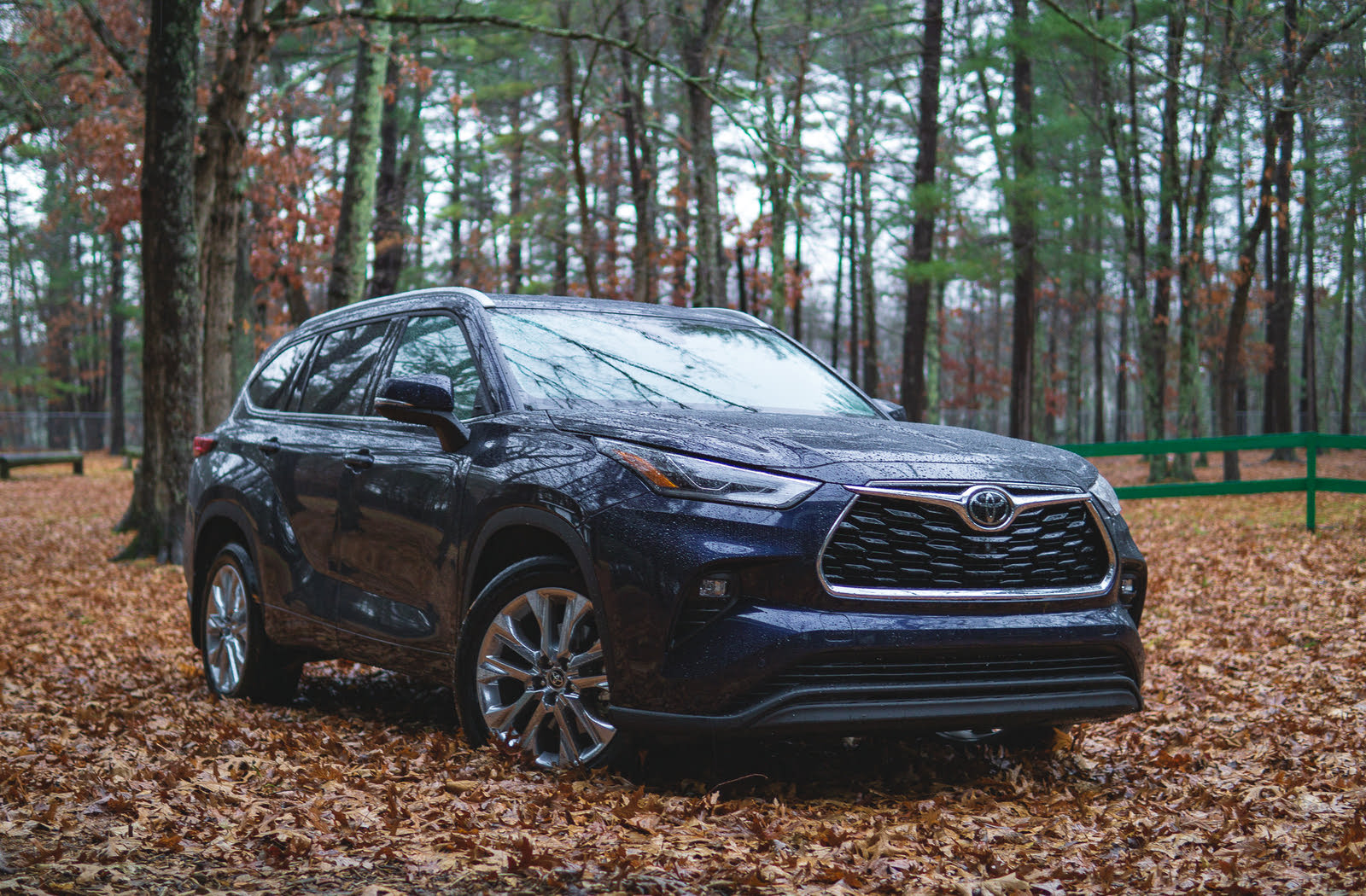
Overview | |
MSRP$59,400 | MSRP$35,085 |
Listings308 | Listings257 |
Ratings & Reviews | |
User Reviews | User Reviews |
Expert reviews8.0 out of 10 | Expert reviews7.5 out of 10 |
Pros
Cons
| Pros
Cons
|
2021 BMW X5 Reviews SummaryThe BMW X5 was fully redesigned for the 2019 model year. In 2020, high-performance models were added to the mix and for 2021, the SUV’s second-generation plug-in hybrid variant joins the family. All feature similar body design and utility, including a large cargo area. | |
2021 Toyota Highlander Reviews SummaryToyota hardly needs any help selling three-row Highlanders. It already sits close to the top of the sales charts for its segment, and few vehicles carry the name recognition as the Highlander, which enters into its 20th year of production. But the three-row marketplace is a competitive one, and even after a 2020 redesign, Toyota would be foolish to rest on its laurels. As such, the Highlander enters this year with additional safety-feature technology listed as standard equipment. | |
No video found | |
Popular Features & Specs | |
Engine3.0L 335 hp I6 | Engine3.5L 295 hp V6 |
DrivetrainRWD | DrivetrainFWD |
Seating Capacity7 | Seating Capacity8 |
Horsepower335 hp @ 5500 rpm | Horsepower295 hp @ 6600 rpm |
MPG City21 | MPG City20 |
MPG Highway26 | MPG Highway28 |
Engine | |
Engine Name3.0L 335 hp I6 | Engine Name3.5L 295 hp V6 |
Torque330 lb-ft @ 1500 rpm | Torque263 lb-ft @ 4700 rpm |
Horsepower335 hp @ 5500 rpm | Horsepower295 hp @ 6600 rpm |
DrivetrainRWD | DrivetrainFWD |
Fuel Economy | |
MPG City21 | MPG City20 |
MPG Highway26 | MPG Highway28 |
Interior | |
Seating Capacity7 | Seating Capacity8 |
Key Features | |
Navigation SystemStandard | Navigation System |
Sunroof/MoonroofStandard | Sunroof/Moonroof |
Safety | |
Front Crash Overall4 | Front Crash Overall4 |
Side Crash Overall5 | Side Crash Overall5 |
Dimensions & Capacity | |
Cargo Space33.9 cu ft | Cargo Space16.0 cu ft |
Curb Weight4828 lbs | Curb Weight4145 lbs |
Height68.7 in | Height68.1 in |
Length194.3 in | Length194.9 in |
Width87.3 in | Width76.0 in |
Wheelbase117.1 in | Wheelbase112.2 in |
Maximum Payload974 lbs | Maximum Payload1685 lbs |
Number of doors4 | Number of doors4 |
Maximum Towing Capacity7209 lbs | Maximum Towing Capacity5000 lbs |
Overview | ||
MSRP | $59,400 | $35,085 |
Listings | ||
Ratings & Reviews | ||
User reviews | ||
Expert reviews | 8.0 out of 10Read full review | 7.5 out of 10Read full review |
Pros & cons | Pros
Cons
| Pros
Cons
|
Summary | The BMW X5 was fully redesigned for the 2019 model year. In 2020, high-performance models were added to the mix and for 2021, the SUV’s second-generation plug-in hybrid variant joins the family. All feature similar body design and utility, including a large cargo area. | Toyota hardly needs any help selling three-row Highlanders. It already sits close to the top of the sales charts for its segment, and few vehicles carry the name recognition as the Highlander, which enters into its 20th year of production. But the three-row marketplace is a competitive one, and even after a 2020 redesign, Toyota would be foolish to rest on its laurels. As such, the Highlander enters this year with additional safety-feature technology listed as standard equipment. |
Video | No video found | |
Popular Features & Specs | ||
Engine | 3.0L 335 hp I6 | 3.5L 295 hp V6 |
Drivetrain | RWD | FWD |
Seating Capacity | 7 | 8 |
Horsepower | 335 hp @ 5500 rpm | 295 hp @ 6600 rpm |
MPG City | 21 | 20 |
MPG Highway | 26 | 28 |
Engine | ||
Engine Name | 3.0L 335 hp I6 | 3.5L 295 hp V6 |
Torque | 330 lb-ft @ 1500 rpm | 263 lb-ft @ 4700 rpm |
Horsepower | 335 hp @ 5500 rpm | 295 hp @ 6600 rpm |
Drivetrain | RWD | FWD |
Fuel Economy | ||
MPG City | 21 | 20 |
MPG Highway | 26 | 28 |
Interior | ||
Seating Capacity | 7 | 8 |
Key Features | ||
Navigation System | Standard | |
Sunroof/Moonroof | Standard | |
Safety | ||
Front Crash Overall | 4 | 4 |
Side Crash Overall | 5 | 5 |
Dimensions & Capacity | ||
Cargo Space | 33.9 cu ft | 16.0 cu ft |
Curb Weight | 4828 lbs | 4145 lbs |
Height | 68.7 in | 68.1 in |
Length | 194.3 in | 194.9 in |
Width | 87.3 in | 76.0 in |
Wheelbase | 117.1 in | 112.2 in |
Maximum Payload | 974 lbs | 1685 lbs |
Number of doors | 4 | 4 |
Maximum Towing Capacity | 7209 lbs | 5000 lbs |
The 2021 BMW X5 demonstrated the high-quality craftsmanship expected from the brand. Part of BMW's true SUV range, the X5 epitomized luxury with its unmistakable kidney grille and robust body shape. The full adaptive LED headlights on its corners and high-end finishes like matte aluminum grilles, satin aluminum underbody protection, roof rails, and side window surrounds added to its upscale appearance. The M Sport styling brought a sportier look with body-color trim and high-gloss black accents. Owners had the option to choose between various wheel sizes, ranging from 19 to 22 inches. Inside, the X5 maintained brand consistency with controls and displays that could be found in any other BMW model. The interior, while replete with black plastic that collected dust easily, did not lack leather and soft-touch materials. M Sport models featured an aggressive interior design with an M sports steering wheel, unique pedals, seat piping, and model-specific trim strips.
Conversely, the 2021 Toyota Highlander made a bold statement with its design. Its assertive trapezoidal grille, wide headlights, and long hood added to its distinctiveness. The character line along its side, inspired by the Supra sports car, and Lexus-like taillights contributed to its standout appearance. Despite looking longer and lower than its predecessor, the Highlander did not compromise on its size. For 2021, Toyota introduced the XSE trim with a sportier aesthetic including a restyled front end, 20-inch wheels with black accents, a unique lower spoiler, and a larger lower air intake. The Limited trim, just below the Platinum, exuded luxury with chrome roof rails and accents. Inside, the trim levels focused on luxury with near-flawless fit and finish, comfortable tan leather seats, and attractive yet faux wood details.


The 2021 BMW X5 boasted multiple powertrain options. The base X5 sDrive40i/xDrive40i featured a 3.0-liter inline six-cylinder engine delivering 335 horsepower and 330 pound-feet of torque. The sDrive model offered rear-wheel drive, while the xDrive came with all-wheel drive. More powerful options included the X5 M50i with a twin-turbo 4.4-liter V8 producing 523 hp and 553 lb-ft of torque, and the X5 M with a twin-turbo V8 generating 600 hp or 617 hp with the Competition Package. The new xDrive45e plug-in hybrid combined a 3.0-liter six-cylinder engine with a 24-kilowatt-hour battery, producing 389 hp and 443 lb-ft of torque with up to 30 miles of all-electric range. Despite its power, the plug-in model struggled with steering dynamics and wheel play at low speeds. All variations featured premium gasoline engines with varying fuel efficiency, with the xDrive45e achieving up to 50 MPGe.
The 2021 Toyota Highlander, with its 3.5-liter V6 engine, delivered 295 horsepower and 263 pound-feet of torque. Paired with an eight-speed automatic transmission, it offered both front-wheel and all-wheel drive options. Although not designed for high-speed racing, the Highlander's powertrain ensured smooth and confident merging onto highways. When compared to competitors like the Hyundai Palisade and Kia Telluride, the Highlander held its own, with similar horsepower and torque. The XSE trim added sportier suspension features, including higher-rated springs, retuned shock absorbers, a rear stabilizer bar, and improved power steering, but remained focused on providing a comfortable ride rather than high-speed performance.
The 2021 BMW X5 utilized space efficiently. Up front, the center console featured well-placed cupholders, although the plethora of buttons, knobs, and dials could be confusing at night. Seating remained comfortable for short trips but became hard during extended drives. Rear seats accommodated two adults comfortably and could be supplemented with an optional third row. The split liftgate offered ease of use with power functionality and an adjustable vehicle height button, assisting with loading and unloading cargo. Without the third row, the X5's cargo space was ample, though slightly reduced in the xDrive45e model. However, the second-row seats proved difficult for children and awkwardly-sized cargo due to narrow door openings.
The 2021 Toyota Highlander excelled at maximizing driver and passenger comfort. A set of front shelves provided ample space for even large cell phones, with built-in USB port access. Higher trims included a wireless charging pad located within the center console. Second-row seats offered generous legroom and could slide forward to allow third-row access, accommodating adults with some compromise. One critique was the rear-seat climate control vents positioned only in the ceiling, potentially blowing air directly on passengers' heads. Cargo space varied with seating configurations: 16 cubic feet behind the third row, 48.4 cubic feet with the third row folded, and 84.3 cubic feet with both second and third rows down. This capacity made the Highlander versatile for various luggage and equipment needs, although some larger minivans outperformed it in cargo volume.
The 2021 BMW X5 came packed with standard technology features, including a 12.3-inch infotainment touchscreen, wireless Apple CarPlay and Android Auto, a 12.3-inch digital gauge cluster, a 10-speaker sound system, voice recognition, Bluetooth, five USB ports, navigation, HD Radio, satellite radio, automatic climate control, and a panoramic moonroof. Optional upgrades included remote start, quad-zone automatic climate control, massaging seats, a Wi-Fi hotspot, a 16-speaker Harman Kardon audio system, a 20-speaker Bowers & Wilkins audio system, rear sunshades, and a dual-panel panoramic roof. However, the iDrive system required a learning curve, and wireless Apple CarPlay sometimes took over musical operations uninvited, necessitating a reset to disconnect.
The 2021 Toyota Highlander offered an 8-inch touchscreen on lower trims and an optional 12.3-inch touchscreen on the Limited trim, standard on the top-tier Platinum trim. Both systems were user-friendly, with Android Auto and Apple CarPlay standard across all trims. The optional navigation system functioned well with specific addresses but struggled with points of interest. The 12.3-inch unit provided a bright, crisp display but limited certain apps to smaller portions of the screen. The JBL audio system was serviceable, but not exceptional. The inclusion of volume and tuning knobs was a plus, although the limited functionality of the larger screen raised questions about its value.
The 2021 BMW X5 was equipped with numerous standard safety features, including blind-spot monitoring, forward collision warning, automatic emergency braking, pedestrian detection, adaptive cruise control, front and rear parking sensors, rain-sensing windshield wipers, fatigue and focus alert, lane departure warning, and automatic high-beam headlights. However, some features like adaptive cruise control with stop-and-go and lane-keeping assistance had mixed performance in testing, particularly with handling and visibility issues. The X5 earned high safety ratings, with nearly all Good scores from the IIHS and a four-star overall rating from the NHTSA.
The 2021 Toyota Highlander featured an enhanced suite of advanced driver assistance systems (ADAS) with Toyota Safety Sense 2.5+ (TSS 2.5+). This included automatic emergency braking with pedestrian detection and intersection support, road-sign assist, adaptive cruise control, lane-departure warning, lane-keeping assist, lane-tracing assist, and automatic high beams. The Highlander received top safety ratings, achieving a five-star overall rating from the NHTSA and a Top Safety Pick+ designation from the IIHS.
CarGurus highlights

According to CarGurus experts, the overall rating for the 2021 BMW X5 was 8.0 out of 10, while the 2021 Toyota Highlander scored 7.5 out of 10. Based on these ratings, the 2021 BMW X5 took the lead as the preferred choice for those looking for a luxury SUV with powerful performance, advanced technology, and high safety standards. The Highlander, meanwhile, excelled in practicality, space, and technology, making it a solid choice for families. However, in this comparison, the BMW X5 emerged as the slightly better overall vehicle.
Choose the 2021 Toyota Highlander if:
- You need a versatile and spacious three-row crossover with excellent cargo capacity.
- You value user-friendly technology features and standard smartphone integration.
- You prioritize top-tier safety ratings and advanced driver assistance systems.


Choose the 2021 BMW X5 if:
- You prioritize a luxury interior with high-quality materials and advanced features.
- You desire a variety of powerful engine options, including a capable plug-in hybrid.
- You prefer a vehicle with high safety ratings and an array of standard safety features.


CarGurus highlights
According to CarGurus experts, the overall rating for the 2021 BMW X5 was 8.0 out of 10, while the 2021 Toyota Highlander scored 7.5 out of 10. Based on these ratings, the 2021 BMW X5 took the lead as the preferred choice for those looking for a luxury SUV with powerful performance, advanced technology, and high safety standards. The Highlander, meanwhile, excelled in practicality, space, and technology, making it a solid choice for families. However, in this comparison, the BMW X5 emerged as the slightly better overall vehicle.
Choose the 2021 Toyota Highlander if:
Shop Now- You need a versatile and spacious three-row crossover with excellent cargo capacity.
- You value user-friendly technology features and standard smartphone integration.
- You prioritize top-tier safety ratings and advanced driver assistance systems.
Choose the 2021 BMW X5 if:
Shop Now- You prioritize a luxury interior with high-quality materials and advanced features.
- You desire a variety of powerful engine options, including a capable plug-in hybrid.
- You prefer a vehicle with high safety ratings and an array of standard safety features.

By: CarGurus + AI
At CarGurus, our team of experienced automotive writers remain at the heart of our content operation, conducting hands-on car tests and writing insightful guides that are backed by years of industry experience. To complement this, we are harnessing AI to make our content offering more diverse and more helpful to shoppers than ever. To achieve this, our AI systems are based exclusively on CarGurus content, ratings and data, so that what we produce is both unique to CarGurus, and uniquely helpful to car shoppers.

