2021 Lincoln Navigator vs 2020 Toyota Highlander

Overview | |
MSRP$34,600 | MSRP$76,705 |
Listings728 | Listings284 |
Ratings & Reviews | |
User Reviews | User Reviews |
Expert reviews7.7 out of 10 | Expert reviews7.7 out of 10 |
Pros
Cons
| Pros
Cons
|
2020 Toyota Highlander Reviews SummaryMidsize three-row SUVs are all spacious and powerful, but only the Toyota Highlander reaches the premium threshold for passenger comfort. Redesigned for 2020, the Highlander's revised styling and technology are secondary to its silent operation, soft ride, and cosseting interior. The upper trims feel and drive just like a Lexus, without the upcharge. There is nothing exciting about a Highlander, and yet, there is no other SUV in the $35,000 to $50,000 range that feels so effortless and tranquil. | |
2021 Lincoln Navigator Reviews SummaryFull-size SUVs like the Lincoln Navigator represent the smallest slice of the luxury SUV market. They're the heaviest, hugest, and fanciest people movers sold by mainstream automakers—and you can count them all on two hands. The Navigator, a popular nameplate since 1998, was redesigned in dramatic fashion for 2018. In its fourth model year, this Navigator still delights us as we test newer competitors costing at or above its $77,000 starting price. Foreign nameplates offer no equal to the Navigator, and it's not for sheer size or a desire to lift up Lincoln that we say this is one of the best American vehicles, among both trucks and cars, ever made. | |
No video found | |
Popular Features & Specs | |
Engine3.5L 295 hp V6 | Engine3.5L 450 hp V6 |
Drive TrainFWD | Drive Train4X2 |
Seating Capacity8 | Seating Capacity8 |
Horsepower295 hp @ 6600 rpm | Horsepower450 hp @ 5500 rpm |
MPG City20 | MPG City16 |
MPG Highway28 | MPG Highway22 |
Engine | |
Engine Name3.5L 295 hp V6 | Engine Name3.5L 450 hp V6 |
Torque263 lb-ft @ 4700 rpm | Torque510 lb-ft @ 3000 rpm |
Horsepower295 hp @ 6600 rpm | Horsepower450 hp @ 5500 rpm |
DrivetrainFWD | Drivetrain4X2 |
Fuel Economy | |
MPG City20 | MPG City16 |
MPG Highway28 | MPG Highway22 |
Interior | |
Leather Seats | Leather SeatsStandard |
Seating Capacity8 | Seating Capacity8 |
Key Features | |
Navigation System | Navigation SystemStandard |
Safety | |
Front Crash Overall4 | Front Crash Overall5 |
Side Crash Overall5 | Side Crash Overall5 |
Dimensions & Capacity | |
Cargo Space16.0 cu ft | Cargo Space20.9 cu ft |
Curb Weight4145 lbs | Curb Weight5673 lbs |
Height68.1 in | Height76.4 in |
Length194.9 in | Length210.0 in |
Width76.0 in | Width93.8 in |
Wheelbase112.2 in | Wheelbase122.5 in |
Maximum Payload1685 lbs | Maximum Payload1620 lbs |
Number of doors4 | Number of doors4 |
Maximum Towing Capacity5000 lbs | Maximum Towing Capacity8600 lbs |
Standard Towing Capacity | Standard Towing Capacity6200 lbs |
Overview | ||
MSRP | $34,600 | $76,705 |
Listings | ||
Ratings & Reviews | ||
User reviews | ||
Expert reviews | 7.7 out of 10Read full review | 7.7 out of 10Read full review |
Pros & cons | Pros
Cons
| Pros
Cons
|
Summary | Midsize three-row SUVs are all spacious and powerful, but only the Toyota Highlander reaches the premium threshold for passenger comfort. Redesigned for 2020, the Highlander's revised styling and technology are secondary to its silent operation, soft ride, and cosseting interior. The upper trims feel and drive just like a Lexus, without the upcharge. There is nothing exciting about a Highlander, and yet, there is no other SUV in the $35,000 to $50,000 range that feels so effortless and tranquil. | Full-size SUVs like the Lincoln Navigator represent the smallest slice of the luxury SUV market. They're the heaviest, hugest, and fanciest people movers sold by mainstream automakers—and you can count them all on two hands. The Navigator, a popular nameplate since 1998, was redesigned in dramatic fashion for 2018. In its fourth model year, this Navigator still delights us as we test newer competitors costing at or above its $77,000 starting price. Foreign nameplates offer no equal to the Navigator, and it's not for sheer size or a desire to lift up Lincoln that we say this is one of the best American vehicles, among both trucks and cars, ever made. |
Video | No video found | |
Popular Features & Specs | ||
Engine | 3.5L 295 hp V6 | 3.5L 450 hp V6 |
Drive Train | FWD | 4X2 |
Seating Capacity | 8 | 8 |
Horsepower | 295 hp @ 6600 rpm | 450 hp @ 5500 rpm |
MPG City | 20 | 16 |
MPG Highway | 28 | 22 |
Engine | ||
Engine Name | 3.5L 295 hp V6 | 3.5L 450 hp V6 |
Torque | 263 lb-ft @ 4700 rpm | 510 lb-ft @ 3000 rpm |
Horsepower | 295 hp @ 6600 rpm | 450 hp @ 5500 rpm |
Drivetrain | FWD | 4X2 |
Fuel Economy | ||
MPG City | 20 | 16 |
MPG Highway | 28 | 22 |
Interior | ||
Leather Seats | Standard | |
Seating Capacity | 8 | 8 |
Key Features | ||
Navigation System | Standard | |
Safety | ||
Front Crash Overall | 4 | 5 |
Side Crash Overall | 5 | 5 |
Dimensions & Capacity | ||
Cargo Space | 16.0 cu ft | 20.9 cu ft |
Curb Weight | 4145 lbs | 5673 lbs |
Height | 68.1 in | 76.4 in |
Length | 194.9 in | 210.0 in |
Width | 76.0 in | 93.8 in |
Wheelbase | 112.2 in | 122.5 in |
Maximum Payload | 1685 lbs | 1620 lbs |
Number of doors | 4 | 4 |
Maximum Towing Capacity | 5000 lbs | 8600 lbs |
Standard Towing Capacity | 6200 lbs | |
The 2020 Toyota Highlander had a design that was functional but not particularly exciting. The tailgate glass was slanted more than the previous model, and the body panels featured exaggerated creases. The trapezoidal theme was evident in various parts of the vehicle, including the tailgate's license plate cutout, rear bumper, headlights, grille, and lower front bumper. Higher trims like the Limited and Platinum boasted projector-beam LED headlights and fog lights, along with 20-inch wheels. The interior was where the Highlander truly shined, with quality fit and finish, silver-painted accents, and a multi-layered dash. The Limited trim featured a three-tone interior with padded surfaces and rich textures, making it one of the nicest interiors in its class.
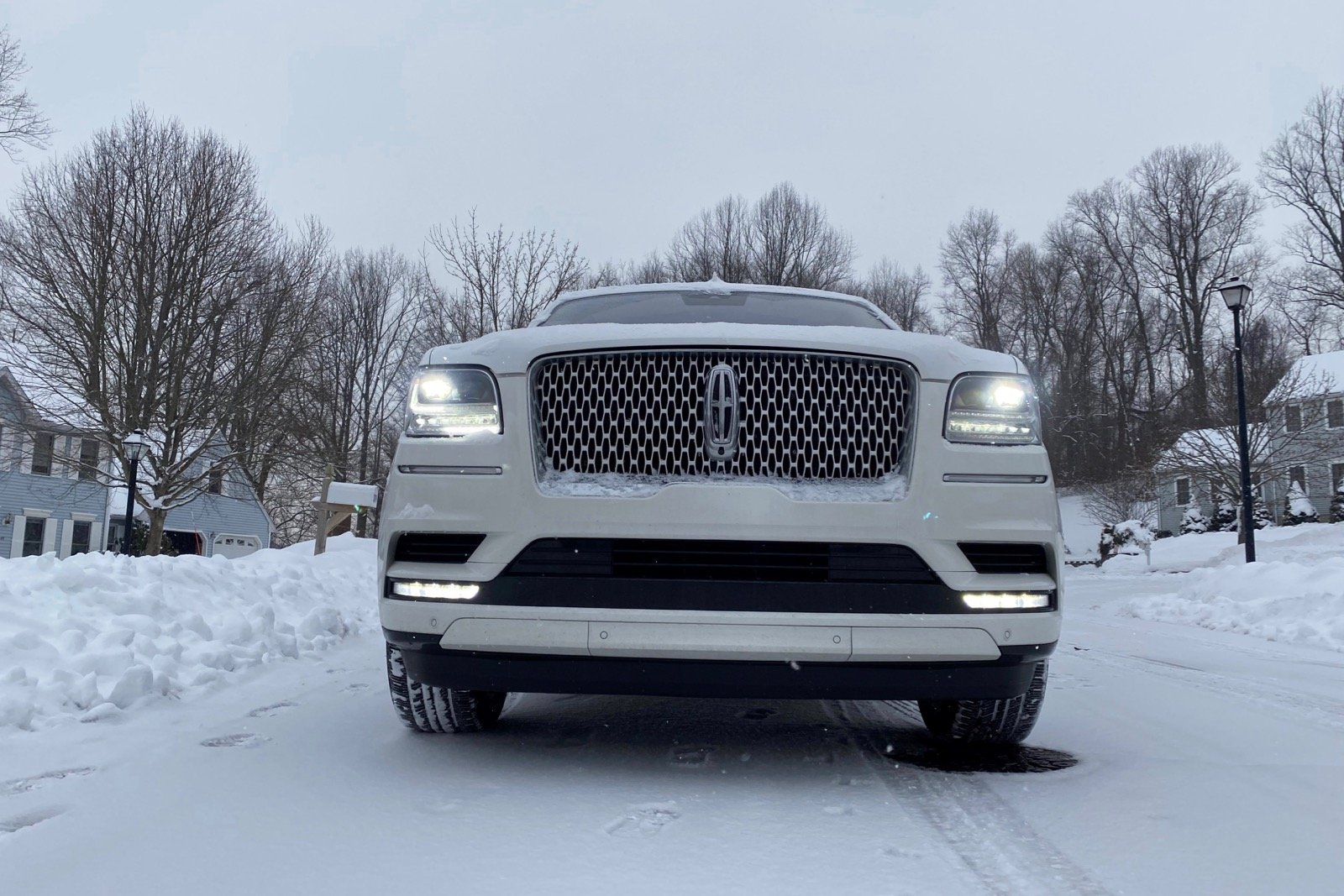
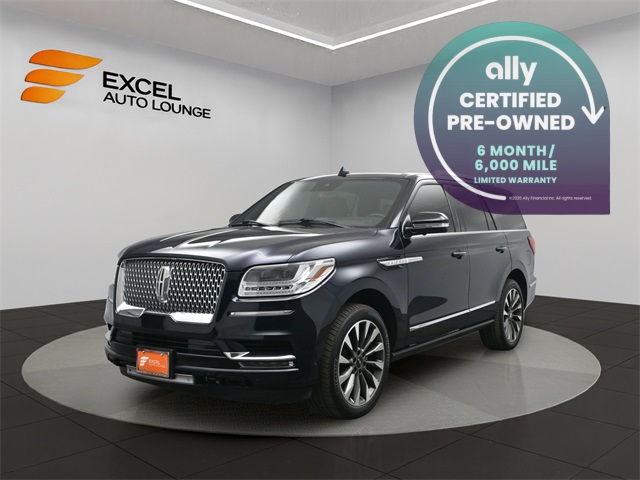
The 2021 Lincoln Navigator, on the other hand, exuded elegance and understatement despite its massive size. The exterior featured simple rectilinear shapes, a body-color grille, and a few chrome accents. The Pristine White model with a white-painted grille and black wheels was particularly striking. The interior was equally impressive, with seven color palettes and high-quality materials. The Slate Gray interior of the test truck showcased layered wood trim, a floating center console, and a minimalist digital instrument panel. The Black Label trims offered even more luxurious materials and textures, making the Navigator feel like a high-end vehicle.


The 2020 Toyota Highlander came equipped with a 3.5-liter V6 engine, available in both front-wheel drive (FWD) and all-wheel drive (AWD). This engine delivered 295 horsepower and 263 pound-feet of torque, providing brisk acceleration. The eight-speed automatic transmission made full use of the engine's power, although it required a heavy foot to initiate a kickdown. The Highlander's steering was loose, and the suspension was soft, leading to a floaty ride. However, this made for a comfortable and isolating driving experience, especially on long road trips. Fuel economy was commendable, with the FWD model achieving 21 mpg city, 29 mpg highway, and 24 mpg combined. The AWD model was slightly less efficient at 20/27/23 mpg.
The 2021 Lincoln Navigator featured a twin-turbo V6 engine from the Ford Raptor, producing an impressive 450 horsepower and 510 pound-feet of torque. This engine made the Navigator feel surprisingly sprightly, and it sounded terrific. Paired with a 10-speed automatic transmission, the Navigator offered both rear-wheel drive (RWD) and four-wheel drive (4WD) options. The 4WD system was smooth and didn't bind during tight turns. Towing capacity was substantial, with 8,300 pounds for 4WD models and 8,700 pounds for RWD models. Fuel economy was less impressive, averaging in the teens and fitting the EPA-estimated 17 mpg combined rating. The Navigator's adaptive dampers provided a decent ride, but it lacked the superior control and precision of its Cadillac competitors.
The 2020 Toyota Highlander could seat eight passengers or seven with the second-row captain's chairs, which were standard on the Limited and Platinum trims. The second-row seats were versatile, offering generous legroom and easy access to the third row. The Highlander featured three-zone climate control, a 120-volt outlet, and side window shades on upper trims. Cargo space was generous, with 16 cubic feet behind the third row, 48 cubic feet behind the second, and 84 cubic feet with both rows folded. The interior also included eight cupholders, four bottle holders, and two shelves integrated into the dash for additional storage.
The 2021 Lincoln Navigator offered ample space, seating up to seven passengers with the option for a bench seat in the second row to accommodate eight. The boxy design provided generous cargo space, with 19 cubic feet behind the third row, 57 cubic feet behind the second, and 103 cubic feet in total. The long-wheelbase Navigator L offered even more storage. The rear glass could open separately from the tailgate, a convenient feature for loading and unloading. The Navigator Reserve trim included heated second-row seats and a three-zone climate control system. The front seats were highly adjustable and comfortable, making visibility easy despite the vehicle's large size.
The 2020 Toyota Highlander's infotainment system felt outdated, with low-resolution maps and screens. The 12.3-inch touchscreen, optional on the Limited and standard on the Platinum, couldn't fully utilize its size due to constant display of climate and fuel economy information. However, Apple CarPlay, Android Auto, and Amazon Alexa integration were standard. The Highlander also featured a 10-inch head-up display and a 7-inch display in the instrument cluster. The semi-automated driving system was effective, and the optional JBL audio system provided decent sound quality. Standard features included SiriusXM, HD radio, WiFi, and four USB-A ports.
The 2021 Lincoln Navigator's 10-inch touchscreen felt small compared to newer systems. The instrument panel couldn't display full-screen maps, and the cameras were low-resolution. However, the software was intuitive and shared its interface with Ford, albeit with a unique Lincoln skin. The Navigator included onboard 4G WiFi, wireless device charging, and a smartwatch app. The rear entertainment system featured Roku media streaming and various connection options. The Navigator's drive modes played beautiful animations on the instrument panel, and the overall simplicity of the system was a relief compared to more complex competitors.
The 2020 Toyota Highlander came standard with Toyota Safety Sense 2.0, which included automatic emergency braking with pedestrian and cyclist detection, lane-keeping assist, adaptive cruise control, and automatic high beams. Optional features included blind-spot monitoring, parking sensors, and rear emergency braking. The Highlander had a driver's knee airbag and a special cushion airbag for the front passenger. The Insurance Institute for Highway Safety (IIHS) awarded it a 2020 Top Safety Pick, and it scored top ratings in all six crash tests.
The 2021 Lincoln Navigator received five stars overall from the National Highway Traffic Safety Administration (NHTSA), with five stars in every test except for rollover resistance. The Insurance Institute for Highway Safety (IIHS) had not rated the Navigator in its current generation. The Navigator lacked knee airbags but offered optional inflatable rear seat belts for the second row. Standard safety features included automatic emergency braking, lane-keep assist, blind-spot monitoring, and auto high beams. Adaptive cruise control was optional but didn't offer the same level of self-steering as some competitors.
CarGurus highlights
According to CarGurus experts, the overall rating for the 2020 Toyota Highlander is 7.7 out of 10, while the 2021 Lincoln Navigator scores 7.7 out of 10. Both vehicles offer unique strengths, but the final recommendation depends on your specific needs. If you prioritize fuel efficiency and a high-quality interior, the 2020 Toyota Highlander is a solid choice. However, if you seek a powerful engine, luxurious interior, and advanced technology, the 2021 Lincoln Navigator is the better option.
Choose the 2021 Lincoln Navigator if:
- You want a powerful engine with impressive towing capacity.
- You seek a luxurious and spacious interior with high-end materials.
- You appreciate advanced technology and intuitive software.






Choose the 2020 Toyota Highlander if:
- You prioritize fuel efficiency in a large vehicle.
- You value a high-quality interior with excellent fit and finish.
- You need versatile seating and generous cargo space.





CarGurus highlights
According to CarGurus experts, the overall rating for the 2020 Toyota Highlander is 7.7 out of 10, while the 2021 Lincoln Navigator scores 7.7 out of 10. Both vehicles offer unique strengths, but the final recommendation depends on your specific needs. If you prioritize fuel efficiency and a high-quality interior, the 2020 Toyota Highlander is a solid choice. However, if you seek a powerful engine, luxurious interior, and advanced technology, the 2021 Lincoln Navigator is the better option.
Choose the 2021 Lincoln Navigator if:
Shop Now- You want a powerful engine with impressive towing capacity.
- You seek a luxurious and spacious interior with high-end materials.
- You appreciate advanced technology and intuitive software.








Choose the 2020 Toyota Highlander if:
Shop Now- You prioritize fuel efficiency in a large vehicle.
- You value a high-quality interior with excellent fit and finish.
- You need versatile seating and generous cargo space.






By: CarGurus + AI
At CarGurus, our team of experienced automotive writers remain at the heart of our content operation, conducting hands-on car tests and writing insightful guides that are backed by years of industry experience. To complement this, we are harnessing AI to make our content offering more diverse and more helpful to shoppers than ever. To achieve this, our AI systems are based exclusively on CarGurus content, ratings and data, so that what we produce is both unique to CarGurus, and uniquely helpful to car shoppers.