2020 Honda CR-V vs 2021 Toyota Highlander
Overview | |
MSRP$25,150 | MSRP$35,085 |
Listings1518 | Listings1373 |
Ratings & Reviews | |
User Reviews | User Reviews |
Expert reviews7.5 out of 10 | Expert reviews7.5 out of 10 |
Pros
Cons
| Pros
Cons
|
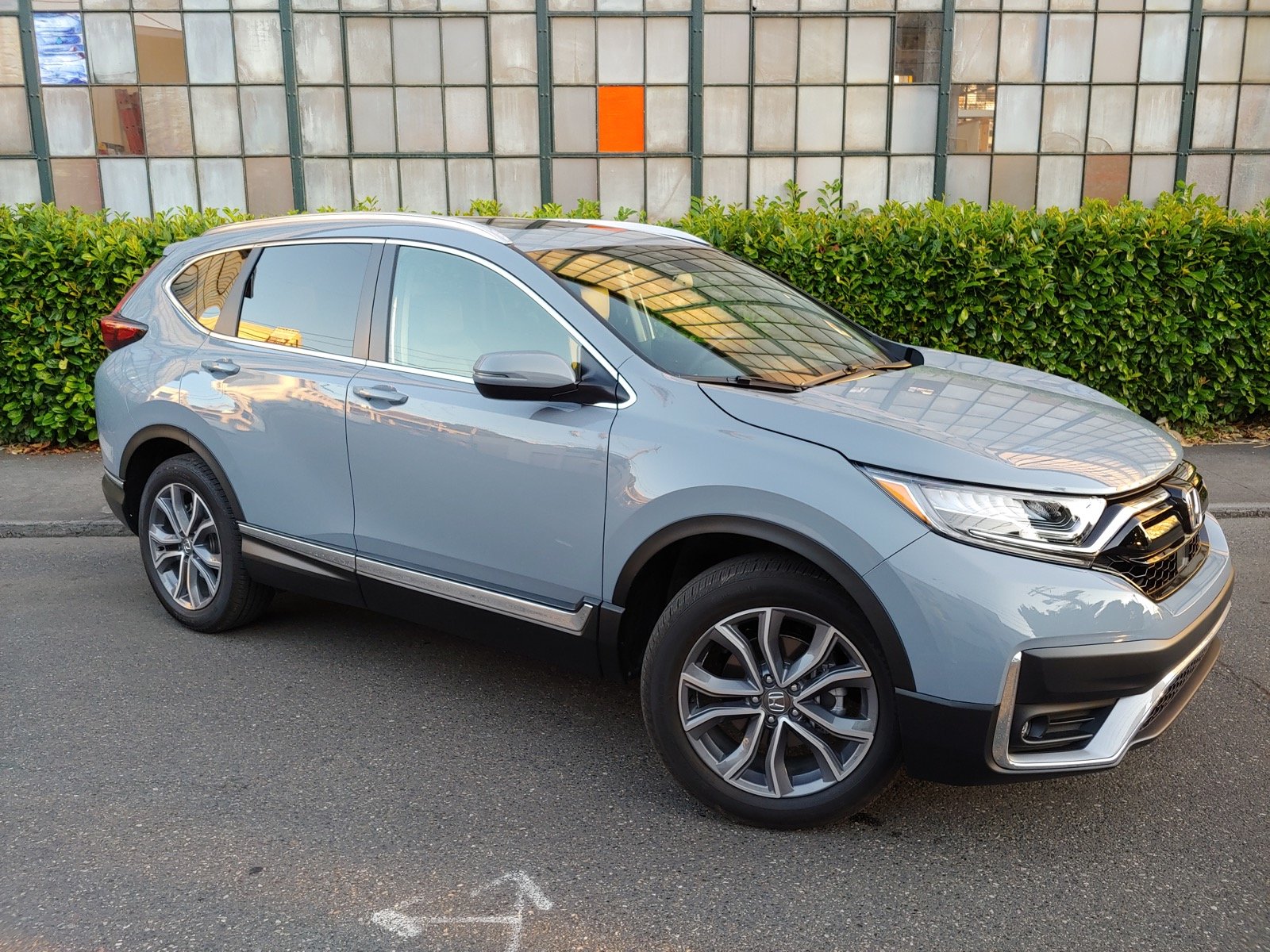
2020 Honda CR-V Reviews SummaryHonda’s compact SUV has been satisfying buyers for more than two decades, with more than five million CR-V’s sold. Such a legacy means the CR-V has long had its wrinkles smoothed out into a comfortable and capable crossover package that’s only downside may be its sheer inoffensiveness. This year’s model gets engine and safety upgrades, which improve fuel economy and help to make Honda’s bestseller an even better value. | |
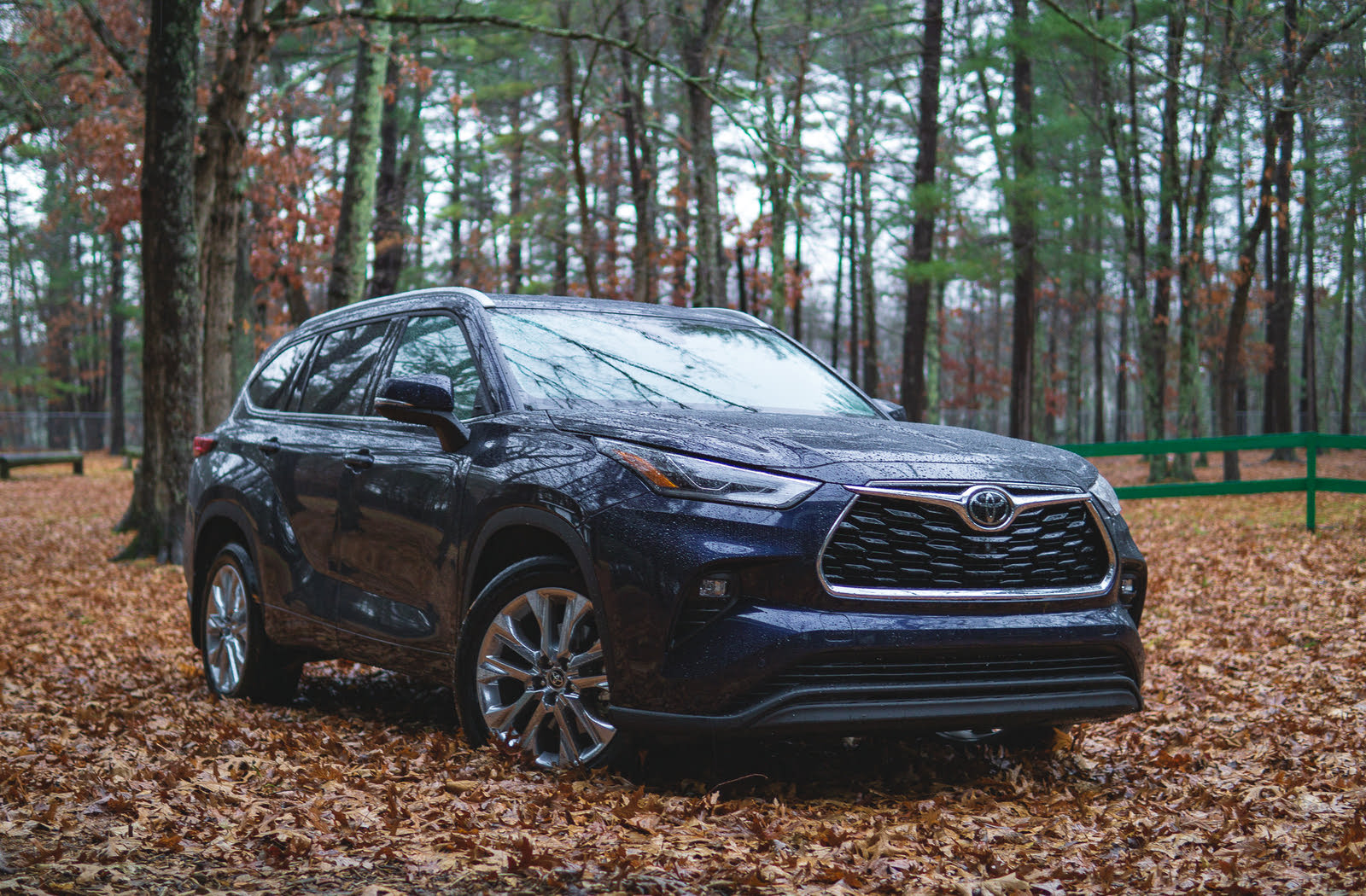
2021 Toyota Highlander Reviews SummaryToyota hardly needs any help selling three-row Highlanders. It already sits close to the top of the sales charts for its segment, and few vehicles carry the name recognition as the Highlander, which enters into its 20th year of production. But the three-row marketplace is a competitive one, and even after a 2020 redesign, Toyota would be foolish to rest on its laurels. As such, the Highlander enters this year with additional safety-feature technology listed as standard equipment. | |
No video found | |
Popular Features & Specs | |
Engine1.5L 190 hp I4 | Engine3.5L 295 hp V6 |
Drive TrainFWD | Drive TrainFWD |
Seating Capacity5 | Seating Capacity8 |
Horsepower190 hp @ 5600 rpm | Horsepower295 hp @ 6600 rpm |
MPG City28 | MPG City20 |
MPG Highway34 | MPG Highway28 |
Engine | |
Engine Name1.5L 190 hp I4 | Engine Name3.5L 295 hp V6 |
Torque179 lb-ft @ 2000 rpm | Torque263 lb-ft @ 4700 rpm |
Horsepower190 hp @ 5600 rpm | Horsepower295 hp @ 6600 rpm |
DrivetrainFWD | DrivetrainFWD |
Fuel Economy | |
MPG City28 | MPG City20 |
MPG Highway34 | MPG Highway28 |
Interior | |
Seating Capacity5 | Seating Capacity8 |
Safety | |
Front Crash Overall5 | Front Crash Overall4 |
Side Crash Overall5 | Side Crash Overall5 |
Dimensions & Capacity | |
Cargo Space39.2 cu ft | Cargo Space16.0 cu ft |
Curb Weight3337 lbs | Curb Weight4145 lbs |
Height66.1 in | Height68.1 in |
Length182.1 in | Length194.9 in |
Width73.0 in | Width76.0 in |
Wheelbase104.8 in | Wheelbase112.2 in |
Maximum Payload1358 lbs | Maximum Payload1685 lbs |
Number of doors4 | Number of doors4 |
Maximum Towing Capacity1500 lbs | Maximum Towing Capacity5000 lbs |
Overview | ||
MSRP | $25,150 | $35,085 |
Listings | ||
Ratings & Reviews | ||
User reviews | ||
Expert reviews | 7.5 out of 10Read full review | 7.5 out of 10Read full review |
Pros & cons | Pros
Cons
| Pros
Cons
|
Summary | Honda’s compact SUV has been satisfying buyers for more than two decades, with more than five million CR-V’s sold. Such a legacy means the CR-V has long had its wrinkles smoothed out into a comfortable and capable crossover package that’s only downside may be its sheer inoffensiveness. This year’s model gets engine and safety upgrades, which improve fuel economy and help to make Honda’s bestseller an even better value. | Toyota hardly needs any help selling three-row Highlanders. It already sits close to the top of the sales charts for its segment, and few vehicles carry the name recognition as the Highlander, which enters into its 20th year of production. But the three-row marketplace is a competitive one, and even after a 2020 redesign, Toyota would be foolish to rest on its laurels. As such, the Highlander enters this year with additional safety-feature technology listed as standard equipment. |
Video | No video found | |
Popular Features & Specs | ||
Engine | 1.5L 190 hp I4 | 3.5L 295 hp V6 |
Drive Train | FWD | FWD |
Seating Capacity | 5 | 8 |
Horsepower | 190 hp @ 5600 rpm | 295 hp @ 6600 rpm |
MPG City | 28 | 20 |
MPG Highway | 34 | 28 |
Engine | ||
Engine Name | 1.5L 190 hp I4 | 3.5L 295 hp V6 |
Torque | 179 lb-ft @ 2000 rpm | 263 lb-ft @ 4700 rpm |
Horsepower | 190 hp @ 5600 rpm | 295 hp @ 6600 rpm |
Drivetrain | FWD | FWD |
Fuel Economy | ||
MPG City | 28 | 20 |
MPG Highway | 34 | 28 |
Interior | ||
Seating Capacity | 5 | 8 |
Safety | ||
Front Crash Overall | 5 | 4 |
Side Crash Overall | 5 | 5 |
Dimensions & Capacity | ||
Cargo Space | 39.2 cu ft | 16.0 cu ft |
Curb Weight | 3337 lbs | 4145 lbs |
Height | 66.1 in | 68.1 in |
Length | 182.1 in | 194.9 in |
Width | 73.0 in | 76.0 in |
Wheelbase | 104.8 in | 112.2 in |
Maximum Payload | 1358 lbs | 1685 lbs |
Number of doors | 4 | 4 |
Maximum Towing Capacity | 1500 lbs | 5000 lbs |
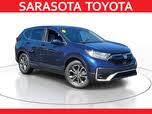
The 2020 Honda CR-V, part of Honda’s fifth generation of compact crossovers, had a design that was both familiar and fun. Its exterior featured curvy, car-like lines with a family resemblance to Honda’s sedan lineup, giving it a station wagon vibe rather than a traditional SUV look. Inside, the CR-V’s interior was a mix of textures and materials. While pricier models boasted wood-look trim and leather upholstery, these upscale touches clashed with some low-quality plastics, reminding drivers that even the expensive versions were upgrades of a commodity car.
In contrast, the 2021 Toyota Highlander stood out in a crowd with its bold design. Its front end, though less dramatic than the 2021 Sienna minivan, made a statement with wide headlights, a long hood, and an assertive grille. The side profile featured a character line reminiscent of the Supra sports car, and the rear taillights had a Lexus-like appearance. The Highlander looked longer and lower than its predecessor without sacrificing size. The new XSE trim added a sportier look with a restyled front end, 20-inch wheels, and a more aggressive appearance package, though it didn’t significantly enhance performance.


The 2020 Honda CR-V simplified its lineup by replacing the previous base engine with a 1.5-liter turbocharged engine, producing 190 horsepower and 179 pound-feet of torque. This engine, paired with a continuously variable automatic transmission (CVT), provided a well-matched powertrain. Despite some CVTs’ reputation for sluggishness, Honda’s engineers managed to make this one responsive and efficient. The CR-V’s car-like demeanor extended to its road manners, offering nimble handling and a firm yet comfortable ride. Its low curb weight of 3,337 pounds for the FWD LX model contributed to excellent fuel economy, with FWD models achieving 30 mpg combined and AWD models 29 mpg.
The 2021 Toyota Highlander featured a 3.5-liter V6 engine producing 295 horsepower and 263 pound-feet of torque, paired with an eight-speed automatic transmission. This powertrain offered smooth and predictable operation, making it reliable for family use. While not the fastest in its class, the Highlander’s performance was competitive, matching the Hyundai Palisade and Kia Telluride in horsepower and torque. The Highlander’s soft suspension provided a comfortable ride, though it tended to lumber through corners. The XSE trim added sportier suspension tuning, but it didn’t transform the Highlander into a performance vehicle.
The 2020 Honda CR-V excelled in interior space and clever storage solutions. Its cabin was roomy, with excellent head- and legroom for both front and rear passengers. The CR-V’s seating position and low cowl provided great front visibility. The cargo compartment was spacious, offering 75.8 cubic feet of cargo space with the rear seats folded. Clever storage solutions included a deep center console bin and a two-position load floor in the rear, maximizing cargo space and providing a flat floor when needed.
The 2021 Toyota Highlander offered a practical and comfortable interior. Front passengers enjoyed large shelves for storage, while second-row passengers had ample legroom with seats that moved forward and backward. The third row could accommodate adults, but only if the second-row passengers compromised on space. The Highlander’s cargo space was 16 cubic feet behind the third row, 48.4 cubic feet with the third row folded, and 84.3 cubic feet with both the second and third rows folded. However, the rear-seat climate control vents were positioned on the ceiling, which could be uncomfortable for middle-row passengers.
The 2020 Honda CR-V’s infotainment system showed its age. The base LX trim featured a 5-inch screen with limited features, while higher trims had a 7-inch touchscreen that felt small compared to competitors. The system lacked hard buttons, making it challenging to operate. Apple CarPlay and Android Auto were available only with the larger screen, and even then, they felt tacked on. However, the CR-V offered plenty of USB ports, with two in the front and two high-powered ones in the backseat. The Touring trim added a wireless phone charger.
The 2021 Toyota Highlander offered an 8-inch touchscreen on lower trims, with a 12.3-inch touchscreen available on the Limited trim and standard on the Platinum trim. Both systems were user-friendly, though the navigation system struggled with points of interest. Android Auto and Apple CarPlay were standard across the lineup. The 12.3-inch screen was bright and crisp, though it only displayed certain apps on the full width. The JBL audio system sounded good but wasn’t overly impressive.
The 2020 Honda CR-V came standard with the “Honda Sensing” system, which included forward-collision warning with automatic emergency braking, road-departure mitigation, and adaptive cruise control with lane-keeping assist. EX trims and above added blind-spot monitoring and cross-traffic monitoring. The CR-V earned five stars from the NHTSA and a Top Safety Pick designation from the IIHS, though only the Touring trim had LED headlights that performed well in tests.
The 2021 Toyota Highlander upgraded its safety features to Toyota Safety Sense 2.5+ (TSS 2.5+), which included automatic emergency braking with pedestrian detection and intersection support. Other features included road-sign assist, adaptive cruise control, lane-departure warning, lane-keeping assist, lane-tracing assist, and automatic high beams. The Highlander earned five stars from the NHTSA and a Top Safety Pick+ designation from the IIHS.
CarGurus highlights
According to CarGurus experts, the overall rating for the 2020 Honda CR-V is 7.5 out of 10, while the 2021 Toyota Highlander scores 7.5 out of 10. Given these equal ratings, the final recommendation depends on your specific needs. If you prioritize fuel efficiency, nimble handling, and a lower starting price, the 2020 Honda CR-V is a solid choice. However, if you need a three-row crossover with advanced safety features and a user-friendly infotainment system, the 2021 Toyota Highlander is the better option.
Choose the 2020 Honda CR-V if:
- You prioritize fuel efficiency and nimble handling.
- You need a spacious and cleverly designed interior.
- You want a vehicle with a lower starting price.



Choose the 2021 Toyota Highlander if:
- You need a three-row crossover with ample passenger and cargo space.
- You value advanced safety features and a high safety rating.
- You prefer a user-friendly infotainment system with a large touchscreen option.




CarGurus highlights
According to CarGurus experts, the overall rating for the 2020 Honda CR-V is 7.5 out of 10, while the 2021 Toyota Highlander scores 7.5 out of 10. Given these equal ratings, the final recommendation depends on your specific needs. If you prioritize fuel efficiency, nimble handling, and a lower starting price, the 2020 Honda CR-V is a solid choice. However, if you need a three-row crossover with advanced safety features and a user-friendly infotainment system, the 2021 Toyota Highlander is the better option.
Choose the 2020 Honda CR-V if:
Shop Now- You prioritize fuel efficiency and nimble handling.
- You need a spacious and cleverly designed interior.
- You want a vehicle with a lower starting price.





Choose the 2021 Toyota Highlander if:
Shop Now- You need a three-row crossover with ample passenger and cargo space.
- You value advanced safety features and a high safety rating.
- You prefer a user-friendly infotainment system with a large touchscreen option.








By: CarGurus + AI
At CarGurus, our team of experienced automotive writers remain at the heart of our content operation, conducting hands-on car tests and writing insightful guides that are backed by years of industry experience. To complement this, we are harnessing AI to make our content offering more diverse and more helpful to shoppers than ever. To achieve this, our AI systems are based exclusively on CarGurus content, ratings and data, so that what we produce is both unique to CarGurus, and uniquely helpful to car shoppers.