2020 Toyota RAV4 vs 2021 Chevrolet Traverse
Overview | |
MSRP$25,950 | MSRP$29,800 |
Listings1076 | Listings1085 |
Ratings & Reviews | |
User Reviews | User Reviews |
Expert reviews8.7 out of 10 | Expert reviews6.7 out of 10 |
Pros
Cons
| Pros
Cons
|
2020 Toyota RAV4 Reviews SummaryAmericans love the Toyota RAV4. The compact crossover SUV is the most popular vehicle in the U.S. that isn’t a pickup truck, and when you live with one for a while, it’s easy to understand why so many people buy a RAV4. Available with a gasoline 4-cylinder or a gas-electric hybrid powertrain (covered as a separate model), and in a wide range of configurations including sporty XSE, luxurious Limited, and rugged Adventure, the 2020 RAV4 meets a variety of customer wants and needs. | |
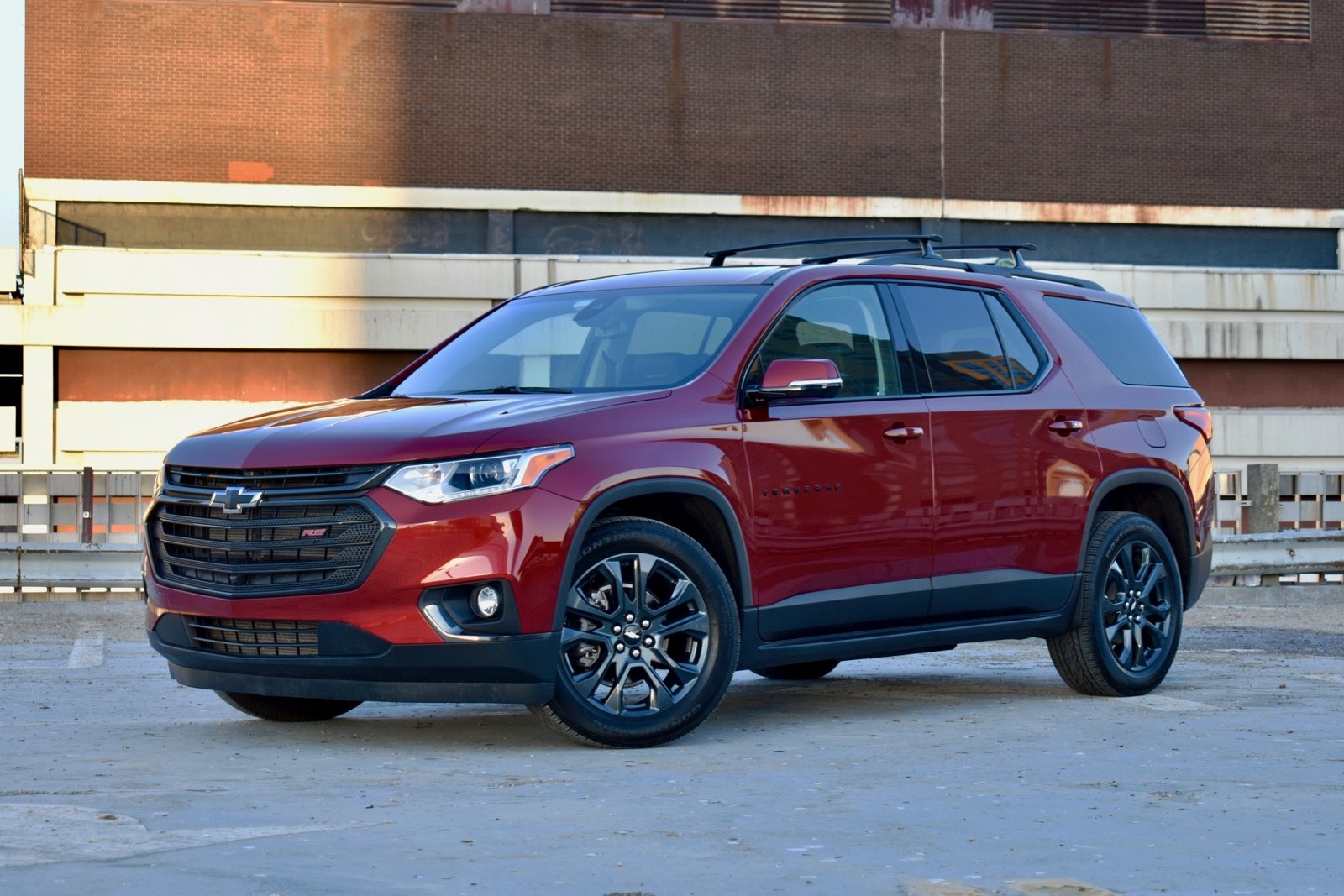
2021 Chevrolet Traverse Reviews SummaryLike a geological core sample, you can chart the evolution of the American family car by looking at the Chevrolet lineup. Go back a few decades and you have tail-finned and wood-paneled station wagons, then Lumina APV “Dustbuster” minivans. Today, you have the 2021 Chevrolet Traverse. The Traverse is a three-row crossover of the type that has largely eliminated the minivan from showrooms. As the new default choice for larger families, the three-row crossover has spawned a competitive market segment, encompassing the Ford Explorer, Honda Pilot, Hyundai Palisade, Kia Telluride, Mazda CX-9, Nissan Pathfinder, Subaru Ascent, Toyota Highlander, and Volkswagen Atlas. So buyers aren’t exactly lacking in choices here. The current-generation Traverse dates back to the 2018 model year, so it’s not the newest vehicle in the segment, but still fairly fresh. Chevy had some updates planned for the 2021 model year—including minor styling changes and wireless Apple CarPlay/Android Auto connectivity—but they’ve been pushed to 2022. However, these changes don’t appear significant enough to justify waiting around for the 2022 Traverse, which is scheduled to reach dealerships later this year. For 2021, the Traverse is available in L, LS, LT Cloth, LT Leather, RS, Premier, and High Country trim levels, with standard front-wheel drive (FWD) or optional all-wheel drive (AWD). Our test car was an AWD Traverse RS model. | |
No video found | |
Popular Features & Specs | |
Engine2.5L 203 hp I4 | Engine3.6L 310 hp V6 |
DrivetrainFWD | DrivetrainFWD |
Seating Capacity5 | Seating Capacity8 |
Horsepower | Horsepower310 hp @ 6800 rpm |
MPG City27 | MPG City18 |
MPG Highway35 | MPG Highway27 |
Engine | |
Engine Name2.5L 203 hp I4 | Engine Name3.6L 310 hp V6 |
Torque | Torque266 lb-ft @ 2800 rpm |
Horsepower | Horsepower310 hp @ 6800 rpm |
DrivetrainFWD | DrivetrainFWD |
Fuel Economy | |
MPG City27 | MPG City18 |
MPG Highway35 | MPG Highway27 |
Interior | |
Seating Capacity5 | Seating Capacity8 |
Safety | |
Front Crash Overall4 | Front Crash Overall4 |
Side Crash Overall5 | Side Crash Overall5 |
Dimensions & Capacity | |
Cargo Space37.5 cu ft | Cargo Space23.0 cu ft |
Curb Weight3370 lbs | Curb Weight4362 lbs |
Height67.0 in | Height70.7 in |
Length180.9 in | Length204.3 in |
Width73.0 in | Width78.6 in |
Wheelbase105.9 in | Wheelbase120.9 in |
Maximum Payload1240 lbs | Maximum Payload1798 lbs |
Number of doors4 | Number of doors4 |
Maximum Towing Capacity1500 lbs | Maximum Towing Capacity |
Overview | ||
MSRP | $25,950 | $29,800 |
Listings | ||
Ratings & Reviews | ||
User reviews | ||
Expert reviews | 8.7 out of 10Read full review | 6.7 out of 10Read full review |
Pros & cons | Pros
Cons
| Pros
Cons
|
Summary | Americans love the Toyota RAV4. The compact crossover SUV is the most popular vehicle in the U.S. that isn’t a pickup truck, and when you live with one for a while, it’s easy to understand why so many people buy a RAV4. Available with a gasoline 4-cylinder or a gas-electric hybrid powertrain (covered as a separate model), and in a wide range of configurations including sporty XSE, luxurious Limited, and rugged Adventure, the 2020 RAV4 meets a variety of customer wants and needs. | Like a geological core sample, you can chart the evolution of the American family car by looking at the Chevrolet lineup. Go back a few decades and you have tail-finned and wood-paneled station wagons, then Lumina APV “Dustbuster” minivans. Today, you have the 2021 Chevrolet Traverse. The Traverse is a three-row crossover of the type that has largely eliminated the minivan from showrooms. As the new default choice for larger families, the three-row crossover has spawned a competitive market segment, encompassing the Ford Explorer, Honda Pilot, Hyundai Palisade, Kia Telluride, Mazda CX-9, Nissan Pathfinder, Subaru Ascent, Toyota Highlander, and Volkswagen Atlas. So buyers aren’t exactly lacking in choices here. The current-generation Traverse dates back to the 2018 model year, so it’s not the newest vehicle in the segment, but still fairly fresh. Chevy had some updates planned for the 2021 model year—including minor styling changes and wireless Apple CarPlay/Android Auto connectivity—but they’ve been pushed to 2022. However, these changes don’t appear significant enough to justify waiting around for the 2022 Traverse, which is scheduled to reach dealerships later this year. For 2021, the Traverse is available in L, LS, LT Cloth, LT Leather, RS, Premier, and High Country trim levels, with standard front-wheel drive (FWD) or optional all-wheel drive (AWD). Our test car was an AWD Traverse RS model. |
Video | No video found | |
Popular Features & Specs | ||
Engine | 2.5L 203 hp I4 | 3.6L 310 hp V6 |
Drivetrain | FWD | FWD |
Seating Capacity | 5 | 8 |
Horsepower | 310 hp @ 6800 rpm | |
MPG City | 27 | 18 |
MPG Highway | 35 | 27 |
Engine | ||
Engine Name | 2.5L 203 hp I4 | 3.6L 310 hp V6 |
Torque | 266 lb-ft @ 2800 rpm | |
Horsepower | 310 hp @ 6800 rpm | |
Drivetrain | FWD | FWD |
Fuel Economy | ||
MPG City | 27 | 18 |
MPG Highway | 35 | 27 |
Interior | ||
Seating Capacity | 5 | 8 |
Safety | ||
Front Crash Overall | 4 | 4 |
Side Crash Overall | 5 | 5 |
Dimensions & Capacity | ||
Cargo Space | 37.5 cu ft | 23.0 cu ft |
Curb Weight | 3370 lbs | 4362 lbs |
Height | 67.0 in | 70.7 in |
Length | 180.9 in | 204.3 in |
Width | 73.0 in | 78.6 in |
Wheelbase | 105.9 in | 120.9 in |
Maximum Payload | 1240 lbs | 1798 lbs |
Number of doors | 4 | 4 |
Maximum Towing Capacity | 1500 lbs | |
The 2020 Toyota RAV4, redesigned in 2019, showcased a bolder and more angular appearance, enhancing its already proven durability. The Adventure trim improved off-roading capabilities with a torque-vectoring all-wheel-drive system, multiple driving modes, and 8.6 inches of ground clearance. The new TRD Off-Road trim for 2020 took these features further with smaller, lighter matte-black 18-inch alloy wheels, all-terrain tires, and a special TRD suspension setup. The TRD Off-Road trim also featured unique TRD logos, rubber floor mats, and a rubber cargo mat, contrasting with the otherwise high-quality interior materials.
The 2021 Chevrolet Traverse, on the other hand, relied on styling details to differentiate its trim levels, giving each a unique identity. The exterior design was generic but clean and handsome, with the RS model featuring blacked-out trim and the High Country model sporting chrome accents. The Traverse shared its platform with the Buick Enclave, GMC Acadia, and Cadillac XT6 but aimed for a more blue-collar feel. Inside, the Traverse offered a restrained design with an optional Dual SkyScape two-panel sunroof and materials that, while good, didn't quite justify the $50,000 MSRP of the RS model.


The 2020 Toyota RAV4 came with a 2.5-liter 4-cylinder engine producing 203 horsepower and 184 pound-feet of torque. The RAV4 Hybrid model delivered 219 horsepower and up to 40 mpg in combined driving but wasn't available in the TRD Off-Road trim. The non-turbo, non-hybrid powertrain of the test vehicle felt energetic, especially in Sport mode, though a turbocharged engine would have been preferable at higher altitudes. The 8-speed automatic transmission generally performed well but occasionally struggled with gear selection. The TRD Off-Road model featured a torque-vectoring AWD system, multi-terrain select settings, and 8.6 inches of ground clearance, making it capable on various terrains. The test vehicle averaged 23.4 mpg, missing the EPA estimate of 27 mpg.
The 2021 Chevrolet Traverse was equipped with a 3.6-liter V6 engine producing 310 horsepower and 266 pound-feet of torque, paired with a nine-speed automatic transmission. While the V6 didn't feel particularly strong off the line, it provided ample power for highway merging and overtaking. The nine-speed automatic performed well overall but occasionally had rough shifts. The Traverse excelled in highway road manners, offering a quiet cabin and comfortable ride. However, it lacked agility on twistier roads, partly due to its AWD system, which required manual activation and didn't fully utilize its torque-vectoring capabilities. The Traverse had a 5,000-pound towing capacity, average for the segment.
The 2020 Toyota RAV4 offered easy entry and exit, with a low and sporty driving position in an 8-way adjustable driver's seat. The TRD Off-Road trim featured SofTex upholstery, which could trap sweat on hot days, but the Weather Package added heated and ventilated front seats and a heated steering wheel. The rear seat provided generous legroom, and interior storage was ample, with a dashboard shelf and 37.6 cubic feet of cargo space behind the back seat, expandable to 69.8 cubic feet. The test vehicle also had a robust roof rack and an optional hands-free power liftgate.
The 2021 Chevrolet Traverse offered seating for seven or eight, with above-average headroom and legroom in all three rows. Heated front seats were standard on the RS trim, with ventilated front seats and heated outboard rear seats available on higher trims. The Traverse excelled in cargo space, offering 23.0 cubic feet with all seats in place, 57.8 cubic feet with the third row stowed, and 98.2 cubic feet with all rear seats folded. A power liftgate was optional on the LT Cloth trim and standard on higher trims, with a gesture-activated liftgate available on the Premier and High Country models. However, interior storage options were limited compared to minivans.
The 2020 Toyota RAV4 featured a user-friendly infotainment system with a 7- or 8-inch touchscreen, depending on the trim level. The system included Bluetooth, Apple CarPlay, Android Auto, Amazon Alexa, SiriusXM satellite radio, and multiple connected services packages. A 4G LTE WiFi hotspot was free for three months or 2GB of data usage. The TRD Off-Road trim had an 8-inch touchscreen with menu shortcut buttons and knobs for easy use, along with an optional JBL premium sound system. The Technology Package added wireless smartphone charging, a 360-degree surround-view camera, and a digital rear-view mirror with adjustable camera height and angle.
The 2021 Chevrolet Traverse came with a standard 7-inch touchscreen, Apple CarPlay/Android Auto, and Bluetooth. Higher trims offered an 8-inch touchscreen, navigation, a 4G LTE WiFi hotspot, and a Bose 10-speaker audio system. The 8-inch screen in the RS trim was easy to use, with large icons and analog controls for audio volume and climate control. The Traverse also featured a rearview camera mirror and an optional HD surround-view camera system. Standard USB ports were provided for each row, but wireless phone charging was only available on the Premier and High Country trims.
The 2020 Toyota RAV4 included Toyota Safety Sense 2.0, featuring advanced driving assist safety features such as Pre-Collision System with Pedestrian Detection, radar adaptive cruise control, lane departure alert with steering assist, front and rear parking assist with automated braking, and blind spot assist with rear cross-traffic alert. The RAV4 received a Top Safety Pick rating from the IIHS, with top marks for crash protection and ADAS performance, but only models with full LED, curve adaptive headlights received this rating.
The 2021 Chevrolet Traverse received top "Good" scores in all crash tests from the IIHS, along with a "Superior" rating for front-crash prevention tech. However, it received "Acceptable" and "Poor" headlight ratings and an "Acceptable" rating for LATCH child-seat anchor ease of use. The NHTSA gave the Traverse a five-star overall safety rating, with four stars in frontal and rollover crash tests and five stars in side-impact crash tests. Chevy offered less standard driver-assist tech than competitors, with features like adaptive cruise control, automatic emergency braking, and lane-keep assist only available on higher trims.
CarGurus highlights

According to CarGurus experts, the overall rating for the 2020 Toyota RAV4 is 8.7 out of 10, while the 2021 Chevrolet Traverse scores 6.7 out of 10. Based on these ratings, the 2020 Toyota RAV4 is the clear winner, offering a better blend of performance, safety, and technology.
Choose the 2020 Toyota RAV4 if:
- You prioritize advanced safety features and a high safety rating.
- You need a versatile SUV with excellent off-roading capabilities.
- You value a user-friendly infotainment system with comprehensive connectivity options.


Choose the 2021 Chevrolet Traverse if:
- You require substantial cargo space for family trips or hauling gear.
- You prefer a quiet and comfortable ride for long highway drives.
- You need seating for up to eight passengers with available heated and ventilated seats.


CarGurus highlights
According to CarGurus experts, the overall rating for the 2020 Toyota RAV4 is 8.7 out of 10, while the 2021 Chevrolet Traverse scores 6.7 out of 10. Based on these ratings, the 2020 Toyota RAV4 is the clear winner, offering a better blend of performance, safety, and technology.
Choose the 2020 Toyota RAV4 if:
Shop Now- You prioritize advanced safety features and a high safety rating.
- You need a versatile SUV with excellent off-roading capabilities.
- You value a user-friendly infotainment system with comprehensive connectivity options.
Choose the 2021 Chevrolet Traverse if:
Shop Now- You require substantial cargo space for family trips or hauling gear.
- You prefer a quiet and comfortable ride for long highway drives.
- You need seating for up to eight passengers with available heated and ventilated seats.

By: CarGurus + AI
At CarGurus, our team of experienced automotive writers remain at the heart of our content operation, conducting hands-on car tests and writing insightful guides that are backed by years of industry experience. To complement this, we are harnessing AI to make our content offering more diverse and more helpful to shoppers than ever. To achieve this, our AI systems are based exclusively on CarGurus content, ratings and data, so that what we produce is both unique to CarGurus, and uniquely helpful to car shoppers.

