2020 Toyota RAV4 vs 2020 Hyundai Venue

Overview | |
MSRP$25,950 | MSRP$17,350 |
Listings1255 | Listings101 |
Ratings & Reviews | |
User Reviews | User Reviews |
Expert reviews8.7 out of 10 | Expert reviews7.3 out of 10 |
Pros
Cons
| Pros
Cons
|
2020 Toyota RAV4 Reviews SummaryAmericans love the Toyota RAV4. The compact crossover SUV is the most popular vehicle in the U.S. that isn’t a pickup truck, and when you live with one for a while, it’s easy to understand why so many people buy a RAV4. Available with a gasoline 4-cylinder or a gas-electric hybrid powertrain (covered as a separate model), and in a wide range of configurations including sporty XSE, luxurious Limited, and rugged Adventure, the 2020 RAV4 meets a variety of customer wants and needs. | |
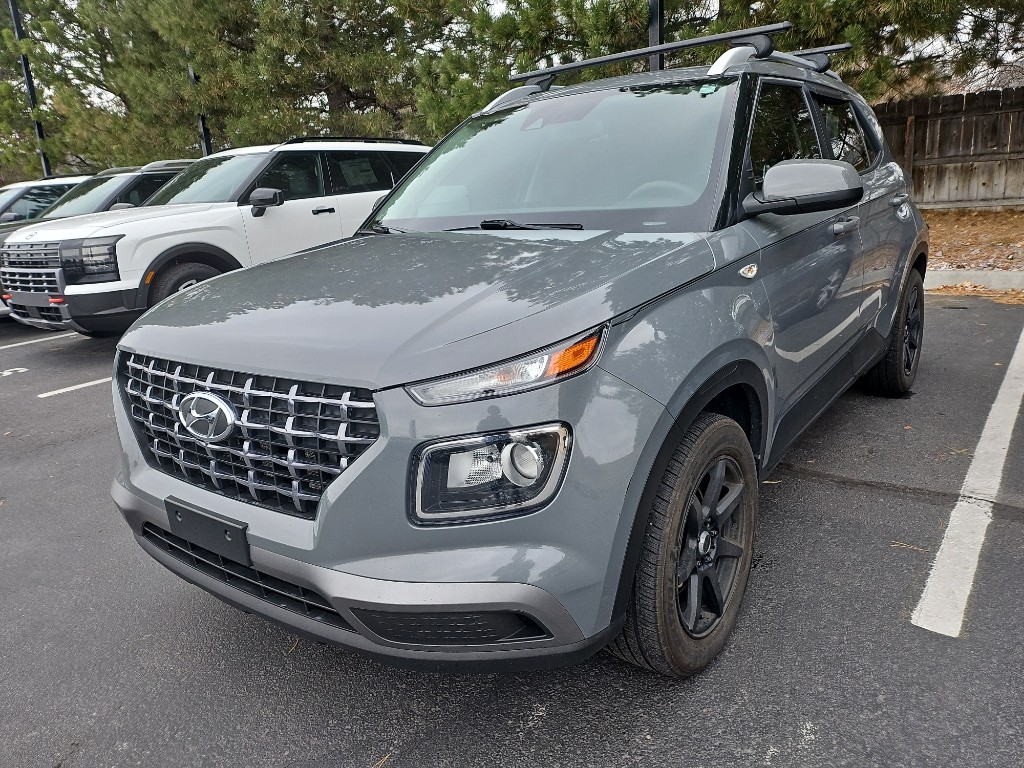
2020 Hyundai Venue Reviews SummaryThe 2020 Hyundai Venue you see here is classified as a subcompact crossover. But without the roof rails and extra plastic fender cladding, you might just as well call it a hatchback. If you were to describe a front-wheel-drive (FWD) car with a bit more space than a small sedan and with an emphasis on economy and efficiency, I would figure you are talking about a compact hatchback. But here we are, calling the Venue a crossover. Small crossovers and SUVs have been among the most popular and fastest-growing group of vehicles sold in the past decade. This is partly because of their utilitarian image, but it’s also because automakers are choosing to offer would-be hatchbacks as crossovers, thanks to the popularity of the segment. All we know is automakers have an easier time marketing a vehicle as a small sport utility vehicle, even if it doesn’t offer much sport or utility. But forget the labels. Let’s look at the 2020 Venue for what it is: an affordable, economical hatchback with a decent amount of cabin space (for a vehicle its size) and the latest infotainment and safety technology. | |
Popular Features & Specs | |
Engine2.5L 203 hp I4 | Engine1.6L 121 hp I4 |
Drive TrainFWD | Drive TrainFWD |
Seating Capacity5 | Seating Capacity5 |
Horsepower | Horsepower121 hp @ 6300 rpm |
MPG City27 | MPG City27 |
MPG Highway35 | MPG Highway35 |
Engine | |
Engine Name2.5L 203 hp I4 | Engine Name1.6L 121 hp I4 |
Torque | Torque113 lb-ft @ 4500 rpm |
Horsepower | Horsepower121 hp @ 6300 rpm |
DrivetrainFWD | DrivetrainFWD |
Fuel Economy | |
MPG City27 | MPG City27 |
MPG Highway35 | MPG Highway35 |
Interior | |
Seating Capacity5 | Seating Capacity5 |
Safety | |
Front Crash Overall4 | Front Crash Overall4 |
Side Crash Overall5 | Side Crash Overall5 |
Dimensions & Capacity | |
Cargo Space37.6 cu ft | Cargo Space18.7 cu ft |
Curb Weight3370 lbs | Curb Weight2557 lbs |
Height67.0 in | Height61.6 in |
Length180.9 in | Length159.0 in |
Width73.0 in | Width69.7 in |
Wheelbase105.9 in | Wheelbase99.2 in |
Maximum Payload1240 lbs | Maximum Payload1081 lbs |
Number of doors4 | Number of doors4 |
Maximum Towing Capacity1500 lbs | Maximum Towing Capacity |
Overview | ||
MSRP | $25,950 | $17,350 |
Listings | ||
Ratings & Reviews | ||
User reviews | ||
Expert reviews | 8.7 out of 10Read full review | 7.3 out of 10Read full review |
Pros & cons | Pros
Cons
| Pros
Cons
|
Summary | Americans love the Toyota RAV4. The compact crossover SUV is the most popular vehicle in the U.S. that isn’t a pickup truck, and when you live with one for a while, it’s easy to understand why so many people buy a RAV4. Available with a gasoline 4-cylinder or a gas-electric hybrid powertrain (covered as a separate model), and in a wide range of configurations including sporty XSE, luxurious Limited, and rugged Adventure, the 2020 RAV4 meets a variety of customer wants and needs. | The 2020 Hyundai Venue you see here is classified as a subcompact crossover. But without the roof rails and extra plastic fender cladding, you might just as well call it a hatchback. If you were to describe a front-wheel-drive (FWD) car with a bit more space than a small sedan and with an emphasis on economy and efficiency, I would figure you are talking about a compact hatchback. But here we are, calling the Venue a crossover. Small crossovers and SUVs have been among the most popular and fastest-growing group of vehicles sold in the past decade. This is partly because of their utilitarian image, but it’s also because automakers are choosing to offer would-be hatchbacks as crossovers, thanks to the popularity of the segment. All we know is automakers have an easier time marketing a vehicle as a small sport utility vehicle, even if it doesn’t offer much sport or utility. But forget the labels. Let’s look at the 2020 Venue for what it is: an affordable, economical hatchback with a decent amount of cabin space (for a vehicle its size) and the latest infotainment and safety technology. |
Video | ||
Popular Features & Specs | ||
Engine | 2.5L 203 hp I4 | 1.6L 121 hp I4 |
Drive Train | FWD | FWD |
Seating Capacity | 5 | 5 |
Horsepower | 121 hp @ 6300 rpm | |
MPG City | 27 | 27 |
MPG Highway | 35 | 35 |
Engine | ||
Engine Name | 2.5L 203 hp I4 | 1.6L 121 hp I4 |
Torque | 113 lb-ft @ 4500 rpm | |
Horsepower | 121 hp @ 6300 rpm | |
Drivetrain | FWD | FWD |
Fuel Economy | ||
MPG City | 27 | 27 |
MPG Highway | 35 | 35 |
Interior | ||
Seating Capacity | 5 | 5 |
Safety | ||
Front Crash Overall | 4 | 4 |
Side Crash Overall | 5 | 5 |
Dimensions & Capacity | ||
Cargo Space | 37.6 cu ft | 18.7 cu ft |
Curb Weight | 3370 lbs | 2557 lbs |
Height | 67.0 in | 61.6 in |
Length | 180.9 in | 159.0 in |
Width | 73.0 in | 69.7 in |
Wheelbase | 105.9 in | 99.2 in |
Maximum Payload | 1240 lbs | 1081 lbs |
Number of doors | 4 | 4 |
Maximum Towing Capacity | 1500 lbs | |
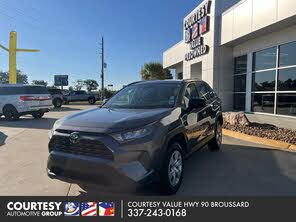
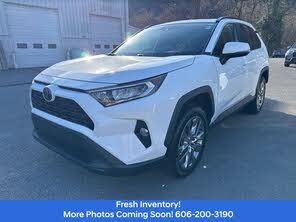
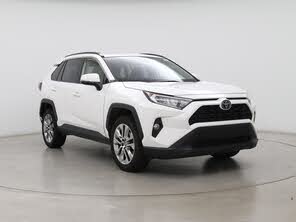
The 2020 Toyota RAV4 had undergone a significant redesign in 2019, giving it a bolder and more angular appearance, which enhanced its rugged look. This redesign was aimed at maintaining its reputation for durability while adding a more adventurous aesthetic. The RAV4 Adventure trim improved off-roading capabilities with a torque-vectoring all-wheel-drive system, multiple driving modes, and downhill assist control. The TRD Off-Road trim, introduced in 2020, further enhanced these capabilities with specialized wheels, tires, and suspension, making it suitable for a variety of terrains. The interior featured TRD logos, rubber mats, and a mix of quality materials, although some plastics appeared inexpensive. The RAV4's trim levels ranged from the base LE to the top-tier Limited, with the TRD Off-Road near the top, offering a blend of equipment and value.
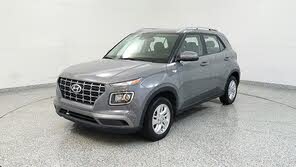
The 2020 Hyundai Venue, on the other hand, filled a gap in Hyundai's lineup as a subcompact SUV, positioned as a more affordable option compared to the Kona. It featured a more upright design and unique touches like a contrasting white roof and a large chrome grille. Inside, the Venue offered a modern and clean cabin with ample head- and legroom, even in the second row. The Venue's trims included SE, SEL, and Denim, with the latter offering a two-tone exterior and denim upholstery. The SEL trim, recommended by CarGurus, provided a good balance of features and value, especially with the Premium package. The Venue's interior layout was praised for its simplicity and user-friendly controls, although the automatic climate control display could be confusing.


The 2020 Toyota RAV4 was equipped with a 2.5-liter 4-cylinder engine producing 203 horsepower and 184 pound-feet of torque. It also offered a hybrid version with 219 horsepower and impressive fuel efficiency, though the TRD Off-Road trim was not available as a hybrid. The RAV4's 8-speed automatic transmission generally performed well, though it occasionally struggled with gear selection. The TRD Off-Road model featured a torque-vectoring AWD system, multi-terrain select settings, and downhill assist control, making it capable on various terrains. Despite its off-road focus, the RAV4 was also practical for daily use, with features like a 360-degree camera system and a JBL premium sound system. However, its fuel economy fell short of the EPA estimate, averaging 23.4 mpg.
The 2020 Hyundai Venue was powered by a 1.6-liter 4-cylinder engine producing 121 horsepower and 113 pound-feet of torque. It was available with a manual transmission on the base trim, but most trims came with a continuously variable automatic transmission (IVT). The Venue was front-wheel drive only, lacking the AWD option found in some competitors. Its acceleration was underwhelming, and the engine was noisy, especially when pushed. The Venue offered drive modes like Normal, Snow, and Sport, but its performance remained modest. Despite its taller setup, the Venue handled corners well, though it transmitted road imperfections to the cabin. Fuel economy was a strong point, with the CVT version achieving 30 mpg city, 34 highway, and 32 combined.
The 2020 Toyota RAV4 offered easy entry and exit, with a low and sporty driving position in the 8-way adjustable driver's seat. The TRD Off-Road trim featured SofTex upholstery, which could trap sweat, but the Weather Package added heated and ventilated front seats. The rear seat provided ample legroom for adults and children, with air conditioning vents and USB ports for convenience. Interior storage was generous, with a dashboard shelf and a cargo capacity of 37.6 cubic feet behind the rear seats, expanding to 69.8 cubic feet with the seats folded. The test vehicle also had a robust roof rack and an optional hands-free power liftgate.
The 2020 Hyundai Venue, while not particularly fast or sporty, offered decent utility for its size. It had 31.9 cubic feet of cargo space with the rear seats folded, less than the Hyundai Kona. However, with the rear seats up, both vehicles offered around 19 cubic feet. The Venue provided ample head- and legroom in the front seats, even for taller drivers, and decent legroom in the rear. The control layout was praised for its simplicity, with traditional buttons and dials for key functions. The automatic climate control display on higher trims could be confusing, but overall, the Venue's interior was well thought out for everyday use.
The 2020 Toyota RAV4 featured a user-friendly infotainment system with a 7- or 8-inch touchscreen display, depending on the trim. It included Bluetooth, Apple CarPlay, Android Auto, Amazon Alexa, and SiriusXM satellite radio. A 4G LTE WiFi hotspot was available with a free trial period. The system's voice-recognition technology was impressive, accurately responding to commands. The optional Technology Package added wireless smartphone charging, a 360-degree camera, and a digital rear-view mirror with adjustable camera settings.
The 2020 Hyundai Venue came standard with an 8-inch touchscreen infotainment system, offering Bluetooth, USB ports, Apple CarPlay, and Android Auto. Hyundai's logical touchscreen layout minimized distracted driving, with large icons and fonts and redundant hard buttons for major functions. The screen placement allowed for easy use while driving, with a design that partially extended from the dash for finger bracing.
The 2020 Toyota RAV4 included Toyota Safety Sense 2.0, featuring advanced safety features like Pre-Collision System with Pedestrian Detection, radar adaptive cruise control, lane departure alert with steering assist, and blind spot assist with rear cross-traffic alert. It also offered a free 1-year subscription to Safety Connect services. The RAV4 received a Top Safety Pick rating from the IIHS, though headlight performance varied by model.
The 2020 Hyundai Venue came with standard safety features like a reversing camera, traction control, and a full array of airbags. It also included driver-assistance technology like forward-collision avoidance with pedestrian detection and lane-keeping assist. The SEL trim with the Convenience Package added blind-spot monitoring and rear cross-traffic alert, standard on the Denim trim.
CarGurus highlights

According to CarGurus experts, the overall rating for the 2020 Toyota RAV4 is 8.7 out of 10, while the 2020 Hyundai Venue scores 7.3 out of 10. Based on these ratings, the Toyota RAV4 is the recommended choice, offering a better blend of performance, safety, and utility.
Choose the 2020 Toyota RAV4 if:
- You need a versatile SUV with off-road capabilities and a range of driving modes.
- You value advanced safety features and a high safety rating.
- You want a spacious interior with ample cargo capacity and practical storage solutions.







Choose the 2020 Hyundai Venue if:
- You are looking for an affordable subcompact SUV with modern technology and user-friendly controls.
- You prioritize fuel efficiency and a straightforward driving experience.
- You appreciate a compact vehicle with a well-designed interior and ample headroom.








CarGurus highlights
According to CarGurus experts, the overall rating for the 2020 Toyota RAV4 is 8.7 out of 10, while the 2020 Hyundai Venue scores 7.3 out of 10. Based on these ratings, the Toyota RAV4 is the recommended choice, offering a better blend of performance, safety, and utility.
Choose the 2020 Toyota RAV4 if:
Shop Now- You need a versatile SUV with off-road capabilities and a range of driving modes.
- You value advanced safety features and a high safety rating.
- You want a spacious interior with ample cargo capacity and practical storage solutions.










Choose the 2020 Hyundai Venue if:
Shop Now- You are looking for an affordable subcompact SUV with modern technology and user-friendly controls.
- You prioritize fuel efficiency and a straightforward driving experience.
- You appreciate a compact vehicle with a well-designed interior and ample headroom.










By: CarGurus + AI
At CarGurus, our team of experienced automotive writers remain at the heart of our content operation, conducting hands-on car tests and writing insightful guides that are backed by years of industry experience. To complement this, we are harnessing AI to make our content offering more diverse and more helpful to shoppers than ever. To achieve this, our AI systems are based exclusively on CarGurus content, ratings and data, so that what we produce is both unique to CarGurus, and uniquely helpful to car shoppers.