2021 Honda CR-V vs 2021 Toyota RAV4

Overview | |
MSRP$26,350 | MSRP$25,350 |
Listings2032 | Listings1279 |
Ratings & Reviews | |
User Reviews | User Reviews |
Expert reviews7.3 out of 10 | Expert reviews7.8 out of 10 |
Pros
Cons
| Pros
Cons
|
2021 Toyota RAV4 Reviews SummarySince its launch in 1997, the Toyota RAV4 has ridden a wave of crossover SUV popularity to become one of Toyota’s bestselling models. Introduced for the 2019 model year, the current-generation RAV4 tries to offer the rugged style of a traditional SUV, but underneath it’s still a car-based crossover pitched against the likes of the Ford Escape, Honda CR-V, Hyundai Tucson, Kia Sportage, Nissan Rogue, Subaru Forester, and Volkswagen Tiguan. Because it’s only in its third model year, this fifth-generation RAV4 doesn’t get many updates for 2021. The biggest news is the addition of the RAV4 Prime plug-in hybrid to the lineup, but that model actually went on sale last year. The only other changes are a new XLE Premium trim level for the RAV4 Hybrid, and a new front stainless steel front skid plate for the gasoline RAV4 TRD Off-Road model. Toyota offers compact SUV buyers more choices than most competitors. The RAV4 LE, XLE, XLE Premium, and Limited trim levels are available with hybrid and non-hybrid powertrains. Toyota also offers the gasoline-only RAV4 Adventure and TRD Off-Road trim levels, plus the RAV4 Hybrid XSE. The RAV4 Prime is also available in two trim levels—SE and XSE. We’ve covered the RAV4 Hybrid and RAV4 Prime in separate reviews, so this review will focus on the gasoline RAV4. Our test car was a RAV4 TRD Off-Road, which joined the lineup for the 2020 model year and is the first RAV4 model tuned by Toyota Racing Development, the automaker’s North American performance division. | |
2021 Honda CR-V Reviews SummaryEven in a grim year, Honda is selling a staggering number of CR-Vs. The CR-V is the best-selling Honda by far. It’s also the second best-selling compact SUV, just behind the Toyota RAV4. And it's the fifth best-selling vehicle in the U.S., and if you take out all the commercial sales of full-size pickups it’s one of the two best-selling vehicles year in and year out. So it’s hard to argue against the CR-V formula. Honda’s been at this almost as long as crossovers have been a thing, launching the CR-V in 1997—a year after the RAV4 debuted. The funny thing is, aside from sales volume, there’s only one thing the CR-V particularly excels at. Aesthetics are subjective, but it would be hard to argue the CR-V is the best looking vehicle in its class. It’s not the cheapest. It’s not the best equipped, especially at the middle to lower trim levels. It’s not the fastest, nor is it the quietest, or the most fuel efficient. It’s not even the most reliable, showing up nowhere in J.D. Power's Most Reliable list. So what makes it so appealing to American consumers? Let’s see if we can figure that out. | |
No video found | No video found |
Popular Features & Specs | |
Engine2.5L 203 hp I4 | Engine1.5L 190 hp I4 |
Drive TrainFWD | Drive TrainFWD |
Seating Capacity5 | Seating Capacity5 |
Horsepower | Horsepower190 hp @ 5600 rpm |
MPG City28 | MPG City28 |
MPG Highway35 | MPG Highway34 |
Engine | |
Engine Name2.5L 203 hp I4 | Engine Name1.5L 190 hp I4 |
Torque | Torque179 lb-ft @ 2000 rpm |
Horsepower | Horsepower190 hp @ 5600 rpm |
DrivetrainFWD | DrivetrainFWD |
Fuel Economy | |
MPG City28 | MPG City28 |
MPG Highway35 | MPG Highway34 |
Interior | |
Seating Capacity5 | Seating Capacity5 |
Safety | |
Front Crash Overall4 | Front Crash Overall5 |
Side Crash Overall5 | Side Crash Overall5 |
Dimensions & Capacity | |
Cargo Space37.6 cu ft | Cargo Space39.2 cu ft |
Curb Weight3370 lbs | Curb Weight3337 lbs |
Height67.0 in | Height66.1 in |
Length180.9 in | Length182.1 in |
Width73.0 in | Width73.0 in |
Wheelbase105.9 in | Wheelbase104.8 in |
Maximum Payload1240 lbs | Maximum Payload1358 lbs |
Number of doors4 | Number of doors4 |
Maximum Towing Capacity1500 lbs | Maximum Towing Capacity1500 lbs |
Overview | ||
MSRP | $26,350 | $25,350 |
Listings | ||
Ratings & Reviews | ||
User reviews | ||
Expert reviews | 7.3 out of 10Read full review | 7.8 out of 10Read full review |
Pros & cons | Pros
Cons
| Pros
Cons
|
Summary | Since its launch in 1997, the Toyota RAV4 has ridden a wave of crossover SUV popularity to become one of Toyota’s bestselling models. Introduced for the 2019 model year, the current-generation RAV4 tries to offer the rugged style of a traditional SUV, but underneath it’s still a car-based crossover pitched against the likes of the Ford Escape, Honda CR-V, Hyundai Tucson, Kia Sportage, Nissan Rogue, Subaru Forester, and Volkswagen Tiguan. Because it’s only in its third model year, this fifth-generation RAV4 doesn’t get many updates for 2021. The biggest news is the addition of the RAV4 Prime plug-in hybrid to the lineup, but that model actually went on sale last year. The only other changes are a new XLE Premium trim level for the RAV4 Hybrid, and a new front stainless steel front skid plate for the gasoline RAV4 TRD Off-Road model. Toyota offers compact SUV buyers more choices than most competitors. The RAV4 LE, XLE, XLE Premium, and Limited trim levels are available with hybrid and non-hybrid powertrains. Toyota also offers the gasoline-only RAV4 Adventure and TRD Off-Road trim levels, plus the RAV4 Hybrid XSE. The RAV4 Prime is also available in two trim levels—SE and XSE. We’ve covered the RAV4 Hybrid and RAV4 Prime in separate reviews, so this review will focus on the gasoline RAV4. Our test car was a RAV4 TRD Off-Road, which joined the lineup for the 2020 model year and is the first RAV4 model tuned by Toyota Racing Development, the automaker’s North American performance division. | Even in a grim year, Honda is selling a staggering number of CR-Vs. The CR-V is the best-selling Honda by far. It’s also the second best-selling compact SUV, just behind the Toyota RAV4. And it's the fifth best-selling vehicle in the U.S., and if you take out all the commercial sales of full-size pickups it’s one of the two best-selling vehicles year in and year out. So it’s hard to argue against the CR-V formula. Honda’s been at this almost as long as crossovers have been a thing, launching the CR-V in 1997—a year after the RAV4 debuted. The funny thing is, aside from sales volume, there’s only one thing the CR-V particularly excels at. Aesthetics are subjective, but it would be hard to argue the CR-V is the best looking vehicle in its class. It’s not the cheapest. It’s not the best equipped, especially at the middle to lower trim levels. It’s not the fastest, nor is it the quietest, or the most fuel efficient. It’s not even the most reliable, showing up nowhere in J.D. Power's Most Reliable list. So what makes it so appealing to American consumers? Let’s see if we can figure that out. |
Video | No video found | No video found |
Popular Features & Specs | ||
Engine | 2.5L 203 hp I4 | 1.5L 190 hp I4 |
Drive Train | FWD | FWD |
Seating Capacity | 5 | 5 |
Horsepower | 190 hp @ 5600 rpm | |
MPG City | 28 | 28 |
MPG Highway | 35 | 34 |
Engine | ||
Engine Name | 2.5L 203 hp I4 | 1.5L 190 hp I4 |
Torque | 179 lb-ft @ 2000 rpm | |
Horsepower | 190 hp @ 5600 rpm | |
Drivetrain | FWD | FWD |
Fuel Economy | ||
MPG City | 28 | 28 |
MPG Highway | 35 | 34 |
Interior | ||
Seating Capacity | 5 | 5 |
Safety | ||
Front Crash Overall | 4 | 5 |
Side Crash Overall | 5 | 5 |
Dimensions & Capacity | ||
Cargo Space | 37.6 cu ft | 39.2 cu ft |
Curb Weight | 3370 lbs | 3337 lbs |
Height | 67.0 in | 66.1 in |
Length | 180.9 in | 182.1 in |
Width | 73.0 in | 73.0 in |
Wheelbase | 105.9 in | 104.8 in |
Maximum Payload | 1240 lbs | 1358 lbs |
Number of doors | 4 | 4 |
Maximum Towing Capacity | 1500 lbs | 1500 lbs |
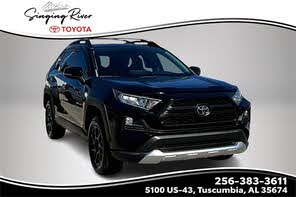
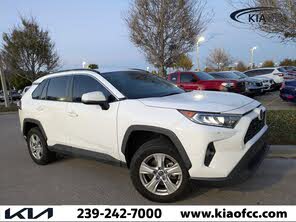
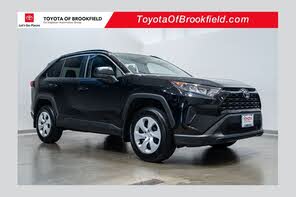
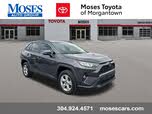
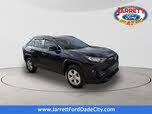
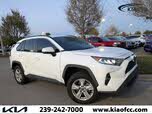
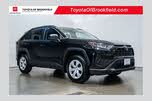
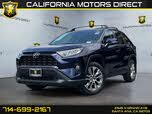
The 2021 Toyota RAV4 carried a distinctly aggressive appearance that marked a significant departure from its predecessor and most compact crossovers. Its exterior, influenced by traditional SUV designs, featured boxy fender flares, chiseled taillights, and a scowl-like front end that diverged sharply from the friendly facades typical of its ancestors and competitors. This rugged charm allowed it to stand out in the congested family crossover space. Inside, the RAV4 embraced similarly rugged styling cues, like oversized rubberized knobs and hardy door handles that underscored its durability.
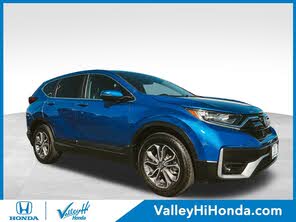
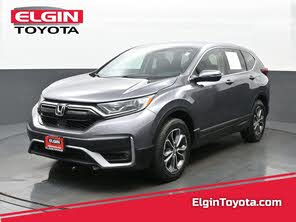
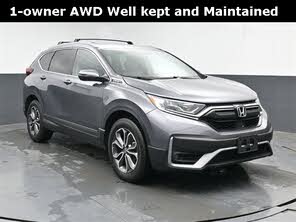
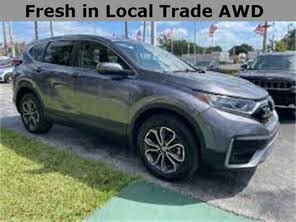
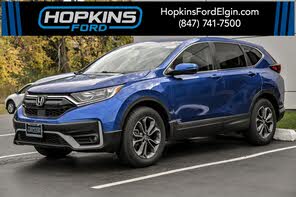
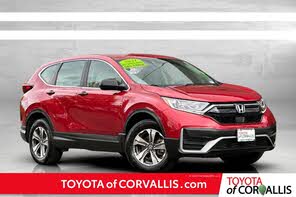
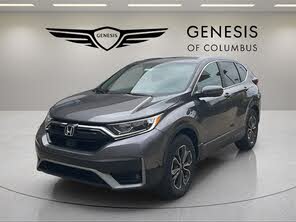
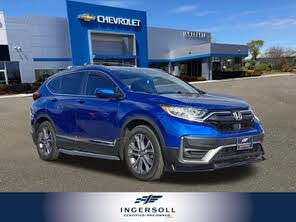
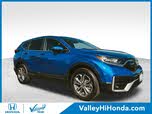
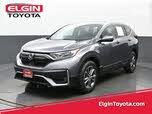
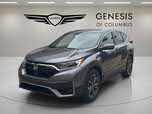
Conversely, the 2021 Honda CR-V opted for a more conventional crossover look that blended seamlessly with its segment. Despite subtle distinctions like a unique grille opening and chrome accents, its appearance was largely uniform among competitors. The CR-V shone brighter in color offerings at higher trims, although more vivid colors were scarce on dealership lots. The interior design was angular and modern, contrasting with less adventurous competitors and lending the CR-V a contemporary edge.


The performance of the RAV4 was dominated by its 203-horsepower "Dynamic Force" 2.5-liter four-cylinder engine, which balanced high thermal efficiency with a love for high RPMs. While the powertrain was exceptional, the rest of the vehicle struggled to match it, with a transmission that hesitated and steering that lacked tactile feedback. The RAV4 excelled on the highway and proved capable in off-road scenarios thanks to specific models featuring increased ground clearance and all-terrain tires, despite lacking traditional rugged vehicle features like a two-speed transfer case.
The Honda CR-V, equipped with a consistent 190-horsepower turbocharged engine across all trims, provided a smooth and predictable driving experience, albeit without the thrill of rapid acceleration or sporty handling. It used a continuously variable transmission that maintained engine revs consistently, which might deter those seeking a dynamic drive. With standard front-wheel drive and an optional all-wheel-drive system, the CR-V performed solidly, prioritizing comfort and stability over excitement.
Interior space usage was a clear focus for both vehicles. The RAV4 offered comfortable front seating but fell slightly short on rear seat comfort and legroom compared to competitors. It boasted 37.6 cubic feet of cargo space behind the second row, which was impressive but still less than the CR-V. Its user-friendly controls and sensible interior design highlighted functionality suitable for active lifestyles.
The CR-V excelled in maximizing passenger and cargo space, providing 102.9 cubic feet of passenger volume and up to 75.8 cubic feet of total cargo space with the rear seats folded, comfortably leading its class. Through thoughtful design, it facilitated easy access to cargo areas and optional hands-free tailgate functionality on higher trims, underscoring its commitment to practicality and convenience.
Toyota equipped the RAV4 with a robust tech suite that included standard connectivity features like Apple CarPlay and Android Auto across all models. The interface, though not industry-leading, was straightforward and user-friendly, with varying screen sizes depending on the model and optional premium audio systems.
Honda's approach in the CR-V was similarly comprehensive, with a stronger emphasis on infotainment features beginning from mid-tier trims. Base models had limited tech, but the majority of the line-up boasted a 7-inch touchscreen, integrated advanced smartphone connectivity, and enhanced audio systems on higher trims. Notably, the CR-V offered more consistent access to modern tech across its range compared to the base offerings of the RAV4.
CarGurus highlights

According to CarGurus experts, the overall rating for 2021 Toyota RAV4 is 7.3 out of 10, while the 2021 Honda CR-V scores 7.8 out of 10. In light of these ratings, the Honda CR-V edges ahead slightly, largely due to its superior usage of space, comprehensive standard safety features, and more consistent technology offerings across its range. For buyers prioritizing practicality, safety, and technology in a compact crossover, the 2021 Honda CR-V presents a slightly more compelling choice.
Choose the 2021 Honda CR-V if:
- Interior space for passengers and cargo is a priority in your vehicle choice.
- You seek a strong safety profile with comprehensive features available at all trim levels.
- Consistent access to modern technology across nearly all trims is essential.

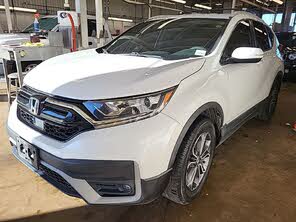
Choose the 2021 Toyota RAV4 if:
- You value a distinct, rugged aesthetic that stands out in the crossover crowd.
- Off-road capability and adaptability are important to your lifestyle and driving needs.
- You prefer a straightforward tech setup with solid standard features.





CarGurus highlights
According to CarGurus experts, the overall rating for 2021 Toyota RAV4 is 7.3 out of 10, while the 2021 Honda CR-V scores 7.8 out of 10. In light of these ratings, the Honda CR-V edges ahead slightly, largely due to its superior usage of space, comprehensive standard safety features, and more consistent technology offerings across its range. For buyers prioritizing practicality, safety, and technology in a compact crossover, the 2021 Honda CR-V presents a slightly more compelling choice.
Choose the 2021 Honda CR-V if:
Shop Now- Interior space for passengers and cargo is a priority in your vehicle choice.
- You seek a strong safety profile with comprehensive features available at all trim levels.
- Consistent access to modern technology across nearly all trims is essential.







Choose the 2021 Toyota RAV4 if:
Shop Now- You value a distinct, rugged aesthetic that stands out in the crossover crowd.
- Off-road capability and adaptability are important to your lifestyle and driving needs.
- You prefer a straightforward tech setup with solid standard features.






By: CarGurus + AI
At CarGurus, our team of experienced automotive writers remain at the heart of our content operation, conducting hands-on car tests and writing insightful guides that are backed by years of industry experience. To complement this, we are harnessing AI to make our content offering more diverse and more helpful to shoppers than ever. To achieve this, our AI systems are based exclusively on CarGurus content, ratings and data, so that what we produce is both unique to CarGurus, and uniquely helpful to car shoppers.