2021 Honda CR-V Reviews, Pricing & Specs



Pros & cons
What we like
Plenty of cargo space
Standard advanced safety features
Excellent value for money
What to consider
Uninspired styling
Fairly pedestrian performance
Expert review
Is there a reason that the Honda CR-V is one of the top five best-selling vehicles in the United States? Maybe, but with competition from almost every single manufacturer, there may also be good reasons to look elsewhere.
Even in a grim year, Honda is selling a staggering number of CR-Vs. The CR-V is the best-selling Honda by far. It’s also the second best-selling compact SUV, just behind the Toyota RAV4. And it's the fifth best-selling vehicle in the U.S., and if you take out all the commercial sales of full-size pickups it’s one of the two best-selling vehicles year in and year out.
So it’s hard to argue against the CR-V formula. Honda’s been at this almost as long as crossovers have been a thing, launching the CR-V in 1997—a year after the RAV4 debuted.
The funny thing is, aside from sales volume, there’s only one thing the CR-V particularly excels at. Aesthetics are subjective, but it would be hard to argue the CR-V is the best looking vehicle in its class. It’s not the cheapest. It’s not the best equipped, especially at the middle to lower trim levels. It’s not the fastest, nor is it the quietest, or the most fuel efficient. It’s not even the most reliable, showing up nowhere in J.D. Power's Most Reliable list.
So what makes it so appealing to American consumers? Let’s see if we can figure that out.
out of 10 expert review
Look & feel
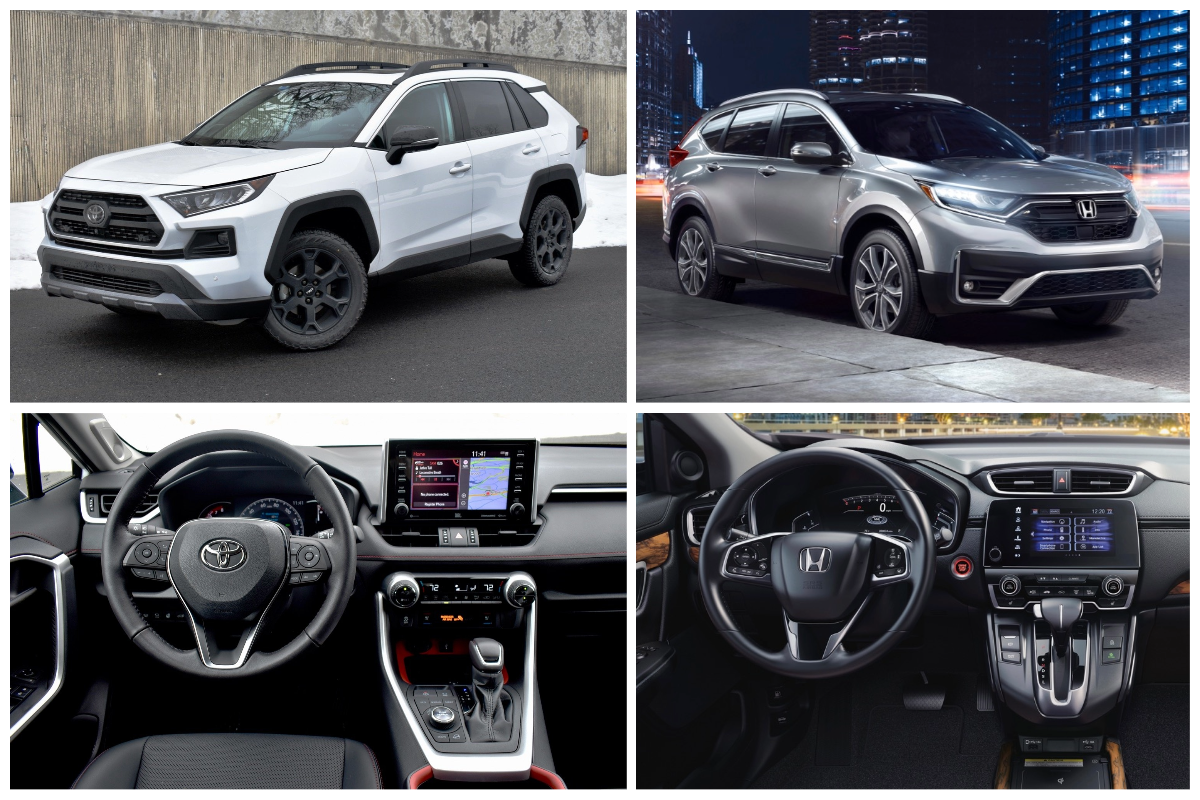
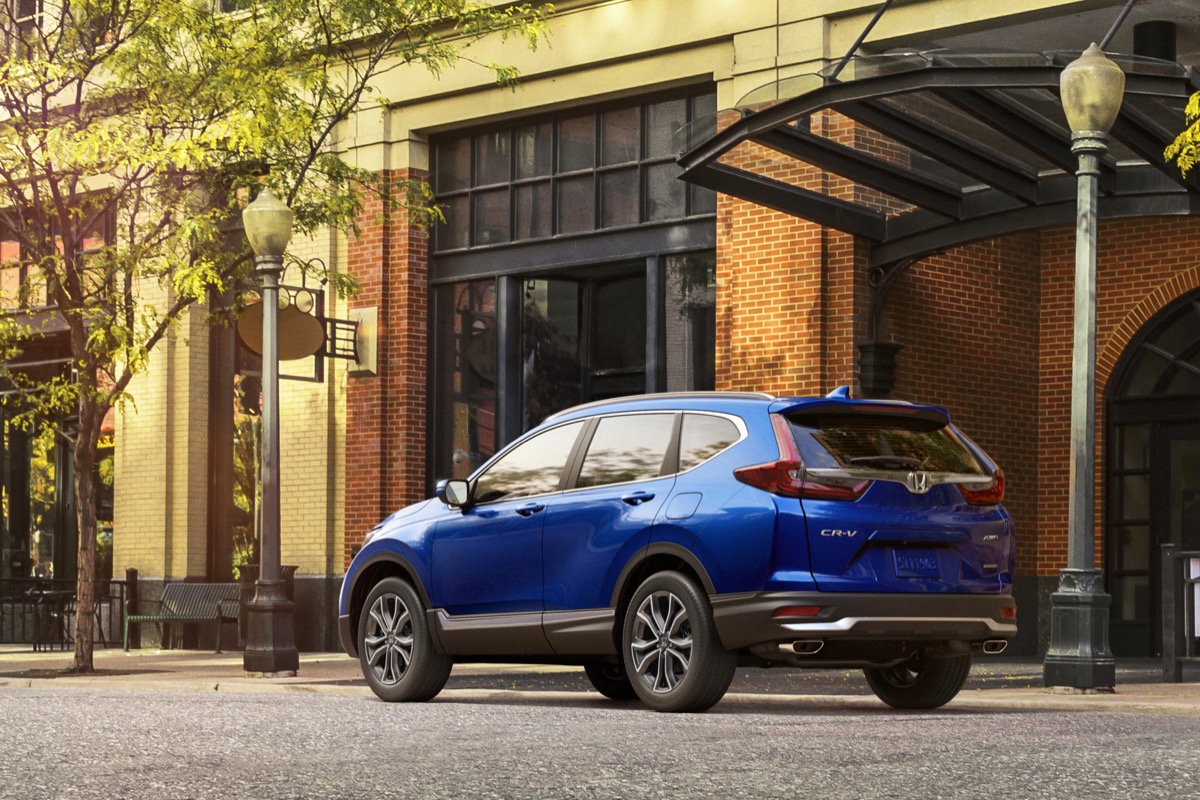
People who grew up with cars in the 1950s probably had a point in the 1990s when they said that all cars looked the same. At the risk of going all “In MY day…” the Honda CR-V truly looks the same as almost every other competitive crossover in the marketplace. The styling of all compact crossovers is nearly identical. What the industry calls the “daylight opening”—the side window opening—is shaped exactly the same, whether you buy a crossover from Honda or you choose one from anywhere else.
There are a few details that separate the CR-V from the herd, like the grille opening, and some chromed plastic features here and there, but if you’re in the market for one of these vehicles, you’re certainly not buying one based on what it looks like from the outside.
Honda offers the CR-V in eight colors, but that’s a bit deceiving. Three of those colors are slightly different shades of gray, one is black, and one is white. There are two flavors of blue (Obsidian Blue Pearl and Aegean Blue Metallic, the one color in the palette that’s truly vibrant) and Radiant Red Metallic. All of the more interesting colors are limited to the higher trims. The LX only has three colors: black, silver, and white (which is a $395 upcharge).
We looked at the inventory at the largest Honda dealer nearby, and out of 37 CR-Vs on the lot, zero were Aegean Blue Metallic, and three were Radiant Red. The dealer had 14 in the same white as your mom’s refrigerator, so it seems finding one in any other color is a challenge.
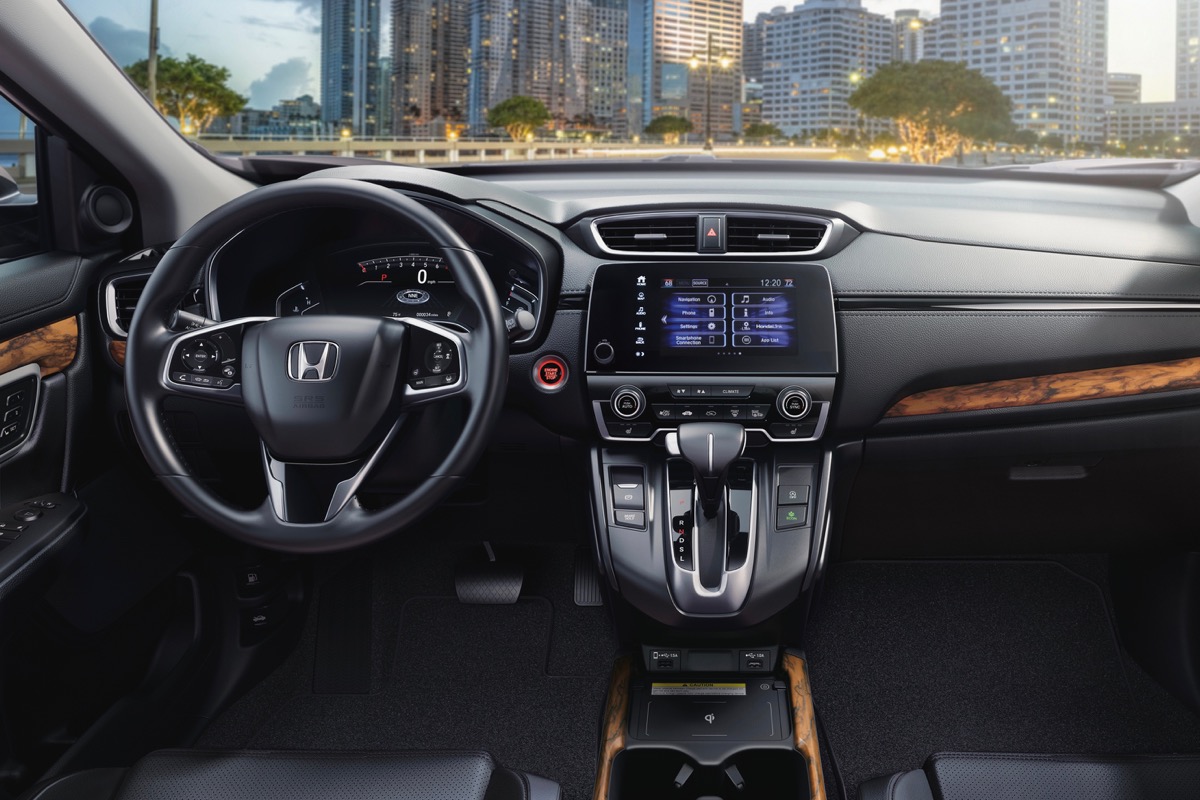
The inside is offered in black, gray, and ivory cloth or leather depending on the trim level. Climbing the trim ladder unlocks things like wood panels and more chrome for a more upscale appearance. The front seats and rear seats themselves are much more angular than some of the competition, with sharp details on the seat edges and headrests. It’s definitely a more modern look than some of the vehicles it competes with.
Inside and out, vehicles like the Kia Sportage and the Hyundai Tucson have an advantage over the CR-V, especially at the mid-tier trims. Again, these likely aren’t vehicles most people are buying on looks alone, but if it’s a consideration, other crossovers offer more distinctive styling.
Performance
You’re not buying a CR-V for neck-snapping acceleration, or its ability to turn high Gs on the skidpad. What you’re looking for is smooth, steady acceleration when you’re merging onto the highway, and predictable cornering when you’re exiting.
Regardless which one of the nine trims you choose (not including the CR-V Hybrid trims, we’ll discuss that car in another review) you get the same 190-horsepower turbocharged four cylinder engine. Contemporary road tests put its acceleration at about 7.8 seconds to 60 mph, which isn’t going to win any stoplight drags, but it’s only about 0.7 second slower to 60 than a 1987 Chevrolet Camaro IROC-Z. None of the competitive crossover SUVs have any huge advantage over the CR-V in terms of acceleration.
All of the CR-V trims have the same continuously variable transmission (CVT) that holds engine revs at a more or less constant level as the vehicle accumulates speed. If you’re looking for engagement in your driving experience, this isn’t it. Again, the drivetrain is where vehicles like the Kia Sportage and Hyundai Tucson have a leg up. They both offer conventional eight-speed automatic transmissions, with sport modes at the higher trim levels that provide a more entertaining driving experience than the CR-V does. The RAV4 also has a more conventional transmission, as does the VW Taos.
The CR-V comes standard with front-wheel drive (FWD); all-wheel drive (AWD) is an extra-cost option. That's also the case with most of this Honda's competitors, but the Subaru Forester gets AWD as standard equipment.
Like every other vehicle in this class, the CR-V has a unitized body structure. Suspension consists of a MacPherson strut setup in the front, with a multi-link suspension at the rear, which you’re also going to find in almost every other vehicle in this class as well. Handling and ride quality has always been decent in this generation of CR-V, with no real surprises.

Form & function
The form of the CR-V is definitely dictated by its function. The goal has been the same since the CR-V first came into existence: fit five people comfortably and carry their gear. In that respect, the CR-V works out as well as any other vehicle it competes with.
The CR-V boasts 102.9 cubic feet of passenger volume, four cubic feet more than the Toyota RAV4. It’s also got a tiny bit more cargo space behind the second row than the Toyota does. With the rear seats folded, the CR-V 75.8 cubic feet of total cargo volume, which is enough to swallow all the rolling luggage in your house.
Getting to that cargo area is accomplished in one of three ways, depending on the trim. From the LX to the EX, you’re on your own to raise it and lower the tailgate yourself, which honestly isn’t a bad thing. The EX-L upgrades you to a power tailgate, which operates via a button on the remote, or by pushing the button on the tailgate itself. The Touring has a hands-free version of the power tailgate, where you wave your foot under the bumper to open it, as long as you have the key fob in your pocket. This is a nice feature when you’re carrying heavy loads—as long as it works. In the past, we've sometimes found ourselves doing a modified chicken dance to hit the right spot.
If you intend to carry something on the roof, the only CR-V trim that has roof rails as a standard feature is the top-of-the-line $35,500 Touring trim. Over at Subaru, you get roof rails with tie-downs on every trim except for the base model.

Technology
The base CR-V LX has a miniscule 5-inch color screen with Bluetooth connectivity, but that’s pretty much it. However, every other CR-V has a 7-inch high-definition touchscreen infotainment system with Apple CarPlay and Android Auto integration and SMS text messaging functions.
The Special Edition and EX trims have a 180-watt audio system with six speakers. The EX-L steps up slightly with two additional speakers. The Honda CR-V Touring has a 300-watt system, adding a subwoofer to the EX-L’s setup. From the EX on up, the audio system features Sirius XM and an HD radio. The Touring trim is the only one that offers a satellite navigation system with voice recognition.
With the exception of the base LX, there are charging ports all over the place in the CR-V, including 1-amp and 1.5-amp USB ports in the front console that integrate with the audio system, a 12-volt outlet in the center console, and a pair of 2.5-amp USB ports in the second row. The Touring trim adds a wireless phone charger up front.

Safety
We mentioned earlier that there really was only one area where the Honda CR-V truly excelled. That area is safety.
Keep in mind that the compact crossover segment is the most hotly contested vehicle segment in America right now. If your entry into this segment does not include a five-star National Highway Traffic Safety Administration (NHTSA) overall crash test rating and Insurance Institute for Highway Safety (IIHS )Top Safety Pick award, you didn't understand the assignment.
The 2021 Honda CR-V earned both safety awards. However, it didn't get the highest IIHS Top Safety Pick+ rating because of lower scores in the headlight evaluation (which vary slightly by trim level) and the updated side crash test. It got the best rating of “Good” in the original side crash test, though. The CR-V also received a middling “Acceptable” rating for the ease of use of its LATCH child safety seat anchoring system.
But what really puts Honda ahead of many of its rivals is how it packages its advanced safety features. It puts them all in a suite of technology called the Honda Sensing system, and it makes every single one of those features standard, no matter what trim level you purchase.
It is immensely frustrating to see manufacturers offer advanced safety features only on the top trim levels, with price tags that put them out of reach of the young families and single parents that could most benefit from having them. Honda’s approach is to rely upon economies of scale to provide almost all of the technology—even in the base trim.
Standard safety features include a multi-angle rearview camera, forward collision warning, lane departure warning, automatic emergency braking, road departure mitigation, lane keeping assist, adaptive cruise control, and auto high-beam headlamps. The only feature not on the lowest CR-V LX trim is the blind spot monitoring system with rear cross-traffic alert, which becomes standard on the EX and remains that way up the trim ladder.

Cost-effectiveness
On paper, the CR-V provides decent EPA fuel economy rankings. Honda's website touts its 28 mpg city and 34 mpg highway ratings high on the CR-V landing page. But keep in mind, that’s only the FWD trim. AWD models are rated at 27 mpg city and 32 mpg highway, which puts it exactly neck-and-neck with the RAV4. The Subaru Forester achieves 1 mpg less in city testing, but 1 mpg better on the highway, so the combined rating ends up being the same.
MSRP is aligned with every other vehicle in the class. At the low end, you start at $25,750 for the base model FWD CR-V LX and pricing goes up to $35,500 for the top Touring trim level. AWD is a $1,500 option on all trim levels except the Touring, where it's standard. Again, it's worth noting that the Forester gets standard AWD on every trim level.
The CR-V's impressive array of standard safety equipment is also worth considering, though. If safety is your number one concern, and you can get away with FWD, you can see where the Honda CR-V has performed well against its rivals.

What owners say
"Overall, owners of the 2021 Honda CR-V are very pleased with their purchase. They particularly appreciate the outstanding safety features, spacious and comfortable interior, and the excellent fuel economy. Many find it reliable and highly rated, reflecting their long-term satisfaction with Honda vehicles. On the downside, a few drivers mentioned concerns about the lack of power from the engine during highway merging and the absence of certain features like better sound insulation and a larger infotainment screen."
The Honda CR-V is my favorite vehicle. Only thing missing was a hitch.
November 2, 2025Yes. I love that car. It has good engine capacity and also low fuel consumption.
July 20, 2025Awesome great model and engine. 2021 honda crv. Great safety features come with honda link
March 30, 2025What owners say
The Honda CR-V is my favorite vehicle. Only thing missing was a hitch.
November 2, 2025Yes. I love that car. It has good engine capacity and also low fuel consumption.
July 20, 2025Awesome great model and engine. 2021 honda crv. Great safety features come with honda link
March 30, 20252021 Honda CRV Touring (My Wifes Vehicle). Consistently get 32 MPG Around Town. Drives Good And No Rattles In The Vehicle. It Has All The Bells And Whistles But Would Be Nice If Honda Offered Cooling For Seats. Would Also Be Nice If Infotainment Screen Was Larger. Overall Impression After 1 Week Of Ownership Is Very Good.
July 13, 2023This is my fourth CRV! I got one when they first game out, and loved it. Ive had some other car brands over my many years as a driver, but I keep coming back to the Honda CR-V! We keep our cars for a long time (at least 10-13 yrs) I planned on just keeping my 2012 CR-V forever, but decided to give it to my son this year (2024). The 2021 is a wonderful upgrade! I got it pre-owned with 16k on it, which is basically brand new for a Honda. I did a lot of research before getting it since I considered downsizing to a smaller hatchback or maybe a fun car. They all seemed to have various issues that I didnt want to risk dealing with. I decided to accept Im a CR-V girl! My husband is on his third Honda Civic (his 2009 is still in the family!). You really cant go wrong with the Hondas warhorses--the CR-V or the Civic.
June 26, 2024This is a very good vehicle. In fact, it runs well, has great power, and is just very well designed for sure. I cant think of a better vehicle. It is quite roomy and has pretty good storage in the back. I can see why it is always rated so highly by Consumer Reports. It is excellent. I like the Honda Sensing Suite of Safety Features, which are standard. Like the electric tailgate and so many other features. Just cant go wrong. It also has a maintenance minder telling you when its time to change the oil. This saves you money. The fuel mileage is very good as well. Packed with features. You just cant go wrong.
July 14, 2023Great ride, strong, every toy imaginable. Our old CR-V is 13 years old, 360,000 km plus, and still going strong, so were great fans of the CR-V. And this one is nearly new, and with all the latest.
July 10, 2022Excellent value with outstanding safety features. The Touring model is also very well appointed.
January 8, 2021Great, dependable , low Maintenance, great mileage,plenty of onside room, cruise control system @ lane departure,radar separation, auto braking make this car THE CHOICE. This is the second touring model I’ve owned due to a accident loss. The only thing I can think of is better sound insulation to deadening road noises.
August 10, 2021Purchased this 21 CRV -Ex two weeks ago. Been very satisfied so far. Its very roomy and comfortable; has nice options, and is getting better gas mileage than I expected. (29 mpg in the city) My only problem has been resetting the TPMS system after a tire was changed. The CRV feels like it is well made; my last Honda was still going strong after 8 years.
June 12, 2022Trims & specs
Base MSRP $28,050 | Seating 5 |
Engine 1.5L 190 hp I4 | Cargo Capacity 39.2 cu ft |
Combined MPG 29 | Drivetrain AWD |
Base MSRP $25,350 | Seating 5 |
Engine 1.5L 190 hp I4 | Cargo Capacity 39.2 cu ft |
Combined MPG 31 | Drivetrain FWD |
Base MSRP $26,550 | Seating 5 |
Engine 1.5L 190 hp I4 | Cargo Capacity 39.2 cu ft |
Combined MPG 31 | Drivetrain FWD |
Base MSRP $35,150 | Seating 5 |
Engine 1.5L 190 hp I4 | Cargo Capacity 37.6 cu ft |
Combined MPG 29 | Drivetrain AWD |
Base MSRP $30,450 | Seating 5 |
Engine 1.5L 190 hp I4 | Cargo Capacity 39.2 cu ft |
Combined MPG 31 | Drivetrain FWD |
Base MSRP N/A | Seating N/A |
Engine N/A | Cargo Capacity N/A |
Combined MPG N/A | Drivetrain N/A |
Base MSRP $26,850 | Seating 5 |
Engine 1.5L 190 hp I4 | Cargo Capacity 39.2 cu ft |
Combined MPG 29 | Drivetrain AWD |
Base MSRP $27,860 | Seating 5 |
Engine 1.5L 190 hp I4 | Cargo Capacity 39.2 cu ft |
Combined MPG 31 | Drivetrain FWD |
Base MSRP $31,950 | Seating 5 |
Engine 1.5L 190 hp I4 | Cargo Capacity 39.2 cu ft |
Combined MPG 29 | Drivetrain AWD |
Base MSRP $29,360 | Seating 5 |
Engine 1.5L 190 hp I4 | Cargo Capacity 39.2 cu ft |
Combined MPG 29 | Drivetrain AWD |
Base MSRP $33,650 | Seating 5 |
Engine 1.5L 190 hp I4 | Cargo Capacity 37.6 cu ft |
Combined MPG 31 | Drivetrain FWD |


Pricing trends
MSRP range
$25,350 - $35,150
Current avg. market price
$23,862
Trending down by 1.3% this month
May 2026 - November 2026