2021 Ford Explorer vs 2021 Hyundai Venue

Overview | |
MSRP$32,925 | MSRP$18,750 |
Listings2269 | Listings169 |
Ratings & Reviews | |
User Reviews | User Reviews |
Expert reviews7.5 out of 10 | Expert reviews7.3 out of 10 |
Pros
Cons
| Pros
Cons
|
2021 Ford Explorer Reviews SummaryThere was a time when everybody in America seemingly drove an Explorer. That may be an exaggeration, but not by much. In its first four years of production, Ford sold over a million examples. In 1998, Ford was selling its second-generation Explorer at a rate of nearly 440,000 per year. Whether your family purchased an Explorer or not, this was the nameplate that invented the midsize SUV segment. Fast forward to the 2021 model year and the Explorer is in its sixth generation. It's now a three-row SUV that clocks in at a maximum of 4,700 pounds, with a price tag north of $50,000 for the Explorer Platinum trim level. Long gone are the days when it was the only game in town. Almost every automaker has a competitor. So how does the Explorer shake out for 2021? | |
2021 Hyundai Venue Reviews SummaryThis is the future of basic transportation. Shoppers are shifting from sedans and hatchbacks to crossovers and SUVs, but the bigger the car, the bigger the price tag. Enter the Hyundai Venue. Roughly the same shape as a typical crossover, but impossibly small, the Venue offers the look and feel of a crossover while maintaining the footprint (and, very nearly, the price) of a hatchback. | |
No video found | |
Popular Features & Specs | |
Engine2.3L 300 hp I4 | Engine1.6L 121 hp I4 |
Drive TrainRWD | Drive TrainFWD |
Seating Capacity7 | Seating Capacity5 |
Horsepower | Horsepower121 hp @ 6300 rpm |
MPG City21 | MPG City30 |
MPG Highway28 | MPG Highway33 |
Engine | |
Engine Name2.3L 300 hp I4 | Engine Name1.6L 121 hp I4 |
Torque | Torque113 lb-ft @ 4500 rpm |
Horsepower | Horsepower121 hp @ 6300 rpm |
DrivetrainRWD | DrivetrainFWD |
Fuel Economy | |
MPG City21 | MPG City30 |
MPG Highway28 | MPG Highway33 |
Interior | |
Seating Capacity7 | Seating Capacity5 |
Safety | |
Front Crash Overall5 | Front Crash Overall4 |
Side Crash Overall5 | Side Crash Overall5 |
Dimensions & Capacity | |
Cargo Space18.2 cu ft | Cargo Space18.7 cu ft |
Curb Weight4345 lbs | Curb Weight2612 lbs |
Height69.9 in | Height61.6 in |
Length198.8 in | Length159.0 in |
Width89.3 in | Width69.7 in |
Wheelbase119.1 in | Wheelbase99.2 in |
Maximum Payload1425 lbs | Maximum Payload1158 lbs |
Number of doors4 | Number of doors4 |
Maximum Towing Capacity5300 lbs | Maximum Towing Capacity |
Overview | ||
MSRP | $32,925 | $18,750 |
Listings | ||
Ratings & Reviews | ||
User reviews | ||
Expert reviews | 7.5 out of 10Read full review | 7.3 out of 10Read full review |
Pros & cons | Pros
Cons
| Pros
Cons
|
Summary | There was a time when everybody in America seemingly drove an Explorer. That may be an exaggeration, but not by much. In its first four years of production, Ford sold over a million examples. In 1998, Ford was selling its second-generation Explorer at a rate of nearly 440,000 per year. Whether your family purchased an Explorer or not, this was the nameplate that invented the midsize SUV segment. Fast forward to the 2021 model year and the Explorer is in its sixth generation. It's now a three-row SUV that clocks in at a maximum of 4,700 pounds, with a price tag north of $50,000 for the Explorer Platinum trim level. Long gone are the days when it was the only game in town. Almost every automaker has a competitor. So how does the Explorer shake out for 2021? | This is the future of basic transportation. Shoppers are shifting from sedans and hatchbacks to crossovers and SUVs, but the bigger the car, the bigger the price tag. Enter the Hyundai Venue. Roughly the same shape as a typical crossover, but impossibly small, the Venue offers the look and feel of a crossover while maintaining the footprint (and, very nearly, the price) of a hatchback. |
Video | No video found | |
Popular Features & Specs | ||
Engine | 2.3L 300 hp I4 | 1.6L 121 hp I4 |
Drive Train | RWD | FWD |
Seating Capacity | 7 | 5 |
Horsepower | 121 hp @ 6300 rpm | |
MPG City | 21 | 30 |
MPG Highway | 28 | 33 |
Engine | ||
Engine Name | 2.3L 300 hp I4 | 1.6L 121 hp I4 |
Torque | 113 lb-ft @ 4500 rpm | |
Horsepower | 121 hp @ 6300 rpm | |
Drivetrain | RWD | FWD |
Fuel Economy | ||
MPG City | 21 | 30 |
MPG Highway | 28 | 33 |
Interior | ||
Seating Capacity | 7 | 5 |
Safety | ||
Front Crash Overall | 5 | 4 |
Side Crash Overall | 5 | 5 |
Dimensions & Capacity | ||
Cargo Space | 18.2 cu ft | 18.7 cu ft |
Curb Weight | 4345 lbs | 2612 lbs |
Height | 69.9 in | 61.6 in |
Length | 198.8 in | 159.0 in |
Width | 89.3 in | 69.7 in |
Wheelbase | 119.1 in | 99.2 in |
Maximum Payload | 1425 lbs | 1158 lbs |
Number of doors | 4 | 4 |
Maximum Towing Capacity | 5300 lbs | |
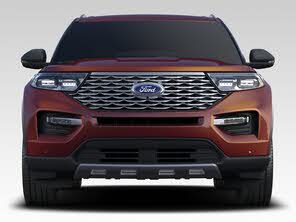
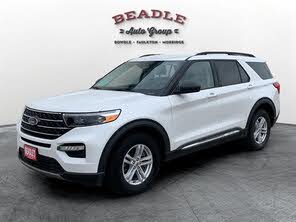
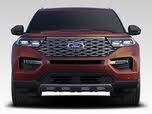
The 2021 Ford Explorer presented a classic yet modern SUV aesthetic, reminiscent of Ford's historical approach to vehicle design. It shared a familial resemblance with other Ford SUVs, characterized by sporty, raked belt lines and distinctive visages. The Explorer offered a variety of trim levels, each with unique grille designs ranging from black to full chrome, and prices that escalated from $32,925 to $52,730. Inside, the Explorer provided three rows of seating as standard, with the base model featuring cloth upholstery. The dashboard was clean and functional, dominated by an 8-inch LCD touchscreen and a center console with a rotary gearshift, enhancing storage space. The XLT trim was particularly popular, offering better equipment and finishes, while higher trims like the Limited and ST provided leather upholstery and more luxurious features.
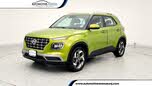
The 2021 Hyundai Venue, on the other hand, was a stylish little crossover that seemed timeless in its design. Its upright stance, horizontal roofline, and steep tailgate gave it a unique presence that belied its small size. The Venue's grille was appropriately sized, drawing attention without overwhelming the design. The exterior updates from the 2020 model included new alloy wheels for the SE and SEL trims. The top-line Denim trim stood out with its white roof and unique paint job, while the SEL trim offered great value with standard features that were previously optional. Inside, the Venue was economical yet modern, with plastic materials but plenty of light due to its design. The cabin felt spacious, and the heated seats in the SEL trim added comfort despite the Venue's budget-friendly build.


The 2021 Ford Explorer, at its lightest, weighed 4,345 pounds and was powered by a base 2.3-liter EcoBoost turbocharged four-cylinder engine, delivering 300 horsepower and 310 pound-feet of torque. This engine outperformed the Kia Telluride's V6, despite the Explorer's heavier weight. All trims featured a 10-speed automatic transmission. The Limited Hybrid trim offered a V6 hybrid drivetrain with 310 hp and 331 lb-ft of torque, while higher trims boasted a 3.0-liter EcoBoost twin-turbo V6, producing 365 hp and 380 lb-ft of torque. The sport-oriented ST trim delivered 400 hp and 415 lb-ft of torque, providing the most engaging driving experience. The Explorer excelled in towing, with capacities ranging from 5,000 to 5,600 pounds, depending on the configuration.
In contrast, the 2021 Hyundai Venue was equipped with a 1.6-liter four-cylinder engine, producing 121 horsepower and 113 pound-feet of torque. This engine was designed for economy rather than performance, and no other powertrain options were available. The Venue's front-wheel-drive setup and continuously variable automatic transmission (CVT) managed the power adequately. Despite its modest power, the Venue's lightweight design, at 2,612 pounds, allowed it to feel lively in lower-speed areas. However, it lacked the horsepower needed for more thrilling highway driving.
The 2021 Ford Explorer offered seating for seven in the base model, with captain's chairs in higher trims reducing capacity to six. It provided 39 inches of legroom for second-row passengers, surpassing some competitors but falling short of others like the Kia Telluride. With the third row in use, the Explorer offered 21 cubic feet of cargo space, expanding to 81 cubic feet with the rear seats folded, which was competitive with smaller SUVs.
The 2021 Hyundai Venue, given its compact size, provided ample headroom and legroom in the front seats, along with decent storage options. The back seat was tighter, with limited legroom for adults. Cargo space was limited, with 18.7 cubic feet behind the rear seats and 31.9 cubic feet with them folded. This was less than most hatchbacks and its direct competitors, such as the Nissan Kicks and Ford EcoSport, which offered more cargo volume.
The 2021 Ford Explorer came equipped with an 8-inch touchscreen as standard, featuring AM/FM radio, SiriusXM, Apple CarPlay, Android Auto, a 4G WiFi hotspot, and Ford's Sync 3 infotainment system. Higher trims offered a 12-speaker Bang & Olufsen audio system and a 10.1-inch touchscreen. The Explorer provided multiple USB ports and power outlets, with a wireless charging pad available from the Limited trim upwards.
The 2021 Hyundai Venue impressed with its tech offerings, despite its low price. An 8-inch touchscreen was standard, with physical buttons for easy access to media and settings. The interface was user-friendly, with high-resolution graphics and smooth swipe functionality. The infotainment system supported driver profiles, Bluetooth, Apple CarPlay, and Android Auto. The Venue SE was set to receive wireless CarPlay in the future, although the SEL and Denim trims would not.
The 2021 Ford Explorer was rated as a Top Safety Pick+ by the IIHS, with top scores in crash tests and an "Acceptable" rating for adaptive headlights. The Explorer's base trim included the Ford Co-Pilot360 suite, featuring auto high-beam headlights, blind-spot monitoring, rear cross-traffic alert, lane-keeping assist, forward-collision warning, and more. Higher trims offered additional features like adaptive cruise control and evasive steering assist.
The 2021 Hyundai Venue, despite its small size, offered a solid array of safety features. Standard equipment included automatic emergency braking, lane-keeping assist, and driver-attention warning. The SEL and Denim trims added blind-spot monitoring and rear cross-traffic alert. The Venue received four out of five stars in NHTSA's front collision and rollover tests, demonstrating its capability to protect occupants.
CarGurus highlights

According to CarGurus experts, the overall rating for the 2021 Ford Explorer is 7.5 out of 10, while the 2021 Hyundai Venue scores 7.3 out of 10. Based on these ratings, the Ford Explorer is the recommended choice, offering a more versatile and feature-rich experience for consumers seeking a larger SUV with robust capabilities.
Choose the 2021 Ford Explorer if:
- You need a vehicle with strong towing capabilities and multiple powertrain options.
- You prioritize advanced safety features and a high safety rating.
- You desire a spacious interior with three rows of seating and ample cargo space.






Choose the 2021 Hyundai Venue if:
- You are looking for a budget-friendly vehicle with modern tech features.
- You prefer a compact car with a stylish design and good fuel economy.
- You want a vehicle with standard safety features and a user-friendly infotainment system.




CarGurus highlights
According to CarGurus experts, the overall rating for the 2021 Ford Explorer is 7.5 out of 10, while the 2021 Hyundai Venue scores 7.3 out of 10. Based on these ratings, the Ford Explorer is the recommended choice, offering a more versatile and feature-rich experience for consumers seeking a larger SUV with robust capabilities.
Choose the 2021 Ford Explorer if:
Shop Now- You need a vehicle with strong towing capabilities and multiple powertrain options.
- You prioritize advanced safety features and a high safety rating.
- You desire a spacious interior with three rows of seating and ample cargo space.









Choose the 2021 Hyundai Venue if:
Shop Now- You are looking for a budget-friendly vehicle with modern tech features.
- You prefer a compact car with a stylish design and good fuel economy.
- You want a vehicle with standard safety features and a user-friendly infotainment system.










By: CarGurus + AI
At CarGurus, our team of experienced automotive writers remain at the heart of our content operation, conducting hands-on car tests and writing insightful guides that are backed by years of industry experience. To complement this, we are harnessing AI to make our content offering more diverse and more helpful to shoppers than ever. To achieve this, our AI systems are based exclusively on CarGurus content, ratings and data, so that what we produce is both unique to CarGurus, and uniquely helpful to car shoppers.