2020 Honda CR-V vs 2021 Honda CR-V Hybrid

Overview | |
MSRP$25,150 | MSRP$30,560 |
Listings1672 | Listings230 |
Ratings & Reviews | |
User Reviews | User Reviews |
Expert reviews7.5 out of 10 | Expert reviews6.3 out of 10 |
Pros
Cons
| Pros
Cons
|
2020 Honda CR-V Reviews SummaryHonda’s compact SUV has been satisfying buyers for more than two decades, with more than five million CR-V’s sold. Such a legacy means the CR-V has long had its wrinkles smoothed out into a comfortable and capable crossover package that’s only downside may be its sheer inoffensiveness. This year’s model gets engine and safety upgrades, which improve fuel economy and help to make Honda’s bestseller an even better value. | |
2021 Honda CR-V Hybrid Reviews SummaryEmotion drives your choice in a new car, truck, or SUV. You say you want reliability, safety, practicality, and efficiency. Then you buy the vehicle you think is the best looking, or comes in the right color combination, or gives you the biggest thrill, or makes a statement about your success. After all, you want your new set of wheels to look good on you, in addition to all that other boring stuff. The 2021 Honda CR-V Hybrid compact SUV is all about the boring stuff. And it doesn't look half bad, either. | |
No video found | No video found |
Popular Features & Specs | |
Engine1.5L 190 hp I4 | Engine2.0L 212 hp I4 Hybrid |
Drive TrainFWD | Drive TrainAWD |
Seating Capacity5 | Seating Capacity5 |
Horsepower190 hp @ 5600 rpm | Horsepower212 hp @ 6200 rpm |
EV Battery Capacity | EV Battery Capacity1.3 kWh |
MPG City28 | MPG City40 |
MPG Highway34 | MPG Highway35 |
Engine | |
Engine Name1.5L 190 hp I4 | Engine Name2.0L 212 hp I4 Hybrid |
Torque179 lb-ft @ 2000 rpm | Torque |
Horsepower190 hp @ 5600 rpm | Horsepower212 hp @ 6200 rpm |
DrivetrainFWD | DrivetrainAWD |
Fuel Economy | |
EV Battery Capacity | EV Battery Capacity1.3 kWh |
MPG City28 | MPG City40 |
MPG Highway34 | MPG Highway35 |
Interior | |
Seating Capacity5 | Seating Capacity5 |
Key Features | |
Sunroof/Moonroof | Sunroof/MoonroofStandard |
Safety | |
Front Crash Overall5 | Front Crash Overall5 |
Side Crash Overall5 | Side Crash Overall5 |
Dimensions & Capacity | |
Cargo Space39.2 cu ft | Cargo Space33.2 cu ft |
Curb Weight3337 lbs | Curb Weight3708 lbs |
Height66.1 in | Height66.5 in |
Length182.1 in | Length182.1 in |
Width73.0 in | Width73.0 in |
Wheelbase104.8 in | Wheelbase104.7 in |
Maximum Payload1358 lbs | Maximum Payload |
Number of doors4 | Number of doors4 |
Maximum Towing Capacity1500 lbs | Maximum Towing Capacity |
Overview | ||
MSRP | $25,150 | $30,560 |
Listings | ||
Ratings & Reviews | ||
User reviews | ||
Expert reviews | 7.5 out of 10Read full review | 6.3 out of 10Read full review |
Pros & cons | Pros
Cons
| Pros
Cons
|
Summary | Honda’s compact SUV has been satisfying buyers for more than two decades, with more than five million CR-V’s sold. Such a legacy means the CR-V has long had its wrinkles smoothed out into a comfortable and capable crossover package that’s only downside may be its sheer inoffensiveness. This year’s model gets engine and safety upgrades, which improve fuel economy and help to make Honda’s bestseller an even better value. | Emotion drives your choice in a new car, truck, or SUV. You say you want reliability, safety, practicality, and efficiency. Then you buy the vehicle you think is the best looking, or comes in the right color combination, or gives you the biggest thrill, or makes a statement about your success. After all, you want your new set of wheels to look good on you, in addition to all that other boring stuff. The 2021 Honda CR-V Hybrid compact SUV is all about the boring stuff. And it doesn't look half bad, either. |
Video | No video found | No video found |
Popular Features & Specs | ||
Engine | 1.5L 190 hp I4 | 2.0L 212 hp I4 Hybrid |
Drive Train | FWD | AWD |
Seating Capacity | 5 | 5 |
Horsepower | 190 hp @ 5600 rpm | 212 hp @ 6200 rpm |
EV Battery Capacity | 1.3 kWh | |
MPG City | 28 | 40 |
MPG Highway | 34 | 35 |
Engine | ||
Engine Name | 1.5L 190 hp I4 | 2.0L 212 hp I4 Hybrid |
Torque | 179 lb-ft @ 2000 rpm | |
Horsepower | 190 hp @ 5600 rpm | 212 hp @ 6200 rpm |
Drivetrain | FWD | AWD |
Fuel Economy | ||
EV Battery Capacity | 1.3 kWh | |
MPG City | 28 | 40 |
MPG Highway | 34 | 35 |
Interior | ||
Seating Capacity | 5 | 5 |
Key Features | ||
Sunroof/Moonroof | Standard | |
Safety | ||
Front Crash Overall | 5 | 5 |
Side Crash Overall | 5 | 5 |
Dimensions & Capacity | ||
Cargo Space | 39.2 cu ft | 33.2 cu ft |
Curb Weight | 3337 lbs | 3708 lbs |
Height | 66.1 in | 66.5 in |
Length | 182.1 in | 182.1 in |
Width | 73.0 in | 73.0 in |
Wheelbase | 104.8 in | 104.7 in |
Maximum Payload | 1358 lbs | |
Number of doors | 4 | 4 |
Maximum Towing Capacity | 1500 lbs | |
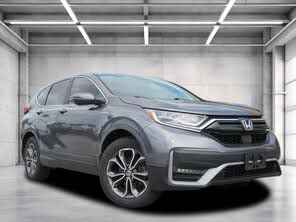
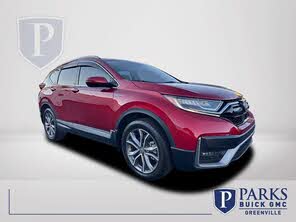
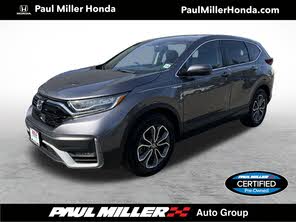
The 2020 Honda CR-V, as part of Honda’s familiar fifth-generation compact crossover, was known for its unmistakable design that had remained relatively unchanged since the 2017 model year. Its exterior lines were soft and curvy, leaning more towards a car-like appearance than that of a conventional SUV. This design choice created a family resemblance to Honda's sedans, evident in both the front and rear fascias. This styling ethos, which leaned more station wagon, defined the paradigm for modern family transportation on the outside.
The interior, however, presented a more mixed impression. While higher trims boasted upscale materials like wood-look trim and leather upholstery, these luxurious elements clashed with the presence of lower-quality plastics, which detracted from an otherwise premium feel of the pricier models. Despite this, the CR-V was competitively priced, with the base LX trim starting at $26,270. The lineup was straightforward, consisting of four trims: LX, EX ($28,720), EX-L ($31,270), and Touring ($34,470), with AWD available for an additional $1,500 across all trims.
Standard on all CR-Vs were 17-inch alloy wheels, with 18-inch wheels for EX trims and optional 19-inch wheels on the Touring model. Fabric seating was standard on the LX and EX trims, while leather upholstered the EX-L and Touring models. A retractable moonroof was a feature of all trims except the LX, though it wasn’t the expansive panoramic sunroof found in competitors like the Toyota RAV4 and Volkswagen Tiguan. Roof rails, low-profile as they were, were only available on the Touring model, maintaining the CR-V’s car-like profile.
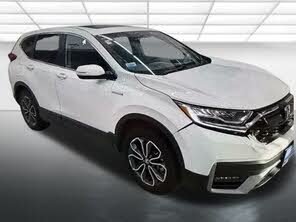
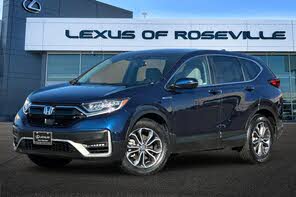
In contrast, the 2021 Honda CR-V Hybrid didn’t undergo significant changes from the previous year. It retained much of the updated exterior design introduced alongside the 2020 Hybrid model with subtle tweaks like "Hybrid" badges and blue Honda logos. The LED fog lights had a more sophisticated look, and the rear bumper differed slightly, ensuring the hybrid model maintained a distinct but familiar appearance.
Inside, the CR-V Hybrid featured unique trim and instrumental panels specific to hybrid functionality, such as battery-charge status and power distribution indicators. The steering wheel-mounted paddles controlled the regenerative braking system, aligning with the hybrid’s distinct driving dynamics. The CR-V Hybrid lineup included EX, EX-L, and Touring trims, all equipped with standard AWD, priced between $30,560 and $36,350—a $1,200 premium over their gasoline counterparts.
Touring models, such as the test Touring model with its Platinum White Pearl paint and ivory leather cabin, exuded an upscale vibe despite some inconsistencies like the faux wood trim, which failed to look authentic. The Touring model's interior was further adorned with high-contrast two-tone leather, adding a touch of sophistication to the overall design.


The 2020 Honda CR-V saw the elimination of its previous base engine in favor of a 1.5-liter turbocharged four-cylinder across the board, delivering 190 horsepower and 179 pound-feet of torque, paired with a continuously variable automatic transmission (CVT). This configuration provided a well-matched driving experience, especially in Sport mode, despite a momentary lag on initial acceleration. Honda’s application of CVT technology earned praise for its responsiveness and ability to mimic a traditional automatic transmission, ensuring a smooth driving experience.
The CR-V's driving dynamics were commendable, closely resembling a small sedan. Its well-balanced chassis, nimble handling, and minimal body roll contributed to a comfortable yet engaging drive. With a low curb weight of 3,337 pounds for the FWD LX model, the CR-V was one of the lighter vehicles in its class, aiding both performance and fuel efficiency. FWD models achieved an EPA rating of 30 mpg combined, while AWD versions managed 29 mpg, placing the CR-V at the top of its class in fuel economy.
Conversely, the 2021 Honda CR-V Hybrid integrated Honda's two-motor hybrid system, pairing a 2.0-liter gasoline engine with an electric assist motor and a generator/starter motor, replacing the conventional transmission with a combined output of 212 horsepower and 232 pound-feet of torque. The hybrid system offered three driving modes—EV Drive, Hybrid Drive, and Engine Drive—automatically selecting the most appropriate one based on driving conditions. Additionally, driver-selectable modes—Econ, Sport, and EV—provided further customization.
The hybrid’s additional weight, totaling 194 pounds due to the battery pack and electric motors, was strategically positioned low in the vehicle, enhancing handling by lowering the center of gravity. This setup, coupled with all-wheel drive and 8.2 inches of ground clearance, ensured the CR-V Hybrid retained its versatility.
Despite some occasional droning under steady acceleration, the CR-V Hybrid delivered a pleasing driving experience with quick off-the-line performance, ample power, smooth ride quality, and predictable handling. However, during testing, the CR-V Hybrid achieved 33.7 mpg, falling short of the EPA’s 38 mpg combined rating and noticeably below the 39.7 mpg attained by the RAV4 Hybrid under similar conditions.
The 2020 Honda CR-V's interior packaging showcased Honda’s reputation for maximizing space efficiency. The cabin felt spacious, offering ample head- and legroom for both the driver and passengers. This spaciousness was partly attributed to the CR-V’s excellent seating position, enabling visibility and comfort. The cargo area was equally impressive, matching the Volkswagen Tiguan’s volume despite the CR-V being three inches shorter in length.
In terms of storage solutions, the CR-V excelled with thoughtful features like a deep center console with a sliding cover for secure storage, inspired by the Honda Odyssey minivan. The rear compartment featured a two-position load floor that could either maximize cargo space or create a flat floor with the rear seats folded, offering a total of 75.8 cubic feet of cargo space. Even the door pockets were generously sized, further enhancing practicality.
Similarly, the 2021 Honda CR-V Hybrid provided an accommodating interior well-suited for carrying both people and cargo. The front seats offered extensive comfort and adjustability, with the driver’s seat featuring 12-way power adjustment and heated functionality. However, the front passenger seat lacked height adjustment, which was notable when compared to the driver's seat comfort level.
Rear seat passengers enjoyed remarkable space, akin to the Accord sedan, with excellent leg support and comfort. The flat floor design facilitated easier accommodation of three passengers. Rear passengers also benefited from air conditioning vents and 2.5-amp quick-charge USB ports.
Cargo capacity in the CR-V Hybrid, though slightly reduced due to the battery pack, still provided substantial utility. It offered 33.2 cubic feet behind the rear seats, down from 37.6 cubic feet in the standard CR-V, and a maximum of 68.7 cubic feet with the seats folded—7.1 cubic feet less than the gasoline CR-V’s total. The cargo area could still fit four full-sized suitcases beneath the cover, maintaining practical utility.
The 2020 Honda CR-V's infotainment system struggled to keep up with competitors in terms of functionality and modernization. The base LX trim featured an outdated 5-inch screen, offering limited capabilities such as Bluetooth connectivity and Pandora compatibility. Higher trims upgraded to a 7-inch screen, which still felt underwhelming compared to the optional 8-inch screen in the Volkswagen Tiguan. The absence of hard buttons for functions, except for the power and volume knob, made navigating the system cumbersome and often required multiple taps.
Although Apple CarPlay and Android Auto were available with the larger screen, they felt like afterthoughts rather than seamless integrations. The navigation system found only in the Touring trim was no match for smartphone navigation. However, Honda successfully integrated multiple USB ports in the higher trims, including two high-powered ports in the backseat, and added a wireless phone charger to the Touring trim.
In comparison, the 2021 Honda CR-V Hybrid’s infotainment system shared similar shortcomings. Despite a sleek appearance with a power/volume knob, the system’s performance was slow, with a seven-inch touchscreen that felt small by current standards. The absence of a tuning knob detracted from the user experience, although steering wheel controls mitigated the inconvenience.
The voice-recognition technology lagged behind in understanding natural speech, making it necessary to rely on wired Apple CarPlay or Android Auto for voice commands. The navigation system displayed cluttered maps, and the HondaLink connected services remained underwhelming. The front USB ports provided lower power outputs compared to the quick-charging rear ports, and the center console’s wireless charging pad appeared to take up valuable space.
Positively, the Touring trim’s nine-speaker premium audio system delivered good sound quality, and the infotainment supported text messaging, SiriusXM satellite radio, and Pandora internet radio, adding some redeeming qualities to an otherwise dated system.
The 2020 Honda CR-V was well-equipped with safety features, notably the “Honda Sensing” suite, which was standard across all trims. This suite included advanced systems like forward-collision warning with automatic emergency braking, pedestrian detection, adaptive cruise control with lane-keeping assist, and road-departure mitigation. Automatic high beams were standard, with blind-spot monitoring and cross-traffic alert available from the EX trim upwards.
The CR-V excelled in safety ratings, earning a five-star overall rating from the NHTSA and a Top Safety Pick from the IIHS, though trims below the Touring only received a Marginal rating for their halogen headlights. Touring trims featured more effective LED headlights, enhancing nighttime driving safety. There was one safety recall for a possible rear subframe failure, affecting only 358 vehicles, including some from the 2019 model year.
In 2021, the CR-V Hybrid continued to prioritize safety with the standard inclusion of Honda Sensing. This suite offered adaptive cruise control with full-stop capability, forward-collision warning with automatic emergency braking, lane-departure warning, lane-keeping assist, and road-departure mitigation. Additionally, the CR-V Hybrid included blind-spot monitoring with rear cross-traffic alert.
These safety systems operated smoothly and consistently, although they lacked some features found in other compact crossovers, such as automatic collision notification, SOS emergency calling, and safe teen driver settings. Nevertheless, the CR-V Hybrid maintained excellent safety ratings, achieving a five-star overall rating from the NHTSA and a Top Safety Pick rating from the IIHS.
CarGurus highlights
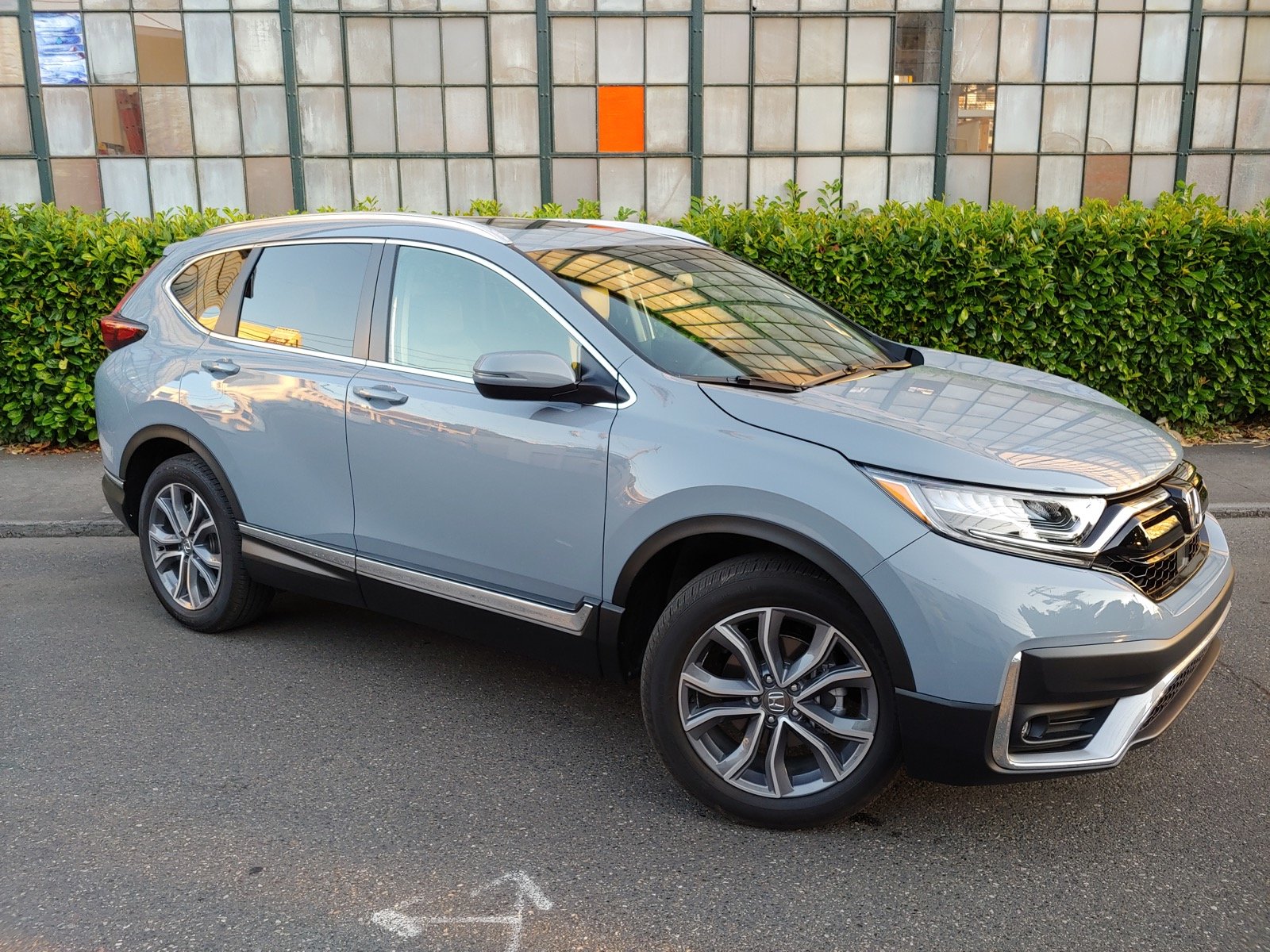
According to CarGurus experts, the overall rating for the 2020 Honda CR-V is 7.5 out of 10, while the 2021 Honda CR-V Hybrid scores 6.3 out of 10. While both models offer unique benefits, the 2020 Honda CR-V’s superior technology, practical storage solutions, and higher safety ratings make it the better overall choice. For those seeking a reliable and versatile compact crossover, the 2020 Honda CR-V remains the recommended option.
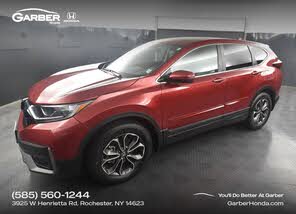
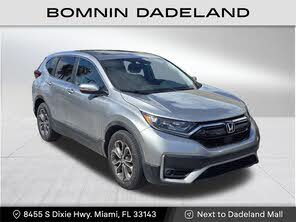
Choose the 2020 Honda CR-V if:
- You prioritize lower initial costs with a straightforward and well-equipped lineup.
- You prefer a vehicle with extensive storage solutions and maximum cargo space.
- You value proven safety features with impressive ratings and a variety of trims to suit your needs.

Choose the 2021 Honda CR-V Hybrid if:
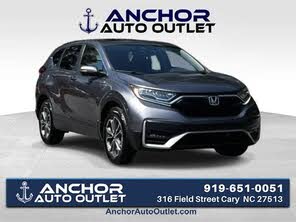
- You seek a more environmentally friendly vehicle with advanced hybrid technology.
- You desire better driving dynamics with quick off-the-line performance and smooth ride quality.
- You want enhanced interior comfort with luxury features like leather upholstery and a quieter cabin.


CarGurus highlights
According to CarGurus experts, the overall rating for the 2020 Honda CR-V is 7.5 out of 10, while the 2021 Honda CR-V Hybrid scores 6.3 out of 10. While both models offer unique benefits, the 2020 Honda CR-V’s superior technology, practical storage solutions, and higher safety ratings make it the better overall choice. For those seeking a reliable and versatile compact crossover, the 2020 Honda CR-V remains the recommended option.
Choose the 2020 Honda CR-V if:
Shop Now- You prioritize lower initial costs with a straightforward and well-equipped lineup.
- You prefer a vehicle with extensive storage solutions and maximum cargo space.
- You value proven safety features with impressive ratings and a variety of trims to suit your needs.







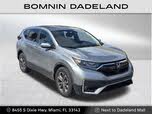
Choose the 2021 Honda CR-V Hybrid if:
Shop Now- You seek a more environmentally friendly vehicle with advanced hybrid technology.
- You desire better driving dynamics with quick off-the-line performance and smooth ride quality.
- You want enhanced interior comfort with luxury features like leather upholstery and a quieter cabin.







By: CarGurus + AI
At CarGurus, our team of experienced automotive writers remain at the heart of our content operation, conducting hands-on car tests and writing insightful guides that are backed by years of industry experience. To complement this, we are harnessing AI to make our content offering more diverse and more helpful to shoppers than ever. To achieve this, our AI systems are based exclusively on CarGurus content, ratings and data, so that what we produce is both unique to CarGurus, and uniquely helpful to car shoppers.