2021 Lincoln Aviator vs 2020 Honda CR-V Hybrid

Overview | |
MSRP$27,850 | MSRP$50,660 |
Listings217 | Listings302 |
Ratings & Reviews | |
User Reviews | User Reviews |
Expert reviews7.3 out of 10 | Expert reviews7.8 out of 10 |
Pros
Cons
| Pros
Cons
|
2020 Honda CR-V Hybrid Reviews SummaryOne of the forerunners to today’s seemingly never-ending onslaught of crossover SUV debuts, the Honda CR-V entered the market when SUV meant body-on-frame truck and CUV meant, well, nothing. The year was 1996 and the only other crossover option in the U.S. was the Toyota RAV4, which went on sale the year prior. Since then, hybrid technology has become commonplace. Yet, Americans have lived without a battery-assisted Honda crossover. That finally changes, with the debut of the 2020 Honda CR-V Hybrid. | |
2021 Lincoln Aviator Reviews SummaryOnly a few years ago, Lincoln was in a confusing space. Confusing because many of its cars overlapped with the nicest trims of vehicles from parent company Ford. It was also confusing because of the alphanumeric vehicle names. But Lincoln has ended both of those trends. First, Lincoln has returned to real names for its vehicles, such as the Corsair and Nautilus (Cadillac, are you listening?!). But what’s in a name? This rebranding would be moot without a compelling product. In this respect, the American luxury brand has delivered, highlighted by the 2021 Lincoln Aviator. This three-row midsize SUV boasts modern technology, potent drivetrain options, and creature comforts that you might sooner find in a high-end German luxury sedan. But this newfound quality comes with a steeper price tag. So is it worth consideration against the likes of the Audi Q7 and RX 350L? Read on to find out. | |
No video found | No video found |
Popular Features & Specs | |
Engine2.0L 212 hp I4 Hybrid | Engine3.0L 400 hp V6 |
Drive TrainAWD | Drive TrainRWD |
Seating Capacity5 | Seating Capacity7 |
Horsepower212 hp @ 6200 rpm | Horsepower |
EV Battery Capacity1.3 kWh | EV Battery Capacity |
MPG City40 | MPG City18 |
MPG Highway35 | MPG Highway26 |
Engine | |
Engine Name2.0L 212 hp I4 Hybrid | Engine Name3.0L 400 hp V6 |
Horsepower212 hp @ 6200 rpm | Horsepower |
DrivetrainAWD | DrivetrainRWD |
Fuel Economy | |
EV Battery Capacity1.3 kWh | EV Battery Capacity |
MPG City40 | MPG City18 |
MPG Highway35 | MPG Highway26 |
Interior | |
Seating Capacity5 | Seating Capacity7 |
Safety | |
Front Crash Overall5 | Front Crash Overall5 |
Side Crash Overall5 | Side Crash Overall5 |
Dimensions & Capacity | |
Cargo Space33.2 cu ft | Cargo Space18.3 cu ft |
Curb Weight3649 lbs | Curb Weight4745 lbs |
Height66.5 in | Height69.6 in |
Length182.1 in | Length199.3 in |
Width73.0 in | Width89.9 in |
Wheelbase104.7 in | Wheelbase119.1 in |
Maximum Payload | Maximum Payload1615 lbs |
Number of doors4 | Number of doors4 |
Overview | ||
MSRP | $27,850 | $50,660 |
Listings | ||
Ratings & Reviews | ||
User reviews | ||
Expert reviews | 7.3 out of 10Read full review | 7.8 out of 10Read full review |
Pros & cons | Pros
Cons
| Pros
Cons
|
Summary | One of the forerunners to today’s seemingly never-ending onslaught of crossover SUV debuts, the Honda CR-V entered the market when SUV meant body-on-frame truck and CUV meant, well, nothing. The year was 1996 and the only other crossover option in the U.S. was the Toyota RAV4, which went on sale the year prior. Since then, hybrid technology has become commonplace. Yet, Americans have lived without a battery-assisted Honda crossover. That finally changes, with the debut of the 2020 Honda CR-V Hybrid. | Only a few years ago, Lincoln was in a confusing space. Confusing because many of its cars overlapped with the nicest trims of vehicles from parent company Ford. It was also confusing because of the alphanumeric vehicle names. But Lincoln has ended both of those trends. First, Lincoln has returned to real names for its vehicles, such as the Corsair and Nautilus (Cadillac, are you listening?!). But what’s in a name? This rebranding would be moot without a compelling product. In this respect, the American luxury brand has delivered, highlighted by the 2021 Lincoln Aviator. This three-row midsize SUV boasts modern technology, potent drivetrain options, and creature comforts that you might sooner find in a high-end German luxury sedan. But this newfound quality comes with a steeper price tag. So is it worth consideration against the likes of the Audi Q7 and RX 350L? Read on to find out. |
Video | No video found | No video found |
Popular Features & Specs | ||
Engine | 2.0L 212 hp I4 Hybrid | 3.0L 400 hp V6 |
Drive Train | AWD | RWD |
Seating Capacity | 5 | 7 |
Horsepower | 212 hp @ 6200 rpm | |
EV Battery Capacity | 1.3 kWh | |
MPG City | 40 | 18 |
MPG Highway | 35 | 26 |
Engine | ||
Engine Name | 2.0L 212 hp I4 Hybrid | 3.0L 400 hp V6 |
Horsepower | 212 hp @ 6200 rpm | |
Drivetrain | AWD | RWD |
Fuel Economy | ||
EV Battery Capacity | 1.3 kWh | |
MPG City | 40 | 18 |
MPG Highway | 35 | 26 |
Interior | ||
Seating Capacity | 5 | 7 |
Safety | ||
Front Crash Overall | 5 | 5 |
Side Crash Overall | 5 | 5 |
Dimensions & Capacity | ||
Cargo Space | 33.2 cu ft | 18.3 cu ft |
Curb Weight | 3649 lbs | 4745 lbs |
Height | 66.5 in | 69.6 in |
Length | 182.1 in | 199.3 in |
Width | 73.0 in | 89.9 in |
Wheelbase | 104.7 in | 119.1 in |
Maximum Payload | 1615 lbs | |
Number of doors | 4 | 4 |
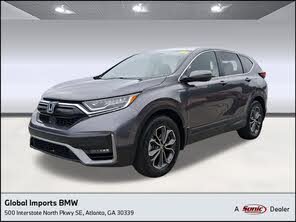
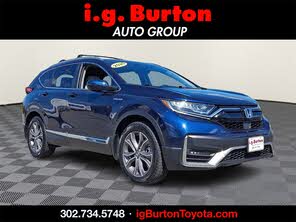
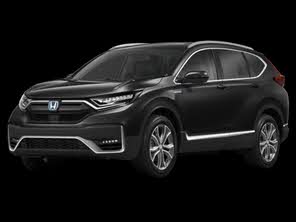
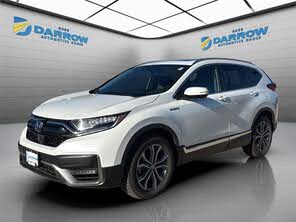
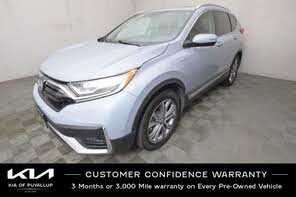
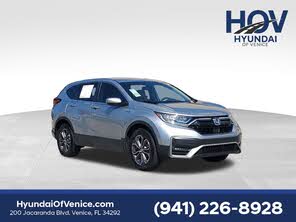
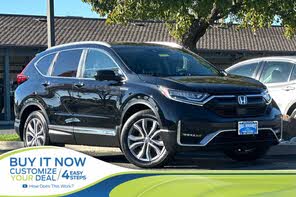
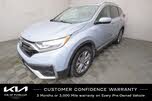
The 2020 Honda CR-V Hybrid, introduced as part of a mid-cycle refresh, closely mirrored its gasoline-powered counterpart in terms of dimensions and design. Measuring 182.1 inches in length, 73.0 inches in width, and 66.5 inches in height, the hybrid model maintained the same visual appeal, including the 19-inch alloy wheels on the Touring trim. Inside, the cabin was nearly identical to the gasoline version, featuring the same dashboard, multi-function center console, and 7-inch infotainment screen. The primary visual differences were subtle, such as blue-outlined Honda emblems and "Hybrid" badges, along with a hidden exhaust in the rear bumper and LED fog lights on EX models and above.
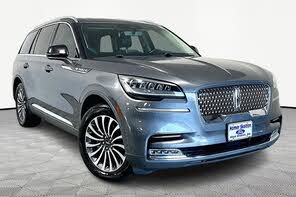
The 2021 Lincoln Aviator, carrying over its design from the 2020 model, showcased a distinct and sharp look with crisp lines and chrome accents. The Aviator's design language, inspired by the larger Navigator, set it apart from its competitors. Inside, the Aviator's cabin exuded comfort and warmth, with soft-touch materials and a 10.1-inch touchscreen dominating the dash. The piano button shifter and soothing chimes added to the luxurious feel. The Aviator's trims ranged from Standard to Black Label Grand Touring, each offering progressively more luxurious features, such as upgraded leather upholstery, panoramic sunroof, and a 28-speaker Revel Ultima sound system.


The 2020 Honda CR-V Hybrid featured a two-motor hybrid system with a 2.0-liter 4-cylinder gasoline engine, producing a combined 212 horsepower and 232 pound-feet of torque. This setup eliminated the need for a conventional transmission, using four fixed-ratio gear sets and a lock-up clutch instead. The hybrid's fuel economy was impressive, with an EPA rating of 40 mpg city, 35 highway, and 38 combined. In real-world testing, the CR-V Hybrid achieved nearly 41 mpg during city driving. The hybrid system's EV mode allowed for short bursts of electric-only driving, though it was limited to about a mile under specific conditions. The CR-V Hybrid's ride comfort and handling were commendable, with good steering feel and on-demand torque making it more enjoyable to drive than the gasoline model.
The 2021 Lincoln Aviator offered a 3.0-liter twin-turbocharged V6 engine in its Standard, Reserve, and Black Label trims, delivering 400 horsepower and 415 pound-feet of torque. The Grand Touring and Grand Touring Black Label trims featured a plug-in hybrid configuration, boosting output to 494 horsepower and 630 pound-feet of torque. The plug-in hybrid could travel up to 21 miles on electric power alone. The Aviator's drive mode selector included options like "Excite" and "Conserve," enhancing its driving experience. While the Aviator excelled on highways and in suburban settings, its large size and long wheelbase made city driving and tight maneuvers more challenging.
The 2020 Honda CR-V Hybrid, while maintaining the same exterior dimensions as its gasoline counterpart, sacrificed some cargo space to accommodate the battery pack. It offered 33.2 cubic feet of cargo space behind the rear seats and up to 68.7 cubic feet with the seats folded flat. Despite this reduction, the CR-V Hybrid still provided more cargo volume than the Ford Escape Hybrid. The CR-V Hybrid also boasted a low cargo floor for easy loading and unloading, along with class-competitive ground clearance. Passenger comfort was a highlight, with more overall space than its direct competitors, including superior front headroom and rear legroom.
The 2021 Lincoln Aviator provided 18.3 cubic feet of cargo space behind the third-row seats, expanding to 41.8 cubic feet with the third row folded, and a total of 77.7 cubic feet with all rear seats down. The power-lift-and-lower third-row seats and a power liftgate added convenience. The second row, especially in the Grand Touring trim, offered captain's chairs, a center console, and a digital control panel for seat, climate, and audio controls. However, the use of power-button door releases raised concerns about functionality in the event of a battery failure.
The 2020 Honda CR-V Hybrid came standard with Bluetooth connectivity, Pandora compatibility, and a single USB connector. Higher trims added a 7-inch touchscreen display, Honda Link, smartphone integration, SiriusXM, HD radio, and additional USB ports. The top-tier Touring trim included navigation, wireless device charging, and a 330-watt premium audio system. However, the infotainment system's lack of haptic feedback and complicated menu navigation were points of frustration.
The 2021 Lincoln Aviator featured a 10.1-inch touchscreen running the Sync 3 infotainment system, which was praised for its intuitive layout and ease of use. The Aviator's screen, in a landscape format, provided a more natural layout compared to the Explorer's tall screen. Standard features included Apple CarPlay and Android Auto, with large icons for easy navigation. The Aviator also offered a fully digital instrument panel and an optional head-up display with crisp graphics.
The 2020 Honda CR-V Hybrid earned top safety ratings, including a Top Safety Pick designation from the IIHS and a 5-Star Safety Rating from the NHTSA. Standard safety features included Honda Sensing, which offered automatic braking, forward-collision warning, lane-departure warning, lane-keep assist, adaptive cruise control, automatic high beams, and a multi-angle rearview camera. Blind-spot monitoring and rear cross-traffic alert were available starting with the EX trim.
The 2021 Lincoln Aviator came equipped with the Lincoln Co-Pilot 360 package, which included automatic emergency braking, lane departure warning, automatic high beams, blind-spot monitoring, and front-and-rear parking sensors. The Co-Pilot 360 Plus package, available on higher trims, added reverse automatic braking, self-parking functionality, and adaptive cruise control. The Aviator received top safety ratings from both the NHTSA and IIHS, earning a Top Safety Pick accolade.
CarGurus highlights
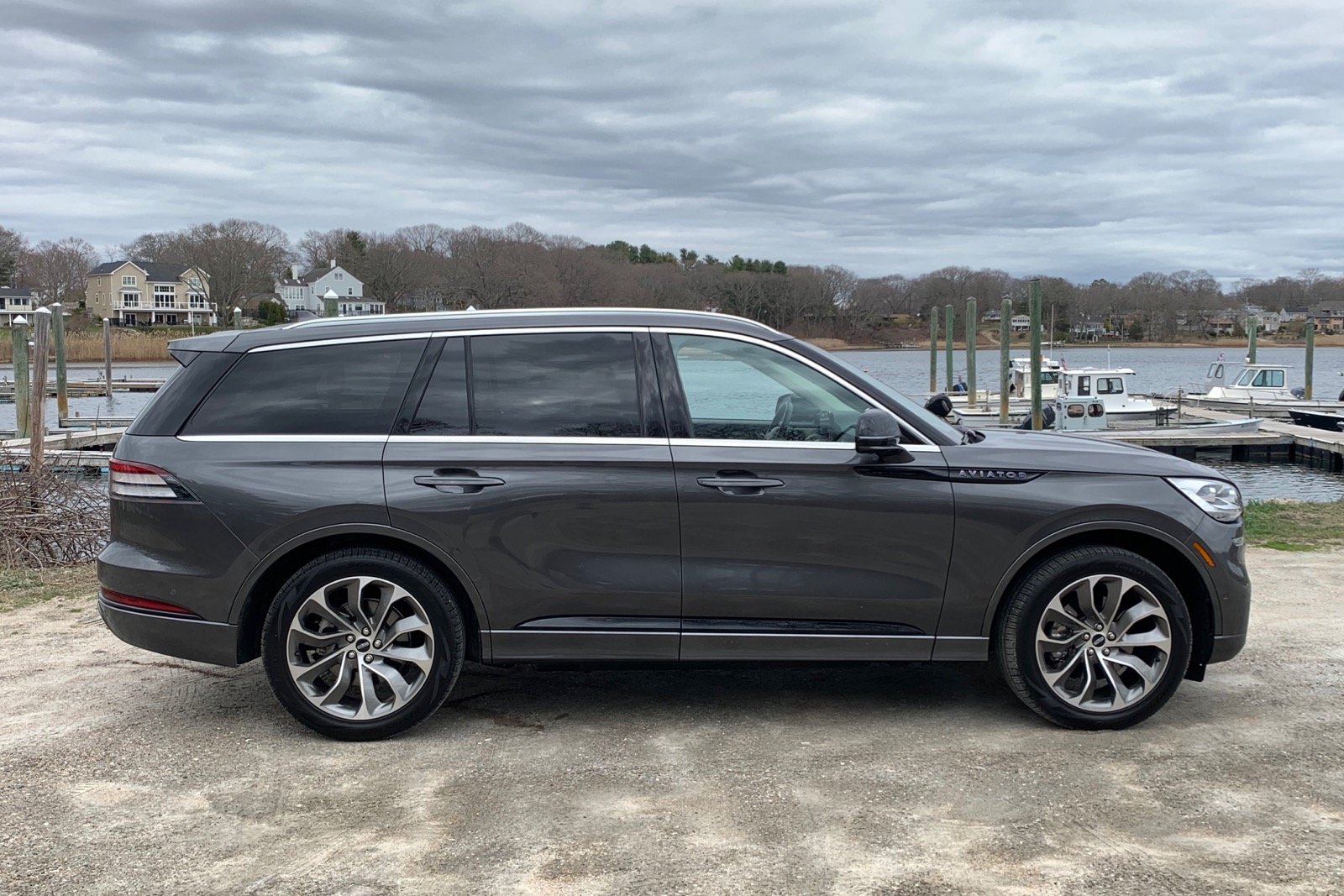
According to CarGurus experts, the overall rating for the 2020 Honda CR-V Hybrid is 7.3 out of 10, while the 2021 Lincoln Aviator scores 7.8 out of 10. Based on these ratings, the 2021 Lincoln Aviator is the recommended choice, offering a more luxurious experience, advanced technology, and powerful performance.
Choose the 2021 Lincoln Aviator if:
- You seek a luxurious midsize SUV with powerful engine options.
- You want advanced technology features, including a large touchscreen and head-up display.
- You prefer a spacious and comfortable second-row seating experience.






Choose the 2020 Honda CR-V Hybrid if:
- You prioritize fuel efficiency and lower running costs.
- You need a compact SUV with ample passenger space and a low cargo floor.
- You value a suite of standard safety features and top safety ratings.



CarGurus highlights
According to CarGurus experts, the overall rating for the 2020 Honda CR-V Hybrid is 7.3 out of 10, while the 2021 Lincoln Aviator scores 7.8 out of 10. Based on these ratings, the 2021 Lincoln Aviator is the recommended choice, offering a more luxurious experience, advanced technology, and powerful performance.
Choose the 2021 Lincoln Aviator if:
Shop Now- You seek a luxurious midsize SUV with powerful engine options.
- You want advanced technology features, including a large touchscreen and head-up display.
- You prefer a spacious and comfortable second-row seating experience.







Choose the 2020 Honda CR-V Hybrid if:
Shop Now- You prioritize fuel efficiency and lower running costs.
- You need a compact SUV with ample passenger space and a low cargo floor.
- You value a suite of standard safety features and top safety ratings.










By: CarGurus + AI
At CarGurus, our team of experienced automotive writers remain at the heart of our content operation, conducting hands-on car tests and writing insightful guides that are backed by years of industry experience. To complement this, we are harnessing AI to make our content offering more diverse and more helpful to shoppers than ever. To achieve this, our AI systems are based exclusively on CarGurus content, ratings and data, so that what we produce is both unique to CarGurus, and uniquely helpful to car shoppers.