Polestar 2 vs Kia EV6

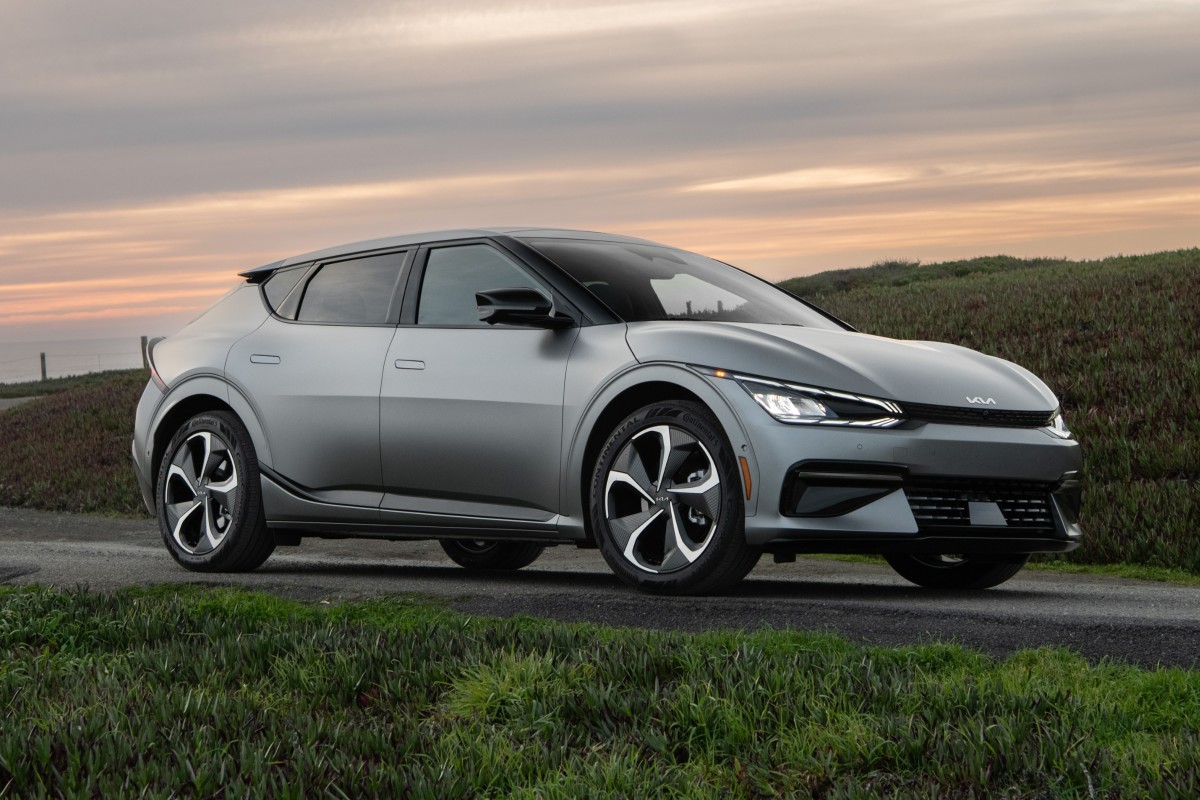
Overview | |
MSRP$49,900 | MSRP$42,900 |
Listings144 | Listings182 |
Ratings & Reviews | |
User Reviews | User Reviews |
Expert reviews6.8 out of 10 | Expert reviews7.8 out of 10 |
Pros
Cons
| Pros
Cons
|
Reviews SummaryPolestar is one of the newest brands in the automotive firmament, but it still has a connection to an established automaker. The Polestar name originally belonged to an independent motorsports and tuning company focused on modifying Volvos. It was eventually acquired by the Swedish automaker, and for a short time became its performance sub-brand, similar to Mercedes-AMG or BMW M. Volvo then decided to reassign the Polestar name to a new brand focused on electric vehicles. Launched for the 2021 model year, the Polestar 2 was the new brand’s first volume model, following the limited-edition Polestar 1 plug-in hybrid. Polestar has other EVs planned, but for now the 2 remains its sole offering. The 2024 Polestar 2 gets some notable upgrades, including a range boost, revised styling, and some powertrain changes. All of that helps keep the 2 fresh in the face of competition like the Tesla Model 3 and Hyundai Ioniq 6. Polestar keeps its lineup simple. Buyers can choose between Long Range Single Motor and Long Range Dual Motor configurations. We sampled the single-motor Polestar 2 for this review. | |
Reviews SummaryThe EV6 has an appealing design, a stylish and practical interior, and one of the most sophisticated EV platforms available at its price point. Additional hallmarks of the 2025 EV6 include commendable power, plenty of driving range, and quick recharging times. For this model year, Kia improves this electric crossover SUV with an exterior facelift, a revised interior, increased battery capacity, a new charging port, modified steering, frame enhancements to ensure safety, and next-generation infotainment technology. Verdict: Can the Kia EV6 survive the discontinuation of the $7,500 federal EV tax credit? It deserves to, because it is one of the most appealing EV models available today. Aside from a few quirks associated with its onboard technology, there isn’t much wrong with the EV6, and plenty that is right with it. | |
No video found | No video found |
Popular Features & Specs | |
Engine299 hp Electric | Engine167 hp Electric |
DrivetrainRWD | DrivetrainRWD |
Seating Capacity5 | Seating Capacity5 |
EV Battery Capacity82 kWh | EV Battery Capacity63 kWh |
MPG City124 | MPG City128 |
MPG Highway106 | MPG Highway103 |
Battery Charge Time (120V) | Battery Charge Time (120V)54 hours |
Battery Charge Time (240V)8 hours | Battery Charge Time (240V)5.7 hours |
Engine | |
Engine Name299 hp Electric | Engine Name167 hp Electric |
Battery Charge Time (120V) | Battery Charge Time (120V)54 hours |
Battery Charge Time (240V)8 hours | Battery Charge Time (240V)5.7 hours |
DrivetrainRWD | DrivetrainRWD |
Fuel Economy | |
EV Battery Capacity82 kWh | EV Battery Capacity63 kWh |
MPG City124 | MPG City128 |
MPG Highway106 | MPG Highway103 |
Interior | |
Seating Capacity5 | Seating Capacity5 |
Key Features | |
Navigation SystemStandard | Navigation SystemStandard |
Safety | |
Front Crash Overall5 | Front Crash Overall5 |
Side Crash Overall5 | Side Crash Overall5 |
Dimensions & Capacity | |
Cargo Space14.4 cu ft | Cargo Space24.4 cu ft |
Curb Weight4396 lbs | Curb Weight4132 lbs |
Height58.2 in | Height60.8 in |
Length181.3 in | Length184.8 in |
Width78.1 in | Width74.0 in |
Wheelbase107.7 in | Wheelbase114.2 in |
Maximum Payload925 lbs | Maximum Payload983 lbs |
Number of doors4 | Number of doors4 |
Maximum Towing Capacity2000 lbs | Maximum Towing Capacity |
Overview | ||
MSRP | $49,900 | $42,900 |
Listings | ||
Ratings & Reviews | ||
User reviews | ||
Expert reviews | 6.8 out of 10Read full review | 7.8 out of 10Read full review |
Pros & cons | Pros
Cons
| Pros
Cons
|
Summary | Polestar is one of the newest brands in the automotive firmament, but it still has a connection to an established automaker. The Polestar name originally belonged to an independent motorsports and tuning company focused on modifying Volvos. It was eventually acquired by the Swedish automaker, and for a short time became its performance sub-brand, similar to Mercedes-AMG or BMW M. Volvo then decided to reassign the Polestar name to a new brand focused on electric vehicles. Launched for the 2021 model year, the Polestar 2 was the new brand’s first volume model, following the limited-edition Polestar 1 plug-in hybrid. Polestar has other EVs planned, but for now the 2 remains its sole offering. The 2024 Polestar 2 gets some notable upgrades, including a range boost, revised styling, and some powertrain changes. All of that helps keep the 2 fresh in the face of competition like the Tesla Model 3 and Hyundai Ioniq 6. Polestar keeps its lineup simple. Buyers can choose between Long Range Single Motor and Long Range Dual Motor configurations. We sampled the single-motor Polestar 2 for this review. | The EV6 has an appealing design, a stylish and practical interior, and one of the most sophisticated EV platforms available at its price point. Additional hallmarks of the 2025 EV6 include commendable power, plenty of driving range, and quick recharging times. For this model year, Kia improves this electric crossover SUV with an exterior facelift, a revised interior, increased battery capacity, a new charging port, modified steering, frame enhancements to ensure safety, and next-generation infotainment technology. Verdict: Can the Kia EV6 survive the discontinuation of the $7,500 federal EV tax credit? It deserves to, because it is one of the most appealing EV models available today. Aside from a few quirks associated with its onboard technology, there isn’t much wrong with the EV6, and plenty that is right with it. |
Video | No video found | No video found |
Popular Features & Specs | ||
Engine | 299 hp Electric | 167 hp Electric |
Drivetrain | RWD | RWD |
Seating Capacity | 5 | 5 |
EV Battery Capacity | 82 kWh | 63 kWh |
MPG City | 124 | 128 |
MPG Highway | 106 | 103 |
Battery Charge Time (120V) | 54 hours | |
Battery Charge Time (240V) | 8 hours | 5.7 hours |
Engine | ||
Engine Name | 299 hp Electric | 167 hp Electric |
Battery Charge Time (120V) | 54 hours | |
Battery Charge Time (240V) | 8 hours | 5.7 hours |
Drivetrain | RWD | RWD |
Fuel Economy | ||
EV Battery Capacity | 82 kWh | 63 kWh |
MPG City | 124 | 128 |
MPG Highway | 106 | 103 |
Interior | ||
Seating Capacity | 5 | 5 |
Key Features | ||
Navigation System | Standard | Standard |
Safety | ||
Front Crash Overall | 5 | 5 |
Side Crash Overall | 5 | 5 |
Dimensions & Capacity | ||
Cargo Space | 14.4 cu ft | 24.4 cu ft |
Curb Weight | 4396 lbs | 4132 lbs |
Height | 58.2 in | 60.8 in |
Length | 181.3 in | 184.8 in |
Width | 78.1 in | 74.0 in |
Wheelbase | 107.7 in | 114.2 in |
Maximum Payload | 925 lbs | 983 lbs |
Number of doors | 4 | 4 |
Maximum Towing Capacity | 2000 lbs | |


By: CarGurus + AI
At CarGurus, our team of experienced automotive writers remain at the heart of our content operation, conducting hands-on car tests and writing insightful guides that are backed by years of industry experience. To complement this, we are harnessing AI to make our content offering more diverse and more helpful to shoppers than ever. To achieve this, our AI systems are based exclusively on CarGurus content, ratings and data, so that what we produce is both unique to CarGurus, and uniquely helpful to car shoppers.

