Jeep Compass vs Genesis GV70
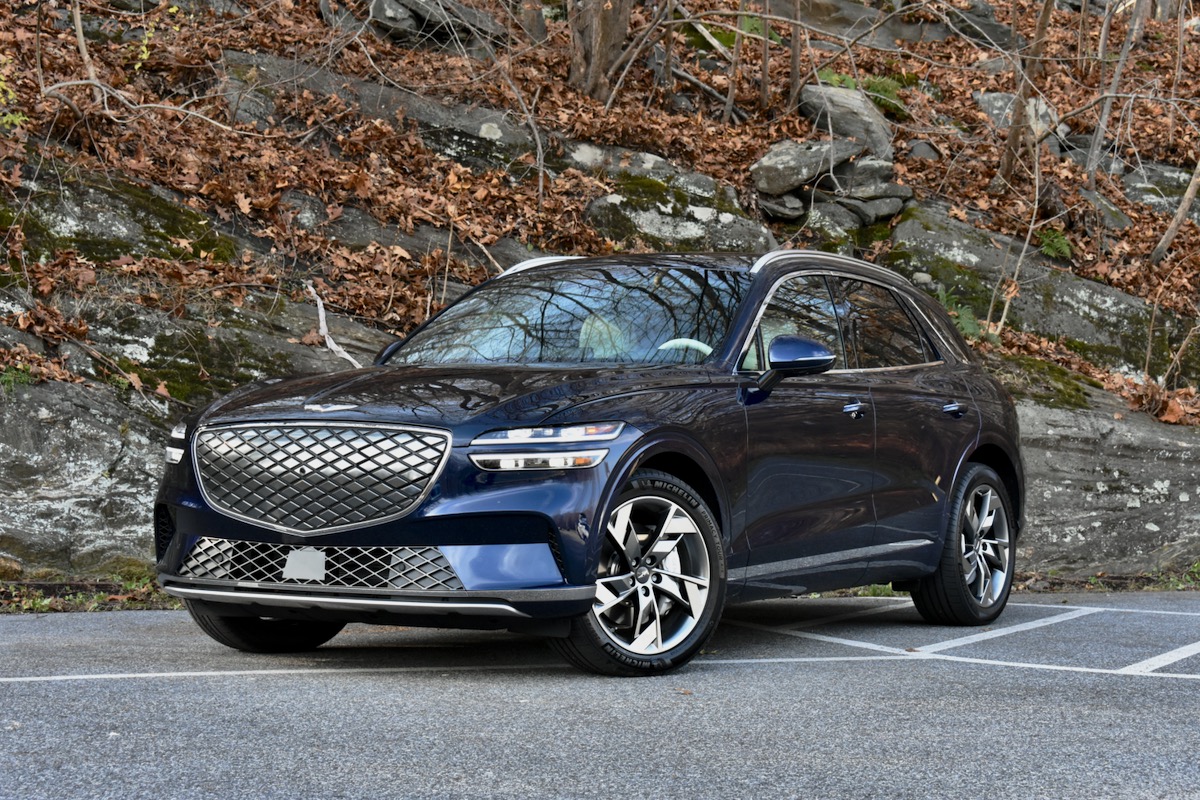
Overview | |
MSRP$25,900 | MSRP$45,150 |
Listings1034 | Listings252 |
Ratings & Reviews | |
User Reviews | User Reviews |
Expert reviews6.8 out of 10 | Expert reviews8.3 out of 10 |
Pros
Cons
| Pros
Cons
|
Reviews SummaryThe 2024 Compass Sport carries over last year's major powertrain upgrade without any increase to the base price: $28,400. That's less than the littlest Jeep, the Renegade, and nearly $10,000 below the similarly-sized Cherokee. It's also cheaper than a Ford Escape and many other compact SUVs but without the bargain-bin interior of older Compass models. While upper trims get too pricey for their britches, the base-model Compass we tested provides real value in an era where new-car prices increase every few months. Verdict: The 2024 Jeep Compass offers good tech and impressive safety features, and it arrives with a sub-$30,000 base MSRP. The Compass still lags behind some of the competition in terms of materials quality and performance. Now in its second year past a 2023 facelift, however, it’s many strides better than older iterations. | |
Reviews SummaryVerdict: The GV70 offers style, impressive tech, and a well-executed electric variant. Launched as a 2022 model and thus still very fresh, the Genesis GV70 is the Korean luxury brand’s answer to the BMW X3, Mercedes-Benz GLC-Class, Lexus NX, Volvo XC60, and other small luxury crossover SUVs. The GV70 checks most of the boxes needed to compete in this segment while offering something the competition doesn’t: an all-electric powertrain option. | |
No video found | No video found |
Popular Features & Specs | |
Engine2.0L 200 hp I4 | Engine2.5L 300 hp I4 |
Drive Train4X4 | Drive TrainAWD |
Seating Capacity5 | Seating Capacity5 |
Horsepower200 hp @ 5000 rpm | Horsepower |
MPG City24 | MPG City22 |
MPG Highway32 | MPG Highway28 |
Engine | |
Engine Name2.0L 200 hp I4 | Engine Name2.5L 300 hp I4 |
Torque221 lb-ft @ 1750 rpm | Torque |
Horsepower200 hp @ 5000 rpm | Horsepower |
Drivetrain4X4 | DrivetrainAWD |
Fuel Economy | |
MPG City24 | MPG City22 |
MPG Highway32 | MPG Highway28 |
Interior | |
Seating Capacity5 | Seating Capacity5 |
Key Features | |
Navigation System | Navigation SystemStandard |
Safety | |
Front Crash Overall4 | Front Crash Overall4 |
Side Crash Overall5 | Side Crash Overall5 |
Dimensions & Capacity | |
Cargo Space27.2 cu ft | Cargo Space28.9 cu ft |
Curb Weight3620 lbs | Curb Weight4167 lbs |
Height64.6 in | Height64.2 in |
Length173.4 in | Length185.6 in |
Width80.0 in | Width75.2 in |
Wheelbase103.8 in | Wheelbase113.2 in |
Maximum Payload1030 lbs | Maximum Payload1334 lbs |
Number of doors4 | Number of doors4 |
Maximum Towing Capacity | Maximum Towing Capacity3500 lbs |
Overview | ||
MSRP | $25,900 | $45,150 |
Listings | ||
Ratings & Reviews | ||
User reviews | ||
Expert reviews | 6.8 out of 10Read full review | 8.3 out of 10Read full review |
Pros & cons | Pros
Cons
| Pros
Cons
|
Summary | The 2024 Compass Sport carries over last year's major powertrain upgrade without any increase to the base price: $28,400. That's less than the littlest Jeep, the Renegade, and nearly $10,000 below the similarly-sized Cherokee. It's also cheaper than a Ford Escape and many other compact SUVs but without the bargain-bin interior of older Compass models. While upper trims get too pricey for their britches, the base-model Compass we tested provides real value in an era where new-car prices increase every few months. Verdict: The 2024 Jeep Compass offers good tech and impressive safety features, and it arrives with a sub-$30,000 base MSRP. The Compass still lags behind some of the competition in terms of materials quality and performance. Now in its second year past a 2023 facelift, however, it’s many strides better than older iterations. | Verdict: The GV70 offers style, impressive tech, and a well-executed electric variant. Launched as a 2022 model and thus still very fresh, the Genesis GV70 is the Korean luxury brand’s answer to the BMW X3, Mercedes-Benz GLC-Class, Lexus NX, Volvo XC60, and other small luxury crossover SUVs. The GV70 checks most of the boxes needed to compete in this segment while offering something the competition doesn’t: an all-electric powertrain option. |
Video | No video found | No video found |
Popular Features & Specs | ||
Engine | 2.0L 200 hp I4 | 2.5L 300 hp I4 |
Drive Train | 4X4 | AWD |
Seating Capacity | 5 | 5 |
Horsepower | 200 hp @ 5000 rpm | |
MPG City | 24 | 22 |
MPG Highway | 32 | 28 |
Engine | ||
Engine Name | 2.0L 200 hp I4 | 2.5L 300 hp I4 |
Torque | 221 lb-ft @ 1750 rpm | |
Horsepower | 200 hp @ 5000 rpm | |
Drivetrain | 4X4 | AWD |
Fuel Economy | ||
MPG City | 24 | 22 |
MPG Highway | 32 | 28 |
Interior | ||
Seating Capacity | 5 | 5 |
Key Features | ||
Navigation System | Standard | |
Safety | ||
Front Crash Overall | 4 | 4 |
Side Crash Overall | 5 | 5 |
Dimensions & Capacity | ||
Cargo Space | 27.2 cu ft | 28.9 cu ft |
Curb Weight | 3620 lbs | 4167 lbs |
Height | 64.6 in | 64.2 in |
Length | 173.4 in | 185.6 in |
Width | 80.0 in | 75.2 in |
Wheelbase | 103.8 in | 113.2 in |
Maximum Payload | 1030 lbs | 1334 lbs |
Number of doors | 4 | 4 |
Maximum Towing Capacity | 3500 lbs | |
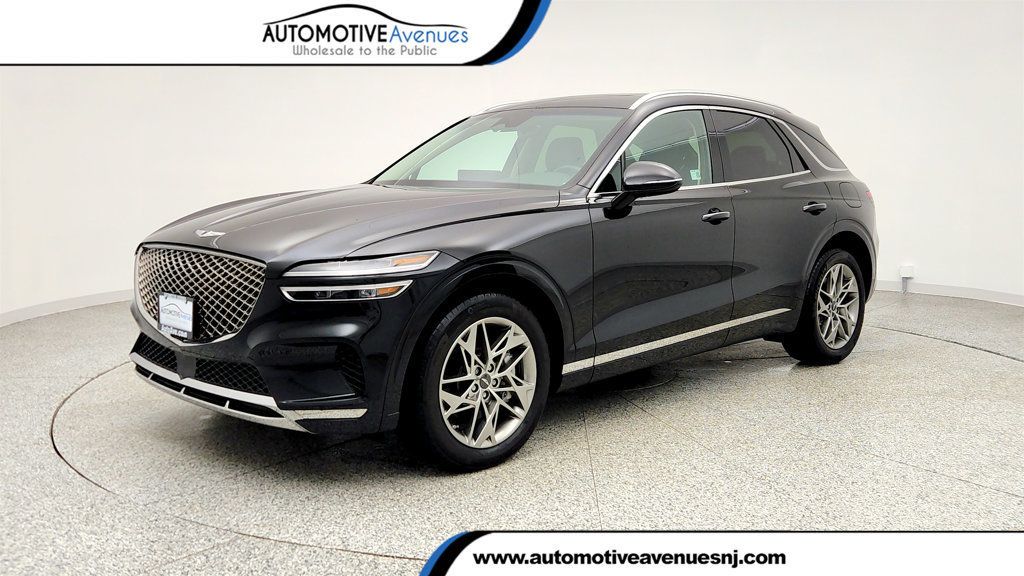
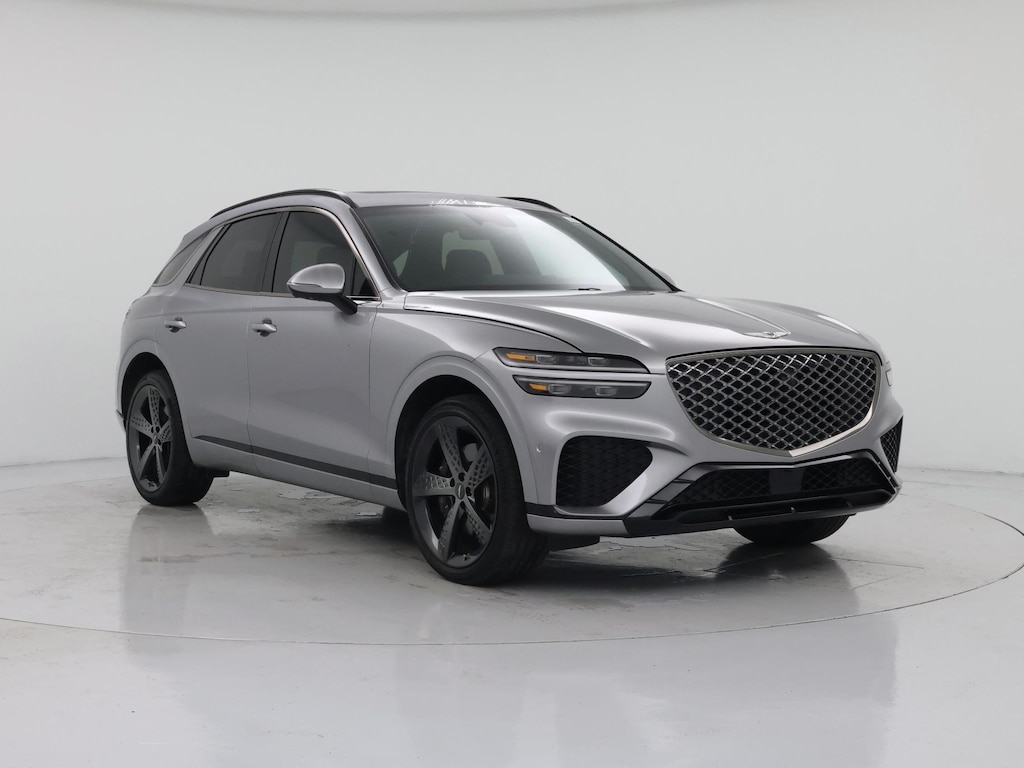
The Genesis GV70 emerged as a standout within the Genesis lineup, as well as among its competitors. Certain Genesis styling staples, such as the distinctive split headlights and large, shield-like grille, were carried over to maintain brand recognition. The GV70, however, distinguished itself with its sleekness, positioned neatly between the larger GV80 and the quirky smaller GV60. Noteworthy design details included a hatchback-like rear window profile, significant round exhaust outlets for the gasoline-powered Sport Prestige trim, and unique 21-inch wheel designs, although 19-inch wheels came standard.
Occupying the sweet spot between SUV size and luxury-car aesthetics, the GV70’s styling elevated it above rivals like the Audi Q5 and BMW X3, which often looked bulkier and less refined. The Porsche Macan struggled to marry its car-like styling cues with its SUV form, while the Mercedes-Benz GLC-Class leaned heavily on its grille’s three-pointed star for prestige. In contrast, the GV70’s design successfully projected both the SUV’s robust character and its luxury brand credentials.
For those leaning toward an electric vehicle (EV), the Electrified GV70 offered a low-profile option. The shiny grille, while eye-catching, mainly housed the charge port, ensuring convenience at charging stations. Unlike many EVs with charge ports on the front fenders or typical fuel filler locations, the GV70’s front placement resembled pulling into a standard parking spot, simplifying the charging process.
Inside, the GV70’s cabin was a visual treat, standing out for its distinctiveness rather than just traditional luxury staples like quilted Nappa leather upholstery and a panoramic sunroof. The climate controls and various buttons and knobs, housed in an elliptical pod, offered a unique aesthetic. The infotainment system featured a rotary controller that seemed straight out of a sci-fi movie. Additionally, the dashboard’s aerodynamic, airplane-wing-like curve added to the striking interior design choices, underscoring Genesis’s commitment to innovation and style.
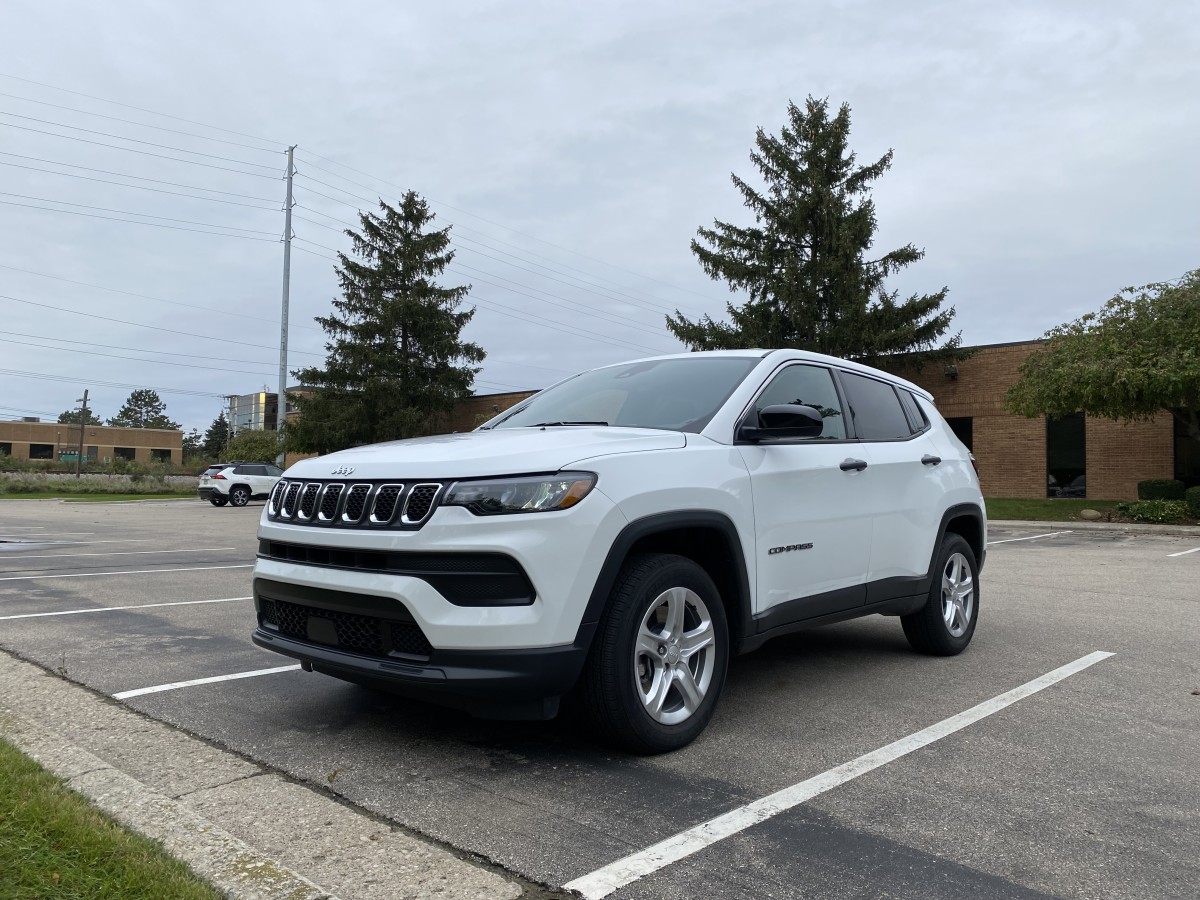
The Jeep Compass, tested in Michigan, began its journey with a minor hiccup as the initial vehicle turned out to be a standard white Compass tailored for fleet use, contrasting the initially intended, fully equipped red Altitude model. This misadventure set the tone for what was about to be an experience illustrating the Compass’s various facets.
In its rental-fleet guise, the Compass Sport was practically invisible. Its design, aside from the iconic seven-slot grille, could easily be mistaken for any other compact SUV from the past twenty years. The body shape and taillights seemed generic, and without the distinctive elements like the red tow hooks and revised bumpers of the Trailhawk model, the vehicle lacked a unique presence. Exterior quirks upheld only by the Trailhawk, combined with an everyday body design, made the Compass a rather inconspicuous model in the Jeep lineup.
The interior, however, told a different story. With a refreshed black and gray color scheme contrasted by caramel leatherette on the dash and doors, the Compass Limited trim exuded sophistication. Even in the base trim, the Compass made a commendable effort with supportive cloth seats featuring blue stitching and textured inserts. Its revamped interior since the 2022 model year showcased large screens and improved fit and finish. Silver plastic accents on the steering wheel and dash added a touch of style, pulling the interior out of the bland zone previous models occupied. Despite these improvements, the exterior's lack of distinctive character remained a sticking point, detracting from the overall appeal.


The Genesis GV70 maintained its powertrain options from the previous year. The standard gasoline model featured a 2.0-liter turbocharged four-cylinder engine pumping out 300 horsepower and 311 pound-feet of torque on premium fuel. There was also a 3.5-liter twin-turbo V6 option delivering a robust 375 hp and 391 lb-ft. Both engines came paired with an eight-speed automatic transmission and standard all-wheel drive (AWD).
The Electrified GV70 also boasted standard AWD, powered by front and rear electric motors producing a combined 429 hp and 516 lb-ft of torque, supported by a 77.4-kilowatt-hour battery pack. A “Boost Mode” could temporarily increase output to 483 hp, enhancing the driving experience.
While the GV70 provided impressive straight-line acceleration with its Boost or Sport+ modes, its chassis tuning lagged behind sportier rivals. It felt heavier and less agile through corners compared to competitors like the Acura RDX, BMW X3, or Porsche Macan. The suspension, which aimed to offer reasonably comfortable rides, tended to jolt over road imperfections rather than glide smoothly.
The performance aspects lagged slightly for the Electrified GV70, yet it didn’t feel significantly more cumbersome than its gasoline counterpart. The electric model, while heavier by 441 pounds in its lightest trim, still managed to deliver a balanced driving experience. Its steering-wheel paddles allowed for adjustments in regenerative braking, providing a range of driving feels from traditional gasoline-like responses to true one-pedal driving. The EPA-rate of 236 miles of range offered sufficient driving flexibility for most scenarios.
The Compass significantly improved its powertrain from previous years, ditching the naturally-aspirated 2.4-liter four-cylinder engine in favor of a more robust turbocharged 2.0-liter Inline four-cylinder engine. This new engine produced a solid 200 horsepower and 221 pound-feet of torque, paired with an eight-speed automatic transmission and standard AWD. This setup enhanced the Compass’s city and highway driving capabilities substantially while reducing engine noise.
The Compass featured multiple driving modes—auto, snow, sand/mud—and a 4WD Lock button to optimize traction. Notably, a rear-axle disconnect feature aimed to save fuel by driving only the front wheels in most situations, though it reacted slowly under hard acceleration, causing occasional wheelspin.
The Trailhawk model added a low-range transfer case, unique among compact SUVs, enhancing its capability on steep inclines and exceedingly slippery surfaces. Paired with all-terrain tires, metal skid plates, and 8.6 inches of ground clearance, it presented a formidable package for off-road enthusiasts, though it came at a $7,000 premium.
Steering and handling remained weak points for the Compass, struggling with accuracy and feedback at higher speeds compared to rivals like the Chevrolet Equinox and Toyota RAV4. However, the ride quality was commendable, offering comfort and good damping over rougher surfaces. The EPA-estimated fuel economy stood at 24 mpg city, 32 mpg highway, and 27 mpg combined—competitive but slightly below the top performers in its segment.
The GV70 offered an interior space comparable to its rivals, albeit with slightly less headroom than the Audi Q5, BMW X3, and Mercedes-Benz GLC-Class. While the difference was minimal, it did reflect the Genesis’ more aerodynamic roofline. Front-seat legroom was slightly more than in the BMW and Mercedes, while second-row legroom closely matched its competitors—marginally more than the X3 but a bit less than the Q5 and GLC.
Cargo capacity with rear seats up stood at 28.9 cubic feet, surpassing the GLC’s 21.9 cubic feet, slightly better than the X3’s 28.7 cubic feet, but slightly less than the Q5’s 29.5 cubic feet. With seats folded, the GV70 offered 56.9 cubic feet—less than its German counterparts.
The Electrified GV70 managed to accommodate its battery pack without significantly impacting interior space. First-row legroom remained unchanged, while second-row legroom decreased by 0.6 inch, and headroom dropped by about an inch in both rows. Cargo capacity difference between gasoline and electric models was less than a cubic foot.
Genesis’ stylish interior design sacrificed some small-item storage space due to its elaborate features like the orb-like infotainment controller and rotary shifter. However, the inclusion of a dedicated phone storage nook and rear-seat climate controls were practical elements that enhanced functionality.
The Compass excelled in utility and ease of use. Its driver-oriented layout included clear analog gauges flanking a large color display that conveyed various information. The traditional PRNDL gear selector, complemented by a row of buttons beneath the touchscreen and physical climate controls, facilitated an intuitive user experience. However, the absence of specific temperature readouts was puzzling.
Visibility and sight lines from the driver’s seat were superb, and headroom was ample, especially without a sunroof. The rear seats offered generous legroom and headroom, with added amenities like rear air vents, USB ports, and a fold-down center armrest—a feature often missing in entry-level luxury SUVs.
The Compass provided a competitive 27.2 cubic feet of cargo space with the rear seat up and 59.8 cubic feet when folded. One noteworthy feature was the manually adjustable front passenger seat, which folded flat to accommodate longer items, underscoring the vehicle’s practical design.
The Genesis GV70’s infotainment leaned heavily on Hyundai’s established tech, focusing on simplicity over complexity. All models came with a standard 14.5-inch touchscreen and wired Apple CarPlay and Android Auto. Higher trim levels featured a 12.3-inch digital instrument cluster with a 3D effect, while lower trims got an 8-inch version. A heads-up display and 16-speaker Lexicon audio system were also available, delivering a high-end audio experience.
The touchscreen’s intuitive layout, large tiles for various functions, and accessible positioning catered equally to drivers and front-seat passengers. Complementing this was a high-quality rotary controller, preferred over those found in BMW’s iDrive and Mercedes’ MBUX systems.
Innovative features included a fingerprint scanner for driver profiles and a digital key function allowing a phone to replace the key fob, facilitating door locking/unlocking, and vehicle starting.
The Jeep Compass’s standard 10.1-inch touchscreen with Uconnect 5 software provided a crisp, responsive interface. Unlike some models with legibility issues, the Compass’s display always maintained clarity, and navigating menus to adjust settings was straightforward. A minor disadvantage was the home screen’s lack of direct app switching for essential functions like climate control and the radio.
Standard tech included wireless Apple CarPlay and Android Auto, SiriusXM, 4G Wi-Fi (subject to subscription), and USB-C ports. An optional wireless charging pad added convenience by securing phones, preventing them from sliding around.
Jeep also offered a 10.3-inch digital instrument panel with full-screen maps for higher trims. The Elite Group package enhanced tech features further, adding navigation, live traffic updates, power lumbar support, a heated steering wheel, power passenger seat, foot-activated power tailgate, Alexa, remote start, and additional second-row USB ports.
Optional premium features like a panoramic moonroof and a nine-speaker Alpine stereo added to the vehicle’s attractiveness, while semi-automated driving technology, Active Driving Assist, bolstered its appeal in higher trims, though it required the Elite Group package.
The gasoline GV70 models earned accolades with the IIHS, achieving their highest Top Safety Pick+ award. The Electrified GV70 garnered the same award for the 2023 model. Official ratings for the 2024 models from NHTSA were incomplete at the time, but gasoline models received four-star frontal and rollover crash-test ratings, similar to the identical 2023 GV70’s five-star overall safety rating.
Standard safety features across the GV70 lineup included lane-keep assist, forward-collision warning, automatic emergency braking, rear cross-traffic alert, driver-attention monitoring, and parking assist sensors. The Highway Driving Assist system combined adaptive cruise control with automated lane centering, enhancing highway driving ease. A more advanced Highway Driving Assist 2 system was also available, adding automated lane-change capability and blind-spot monitoring, though hands-free driving required constant driver engagement.
Genesis’s safety measures extended to destination points, with features like a safe exit assist, which aimed to prevent accidents by alerting occupants of oncoming traffic. Their rear occupant alert system used radar sensitive enough to detect even the breathing of children or pets, further underscoring their comprehensive safety approach.
The 2024 Jeep Compass had yet to receive its ratings from NHTSA by publication time, but the identical 2022 model achieved a four out of five stars overall rating, with specific ratings of four stars for frontal crash tests and five stars for side tests. The Insurance Institute for Highway Safety (IIHS) awarded the 2023 model a Top Safety Pick, endorsing its top performance across all crash tests. A driver's knee airbag came as standard across the range.
Standard safety tech included forward emergency braking with pedestrian and cyclist detection, lane-keep assist, blind-spot monitoring, and a driver attention monitor. Adaptive cruise control was available on higher trims, beginning with the Latitude Lux and Altitude, and became standard on the Limited and above trims. Optional parking sensors and 360-degree cameras further enhanced the safety suite in these higher-level trims. Additionally, rain-sensing wipers were standard on higher trims like the Limited and above.
CarGurus highlights
According to CarGurus experts, the overall rating for the 2024 Genesis GV70 is 8.3 out of 10, while the 2024 Jeep Compass scores 6.8 out of 10. Given these scores, the Genesis GV70 stands out as the superior choice. Offering a more luxurious interior, advanced technology features, and better performance metrics, the GV70 presents a compelling package for those looking for a refined and high-performing SUV. While the Compass shines in areas like off-road capability and functional interior space, it falls short in several important categories compared to the GV70. Thus, for a well-rounded, luxury SUV experience, the 2024 Genesis GV70 is the recommended option.
Choose the 2024 Jeep Compass if:
- Off-Road Capability: The Compass Trailhawk offers robust off-road features, such as a low-range transfer case, all-terrain tires, and excellent ground clearance.
- Functional Interior: Ample legroom, headroom, and practical features like a fold-flat front passenger seat and competitive cargo space make it a practical choice.
- User-Friendly Tech: The Compass includes a large, easy-to-use infotainment system with standard wireless Apple CarPlay and Android Auto, enriching the driving experience.


Choose the 2024 Genesis GV70 if:
- Premium Interior: The GV70 offers a luxurious and distinctive interior with high-quality materials and innovative design touches.
- Advanced Technology: It features a range of advanced technologies, including a large touchscreen, fingerprint scanner, and a high-quality audio system.
- Balanced Performance: The vehicle provides strong powertrain options and a reasonably comfortable ride, ensuring a balanced driving experience.






CarGurus highlights
According to CarGurus experts, the overall rating for the 2024 Genesis GV70 is 8.3 out of 10, while the 2024 Jeep Compass scores 6.8 out of 10. Given these scores, the Genesis GV70 stands out as the superior choice. Offering a more luxurious interior, advanced technology features, and better performance metrics, the GV70 presents a compelling package for those looking for a refined and high-performing SUV. While the Compass shines in areas like off-road capability and functional interior space, it falls short in several important categories compared to the GV70. Thus, for a well-rounded, luxury SUV experience, the 2024 Genesis GV70 is the recommended option.
Choose the 2024 Jeep Compass if:
Shop Now- Off-Road Capability: The Compass Trailhawk offers robust off-road features, such as a low-range transfer case, all-terrain tires, and excellent ground clearance.
- Functional Interior: Ample legroom, headroom, and practical features like a fold-flat front passenger seat and competitive cargo space make it a practical choice.
- User-Friendly Tech: The Compass includes a large, easy-to-use infotainment system with standard wireless Apple CarPlay and Android Auto, enriching the driving experience.


Choose the 2024 Genesis GV70 if:
Shop Now- Premium Interior: The GV70 offers a luxurious and distinctive interior with high-quality materials and innovative design touches.
- Advanced Technology: It features a range of advanced technologies, including a large touchscreen, fingerprint scanner, and a high-quality audio system.
- Balanced Performance: The vehicle provides strong powertrain options and a reasonably comfortable ride, ensuring a balanced driving experience.


By: CarGurus + AI
At CarGurus, our team of experienced automotive writers remain at the heart of our content operation, conducting hands-on car tests and writing insightful guides that are backed by years of industry experience. To complement this, we are harnessing AI to make our content offering more diverse and more helpful to shoppers than ever. To achieve this, our AI systems are based exclusively on CarGurus content, ratings and data, so that what we produce is both unique to CarGurus, and uniquely helpful to car shoppers.

