2021 Toyota 4Runner vs 2022 Lexus NX
Overview | |
MSRP$36,765 | MSRP$38,350 |
Listings196 | Listings76 |
Ratings & Reviews | |
User Reviews | User Reviews |
Expert reviews6.2 out of 10 | Expert reviews7.8 out of 10 |
Pros
Cons
| Pros
Cons
|
2021 Toyota 4Runner Reviews SummaryDespite its design age, poor fuel economy, rough ride, iffy handling, and marginal safety ratings, the current-generation Toyota 4Runner remains a popular choice in a midsize SUV. Why? Its reputation for reliability and resale value, coupled with its undeniable utility, rugged image, and go-anywhere and do-anything capability, are the selling points. And if that's why you want a 2021 Toyota 4Runner, it won't disappoint you as long as you accept its shortcomings. | |
2022 Lexus NX Reviews SummaryWith the redesigned 2022 Lexus NX, the luxury brand is aiming at a young, affluent, diverse, and tech-savvy customer. At the same time, the new 2022 NX is built upon the brand pillars that Lexus says will support all of its future products. They include bold design, advanced technology, electrification, and a dynamic tuning recipe called Lexus Driving Signature. Does the redesigned NX reflect those foundational building blocks? We went to Phoenix, Arizona to find out. | |
No video found | |
Popular Features & Specs | |
Engine4.0L 270 hp V6 | Engine2.5L 203 hp I4 |
Drive Train4X2 | Drive TrainFWD |
Seating Capacity7 | Seating Capacity5 |
Horsepower270 hp @ 5600 rpm | Horsepower |
MPG City16 | MPG City26 |
MPG Highway19 | MPG Highway33 |
Engine | |
Engine Name4.0L 270 hp V6 | Engine Name2.5L 203 hp I4 |
Torque278 lb-ft @ 4400 rpm | Torque |
Horsepower270 hp @ 5600 rpm | Horsepower |
Drivetrain4X2 | DrivetrainFWD |
Fuel Economy | |
MPG City16 | MPG City26 |
MPG Highway19 | MPG Highway33 |
Interior | |
Seating Capacity7 | Seating Capacity5 |
Safety | |
Front Crash Overall4 | Front Crash Overall4 |
Side Crash Overall5 | Side Crash Overall5 |
Dimensions & Capacity | |
Cargo Space47.2 cu ft | Cargo Space22.7 cu ft |
Curb Weight4400 lbs | Curb Weight3660 lbs |
Height71.5 in | Height65.8 in |
Length190.2 in | Length183.5 in |
Width75.8 in | Width73.4 in |
Wheelbase109.8 in | Wheelbase105.9 in |
Maximum Payload1700 lbs | Maximum Payload |
Number of doors4 | Number of doors4 |
Maximum Towing Capacity5000 lbs | Maximum Towing Capacity2000 lbs |
Standard Towing Capacity5000 lbs | Standard Towing Capacity |
Overview | ||
MSRP | $36,765 | $38,350 |
Listings | ||
Ratings & Reviews | ||
User reviews | ||
Expert reviews | 6.2 out of 10Read full review | 7.8 out of 10Read full review |
Pros & cons | Pros
Cons
| Pros
Cons
|
Summary | Despite its design age, poor fuel economy, rough ride, iffy handling, and marginal safety ratings, the current-generation Toyota 4Runner remains a popular choice in a midsize SUV. Why? Its reputation for reliability and resale value, coupled with its undeniable utility, rugged image, and go-anywhere and do-anything capability, are the selling points. And if that's why you want a 2021 Toyota 4Runner, it won't disappoint you as long as you accept its shortcomings. | With the redesigned 2022 Lexus NX, the luxury brand is aiming at a young, affluent, diverse, and tech-savvy customer. At the same time, the new 2022 NX is built upon the brand pillars that Lexus says will support all of its future products. They include bold design, advanced technology, electrification, and a dynamic tuning recipe called Lexus Driving Signature. Does the redesigned NX reflect those foundational building blocks? We went to Phoenix, Arizona to find out. |
Video | No video found | |
Popular Features & Specs | ||
Engine | 4.0L 270 hp V6 | 2.5L 203 hp I4 |
Drive Train | 4X2 | FWD |
Seating Capacity | 7 | 5 |
Horsepower | 270 hp @ 5600 rpm | |
MPG City | 16 | 26 |
MPG Highway | 19 | 33 |
Engine | ||
Engine Name | 4.0L 270 hp V6 | 2.5L 203 hp I4 |
Torque | 278 lb-ft @ 4400 rpm | |
Horsepower | 270 hp @ 5600 rpm | |
Drivetrain | 4X2 | FWD |
Fuel Economy | ||
MPG City | 16 | 26 |
MPG Highway | 19 | 33 |
Interior | ||
Seating Capacity | 7 | 5 |
Safety | ||
Front Crash Overall | 4 | 4 |
Side Crash Overall | 5 | 5 |
Dimensions & Capacity | ||
Cargo Space | 47.2 cu ft | 22.7 cu ft |
Curb Weight | 4400 lbs | 3660 lbs |
Height | 71.5 in | 65.8 in |
Length | 190.2 in | 183.5 in |
Width | 75.8 in | 73.4 in |
Wheelbase | 109.8 in | 105.9 in |
Maximum Payload | 1700 lbs | |
Number of doors | 4 | 4 |
Maximum Towing Capacity | 5000 lbs | 2000 lbs |
Standard Towing Capacity | 5000 lbs | |
The 2021 Toyota 4Runner retained an appearance that blended rugged functionality with an unmistakable sense of durability. Even after over a decade since its last complete redesign, the vehicle managed to retain its distinctive look. Although the 4Runner had undergone periodic updates, its overall design had stayed largely consistent, with some minor changes in infotainment and safety technologies setting apart the newer models from their older counterparts. The SUV's design was less about being attractive and more about showcasing its utility and toughness. It proudly flaunted a two-box body structure, highlighted by flared fenders and trapezoidal wheel arches that embodied balanced proportions and timeless styling.
Toyota offered the 4Runner in several trims: SR5, TRD Off-Road, Limited, and TRD Pro, with each level bringing unique features. Special editions like the Trail, Venture, and Nightshade were introduced to shake things up a bit, but the base price ranged from $36,950 to $50,570. The test model in this summary was the Trail Special Edition, starting at $38,565 for the rear-wheel-drive model, with an additional $1,875 for 4WD. Opting for added features like a premium audio system, cargo cover, and TRD skid plate brought the cost up to $43,729.
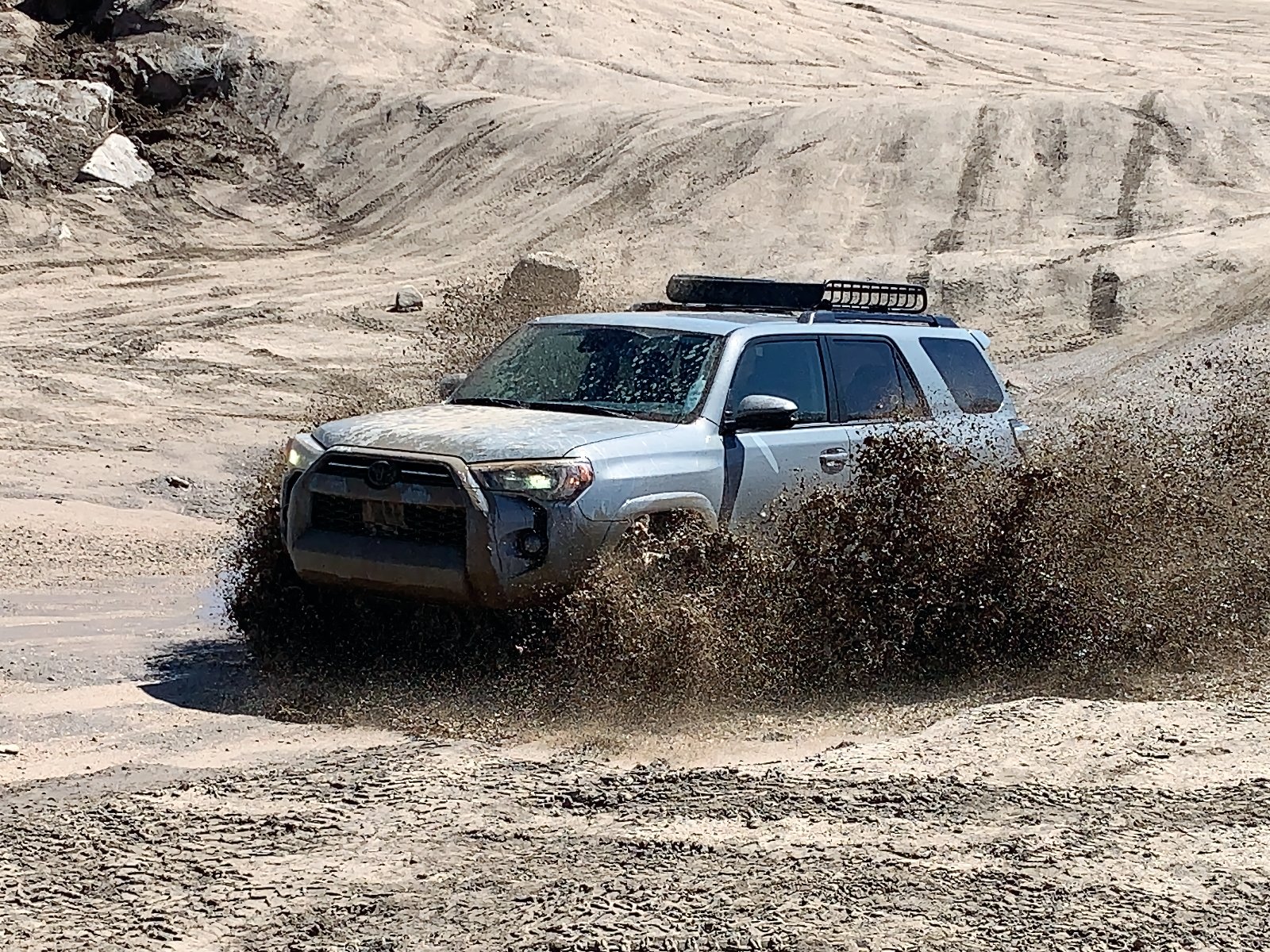
The Trail Special Edition was designed with adventure in mind, sporting dark gray TRD Off-Road wheels and a Yakima RoadWarrior rooftop cargo basket. Inside, it sported black cloth upholstery with tan stitching, all-weather floor mats, and a sliding rear cargo tray, all aimed at enhancing utility and comfort during off-road journeys. The interior featured hard plastic materials that, while not luxurious, were practical and easy to clean, fitting the vehicle's rugged mission. The dashboard was straightforward, equipped with large knobs and buttons, manual air conditioning, and a traditional ignition key, underscoring the SUV's simplicity and durability.
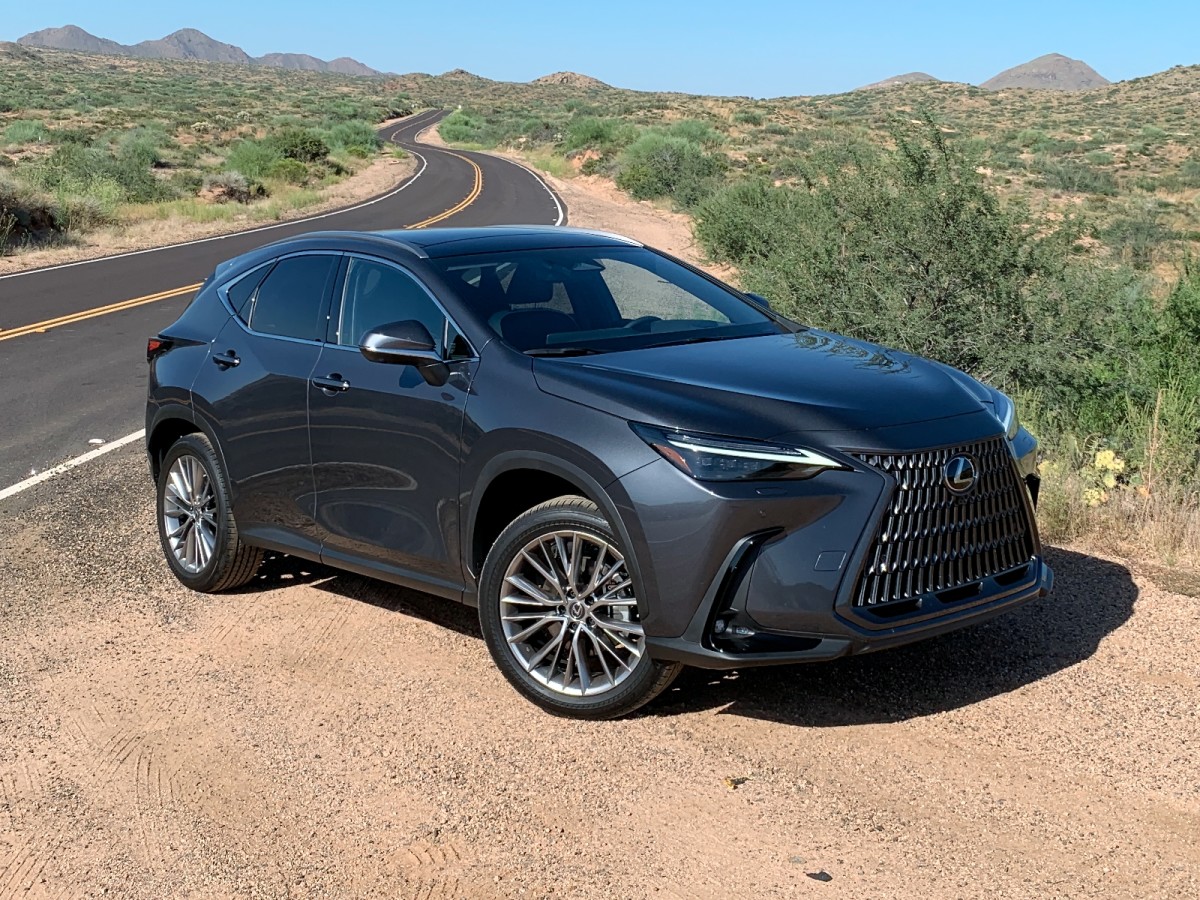
In contrast, the 2022 Lexus NX struck a balance between modern elegance and sleek sophistication. Unveiled with a redesigned appearance in December 2021, it came in four models: NX 250, NX 350, NX 350h, and NX 450h+. Depending on the model, trims such as Premium, F Sport, and Luxury were available, with base prices ranging from $37,950 to $49,000.
Lexus designed the NX with its signature spindle grille and fresh block lettering on the tailgate for brand identification. Longer, wider, and taller than its predecessor, the NX offered more space inside. Most models included synthetic NuLuxe leather, while the Luxury trim offered genuine leather and open-pore wood trim. For the first time, a panoramic sunroof was available.
The F Sport trim provided unique enhancements like a mesh-pattern grille, body-colored fender trim, 20-inch black wheels, and contrasting black mirrors. Inside, sport-bolstered seats, a black headliner, dark trim, and special instrumentation emphasized a sporty vibe. The new dashboard was minimalist, replacing numerous buttons and knobs with a streamlined layout. However, the integration of many functions into the 14-inch touchscreen made accessibility somewhat challenging. Physical controls for essential features like stereo volume remained, while the electronic shifter was easy to acclimate to. Despite some minor concerns, quality remained generally high, though the turn signal felt unexpectedly flimsy.


Taking the 2021 Toyota 4Runner Trail Special Edition to the Hungry Valley State Vehicular Recreational Area highlighted its off-road prowess. Thanks to late winter storms, the terrain was challenging, providing the perfect testing ground for the 4Runner. A-Trac, the off-road traction control system, showcased its utility particularly in tough conditions such as the Frame Twister, where it enabled the SUV to resume movement by braking spinning wheels, allowing the ones in contact with the ground to propel the vehicle forward.
Despite these capabilities, the 4Runner's 4.0-liter V6 engine generating 270 horsepower and 278 lb-ft of torque, coupled with a 5-speed automatic transmission, felt sluggish and clumsy on regular roads. While excellent in off-road scenarios, the SUV's weight and age showed in daily driving, with less nimble handling and frequent fuel stops. EPA estimated a combined driving fuel economy of 17 mpg, corroborated by an observed 16.8 mpg during various driving conditions, including off-roading. This meant frequent visits to fuel stations, despite its 23-gallon tank allowing around 385 miles per fill.
The 2022 Lexus NX, emphasizing electrification and a new Lexus Driving Signature, delivered a different driving experience. The NX 350h hybrid achieved a combined 239 horsepower with an estimated 39 mpg, while the NX 450h+ PHEV with a 302-hp output provided 36 miles of electric range before reverting to hybrid mode.
The NX 350 F Sport featured a turbocharged 2.4-liter four-cylinder engine generating 275 horsepower and 317 lb-ft of torque, facilitated by an eight-speed automatic transmission and AWD. Sporting both Normal, Sport, Eco driving modes and additional Sport S, Sport+, and Custom modes in the F Sport, the NX felt agile and composed. Lexus's claim of 6.6 seconds to 60 mph felt credible in both F Sport and Luxury trims, though the F Sport, equipped with adaptive suspension and 20-inch tires, provided better handling on winding roads. However, it didn't mask noise from the road and wind as well as expected.
In contrast, the base NX 250’s 2.5-liter engine with a 203-hp output appeared less lively. Its CVT and option for AWD made it practical, though less exhilarating. Lexus estimated an average of 25 mpg in combined driving for the NX 350, consistent with test observations of around 25.5 mpg in the Luxury trim and 22.2 mpg in the F Sport trim.
The 2021 Toyota 4Runner, while providing excellent off-road capabilities, had practical concerns, particularly for shorter individuals finding it challenging to climb aboard due to its height. Inside, however, it offered comfort with supportive seats and sufficient legroom, complemented by good visibility, air conditioning vents, and USB ports in the back. The sunroof, combined with power windows and a retractable rear window, gave an airy feel akin to open-top vehicles like the Jeep Wrangler.
Though missing a third-row seat, our test vehicle featured a useful sliding cargo deck handling up to 440 pounds, making it ideal for adventurous lifestyles. The cargo space was impressively large, at 47.2 cubic feet behind the rear seats and expanding to 89.7 cubic feet with seats folded. Paired with a robust roof rack, it was designed to accommodate various outdoor needs.
Functionally, the 2022 Lexus NX provided more room, though the new dashboard design created a cozy, intimate feel. Both seats and storage options were well-designed, offering pleasant driving and riding experiences. Equipped with heated/ventilated seats and padding on key interior surfaces, the NX ensured comfort. The Luxury trim brought in aesthetic touches like Thematic Ambient Illumination, displaying 14 nature-inspired themes, enhancing the cabin's atmosphere.
Rear passengers enjoyed ample space, rear air conditioning vents, heated cushions, and USB charging ports. The panoramic sunroof extended over the back seats, adding to the spacious feel. Lexus announced a 14% increase in cargo space, bringing it to 22.7 cubic feet behind the back seat and 46.9 cubic feet with seats folded down. While less than the 4Runner, the storage was well-utilized for a compact crossover.
Technologically, the 2021 Toyota 4Runner Trail Special Edition was somewhat sparse. Useful features like the windshield wiper de-icer and cargo area AC power outlet stood out. The infotainment system included an 8-inch touchscreen compatible with Apple CarPlay, Android Auto, Amazon Alexa, SiriusXM, and multiple USB ports. Additionally, it provided a year’s Safety Connect subscription and a three-month trial of WiFi Connect.
Premium audio upgrades added dynamic navigation, enhanced voice recognition, and Destination Assist concierge services for three years. While the software had sophisticated features, the physical layout with shortcut buttons and knobs made it practical for drivers, especially in challenging conditions where gloves might be necessary.
The 2022 Lexus NX, on the other hand, featured advanced technology aimed at attracting younger, tech-savvy consumers. With the Lexus Interface, the NX offered large touchscreens, natural voice recognition, music streaming services, and cloud-based features. The 9.8-inch touchscreen came standard, with an optional 14-inch display. Wireless Apple CarPlay, Android Auto, Voice Assistant technology, and various subscription plans for connected services were standard across both versions.
A 10-speaker system was typical, with an optional 17-speaker Mark Levinson premium system. However, issues like screen glare and fingerprint collection slightly marred the tech experience. The navigation system included offline capabilities, while Voice and Intelligent Assistant systems allowed natural language commands for various functionalities.
The NX’s tech advancements included Drive Connect with three-year complimentary subscriptions, User Profiles for driver preferences, digital keys, and additional features like a digital rearview mirror and head-up display. However, without a dual-action knob for volume and tuning, some usability issues persisted.
Safety was a mixed bag for the 2021 Toyota 4Runner. Toyota Safety Sense P (TSS-P) offered adaptive cruise control, forward-collision warning, automatic braking, lane departure warning, and automatic high beams. However, features like blind-spot monitoring and rear cross-traffic warning were notably absent. This was a significant drawback given its three-star rollover resistance rating from NHTSA and a marginal rating for small overlap frontal impacts from IIHS, reflecting the model's age and design limitations.
Conversely, the 2022 Lexus NX excelled in safety with the Lexus Safety System+ 3.0 (LSS+ 3.0). Featuring Risk Avoidance Emergency Steer Assist, Oncoming Vehicle and Pedestrian Detection, Curve Speed Management, and an Emergency Driving Stop System, it showcased cutting-edge safety technologies. The system’s ability to detect and respond to unresponsive drivers was particularly notable.
Additional features included blind-spot monitoring, rear cross-traffic warning, Safe Exit Assist, and an adaptive lighting system. Premium trims added semi-autonomous parking, panoramic view monitoring, and front cross-traffic alerts, enhancing overall safety and making the NX a leader in this respect.
CarGurus highlights
According to CarGurus experts, the overall rating for the 2021 Toyota 4Runner is 6.2 out of 10, while the 2022 Lexus NX scores 7.8 out of 10. Based on these ratings, the 2022 Lexus NX emerges as the better choice, particularly given its superior technology, safety features, and overall modern design. While the 4Runner appeals to those seeking rugged, off-road capabilities, the NX offers a more refined and versatile experience for everyday driving with contemporary comforts and advanced safety technologies. Therefore, for most consumers, the 2022 Lexus NX would be the recommended choice.
Choose the 2021 Toyota 4Runner if:
- You need a robust, off-road capable SUV suitable for adventurous, rugged terrains.
- You prefer simple, practical features over tech-heavy interfaces, making it easier to manage in challenging conditions.
- You value cargo space and versatility with up to 89.7 cubic feet of storage for various needs.


Choose the 2022 Lexus NX if:
- You prefer advanced technology and connectivity features for a modern driving experience, with large touchscreens and natural voice controls.
- You seek superior safety features with cutting-edge driver assistance systems like Risk Avoidance Emergency Steer Assist and Curve Speed Management.
- You desire a more luxurious interior with comfort-oriented features like heated/ventilated seats, thematic ambient lighting, and a panoramic sunroof.






CarGurus highlights
According to CarGurus experts, the overall rating for the 2021 Toyota 4Runner is 6.2 out of 10, while the 2022 Lexus NX scores 7.8 out of 10. Based on these ratings, the 2022 Lexus NX emerges as the better choice, particularly given its superior technology, safety features, and overall modern design. While the 4Runner appeals to those seeking rugged, off-road capabilities, the NX offers a more refined and versatile experience for everyday driving with contemporary comforts and advanced safety technologies. Therefore, for most consumers, the 2022 Lexus NX would be the recommended choice.
Choose the 2021 Toyota 4Runner if:
Shop Now- You need a robust, off-road capable SUV suitable for adventurous, rugged terrains.
- You prefer simple, practical features over tech-heavy interfaces, making it easier to manage in challenging conditions.
- You value cargo space and versatility with up to 89.7 cubic feet of storage for various needs.
Choose the 2022 Lexus NX if:
Shop Now- You prefer advanced technology and connectivity features for a modern driving experience, with large touchscreens and natural voice controls.
- You seek superior safety features with cutting-edge driver assistance systems like Risk Avoidance Emergency Steer Assist and Curve Speed Management.
- You desire a more luxurious interior with comfort-oriented features like heated/ventilated seats, thematic ambient lighting, and a panoramic sunroof.

By: CarGurus + AI
At CarGurus, our team of experienced automotive writers remain at the heart of our content operation, conducting hands-on car tests and writing insightful guides that are backed by years of industry experience. To complement this, we are harnessing AI to make our content offering more diverse and more helpful to shoppers than ever. To achieve this, our AI systems are based exclusively on CarGurus content, ratings and data, so that what we produce is both unique to CarGurus, and uniquely helpful to car shoppers.

