2022 Lexus NX Reviews, Pricing & Specs
Write a reviewPros
Stylish design
Impressive technology
Standard advanced safety features
Cons
Noisy
Poor off-road capability
Lacking physical tuning knob
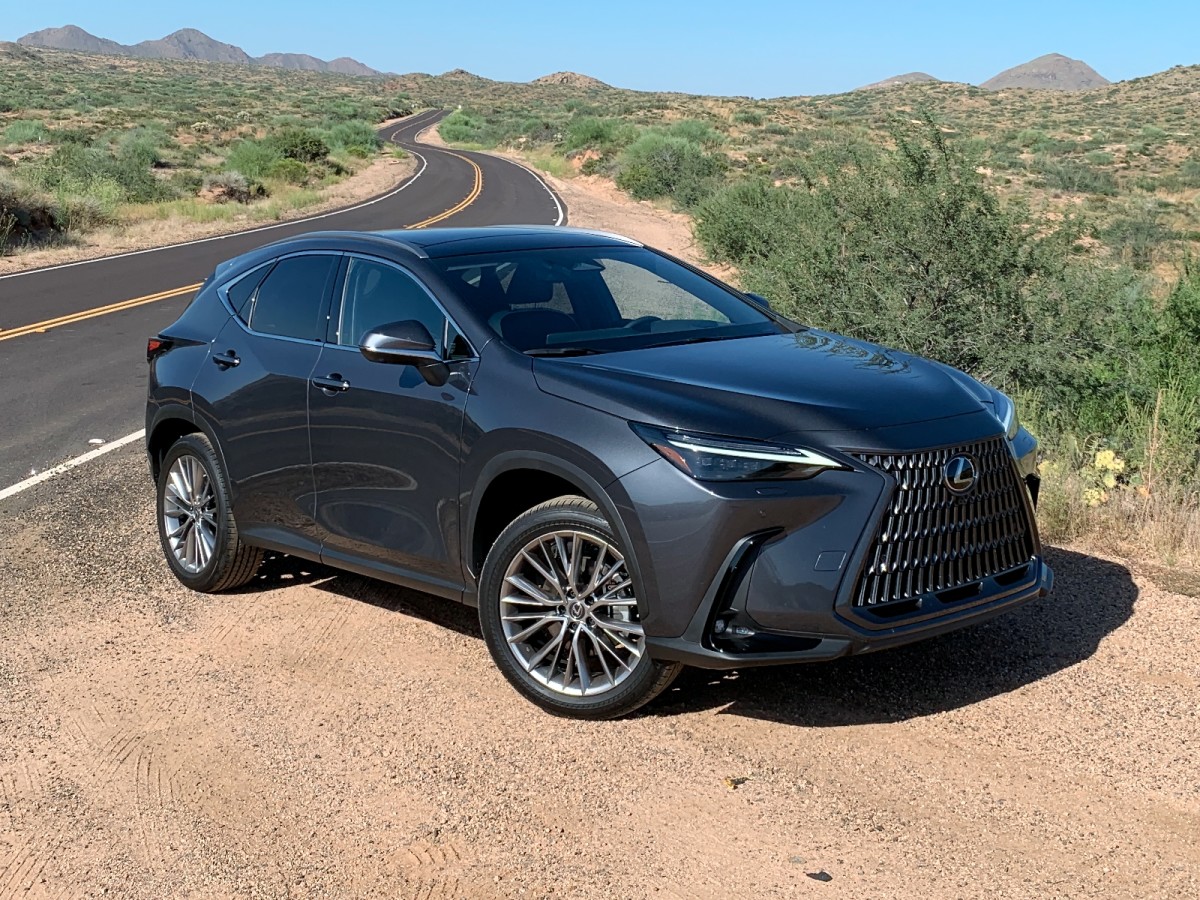
The redesigned 2022 Lexus NX is a more attractive, more dynamic, and more technologically advanced SUV than the one it replaces. But can it draw new customers in the compact luxury SUV segment?
When the redesigned 2022 Lexus NX goes on sale in December 2021, it will come in four model series including NX 250, NX 350, NX 350h, and NX 450h+. Depending on the model, available trim levels include base, Premium, F Sport, and Luxury, and base prices range from $37,950 to $49,000, not including the $1,075 destination charge to ship the compact crossover SUV from the Cambridge, Ontario factory where it is built to your local dealership.
The NX 250 and the turbocharged NX 350 are not electrified. The NX 350h is a hybrid, while the NX 450h+ is a plug-in hybrid based on the Toyota Rav4 Prime. This review focuses on the turbocharged NX 350 in F Sport and Luxury trim levels.
Design is one of the automaker’s four pillars, and the NX is unmistakably a Lexus thanks to its jutting spindle grille. However, styling details reflect the same simplification and refined attention to detail recently bestowed upon the Lexus IS sports sedan. New block lettering spelling out the brand name appears on the SUV’s tailgate, an approach that will proliferate across the entire Lexus lineup.
Longer, wider, and taller than the vehicle it replaces, the new 2022 Lexus NX offers more passenger and cargo space. Most NX models have NuLuxe simulated leather, while the NX Luxury includes real leather and open pore wood trim. A panoramic sunroof is available for the first time on the NX.
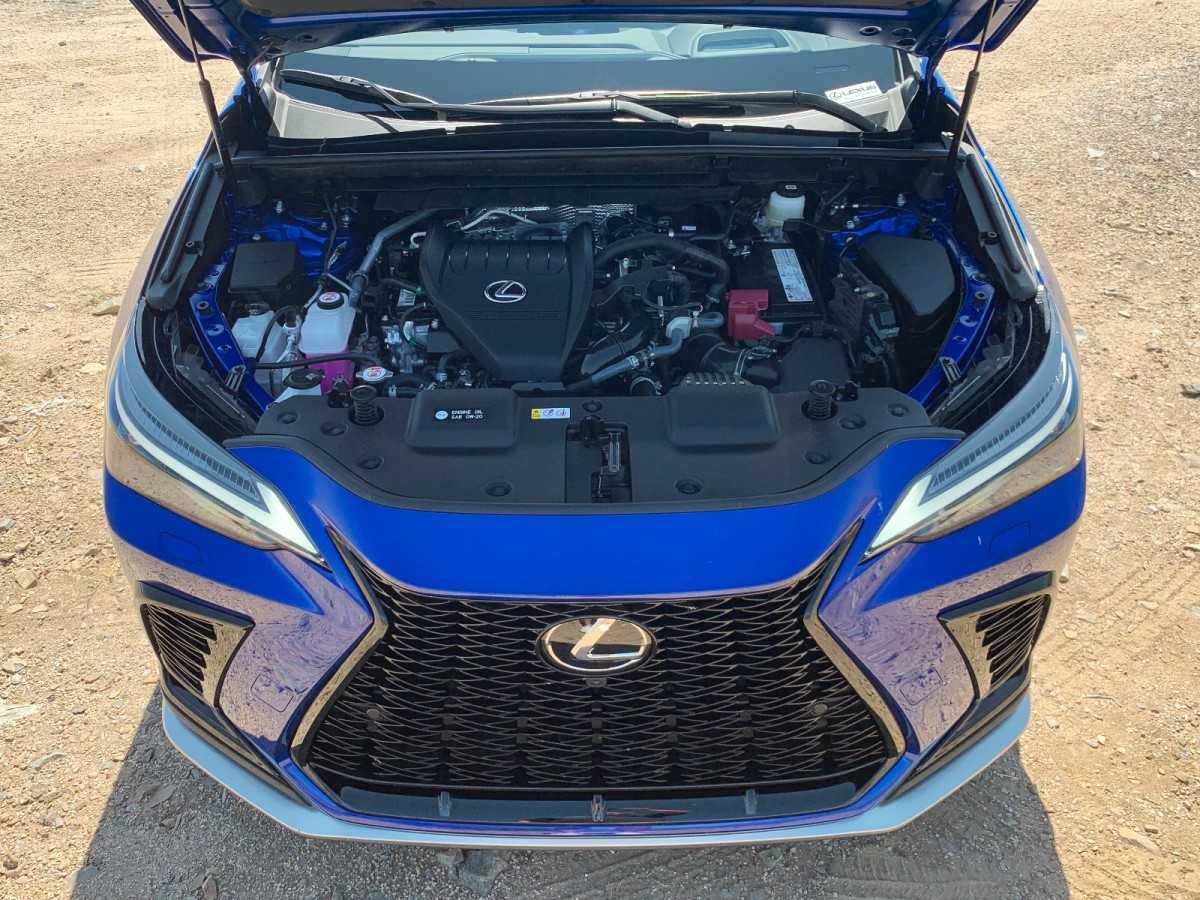
Choose the NX 350 F Sport, and the SUV distinguishes itself with a unique mesh-pattern grille, body-color fender trim, 20-inch gloss black wheels, and black mirrors. Inside, sport-bolstered seats and a black headliner define the sporty version of the NX, and drivers face a new F Sport steering wheel and unique instrumentation with a G-force meter and more. The F Sport also features dark interior trim and alloy pedals and scuff plates.
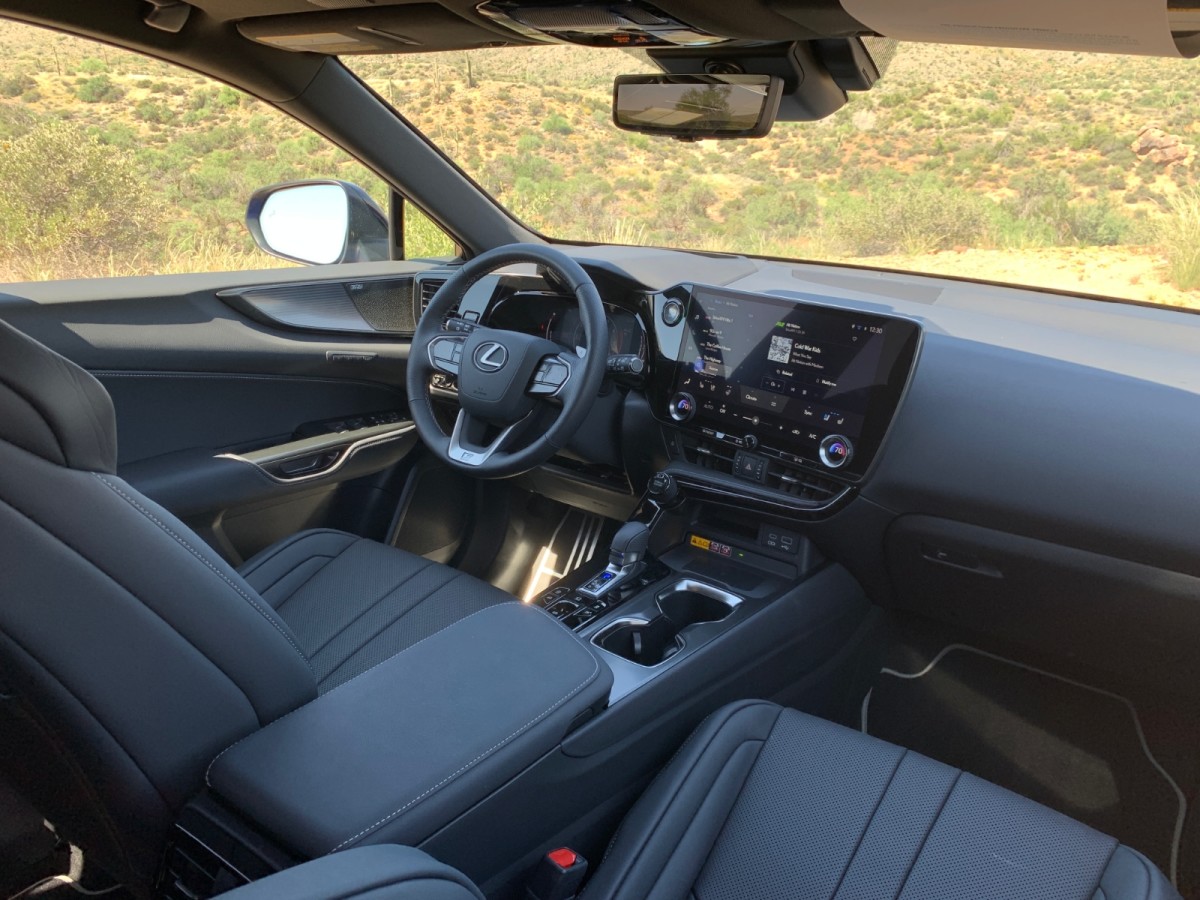
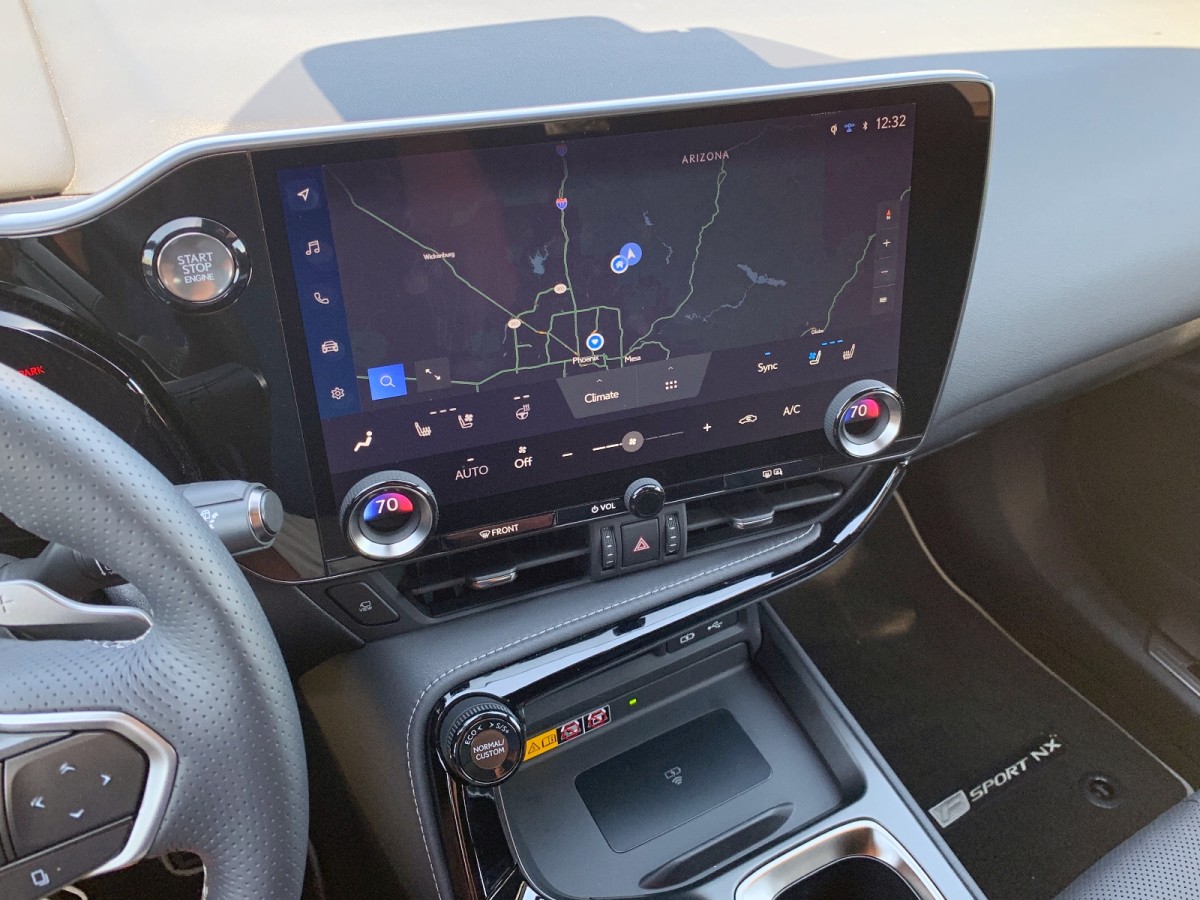
Lexus appears to have gone for a simple, minimalist look for the interior, a much different approach than in the previous version of the SUV. The outgoing NX had a dashboard littered with buttons and knobs, but the controls were clearly labeled. The decluttering for the 2022 model year was necessary, but the company may have gone a little overboard.
For example, with so many functions, including the climate control system, integrated into the available 14-inch touchscreen, it can be hard for the driver to quickly locate and use some features. Also, the symbols used to mark the controls sometimes don’t immediately convey functionality. Perhaps this confusion will resolve itself after the first drive, when you've spent more than just a couple of hours behind the wheel.
Physical controls for the frequently used stereo volume and temperature adjustment functions remain, which helps. The new NX has an electronic shifter on the center console, and unlike with those found in other vehicles, it's easy to acclimate quickly to the shift pattern. Quality levels are generally high, but the turn signal feels inexpensive when you use it, and you’ll use it every day.
Electrification is another one of the four Lexus pillars. For 2022, two electrified versions of the NX will be available. The NX 350h offers a combined output of 239 horsepower and an EPA-estimated 39 mpg in combined driving, while the NX 450h+, with its high-capacity lithium-ion battery, is a 302-hp plug-in hybrid electric vehicle (PHEV) delivering an estimated 36 miles of pure electric range before switching to gas-electric hybrid operation.
A third pillar on which the brand will build its future is Lexus Driving Signature. With the NX’s move to a platform that features a lower center of gravity, reduced curb weight, and dynamic tuning honed at the company’s new technical center in Shimoyama, Japan, the new model feels composed and capable when you’re hustling it.
Shimoyama has a test track replicating some of the most difficult parts of the famed Nürburgring Nordschleife. Now, we’re not saying the new 2022 Lexus NX 350 F Sport is going to challenge performance-tuned luxury SUVs on that German road circuit anytime soon, but on the roads just outside of Carefree, Arizona, it proved smooth, responsive, and athletic enough for a driver to derive enjoyment from the experience.
The NX 350 has a turbocharged 2.4-liter four-cylinder gas engine whipping up 275 horsepower and 317 pound-feet of torque, the latter available between 1,600 rpm and 3,600 rpm. An eight-speed automatic transmission with paddle shifters powers all four wheels, and all-wheel drive (AWD) is standard with this engine.
The turbocharged powertrain is more rewarding than what you’ll find in the base NX 250. This version of the SUV has a 2.5-liter four-cylinder generating 203 horsepower and 184 lb-ft of torque, delivered to front-wheel drive (FWD) through the same eight-speed continuously variable transmission (CVT) used in the NX 350. All-wheel drive is an option for the NX 250.
Both the NX 250 and NX 350 come with Normal, Sport, and Eco driving modes to calibrate the drivetrain for normal, sporty, and economical driving. The NX 350 F Sport adds Sport S, Sport+, and Custom modes, along with an adaptive variable sports suspension with performance dampers and standard 20-inch wheels wrapped in 235/50 all-season tires.
On winding desert roads, the F Sport felt taut and lean while the NX 350 Luxury offered a softer and more relaxed driving character. In either model, Lexus’s claim that it takes 6.6 seconds for the SUV to accelerate to 60 mph seems credible. Based on observed fuel economy numbers, we clearly had more fun driving the F Sport (22.2 mpg) than the Luxury (25.5 mpg). Lexus estimates 25 mpg in combined driving for the NX 350.
Overall, the new NX is a dynamic improvement over the previous model. However, based on this evaluation period and location, the turbocharged 2.4-liter doesn’t sound as smooth and refined as the turbo fours in German rivals. Handling impresses in both versions, but the F Sport does a better job than the Luxury does of isolating the impacts from sharper cracks and bumps in the pavement. There is more road and wind noise than expected, too, despite Lexus’s claim that it has undertaken extensive noise dampening efforts.
Don’t buy a Lexus NX if you’re planning to go off-road. It just doesn't have the specs. The NX supplies no more than 7.7 inches of ground clearance, and its shallow 16-degree approach angle and 25-degree departure angle will drastically limit its usefulness on unimproved terrain.
Lexus says the new NX offers more interior room for people and cargo, but it doesn’t necessarily feel that way from the driver’s seat. The new dashboard design creates a more intimate and cozy feeling compared to the previous NX.
Regardless, the NX is comfortable, especially models equipped with heated and ventilated front seats and a heated steering wheel. With F Sport trim, the SUV’s front seats offer better bolstering in keeping with expected driver behavior. Thoughtfully, Lexus pads both the driver’s door panel and the side of the center console where you’re likely to brace your legs in curves and corners.
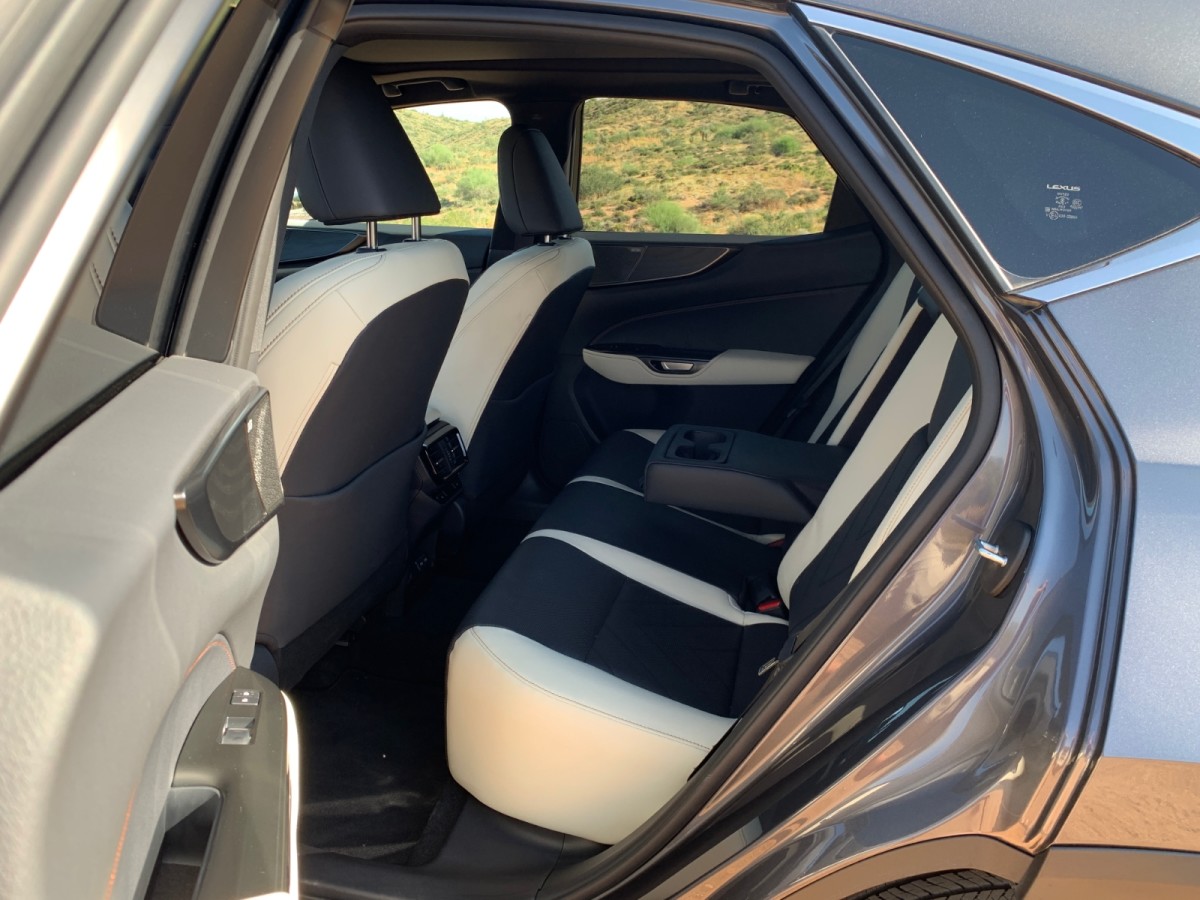
Rear-seat passengers enjoy roomy accommodations, and the test vehicles had rear air conditioning vents, rear heated cushions, and ports for USB chargers. Practical storage space impresses in both rows of seats, and the NX’s panoramic glass sunroof extends all the way over the back seat.
Luxury trim equips the NX with a nature-inspired Thematic Ambient Illumination system with 14 themes such as Rain Forest, Sunset, and Waterfall. We didn’t sample the ambient lighting, as testing took place under bright blue Arizona skies. The climate system and ventilated front seats did a good job of battling the triple-digit heat, though.
Lexus claims that the new NX has a 14% increase in cargo space behind the back seat, bringing the figure to 22.7 cubic feet. When you need more, fold the back seats down to create 46.9 cubic feet of volume.
Advanced Technology is the final pillar of Lexus’s brand foundation, and with the redesigned 2022 NX, the company takes a huge leap forward on this front.
The new Lexus Interface infotainment system does more than any other improvement to enhance the automaker’s standing with the young digital natives the company hopes to attract to the redesigned NX. Large touchscreen displays, natural voice recognition, music streaming from popular services, and cloud-based features make the new NX seem like a natural fit into their lives.
Best of all, the new NX banishes the old Remote Touch Interface and its widely reviled touchpad to the dustbin of history.
A 9.8-inch touchscreen display is standard, with a 14-inch screen an optional upgrade. Standard equipment for both versions of Lexus Interface includes wireless Apple CarPlay and Android Auto, Voice Assistant technology, and readiness for five different connected service subscription plans that grant access to features such as WiFi, Apple Music and Amazon Music streaming, and Intelligent Assistant. Over-the-air (OTA) software updates keep Lexus Interface up to date.
A 10-speaker sound system is standard, with a 17-speaker Mark Levinson premium surround system available as an option. Both test vehicles had the Mark Levinson system, and it did a great job with the NX’s standard satellite radio stations, let alone more sophisticated media files.
Why didn’t we stream music? There was no signal in the remote areas where we were driving, underscoring a limitation of cloud-based services. Fortunately, the navigation system that’s included with the 14-inch touchscreen includes an off-line mode so that you can continue to get directions to your destination.
The new Voice Assistant and Intelligent Assistant systems respond to either front-seat occupant. Say something like “OK Lexus” to rouse it, and then use naturally spoken commands to control a wide variety of features and functions. You can even say “Lexus” during a conversation without activating the assistant, unlike with some competitive brands.
Lexus includes a complimentary three-year trial subscription to its new Drive Connect service. This includes cloud-based navigation, destination assist, and Intelligent Assistant technology that builds on the standard Voice Assistant. Intelligent Assist can find points of interest based on Google POI data and input addresses for navigation.
Intelligent Assistant also works with WiFi Connect service and supported music streaming services to find and play specific artists and songs. Additional connected services include Safety Connect with automatic collision notification (among others), Remote Connect with remote engine starting (among others), and Service Connect with maintenance reminders (among others). Each is complimentary for a specific amount of time, and it then costs extra to continue the subscription.
Another cloud-based feature in the new NX is User Profiles. Here, you can store preferences and settings for individual drivers, and even transfer them to other models equipped with Lexus Interface. These also include digital key capability, which transforms the user’s smartphone into a key that unlocks and starts the NX. Digital key is part of an option package that also includes wireless smartphone charging and a SmartAccess key card.
Additional technologies available for the new Lexus NX include a digital mirror showing a camera-based view of what’s behind the SUV and a 10-inch head-up display (HUD). The HUD is comprehensively detailed, and while it fades when the driver wears polarized sunglasses, it does remain faintly visible.
Overall, the new tech in the 2022 Lexus NX is impressive, but it is not beyond criticism. Both test vehicles had the larger 14-inch touchscreen display, which rapidly collects fingerprints and dust while casting quite a bit of reflection on bright and sunny days. Also, we couldn’t find a way to show multiple data panels, such as the navigation map and the radio, at the same time. Lastly, there isn’t a tuning knob. Why the automaker doesn’t include the brilliant single dual-action knob for volume and tuning that Lexus uses in the ES sedan is beyond understanding.

As part of its Advanced Technology brand pillar, Lexus throws every driver assistance and collision avoidance system it has into the all-new NX SUV. Most of these features are bundled together in the standard Lexus Safety System+ 3.0 (LSS+ 3.0) collection of technologies.
In addition to the features you expect in a modern suite of advanced driving assistance systems (ADAS), LSS+ 3.0 includes several new features worth mentioning:
- Risk Avoidance Emergency Steer Assist: Supports as much evasive steering input as is possible within the lane of travel in order to avoid colliding with pedestrians, cyclists, or other vehicles.
- Oncoming Vehicle Detection: Identifies when an approaching vehicle crosses the center line and into the Lexus’s path of travel and will activate automatic emergency braking if called for.
- Oncoming Pedestrian Detection: When turning, detects pedestrians in the path of travel and can brake the NX if necessary.
- Curve Speed Management: Automatically adjusts vehicle speed for curves when using the adaptive cruise control.
Aside from Curve Speed Management, which kicked in while we were transitioning between freeways north of Phoenix, we did not get a chance to experience any of these new technologies. We did, however, try out the standard Emergency Driving Stop System. This technology reacts to an unresponsive driver and brings the NX to a stop in its lane of travel with the hazard lights flashing.
Out in the middle of nowhere, with all of the ADAS turned on and active, we let go of the NX 350 F Sport’s steering wheel. After a bit, the technology requested that we put our hands back on the wheel. We ignored this request, and after a short while the NX began a slowing process from our traveling speed of 55 mph, accompanied by a consistent audible alert. At 25 mph, we resumed control and accelerated back up to speed.
What’s the point of this? The Emergency Driving Stop System goes into effect if a driver falls asleep or suffers a medical emergency, bringing the NX to a safe stop rather than allowing the SUV to travel on and potentially crash.
Additionally, the 2022 NX has standard blind-spot warning, rear cross-traffic warning, and Safe Exit Assist technology with digital-latch door releases. The NX can also warn you and prevent unsafe left turns across traffic, and it can detect pedestrians, cyclists, and motorcyclists to help prevent collisions.
Rear pedestrian detection comes with Premium trim, along with an adaptive front lighting system that helps you to see around corners after dark, rain-sensing wipers, semi-autonomous parking assist with automatic braking, and rear cross-traffic braking. A Vision Package is also available, installing a panoramic view monitoring system, front cross-traffic alert, and a lane-change assistance function for use with the adaptive cruise control.

Prices for the new 2022 Lexus NX are higher than before, which explains why the new NX 250 exists and why the company added a Premium trim level to the menu. Still, given the impressive load of standard technology combined with its full redesign, the new NX’s base model price of less than $40,000 (including destination fee) is somewhat miraculous.
However, all of the new NX’s competitors, including the Acura RDX, BMW X3, Volvo XC60, Audi Q5, and Mercedes-Benz GLC, offer standard turbocharged power, and not all of them are more expensive than the Lexus. Some are also more generous with warranty coverage and ownership perks, or offer more sophisticated AWD systems, or are available with plug-in hybrid powertrain options, or come in higher-performance variants that are a genuine thrill to drive.
Undoubtedly, the 2022 NX is a more attractive, more dynamic, and more technologically advanced SUV than the one it replaces. And the new NX 450h+ plug-in hybrid offers a compelling alternative to what competitors offer. In these respects, it serves as a credible vessel for the four brand pillars that will support Lexus’s future.

User reviews for 2022 Lexus NX
Write a review2022 Lexus NX Pricing
Trims & specs
Air Conditioning
Automatic climate control front air conditioning · Dual front air conditioning zones
Airbags
Passenger seat cushion front airbags · Driver knee airbags · Passenger airbag deactivation: occupant sensing deactivation · Front side airbags · Rear side curtain airbags
Audio System
Antenna Type: diversity · Voice recognition audio system · Bluetooth auxiliary audio input · AM/FM radio · Satellite Radio: SiriusXM · Total Number of Speakers: 10
Brakes
ABS: 4-wheel · Braking assist: hill start assist · Electronic parking brake: auto off · Front brake diameter: 12.9 · Front brake width: 1.1 · Front brakes: ventilated disc · Rear brake diameter: 12.5 · Rear brake width: 0.71 · Rear brakes: ventilated disc
Comfort Features
Armrests: rear center with cupholders · Center console trim: alloy · Dash Trim: Leatherette · Door trim: leatherette · Floor Mat Material: carpet · Floor Material: carpet · Floor Mats: front · Shift knob trim: leather · Steering wheel trim: leather
Convenience Features
Adaptive stop and go cruise control: semi-automatic · Assist handle: rear · Autonomous lane guidance: lane centering · Cargo area power outlet: 12V · Center console: front console with armrest · Cruise control: adaptive · Cupholders: rear · Multi-function remote: keyless entry with panic alarm · One-touch windows: 4 · Power outlet(s): 12V front · Power steering: electric · Power windows: lockout button · Reading lights: rear · Rear power outlet: 12V · Steering wheel: tilt and telescopic · Steering wheel mounted controls: multi-function screen controls · Storage: cargo tie-down anchors and hooks · Universal garage door opener: Homelink · Vanity mirrors: dual illuminating
Driver Seat
Adjustable lumbar support: power · Power adjustments: 10
Drivetrain
Axle ratio: 3.42
Engine
Battery: maintenance-free
Exterior Features
Door handle color: body-color · Fender lip moldings: black · Front bumper color: body-color · Grille color: black · Mirror color: body-color · Rear bumper color: body-color · Rear spoiler: roofline spoiler · Rear spoiler color: body-color · Rear trunk/liftgate: liftgate · Rocker panel color: black · Window trim: chrome
Headrests
Front headrests: adjustable · Number of front headrests: 2 · Number of rear headrests: 3
In Car Entertainment
Connected in-car apps: Yelp · Infotainment: Enform · Infotainment screen size: 9.8 in. · Smartphone integration: wireless Apple CarPlay
Instrumentation
Fuel economy display: MPG · Instrument cluster screen size: 7 in. · Warnings and reminders: coolant temperature warning
Lights
Daytime running lights: LED · Exterior entry lights: puddle lamps · Headlights: LED · Tail and brake lights: LED
Mirrors
Exterior mirrors: power folding · Inside rearview mirror: manual day/night
Passenger Seat
Power adjustments: 8
Rear Seats
Type: 60-40 split bench
Roof
Roof rails: chrome
Safety
Automatic emergency braking: intersection/junction turn · Camera system: rearview · Child seat anchors: LATCH system · Cross Traffic Alert: rear · Crumple zones: front · Impact absorbing seats: dual front · Impact sensor: door unlock · Pre-Collision Warning System: audible warning · Pre-collision warning system: pedestrian detection · Rearview monitor: in dash
Seatbelts
Emergency locking retractors: front and rear · Front seatbelts: 3-point · Seatbelt force limiters: front · Seatbelt pretensioners: front and rear · Seatbelt warning sensor: driver and passenger · Second row seatbelts: 3-point
Seats
Driver seat power adjustments: reclining · Front seat type: bucket · Passenger seat power adjustments: reclining · Rear headrests: adjustable · Rear seat folding: split · Rear seat manual adjustments: reclining · Upholstery: leatherette
Security
Power door locks: anti-lockout
Steering
Turns lock-to-lock: 2.4
Suspension
Front Arm Type: lower control arms · Front Shock Type: gas shock absorbers · Front Spring Type: coil springs · Front Suspension Classification: independent · Front Suspension Type: MacPherson struts · Rear Shock Type: gas shock absorbers · Rear Spring Type: coil springs · Rear Suspension Classification: independent · Rear Suspension Type: multi-link · Stabilizer bar(s): front
Telematics
Driver assistance app: roadside assistance · Electronic messaging assistance: with read function · Phone: voice activated · Phone wireless data link: Bluetooth · Smart device app compatibility: Enform Remote Connect · Smart device app function: lock operation
Tires
Type: all season
Tires and Rims
Wheels: painted aluminum
Wheels
Wheel spokes: 15
Windows
Front wipers: variable intermittent · Laminated glass: acoustic · Liftgate window: fixed · Power windows: with safety reverse · Rear wiper: intermittent
Air Conditioning
Automatic climate control front air conditioning · Dual front air conditioning zones
Airbags
Dual front airbags · Driver knee airbags · Passenger airbag deactivation: occupant sensing deactivation · Front side airbags · Front side curtain airbags
Audio System
Antenna Type: mast · Voice recognition audio system · Auxiliary audio input: jack · AM/FM radio · Satellite Radio: SiriusXM · Total Number of Speakers: 10
Brakes
ABS: 4-wheel · Braking assist: hill start assist · Electronic parking brake: auto off · Front brake diameter: 12.9 · Front brake width: 1.1 · Front brakes: ventilated disc · Rear brake diameter: 12.5 · Rear brake width: 0.71 · Rear brakes: ventilated disc
Comfort Features
Armrests: rear center with cupholders · Center console trim: leatherette · Dash Trim: Leatherette · Door trim: leatherette · Floor Mat Material: carpet · Floor Material: carpet · Floor Mats: front · Shift knob trim: leather · Steering wheel trim: leather
Convenience Features
Adaptive stop and go cruise control: semi-automatic · Assist handle: rear · Autonomous lane guidance: lane centering · Cargo area power outlet: 12V · Center console: front console with armrest · Cruise control: adaptive · Cupholders: front · Multi-function remote: proximity entry system · One-touch windows: 4 · Power outlet(s): 12V front · Power steering: electric · Power windows: lockout button · Reading lights: front · Rear power outlet: 12V · Steering wheel: tilt and telescopic · Steering wheel mounted controls: cruise controls · Storage: cargo tie-down anchors and hooks · Universal garage door opener: Homelink · Vanity mirrors: dual illuminating
Driver Seat
Adjustable lumbar support: power · Power adjustments: 10
Drivetrain
4WD Type: on demand · Axle ratio: 3.42 · Locking differential: center
Engine
Battery: maintenance-free
Exterior Features
Door handle color: body-color · Fender lip moldings: black · Front bumper color: body-color · Grille color: black · Mirror color: body-color · Rear bumper color: body-color · Rear spoiler: roofline spoiler · Rear spoiler color: body-color · Rear trunk/liftgate: liftgate · Rocker panel color: black · Window trim: chrome
Headrests
Front headrests: adjustable · Number of front headrests: 2 · Number of rear headrests: 3
In Car Entertainment
Connected in-car apps: Yelp · Infotainment: Enform · Infotainment screen size: 9.8 in. · Smartphone integration: wireless Android Auto
Instrumentation
Fuel economy display: MPG · Instrument cluster screen size: 7 in. · Warnings and reminders: low fuel level
Lights
Daytime running lights: LED · Exterior entry lights: puddle lamps · Headlights: Auto on/off · Tail and brake lights: LED
Mirrors
Exterior mirrors: integrated turn signals · Inside rearview mirror: manual day/night
Passenger Seat
Power adjustments: 8
Rear Seats
Type: 60-40 split bench
Roof
Roof rails: chrome
Safety
Automatic emergency braking: front · Camera system: rearview · Child seat anchors: LATCH system · Cross Traffic Alert: rear · Crumple zones: rear · Impact absorbing seats: dual front · Impact sensor: fuel cut-off · Pre-Collision Warning System: audible warning · Pre-collision warning system: pedestrian detection · Rearview monitor: in dash
Seatbelts
Emergency locking retractors: front · Front seatbelts: 3-point · Seatbelt force limiters: front · Seatbelt pretensioners: front and rear · Seatbelt warning sensor: driver and passenger · Second row seatbelts: 3-point
Seats
Driver seat power adjustments: height · Front seat type: bucket · Passenger seat power adjustments: height · Rear headrests: adjustable · Rear seat folding: split · Rear seat manual adjustments: reclining · Upholstery: leatherette
Security
Power door locks: anti-lockout
Steering
Turns lock-to-lock: 2.4
Suspension
Front Arm Type: lower control arms · Front Shock Type: gas shock absorbers · Front Spring Type: coil springs · Front Suspension Classification: independent · Front Suspension Type: MacPherson struts · Rear Shock Type: gas shock absorbers · Rear Spring Type: coil springs · Rear Suspension Classification: independent · Rear Suspension Type: multi-link · Stabilizer bar(s): rear
Telematics
Driver assistance app: roadside assistance · Electronic messaging assistance: with read function · Phone: voice activated · Phone wireless data link: Bluetooth · Smart device app compatibility: Enform Remote Connect · Smart device app function: maintenance status
Tires
Type: all season
Tires and Rims
Wheels: painted aluminum
Wheels
Wheel spokes: 15
Windows
Front wipers: variable intermittent · Laminated glass: acoustic · Liftgate window: fixed · Power windows: with safety reverse · Rear wiper: intermittent
Air Conditioning
Automatic climate control front air conditioning · Dual front air conditioning zones
Airbags
Dual front airbags · Driver knee airbags · Passenger airbag deactivation: occupant sensing deactivation · Front side airbags · Rear side curtain airbags
Audio System
Antenna Type: mast · Voice recognition audio system · Auxiliary audio input: jack · AM/FM radio · Satellite Radio: SiriusXM · Total Number of Speakers: 10
Brakes
ABS: 4-wheel · Braking assist: hill start assist · Electronic parking brake: auto off · Front brake diameter: 12.9 · Front brake width: 1.1 · Front brakes: ventilated disc · Rear brake diameter: 12.5 · Rear brake width: 0.71 · Rear brakes: ventilated disc
Comfort Features
Armrests: rear center with cupholders · Center console trim: alloy · Dash Trim: Leatherette · Door trim: leatherette · Floor Mat Material: carpet · Floor Material: carpet · Floor Mats: front · Shift knob trim: leather · Steering wheel trim: leather
Convenience Features
Adaptive stop and go cruise control: semi-automatic · Assist handle: rear · Autonomous lane guidance: lane centering · Cargo area power outlet: 12V · Center console: front console with armrest · Cruise control: adaptive · Cupholders: front · Memorized settings: driver seat · Multi-function remote: keyless entry with panic alarm · One-touch windows: 4 · Power outlet(s): 12V front · Power steering: electric · Power windows: lockout button · Reading lights: rear · Rear power outlet: 12V · Steering wheel: power tilt and telescopic · Steering wheel mounted controls: audio · Storage: front seatback · Universal garage door opener: Homelink · Vanity mirrors: dual illuminating
Driver Seat
Adjustable lumbar support: power · Power adjustments: 10
Drivetrain
Axle ratio: 3.42
Engine
Battery: maintenance-free
Exterior Features
Door handle color: body-color · Fender lip moldings: black · Front bumper color: body-color · Grille color: black · Mirror color: body-color · Rear bumper color: body-color · Rear spoiler: roofline spoiler · Rear spoiler color: body-color · Rear trunk/liftgate: liftgate · Rocker panel color: black · Window trim: chrome
Headrests
Front headrests: adjustable · Number of front headrests: 2 · Number of rear headrests: 3
In Car Entertainment
Connected in-car apps: Google POIs · Infotainment: Enform · Infotainment screen size: 9.8 in. · Smartphone integration: wireless Android Auto
Instrumentation
Fuel economy display: MPG · Instrument cluster screen size: 7 in. · Warnings and reminders: lamp failure
Lights
Daytime running lights: LED · Exterior entry lights: puddle lamps · Headlights: auto delay off · Tail and brake lights: LED
Mirrors
Exterior mirrors: power · Inside rearview mirror: manual day/night
Passenger Seat
Power adjustments: 8
Rear Seats
Type: 60-40 split bench
Roof
Moonroof: tilt/slide · Roof rails: chrome
Safety
Automatic emergency braking: intersection/junction turn · Camera system: rearview · Child seat anchors: LATCH system · Cross Traffic Alert: rear · Crumple zones: front · Impact absorbing seats: dual front · Impact sensor: battery disconnect · Pre-Collision Warning System: audible warning · Pre-collision warning system: pedestrian detection · Rearview monitor: in dash
Seatbelts
Emergency locking retractors: front and rear · Front seatbelts: 3-point · Seatbelt force limiters: front · Seatbelt pretensioners: front and rear · Seatbelt warning sensor: driver and passenger · Second row seatbelts: 3-point
Seats
Driver seat power adjustments: height · Front seat type: bucket · Passenger seat power adjustments: height · Rear headrests: adjustable · Rear seat folding: split · Rear seat manual adjustments: reclining · Upholstery: leatherette
Security
Power door locks: anti-lockout
Steering
Turns lock-to-lock: 2.4
Suspension
Front Arm Type: lower control arms · Front Shock Type: gas shock absorbers · Front Spring Type: coil springs · Front Suspension Classification: independent · Front Suspension Type: MacPherson struts · Rear Shock Type: gas shock absorbers · Rear Spring Type: coil springs · Rear Suspension Classification: independent · Rear Suspension Type: multi-link · Stabilizer bar(s): rear
Telematics
Driver assistance app: roadside assistance · Electronic messaging assistance: with read function · Phone: voice activated · Phone wireless data link: Bluetooth · Smart device app compatibility: Enform Remote Connect · Smart device app function: window operation
Tires
Type: all season
Tires and Rims
Wheels: painted aluminum
Wheels
Wheel spokes: 15
Windows
Front wipers: speed sensitive · Laminated glass: acoustic · Liftgate window: fixed · Power windows: with safety reverse · Rear wiper: intermittent
Air Conditioning
Automatic climate control front air conditioning · Dual front air conditioning zones
Airbags
Dual front airbags · Driver knee airbags · Passenger airbag deactivation: occupant sensing deactivation · Front side airbags · Front side curtain airbags
Audio System
Antenna Type: mast · Voice recognition audio system · Bluetooth auxiliary audio input · Touch screen display radio · Satellite Radio: SiriusXM · Total Number of Speakers: 10
Brakes
ABS: 4-wheel · Braking assist: hill start assist · Electronic parking brake: auto off · Front brake diameter: 12.9 · Front brake width: 1.1 · Front brakes: ventilated disc · Rear brake diameter: 12.5 · Rear brake width: 0.71 · Rear brakes: ventilated disc
Comfort Features
Armrests: rear center with cupholders · Center console trim: leatherette · Dash Trim: Leatherette · Door trim: leatherette · Floor Mat Material: carpet · Floor Material: carpet · Floor Mats: front · Shift knob trim: leather · Steering wheel trim: leather
Convenience Features
Adaptive stop and go cruise control: semi-automatic · Assist handle: front · Autonomous lane guidance: lane centering · Cargo area power outlet: 12V · Center console: front console with armrest · Cruise control: adaptive · Cupholders: rear · Multi-function remote: proximity entry system · One-touch windows: 4 · Power outlet(s): USB-C rear · Power steering: electric · Power windows: lockout button · Reading lights: front · Rear power outlet: 12V · Steering wheel: tilt and telescopic · Steering wheel mounted controls: cruise controls · Storage: sunglasses holder · Universal garage door opener: Homelink · Vanity mirrors: dual illuminating
Driver Seat
Adjustable lumbar support: power · Power adjustments: 10
Drivetrain
4WD Type: on demand · Axle ratio: 3.33 · Locking differential: center
Engine
Battery: maintenance-free
Exterior Features
Door handle color: body-color · Fender lip moldings: black · Front bumper color: body-color · Grille color: black · Mirror color: body-color · Rear bumper color: body-color · Rear spoiler: roofline spoiler · Rear spoiler color: body-color · Rear trunk/liftgate: liftgate · Rocker panel color: black · Window trim: chrome
Headrests
Front headrests: adjustable · Number of front headrests: 2 · Number of rear headrests: 3
In Car Entertainment
Connected in-car apps: Google POIs · Infotainment: Enform · Infotainment screen size: 9.8 in. · Smartphone integration: wireless Apple CarPlay
Instrumentation
Fuel economy display: range · Instrument cluster screen size: 7 in. · Warnings and reminders: coolant temperature warning
Lights
Daytime running lights: LED · Exterior entry lights: puddle lamps · Headlights: Auto on/off · Tail and brake lights: LED
Mirrors
Exterior mirrors: integrated turn signals · Inside rearview mirror: manual day/night
Passenger Seat
Power adjustments: 8
Rear Seats
Type: 60-40 split bench
Roof
Roof rails: chrome
Safety
Automatic emergency braking: front pedestrian · Camera system: rearview · Child seat anchors: LATCH system · Cross Traffic Alert: rear · Crumple zones: rear · Impact absorbing seats: dual front · Impact sensor: battery disconnect · Pre-Collision Warning System: visual warning · Pre-collision warning system: pedestrian detection · Rearview monitor: in dash
Seatbelts
Emergency locking retractors: front and rear · Front seatbelts: 3-point · Seatbelt force limiters: front · Seatbelt pretensioners: front and rear · Seatbelt warning sensor: driver and passenger · Second row seatbelts: 3-point
Seats
Driver seat power adjustments: height · Front seat type: bucket · Passenger seat power adjustments: height · Rear headrests: adjustable · Rear seat folding: split · Rear seat manual adjustments: reclining · Upholstery: leatherette
Security
Power door locks: anti-lockout
Steering
Turns lock-to-lock: 2.4
Suspension
Front Arm Type: lower control arms · Front Shock Type: gas shock absorbers · Front Spring Type: coil springs · Front Suspension Classification: independent · Front Suspension Type: MacPherson struts · Rear Shock Type: gas shock absorbers · Rear Spring Type: coil springs · Rear Suspension Classification: independent · Rear Suspension Type: multi-link · Stabilizer bar(s): front
Telematics
Driver assistance app: roadside assistance · Electronic messaging assistance: with voice recognition · Phone: voice activated · Phone wireless data link: Bluetooth · Smart device app compatibility: Enform Remote Connect · Smart device app function: lock operation
Tires
Type: all season
Tires and Rims
Wheels: painted aluminum
Wheels
Wheel spokes: 15
Windows
Front wipers: variable intermittent · Laminated glass: acoustic · Liftgate window: fixed · Power windows: with safety reverse · Rear wiper: with washer
Air Conditioning
Automatic climate control front air conditioning · Dual front air conditioning zones
Airbags
Dual front airbags · Driver knee airbags · Passenger airbag deactivation: occupant sensing deactivation · Front side airbags · Rear side curtain airbags
Audio System
Antenna Type: diversity · Voice recognition audio system · USB auxiliary audio input · AM/FM radio · Satellite Radio: SiriusXM · Total Number of Speakers: 10
Brakes
ABS: 4-wheel · Braking assist: hill start assist · Electronic parking brake: auto off · Front brake diameter: 12.9 · Front brake width: 1.1 · Front brakes: ventilated disc · Rear brake diameter: 12.5 · Rear brake width: 0.71 · Rear brakes: ventilated disc
Comfort Features
Armrests: rear center with cupholders · Center console trim: alloy · Dash Trim: Leatherette · Door trim: leatherette · Floor Mat Material: carpet · Floor Material: carpet · Floor Mats: front · Shift knob trim: leather · Steering wheel trim: leather
Convenience Features
Adaptive stop and go cruise control: semi-automatic · Assist handle: rear · Autonomous lane guidance: lane centering · Cargo area power outlet: 12V · Center console: front console with armrest · Cruise control: adaptive · Cupholders: front · Memorized settings: 3 driver · Multi-function remote: keyless entry with panic alarm · One-touch windows: 4 · Power outlet(s): 12V front · Power steering: electric · Power windows: lockout button · Reading lights: front · Rear power outlet: 12V · Steering wheel: power tilt and telescopic · Steering wheel mounted controls: phone · Storage: door pockets · Universal garage door opener: Homelink · Vanity mirrors: dual illuminating
Driver Seat
Adjustable lumbar support: power · Power adjustments: 10
Drivetrain
4WD Type: on demand · Axle ratio: 3.42 · Locking differential: center
Engine
Battery: maintenance-free
Exterior Features
Door handle color: body-color · Fender lip moldings: black · Front bumper color: body-color · Grille color: black · Mirror color: body-color · Rear bumper color: body-color · Rear spoiler: roofline spoiler · Rear spoiler color: body-color · Rear trunk/liftgate: liftgate · Rocker panel color: black · Window trim: chrome
Headrests
Front headrests: adjustable · Number of front headrests: 2 · Number of rear headrests: 3
In Car Entertainment
Connected in-car apps: Yelp · Infotainment: Enform · Infotainment screen size: 9.8 in. · Smartphone integration: wireless Android Auto
Instrumentation
Fuel economy display: MPG · Instrument cluster screen size: 7 in. · Warnings and reminders: maintenance reminder
Lights
Daytime running lights: LED · Exterior entry lights: puddle lamps · Headlights: auto delay off · Tail and brake lights: LED
Mirrors
Exterior mirrors: power · Inside rearview mirror: manual day/night
Passenger Seat
Power adjustments: 8
Rear Seats
Type: 60-40 split bench
Roof
Moonroof: tilt/slide · Roof rails: chrome
Safety
Automatic emergency braking: front pedestrian · Camera system: rearview · Child seat anchors: LATCH system · Cross Traffic Alert: rear · Crumple zones: rear · Impact absorbing seats: dual front · Impact sensor: door unlock · Pre-Collision Warning System: visual warning · Pre-collision warning system: pedestrian detection · Rearview monitor: in dash
Seatbelts
Emergency locking retractors: front · Front seatbelts: 3-point · Seatbelt force limiters: front · Seatbelt pretensioners: front and rear · Seatbelt warning sensor: driver and passenger · Second row seatbelts: 3-point
Seats
Driver seat power adjustments: height · Front seat type: bucket · Passenger seat power adjustments: height · Rear headrests: adjustable · Rear seat folding: split · Rear seat manual adjustments: reclining · Upholstery: leatherette
Security
Power door locks: anti-lockout
Steering
Turns lock-to-lock: 2.4
Suspension
Front Arm Type: lower control arms · Front Shock Type: gas shock absorbers · Front Spring Type: coil springs · Front Suspension Classification: independent · Front Suspension Type: MacPherson struts · Rear Shock Type: gas shock absorbers · Rear Spring Type: coil springs · Rear Suspension Classification: independent · Rear Suspension Type: multi-link · Stabilizer bar(s): rear
Telematics
Driver assistance app: roadside assistance · Electronic messaging assistance: with voice recognition · Phone: voice activated · Phone wireless data link: Bluetooth · Smart device app compatibility: Enform Remote Connect · Smart device app function: engine start
Tires
Type: all season
Tires and Rims
Wheels: painted aluminum
Windows
Front wipers: speed sensitive · Laminated glass: acoustic · Liftgate window: fixed · Power windows: with safety reverse · Rear wiper: intermittent
Air Conditioning
Automatic climate control front air conditioning · Dual front air conditioning zones
Airbags
Passenger seat cushion front airbags · Driver knee airbags · Passenger airbag deactivation: occupant sensing deactivation · Front side airbags · Front side curtain airbags
Audio System
Antenna Type: mast · Voice recognition audio system · Auxiliary audio input: jack · Touch screen display radio · Satellite Radio: SiriusXM · Total Number of Speakers: 10
Brakes
ABS: 4-wheel · Braking assist: hill start assist · Electronic parking brake: auto off · Front brake diameter: 12.9 · Front brake width: 1.1 · Front brakes: ventilated disc · Rear brake diameter: 12.5 · Rear brake width: 0.71 · Rear brakes: ventilated disc
Comfort Features
Armrests: rear center with cupholders · Center console trim: leather · Dash trim: wood · Door trim: wood · Floor Mat Material: carpet · Floor Material: carpet · Floor Mats: front · Interior accents: wood · Shift knob trim: leather · Steering wheel trim: leather
Convenience Features
Adaptive stop and go cruise control: semi-automatic · Ambient lighting: color-adjustable · Assist handle: rear · Autonomous lane guidance: lane centering · Cargo area power outlet: 12V · Center console: front console with armrest · Cruise control: adaptive · Cupholders: rear · Easy entry: power steering wheel · Memorized settings: side mirrors · Multi-function remote: vehicle and key memory · One-touch windows: 4 · Power outlet(s): 12V front · Power steering: electric · Power windows: lockout button · Reading lights: rear · Rear power outlet: 12V · Steering wheel: power tilt and telescopic · Steering wheel mounted controls: phone · Storage: front seatback · Universal garage door opener: Homelink · Vanity mirrors: dual illuminating
Driver Seat
Adjustable lumbar support: 4-way power · Power adjustments: 12
Drivetrain
Axle ratio: 3.42
Engine
Battery: maintenance-free
Exterior Features
Door handle color: body-color · Fender lip moldings: black · Front bumper color: body-color · Grille color: black · Mirror color: body-color · Rear bumper color: body-color · Rear spoiler: roofline spoiler · Rear spoiler color: body-color · Rear trunk/liftgate: liftgate · Rocker panel color: black · Window trim: chrome
Headrests
Front headrests: adjustable · Number of front headrests: 2 · Number of rear headrests: 3
In Car Entertainment
Connected in-car apps: Google POIs · Infotainment: Enform · Infotainment screen size: 14 in. · Smartphone integration: wireless Android Auto
Instrumentation
Fuel economy display: MPG · Instrument cluster screen size: 7 in. · Warnings and reminders: lamp failure
Lights
Daytime running lights: LED · Exterior entry lights: security approach lamps · Headlights: automatic high beam dimmer · Tail and brake lights: LED
Mirrors
Exterior mirrors: power · Inside rearview mirror: manual day/night
Passenger Seat
Power adjustments: 8
Rear Seats
Type: 60-40 split bench
Roof
Moonroof: one-touch open/close · Roof rails: chrome
Safety
Automatic emergency braking: front · Camera system: rearview · Child seat anchors: LATCH system · Cross Traffic Alert: rear · Crumple zones: front · Impact absorbing seats: dual front · Impact sensor: door unlock · Pre-Collision Warning System: audible warning · Pre-collision warning system: pedestrian detection · Rearview monitor: in dash
Seatbelts
Emergency locking retractors: front · Front seatbelts: 3-point · Seatbelt force limiters: front · Seatbelt pretensioners: front and rear · Seatbelt warning sensor: driver and passenger · Second row seatbelts: 3-point
Seats
Driver seat power adjustments: reclining · Front seat type: bucket · Passenger seat power adjustments: reclining · Rear headrests: adjustable · Rear seat folding: split · Rear seat manual adjustments: reclining · Upholstery: perforated
Security
Power door locks: anti-lockout
Steering
Turns lock-to-lock: 2.4
Suspension
Front Arm Type: lower control arms · Front Shock Type: gas shock absorbers · Front Spring Type: coil springs · Front Suspension Classification: independent · Front Suspension Type: MacPherson struts · Rear Shock Type: gas shock absorbers · Rear Spring Type: coil springs · Rear Suspension Classification: independent · Rear Suspension Type: multi-link · Stabilizer bar(s): front
Telematics
Driver assistance app: roadside assistance · Electronic messaging assistance: with voice recognition · Navigation system: with voice recognition · Phone: voice activated · Phone wireless data link: Bluetooth · Smart device app compatibility: Enform Remote Connect · Smart device app function: engine start · Wifi: hotspot
Tires
Type: all season
Tires and Rims
Wheels: painted aluminum
Wheels
Wheel spokes: 15
Windows
Front wipers: speed sensitive · Laminated glass: acoustic · Liftgate window: fixed · Power windows: with safety reverse · Rear wiper: with washer
Air Conditioning
Automatic climate control front air conditioning · Dual front air conditioning zones
Airbags
Passenger seat cushion front airbags · Driver knee airbags · Passenger airbag deactivation: occupant sensing deactivation · Front side airbags · Front side curtain airbags
Audio System
Antenna Type: diversity · Voice recognition audio system · Bluetooth auxiliary audio input · HD radio · Satellite Radio: SiriusXM · Total Number of Speakers: 10
Brakes
ABS: 4-wheel · Braking assist: hill start assist · Electronic parking brake: auto off · Front brake diameter: 12.9 · Front brake width: 1.1 · Front brakes: ventilated disc · Rear brake diameter: 12.5 · Rear brake width: 0.71 · Rear brakes: ventilated disc
Comfort Features
Armrests: rear center with cupholders · Center console trim: alloy · Dash Trim: Leatherette · Door trim: leatherette · Floor Mat Material: carpet · Floor Material: carpet · Floor Mats: front · Shift knob trim: leather · Steering wheel trim: leather
Convenience Features
Adaptive stop and go cruise control: semi-automatic · Assist handle: rear · Autonomous lane guidance: lane centering · Cargo area power outlet: 12V · Center console: front console with armrest · Cruise control: adaptive · Cupholders: front · Memorized settings: side mirrors · Multi-function remote: vehicle and key memory · One-touch windows: 4 · Power outlet(s): USB-C rear · Power steering: electric · Power windows: lockout button · Reading lights: rear · Rear power outlet: 12V · Steering wheel: power tilt and telescopic · Steering wheel mounted controls: multi-function screen controls · Storage: sunglasses holder · Universal garage door opener: Homelink · Vanity mirrors: dual illuminating
Driver Seat
Adjustable lumbar support: power · Power adjustments: 10
Drivetrain
4WD Type: on demand · Axle ratio: 3.33 · Locking differential: center
Engine
Battery: maintenance-free
Exterior Features
Door handle color: body-color · Fender lip moldings: black · Front bumper color: body-color · Grille color: black · Mirror color: body-color · Rear bumper color: body-color · Rear spoiler: roofline spoiler · Rear spoiler color: body-color · Rear trunk/liftgate: power operated · Rocker panel color: black · Window trim: chrome
Headrests
Front headrests: adjustable · Number of front headrests: 2 · Number of rear headrests: 3
In Car Entertainment
Connected in-car apps: Google POIs · Infotainment: Enform · Infotainment screen size: 9.8 in. · Smartphone integration: wireless Apple CarPlay
Instrumentation
Fuel economy display: MPG · Instrument cluster screen size: 7 in. · Warnings and reminders: maintenance reminder
Lights
Daytime running lights: LED · Exterior entry lights: puddle lamps · Headlights: auto delay off · Tail and brake lights: LED
Mirrors
Exterior mirrors: heated · Inside rearview mirror: manual day/night
Passenger Seat
Power adjustments: 8
Rear Seats
Type: 60-40 split bench
Roof
Moonroof: anti-trapping feature · Roof rails: chrome
Safety
Automatic emergency braking: front pedestrian · Camera system: rearview · Child seat anchors: LATCH system · Cross Traffic Alert: rear · Crumple zones: rear · Impact absorbing seats: dual front · Impact sensor: fuel cut-off · Pre-Collision Warning System: visual warning · Pre-collision warning system: pedestrian detection · Rearview monitor: in dash
Seatbelts
Emergency locking retractors: front · Front seatbelts: 3-point · Seatbelt force limiters: front · Seatbelt pretensioners: front · Seatbelt warning sensor: driver and passenger · Second row seatbelts: 3-point
Seats
Driver seat power adjustments: reclining · Front seat type: bucket · Passenger seat power adjustments: height · Rear headrests: adjustable · Rear seat folding: split · Rear seat manual adjustments: reclining · Upholstery: leatherette
Security
Power door locks: anti-lockout
Steering
Turns lock-to-lock: 2.4
Suspension
Front Arm Type: lower control arms · Front Shock Type: gas shock absorbers · Front Spring Type: coil springs · Front Suspension Classification: independent · Front Suspension Type: MacPherson struts · Rear Shock Type: gas shock absorbers · Rear Spring Type: coil springs · Rear Suspension Classification: independent · Rear Suspension Type: multi-link · Stabilizer bar(s): rear
Telematics
Driver assistance app: roadside assistance · Electronic messaging assistance: with voice recognition · Phone: voice activated · Phone wireless data link: Bluetooth · Smart device app compatibility: Enform Remote Connect · Smart device app function: lock operation
Tires
Type: all season
Tires and Rims
Wheels: painted aluminum
Wheels
Wheel spokes: 15
Windows
Front wipers: speed sensitive · Laminated glass: acoustic · Liftgate window: fixed · Power windows: with safety reverse · Rear wiper: intermittent
Air Conditioning
Automatic climate control front air conditioning · Dual front air conditioning zones
Airbags
Dual front airbags · Driver knee airbags · Passenger airbag deactivation: occupant sensing deactivation · Front side airbags · Rear side curtain airbags
Audio System
Antenna Type: diversity · Voice recognition audio system · Bluetooth auxiliary audio input · Touch screen display radio · Satellite Radio: SiriusXM · Total Number of Speakers: 10
Brakes
ABS: 4-wheel · Braking assist: hill start assist · Electronic parking brake: auto off · Front brake diameter: 12.9 · Front brake width: 1.1 · Front brakes: ventilated disc · Rear brake diameter: 12.5 · Rear brake width: 0.71 · Rear brakes: ventilated disc
Comfort Features
Armrests: rear center with cupholders · Center console trim: alloy · Dash trim: wood · Door trim: leather · Floor Mat Material: carpet · Floor Material: carpet · Floor Mats: front · Interior accents: wood · Shift knob trim: leather · Steering wheel trim: leather
Convenience Features
Adaptive stop and go cruise control: semi-automatic · Ambient lighting: color-adjustable · Assist handle: front · Autonomous lane guidance: lane centering · Cargo area power outlet: 12V · Center console: front console with armrest · Cruise control: adaptive · Cupholders: rear · Easy entry: power steering wheel · Memorized settings: side mirrors · Multi-function remote: proximity entry system · One-touch windows: 4 · Power outlet(s): USB-C rear · Power steering: electric · Power windows: lockout button · Reading lights: front · Rear power outlet: 12V · Steering wheel: power tilt and telescopic · Steering wheel mounted controls: multi-function screen controls · Storage: grocery bag holder · Universal garage door opener: Homelink · Vanity mirrors: dual illuminating
Driver Seat
Adjustable lumbar support: 4-way power · Power adjustments: 12
Drivetrain
4WD Type: on demand · Axle ratio: 3.42 · Locking differential: center
Engine
Battery: maintenance-free
Exterior Features
Door handle color: body-color · Fender lip moldings: black · Front bumper color: body-color · Grille color: black · Mirror color: body-color · Rear bumper color: body-color · Rear spoiler: roofline spoiler · Rear spoiler color: body-color · Rear trunk/liftgate: power operated · Rocker panel color: black · Window trim: chrome
Headrests
Front headrests: adjustable · Number of front headrests: 2 · Number of rear headrests: 3
In Car Entertainment
Connected in-car apps: Google POIs · Infotainment: Enform · Infotainment screen size: 14 in. · Smartphone integration: wireless Android Auto
Instrumentation
Fuel economy display: range · Instrument cluster screen size: 7 in. · Warnings and reminders: low fuel level
Lights
Daytime running lights: LED · Exterior entry lights: security approach lamps · Headlights: Auto on/off · Tail and brake lights: LED
Mirrors
Exterior mirrors: reverse gear tilt · Inside rearview mirror: manual day/night
Passenger Seat
Power adjustments: 8
Rear Seats
Type: 60-40 split bench
Roof
Moonroof: power glass · Roof rails: chrome
Safety
Automatic emergency braking: front · Camera system: rearview · Child seat anchors: LATCH system · Cross Traffic Alert: rear · Crumple zones: rear · Impact absorbing seats: dual front · Impact sensor: door unlock · Pre-Collision Warning System: visual warning · Pre-collision warning system: pedestrian detection · Rearview monitor: in dash
Seatbelts
Emergency locking retractors: front · Front seatbelts: 3-point · Seatbelt force limiters: front · Seatbelt pretensioners: front and rear · Seatbelt warning sensor: driver and passenger · Second row seatbelts: 3-point
Seats
Driver seat power adjustments: reclining · Front seat type: bucket · Passenger seat power adjustments: reclining · Rear headrests: adjustable · Rear seat folding: split · Rear seat manual adjustments: reclining · Upholstery: perforated
Security
Power door locks: anti-lockout
Steering
Turns lock-to-lock: 2.4
Suspension
Front Arm Type: lower control arms · Front Shock Type: gas shock absorbers · Front Spring Type: coil springs · Front Suspension Classification: independent · Front Suspension Type: MacPherson struts · Rear Shock Type: gas shock absorbers · Rear Spring Type: coil springs · Rear Suspension Classification: independent · Rear Suspension Type: multi-link · Stabilizer bar(s): rear
Telematics
Driver assistance app: roadside assistance · Electronic messaging assistance: with voice recognition · Navigation system: with voice recognition · Phone: voice activated · Phone wireless data link: Bluetooth · Smart device app compatibility: Enform Remote Connect · Smart device app function: maintenance status · Wifi: hotspot
Tires
Type: all season
Tires and Rims
Wheels: painted aluminum
Windows
Front wipers: speed sensitive · Laminated glass: acoustic · Liftgate window: fixed · Power windows: with safety reverse · Rear wiper: with washer
Air Conditioning
Automatic climate control front air conditioning · Dual front air conditioning zones
Airbags
Passenger seat cushion front airbags · Driver knee airbags · Passenger airbag deactivation: occupant sensing deactivation · Front side airbags · Rear side curtain airbags
Audio System
Antenna Type: diversity · Voice recognition audio system · USB auxiliary audio input · AM/FM radio · Satellite Radio: SiriusXM · Total Number of Speakers: 10
Brakes
ABS: 4-wheel · Braking assist: hill start assist · Electronic parking brake: auto off · Front brake diameter: 12.9 · Front brake width: 1.1 · Front brakes: ventilated disc · Rear brake diameter: 12.5 · Rear brake width: 0.71 · Rear brakes: ventilated disc
Comfort Features
Armrests: rear center with cupholders · Center console trim: leatherette · Dash Trim: Leatherette · Door sill trim: scuff plate · Door trim: leatherette · Floor Mat Material: carpet · Floor Material: carpet · Floor Mats: front · Foot pedal trim: aluminum · Shift knob trim: leather · Steering wheel trim: leather
Convenience Features
Adaptive stop and go cruise control: semi-automatic · Assist handle: rear · Autonomous lane guidance: lane centering · Cargo area power outlet: 12V · Center console: front console with armrest · Cruise control: adaptive · Cupholders: front · Multi-function remote: keyless entry with panic alarm · One-touch windows: 4 · Power outlet(s): 12V front · Power steering: electric · Power windows: lockout button · Reading lights: rear · Rear power outlet: 12V · Steering wheel: power tilt and telescopic · Steering wheel mounted controls: phone · Storage: cargo tie-down anchors and hooks · Universal garage door opener: Homelink · Vanity mirrors: dual illuminating
Driver Seat
Adjustable lumbar support: power · Power adjustments: 10
Drivetrain
4WD Type: on demand · Axle ratio: 3.33 · Locking differential: center
Engine
Battery: maintenance-free
Exterior Features
Door handle color: body-color · Fender lip moldings: body-color · Front bumper color: body-color · Grille color: black · Mirror color: black · Rear bumper color: body-color · Rear spoiler: roofline spoiler · Rear spoiler color: body-color · Rear trunk/liftgate: liftgate · Rocker panel color: black · Window trim: black
Headrests
Front headrests: adjustable · Number of front headrests: 2 · Number of rear headrests: 3
In Car Entertainment
Connected in-car apps: Yelp · Infotainment: Enform · Infotainment screen size: 9.8 in. · Smartphone integration: wireless Apple CarPlay
Instrumentation
Fuel economy display: range · Instrument cluster screen size: 7 in. · Warnings and reminders: low fuel level
Lights
Daytime running lights: LED · Exterior entry lights: puddle lamps · Headlights: LED · Tail and brake lights: LED
Mirrors
Exterior mirrors: power folding · Inside rearview mirror: manual day/night
Passenger Seat
Power adjustments: 8
Rear Seats
Type: 60-40 split bench
Roof
Roof rails: black
Safety
Automatic emergency braking: front pedestrian · Camera system: rearview · Child seat anchors: LATCH system · Cross Traffic Alert: rear · Crumple zones: front · Impact absorbing seats: dual front · Impact sensor: fuel cut-off · Pre-Collision Warning System: visual warning · Pre-collision warning system: pedestrian detection · Rearview monitor: in dash
Seatbelts
Emergency locking retractors: front and rear · Front seatbelts: 3-point · Seatbelt force limiters: front · Seatbelt pretensioners: front and rear · Seatbelt warning sensor: driver and passenger · Second row seatbelts: 3-point
Seats
Driver seat power adjustments: reclining · Front seat type: sport bucket · Passenger seat power adjustments: reclining · Rear headrests: adjustable · Rear seat folding: split · Rear seat manual adjustments: reclining · Upholstery: leatherette
Security
Power door locks: anti-lockout
Steering
Turns lock-to-lock: 2.4
Suspension
Driver Adjustable Suspension: ride control · Front Arm Type: lower control arms · Front Shock Type: gas shock absorbers · Front Spring Type: coil springs · Front Suspension Classification: independent · Front Suspension Type: MacPherson struts · Rear Shock Type: gas shock absorbers · Rear Spring Type: coil springs · Rear Suspension Classification: independent · Rear Suspension Type: multi-link · Stabilizer bar(s): front · Suspension control: electronic
Telematics
Driver assistance app: roadside assistance · Electronic messaging assistance: with voice recognition · Phone: voice activated · Phone wireless data link: Bluetooth · Smart device app compatibility: Enform Remote Connect · Smart device app function: lock operation · Wifi: hotspot
Tires
Type: all season
Tires and Rims
Wheels: painted aluminum
Wheels
Wheel spokes: 5
Windows
Front wipers: variable intermittent · Laminated glass: acoustic · Liftgate window: fixed · Power windows: with safety reverse · Rear wiper: intermittent
Air Conditioning
Automatic climate control front air conditioning · Dual front air conditioning zones
Airbags
Passenger seat cushion front airbags · Driver knee airbags · Passenger airbag deactivation: occupant sensing deactivation · Front side airbags · Rear side curtain airbags
Audio System
Antenna Type: diversity · Voice recognition audio system · Bluetooth auxiliary audio input · HD radio · Satellite Radio: SiriusXM · Total Number of Speakers: 10
Brakes
ABS: 4-wheel · Braking assist: hill start assist · Electronic parking brake: auto off · Front brake diameter: 12.9 · Front brake width: 1.1 · Front brakes: ventilated disc · Rear brake diameter: 12.5 · Rear brake width: 0.71 · Rear brakes: ventilated disc
Comfort Features
Armrests: rear center with cupholders · Center console trim: leather · Dash trim: wood · Door trim: wood · Floor Mat Material: carpet · Floor Material: carpet · Floor Mats: front · Interior accents: wood · Shift knob trim: leather · Steering wheel trim: leather
Convenience Features
Adaptive stop and go cruise control: semi-automatic · Ambient lighting: color-adjustable · Assist handle: rear · Autonomous lane guidance: lane centering · Cargo area power outlet: 12V · Center console: front console with armrest · Cruise control: adaptive · Cupholders: front · Easy entry: power driver seat · Memorized settings: driver seat · Multi-function remote: vehicle and key memory · One-touch windows: 4 · Power outlet(s): USB-C rear · Power steering: electric · Power windows: lockout button · Reading lights: rear · Rear power outlet: 12V · Steering wheel: power tilt and telescopic · Steering wheel mounted controls: audio · Storage: front seatback · Universal garage door opener: Homelink · Vanity mirrors: dual illuminating
Driver Seat
Adjustable lumbar support: 4-way power · Power adjustments: 12
Drivetrain
4WD Type: on demand · Axle ratio: 3.33 · Locking differential: center
Engine
Battery: maintenance-free
Exterior Features
Door handle color: body-color · Fender lip moldings: black · Front bumper color: body-color · Grille color: black · Mirror color: body-color · Rear bumper color: body-color · Rear spoiler: roofline spoiler · Rear spoiler color: body-color · Rear trunk/liftgate: power operated · Rocker panel color: black · Window trim: chrome
Headrests
Front headrests: adjustable · Number of front headrests: 2 · Number of rear headrests: 3
In Car Entertainment
Connected in-car apps: Yelp · Infotainment: Enform · Infotainment screen size: 14 in. · Smartphone integration: wireless Apple CarPlay
Instrumentation
Fuel economy display: MPG · Instrument cluster screen size: 7 in. · Warnings and reminders: coolant temperature warning
Lights
Daytime running lights: LED · Exterior entry lights: puddle lamps · Headlights: LED · Tail and brake lights: LED
Mirrors
Exterior mirrors: power folding · Inside rearview mirror: manual day/night
Passenger Seat
Power adjustments: 8
Rear Seats
Type: 60-40 split bench
Roof
Moonroof: one-touch open/close · Roof rails: chrome
Safety
Automatic emergency braking: front pedestrian · Camera system: rearview · Child seat anchors: LATCH system · Cross Traffic Alert: rear · Crumple zones: front · Impact absorbing seats: dual front · Impact sensor: battery disconnect · Pre-Collision Warning System: visual warning · Pre-collision warning system: pedestrian detection · Rearview monitor: in dash
Seatbelts
Emergency locking retractors: front · Front seatbelts: 3-point · Seatbelt force limiters: front · Seatbelt pretensioners: front and rear · Seatbelt warning sensor: driver and passenger · Second row seatbelts: 3-point
Seats
Driver seat power adjustments: reclining · Front seat type: bucket · Passenger seat power adjustments: reclining · Rear headrests: adjustable · Rear seat folding: split · Rear seat manual adjustments: reclining · Upholstery: leather-trimmed
Security
Power door locks: anti-lockout
Steering
Turns lock-to-lock: 2.4
Suspension
Front Arm Type: lower control arms · Front Shock Type: gas shock absorbers · Front Spring Type: coil springs · Front Suspension Classification: independent · Front Suspension Type: MacPherson struts · Rear Shock Type: gas shock absorbers · Rear Spring Type: coil springs · Rear Suspension Classification: independent · Rear Suspension Type: multi-link · Stabilizer bar(s): front
Telematics
Driver assistance app: roadside assistance · Electronic messaging assistance: with read function · Navigation system: with voice recognition · Phone: voice activated · Phone wireless data link: Bluetooth · Smart device app compatibility: Enform Remote Connect · Smart device app function: window operation · Wifi: hotspot
Tires
Type: all season
Tires and Rims
Wheels: painted aluminum
Windows
Front wipers: variable intermittent · Laminated glass: acoustic · Liftgate window: fixed · Power windows: with safety reverse · Rear wiper: intermittent

