2021 Dodge Durango vs 2021 Nissan Rogue

Overview | |
MSRP$26,050 | MSRP$33,225 |
Listings2462 | Listings1133 |
Ratings & Reviews | |
User Reviews | User Reviews |
Expert reviews9.0 out of 10 | Expert reviews8.0 out of 10 |
Pros
Cons
| Pros
Cons
|
2021 Nissan Rogue Reviews SummaryTo characterize the all-new 2021 Nissan Rogue as vital to the automaker's success is an understatement. Not only is the compact crossover SUV the best-selling Nissan in America, but it's also one of the best-selling vehicles in America. Strip out pickup trucks, and the Rogue sits near the top of the U.S. sales chart with its primary competitors, the Honda CR-V and Toyota RAV4. Imagine the pressure on Nissan designers, engineers, and product planners as they prepared the current Rogue's replacement! The good news is that the new Rogue is a better SUV in every way but one. | |
2021 Dodge Durango Reviews SummaryThough the current generation of Durango is aging, Dodge continues to update it to keep it relevant in an increasingly competitive SUV marketplace. For 2021, the story continues with the new SRT Hellcat variant, the most powerful SUV ever, and the available Tow N Go Package. | |
No video found | |
Popular Features & Specs | |
Engine2.5L 181 hp I4 | Engine3.6L 293 hp V6 |
Drive TrainFWD | Drive TrainRWD |
Seating Capacity5 | Seating Capacity5 |
Horsepower181 hp @ 6000 rpm | Horsepower293 hp @ 6400 rpm |
MPG City27 | MPG City19 |
MPG Highway35 | MPG Highway26 |
Engine | |
Engine Name2.5L 181 hp I4 | Engine Name3.6L 293 hp V6 |
Torque181 lb-ft @ 3600 rpm | Torque260 lb-ft @ 4000 rpm |
Horsepower181 hp @ 6000 rpm | Horsepower293 hp @ 6400 rpm |
DrivetrainFWD | DrivetrainRWD |
Fuel Economy | |
MPG City27 | MPG City19 |
MPG Highway35 | MPG Highway26 |
Interior | |
Seating Capacity5 | Seating Capacity5 |
Safety | |
Front Crash Overall3 | Front Crash Overall4 |
Side Crash Overall5 | Side Crash Overall5 |
Dimensions & Capacity | |
Cargo Space31.6 cu ft | Cargo Space43.3 cu ft |
Curb Weight3371 lbs | Curb Weight4849 lbs |
Height66.5 in | Height70.9 in |
Length183.0 in | Length201.2 in |
Width72.4 in | Width85.5 in |
Wheelbase106.5 in | Wheelbase119.8 in |
Maximum Payload1115 lbs | Maximum Payload1640 lbs |
Number of doors4 | Number of doors4 |
Maximum Towing Capacity | Maximum Towing Capacity7200 lbs |
Overview | ||
MSRP | $26,050 | $33,225 |
Listings | ||
Ratings & Reviews | ||
User reviews | ||
Expert reviews | 9.0 out of 10Read full review | 8.0 out of 10Read full review |
Pros & cons | Pros
Cons
| Pros
Cons
|
Summary | To characterize the all-new 2021 Nissan Rogue as vital to the automaker's success is an understatement. Not only is the compact crossover SUV the best-selling Nissan in America, but it's also one of the best-selling vehicles in America. Strip out pickup trucks, and the Rogue sits near the top of the U.S. sales chart with its primary competitors, the Honda CR-V and Toyota RAV4. Imagine the pressure on Nissan designers, engineers, and product planners as they prepared the current Rogue's replacement! The good news is that the new Rogue is a better SUV in every way but one. | Though the current generation of Durango is aging, Dodge continues to update it to keep it relevant in an increasingly competitive SUV marketplace. For 2021, the story continues with the new SRT Hellcat variant, the most powerful SUV ever, and the available Tow N Go Package. |
Video | No video found | |
Popular Features & Specs | ||
Engine | 2.5L 181 hp I4 | 3.6L 293 hp V6 |
Drive Train | FWD | RWD |
Seating Capacity | 5 | 5 |
Horsepower | 181 hp @ 6000 rpm | 293 hp @ 6400 rpm |
MPG City | 27 | 19 |
MPG Highway | 35 | 26 |
Engine | ||
Engine Name | 2.5L 181 hp I4 | 3.6L 293 hp V6 |
Torque | 181 lb-ft @ 3600 rpm | 260 lb-ft @ 4000 rpm |
Horsepower | 181 hp @ 6000 rpm | 293 hp @ 6400 rpm |
Drivetrain | FWD | RWD |
Fuel Economy | ||
MPG City | 27 | 19 |
MPG Highway | 35 | 26 |
Interior | ||
Seating Capacity | 5 | 5 |
Safety | ||
Front Crash Overall | 3 | 4 |
Side Crash Overall | 5 | 5 |
Dimensions & Capacity | ||
Cargo Space | 31.6 cu ft | 43.3 cu ft |
Curb Weight | 3371 lbs | 4849 lbs |
Height | 66.5 in | 70.9 in |
Length | 183.0 in | 201.2 in |
Width | 72.4 in | 85.5 in |
Wheelbase | 106.5 in | 119.8 in |
Maximum Payload | 1115 lbs | 1640 lbs |
Number of doors | 4 | 4 |
Maximum Towing Capacity | 7200 lbs | |
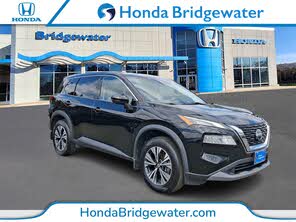
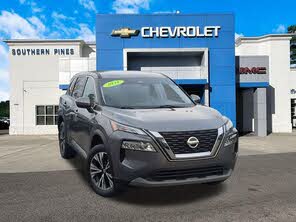
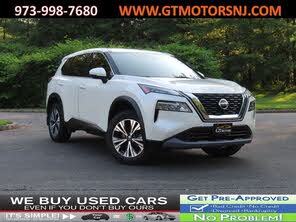
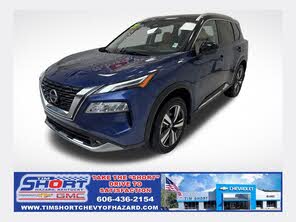
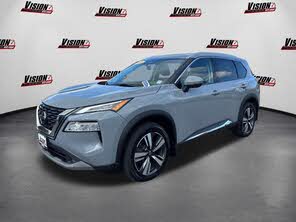
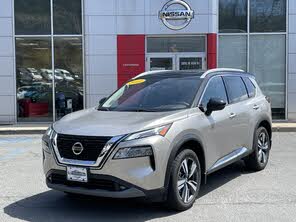
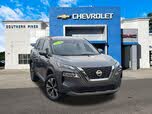
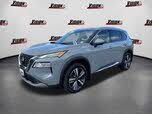
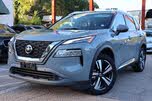
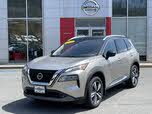
By 2021, the Nissan Rogue had undergone a design transformation, flaunting a more angular and SUV-like appearance paired with an abundance of dark gray plastic cladding around its lower perimeter. This gave the Rogue a rugged demeanor emphasized by simulated skid plates and protective lower door panels. Nevertheless, the rear bumper's audacious rugged styling was a topic of divided opinions among aficionados.
The inclusion of clean LED lighting elements and the iconic V-Motion grille in the Rogue’s design lent it a contemporary and competitive look. Aluminum wheels, ranging up to 19 inches, were another stylish addition. Buyers who chose the optional two-tone paint with a black roof witnessed a hint of custom flair in their vehicle.
The Rogue came in four distinct trims: S, SV, SL, and the luxurious Platinum, priced at $25,650, $27,340, $32,000, and $35,430, respectively. Each price had an added destination charge of $1,095. Factory options included all-wheel drive for $1,400 and Premium option packages for SV and SL trims. It was tested with the SL trim, Premium Package, extra-cost paint, floor mats, and a cargo area protection package, rounding out to $35,195.
Inside, the test Rogue showcased an Almond-colored leather interior with a panoramic glass sunroof, enhancing the cabin's spacious feel. There were plentiful soft-touch surfaces and simulated wood trim, indicating quality. The Platinum trim featured quilted semi-aniline leather, contrast stitching, and ambient lighting for those seeking luxury. Despite the nostalgic design of the climate control digits, modern touches such as wireless Apple CarPlay ensured the Rogue stayed up-to-date.
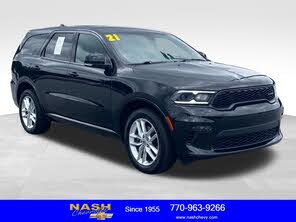
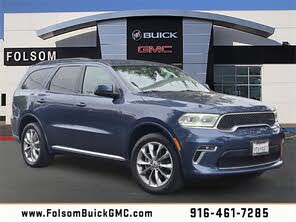
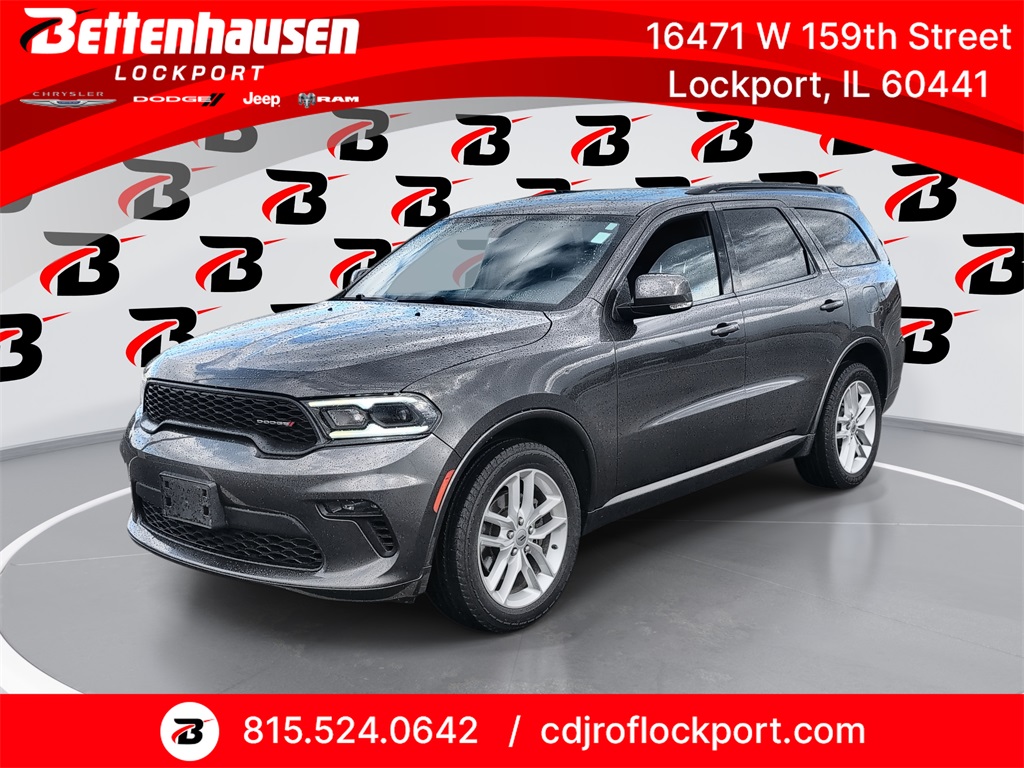
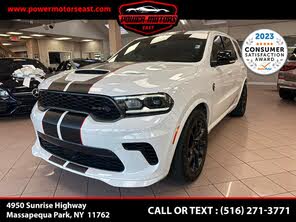
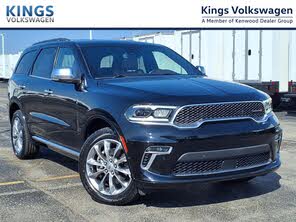
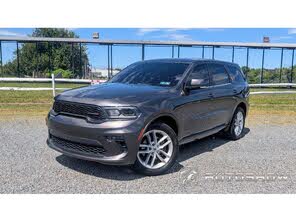
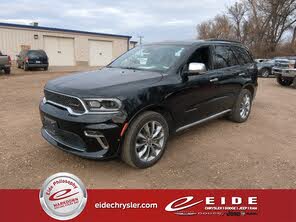
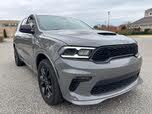
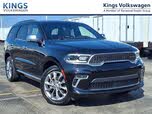
In 2021, Dodge retained the Durango's muscular and athletic stance that was characteristic of its lineup, including the Charger and Challenger. Although its design hadn't changed significantly since its 2011 debut, the 2021 updates injected fresh energy, most notably seen in the Durango SRT Hellcat. This model boasted a cold-air scoop, twin-pipe exhaust, LED headlamps, rear spoiler, and a redesigned front end.
The Durango offered six 20-inch wheel varieties and one 18-inch version, accompanied by 11 exterior colors and six interior schemes. The cabin saw a significant instrument panel update, with either an 8.4-inch or a new 10.1-inch touchscreen running the Uconnect 5 system.
Trim levels ranged from cloth upholstery to luxurious variants featuring leather, suede, Nappa leather, and Laguna leather. The updates to the dashboard modernized the SUV's appearance, aligning it with its muscle car siblings.
The Durango also embraced diversity within its trims, catering to a wide array of buyers. From basic functionality to track-ready performance and sophisticated appointments, this SUV provided several choices including unique packaging options—a rare approach in the SUV market.


By 2021, the Nissan Rogue's powertrain left much to be desired. The sole engine was a 2.5-liter four-cylinder producing 181 horsepower at 6,000 rpm and 181 pound-feet of torque at 3,600 rpm. This was adequate for everyday driving, but the 3,500-pound vehicle felt underpowered during more demanding scenarios.
A continuously variable transmission (CVT) managed the power, emulating the feel of a traditional automatic thanks to programmed ratios and steering wheel paddle shifters, although these were rarely used.
All-wheel drive was available, providing up to 8.2 inches of ground clearance and new Snow and Off-Road driving modes, enhancing its adventure-readiness. Yet, during test drives in mountain terrain, the engine seemed sapped of its energy. Despite hints at future turbocharged variants, this was the Rogue's reality for now.
Switching to Sport mode improved responsiveness, serving as a temporary solution for those seeking extra vigor. Fuel economy figures were commendable; the front-wheel-drive Rogue SL managed 27.5 mpg during mixed-road tests, just short of the EPA's 29 mpg rating.
Built on a new architecture with 35% high-strength steel, the Rogue offered a composed ride, thanks to its strut front and multi-link rear suspension combined with Brake-Induced Intelligent Trace Control and Active Ride Control. Vehicle Motion Control was a new addition, predicting ways to enhance the drive based on inputs. The Rogue boasted new and improved steering with a re-positioned electric assist system, sharpened ratio, and enhanced fine-tuning resulting in a more connected driving experience.
In contrast, the 2021 Dodge Durango provided multiple engine choices: a 3.6-liter V6, 5.7-liter HEMI V8, 392 HEMI V8, and a supercharged 6.2-liter HEMI V8. An eight-speed automatic transmission paired with each, though scaled for the different engines. Rear-wheel drive was standard with all-wheel drive optional on most trims.
The V6 delivered 293 horsepower (295 with dual exhaust) and 260 pound-feet of torque, standard in SXT, GT, and Citadel trims. The Durango R/T benefited from the 5.7-liter V8 with 360 hp and 390 lb-ft of torque. The SRT 392’s 392 HEMI V8 put out 475 hp and 470 lb-ft of torque.
Crowning the options, the SRT Hellcat’s supercharged 6.2-liter V8 churned out a stunning 710 hp and 645 lb-ft of torque. Though powerful, it was controllable, with smooth shifts and responsive acceleration both in city traffic and on the highway.
In steering, the Durango excelled but its age showed in the chassis. Rural road drives transferred bumps to the cabin, and cornering on the track highlighted a tension between the tech and vehicle architecture. Braking, however, was handled expertly by black Brembo six-piston brakes that performed admirably even under strain.
The new Tow N Go Package for the R/T trim demonstrated the V8’s capability when towing. A loaded trailer tested the powertrain's might without struggle but highlighted the tedious ascent to higher speeds. Stability was commendable, with the "Tow" mode ensuring balanced AWD torque distribution.
For track enthusiasts, SRT models included Performance Pages with gauges, timers, and configurable drive modes, enhancing the sporty experience.
Nissan’s innovative Zero Gravity seat designs attempted to replicate the neutral spine position astronauts adopt in space, minimizing stress, fatigue, and muscle strain. While results varied, the seats in the 2021 Rogue felt notably improved over its predecessor. They came in cloth with manual height adjustment (S trim), advanced with power settings and leatherette options (SV), standard leather (SL), and premium leather upholstery (Platinum).
Heated front seats, steering wheel, and rear seats were included in the higher trims, although ventilated seats were surprisingly absent. Air conditioning was standard, with dual-zone automatic climate control on SV trims and triple-zone systems for the SL and Platinum. Rear air conditioning vents were standard, and higher trims added rear side window sunshades.
The Rogue offered added room for rear-seat passengers and nearly 90-degree opening rear doors for easy ingress and egress. The back seat provided ample comfort for both kids and adults, capable of fitting up to three child safety seats courtesy of new LATCH anchors. Nissan calmed the cabin with acoustic front glass and thicker insulation.
Storage proved versatile with a new electronic shifter freeing space under the center console, accommodating 32-ounce bottles in door-panel pockets, and an innovative center armrest with a split butterfly-style opening. Cargo-wise, the power rear liftgate standard on SL and Platinum revealed 36.5 cubic feet of cargo space with the Divide-N-Hide system (31.6 cubic feet without it) and maxed out at 74.1 cubic feet with the rear seats folded—ranking high within its class.
In comparison, the Dodge Durango excelled as a family hauler. Slightly more practical than elegant, it struck a balance between SUVs like the Highlander or Pilot and larger models like the Armada or Expedition. The mid-sized packaging allowed it to serve families well.
The Durango accommodated five to seven passengers across two or three rows. Front and second-row seats were roomy, even for taller individuals, while the third row offered surprising space akin to competitors like the Ascent, Highlander, and Pilot. Access to the third row was easy.
The Durango boasted 21 seating options offering extensive choices. Cargo space was ample, though not exceptional. It performed adequately in storage capabilities without standing out.
Fit and finish saw significant improvements, evident in the awards Dodge received for initial vehicle quality. The Durango surpassed previous Dodge models like the Journey and Grand Caravan in refinement.
Comparatively, the Rogue’s cargo capacity of up to 74.1 cubic feet was among the highest in the compact crossover segment, while the Durango’s third-row capabilities and overall spaciousness made it a standout mid-size family SUV.
By 2021, the Nissan Rogue offered a competitive infotainment setup. The S trim included an 8-inch touchscreen with Bluetooth, SiriusXM, Apple CarPlay, and Android Auto, along with a six-month trial of Nissan Concierge Personal Assistant. Physical knobs facilitated control though their shallow protrusion and glossy finish sometimes made them tricky to use. Shortcut buttons at the display’s bottom enhanced functionality.
Moving to SV and SL trims added NissanConnect Services, a WiFi hotspot, Amazon Alexa, and Google Assistant integration. These came with features like remote engine start, auto collision notification, speed/boundary alerts, and a car finder function. Subscription fees applied post-trial.
SL Premium Package and Platinum trims upped the ante with a 9-inch touchscreen, door-to-door navigation, wireless Apple CarPlay, improved voice recognition, and a Bose premium audio system. The voice recognition worked well, while the Bose system delivered solid audio quality.
Platinum trim brought even more technology, including wireless smartphone charging, a 12.3-inch digital instrument cluster, and a 10.8-inch head-up display, completing the high-tech experience.
Conversely, the Dodge Durango's standard SXT trim featured an 8.4-inch touchscreen, while higher trims enjoyed a 10.1-inch screen. The larger screen operated the Uconnect 5 system, which was five times faster than Uconnect 4 and allowed personalized user profiles.
The Uconnect 5 system supported connected services, dual Bluetooth connections, Amazon Alexa, TomTom navigation, SiriusXM with 360L, wireless Apple CarPlay and Android Auto, and OTA updates through a 4G LTE WiFi hotspot. The system’s user-friendliness and aesthetic design were notable, with a larger screen adding competitive edge.
The Durango also offered a family entertainment system with a Blu-ray/DVD player and dual 9-inch screens, available in mid-to-high trims. Dodge’s infotainment and instrument cluster were distinct while SRT models featured unique animations and fonts.
However, the Durango’s analog speedometer had readability issues due to its design, an area the Rogue's digital cluster addressed more efficiently. The TomTom navigation in the Durango was excellent, presenting information clearly and reacting quickly to changes without disruptive recalculations.
Safety was a key focus for Nissan in the 2021 Rogue, appealing to families often opting for small crossovers instead of family sedans. It came with a comprehensive suite of advanced driver assistance systems (ADAS) under the Nissan Safety Shield 360 umbrella, including features like automatic emergency braking with pedestrian detection and lane-departure warning.
A significant differentiation was the inclusion of blind-spot warning with rear cross-traffic alert over adaptive cruise control—one of the most effective modern ADAS features, even on entry trim levels.
In addition, the Rogue included ten airbags, a driver monitoring system, and a rear-seat reminder system. Platinum trims had rear pre-tensioning seatbelts and an airbag between the front seats for added protection.
Starting with the SV, adaptive cruise control was available via the improved ProPilot Assist, which also included a lane-centering function. ProPilot Assist's radar and camera upgrades enhanced its smoothness and accuracy, making it more user-friendly than the previous generation. SL Premium Package and Platinum trims featured advanced ProPilot Assist with Navi-link technology, adjusting speed based on map data for curves and freeway exits.
However, the system sometimes slowed the SUV excessively, potentially annoying other drivers. As of the review, crash-test results were unavailable, though structural improvements suggested strong protection capabilities.
By contrast, the 2021 Dodge Durango’s safety offerings were reactionary. A rearview camera was the only standard active safety feature, with airbags and stability control mandated by federal regulations.
Buyers could upgrade to include adaptive cruise control, lane-departure warning, blind-spot monitoring, automatic high beams, rear cross-traffic alert, parking sensors, and forward-collision warning—but even these were optional, unlike standard packages in many rivals.
NHTSA awarded the Durango a five-star side crash rating and a four-star rollover rating, with front crash-test results pending due to design changes.
CarGurus highlights
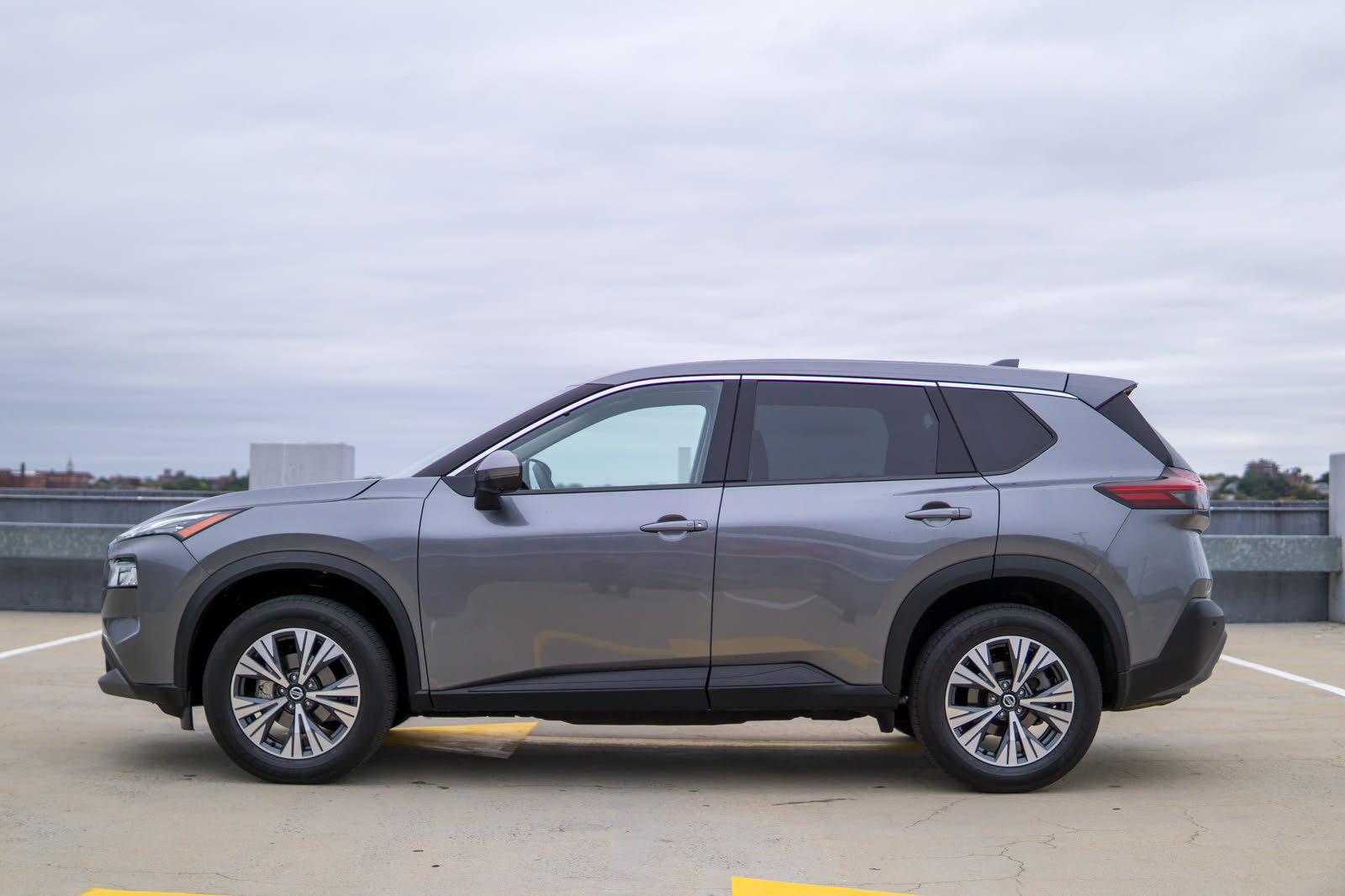
According to CarGurus experts, the overall rating for the 2021 Nissan Rogue is 9.0 out of 10, while the 2021 Dodge Durango scores 8.0 out of 10. Given these ratings, the 2021 Nissan Rogue emerges as the better option for those prioritizing safety, advanced technology, and a comfortable, spacious interior for daily driving. For buyers focused on performance, towing, and versatile passenger arrangements, the 2021 Dodge Durango is still a robust and formidable choice. However, the Rogue’s comprehensive benefits narrowly edge it out in this comparison.
Choose the 2021 Dodge Durango if:
- You desire a mid-size SUV with a range of powerful engine options and robust towing capabilities.
- Your family needs a spacious, adaptable interior that comfortably accommodates up to seven passengers.
- You prefer a tech-savvy SUV with an intuitive infotainment system and an optional rear-seat entertainment setup.



Choose the 2021 Nissan Rogue if:
- You prioritize comprehensive standard safety features, including effective blind-spot monitoring.
- You need a family-friendly SUV with excellent cargo capacity and versatile storage options.
- You seek a refined and technologized driving experience with the possibility of future turbocharged or hybrid models.




CarGurus highlights
According to CarGurus experts, the overall rating for the 2021 Nissan Rogue is 9.0 out of 10, while the 2021 Dodge Durango scores 8.0 out of 10. Given these ratings, the 2021 Nissan Rogue emerges as the better option for those prioritizing safety, advanced technology, and a comfortable, spacious interior for daily driving. For buyers focused on performance, towing, and versatile passenger arrangements, the 2021 Dodge Durango is still a robust and formidable choice. However, the Rogue’s comprehensive benefits narrowly edge it out in this comparison.
Choose the 2021 Dodge Durango if:
Shop Now- You desire a mid-size SUV with a range of powerful engine options and robust towing capabilities.
- Your family needs a spacious, adaptable interior that comfortably accommodates up to seven passengers.
- You prefer a tech-savvy SUV with an intuitive infotainment system and an optional rear-seat entertainment setup.





Choose the 2021 Nissan Rogue if:
Shop Now- You prioritize comprehensive standard safety features, including effective blind-spot monitoring.
- You need a family-friendly SUV with excellent cargo capacity and versatile storage options.
- You seek a refined and technologized driving experience with the possibility of future turbocharged or hybrid models.







By: CarGurus + AI
At CarGurus, our team of experienced automotive writers remain at the heart of our content operation, conducting hands-on car tests and writing insightful guides that are backed by years of industry experience. To complement this, we are harnessing AI to make our content offering more diverse and more helpful to shoppers than ever. To achieve this, our AI systems are based exclusively on CarGurus content, ratings and data, so that what we produce is both unique to CarGurus, and uniquely helpful to car shoppers.