2021 Toyota 4Runner vs 2021 Kia Sorento
Overview | |
MSRP$29,390 | MSRP$36,765 |
Listings684 | Listings1101 |
Ratings & Reviews | |
User Reviews | User Reviews |
Expert reviews7.7 out of 10 | Expert reviews6.2 out of 10 |
Pros
Cons
| Pros
Cons
|
2021 Kia Sorento Reviews SummaryAfter striking gold with the Telluride, Kia has doubled down on the three-row SUV segment with the redesigned Sorento. While it might not bring the same level of near-luxury refinement that has made the Telluride a smash hit, the slightly smaller Sorento arrives as a compelling option for those who value a more maneuverable family crossover. | |
2021 Toyota 4Runner Reviews SummaryDespite its design age, poor fuel economy, rough ride, iffy handling, and marginal safety ratings, the current-generation Toyota 4Runner remains a popular choice in a midsize SUV. Why? Its reputation for reliability and resale value, coupled with its undeniable utility, rugged image, and go-anywhere and do-anything capability, are the selling points. And if that's why you want a 2021 Toyota 4Runner, it won't disappoint you as long as you accept its shortcomings. | |
No video found | |
Popular Features & Specs | |
Engine2.5L 191 hp I4 | Engine4.0L 270 hp V6 |
Drive TrainFWD | Drive Train4X2 |
Seating Capacity7 | Seating Capacity7 |
Horsepower191 hp @ 6100 rpm | Horsepower270 hp @ 5600 rpm |
MPG City24 | MPG City16 |
MPG Highway29 | MPG Highway19 |
Engine | |
Engine Name2.5L 191 hp I4 | Engine Name4.0L 270 hp V6 |
Torque181 lb-ft @ 4000 rpm | Torque278 lb-ft @ 4400 rpm |
Horsepower191 hp @ 6100 rpm | Horsepower270 hp @ 5600 rpm |
DrivetrainFWD | Drivetrain4X2 |
Fuel Economy | |
MPG City24 | MPG City16 |
MPG Highway29 | MPG Highway19 |
Interior | |
Seating Capacity7 | Seating Capacity7 |
Safety | |
Front Crash Overall4 | Front Crash Overall4 |
Side Crash Overall5 | Side Crash Overall5 |
Dimensions & Capacity | |
Cargo Space12.6 cu ft | Cargo Space47.2 cu ft |
Curb Weight3714 lbs | Curb Weight4400 lbs |
Height66.7 in | Height71.5 in |
Length189.0 in | Length190.2 in |
Width74.8 in | Width75.8 in |
Wheelbase110.8 in | Wheelbase109.8 in |
Maximum Payload1643 lbs | Maximum Payload1700 lbs |
Number of doors4 | Number of doors4 |
Maximum Towing Capacity2000 lbs | Maximum Towing Capacity5000 lbs |
Standard Towing Capacity | Standard Towing Capacity5000 lbs |
Overview | ||
MSRP | $29,390 | $36,765 |
Listings | ||
Ratings & Reviews | ||
User reviews | ||
Expert reviews | 7.7 out of 10Read full review | 6.2 out of 10Read full review |
Pros & cons | Pros
Cons
| Pros
Cons
|
Summary | After striking gold with the Telluride, Kia has doubled down on the three-row SUV segment with the redesigned Sorento. While it might not bring the same level of near-luxury refinement that has made the Telluride a smash hit, the slightly smaller Sorento arrives as a compelling option for those who value a more maneuverable family crossover. | Despite its design age, poor fuel economy, rough ride, iffy handling, and marginal safety ratings, the current-generation Toyota 4Runner remains a popular choice in a midsize SUV. Why? Its reputation for reliability and resale value, coupled with its undeniable utility, rugged image, and go-anywhere and do-anything capability, are the selling points. And if that's why you want a 2021 Toyota 4Runner, it won't disappoint you as long as you accept its shortcomings. |
Video | No video found | |
Popular Features & Specs | ||
Engine | 2.5L 191 hp I4 | 4.0L 270 hp V6 |
Drive Train | FWD | 4X2 |
Seating Capacity | 7 | 7 |
Horsepower | 191 hp @ 6100 rpm | 270 hp @ 5600 rpm |
MPG City | 24 | 16 |
MPG Highway | 29 | 19 |
Engine | ||
Engine Name | 2.5L 191 hp I4 | 4.0L 270 hp V6 |
Torque | 181 lb-ft @ 4000 rpm | 278 lb-ft @ 4400 rpm |
Horsepower | 191 hp @ 6100 rpm | 270 hp @ 5600 rpm |
Drivetrain | FWD | 4X2 |
Fuel Economy | ||
MPG City | 24 | 16 |
MPG Highway | 29 | 19 |
Interior | ||
Seating Capacity | 7 | 7 |
Safety | ||
Front Crash Overall | 4 | 4 |
Side Crash Overall | 5 | 5 |
Dimensions & Capacity | ||
Cargo Space | 12.6 cu ft | 47.2 cu ft |
Curb Weight | 3714 lbs | 4400 lbs |
Height | 66.7 in | 71.5 in |
Length | 189.0 in | 190.2 in |
Width | 74.8 in | 75.8 in |
Wheelbase | 110.8 in | 109.8 in |
Maximum Payload | 1643 lbs | 1700 lbs |
Number of doors | 4 | 4 |
Maximum Towing Capacity | 2000 lbs | 5000 lbs |
Standard Towing Capacity | 5000 lbs | |
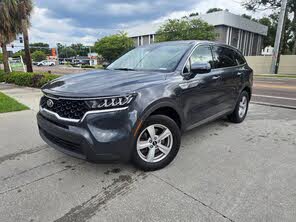
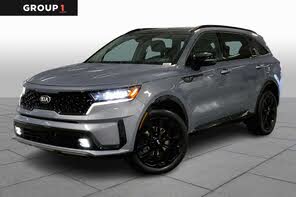
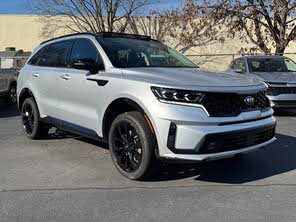
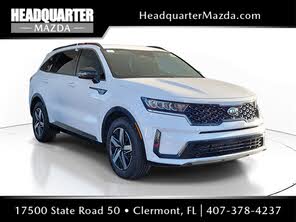
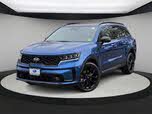
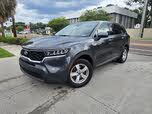
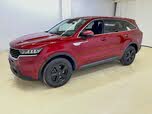
The 2021 Kia Sorento represented a significant leap forward in design compared to its predecessor. It shed the previous model's bubbly aesthetic for a more athletic and muscular silhouette. The SX Prestige trim with the X-Line package added roof rails and a shark fin antenna, enhancing its rugged appeal. The front featured an expansive tiger-nose grille that curved toward the corners, complemented by squinting headlights and a silver accent between the front fender and the door. The rear design included large D-pillars and beautiful vertical taillights, giving the Sorento a cautiously modern look that seemed likely to age well. Inside, the Sorento was packed with high-value features, including heated outside mirrors, second-row air vents, Apple CarPlay, Android Auto, Bluetooth connectivity, and keyless entry. The interior offered various seat adjustments and materials, with the SX Prestige trim boasting real perforated leather seats.
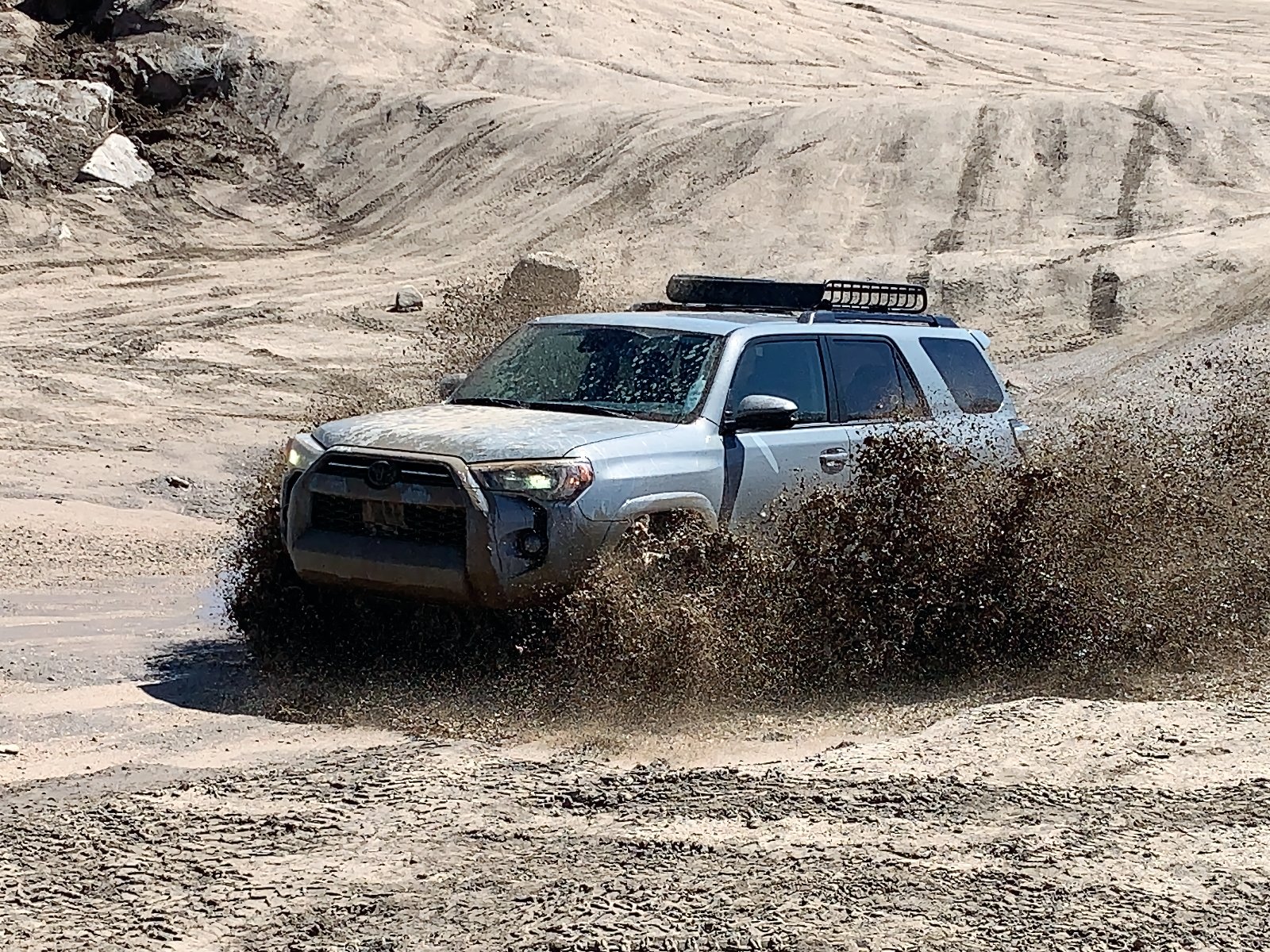
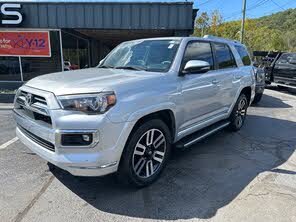
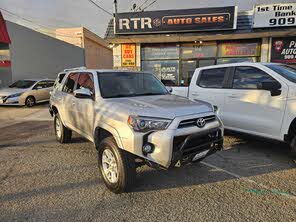
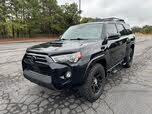
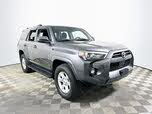
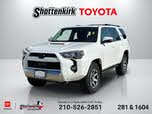
In contrast, the 2021 Toyota 4Runner retained much of its design from 12 years prior, with only minor updates over the years. Its two-box body with flared fenders and trapezoidal wheel arches gave it a timeless and utilitarian look. The 4Runner's design was more about function than form, with a rugged appearance that had aged well. The Trail Special Edition, priced at $38,565 MSRP, featured dark gray TRD Off-Road wheels and a Yakima RoadWarrior rooftop cargo basket. Inside, the 4Runner's interior was filled with hard plastic materials, big knobs, and buttons, reflecting its old-school charm. The Trail Special Edition included black cloth upholstery with tan stitching, all-weather floor mats, a sliding rear cargo tray, and a custom-made 40-quart cooler. The 4Runner's interior was simple and durable, designed to withstand the test of time.


The 2021 Kia Sorento offered a range of powertrains, with the most common being a naturally aspirated 2.5-liter four-cylinder engine producing 191 horsepower and 181 lb-ft of torque. However, our test car featured the more powerful turbocharged 2.5-liter four-cylinder engine, delivering 281 horsepower and 311 lb-ft of torque through an eight-speed dual-clutch transmission (DCT) with a wet clutch to all-wheel drive (AWD). This setup provided ample power for merging, cruising, and passing on the interstate. The Sorento also offered a hybrid version with a turbocharged 1.6-liter four-cylinder engine and an electric motor, available only with front-wheel drive (FWD). The AWD system in our test car included torque vectoring and a center-locking differential for improved traction. The X-Line package added 1.3 inches of ride height, 20-inch alloy wheels, and a roof rack. The Sorento's suspension, consisting of McPherson struts up front and a multi-link setup in the rear, provided a smooth and comfortable ride. Various drive modes, including Eco, Normal, and Sport, allowed drivers to tailor the driving experience to their preferences.
The 2021 Toyota 4Runner, on the other hand, was equipped with a 4.0-liter V6 engine producing 270 horsepower and 278 lb-ft of torque, paired with a five-speed automatic transmission. The 4Runner's off-road capabilities were highlighted during a test at the Hungry Valley State Vehicular Recreational Area, where it tackled mud, hills, and ruts with ease. The A-Trac off-road traction control system proved effective in challenging conditions. The 4Runner's part-time 4WD drivetrain required manual shifting into 4-Hi or 4-Lo, and the Trail Special Edition did not offer automatic 4WD. The maximum tow rating was 5,000 pounds. On pavement, the 4Runner felt slow, heavy, and clunky, with truck-like driving characteristics that added to its charm. However, its fuel economy was a drawback, with an EPA rating of 17 mpg combined and an average of 16.8 mpg during our test.
The 2021 Kia Sorento, while a three-row SUV, was best considered a four-seater in its top trims due to the second-row captain's chairs and a tight third row. The base LX and S trims offered a second-row bench seat, accommodating up to five adults. Cargo space behind the third row was limited to 12.6 cubic feet, making it more practical to fold those seats down. The second-row captain's chairs provided ample legroom, with 41.4 inches in the front and 41.7 inches in the rear. The Sorento offered various storage solutions, including a spot for a phone with an optional wireless charger, cupholders, and a center console bucket. Total cargo volume was 75.5 cubic feet, comparable to compact crossovers like the Honda CR-V or Toyota RAV4.
The 2021 Toyota 4Runner sat high off the ground, which could be challenging for shorter individuals to climb aboard without running boards. Once inside, the 4Runner offered comfortable seating with proper support in both the front and rear. The back seat provided generous legroom, good visibility, air conditioning vents, and USB charging ports. The 4Runner's interior could be configured with a third-row seat, but our test vehicle featured a sliding cargo deck with a 440-pound capacity. Cargo space measured up to 47.2 cubic feet behind the back seat and 89.7 cubic feet with the rear seat folded down. The Trail Special Edition's roof rack added extra storage capacity for adventures. Interior storage was decent, with various compartments for smaller items.
The 2021 Kia Sorento featured an 8-inch touchscreen display on the LX, S, and EX trims, with hard buttons, volume and tuning knobs, and wireless Apple CarPlay and Android Auto. The larger 10.25-inch screen on the SX and SX Prestige trims looked fantastic but required a physical connection for Apple CarPlay and Android Auto. The infotainment system had some quirks, such as the right third of the screen displaying redundant information when using Android Auto. The Sorento offered plenty of USB ports but lacked USB-C ports. The optional Bose stereo system was decent but not exceptional. The navigation system needed improvement, particularly in voice search and Point-of-Interest functions.
The 2021 Toyota 4Runner Trail Special Edition came with an 8-inch touchscreen infotainment system, including Bluetooth, Apple CarPlay, Android Auto, Amazon Alexa compatibility, SiriusXM satellite radio, and five USB ports. The premium audio upgrade added dynamic navigation, dynamic point-of-interest search, dynamic voice recognition, and a one-year subscription to Destination Assist concierge services. The infotainment system featured physical shortcut buttons and knobs, making it easy to use even with gloves. The voice recognition technology was effective, and the navigation map included main trails at Hungry Valley. The 4Runner's infotainment system was functional and user-friendly, despite its smaller screen size.
The 2021 Kia Sorento came equipped with a comprehensive array of standard safety features, including automatic emergency braking with pedestrian detection, driver-attention warning, lane-keeping assist, lane-departure warning, lane-following assist, and auto high beams. Our test car also had a surround-view camera and front- and rear camera views at low speeds. The adaptive cruise control worked smoothly, while the lane-keeping assist system occasionally made noticeable corrections. The Sorento received a four-star overall rating from the National Highway Traffic Safety Administration (NHTSA) and a Top Safety Pick designation from the Insurance Institute for Highway Safety (IIHS).
The 2021 Toyota 4Runner featured Toyota Safety Sense P (TSS-P), which included adaptive cruise control, forward-collision warning, automatic forward emergency braking, lane departure warning, and automatic high-beam headlights. However, it lacked a blind-spot warning system with rear cross-traffic warning. The 4Runner received a three-star rollover resistance rating from the NHTSA and a "Good" rating for roof crush strength from the IIHS. The IIHS rated the 4Runner's protection for the driver in a small overlap frontal-impact collision as Marginal, and the NHTSA gave the front passenger protection a three-star rating in a frontal-impact crash.
CarGurus highlights

According to CarGurus experts, the overall rating for the 2021 Kia Sorento is 7.7 out of 10, while the 2021 Toyota 4Runner scores 6.2 out of 10. Based on these ratings, the 2021 Kia Sorento is the better choice for most consumers, offering a more modern design, advanced safety features, and a versatile range of powertrains.
Choose the 2021 Toyota 4Runner if:
- You require a rugged, off-road-capable SUV with proven durability.
- You appreciate a simple, old-school interior with practical features.
- You need ample cargo space and a high towing capacity.







Choose the 2021 Kia Sorento if:
- You prioritize modern design and a well-equipped interior.
- You need a versatile SUV with various powertrain options, including a hybrid.
- You value advanced safety features and high safety ratings.




CarGurus highlights
According to CarGurus experts, the overall rating for the 2021 Kia Sorento is 7.7 out of 10, while the 2021 Toyota 4Runner scores 6.2 out of 10. Based on these ratings, the 2021 Kia Sorento is the better choice for most consumers, offering a more modern design, advanced safety features, and a versatile range of powertrains.
Choose the 2021 Toyota 4Runner if:
Shop Now- You require a rugged, off-road-capable SUV with proven durability.
- You appreciate a simple, old-school interior with practical features.
- You need ample cargo space and a high towing capacity.







Choose the 2021 Kia Sorento if:
Shop Now- You prioritize modern design and a well-equipped interior.
- You need a versatile SUV with various powertrain options, including a hybrid.
- You value advanced safety features and high safety ratings.








By: CarGurus + AI
At CarGurus, our team of experienced automotive writers remain at the heart of our content operation, conducting hands-on car tests and writing insightful guides that are backed by years of industry experience. To complement this, we are harnessing AI to make our content offering more diverse and more helpful to shoppers than ever. To achieve this, our AI systems are based exclusively on CarGurus content, ratings and data, so that what we produce is both unique to CarGurus, and uniquely helpful to car shoppers.