2021 Kia Sorento vs 2020 Volvo XC90

Overview | |
MSRP$48,350 | MSRP$29,390 |
Listings301 | Listings674 |
Ratings & Reviews | |
User Reviews | User Reviews |
Expert reviews8.5 out of 10 | Expert reviews7.7 out of 10 |
Pros
Cons
| Pros
Cons
|
2020 Volvo XC90 Reviews SummaryThe XC90 has been one of our favorite family shuttles for 18 model years. This 3-row Volvo continues for 2020 as it was during its 2016 redesign, which brought dramatic new design language, chassis architecture, electrified powertrains, infotainment, and semi-automated driving capability. Among midsize SUVs, the XC90 is among the few I would recommend without any hesitation. Families who can afford to splurge will find a stylish and pampering truck that's built upon decades of safety research, which very few automakers can match. | |
2021 Kia Sorento Reviews SummaryAfter striking gold with the Telluride, Kia has doubled down on the three-row SUV segment with the redesigned Sorento. While it might not bring the same level of near-luxury refinement that has made the Telluride a smash hit, the slightly smaller Sorento arrives as a compelling option for those who value a more maneuverable family crossover. | |
Popular Features & Specs | |
Engine2.0L 250 hp I4 | Engine2.5L 191 hp I4 |
Drive TrainFWD | Drive TrainFWD |
Seating Capacity7 | Seating Capacity7 |
Horsepower250 hp @ 5500 rpm | Horsepower191 hp @ 6100 rpm |
MPG City21 | MPG City24 |
MPG Highway30 | MPG Highway29 |
Engine | |
Engine Name2.0L 250 hp I4 | Engine Name2.5L 191 hp I4 |
Torque258 lb-ft @ 1500 rpm | Torque181 lb-ft @ 4000 rpm |
Horsepower250 hp @ 5500 rpm | Horsepower191 hp @ 6100 rpm |
DrivetrainFWD | DrivetrainFWD |
Fuel Economy | |
MPG City21 | MPG City24 |
MPG Highway30 | MPG Highway29 |
Interior | |
Seating Capacity7 | Seating Capacity7 |
Key Features | |
Sunroof/MoonroofStandard | Sunroof/Moonroof |
Safety | |
Front Crash Overall5 | Front Crash Overall4 |
Side Crash Overall5 | Side Crash Overall5 |
Dimensions & Capacity | |
Cargo Space15.8 cu ft | Cargo Space12.6 cu ft |
Curb Weight4375 lbs | Curb Weight3714 lbs |
Height69.9 in | Height66.7 in |
Length195.0 in | Length189.0 in |
Width84.3 in | Width74.8 in |
Wheelbase117.5 in | Wheelbase110.8 in |
Maximum Payload1210 lbs | Maximum Payload1643 lbs |
Number of doors4 | Number of doors4 |
Maximum Towing Capacity4000 lbs | Maximum Towing Capacity2000 lbs |
Overview | ||
MSRP | $48,350 | $29,390 |
Listings | ||
Ratings & Reviews | ||
User reviews | ||
Expert reviews | 8.5 out of 10Read full review | 7.7 out of 10Read full review |
Pros & cons | Pros
Cons
| Pros
Cons
|
Summary | The XC90 has been one of our favorite family shuttles for 18 model years. This 3-row Volvo continues for 2020 as it was during its 2016 redesign, which brought dramatic new design language, chassis architecture, electrified powertrains, infotainment, and semi-automated driving capability. Among midsize SUVs, the XC90 is among the few I would recommend without any hesitation. Families who can afford to splurge will find a stylish and pampering truck that's built upon decades of safety research, which very few automakers can match. | After striking gold with the Telluride, Kia has doubled down on the three-row SUV segment with the redesigned Sorento. While it might not bring the same level of near-luxury refinement that has made the Telluride a smash hit, the slightly smaller Sorento arrives as a compelling option for those who value a more maneuverable family crossover. |
Video | ||
Popular Features & Specs | ||
Engine | 2.0L 250 hp I4 | 2.5L 191 hp I4 |
Drive Train | FWD | FWD |
Seating Capacity | 7 | 7 |
Horsepower | 250 hp @ 5500 rpm | 191 hp @ 6100 rpm |
MPG City | 21 | 24 |
MPG Highway | 30 | 29 |
Engine | ||
Engine Name | 2.0L 250 hp I4 | 2.5L 191 hp I4 |
Torque | 258 lb-ft @ 1500 rpm | 181 lb-ft @ 4000 rpm |
Horsepower | 250 hp @ 5500 rpm | 191 hp @ 6100 rpm |
Drivetrain | FWD | FWD |
Fuel Economy | ||
MPG City | 21 | 24 |
MPG Highway | 30 | 29 |
Interior | ||
Seating Capacity | 7 | 7 |
Key Features | ||
Sunroof/Moonroof | Standard | |
Safety | ||
Front Crash Overall | 5 | 4 |
Side Crash Overall | 5 | 5 |
Dimensions & Capacity | ||
Cargo Space | 15.8 cu ft | 12.6 cu ft |
Curb Weight | 4375 lbs | 3714 lbs |
Height | 69.9 in | 66.7 in |
Length | 195.0 in | 189.0 in |
Width | 84.3 in | 74.8 in |
Wheelbase | 117.5 in | 110.8 in |
Maximum Payload | 1210 lbs | 1643 lbs |
Number of doors | 4 | 4 |
Maximum Towing Capacity | 4000 lbs | 2000 lbs |
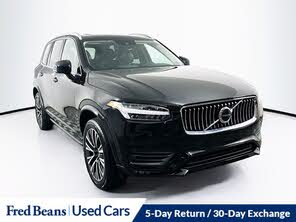
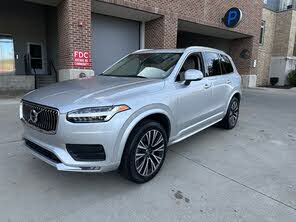
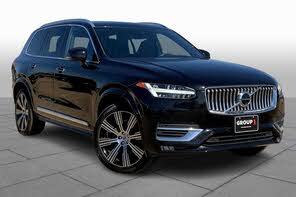
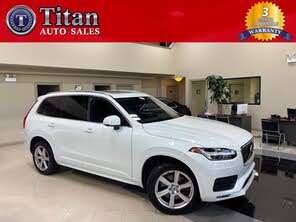
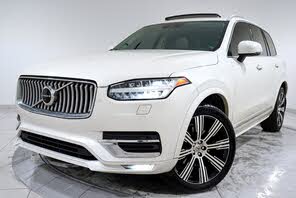
The 2020 Volvo XC90’s appearance took a significant departure from the boxy sedans and wagons of its earlier generations. Modern Volvos epitomized sophisticated Scandinavian design, and the XC90 stood at the zenith of this design evolution. Critics admired its blend of elegance and imposing presence. The XC90 R-Design trim showcased a blacked-out grille with honeycomb treatment, accented by black window surrounds and mirrors, an aggressive chin spoiler, and shining 22-inch rims. Its "Thor's hammer" LED headlights and tall, thin, curving LED taillights were distinctive markers, casting an unmistakably Volvo presence on the road. The Thunder Grey Metallic paint, with its hint of blue, contrasted beautifully with the beige-leather and aluminum interior, drawing comparisons to high-end luxury brands. Volvo's subtle places, like the arching shoulder crease from the 1999 S80 sedan, added to the vehicle's sophisticated yet powerful look.
Inside the XC90, the ambiance exuded luxury and craftsmanship. Inscription models allowed for matte wood trim and wool fabric seats, showcasing Volvo’s attention to unique and high-quality materials. The seats, inspired by designs from earlier models, provided unparalleled comfort and support for long journeys. The interior was filled with padded materials and rich leather, emphasizing quality and safety. Small details, such as the Swedish flag tag on the front passenger seat and the twist-action ignition knob, highlighted Volvo's dedication to craftsmanship. The vertical touchscreen and leather-wrapped center console reinforced the theme of simplicity and quality. This approach was something not even competitors like Mercedes, Audi, Lexus, or Acura could match in that era.
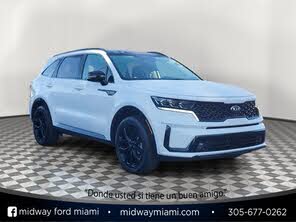
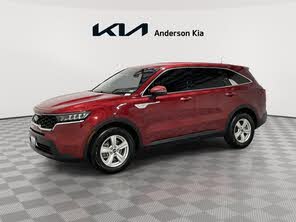
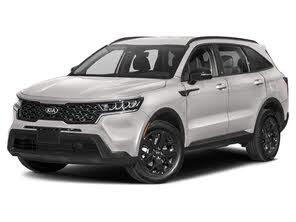
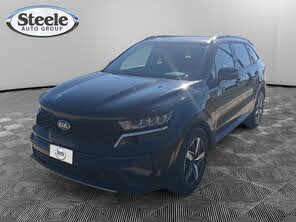
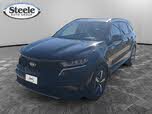
In contrast, the 2021 Kia Sorento made a bold leap away from its jelly-bean-inspired predecessor. The new Sorento adopted a more athletic and muscular silhouette, with the test car's SX Prestige trim featuring the X-Line package, which included roof rails and a shark fin antenna. Kia’s larger, more pronounced tiger-nose grille wrapped around to the front corners, while the headlights, accented by the Sorento’s running lights, were proportional and appealingly squinting.
Along the sides, a striking silver accent between the front fender and the door kept the design visually engaging. The Sorento wasn’t excessively macho, but its styling suggested it was ready for adventure. Moving towards the rear, its large D-pillar and pointed rear edge added a stylistic element, albeit at the expense of creating a potential blind spot. The taillights, composed of beautiful vertical rectangles, lent a cohesive and modern look.
The interior was packed with valuable features. Heated exterior mirrors, second-row air vents, Apple CarPlay, Android Auto, Bluetooth connectivity, and keyless entry were standard. The upper trims offered more luxurious appointments like 10-way power-adjustable seats with lumbar support, although the front passenger’s adjustment options were more limited. The SX Prestige model treated occupants with real perforated leather, which was soft and comfortable, even if the thigh support could have been better. Despite its smaller dimensions in comparison to some competitors, the Sorento offered a contemporary and pleasant interior that was visually appealing and functional.


The 2020 Volvo XC90 offered three powertrains across five tune states, all centered around a turbocharged 2.0-liter inline-4 married to an 8-speed automatic transmission. This was a drastic change from the 6- and 8-cylinder engines of previous generations, and it seemed a heavy vehicle like the XC90 might suffer from this shift. The T5 models produced 250 horsepower and 258 pound-feet of torque, which was considered underwhelming for such a big SUV. Those desiring more power opted for the T6, which, with its added supercharger, delivered a robust 316 hp and 295 lb-ft of torque. This configuration suited the vehicle better for maintaining pace with highway traffic. The Polestar tune available for the T6 further increased its output to 330 hp and 325 lb-ft, although acceleration wasn't always linear, and the engine noise was less refined than competitors in the same price range.
The fuel economy of the XC90 did not particularly impress, especially given its small engine had to work harder than larger-engined competitors. The T6 AWD was rated at 18 mpg city, 26 highway, and 21 combined, while real-world testing averaged out at around 20 mpg, which was mediocre for the class. The T8 plug-in hybrid variant promised up to 18 miles of gas-free driving and delivered 400 hp and 472 lb-ft of torque, but the added weight and limited electric range didn't justify its higher cost.
Meanwhile, the 2021 Kia Sorento offered a simpler engine lineup. The base trims like the LX and S featured a naturally aspirated 2.5-liter four-cylinder that produced 191 hp and 181 lb-ft of torque. This engine, paired with a traditional eight-speed automatic transmission, was sufficient for basic commuting. However, our test car came with the turbocharged 2.5-liter four-cylinder, transforming the Sorento's demeanor. Pumping out 281 hp and 311 lb-ft of torque through an eight-speed dual-clutch transmission with a wet clutch to an AWD setup, this powertrain provided ample thrust for merging, cruising, and passing on highways.
Kia also introduced hybrid and plug-in hybrid versions, the former with a turbocharged 1.6-liter engine and electric motor designed for front-wheel drive only. However, these configurations were considered in separate reviews. Our AWD Sorento, with its torque-vectoring system, performed admirably through corners and came with an increased ride height of 1.3 inches, bringing the total to 8.3 inches. The suspension setup, featuring McPherson struts upfront and a multi-link in the rear, balanced ride comfort and handling, even with the test car’s larger 20-inch wheels.
Fuel economy varied with driving modes. In Eco, the Sorento exceeded EPA estimates but felt sluggish. Normal mode provided average driving dynamics, while Sport mode improved throttle response and offered an enjoyable driving experience. The Sorento, despite its heft, handled corners with minimal head-tossing, making it comfortable on longer drives.
The 2020 Volvo XC90’s interior was a masterpiece of Scandinavian luxury and functional design. Volvo’s Sensus infotainment system had improved in terms of initialization and response time, which was crucial given that almost all vehicle functions were controlled via the touchscreen. Despite this digital-focused design, the system was intuitive once familiar. Physical buttons were minimal, with only essential controls such as the defrosters and volume being accessible. Some minor quibbles like the placement of the glovebox button aside, the system was user-friendly.
Volvo offered unique features like an integrated booster cushion in the middle of the second-row bench, which was perfect for families with small children. The seven-seat configuration provided good legroom and comfort in the first two rows, though the third row was better suited for small children due to its limited space. Cargo capacity was generous, at up to 85.7 cubic feet with the last two rows folded, providing ample room for various cargo needs.
In comparison, the 2021 Kia Sorento, while practical, was best considered as a four-person vehicle in its upper trims, which featured second-row captain's chairs. The third row was cramped for adult use, and the 12.6 cubic feet of cargo space behind it was minimal, making the Telluride a better option for larger groups or more cargo-intensive needs. Legroom was ample in the first two rows, with 41.4 inches in the front and 41.7 inches in the second row.
The Sorento compensated for its tighter third-row space with well-thought-out storage solutions. There were designated spots for phones, cupholders, and door pockets for water bottles. total cargo volume was smaller at 75.5 cubic feet with both the second and third rows folded, aligning it more closely with compact crossovers rather than midsize ones.
The 2020 Volvo XC90 was outfitted with advanced technology, starting with the standard Pilot Assist system. This semi-automated driving feature combined adaptive cruise control and lane-keep assist, making highway driving both comfortable and safe. The standard four-zone climate control system kept all passengers comfortable. The standout tech feature was the Bowers & Wilkins stereo, boasting 19 speakers and 1,400 watts of power. With its surround-sound capabilities mimicking the Gothenburg Concert Hall, it provided an unmatched audio experience. The portrait-oriented touchscreen made navigation easier, allowing for more map details, though apps loaded slowly and the instrument panel offered limited reconfiguration options.
For the 2021 Kia Sorento, tech features included an 8-inch touchscreen on lower trims, which supported wireless Apple CarPlay and Android Auto. The larger 10.25-inch screen on higher trims offered more real estate but required a physical connection for phone projection. Despite this quirk, the larger screen provided clear visuals and housed intuitive menus. The Sorento also offered plenty of USB ports, though lacking modern USB-C ports. The optional Bose stereo system, while adequate, did not impress compared to high-end systems in other vehicles. Navigation via the built-in system had room for improvement, with voice search and point-of-interest functions needing refinement.
The 2020 Volvo XC90 earned top safety ratings from the NHTSA and IIHS, though the latter downgraded its rating slightly due to headlight performance. Standard safety features included forward emergency braking, pedestrian detection, driver-attention monitoring, blind-spot monitoring, and traffic-sign recognition. Volvo’s legacy of safety innovations continued, with features like a boron steel roof and curtain airbags that provided comprehensive protection in rollovers and collisions. Volvo's commitment to safety was rooted in ethical considerations, reflected in their continued emphasis on advanced safety technology.
The 2021 Kia Sorento came equipped with a comprehensive suite of standard safety features, including automatic emergency braking, pedestrian detection, driver-attention warning, lane-keeping assist, and auto high beams. The test model also included a surround-view camera and adaptive cruise control, enhancing driver confidence. While the lane-keeping system could occasionally be overly sensitive, it generally provided effective assistance. The Sorento received a solid four out of five stars overall from the NHTSA, excelling in side-impact crash tests, and earned a Top Safety Pick from the IIHS, with the SX trim's LED headlights contributing to higher ratings.
CarGurus highlights

According to CarGurus experts, the overall rating for the 2020 Volvo XC90 is 8.5 out of 10, while the 2021 Kia Sorento scores 7.7 out of 10. Based on these ratings, the 2020 Volvo XC90 comes out as the stronger choice, offering superior luxury, design, advanced safety features, and a high-end in-cabin experience that eclipses the Sorento. If budget allows, the XC90 provides a more rewarding ownership experience for those seeking luxury and safety. However, the Sorento remains a solid choice for those wanting a stylish, well-equipped SUV at a more accessible price point.
Choose the 2021 Kia Sorento if:
- You desire a stylish, muscular SUV with a modern athletic design and good off-road capability, especially with the X-Line package.
- A high-value feature set with a lower price point compared to luxury brands is important, including standard tech features and smart storage solutions.
- You seek good road performance with varied drive modes and a turbocharged engine option that offers robust power and efficient driving dynamics.






Choose the 2020 Volvo XC90 if:
- You prioritize luxurious design and craftsmanship, with attention to unique materials like wool fabric seats and a high-level audio experience from the Bowers & Wilkins stereo.
- You need a versatile seven-seater with family-friendly features like an integrated booster cushion and generous cargo space.
- Advanced safety features and the brand’s longstanding commitment to top-tier safety are crucial in your buying decision.





CarGurus highlights
According to CarGurus experts, the overall rating for the 2020 Volvo XC90 is 8.5 out of 10, while the 2021 Kia Sorento scores 7.7 out of 10. Based on these ratings, the 2020 Volvo XC90 comes out as the stronger choice, offering superior luxury, design, advanced safety features, and a high-end in-cabin experience that eclipses the Sorento. If budget allows, the XC90 provides a more rewarding ownership experience for those seeking luxury and safety. However, the Sorento remains a solid choice for those wanting a stylish, well-equipped SUV at a more accessible price point.
Choose the 2021 Kia Sorento if:
Shop Now- You desire a stylish, muscular SUV with a modern athletic design and good off-road capability, especially with the X-Line package.
- A high-value feature set with a lower price point compared to luxury brands is important, including standard tech features and smart storage solutions.
- You seek good road performance with varied drive modes and a turbocharged engine option that offers robust power and efficient driving dynamics.








Choose the 2020 Volvo XC90 if:
Shop Now- You prioritize luxurious design and craftsmanship, with attention to unique materials like wool fabric seats and a high-level audio experience from the Bowers & Wilkins stereo.
- You need a versatile seven-seater with family-friendly features like an integrated booster cushion and generous cargo space.
- Advanced safety features and the brand’s longstanding commitment to top-tier safety are crucial in your buying decision.











By: CarGurus + AI
At CarGurus, our team of experienced automotive writers remain at the heart of our content operation, conducting hands-on car tests and writing insightful guides that are backed by years of industry experience. To complement this, we are harnessing AI to make our content offering more diverse and more helpful to shoppers than ever. To achieve this, our AI systems are based exclusively on CarGurus content, ratings and data, so that what we produce is both unique to CarGurus, and uniquely helpful to car shoppers.