2021 Kia Sorento vs 2021 Lexus GX

Overview | |
MSRP$29,390 | MSRP$53,450 |
Listings671 | Listings262 |
Ratings & Reviews | |
User Reviews | User Reviews |
Expert reviews7.7 out of 10 | Expert reviews5.3 out of 10 |
Pros
Cons
| Pros
Cons
|
2021 Kia Sorento Reviews SummaryAfter striking gold with the Telluride, Kia has doubled down on the three-row SUV segment with the redesigned Sorento. While it might not bring the same level of near-luxury refinement that has made the Telluride a smash hit, the slightly smaller Sorento arrives as a compelling option for those who value a more maneuverable family crossover. | |
2021 Lexus GX Reviews SummaryMost modern SUVs are really car-based crossovers—lifted station wagons, or minivans without the sliding doors. That’s not the case with the 2021 Lexus GX 460. Like the mythical Loch Ness Monster, the GX is a creature that time forgot. It’s one of the last SUVs with truck-like body-on-frame construction and true off-road capability. That’s because the GX is actually a rebadged Toyota Land Cruiser Prado (a smaller version of the iconic Toyota Land Cruiser not sold in the United States), and is related to the Toyota 4Runner. It’s also genuinely old: the current generation dates back to the 2010 model year, and Lexus has kept it in production with some updates of styling and tech over the years. That makes the GX a fairly odd proposition on the new-car market. It has the off-road capability, not as a lifestyle statement, but because that’s what was still expected of SUVs when it was launched. The GX sits between the RX and LX in Lexus’ lineup but has little direct competition. Its only real rival is the much newer Land Rover Discovery. For the 2021 model year, the GX gets some minor updates, including a new Premium Plus Package, and acoustic front side glass. Lexus continues to offer only the GX 460 model, with a single powertrain option, standard four-wheel drive (4WD), and three trim levels: base, Premium, and Luxury. Our test car was the midlevel Premium version. | |
No video found | |
Popular Features & Specs | |
Engine2.5L 191 hp I4 | Engine4.6L 301 hp V8 |
Drive TrainFWD | Drive TrainAWD |
Seating Capacity7 | Seating Capacity7 |
Horsepower191 hp @ 6100 rpm | Horsepower301 hp @ 5500 rpm |
MPG City24 | MPG City15 |
MPG Highway29 | MPG Highway19 |
Engine | |
Engine Name2.5L 191 hp I4 | Engine Name4.6L 301 hp V8 |
Torque181 lb-ft @ 4000 rpm | Torque329 lb-ft @ 3500 rpm |
Horsepower191 hp @ 6100 rpm | Horsepower301 hp @ 5500 rpm |
DrivetrainFWD | DrivetrainAWD |
Fuel Economy | |
MPG City24 | MPG City15 |
MPG Highway29 | MPG Highway19 |
Interior | |
Seating Capacity7 | Seating Capacity7 |
Key Features | |
Sunroof/Moonroof | Sunroof/MoonroofOptional |
Safety | |
Front Crash Overall4 | Front Crash Overall |
Side Crash Overall5 | Side Crash Overall |
Dimensions & Capacity | |
Cargo Space12.6 cu ft | Cargo Space11.6 cu ft |
Curb Weight3714 lbs | Curb Weight5130 lbs |
Height66.7 in | Height74.2 in |
Length189.0 in | Length192.1 in |
Width74.8 in | Width74.2 in |
Wheelbase110.8 in | Wheelbase109.8 in |
Maximum Payload1643 lbs | Maximum Payload1315 lbs |
Number of doors4 | Number of doors4 |
Maximum Towing Capacity2000 lbs | Maximum Towing Capacity6500 lbs |
Overview | ||
MSRP | $29,390 | $53,450 |
Listings | ||
Ratings & Reviews | ||
User reviews | ||
Expert reviews | 7.7 out of 10Read full review | 5.3 out of 10Read full review |
Pros & cons | Pros
Cons
| Pros
Cons
|
Summary | After striking gold with the Telluride, Kia has doubled down on the three-row SUV segment with the redesigned Sorento. While it might not bring the same level of near-luxury refinement that has made the Telluride a smash hit, the slightly smaller Sorento arrives as a compelling option for those who value a more maneuverable family crossover. | Most modern SUVs are really car-based crossovers—lifted station wagons, or minivans without the sliding doors. That’s not the case with the 2021 Lexus GX 460. Like the mythical Loch Ness Monster, the GX is a creature that time forgot. It’s one of the last SUVs with truck-like body-on-frame construction and true off-road capability. That’s because the GX is actually a rebadged Toyota Land Cruiser Prado (a smaller version of the iconic Toyota Land Cruiser not sold in the United States), and is related to the Toyota 4Runner. It’s also genuinely old: the current generation dates back to the 2010 model year, and Lexus has kept it in production with some updates of styling and tech over the years. That makes the GX a fairly odd proposition on the new-car market. It has the off-road capability, not as a lifestyle statement, but because that’s what was still expected of SUVs when it was launched. The GX sits between the RX and LX in Lexus’ lineup but has little direct competition. Its only real rival is the much newer Land Rover Discovery. For the 2021 model year, the GX gets some minor updates, including a new Premium Plus Package, and acoustic front side glass. Lexus continues to offer only the GX 460 model, with a single powertrain option, standard four-wheel drive (4WD), and three trim levels: base, Premium, and Luxury. Our test car was the midlevel Premium version. |
Video | No video found | |
Popular Features & Specs | ||
Engine | 2.5L 191 hp I4 | 4.6L 301 hp V8 |
Drive Train | FWD | AWD |
Seating Capacity | 7 | 7 |
Horsepower | 191 hp @ 6100 rpm | 301 hp @ 5500 rpm |
MPG City | 24 | 15 |
MPG Highway | 29 | 19 |
Engine | ||
Engine Name | 2.5L 191 hp I4 | 4.6L 301 hp V8 |
Torque | 181 lb-ft @ 4000 rpm | 329 lb-ft @ 3500 rpm |
Horsepower | 191 hp @ 6100 rpm | 301 hp @ 5500 rpm |
Drivetrain | FWD | AWD |
Fuel Economy | ||
MPG City | 24 | 15 |
MPG Highway | 29 | 19 |
Interior | ||
Seating Capacity | 7 | 7 |
Key Features | ||
Sunroof/Moonroof | Optional | |
Safety | ||
Front Crash Overall | 4 | |
Side Crash Overall | 5 | |
Dimensions & Capacity | ||
Cargo Space | 12.6 cu ft | 11.6 cu ft |
Curb Weight | 3714 lbs | 5130 lbs |
Height | 66.7 in | 74.2 in |
Length | 189.0 in | 192.1 in |
Width | 74.8 in | 74.2 in |
Wheelbase | 110.8 in | 109.8 in |
Maximum Payload | 1643 lbs | 1315 lbs |
Number of doors | 4 | 4 |
Maximum Towing Capacity | 2000 lbs | 6500 lbs |
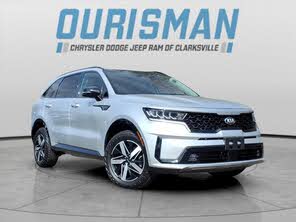
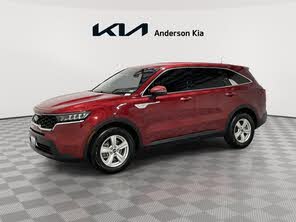
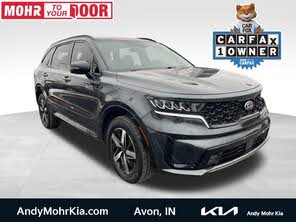
The 2021 Kia Sorento demonstrated a significant transformation in design compared to its predecessor. It shed its previously more rounded and jelly-bean-inspired aesthetic for a more robust and muscular profile. In SX Prestige trim with the X-Line package, the Sorento truly appeared adventurous with its roof rails and shark-fin antenna nicely complementing the rear roof spoiler.
At the Sorento’s front, the larger tiger-nose grille broadened outward with a defined curve toward the car’s corners, offering a bolder look. Its lower edge was sculpted upward toward the headlights, which were equipped with running lights along their bases. These squinty yet suitably-sized headlights added to its sporty demeanor. The side profile featured a silver accent between the front fender and the door, enhancing its visual intrigue with a subtle metallic touch.
Moving to the rear, the design continued to impress with elongated side windows transitioning into a significant D-pillar, accentuating its stylish silhouette. Despite concerns about potential blind spots, this was deemed a worthwhile trade-off for its aesthetic appeal. The taillights were stylish vertical rectangles, two on each side, harmonizing better than Kia's design approach for future models. Overall, the Sorento's carefully modernized design positioned it favorably in the market, balancing macho appeal with practical outdoors preparedness.
Inside, the Sorento brimmed with desirable features, boasting heated outside mirrors, second-row air vents, Apple CarPlay, Android Auto, Bluetooth connectivity, and keyless entry as standard. The interior’s seating adjustments varied by trim, with the base LX offering a simple six-way adjustment for drivers, while other trims elevated comfort with ten-way driver’s seat adjustments and power lumbar support. Front passenger comfort varied more across trims, providing four-way adjustment on lower trims, and up to ten-way with lumbar support only on the SX Prestige with the X-Line package.
Visibility in the Sorento proved exceptional, with generous windows and a large windshield, mitigating concerns from large D-pillars. The panoramic sunroof brought ample light inside, though it occasionally let in a bit too much heat. Upholstery options varied from standard cloth in the LX trim to real perforated leather in the SX Prestige trim, which was notably comfortable, surpassing expectations save for a slight need for more thigh support.
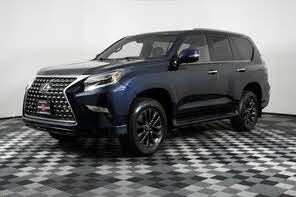
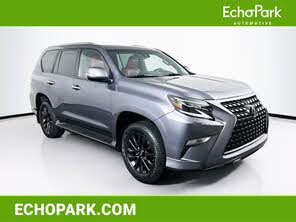
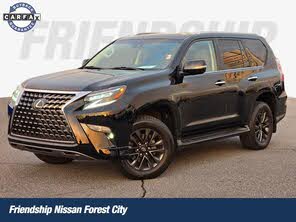
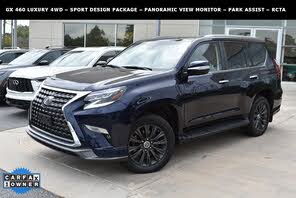
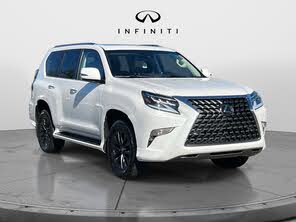
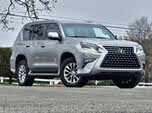
Conversely, the 2021 Lexus GX 460 reflected its age in design, maintaining the same fundamental body shell for a decade. The GX did receive the spindle grille design update in 2014 and further tweaks in 2020 with a new textured grille insert and triple-beam LED headlights. The 2021 model saw new 18-inch silver wheels becoming standard on the Premium trim, with 19-inch alternatives available.
Despite not being initially designed for the spindle grille, the GX’s design seemed relatively coherent, emphasizing a tough, aggressive look that stood out amidst similar SUV models. The Lexus GX’s distinct styling remained appealing to those seeking a robust and unique SUV appearance.
However, the GX’s interior struggled to meet modern luxury standards. The Premium trim’s wood trim unfortunately resembled molded plastic, and actual plastic components were prevalent. While leather upholstery came standard, and semi-aniline leather was available on the luxury trim, the cabin overall felt dated.
The dashboard’s shape and the high position of the center console cramped the legroom, combined with an oddly angled steering wheel that, along with the tall seating position, imparted a bus-like feeling. The new heated wood-trimmed steering wheel for Premium models did not feature heating elements all around due to the wooden parts.
Nonetheless, the GX offered excellent outward visibility due to its boxy profile and low side glass, aiding maneuvers like parking and enhancing off-road capability. Forward visibility was hindered slightly by the tall hood. Interior storage was limited, with small center-console storage bins, cupholders, and in-door bottle holders. The array of physical buttons for various functions still offered a more user-friendly interface compared to modern touchscreen-centric systems.


The 2021 Kia Sorento was available with several powertrains. The base models, such as the LX and S trims, were equipped with a naturally aspirated 2.5-liter four-cylinder engine producing 191 horsepower and 181 lb-ft of torque through a traditional eight-speed automatic transmission. These models allowed both front-wheel drive (FWD) and all-wheel drive (AWD) options.
Our test model featured Kia’s turbocharged 2.5-liter four-cylinder engine, significantly raising the stakes with 281 horsepower and 311 lb-ft of torque channeled through an eight-speed dual-clutch transmission (DCT) with a wet clutch to an AWD system. This setup provided impressive power for merging, cruising, and passing on highways.
Kia also offered a hybrid version of the Sorento with a turbocharged 1.6-liter four-cylinder engine paired with an electric motor. This version came exclusively with FWD, providing another efficiency-oriented option for consumers.
The top-tier Sorento’s AWD system incorporated torque vectoring, maintaining traction through corners and employing a center-locking differential for slipperier conditions. The X-Line package enhanced these capabilities, adding 1.3 inches of ride height (totaling 8.3 inches), 20-inch alloy wheels, and a roof rack.
The Sorento’s suspension—a combination of McPherson struts at the front and a multi-link setup at the rear—ensured a smooth ride, complemented by various drive modes that adapted to different driving needs. Eco mode optimized fuel economy at the cost of throttle response, while Sport mode improved responsiveness. Nevertheless, the Sorento’s weight of around 4,000 pounds did contribute to some corner leaning, although it managed to avoid excessive head-tossing, even on windy roads.
In contrast, the Lexus GX 460 kept its powertrain offering straightforward. The only available engine was a 4.6-liter V8, producing 301 horsepower and 329 pound-feet of torque, paired with a six-speed automatic transmission.
The GX 460’s SUV heritage was evident in its driving experience. Despite the V8’s power, the vehicle’s 5,130-pound weight was a hindrance at higher speeds, where merging and overtaking required careful planning. The 0-60 mph time was 7.8 seconds, respectable yet slower compared to many modern vehicles in its class.
Stopping the GX also demanded foresightedness, and its handling characteristics included noticeable body roll and limited grip in corners. The ride quality was typical of a body-on-frame construction, lacking the refinement of more modern unibody SUVs. While the Luxury trim’s adaptive suspension might improve ride quality, the basic design still leaned heavily toward a traditional off-road-capable SUV.
The GX 460 excelled in off-road capability. It had a Torsen center differential that typically split torque 40/60 front-to-rear but could be locked for a 50/50 distribution. The 4WD system featured a low range for challenging terrains, aided by various driver assists, including hill-descent control and hill-start assist.
The optional Off-Road Package for the Luxury trim elevated capabilities further, with components like a transmission cooler, fuel-tank protector, multi-view camera system, and Crawl Control with Multi-Terrain Select. This setup made the GX a competent off-roader, with 8.1 inches of ground clearance and favorable approach, departure, and break-over angles.
Three-row SUVs appeal largely because of their versatility. However, in reality, the 2021 Kia Sorento—especially in its higher trims—was better off considered a four-seater. The base LX and S trims had a second-row bench, allowing for five adults, but the upper trims featured second-row captain’s chairs that significantly constrained the third row’s usability. With a mere 12.6 cubic feet of cargo space behind the third row, it was more practical to keep these seats folded.
Nevertheless, the second-row seats in our test vehicle were exceedingly comfortable, providing 41.4 inches of legroom upfront and 41.7 inches in the back. Cargo space for smaller items was well-accounted for, with a dedicated spot for a phone, including an option for wireless charging, along with two cupholders right next to the shifter and a decently sized center console bucket.
The Sorento’s door pockets were suitable for standard-sized water bottles, and second-row passengers benefited from additional built-in cupholders in the rear doors holding drinks securely. Despite its smaller size among three-row midsize crossovers, with a total cargo volume of 75.5 cubic feet, the Sorento was comparable to compact crossovers like the Honda CR-V or Toyota RAV4.
Conversely, the Lexus GX 460’s interior reflected its age through its ergonomic layout. The high center console and upright dashboard resulted in limited legroom, and the quirky steering wheel angle, combined with the tall seating position, created a bus-like driving feel. Although the new heated wood-trimmed steering wheel for Premium models was aesthetically pleasing, it lacked full heating coverage.
However, the GX redeemed itself with excellent visibility aided by its boxy profile and low side glass, essential for off-road maneuvers and parking in tight spots. Unfortunately, forward visibility was slightly compromised by the tall hood.
Storage options within the GX were unimpressive, with a small center-console bin, restricted cupholders, and narrow in-door bottle holders across three rows. The fold-down armrest in the second row also consumed significant space for cupholders. A saving grace was the physical buttons for climate control and seat heater functions, providing a straightforward user experience as opposed to complex touchscreen interfaces.
The GX offered three rows of seating for seven occupants as standard, with the option to replace the second-row bench with captain’s chairs. The power-folding third row became available on the Premium trim via the new Premium Plus Package and was standard on the Luxury trim. Still, the third row was best suited for children, with accessibility hindered by the layout of the second-row seats.
Comparatively, while it had more first-row legroom on paper, the GX didn’t feel as spacious as claimed, and the second-row legroom lagged behind the Land Rover Discovery. The Discovery also excelled in headroom dimensions. Furthermore, cargo space in the Lexus GX was constrained with the third-row seats up, offering only a narrow space. Even with the third and second rows folded, it had only 64.7 cubic feet of cargo volume—a stark contrast to the Discovery’s substantial 73.0 cubic feet.
Kia equipped the Sorento with ample tech features, albeit with a few quirks. The 8-inch standard display on the LX, S, and EX trims had hard buttons, volume and tuning knobs, and supported wireless Apple CarPlay and Android Auto. The upscale 10.25-inch screen on the SX and SX Prestige trims had a sleek look, with haptic touch buttons on either side while retaining the knobs. However, it lacked a dedicated home button for ease of navigation.
Moreover, the advanced screen required a physical connection for Apple CarPlay or Android Auto, restricting convenient wireless transmission. When Android Auto was connected, a portion of the display showed redundant and arbitrary information, effectively reducing its functionality to an 8-inch scope. Kia’s numerous USB ports across the cabin were handy, though the omission of USB-C ports stood out.
The optional Bose stereo system in the Sorento wasn’t particularly impressive, lacking the full and immersive audio experience expected from premium systems. Additionally, the built-in navigation system needed enhancement, particularly in refining voice search functionality and the Point-of-Interest database. However, integration with Android Auto or Apple CarPlay often provided alternative solutions for tech-savvy users.
The Lexus GX 460, in line with its older design, had fewer modern tech features. While Bluetooth, Amazon Alexa, and Google Assistant connectivity were standard, the absence of Apple CarPlay and Android Auto was a notable shortcoming. It included two USB ports each for the first and second rows; however, the third row had none. An available 17-speaker Mark Levinson audio system provided an elevated audio experience, albeit in an outdated framework.
The standard infotainment system in the GX included an archaic touchscreen interface with simplistic 1990s-style graphics and limited functionality. Beneath the main screen, a basic digital clock display for time and temperature further underscored its antiquated setup. Unlike the more sophisticated touchscreens in newer luxury SUVs, this system offered minimal engagement.
However, Lexus compensated with numerous analog controls, including large shortcut buttons for navigating the main screen’s menus. While primitive for its price range, this setup was a refreshing alternative to the overwhelming touch-based controls in many current luxury vehicles.
The 2021 Kia Sorento boasted an impressive array of standard safety features. Key inclusions were automatic emergency braking with pedestrian detection, driver-attention warning, lane-keeping assist, lane-departure warning, lane-following assist, and automatic high beams.
Our test vehicle also featured a surround-view camera system that provided front and rear views at low speeds, aiding with meticulous parking. Additionally, the adaptive cruise control system, well-integrated by Hyundai and Kia, ensured smooth operation without overly aggressive braking or acceleration. The lane-keeping assist system occasionally became overzealous, but overall, these safety features made long drives more manageable.
The Sorento earned a four out of five stars overall rating from the National Highway Traffic Safety Administration (NHTSA), with similar scores in frontal-impact crash tests and rollover, while achieving a perfect five stars in side-impact crash tests. The Insurance Institute for Highway Safety (IIHS) awarded the Sorento a Top Safety Pick designation, although the LED headlights on lower trims received a low rating compared to the perfect scores of the SX trim levels.
However, the GX lacked some advanced safety features found on other Lexus models and even non-luxury Toyota models, including traffic-sign recognition and Lane Tracing Assist for automated lane centering.
CarGurus highlights

According to CarGurus experts, the overall rating for the 2021 Kia Sorento is 7.7 out of 10, while the 2021 Lexus GX scores 5.3 out of 10. The Kia Sorento offers a more modern design, better overall functionality, and more advanced tech and safety features, making it the clear winner in this comparison. If you are seeking a contemporary, versatile SUV that excels in both everyday use and occasional off-road outings, the 2021 Kia Sorento is the better choice.
Choose the 2021 Kia Sorento if:
- You want a modern, stylish design with a muscular, athletic look that’s ready for the great outdoors.
- You need a versatile SUV with a variety of powertrains, including turbocharged and hybrid options.
- You prioritize advanced safety features and comprehensive tech integration, including standard Apple CarPlay and Android Auto.






Choose the 2021 Lexus GX if:
- You prefer a traditional, rugged SUV with proven off-road capabilities and a tough, aggressive style.
- You want a vehicle with straightforward analog controls and minimal reliance on touchscreens.
- You need a robust towing capacity (up to 6,500 pounds) and a vehicle that excels in off-road terrains.




CarGurus highlights
According to CarGurus experts, the overall rating for the 2021 Kia Sorento is 7.7 out of 10, while the 2021 Lexus GX scores 5.3 out of 10. The Kia Sorento offers a more modern design, better overall functionality, and more advanced tech and safety features, making it the clear winner in this comparison. If you are seeking a contemporary, versatile SUV that excels in both everyday use and occasional off-road outings, the 2021 Kia Sorento is the better choice.
Choose the 2021 Kia Sorento if:
Shop Now- You want a modern, stylish design with a muscular, athletic look that’s ready for the great outdoors.
- You need a versatile SUV with a variety of powertrains, including turbocharged and hybrid options.
- You prioritize advanced safety features and comprehensive tech integration, including standard Apple CarPlay and Android Auto.









Choose the 2021 Lexus GX if:
Shop Now- You prefer a traditional, rugged SUV with proven off-road capabilities and a tough, aggressive style.
- You want a vehicle with straightforward analog controls and minimal reliance on touchscreens.
- You need a robust towing capacity (up to 6,500 pounds) and a vehicle that excels in off-road terrains.









By: CarGurus + AI
At CarGurus, our team of experienced automotive writers remain at the heart of our content operation, conducting hands-on car tests and writing insightful guides that are backed by years of industry experience. To complement this, we are harnessing AI to make our content offering more diverse and more helpful to shoppers than ever. To achieve this, our AI systems are based exclusively on CarGurus content, ratings and data, so that what we produce is both unique to CarGurus, and uniquely helpful to car shoppers.