2020 Nissan Rogue vs 2020 Toyota RAV4
Overview | |
MSRP$25,950 | MSRP$25,490 |
Listings1161 | Listings1119 |
Ratings & Reviews | |
User Reviews | User Reviews |
Expert reviews8.7 out of 10 | Expert reviews6.0 out of 10 |
Pros
Cons
| Pros
Cons
|
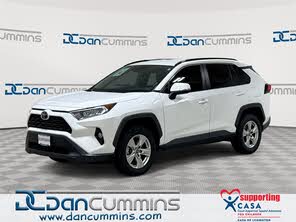
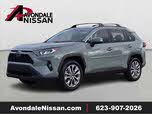
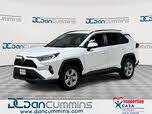
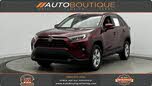
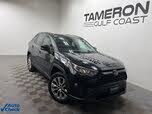
2020 Toyota RAV4 Reviews SummaryAmericans love the Toyota RAV4. The compact crossover SUV is the most popular vehicle in the U.S. that isn’t a pickup truck, and when you live with one for a while, it’s easy to understand why so many people buy a RAV4. Available with a gasoline 4-cylinder or a gas-electric hybrid powertrain (covered as a separate model), and in a wide range of configurations including sporty XSE, luxurious Limited, and rugged Adventure, the 2020 RAV4 meets a variety of customer wants and needs. | |
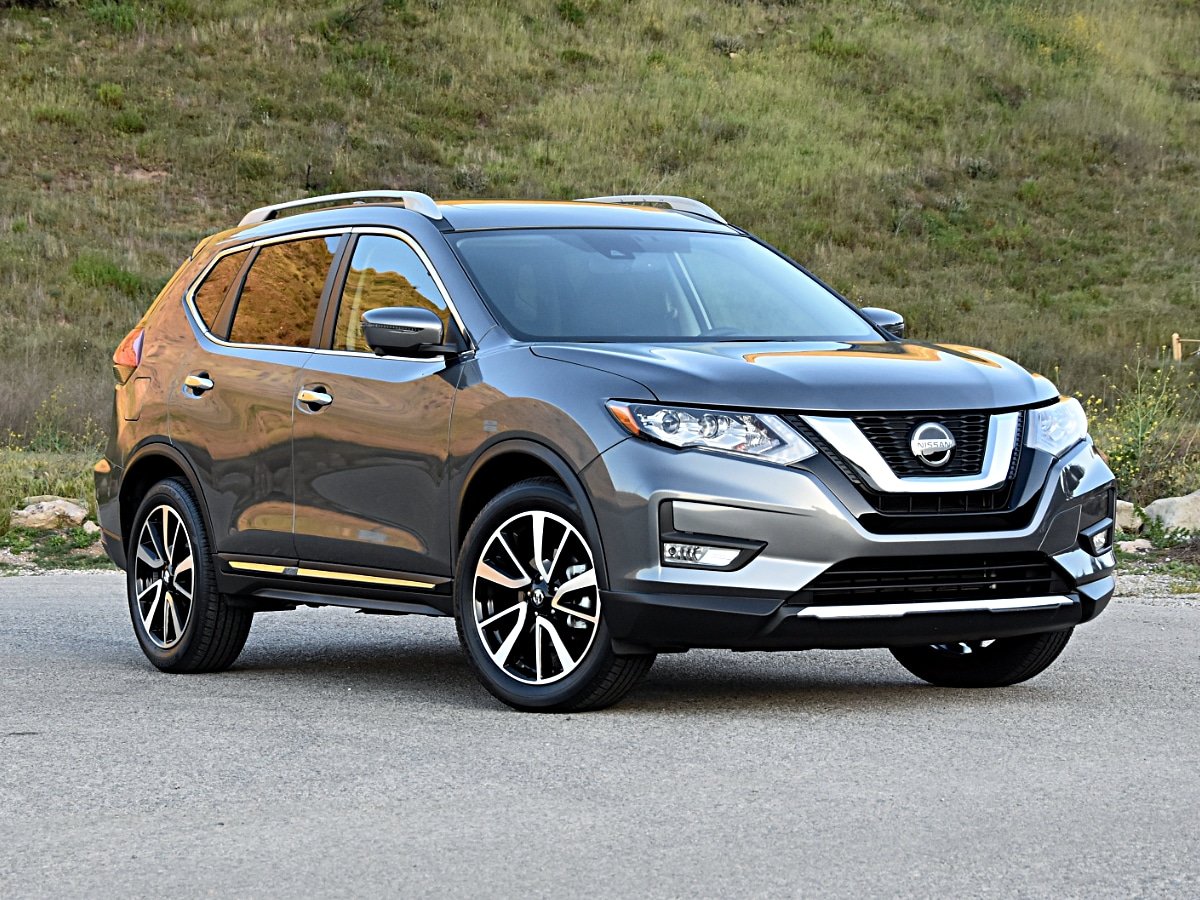
2020 Nissan Rogue Reviews SummaryNissan hasn’t redesigned the Rogue since 2014, but an all-new version of this SUV is coming for the 2021 model year. In the meantime, dealers will be eager to sell remaining stocks of the outgoing 2020 Nissan Rogue, and the deals on these new cars ought to be mighty juicy. Should you bite? Should you wait? Or should you shop for something else? The answers to these questions depend on who you are and what you value in a compact crossover SUV. | |
No video found | |
Popular Features & Specs | |
Engine2.5L 203 hp I4 | Engine2.5L 170 hp I4 |
Drive TrainFWD | Drive TrainFWD |
Seating Capacity5 | Seating Capacity5 |
Horsepower | Horsepower170 hp @ 6000 rpm |
MPG City27 | MPG City26 |
MPG Highway35 | MPG Highway33 |
Engine | |
Engine Name2.5L 203 hp I4 | Engine Name2.5L 170 hp I4 |
Torque | Torque175 lb-ft @ 4400 rpm |
Horsepower | Horsepower170 hp @ 6000 rpm |
DrivetrainFWD | DrivetrainFWD |
Fuel Economy | |
MPG City27 | MPG City26 |
MPG Highway35 | MPG Highway33 |
Interior | |
Seating Capacity5 | Seating Capacity5 |
Safety | |
Front Crash Overall4 | Front Crash Overall4 |
Side Crash Overall5 | Side Crash Overall5 |
Dimensions & Capacity | |
Cargo Space37.6 cu ft | Cargo Space39.3 cu ft |
Curb Weight3370 lbs | Curb Weight3463 lbs |
Height67.0 in | Height66.3 in |
Length180.9 in | Length184.5 in |
Width73.0 in | Width72.4 in |
Wheelbase105.9 in | Wheelbase106.5 in |
Maximum Payload1240 lbs | Maximum Payload1127 lbs |
Number of doors4 | Number of doors4 |
Maximum Towing Capacity1500 lbs | Maximum Towing Capacity |
Overview | ||
MSRP | $25,950 | $25,490 |
Listings | ||
Ratings & Reviews | ||
User reviews | ||
Expert reviews | 8.7 out of 10Read full review | 6.0 out of 10Read full review |
Pros & cons | Pros
Cons
| Pros
Cons
|
Summary | Americans love the Toyota RAV4. The compact crossover SUV is the most popular vehicle in the U.S. that isn’t a pickup truck, and when you live with one for a while, it’s easy to understand why so many people buy a RAV4. Available with a gasoline 4-cylinder or a gas-electric hybrid powertrain (covered as a separate model), and in a wide range of configurations including sporty XSE, luxurious Limited, and rugged Adventure, the 2020 RAV4 meets a variety of customer wants and needs. | Nissan hasn’t redesigned the Rogue since 2014, but an all-new version of this SUV is coming for the 2021 model year. In the meantime, dealers will be eager to sell remaining stocks of the outgoing 2020 Nissan Rogue, and the deals on these new cars ought to be mighty juicy. Should you bite? Should you wait? Or should you shop for something else? The answers to these questions depend on who you are and what you value in a compact crossover SUV. |
Video | No video found | |
Popular Features & Specs | ||
Engine | 2.5L 203 hp I4 | 2.5L 170 hp I4 |
Drive Train | FWD | FWD |
Seating Capacity | 5 | 5 |
Horsepower | 170 hp @ 6000 rpm | |
MPG City | 27 | 26 |
MPG Highway | 35 | 33 |
Engine | ||
Engine Name | 2.5L 203 hp I4 | 2.5L 170 hp I4 |
Torque | 175 lb-ft @ 4400 rpm | |
Horsepower | 170 hp @ 6000 rpm | |
Drivetrain | FWD | FWD |
Fuel Economy | ||
MPG City | 27 | 26 |
MPG Highway | 35 | 33 |
Interior | ||
Seating Capacity | 5 | 5 |
Safety | ||
Front Crash Overall | 4 | 4 |
Side Crash Overall | 5 | 5 |
Dimensions & Capacity | ||
Cargo Space | 37.6 cu ft | 39.3 cu ft |
Curb Weight | 3370 lbs | 3463 lbs |
Height | 67.0 in | 66.3 in |
Length | 180.9 in | 184.5 in |
Width | 73.0 in | 72.4 in |
Wheelbase | 105.9 in | 106.5 in |
Maximum Payload | 1240 lbs | 1127 lbs |
Number of doors | 4 | 4 |
Maximum Towing Capacity | 1500 lbs | |
Traditionally, the Toyota RAV4, which competed with the Mazda CX-5 and Honda CR-V, had served as the archetype for compact SUVs. However, a 2019 redesign introduced a bolder and more angular appearance, emphasizing its longstanding reputation for durability. Among its many trim levels, the 2019 Adventure enhanced off-roading capabilities and came with a torque-vectoring AWD system and multiple driving modes tailored for specific weather and terrain conditions. It boasted 8.6 inches of ground clearance, proving its capability better than any other RAV4 version.
In 2020, the Adventure trim was still available but was overshadowed by the introduction of the new TRD Off-Road trim. This new variant featured smaller and lighter matte-black 18-inch alloy wheels, all-terrain tires effective for severe snow, and a specialized TRD suspension for diverse riding surfaces. The TRD Off-Road was distinguishable by its wheels, tires, and badges but otherwise retained the Adventure's overall look. The test vehicle showcased Toyota’s Lunar Rock gray paint with an extra-cost white roof, a color notably good at hiding dirt. Internally, the new RAV4 featured TRD logos on the front-seat head restraints, practical rubber floor mats, and a rubber cargo mat, contrasting sharply with some less refined plastic surfaces.
The TRD Off-Road trim was near the top of the RAV4's trim-level hierarchy, which ranged from the base LE with FWD ($25,950) to the fully loaded AWD Limited ($35,880). The XLE trim, particularly when upgraded with a top option package, offered an excellent balance of equipment and value for about $31,750 MSRP with a standard gas engine and FWD or just over $33,000 as a hybrid with AWD. The test vehicle, fully equipped and with over $1,500 in dealer-installed accessories, totaled an unusual $42,902.
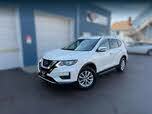
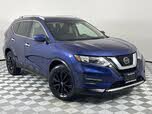
Contrastingly, the 2020 Nissan Rogue, available in S, SV, and SL trims, with a single engine and transmission choice, presented itself as a simple yet attractive vehicle despite its age. The big, bold V-Motion grille and exaggerated fender swells gave it a distinct look, especially with the SL's 19-inch aluminum wheels.
However, the interior betrayed its age, with older design themes dominating the dashboard and rounded surfaces. The plastic interior components failed to impress, though the Rogue compensated with padded sides on the center console, which provided some comfort for the driver's legs.


The 2020 Toyota RAV4 came equipped with a 2.5-liter 4-cylinder engine producing 203 horsepower and 184 pound-feet of torque. Toyota also offered a hybrid variant with 219 horsepower and an impressive fuel economy of up to 40 mpg combined, although it was not available in the TRD Off-Road trim. Next year promised the arrival of the high-performance 2021 RAV4 Prime plug-in hybrid.
The non-turbo, non-hybrid powertrain of the test vehicle offered good class numbers, delivering an enthusiastic performance, particularly in Sport mode. An 8-speed automatic transmission handled power distribution effectively but occasionally struggled with gear selection. The TRD Off-Road trim added unique wheels, tires, suspension, and a torque-vectoring AWD system with various selectable terrain settings. Combined with 8.6 inches of ground clearance and a downhill assist system, the TRD Off-Road demonstrated its capability on challenging terrains, including trails with steep ravines and muddy spots.
For everyday use, the RAV4 performed admirably, impressing with its suspension and 360-degree camera system for urban maneuvers. However, it fell short on fuel economy, averaging 23.4 mpg compared to the EPA’s 27 mpg estimate and wasn’t well-suited for fast mountain road drives due to the all-terrain tires.
Meanwhile, the 2020 Nissan Rogue's sole powertrain—a 170-horsepower 2.5-liter four-cylinder engine paired with a CVT—felt merely adequate for a vehicle weighing up to 3,671 pounds. The CVT managed the available power well but failed to deliver a sporty experience. The Rogue struggled during acceleration, passing, or climbing grades, often responding with noise rather than action. Despite an EPA-rated 29 mpg in combined driving, the test vehicle only managed 24.9 mpg, disappointing in terms of fuel efficiency.
The Rogue’s ride and handling did see some improvement with brake-induced technologies like Intelligent Trace Control and Active Ride Control, which enhanced cornering and ride smoothness. However, it still lacked in driving fun, with its electrically assisted steering feeling lifeless, suspension isolation underwhelming, and occasional CVT drone proving annoying.
The 2020 Toyota RAV4 excelled in ease of entry and exit, thanks to hip point height, and offered a sporty driving position with an 8-way adjustable driver’s seat. The front passenger seat, although lacking height adjustability, provided good thigh support. The SofTex upholstery, notorious for trapping sweat on hot days, could be countered with the Weather Package that added heated and ventilated front seats and a heated steering wheel.
The rear seats in the RAV4 were spacious with generous legroom, accommodating adults and children comfortably. Rear air conditioning vents and USB ports kept passengers comfortable. Interior storage was ample, with a handy dashboard shelf, and cargo space was generous, offering 37.6 cubic feet behind the back seat and 69.8 cubic feet with the seats folded. The test vehicle's roof rack extended its utility, and features like a hands-free power liftgate added convenience.
Conversely, the 2020 Nissan Rogue struggled to provide a comfortable driver’s experience for taller individuals due to a lack of sufficient seat height adjustability. Although it featured Nissan’s Zero Gravity seat design, it failed to deliver ultimate comfort. The rear seats, however, were excellent, offering high cushions with great thigh support, stadium-style seating, and a good view outwards, enhanced by the panoramic sunroof. Rear passengers benefitted from air conditioning vents and USB ports, making the rear seating area a preferred spot.
In-cabin storage in the Rogue was limited, with the glove compartment as the only sizeable space. Nonetheless, it offered significant cargo capacity—with 39 cubic feet behind the back seat and additional underfloor compartments plus the Divide-n-Hide cargo system, surpassing many rivals in utility.
The 2020 Toyota RAV4 featured practical and user-friendly technology. Depending on the trim, it came with a 7- or 8-inch touchscreen display, equipped with Bluetooth, Apple CarPlay, Android Auto, and Amazon Alexa. The TRD Off-Road's 8-inch system, though susceptible to glare, included USB ports and satellite radio, as well as a 4G LTE WiFi hotspot with a three-month trial period.
The infotainment system was intuitive, with menu shortcut buttons and separate climate controls. Upgraded options included an embedded navigation system and a JBL sound system. The TRD Off-Road impressed with its voice-recognition technology and optional Technology Package that added wireless smartphone charging, a 360-degree surround-view camera, and an adjustable digital rear-view mirror.
The 2020 Nissan Rogue, while boasting a comprehensive list of infotainment features, fell short in execution. Standard features included Bluetooth, Apple CarPlay, Android Auto, and hands-free texting. Upgrades included SiriusXM satellite radio, navigation, a Bose premium sound system, and NissanConnect Services with subscription-based features like Amazon Alexa, Google Assistant, remote operations, and safe teen driver settings. Although sophisticated, the NissanConnect interface, with its 7-inch touchscreen, felt outdated and slow, reducing the overall user experience.
Every 2020 RAV4 came equipped with Toyota Safety Sense 2.0, offering a robust suite of advanced driver-assistance systems. These included Pre-Collision System with Pedestrian Detection, radar adaptive cruise control, lane departure alert with steering assist, front and rear parking assist with automated braking, and blind-spot assist with rear cross-traffic alert. The systems performed smoothly and accurately, encouraging their use. Additionally, a free one-year subscription to Safety Connect services was available, providing automatic collision notification and SOS emergency assistance. The RAV4 received a Top Safety Pick rating from the IIHS, contingent on the inclusion of full LED headlights.
Similarly, the 2020 Nissan Rogue offered extensive safety features through its Safety Shield 360 package. This included forward-collision warning, automated emergency braking, blind-spot monitoring, rear cross-traffic alert, lane departure warning, and automatic high-beam headlights. The Rogue also featured Rear Door Alert and a Tire Fill Alert system to improve convenience and safety. Optional upgrades included a surround-view camera and ProPilot Assist adaptive cruise control with lane-centering.
Despite its robust safety package, the Rogue’s crash-test ratings reflected its advancing age. The NHTSA awarded it a 4-star overall rating, largely due to a 3-star rating for driver protection in frontal impacts. The IIHS's evaluation highlighted deficiencies in headlight performance and front-passenger protection, preventing it from earning a Top Safety Pick designation.
CarGurus highlights

According to CarGurus experts, the overall rating for the 2020 Toyota RAV4 was 8.7 out of 10, while the 2020 Nissan Rogue scored 6.0 out of 10. Given these ratings, our recommendation leans strongly towards the 2020 Toyota RAV4. It offers superior off-road capabilities, a wealth of advanced safety features, better technology integration, and a more up-to-date design. The RAV4’s higher rating is a reflection of its overall better performance and versatility compared to the 2020 Nissan Rogue. For a compact SUV that excels in both form and function, the Toyota RAV4 stands as the clear choice.
Choose the 2020 Nissan Rogue if:
- Rear passenger comfort and cargo space are top priorities for your family.
- You seek a simpler, more straightforward vehicle with sufficient standard safety features.
- Advanced subscription-based connectivity services and lower starting prices appeal to you.





Choose the 2020 Toyota RAV4 if:
- You prioritize excellent off-road capability combined with everyday usability.
- Advanced safety features and high crash test ratings are essential for you.
- You want a well-equipped, versatile SUV with generous cargo space and practical technology.




CarGurus highlights
According to CarGurus experts, the overall rating for the 2020 Toyota RAV4 was 8.7 out of 10, while the 2020 Nissan Rogue scored 6.0 out of 10. Given these ratings, our recommendation leans strongly towards the 2020 Toyota RAV4. It offers superior off-road capabilities, a wealth of advanced safety features, better technology integration, and a more up-to-date design. The RAV4’s higher rating is a reflection of its overall better performance and versatility compared to the 2020 Nissan Rogue. For a compact SUV that excels in both form and function, the Toyota RAV4 stands as the clear choice.
Choose the 2020 Nissan Rogue if:
Shop Now- Rear passenger comfort and cargo space are top priorities for your family.
- You seek a simpler, more straightforward vehicle with sufficient standard safety features.
- Advanced subscription-based connectivity services and lower starting prices appeal to you.







Choose the 2020 Toyota RAV4 if:
Shop Now- You prioritize excellent off-road capability combined with everyday usability.
- Advanced safety features and high crash test ratings are essential for you.
- You want a well-equipped, versatile SUV with generous cargo space and practical technology.






By: CarGurus + AI
At CarGurus, our team of experienced automotive writers remain at the heart of our content operation, conducting hands-on car tests and writing insightful guides that are backed by years of industry experience. To complement this, we are harnessing AI to make our content offering more diverse and more helpful to shoppers than ever. To achieve this, our AI systems are based exclusively on CarGurus content, ratings and data, so that what we produce is both unique to CarGurus, and uniquely helpful to car shoppers.