2020 Toyota Camry vs 2020 Lexus ES
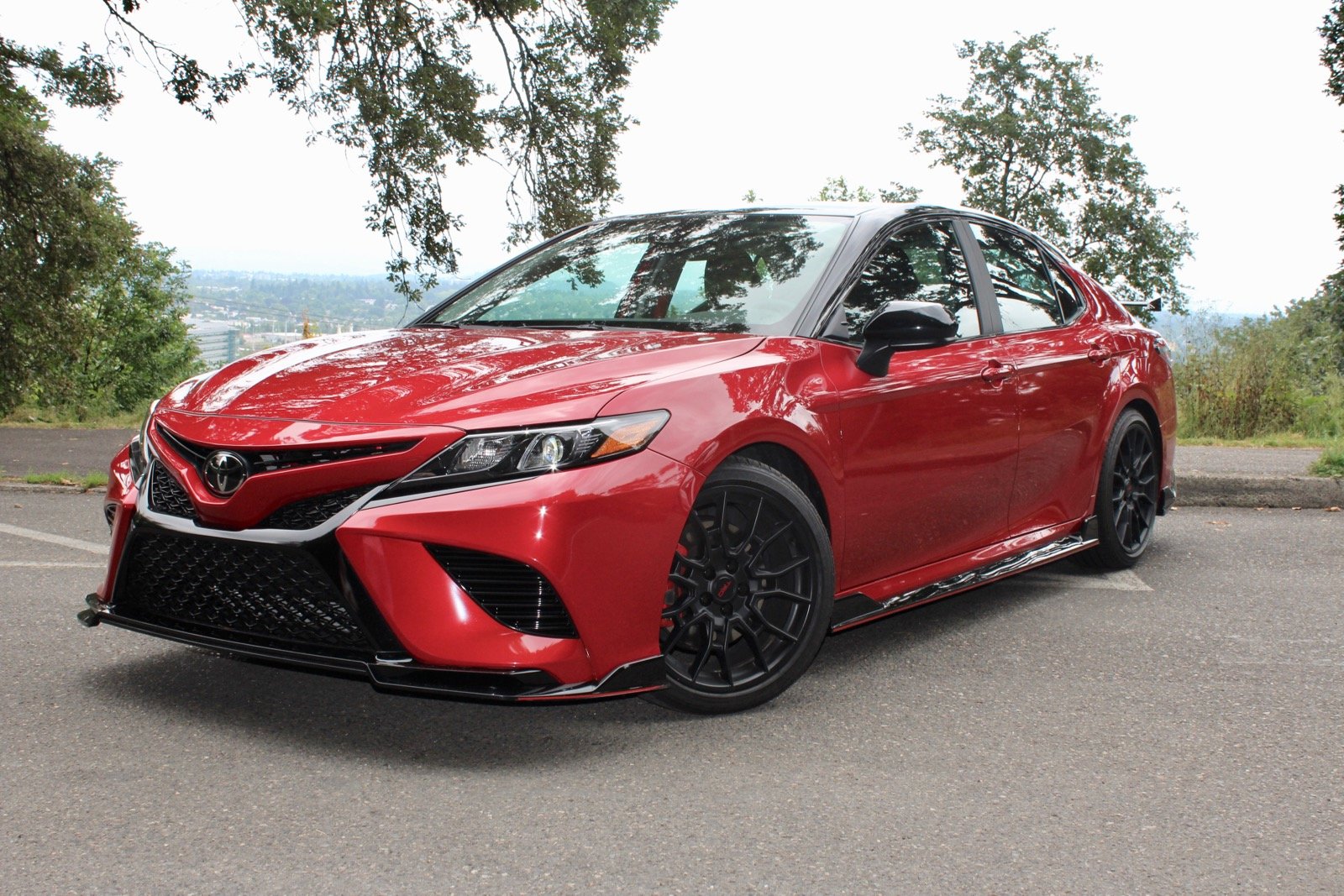
Overview | |
MSRP$24,425 | MSRP$39,900 |
Listings205 | Listings84 |
Ratings & Reviews | |
User Reviews | User Reviews |
Expert reviews7.5 out of 10 | Expert reviews8.0 out of 10 |
Pros
Cons
| Pros
Cons
|
2020 Toyota Camry Reviews SummaryIf you can't beat them, join them. That seems to be Toyota's philosophy in updating the eighth generation of the Camry for the 2020 model year. This latest version of the perennial best seller debuted in 2017 as a 2018 model—and promptly lost its sales crown to Toyota's own RAV4 crossover SUV. As buyers continue to defect from cars, Toyota hopes to entice more shoppers to stick with its midsize sedan by offering all-wheel drive on the Camry for the first time since 1991. Also new for 2020 is the Camry TRD, a sportier version with a 301-horsepower V6 engine that makes its case to a buyer who might never have considered a Camry. | |
2020 Lexus ES Reviews SummarySUVs might dominate the luxury car market, but many luxury brands were built on sedans, like the 2020 Lexus ES. While crossovers and SUVs combine added cargo space with all-weather driving capability, sedans are all about driving in comfort. Lower ride height allows sedans to be far more refined in on-road driving dynamics, offer better fuel economy, and still have enough room for a weekend’s worth of bags. SUVs might have the attributes that you might need in certain scenarios, but sedans like the 2020 Lexus ES excel in ways that are relevant in everyday driving. The 2020 Lexus ES is one year off a complete redesign, though it maintains the same comfort-first formula. It is available in a racy 350 F Sport trim level, but don’t expect any major leaps in performance. The ES delivers on a serene ride and a quiet, well-appointed cabin. For 2020, the ES gains some in-cabin tech features, joining a long list of standard technology. | |
No video found | |
Popular Features & Specs | |
Engine2.5L 203 hp I4 | Engine3.5L 302 hp V6 |
Drive TrainFWD | Drive TrainFWD |
Seating Capacity5 | Seating Capacity5 |
Horsepower | Horsepower302 hp @ 6600 rpm |
MPG City29 | MPG City22 |
MPG Highway41 | MPG Highway32 |
Engine | |
Engine Name2.5L 203 hp I4 | Engine Name3.5L 302 hp V6 |
Torque | Torque267 lb-ft @ 4700 rpm |
Horsepower | Horsepower302 hp @ 6600 rpm |
DrivetrainFWD | DrivetrainFWD |
Fuel Economy | |
MPG City29 | MPG City22 |
MPG Highway41 | MPG Highway32 |
Interior | |
Seating Capacity5 | Seating Capacity5 |
Key Features | |
Sunroof/Moonroof | Sunroof/MoonroofOptional |
Safety | |
Front Crash Overall5 | Front Crash Overall4 |
Side Crash Overall5 | Side Crash Overall5 |
Dimensions & Capacity | |
Cargo Space14.1 cu ft | Cargo Space16.7 cu ft |
Curb Weight3241 lbs | Curb Weight3649 lbs |
Height56.9 in | Height56.9 in |
Length192.1 in | Length195.9 in |
Width72.4 in | Width73.4 in |
Wheelbase111.2 in | Wheelbase113.0 in |
Maximum Payload925 lbs | Maximum Payload905 lbs |
Number of doors4 | Number of doors4 |
Overview | ||
MSRP | $24,425 | $39,900 |
Listings | ||
Ratings & Reviews | ||
User reviews | ||
Expert reviews | 7.5 out of 10Read full review | 8.0 out of 10Read full review |
Pros & cons | Pros
Cons
| Pros
Cons
|
Summary | If you can't beat them, join them. That seems to be Toyota's philosophy in updating the eighth generation of the Camry for the 2020 model year. This latest version of the perennial best seller debuted in 2017 as a 2018 model—and promptly lost its sales crown to Toyota's own RAV4 crossover SUV. As buyers continue to defect from cars, Toyota hopes to entice more shoppers to stick with its midsize sedan by offering all-wheel drive on the Camry for the first time since 1991. Also new for 2020 is the Camry TRD, a sportier version with a 301-horsepower V6 engine that makes its case to a buyer who might never have considered a Camry. | SUVs might dominate the luxury car market, but many luxury brands were built on sedans, like the 2020 Lexus ES. While crossovers and SUVs combine added cargo space with all-weather driving capability, sedans are all about driving in comfort. Lower ride height allows sedans to be far more refined in on-road driving dynamics, offer better fuel economy, and still have enough room for a weekend’s worth of bags. SUVs might have the attributes that you might need in certain scenarios, but sedans like the 2020 Lexus ES excel in ways that are relevant in everyday driving. The 2020 Lexus ES is one year off a complete redesign, though it maintains the same comfort-first formula. It is available in a racy 350 F Sport trim level, but don’t expect any major leaps in performance. The ES delivers on a serene ride and a quiet, well-appointed cabin. For 2020, the ES gains some in-cabin tech features, joining a long list of standard technology. |
Video | No video found | |
Popular Features & Specs | ||
Engine | 2.5L 203 hp I4 | 3.5L 302 hp V6 |
Drive Train | FWD | FWD |
Seating Capacity | 5 | 5 |
Horsepower | 302 hp @ 6600 rpm | |
MPG City | 29 | 22 |
MPG Highway | 41 | 32 |
Engine | ||
Engine Name | 2.5L 203 hp I4 | 3.5L 302 hp V6 |
Torque | 267 lb-ft @ 4700 rpm | |
Horsepower | 302 hp @ 6600 rpm | |
Drivetrain | FWD | FWD |
Fuel Economy | ||
MPG City | 29 | 22 |
MPG Highway | 41 | 32 |
Interior | ||
Seating Capacity | 5 | 5 |
Key Features | ||
Sunroof/Moonroof | Optional | |
Safety | ||
Front Crash Overall | 5 | 4 |
Side Crash Overall | 5 | 5 |
Dimensions & Capacity | ||
Cargo Space | 14.1 cu ft | 16.7 cu ft |
Curb Weight | 3241 lbs | 3649 lbs |
Height | 56.9 in | 56.9 in |
Length | 192.1 in | 195.9 in |
Width | 72.4 in | 73.4 in |
Wheelbase | 111.2 in | 113.0 in |
Maximum Payload | 925 lbs | 905 lbs |
Number of doors | 4 | 4 |
The 2020 Toyota Camry underwent a noteworthy transformation to regain its lost glory. Historically, the Camry had built its reputation on quality, reliability, and unparalleled value, often being synonymous with indestructibility. Its engineering synergy with Toyota’s luxury Lexus brand once underscored its unique stature. However, competitors like the Honda Accord and Hyundai Sonata nudged ahead, marking the Camry as somewhat outdated. In response, Toyota revamped the Camry with renewed attention to detail, bringing it back into the competitive fray.
The redesigned Camry boasted a more expressive styling than ever before. Its bold front fascia and taut, aerodynamic lines reaffirmed its athletic stance. Even the TRD model's huge wing and aerodynamic body kit added to its sporty appeal. Mirroring some design cues from BMW, the character line extended across the doors and bisected their handles, while the upturned kink of the C-pillar paid homage to German engineering. With 14 exterior color options, including an attractive black roof, this Camry aimed to make a bold fashion statement.
Inside, the Camry elevated its quality with uniformly nice materials and a sweeping driver-focused dashboard design, even making lower trims feel premium. The TRD model infused sportiness with red trim accents and bright red seatbelts, evoking the feel of high-performance cars like Porsche or Ferrari. While the top trims featured leather and wood, reinforcing their luxurious vibe comparable to entry-level Lexus models, the Camry, with a starting price of $25,380, remained a mainstream sedan, not quite a Lexus or a BMW. Nonetheless, Toyota made significant strides, showing a clear commitment to enhancing the Camry’s appeal.
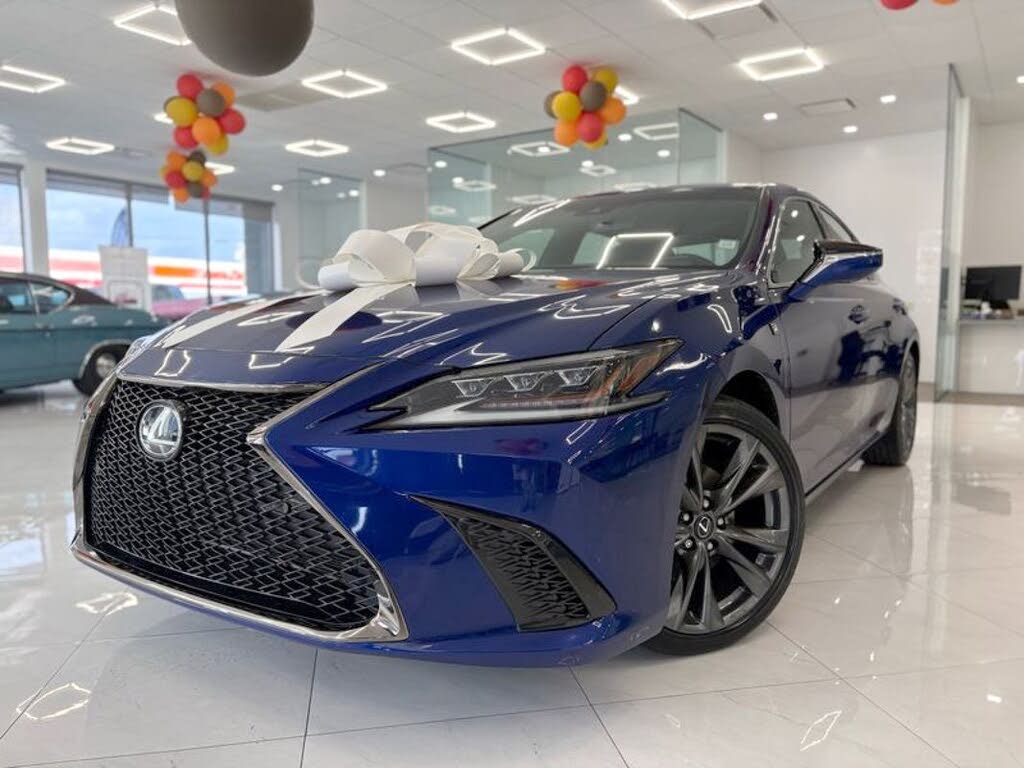
In contrast, the 2020 Lexus ES transformed from being labeled "boring" to showcasing an aggressive design. The notable spindle grille, introduced in 2016, grew larger in the 2020 model, seamlessly integrating with the car’s new larger proportions. The rear showcased thin taillamps consistent with the stylish headlights, while a pronounced kink at the back of the side windows added to its sleek appearance.
The cabin of the ES blended modern technology with luxury, using soft-touch materials throughout. The center of the dashboard housed a large infotainment screen that integrated neatly into the dash's design. Only Mercedes-Benz executed a better interior among luxury-sedan makers. Trim levels like the base ES 350, Luxury, Ultra Luxury, and F Sport offered various features including power moonroof, synthetic leather upholstery, and a 10-way power-adjustable front seat.
The range-topping F Sport trim came with exclusive styling elements like a black mesh grille, unique 19-inch alloy wheels, and dark window accents. Inside, aluminum trim accents, aluminum pedals, and unique heated and ventilated front bucket seats lent it a sporty feel. Packages such as the Premium Package, Navigation Package, and the top-tier Mark Levinson Premium Audio Package added layers of sophistication and customization options for discerning buyers.
Both cars showcased a remarkable commitment to design innovation and quality, but the Lexus ES exuded a distinct luxury aura that was hard to match.


Performance-wise, the 2020 Toyota Camry offered four distinct powertrains. The 3.5-liter V6 engine, producing 301 horsepower, was a standout. Smooth, powerful, and quick to rev, it enhanced the Camry's luxury aspirations, especially in the XLE trim. Paired with an eight-speed automatic transmission, it made the XLE feel like a budget-friendly Lexus. However, this engine did not quite live up to the expectations in the more performance-oriented TRD model, even with a dual exhaust system.
The 2.5-liter four-cylinder engine, generating 203 horsepower (206 in the XSE trim), performed admirably despite its lower power output. The eight-speed automatic transmission maximized its potential, and the lighter front end boosted steering responsiveness, especially in the sporty XSE trim. The new AWD option was a significant addition, especially in a sedan market increasingly focusing on versatility and safety.
On the fuel economy front, the front-drive Camry in the XLE and XSE trims achieved an EPA-combined fuel economy rating of 31 miles per gallon, dropping slightly with AWD to 28 mpg. The V6 models managed 26 mpg, while the TRD stood at 25 mpg, reflecting its performance orientation.
On the other side, the 2020 Lexus ES came equipped with a robust 3.5-liter V6 engine, delivering 302 horsepower and 267 pound-feet of torque to the front wheels via an eight-speed automatic transmission. Lexus boasted a 0-60 mph time of 6.6 seconds and a top speed of 131 mph, ensuring confident and swift acceleration.
The ES focused on providing a serene and refined ride rather than blistering performance. The suspension effectively absorbed road imperfections, and the steering, while light, was precise. The Dynamic Control Shocks played a crucial role in delivering this comfortable and hush ride. The F Sport variant came with the optional Adaptive Variable Suspension (AVS), which allowed for adjustable dampers tailored to the driver’s preferences through the Drive Mode Select Dial. The additional Sport+ mode, exclusive to the AVS-equipped F Sport, stiffened suspension, quickened steering response, and enhanced throttle and transmission mapping made for a more engaging drive.
While the ES wasn’t a performance titan, its combination of upgraded suspension and paddle shifters elevated its driving dynamics, allowing for confident cornering at higher speeds.
The 2020 Toyota Camry provided a user-friendly experience with its well-placed controls. Ergonomically designed, the shifter, cupholders, cell phone tray, and storage bin within the center console were easily accessible. Despite the new styling that might suggest otherwise, front passenger legroom and hip room saw a slight increase from previous generations.
However, the rear seat space was somewhat compromised. Legroom and overall passenger volume shrank slightly, and the trunk space, at 15.1 cubic feet, was relatively small compared to competitors. Fortunately, the addition of AWD didn’t further compromise the trunk or passenger space, though modifications were made to the floor structure and fuel tank, and an electronic parking brake was introduced.
In contrast, the 2020 Lexus ES featured a cavernous cabin, with ample headroom and legroom for both front and rear passengers. The spaciousness extended to the rear seats, which were designed to offer plenty of room, even with the front seats slid back. The front doors came with deep pockets, and the center console featured several storage compartments, ideal for small items.
The Lexus ES provided 16.7 cubic feet of trunk space, placing it mid-pack in the midsize luxury segment. For comparison, the BMW 5 Series offered 18.7 cubic feet, the Mercedes-Benz E-Class provided 13.1 cubic feet, and the Audi A6 had 13.7 cubic feet. A notable drawback for the ES was that the rear seats did not fold down, limiting the ability to carry larger items.
The 2020 Toyota Camry came equipped with an infotainment system that, while functional and quick to respond, felt somewhat dated. The standard 7-inch screen on the lower trims could be upgraded to an 8-inch screen, but it still lagged in terms of graphics resolution compared to rivals. The big news was the inclusion of Android Auto, alongside Apple CarPlay, Amazon Alexa compatibility, and a three-month trial of SiriusXM satellite radio.
The touchscreen interface, coupled with hard buttons for major functions, made the system easy to use. Although a single USB-A port supported phone connectivity, and most models included a pair of USB-A charging ports, the lack of USB-C ports was a slight drawback. Optional features like a Qi wireless charging pad and WiFi Connect with a complimentary data trial added a touch of modern convenience.
Higher trim levels featured a larger 7-inch multi-information display in the instrument panel and an optional 10-inch head-up display (HUD), enhancing the driver-centric technology offerings.
The 2020 Lexus ES, on the other hand, integrated the Lexus Remote Touch system at the heart of its technology suite. This touch-sensitive pad controlled either the standard 8-inch display or the available 12.3-inch display. Although not a touchscreen, the Remote Touch pad was intuitive enough, once users became familiar with it.
The ES’s infotainment system gained a significant update in 2020 with the inclusion of standard Apple CarPlay and Android Auto. The CarPlay interface took full advantage of the large infotainment screen, offering an impressive and user-friendly display. The standard 10-speaker premium audio system could be upgraded to a 17-speaker Mark Levinson stereo system for audiophiles seeking an immersive sound experience. The optional head-up display provided crisp graphics and a high degree of customization, enhancing the overall driving experience.
Toyota equipped every 2020 Camry with a version of its Safety Sense suite of technologies. Standard offerings included a pre-collision system with emergency braking and pedestrian detection, dynamic radar adaptive cruise control, lane-departure warning with steering assist, and automatic high beams. The one-year trial of Safety Connect added emergency assistance and stolen vehicle locator features. Although blind-spot monitoring with rear cross-traffic alert was optional, ten airbags, stability control, and a backup camera were standard.
The Bird's Eye View camera offered on higher trim levels provided a 360-degree view of the surroundings, making parking safer and easier. The 2020 Camry earned the highest crash test ratings from both the NHTSA and IIHS, solidifying its reputation for safety. However, a recall for leaking engine coolant affected some models, highlighting a potential issue for prospective buyers to consider.
Lexus equipped the 2020 ES with its comprehensive Lexus Safety System+ 2.0. This included forward collision avoidance, automatic emergency braking, lane-departure warning, dynamic radar cruise control, and automatic high beams, along with pedestrian and cyclist detection. The lane-keep assist and new lane-tracing assist added semi-autonomous driving capabilities on highways, enhancing safety and convenience.
Additional standard safety features included front and side-impact airbags, traction control, stability control, and a tire-pressure monitoring system, ensuring the ES provided a secure and dependable driving experience.
CarGurus highlights

According to CarGurus experts, the overall rating for the 2020 Toyota Camry is 7.5 out of 10, while the 2020 Lexus ES scores 8.0 out of 10. Based on these ratings, the 2020 Lexus ES emerges as the preferred choice. Its blend of luxury, advanced technology, and comprehensive safety features make it a compelling option for those seeking a midsize luxury sedan. While the Toyota Camry remains a strong contender with impressive reliability and a range of powertrains, the Lexus ES’s higher rating underscores its superior refinement and driving experience.
Choose the 2020 Toyota Camry if:
- You appreciate a diverse selection of powertrain options, including a fuel-efficient four-cylinder and a potent V6.
- You seek a reliable sedan with a comprehensive suite of safety features and top-tier crash test ratings.
- You want a car that balances sportiness with everyday drivability, offering a comfortable ride with an optional AWD system.


Choose the 2020 Lexus ES if:
- You desire a luxury sedan with a refined cabin, spacious interior, and a premium feel.
- You value advanced technology features, including a large infotainment screen, Apple CarPlay, Android Auto, and an optional Mark Levinson audio system.
- Safety and driver-assistance features are a priority, with semi-autonomous driving capabilities for added peace of mind.




CarGurus highlights
According to CarGurus experts, the overall rating for the 2020 Toyota Camry is 7.5 out of 10, while the 2020 Lexus ES scores 8.0 out of 10. Based on these ratings, the 2020 Lexus ES emerges as the preferred choice. Its blend of luxury, advanced technology, and comprehensive safety features make it a compelling option for those seeking a midsize luxury sedan. While the Toyota Camry remains a strong contender with impressive reliability and a range of powertrains, the Lexus ES’s higher rating underscores its superior refinement and driving experience.
Choose the 2020 Toyota Camry if:
Shop Now- You appreciate a diverse selection of powertrain options, including a fuel-efficient four-cylinder and a potent V6.
- You seek a reliable sedan with a comprehensive suite of safety features and top-tier crash test ratings.
- You want a car that balances sportiness with everyday drivability, offering a comfortable ride with an optional AWD system.
Choose the 2020 Lexus ES if:
Shop Now- You desire a luxury sedan with a refined cabin, spacious interior, and a premium feel.
- You value advanced technology features, including a large infotainment screen, Apple CarPlay, Android Auto, and an optional Mark Levinson audio system.
- Safety and driver-assistance features are a priority, with semi-autonomous driving capabilities for added peace of mind.

By: CarGurus + AI
At CarGurus, our team of experienced automotive writers remain at the heart of our content operation, conducting hands-on car tests and writing insightful guides that are backed by years of industry experience. To complement this, we are harnessing AI to make our content offering more diverse and more helpful to shoppers than ever. To achieve this, our AI systems are based exclusively on CarGurus content, ratings and data, so that what we produce is both unique to CarGurus, and uniquely helpful to car shoppers.

