2020 Toyota Camry vs 2021 Nissan Maxima

Overview | |
MSRP$24,425 | MSRP$37,090 |
Listings1392 | Listings192 |
Ratings & Reviews | |
User Reviews | User Reviews |
Expert reviews7.5 out of 10 | Expert reviews7.3 out of 10 |
Pros
Cons
| Pros
Cons
|
2020 Toyota Camry Reviews SummaryIf you can't beat them, join them. That seems to be Toyota's philosophy in updating the eighth generation of the Camry for the 2020 model year. This latest version of the perennial best seller debuted in 2017 as a 2018 model—and promptly lost its sales crown to Toyota's own RAV4 crossover SUV. As buyers continue to defect from cars, Toyota hopes to entice more shoppers to stick with its midsize sedan by offering all-wheel drive on the Camry for the first time since 1991. Also new for 2020 is the Camry TRD, a sportier version with a 301-horsepower V6 engine that makes its case to a buyer who might never have considered a Camry. | |
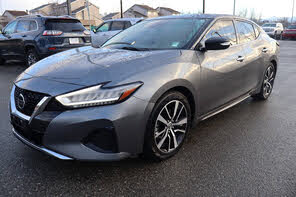
2021 Nissan Maxima Reviews SummaryThe 2021 Nissan Maxima celebrates 40 years on sale, making it one of the oldest Japanese automotive nameplates in continuous use. While it’s impressive for any model to survive four decades, the Maxima has spent most of its history mired in mediocrity. The Nissan Maxima name first appeared in 1981 as a rebranding of the Datsun 810 sedan. The original Maxima/810 was a true enthusiast’s car, boasting rear-wheel drive (RWD) and a sporty character that led Nissan to declare it a “four-door sports car.” However, that only lasted for a few years. With its first redesign for the 1985 model year, the Maxima switched to front-wheel drive (FWD) and was positioned as Nissan’s flagship sedan. It’s been that way ever since. Nissan has continued to gesture in the direction of that original RWD model, but for most of its 40 years, the Maxima has been a slightly sportier alternative to full-size sedans like the Toyota Avalon, rather than a BMW beater. So it is with the current, eighth-generation, Maxima, which debuted for the 2016 model year. It enters the 2021 model year with few changes, the most significant being a 40th Anniversary Edition option package for the top Platinum trim level, which sits above the base SV and mid-range SR trim levels. That’s what we test drove for this review. | |
No video found | No video found |
Popular Features & Specs | |
Engine2.5L 203 hp I4 | Engine3.5L 300 hp V6 |
Drive TrainFWD | Drive TrainFWD |
Seating Capacity5 | Seating Capacity5 |
Horsepower | Horsepower300 hp @ 6400 rpm |
MPG City29 | MPG City20 |
MPG Highway41 | MPG Highway30 |
Engine | |
Engine Name2.5L 203 hp I4 | Engine Name3.5L 300 hp V6 |
Torque | Torque261 lb-ft @ 4400 rpm |
Horsepower | Horsepower300 hp @ 6400 rpm |
DrivetrainFWD | DrivetrainFWD |
Fuel Economy | |
MPG City29 | MPG City20 |
MPG Highway41 | MPG Highway30 |
Interior | |
Seating Capacity5 | Seating Capacity5 |
Key Features | |
Navigation System | Navigation SystemStandard |
Safety | |
Front Crash Overall5 | Front Crash Overall5 |
Side Crash Overall5 | Side Crash Overall5 |
Dimensions & Capacity | |
Cargo Space14.1 cu ft | Cargo Space14.3 cu ft |
Curb Weight3241 lbs | Curb Weight3612 lbs |
Height56.9 in | Height56.5 in |
Length192.1 in | Length192.8 in |
Width72.4 in | Width73.2 in |
Wheelbase111.2 in | Wheelbase109.3 in |
Maximum Payload925 lbs | Maximum Payload1073 lbs |
Number of doors4 | Number of doors4 |
Overview | ||
MSRP | $24,425 | $37,090 |
Listings | ||
Ratings & Reviews | ||
User reviews | ||
Expert reviews | 7.5 out of 10Read full review | 7.3 out of 10Read full review |
Pros & cons | Pros
Cons
| Pros
Cons
|
Summary | If you can't beat them, join them. That seems to be Toyota's philosophy in updating the eighth generation of the Camry for the 2020 model year. This latest version of the perennial best seller debuted in 2017 as a 2018 model—and promptly lost its sales crown to Toyota's own RAV4 crossover SUV. As buyers continue to defect from cars, Toyota hopes to entice more shoppers to stick with its midsize sedan by offering all-wheel drive on the Camry for the first time since 1991. Also new for 2020 is the Camry TRD, a sportier version with a 301-horsepower V6 engine that makes its case to a buyer who might never have considered a Camry. | The 2021 Nissan Maxima celebrates 40 years on sale, making it one of the oldest Japanese automotive nameplates in continuous use. While it’s impressive for any model to survive four decades, the Maxima has spent most of its history mired in mediocrity. The Nissan Maxima name first appeared in 1981 as a rebranding of the Datsun 810 sedan. The original Maxima/810 was a true enthusiast’s car, boasting rear-wheel drive (RWD) and a sporty character that led Nissan to declare it a “four-door sports car.” However, that only lasted for a few years. With its first redesign for the 1985 model year, the Maxima switched to front-wheel drive (FWD) and was positioned as Nissan’s flagship sedan. It’s been that way ever since. Nissan has continued to gesture in the direction of that original RWD model, but for most of its 40 years, the Maxima has been a slightly sportier alternative to full-size sedans like the Toyota Avalon, rather than a BMW beater. So it is with the current, eighth-generation, Maxima, which debuted for the 2016 model year. It enters the 2021 model year with few changes, the most significant being a 40th Anniversary Edition option package for the top Platinum trim level, which sits above the base SV and mid-range SR trim levels. That’s what we test drove for this review. |
Video | No video found | No video found |
Popular Features & Specs | ||
Engine | 2.5L 203 hp I4 | 3.5L 300 hp V6 |
Drive Train | FWD | FWD |
Seating Capacity | 5 | 5 |
Horsepower | 300 hp @ 6400 rpm | |
MPG City | 29 | 20 |
MPG Highway | 41 | 30 |
Engine | ||
Engine Name | 2.5L 203 hp I4 | 3.5L 300 hp V6 |
Torque | 261 lb-ft @ 4400 rpm | |
Horsepower | 300 hp @ 6400 rpm | |
Drivetrain | FWD | FWD |
Fuel Economy | ||
MPG City | 29 | 20 |
MPG Highway | 41 | 30 |
Interior | ||
Seating Capacity | 5 | 5 |
Key Features | ||
Navigation System | Standard | |
Safety | ||
Front Crash Overall | 5 | 5 |
Side Crash Overall | 5 | 5 |
Dimensions & Capacity | ||
Cargo Space | 14.1 cu ft | 14.3 cu ft |
Curb Weight | 3241 lbs | 3612 lbs |
Height | 56.9 in | 56.5 in |
Length | 192.1 in | 192.8 in |
Width | 72.4 in | 73.2 in |
Wheelbase | 111.2 in | 109.3 in |
Maximum Payload | 925 lbs | 1073 lbs |
Number of doors | 4 | 4 |
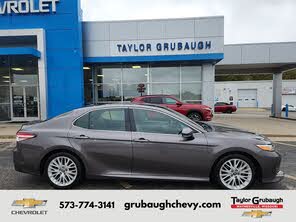
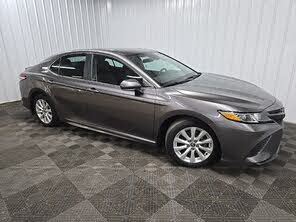
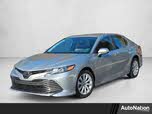
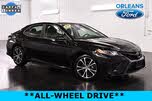
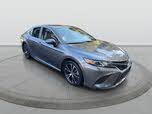
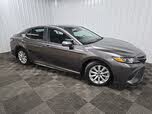
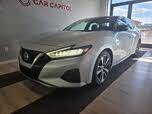
The 2020 Toyota Camry had a renewed focus on quality and appeal, aiming to reclaim its reputation for reliability and value. The styling was more expressive than ever, with a bold front fascia and taut lines that gave it a sporty look. The interior featured high-quality materials and a driver-focused dashboard, making even the base trims feel upscale. The TRD model added red trim accents and bright red seatbelts, enhancing its sporty vibe. Despite these improvements, the Camry remained a mainstream sedan with a starting price of $25,380, not quite reaching the luxury or sport sedan status.
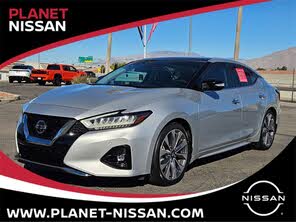
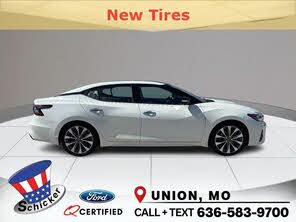
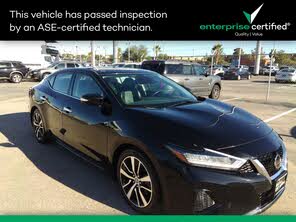
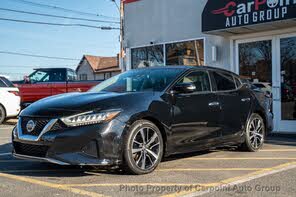
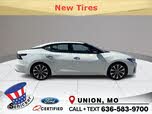
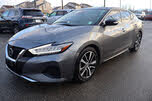
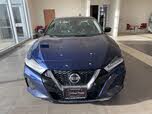
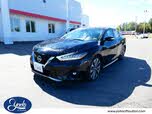
The 2021 Nissan Maxima, as a flagship sedan, set the tone for other Nissan models with its bold styling, including a "floating" roofline and "V-Motion" grille. The Maxima's steeply-angled front end and massive grille gave it a distinctive look, while the 40th Anniversary Edition added unique exterior and interior touches like Ruby Slate Gray Pearl paint, black roof, and red semi-aniline leather upholstery. The interior was dressed up with stylish elements like white gauge faces and heated rear seats, giving it a premium feel. However, the Maxima's design was more about making a statement than blending in.


The 2020 Toyota Camry offered four distinct powertrains: a 2.5-liter four-cylinder with FWD or AWD, a 3.5-liter V6 with FWD, and a hybrid powertrain. The 3.5-liter V6 produced 301 horsepower and was paired with an eight-speed automatic transmission, providing a smooth and powerful driving experience. The 2.5-liter four-cylinder, with 203 hp (206 in XSE trim), was lighter and more agile, making the XSE trim nearly as fun to drive as the TRD. The AWD system, similar to that in the RAV4, could send up to half of the engine's 184 pound-feet of torque to the rear wheels, enhancing traction in slippery conditions. The Camry's fuel economy varied, with the FWD four-cylinder achieving 31 mpg combined, AWD models at 28 mpg, and V6 models at 26 mpg (25 mpg for the TRD).
The 2021 Nissan Maxima came with a 3.5-liter V6 engine producing 300 horsepower and 261 pound-feet of torque, paired with a CVT and FWD. While not a "four-door sports car," the Maxima was quick and the V6 engine sounded great. The CVT was responsive, meting out power effectively. The Maxima was agile for a big sedan, but its steering lacked feel and precision, and the front end struggled with grip and torque steer. Compared to competitors, the Maxima felt more coherent in its sporty design, though the Kia Stinger offered a better performance with RWD. The Maxima excelled in highway cruising, with a quiet cabin and comfortable ride despite its stiff suspension.
The 2020 Toyota Camry was user-friendly, with controls that were easy to reach and use. The front seats offered increased legroom and hip room compared to the previous generation, but the rear seat had less legroom and overall passenger volume. The trunk space was also smaller at 15.1 cubic feet, comparable to the Honda Civic. The addition of AWD did not compromise the trunk or passenger space, maintaining the same dimensions as the FWD versions.
The 2021 Nissan Maxima provided generous space for the driver and front passenger, with the highest front headroom and legroom in its class. However, rear-seat passengers had less headroom and the worst legroom among full-size sedans. The seats were positioned far inboard, creating a cramped feeling despite the ample front space. The Maxima featured Nissan's "Zero Gravity" front seats, designed for optimum support, with eight-way power adjustment for the driver and four-way for the passenger. The trunk space was the smallest in its class at 14.3 cubic feet, less than competitors like the Kia Stinger and Volkswagen Arteon, which offered more cargo space with their hatchback designs.
The 2020 Toyota Camry added Android Auto to its standard features, joining Apple CarPlay, Amazon Alexa compatibility, and a three-month trial of SiriusXM satellite radio. The standard infotainment system had low-resolution graphics and inferior navigation software, but the touchscreen was functional and responsive. The base models had a 7-inch screen, with an optional 8-inch upgrade. USB-A ports were standard, with an optional Qi wireless charging pad. A three-month trial of WiFi Connect and a one-year trial of Remote Connect were available on higher trims. The multi-information display could be upgraded to 7 inches, and an optional 10-inch HUD was available.
The 2021 Nissan Maxima's standard infotainment system included an 8-inch touchscreen, Bluetooth, Apple CarPlay/Android Auto compatibility, and a built-in WiFi hotspot. USB-A and USB-C ports were provided, along with an available 11-speaker Bose audio system. However, the system's graphics were dated, and small icons made it difficult to navigate menus while driving. The notification sounds were also confusing. Nissan included analog controls for climate and audio, but the touchscreen's usability was lacking.
The 2020 Toyota Camry came with Toyota Safety Sense, including a pre-collision system with emergency braking and pedestrian detection, adaptive cruise control, lane-departure warning with steering assist, and automatic high beams. A one-year trial of Safety Connect was included, and blind-spot monitoring with rear cross-traffic alert was optional. The Camry had 10 airbags and standard safety features like stability control and a backup camera. Higher trims offered Bird's Eye View for a 360-degree view while parking. The Camry received a five-star rating from NHTSA and a Top Safety Pick+ from IIHS. There was one NHTSA recall for leaking engine coolant affecting up to 44,191 cars.
The 2021 Nissan Maxima earned a Top Safety Pick+ rating from IIHS and a five-star overall safety rating from NHTSA. Standard safety features included automatic emergency braking, forward-collision warning, blind-spot monitoring, rear cross-traffic alert, lane-departure warning, automatic high beams, and rear automatic emergency braking. Optional features included adaptive cruise control, traffic sign recognition, a driver-alertness monitor, and a 360-degree camera system. The Maxima did not have the ProPilot Assist system available in other Nissan models, but it was not a significant drawback.
CarGurus highlights
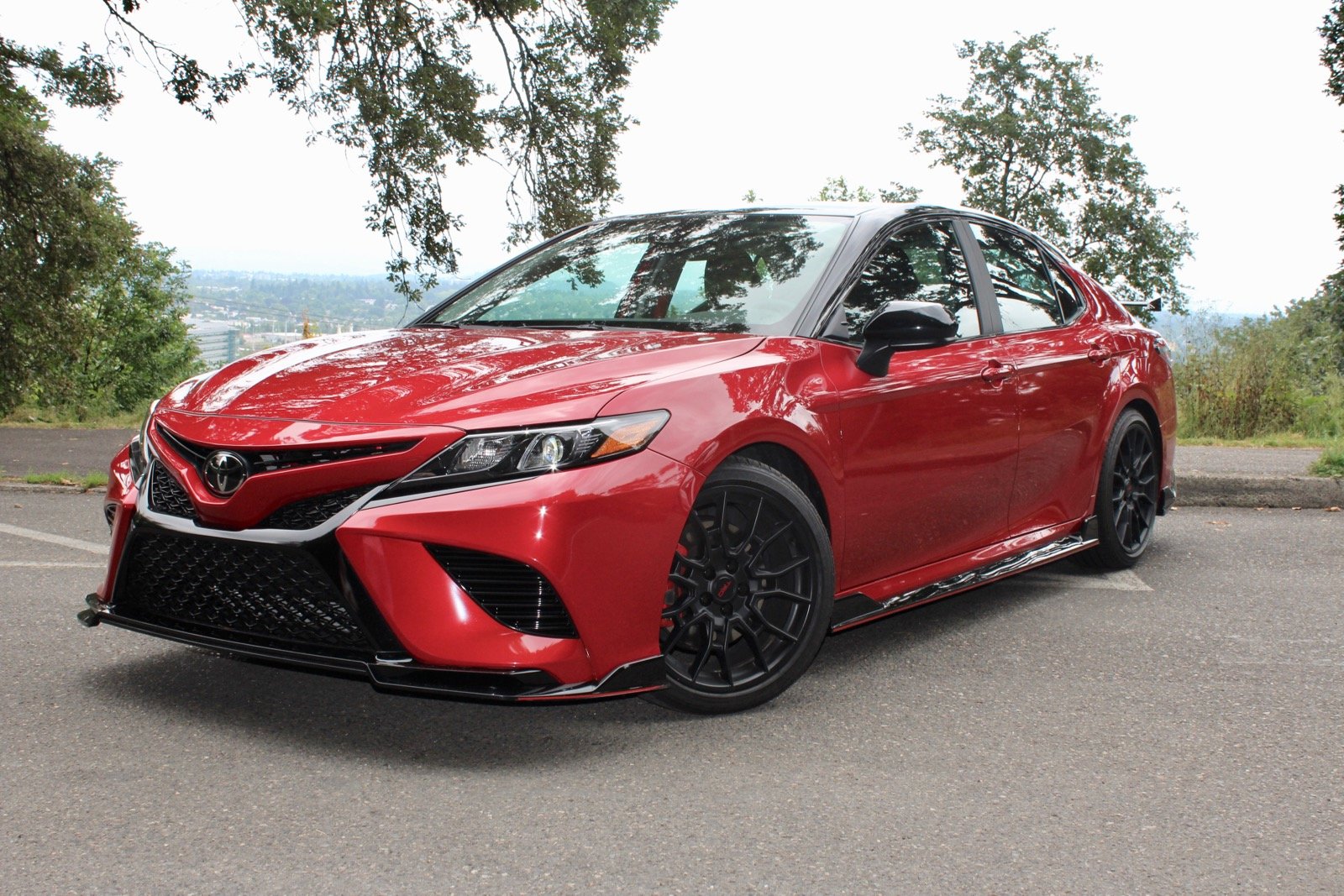
According to CarGurus experts, the overall rating for the 2020 Toyota Camry is 7.5 out of 10, while the 2021 Nissan Maxima scores 7.3 out of 10. Based on these ratings, the 2020 Toyota Camry is the better choice, offering a more balanced combination of performance, technology, and safety features.
Choose the 2020 Toyota Camry if:
- You prioritize fuel economy and a variety of powertrain options, including AWD.
- You want a user-friendly infotainment system with physical controls.
- You value a high safety rating and comprehensive safety features.





Choose the 2021 Nissan Maxima if:
- You prefer a bold, distinctive design with a premium feel.
- You want a spacious and comfortable front seating area with advanced seat technology.
- You appreciate a quiet cabin and comfortable ride for highway cruising.


CarGurus highlights
According to CarGurus experts, the overall rating for the 2020 Toyota Camry is 7.5 out of 10, while the 2021 Nissan Maxima scores 7.3 out of 10. Based on these ratings, the 2020 Toyota Camry is the better choice, offering a more balanced combination of performance, technology, and safety features.
Choose the 2020 Toyota Camry if:
Shop Now- You prioritize fuel economy and a variety of powertrain options, including AWD.
- You want a user-friendly infotainment system with physical controls.
- You value a high safety rating and comprehensive safety features.



Choose the 2021 Nissan Maxima if:
Shop Now- You prefer a bold, distinctive design with a premium feel.
- You want a spacious and comfortable front seating area with advanced seat technology.
- You appreciate a quiet cabin and comfortable ride for highway cruising.





By: CarGurus + AI
At CarGurus, our team of experienced automotive writers remain at the heart of our content operation, conducting hands-on car tests and writing insightful guides that are backed by years of industry experience. To complement this, we are harnessing AI to make our content offering more diverse and more helpful to shoppers than ever. To achieve this, our AI systems are based exclusively on CarGurus content, ratings and data, so that what we produce is both unique to CarGurus, and uniquely helpful to car shoppers.