2021 Toyota Camry vs 2020 Mercedes-Benz E-Class
Overview | |
MSRP$54,050 | MSRP$25,045 |
Listings260 | Listings1419 |
Ratings & Reviews | |
User Reviews | User Reviews |
Expert reviews8.0 out of 10 | Expert reviews7.8 out of 10 |
Pros
Cons
| Pros
Cons
|
2020 Mercedes-Benz E-Class Reviews SummaryA Mercedes-Benz is a physical indulgence that gives as much or as little pleasure as your checking account allows. The 2020 E-Class starts off well-equipped in ways a $55,000 Mercedes wasn't just a few years ago, and it becomes decadent and power-drunk once you start adding options. For 2020, a new base engine joins this car's stellar design, technology, and effortless demeanor. | |
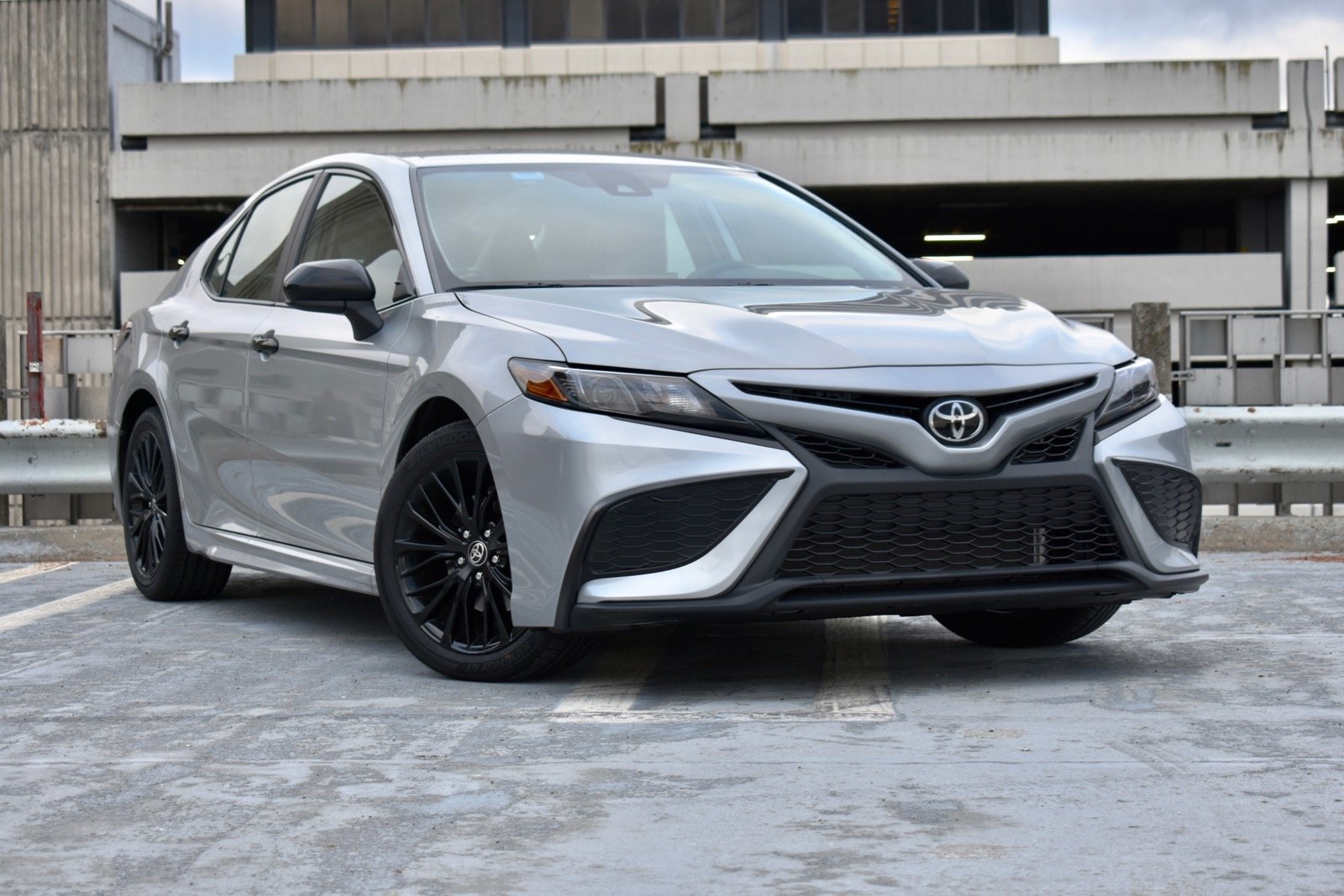
2021 Toyota Camry Reviews SummaryThe Toyota Camry has long been many new-car buyers’ default choice—but not because it’s interesting. Reliability and practicality have traditionally been the Camry’s strengths, not sportiness or style. Toyota tried to change that for the 2018 model year, when the Camry was last redesigned. The current-generation Camry adopted more extroverted styling, and engineers tried to make the driving experience more exciting, too. While Toyota’s approach has changed, the Camry still competes against the same array of midsize sedans, including the Honda Accord, Hyundai Sonata, Mazda 6, Nissan Altima, Subaru Legacy, and Volkswagen Passat. Changes for the 2021 model year include subtle styling tweaks, new infotainment displays, an upgrade to the Toyota Safety Sense 2.5+ (TSS 2.5+) package of driver aids, some changes to the dashboard trim, and the discontinuation of the Camry L trim level. That leaves the Camry LE as the new base trim level. The Camry offers buyers more choices than many rivals, encompassing three powertrains (inline-four, V6, and hybrid), six trim levels (LE, XLE, SE, SE Nightshade Edition, XSE, and TRD), and the choice of front-wheel drive (FWD) or all-wheel drive (AWD). Our test car was an AWD SE Nightshade Edition, positioned close to the middle of the lineup. | |
No video found | |
Popular Features & Specs | |
Engine2.0L 255 hp I4 | Engine2.5L 203 hp I4 |
Drive TrainRWD | Drive TrainFWD |
Seating Capacity5 | Seating Capacity5 |
Horsepower255 hp @ 5800 rpm | Horsepower |
MPG City23 | MPG City28 |
MPG Highway32 | MPG Highway39 |
Engine | |
Engine Name2.0L 255 hp I4 | Engine Name2.5L 203 hp I4 |
Torque273 lb-ft @ 1800 rpm | Torque |
Horsepower255 hp @ 5800 rpm | Horsepower |
DrivetrainRWD | DrivetrainFWD |
Fuel Economy | |
MPG City23 | MPG City28 |
MPG Highway32 | MPG Highway39 |
Interior | |
Seating Capacity5 | Seating Capacity5 |
Key Features | |
Navigation SystemStandard | Navigation System |
Sunroof/MoonroofStandard | Sunroof/Moonroof |
Safety | |
Front Crash Overall5 | Front Crash Overall5 |
Side Crash Overall5 | Side Crash Overall5 |
Dimensions & Capacity | |
Cargo Space13.1 cu ft | Cargo Space15.1 cu ft |
Curb Weight3814 lbs | Curb Weight3310 lbs |
Height57.8 in | Height56.9 in |
Length193.8 in | Length192.1 in |
Width81.3 in | Width72.4 in |
Wheelbase115.7 in | Wheelbase111.2 in |
Maximum Payload | Maximum Payload925 lbs |
Number of doors4 | Number of doors4 |
Overview | ||
MSRP | $54,050 | $25,045 |
Listings | ||
Ratings & Reviews | ||
User reviews | ||
Expert reviews | 8.0 out of 10Read full review | 7.8 out of 10Read full review |
Pros & cons | Pros
Cons
| Pros
Cons
|
Summary | A Mercedes-Benz is a physical indulgence that gives as much or as little pleasure as your checking account allows. The 2020 E-Class starts off well-equipped in ways a $55,000 Mercedes wasn't just a few years ago, and it becomes decadent and power-drunk once you start adding options. For 2020, a new base engine joins this car's stellar design, technology, and effortless demeanor. | The Toyota Camry has long been many new-car buyers’ default choice—but not because it’s interesting. Reliability and practicality have traditionally been the Camry’s strengths, not sportiness or style. Toyota tried to change that for the 2018 model year, when the Camry was last redesigned. The current-generation Camry adopted more extroverted styling, and engineers tried to make the driving experience more exciting, too. While Toyota’s approach has changed, the Camry still competes against the same array of midsize sedans, including the Honda Accord, Hyundai Sonata, Mazda 6, Nissan Altima, Subaru Legacy, and Volkswagen Passat. Changes for the 2021 model year include subtle styling tweaks, new infotainment displays, an upgrade to the Toyota Safety Sense 2.5+ (TSS 2.5+) package of driver aids, some changes to the dashboard trim, and the discontinuation of the Camry L trim level. That leaves the Camry LE as the new base trim level. The Camry offers buyers more choices than many rivals, encompassing three powertrains (inline-four, V6, and hybrid), six trim levels (LE, XLE, SE, SE Nightshade Edition, XSE, and TRD), and the choice of front-wheel drive (FWD) or all-wheel drive (AWD). Our test car was an AWD SE Nightshade Edition, positioned close to the middle of the lineup. |
Video | No video found | |
Popular Features & Specs | ||
Engine | 2.0L 255 hp I4 | 2.5L 203 hp I4 |
Drive Train | RWD | FWD |
Seating Capacity | 5 | 5 |
Horsepower | 255 hp @ 5800 rpm | |
MPG City | 23 | 28 |
MPG Highway | 32 | 39 |
Engine | ||
Engine Name | 2.0L 255 hp I4 | 2.5L 203 hp I4 |
Torque | 273 lb-ft @ 1800 rpm | |
Horsepower | 255 hp @ 5800 rpm | |
Drivetrain | RWD | FWD |
Fuel Economy | ||
MPG City | 23 | 28 |
MPG Highway | 32 | 39 |
Interior | ||
Seating Capacity | 5 | 5 |
Key Features | ||
Navigation System | Standard | |
Sunroof/Moonroof | Standard | |
Safety | ||
Front Crash Overall | 5 | 5 |
Side Crash Overall | 5 | 5 |
Dimensions & Capacity | ||
Cargo Space | 13.1 cu ft | 15.1 cu ft |
Curb Weight | 3814 lbs | 3310 lbs |
Height | 57.8 in | 56.9 in |
Length | 193.8 in | 192.1 in |
Width | 81.3 in | 72.4 in |
Wheelbase | 115.7 in | 111.2 in |
Maximum Payload | 925 lbs | |
Number of doors | 4 | 4 |
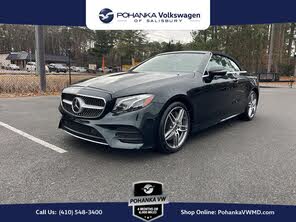
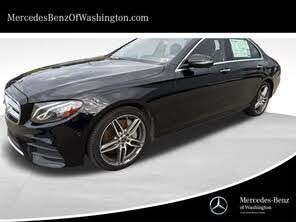
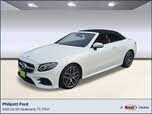
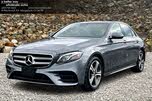
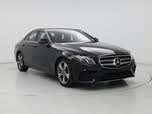
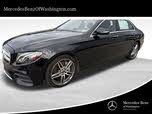
The 2020 Mercedes-Benz E-Class was akin to a work of art with its beautifully rounded, smooth body that harked back to designs from two generations ago. The lack of distinct edges gave it a streamlined appearance, though it bordered on being too sleek, a point addressed with a 2021 facelift. Nonetheless, it bore a strong resemblance to its larger sibling, the S-Class, and its more compact counterpart, the C-Class. The E-Class came in various body styles—sedan, wagon, coupe, or cabriolet—catering to conservative buyers who cherished its unostentatious elegance. Particularly in the sedan variant, the hood ornament and the thin-laced chrome grille epitomized Mercedes’ tradition. Most versions, however, flaunted the sport grille, dominated by a sizeable Mercedes emblem. The E-Class's LED lighting was intricately designed, with twin running lamps that gracefully lit up when the car was unlocked and taillights that displayed a grainy film effect. Whether riding on 17-inch wheels in the Luxury model or low on 20s with ground effects and quad exhausts, its proportions hit a visual sweet spot.
The fluid, creaseless exterior found its best expression in the cabriolet, where a contrasting soft top could be folded back to unveil a plush interior. When specified thoughtfully—avoiding an all-black option—the E-Class interior dazzled with multi-tone leathers, sweeping convergences of aluminum, and richly polished wood. A pair of high-res digital screens stretched across the dash from behind the steering wheel, with four circular air vents at the center and knurled silver toggles for climate control providing an industrial touch to the otherwise modern interior. Ambient lighting, available in 64 colors with around a dozen animations, could be synchronized to suit one's mood, and the vents would even change color to blue when the air conditioning was cranked up. With heated armrests, massaging seats, striking color palettes, and smooth textures, the E-Class cabin was designed for comfort and solitude. Even the base model, equipped with leatherette and standard seats, exuded an air of superiority over its segment peers.
In contrast, the 2021 Toyota Camry made a concerted effort to distance itself from its previously bland iterations. It sported more daring and intricate styling elements, some of which enhanced its appeal. The flared wheel arches and slender headlights and taillights visually broadened the car, creating a more aggressive stance. However, the SE, XSE, and TRD trim levels cluttered the design with fake vents, adding unnecessary visual noise. The LE and XLE models had a somewhat cleaner but still substantial grille. The underpinning TNGA-K platform was shared with other Toyota models like the larger Avalon and the RAV4 SUV.
Minor updates were made to the front fascia for the 2021 model year, but they weren't drastic. The TRD model continued to feature unique styling elements, such as a larger rear spoiler. The Nightshade Edition carried over, offering blacked-out exterior details and wheels based on the SE trim. Standard on the base LE trim, 17-inch alloy wheels could be upgraded to 18-inch or 19-inch wheels on other trims. The Camry's interior mirrored its chaotic exterior. Our SE Nightshade Edition tester had a dashboard that seemed to belong to two different cars, with contrasting trim elements, including stitching, piano black plastic, and faux carbon fiber. While the XLE and XSE models offered leather upholstery, the materials used across the board felt low-rent.


The 2020 Mercedes-Benz E-Class presented a powertrain that experienced significant upgrades. The E350, replacing the E300, featured a turbocharged 2.0-liter four-cylinder engine producing 255 horsepower and 273 pound-feet of torque. It routed this power through a 9-speed automatic transmission. Revised turbo designs and shorter intake runners made the engine more responsive. It held gears longer, reducing noise and making for a more composed drive. In Comfort mode, the E-Class felt relaxed but could spring into action when needed, whereas Sport and Sport+ modes kept the engine in its optimal power band. Although the E350 was quick initially, its performance waned at midrange speeds, making overtaking slower and more challenging.
For those desiring more power, the E450 came with a 3.0-liter V6, delivering 362 horsepower and 369 pound-feet of torque, embodying the effortless performance expected from Mercedes. This V6 made everyday driving feel seamless, in harmony with the light steering and plush suspension of the E450. Even with the standard passive dampers and steel springs, the ride was luxurious and composed. For performance enthusiasts, the AMG versions took the E-Class to another level. The AMG E53 hybrid model harnessed a V6 for 429 horsepower and 384 pound-feet of torque, offering a hybrid system that shut off the engine at highway speeds. The AMG E63 S was an extreme performer with a 4.0-liter twin-turbo V8 churning out 603 horsepower and 627 pound-feet of torque, featuring a drift mode for tire-smoking antics. AWD was standard except in the base E350 sedan and the E450 coupe/cabriolet.
Fuel efficiency varied from 19 to 23 mpg in the city and 26 to 32 on the highway, depending on the powertrain and body style. The high-performance E63 S clocked in at 16/23 mpg, though real-world driving wouldn't often see those numbers.
Similarly, the 2021 Toyota Camry featured a 2.5-liter four-cylinder engine called the Dynamic Force. This engine provided 203 horsepower and 184 pound-feet of torque with FWD, and slightly less with AWD. The XSE trim benefitted from a dual-exhaust system, upping the output to 206 horsepower. Both FWD and AWD versions were paired with an eight-speed automatic transmission. Despite the lack of turbocharging, the engine was spirited and delivered a sports car-like eagerness to rev.
The V6 option, a naturally aspirated 3.5-liter engine, generated 301 horsepower and 267 pound-feet of torque, also mated to an eight-speed automatic. The Camry Hybrid combined a 2.5-liter four-cylinder with electric assistance to produce a total of 208 horsepower. Both the V6 and hybrid setups were available only with FWD. Our SE Nightshade Edition tester's base four-cylinder AWD configuration defied expectations, providing a lively driving experience with a surprisingly sporty feel. The chassis balanced handling and ride quality well, making the car fun to drive without compromising comfort. While the Camry wasn't as sharp as a Honda Accord or Mazda 6, it offered an above-average driving experience for its segment.
The TRD trim, introduced in 2020, paired the V6 engine with performance enhancements like stiffer suspension, larger brakes, and summer tires, making it the sportiest option in the lineup. The AWD system, derived from the RAV4, could direct up to 50% of torque to the rear wheels when needed, reverting to FWD in normal conditions, and did not impact passenger or cargo space.
The 2020 Mercedes-Benz E-Class prioritized luxury and spaciousness but lagged in infotainment usability. Unlike the Mercedes A-Class and GLC-Class that boasted the user-friendly MBUX system, the E-Class retained a more complex COMAND interface, making tasks like adjusting settings or inputting addresses cumbersome. The lack of touchscreens exacerbated the issue, with a combination of thumbpads, a touchpad, and an array of buttons complicating basic functions and distracting drivers.
That said, the E-Class excelled in functionality when it mattered. Seat controls located conveniently on door panels and thoughtful features like a sliding front passenger seat for more rear space exemplified its intuitive design. Roominess was a strong suit, with ample space in every dimension and excellent sightlines. The coupe offered a practical rear seat with its window controls, while the wagon's rear-facing jump seat added a nostalgic touch. The cargo capacity hovered around 13.1 cubic feet.
Conversely, the 2021 Toyota Camry offered generous rear headroom and legroom, though it compromised front space slightly. Despite that, adjustable front seats provided satisfactory comfort and outward visibility. With 15.1 cubic feet of cargo space, the Camry was average for the midsize sedan segment but fell short of the Honda Accord's 16.7 cubic feet. Interior storage was limited, with small cupholders and door bins that could trap items.
Toyota made user experience a priority with analog controls for essential functions, reducing reliance on the touchscreen. Large, rubberized knobs for volume and tuning, along with shortcut buttons, enhanced usability, though some controls were awkwardly positioned. Higher trims featured dual-zone automatic climate control, adding to its practicality.
The 2020 Mercedes-Benz E-Class was packed with advanced technology that showcased its engineering prowess. Its semi-automated driving system could steer itself, assist in steering around obstacles, change lanes autonomously, slow down for curves, and detect people and objects in its vicinity. These features were part of the optional Driver Assistance Package, which provided an exhaustive list of functionalities.
Additionally, the E-Class came equipped with a V2X system, enabling communication with nearby Mercedes models for hazards like slippery roads. The digital dash could be reconfigured into three designs, offering multiple display options for maps and fuel economy. Standard tech included Bluetooth, Apple CarPlay, and Android Auto. The car's multi-contour seats adjusted the side bolsters in response to body movements, while the Burmester stereo provided immersive surround sound. Another innovative yet quirky feature was the Energizing Comfort Package, which combined lighting, climate settings, and prerecorded music to influence the driver’s mood. For AMG versions, the Track Pace app guided users around race tracks. Essentially, the E-Class's tech was overpowered yet highly functional.
The 2021 Toyota Camry offered a more modest but practical tech suite. The base model came with a 7-inch touchscreen, Apple CarPlay, Android Auto, Amazon Alexa, Bluetooth, Siri Eyes Free, and SiriusXM satellite radio. Higher trims offered a 9-inch touchscreen, Wi-Fi capability for five devices, navigation, and a nine-speaker JBL audio system. A 10-inch head-up display was also available on the XSE and XLE trims.
Standard features included a single USB media port, two USB charge ports, and a 12-volt outlet, all located conveniently in the cubby hole ahead of the shifter. Higher trims did not include additional ports. While the touchscreen menus were user-friendly, the graphics lacked sophistication.
The 2020 Mercedes-Benz E-Class excelled in safety ratings. The sedan and wagon models received a 5-star overall rating from NHTSA and were deemed Top Safety Pick+ by IIHS. Mercedes’ long-standing commitment to safety was evident, with innovations like Pre-Safe Sound, which played "pink noise" during a crash to protect eardrums, and side bolsters that instantly moved occupants away from door impacts. Steering and braking assistance countered crosswinds, and rear-side airbags were available even in two-door models. While many of these features were optional, others, like forward emergency braking, driver attention monitoring, and blind-spot monitoring, were standard.
Similarly, the 2021 Toyota Camry scored top marks for safety. It earned the IIHS "Top Safety Pick+" rating and a five-star overall rating from NHTSA. The new model year introduced the TSS 2.5+ safety suite, featuring adaptive cruise control, automatic emergency braking, forward-collision warning with pedestrian and vehicle detection, lane departure warning, automatic high beams, and traffic sign recognition. Enhanced features included automatic acceleration during lane changes and improved collision detection while turning. Toyota's new Rear Seat Reminder aimed to prevent children or pets from being left unattended, although its effectiveness was debatable. Blind-spot monitoring and rear cross-traffic alert were standard in higher trims and optional in others.
CarGurus highlights

According to CarGurus experts, the overall rating for the 2020 Mercedes-Benz E-Class is 8.0 out of 10, while the 2021 Toyota Camry scores 7.8 out of 10. Given these ratings, the Mercedes-Benz E-Class is the better option for those seeking superior luxury, advanced features, and a high level of performance and safety. However, the Toyota Camry offers fantastic value, safety, and practicality for those prioritizing utility and user-friendly technology in a more budget-conscious package.
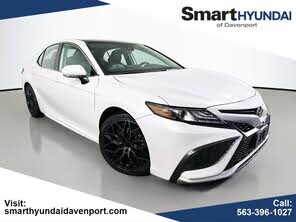
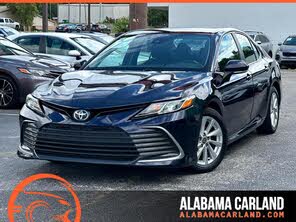
Choose the 2021 Toyota Camry if:
- You want a reliable, family-friendly sedan with excellent rear-seat space and adequate cargo capacity.
- Access to straightforward, easy-to-use tech features and infotainment systems is a priority.
- You value a high safety rating with a comprehensive suite of standard safety features at a more accessible price point.




Choose the 2020 Mercedes-Benz E-Class if:
- You desire a luxurious and technologically advanced vehicle with no compromise on interior quality and comfort.
- Superior safety features and top-notch crash test ratings are important to your purchasing decision.
- You seek an array of powertrain options that cater to both comfort cruising and high-performance driving.




CarGurus highlights
According to CarGurus experts, the overall rating for the 2020 Mercedes-Benz E-Class is 8.0 out of 10, while the 2021 Toyota Camry scores 7.8 out of 10. Given these ratings, the Mercedes-Benz E-Class is the better option for those seeking superior luxury, advanced features, and a high level of performance and safety. However, the Toyota Camry offers fantastic value, safety, and practicality for those prioritizing utility and user-friendly technology in a more budget-conscious package.
Choose the 2021 Toyota Camry if:
Shop Now- You want a reliable, family-friendly sedan with excellent rear-seat space and adequate cargo capacity.
- Access to straightforward, easy-to-use tech features and infotainment systems is a priority.
- You value a high safety rating with a comprehensive suite of standard safety features at a more accessible price point.






Choose the 2020 Mercedes-Benz E-Class if:
Shop Now- You desire a luxurious and technologically advanced vehicle with no compromise on interior quality and comfort.
- Superior safety features and top-notch crash test ratings are important to your purchasing decision.
- You seek an array of powertrain options that cater to both comfort cruising and high-performance driving.





By: CarGurus + AI
At CarGurus, our team of experienced automotive writers remain at the heart of our content operation, conducting hands-on car tests and writing insightful guides that are backed by years of industry experience. To complement this, we are harnessing AI to make our content offering more diverse and more helpful to shoppers than ever. To achieve this, our AI systems are based exclusively on CarGurus content, ratings and data, so that what we produce is both unique to CarGurus, and uniquely helpful to car shoppers.