2021 Mercedes-Benz S-Class vs 2020 Toyota Camry
Overview | |
MSRP$24,425 | MSRP$109,800 |
Listings216 | Listings153 |
Ratings & Reviews | |
User Reviews | User Reviews |
Expert reviews7.5 out of 10 | Expert reviews7.5 out of 10 |
Pros
Cons
| Pros
Cons
|
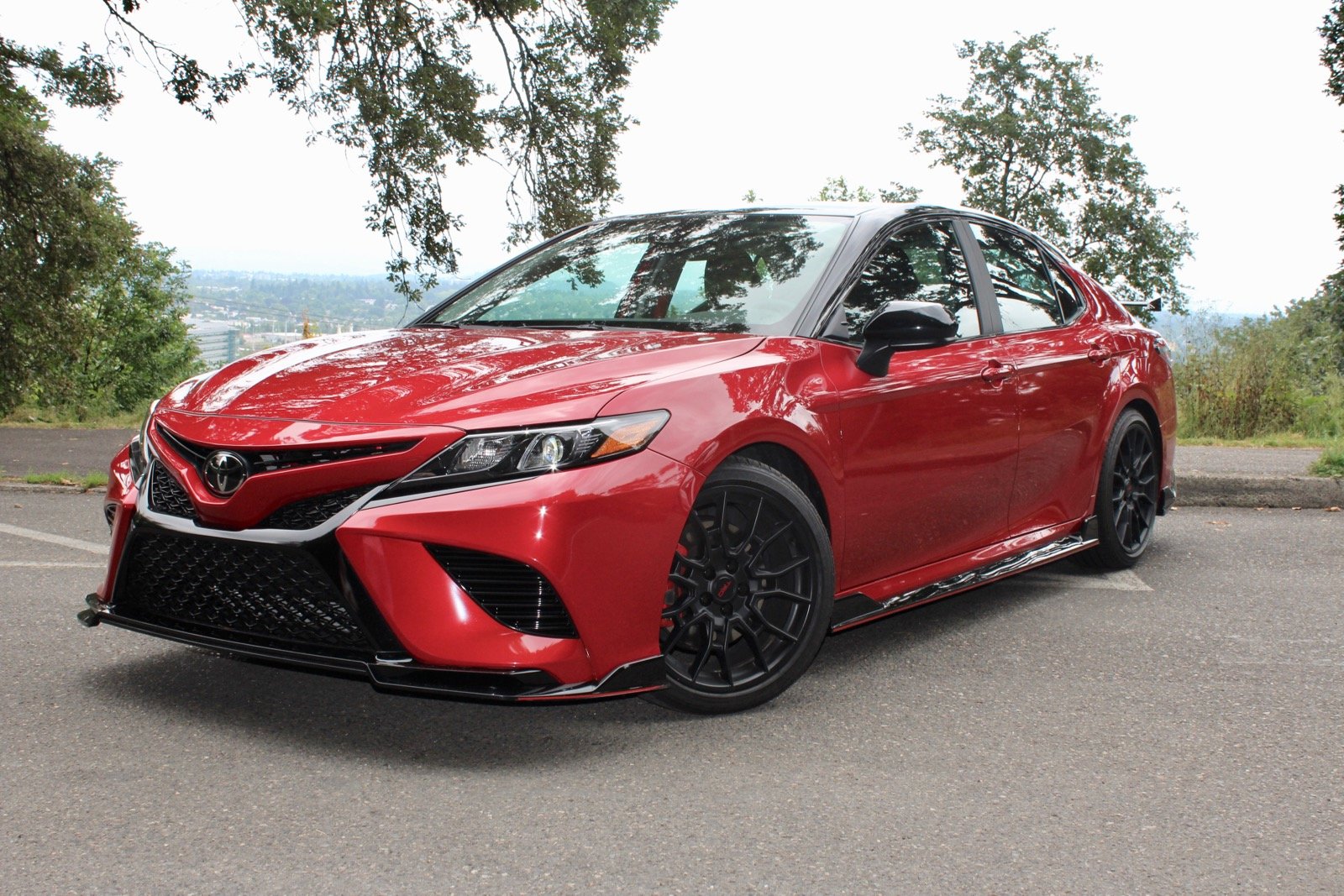
2020 Toyota Camry Reviews SummaryIf you can't beat them, join them. That seems to be Toyota's philosophy in updating the eighth generation of the Camry for the 2020 model year. This latest version of the perennial best seller debuted in 2017 as a 2018 model—and promptly lost its sales crown to Toyota's own RAV4 crossover SUV. As buyers continue to defect from cars, Toyota hopes to entice more shoppers to stick with its midsize sedan by offering all-wheel drive on the Camry for the first time since 1991. Also new for 2020 is the Camry TRD, a sportier version with a 301-horsepower V6 engine that makes its case to a buyer who might never have considered a Camry. | |
2021 Mercedes-Benz S-Class Reviews SummaryThe S-Class not only sits at the top of the Mercedes hierarchy in price and prestige, but it has also long served as a technological showcase. In the press release for the redesigned 2021 S-Class, Mercedes repeatedly noted the innovations—from anti-lock brakes to airbags—that were introduced on the big sedan and eventually trickled down to mainstream vehicles. With the previous generation dating back to the 2014 model year (with a significant update for 2018), the Mercedes-Benz S-Class was in need of an update to maintain that status, and to keep pace with other full-size luxury sedans like the Audi A8, BMW 7 Series, and Lexus LS. To do that, the new S-Class gets a more sophisticated infotainment system, new powertrains, and more aerodynamic bodywork, among other features. The 2021 S-Class launches in two configurations, both with 4Matic all-wheel drive (AWD) and EQ Boost mild-hybrid systems. The S500 4Matic has a six-cylinder engine, while the S580 4Matic has a V8. We spent a few days with the Mercedes-Benz S580 for this review. A Mercedes-Maybach S680 4Matic version will follow in the first half of 2022, and you can expect a new AMG performance version sometime in the future as well. | |
No video found | |
Popular Features & Specs | |
Engine2.5L 203 hp I4 | Engine3.0L 429 hp I6 |
DrivetrainFWD | DrivetrainAWD |
Seating Capacity5 | Seating Capacity5 |
Horsepower | Horsepower429 hp @ 6100 rpm |
MPG City29 | MPG City20 |
MPG Highway41 | MPG Highway29 |
Engine | |
Engine Name2.5L 203 hp I4 | Engine Name3.0L 429 hp I6 |
Torque | Torque384 lb-ft @ 1800 rpm |
Horsepower | Horsepower429 hp @ 6100 rpm |
DrivetrainFWD | DrivetrainAWD |
Fuel Economy | |
MPG City29 | MPG City20 |
MPG Highway41 | MPG Highway29 |
Interior | |
Leather Seats | Leather SeatsOptional |
Seating Capacity5 | Seating Capacity5 |
Key Features | |
Navigation System | Navigation SystemOptional |
Sunroof/Moonroof | Sunroof/MoonroofOptional |
Safety | |
Front Crash Overall5 | Front Crash Overall |
Side Crash Overall5 | Side Crash Overall |
Dimensions & Capacity | |
Cargo Space14.1 cu ft | Cargo Space12.9 cu ft |
Curb Weight3241 lbs | Curb Weight4740 lbs |
Height56.9 in | Height59.2 in |
Length192.1 in | Length208.2 in |
Width72.4 in | Width83.0 in |
Wheelbase111.2 in | Wheelbase126.6 in |
Maximum Payload925 lbs | Maximum Payload |
Number of doors4 | Number of doors4 |
Overview | ||
MSRP | $24,425 | $109,800 |
Listings | ||
Ratings & Reviews | ||
User reviews | ||
Expert reviews | 7.5 out of 10Read full review | 7.5 out of 10Read full review |
Pros & cons | Pros
Cons
| Pros
Cons
|
Summary | If you can't beat them, join them. That seems to be Toyota's philosophy in updating the eighth generation of the Camry for the 2020 model year. This latest version of the perennial best seller debuted in 2017 as a 2018 model—and promptly lost its sales crown to Toyota's own RAV4 crossover SUV. As buyers continue to defect from cars, Toyota hopes to entice more shoppers to stick with its midsize sedan by offering all-wheel drive on the Camry for the first time since 1991. Also new for 2020 is the Camry TRD, a sportier version with a 301-horsepower V6 engine that makes its case to a buyer who might never have considered a Camry. | The S-Class not only sits at the top of the Mercedes hierarchy in price and prestige, but it has also long served as a technological showcase. In the press release for the redesigned 2021 S-Class, Mercedes repeatedly noted the innovations—from anti-lock brakes to airbags—that were introduced on the big sedan and eventually trickled down to mainstream vehicles. With the previous generation dating back to the 2014 model year (with a significant update for 2018), the Mercedes-Benz S-Class was in need of an update to maintain that status, and to keep pace with other full-size luxury sedans like the Audi A8, BMW 7 Series, and Lexus LS. To do that, the new S-Class gets a more sophisticated infotainment system, new powertrains, and more aerodynamic bodywork, among other features. The 2021 S-Class launches in two configurations, both with 4Matic all-wheel drive (AWD) and EQ Boost mild-hybrid systems. The S500 4Matic has a six-cylinder engine, while the S580 4Matic has a V8. We spent a few days with the Mercedes-Benz S580 for this review. A Mercedes-Maybach S680 4Matic version will follow in the first half of 2022, and you can expect a new AMG performance version sometime in the future as well. |
Video | No video found | |
Popular Features & Specs | ||
Engine | 2.5L 203 hp I4 | 3.0L 429 hp I6 |
Drivetrain | FWD | AWD |
Seating Capacity | 5 | 5 |
Horsepower | 429 hp @ 6100 rpm | |
MPG City | 29 | 20 |
MPG Highway | 41 | 29 |
Engine | ||
Engine Name | 2.5L 203 hp I4 | 3.0L 429 hp I6 |
Torque | 384 lb-ft @ 1800 rpm | |
Horsepower | 429 hp @ 6100 rpm | |
Drivetrain | FWD | AWD |
Fuel Economy | ||
MPG City | 29 | 20 |
MPG Highway | 41 | 29 |
Interior | ||
Leather Seats | Optional | |
Seating Capacity | 5 | 5 |
Key Features | ||
Navigation System | Optional | |
Sunroof/Moonroof | Optional | |
Safety | ||
Front Crash Overall | 5 | |
Side Crash Overall | 5 | |
Dimensions & Capacity | ||
Cargo Space | 14.1 cu ft | 12.9 cu ft |
Curb Weight | 3241 lbs | 4740 lbs |
Height | 56.9 in | 59.2 in |
Length | 192.1 in | 208.2 in |
Width | 72.4 in | 83.0 in |
Wheelbase | 111.2 in | 126.6 in |
Maximum Payload | 925 lbs | |
Number of doors | 4 | 4 |
The 2020 Toyota Camry had evolved significantly in terms of its styling, moving away from its previously mundane appearance to a more sporty and expressive design. The bold front fascia and sharp lines gave the Camry a fresh, aggressive look, unusual for a vehicle in its class. The character lines running along the doors and the distinct kink in the C-pillar were clear nods to BMW’s sporty designs. Multiple exterior color options, including a striking black roof, made the Camry more visually appealing.
Inside, Toyota used high-quality materials that contributed to an upscale feel, even in the lower trim levels. The driver-focused dashboard design enhanced the driving experience, and in the TRD model, the red trim accents and seatbelts gave a sporty vibe reminiscent of luxury sports car interiors. Though not a luxury car, the Camry's top trims, with leather and wood touches, set a higher benchmark for midrange sedans.
Contrastingly, the 2021 Mercedes-Benz S-Class retained its familiar exterior styling but with improvements that were more aerodynamic, achieving an impressive drag coefficient of 0.22. The car grew slightly in size, which, combined with the classic Mercedes hood ornament and refined grille, added a level of stately luxury to its presence. Standard 19-inch wheels, with 20-inch and 21-inch options, complemented its elegant look.
Inside, the S-Class was designed around advanced technology, featuring a minimalist cabin with a focus on a large infotainment touchscreen and digital instrument cluster. The interior ambient lighting system, with about 250 LED elements and 64 color choices, created a visually stunning ambiance. The materials used, such as Nappa leather and open-pore wood trim, screamed luxury, though the large piano-black surfaces were prone to smudges and reflections, a minor letdown for a car of this stature.


The 2020 Toyota Camry offered a range of powertrain options to suit different driving preferences. The highlight was the 3.5-liter V6 engine making 301 horsepower, delivering a smooth and powerful drive paired with an eight-speed automatic transmission. This engine closely aligned with luxury aspirations, especially in the XLE trim. However, in the TRD variant aimed at sportiness, the V6 did not quite match the high-performance expectations despite its dual exhaust system.
The 2.5-liter four-cylinder engine, producing 203 hp (206 hp in the XSE trim), provided a nimble and enjoyable driving experience thanks to the efficiency of the eight-speed automatic transmission. The lighter front-end of four-cylinder models improved steering feel. AWD availability across the four-cylinder variants was a significant advancement, offering better control in slippery conditions without compromising fuel economy too severely, with the AWD version yielding an EPA combined fuel economy rating of 28 mpg compared to 31 mpg for the FWD models.
The 2021 Mercedes-Benz S-Class delivered a powerful performance with its advanced engines. The base S500 4Matic came equipped with a 3.0-liter turbocharged inline-six engine generating 429 hp and 384 lb-ft of torque, while the S580 4Matic featured a 4.0-liter twin-turbo V8 producing 496 hp and 516 lb-ft of torque. Both engines were paired with a nine-speed automatic transmission, and the EQ Boost mild-hybrid system added up to 21 hp and 184 lb-ft of torque for short bursts.
The S500 accelerated from 0 to 60 mph in 4.8 seconds, while the S580 achieved it in 4.4 seconds. Both models featured standard air suspension and a sophisticated E-Active Body Control suspension system, further enhancing ride comfort and handling. The addition of rear-wheel steering, which could turn up to 10 degrees, made the S-Class exceptionally agile for its size.
The 2020 Toyota Camry was designed for ease of use and practicality. The layout of controls was mostly intuitive, although there was a somewhat outdated row of buttons to the left of the steering wheel. The center console effectively housed the shifter, cupholders, a cell phone tray, and a storage bin. Front legroom and hip room had increased from the previous generation, ensuring comfort for the driver and front passenger. However, the rear seat lagged behind, with reduced legroom and overall passenger volume compared to some competitors. The trunk only offered 15.1 cubic feet of space, on par with smaller sedans like the Honda Civic rather than its direct rivals.
In contrast, the 2021 Mercedes-Benz S-Class provided a stately interior with notable enhancements in front and rear headroom, and rear legroom compared to its predecessor. While it had less front legroom than some competitors, it excelled in shoulder room. The trunk space increased slightly to 12.9 cubic feet, still less than some rivals, and some optional features like power-adjustable rear seats could eat into this space.
The S-Class offered opulent comfort with front seats featuring 19 motors for adjustment, heating, ventilation, and 10 massage modes. The reconfiguration of interior storage areas, thanks to the removal of analog controls, provided ample space for phones, beverages, and small items.
The 2020 Toyota Camry was equipped with essential modern technology like Apple CarPlay and Android Auto, which were long-overdue additions. The standard infotainment system was user-friendly with quick touch responsiveness and hard buttons for major functions. The base models came with a 7-inch screen, upgradeable to an 8-inch screen. Connectivity included a single USB-A port and a couple of USB-A charging ports, with optional wireless charging and WiFi Connect. Higher trims featured a larger 7-inch multi-information display and an optional 10-inch head-up display.
The 2021 Mercedes-Benz S-Class stood out with its advanced infotainment and tech suite. It featured a 12.3-inch digital instrument cluster and a 12.8-inch OLED central touchscreen with wireless Apple CarPlay and Android Auto. The system was powered by the updated Mercedes-Benz User Experience (MBUX) with a substantial increase in computing power. The 30-speaker Burmester audio system and rear-seat infotainment setup with dual 11.6-inch touchscreens added to the immersive experience.
The S-Class’ augmented-reality head-up display (HUD) was particularly impressive, providing navigation assistance with on-road arrows. However, the touchpads on the steering wheel for instrument cluster controls were small and fiddly. The vehicle also introduced biometric and facial recognition for user profiles, and rear-seat passengers could send navigation directions to the front screen.
The 2020 Toyota Camry featured the Toyota Safety Sense suite with standard technologies like a pre-collision system, emergency braking, adaptive cruise control, lane-departure warning, and automatic high beams. A one-year trial of Safety Connect and optional blind-spot monitoring were included. The NHTSA awarded the 2020 Camry a five-star rating, and the IIHS rated it as a Top Safety Pick+. Despite a recall for leaking engine coolant, its safety scores were excellent.
The 2021 Mercedes-Benz S-Class had not yet been tested by NHTSA or IIHS, but it boasted an extensive list of safety features including the industry-first rear-passenger airbag. Standard driver-assist systems were comprehensive, with adaptive cruise control, lane-centering, emergency braking, blind-spot monitoring, and more. Mercedes improved the performance of features like traffic-sign recognition and lane-keep assist. The new capacitive sensor-equipped steering wheel ensured the car accurately detected driver engagement.
CarGurus highlights

According to CarGurus experts, the overall rating for the 2020 Toyota Camry was 7.5 out of 10, while the 2021 Mercedes-Benz S-Class scored 7.5 out of 10. Both vehicles earned identical ratings, reflecting their strengths within their respective categories. However, for consumers seeking an unparalleled luxury experience, the advanced technology, and comfort of the Mercedes-Benz S-Class put it ahead. For budget-conscious buyers prioritizing reliability, efficiency, and safety, the Toyota Camry remains a formidable choice.
Choose the 2021 Mercedes-Benz S-Class if:
- You desire a luxurious, spacious interior with the latest technological advancements and comfort features.
- You appreciate high-performance powertrains and sophisticated suspension systems for an exceptional driving experience.
- You value advanced safety features and driver assistance technologies that enhance driving confidence and comfort.


Choose the 2020 Toyota Camry if:
- You want a dependable sedan with sporty styling that won't break the bank.
- You prioritize fuel efficiency and the availability of AWD for better handling in adverse conditions.
- You seek a combination of reliable safety features and advanced driver assistance technologies.


CarGurus highlights
According to CarGurus experts, the overall rating for the 2020 Toyota Camry was 7.5 out of 10, while the 2021 Mercedes-Benz S-Class scored 7.5 out of 10. Both vehicles earned identical ratings, reflecting their strengths within their respective categories. However, for consumers seeking an unparalleled luxury experience, the advanced technology, and comfort of the Mercedes-Benz S-Class put it ahead. For budget-conscious buyers prioritizing reliability, efficiency, and safety, the Toyota Camry remains a formidable choice.
Choose the 2021 Mercedes-Benz S-Class if:
Shop Now- You desire a luxurious, spacious interior with the latest technological advancements and comfort features.
- You appreciate high-performance powertrains and sophisticated suspension systems for an exceptional driving experience.
- You value advanced safety features and driver assistance technologies that enhance driving confidence and comfort.
Choose the 2020 Toyota Camry if:
Shop Now- You want a dependable sedan with sporty styling that won't break the bank.
- You prioritize fuel efficiency and the availability of AWD for better handling in adverse conditions.
- You seek a combination of reliable safety features and advanced driver assistance technologies.

By: CarGurus + AI
At CarGurus, our team of experienced automotive writers remain at the heart of our content operation, conducting hands-on car tests and writing insightful guides that are backed by years of industry experience. To complement this, we are harnessing AI to make our content offering more diverse and more helpful to shoppers than ever. To achieve this, our AI systems are based exclusively on CarGurus content, ratings and data, so that what we produce is both unique to CarGurus, and uniquely helpful to car shoppers.

