2020 Honda Civic Hatchback vs 2019 Toyota Camry

Overview | |
MSRP$24,095 | MSRP$21,750 |
Listings1367 | Listings396 |
Ratings & Reviews | |
User Reviews | User Reviews |
Expert reviews7.8 out of 10 | Expert reviews7.7 out of 10 |
Pros
Cons
| Pros
Cons
|
2019 Toyota Camry Reviews SummaryBlame the Toyota Avalon for the Toyota Camry’s flaws. In order to put daylight between itself and Toyota’s larger full-size sedan, the midsize Camry is now smaller than some of its competitors, while simultaneously offering fewer of the increasingly expected features in the segment. Still, there are several good reasons to consider a 2019 Camry, from its outstanding safety ratings to its free scheduled maintenance plan. It’s also one of a handful of family sedans that still offers a 6-cylinder engine. | |
2020 Honda Civic Hatchback Reviews SummaryWhen the Honda Civic first went on sale in the US in 1973, it was a tiny 3-door hatchback capitalizing on concerns arising out of the OPEC Oil Embargo. In other words, it was a safe and smart choice during a period of unrest and uncertainty. Eventually though, years after oil pipelines once again gushed with plentiful crude, hatchbacks became synonymous with economic despair. Judgmental types assumed you couldn’t afford anything better, and soon few people wanted them anymore. Today, hatchbacks are making comebacks, and the 2020 Honda Civic Hatchback is a good example of why. | |
Popular Features & Specs | |
Engine2.5L 203 hp I4 | Engine1.5L 174 hp I4 |
Drive TrainFWD | Drive TrainFWD |
Seating Capacity5 | Seating Capacity5 |
Horsepower | Horsepower174 hp @ 6000 rpm |
MPG City29 | MPG City31 |
MPG Highway41 | MPG Highway40 |
Engine | |
Engine Name2.5L 203 hp I4 | Engine Name1.5L 174 hp I4 |
Torque | Torque162 lb-ft @ 1700 rpm |
Horsepower | Horsepower174 hp @ 6000 rpm |
DrivetrainFWD | DrivetrainFWD |
Fuel Economy | |
MPG City29 | MPG City31 |
MPG Highway41 | MPG Highway40 |
Interior | |
Seating Capacity5 | Seating Capacity5 |
Safety | |
Front Crash Overall5 | Front Crash Overall5 |
Side Crash Overall5 | Side Crash Overall5 |
Dimensions & Capacity | |
Cargo Space14.1 cu ft | Cargo Space25.7 cu ft |
Curb Weight3241 lbs | Curb Weight2906 lbs |
Height56.9 in | Height56.5 in |
Length192.1 in | Length177.9 in |
Width72.4 in | Width70.8 in |
Wheelbase111.2 in | Wheelbase106.3 in |
Maximum Payload925 lbs | Maximum Payload |
Number of doors4 | Number of doors4 |
Overview | ||
MSRP | $24,095 | $21,750 |
Listings | ||
Ratings & Reviews | ||
User reviews | ||
Expert reviews | 7.8 out of 10Read full review | 7.7 out of 10Read full review |
Pros & cons | Pros
Cons
| Pros
Cons
|
Summary | Blame the Toyota Avalon for the Toyota Camry’s flaws. In order to put daylight between itself and Toyota’s larger full-size sedan, the midsize Camry is now smaller than some of its competitors, while simultaneously offering fewer of the increasingly expected features in the segment. Still, there are several good reasons to consider a 2019 Camry, from its outstanding safety ratings to its free scheduled maintenance plan. It’s also one of a handful of family sedans that still offers a 6-cylinder engine. | When the Honda Civic first went on sale in the US in 1973, it was a tiny 3-door hatchback capitalizing on concerns arising out of the OPEC Oil Embargo. In other words, it was a safe and smart choice during a period of unrest and uncertainty. Eventually though, years after oil pipelines once again gushed with plentiful crude, hatchbacks became synonymous with economic despair. Judgmental types assumed you couldn’t afford anything better, and soon few people wanted them anymore. Today, hatchbacks are making comebacks, and the 2020 Honda Civic Hatchback is a good example of why. |
Video | ||
Popular Features & Specs | ||
Engine | 2.5L 203 hp I4 | 1.5L 174 hp I4 |
Drive Train | FWD | FWD |
Seating Capacity | 5 | 5 |
Horsepower | 174 hp @ 6000 rpm | |
MPG City | 29 | 31 |
MPG Highway | 41 | 40 |
Engine | ||
Engine Name | 2.5L 203 hp I4 | 1.5L 174 hp I4 |
Torque | 162 lb-ft @ 1700 rpm | |
Horsepower | 174 hp @ 6000 rpm | |
Drivetrain | FWD | FWD |
Fuel Economy | ||
MPG City | 29 | 31 |
MPG Highway | 41 | 40 |
Interior | ||
Seating Capacity | 5 | 5 |
Safety | ||
Front Crash Overall | 5 | 5 |
Side Crash Overall | 5 | 5 |
Dimensions & Capacity | ||
Cargo Space | 14.1 cu ft | 25.7 cu ft |
Curb Weight | 3241 lbs | 2906 lbs |
Height | 56.9 in | 56.5 in |
Length | 192.1 in | 177.9 in |
Width | 72.4 in | 70.8 in |
Wheelbase | 111.2 in | 106.3 in |
Maximum Payload | 925 lbs | |
Number of doors | 4 | 4 |
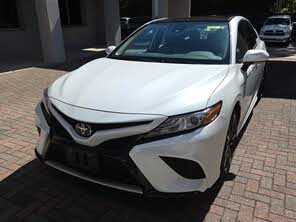
When choosing a 2019 Toyota Camry, buyers had to select between standard and sporty styling, as well as decide on a powertrain among a 4-cylinder, a V6, and a hybrid. Trim levels varied from L, LE, XLE, SE, to XSE, depending on the chosen engine. The Camry XSE tested came equipped with a V6 engine, Toyota's Driver Assist package, and unique two-tone Blue Streak paint with a Midnight Black roof. The sticker price was $39,669, including the $955 destination charge.
Though the Camry XSE V6 proved quick and entertaining to drive, it wasn’t the recommended trim by CarGurus. The standard 2.5-liter 4-cylinder engine in LE trim was suggested for better value. Despite its daring design, the Camry’s styling seemed unresolved, especially compared to the more harmoniously designed Toyota Avalon and the 2020 Toyota Corolla SE or XSE trims. Inside, the Camry XSE boasted high-quality materials, but certain areas like the windshield pillars and some switchgear appeared less refined, seemingly borrowed from the Toyota Tacoma pickup truck.
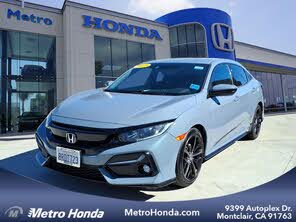
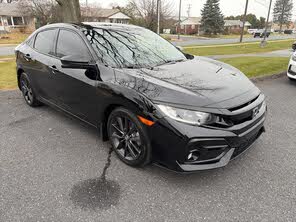
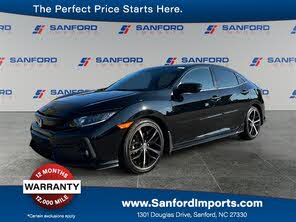
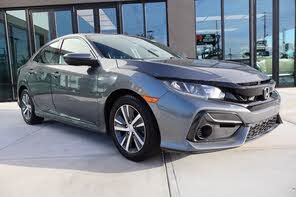
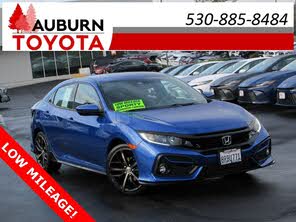
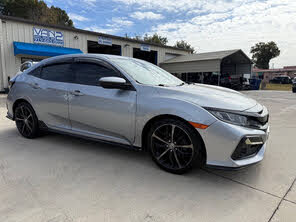
Conversely, the 2020 Honda Civic Hatchback underwent a modest redesign with tweaks to its styling, making the huge fake air intakes less aggressive, a new grille, and smoked headlights. The test car in Sport Touring trim showcased Platinum White Pearl paint, contrasting beautifully with its glossy black detailing, drawing admiration from onlookers. Inside, the Sport Touring trim featured stitched leather on the steering wheel, premium materials, and a hushed cabin, especially noted when closing the door with a satisfying thud.
The Civic Sport Touring’s 2020 model also availed a six-speed manual gearbox, which had previously been limited to the Sport trim, bringing the price to $28,980, including the destination charge. Though the manual gear throws were long, the overall experience remained refined, and quieter, offering a more comfortable daily driving experience despite a bit more performance thrill in the Civic Si variant.


The 2019 Toyota Camry’s standard 203-horsepower, 2.5-liter 4-cylinder engine sufficed for daily driving needs. However, the available 301-hp, 3.5-liter V6 engine added substantial power, delivering 83 more pound-feet of torque and giving the Camry a more exhilarating drive. Despite the extra weight of the V6 in the front, handling remained unaffected, and the 8-speed automatic transmission impressed with its precise gear changes.
With a sport-tuned suspension and 19-inch aluminum wheels, the Camry XSE offered responsive handling without compromising daily comfort. Steering felt naturally firm, particularly in Sport mode, enhancing the driving experience. The brakes held up well but had a slight “thunk” when released quickly. Despite spirited driving, fuel economy fell short of the EPA’s 26-mpg combined rating, achieving only 21.9 mpg during testing, partly due to heavy use of the air conditioning in hot weather.
Meanwhile, the 2020 Honda Civic Hatchback’s Sport and Sport Touring trims, with a turbocharged 1.5-liter 4-cylinder engine, delivered 180 horsepower and 177 lb-ft of torque with the 6-speed manual transmission, or 162 lb-ft with the CVT. While not matching the Civic Si’s performance, the Hatchback provided ample power and a quieter, more refined ride. The gearbox throws were longer, and the experience was less aggressive compared to the Si.
The Civic Sport Touring trim’s softer suspension and wider seats made it more comfortable for daily driving, yet it maintained an engaging drive on twisty roads. Despite achieving an EPA-rated 32 mpg in combined driving, the Civic Hatchback exceeded expectations with 32.7 mpg during rigorous testing on various terrains.
The 2019 Toyota Camry included numerous storage options in its cabin, such as a large center console bin and a hidden compartment below the wireless charging pad. However, the glove box was small and hard to reach, and the door-panel storage pockets were narrow. The Camry’s trunk was unexpectedly small at 15.1 cubic feet, smaller than some competitors like the Honda Accord. The rear-seat comfort was compromised by narrow door openings and a low seating position, and only higher trims included rear air-conditioning vents.
In comparison, the 2020 Honda Civic Hatchback offered a more practical choice for cargo space at 25.2 cubic feet, outdoing the HR-V Touring’s 23.2 cubes. While it couldn’t match the HR-V’s maximum volume of 57.6 cubic feet, the Civic made up for it with its nimble and efficient drive. Although the Civic’s low seating position made entry and exit less convenient, its heated leather front seats provided excellent comfort, and the driver’s side had ample thigh support.
The Civic’s intelligent center console storage area stood out with its slide-enabled armrest, interior tray, and cupholders, accommodating even an oversize water bottle. Rear-seat comfort was noteworthy with good legroom, though lacking rear air conditioning vents and having dark leather seats caused some discomfort in hot weather.
Dramatic in appearance, the 2019 Toyota Camry’s dashboard featured the Entune 3.0 infotainment system, which, while intuitive, still lacked Android Auto by that model year. The system combined stylish buttons, large volume and tuning knobs, and a 6-month/2GB WiFi Connect subscription. Additionally, a Qi-compatible wireless smartphone charging pad kept devices secure even during energetic drives. However, the JBL premium sound system’s performance was disappointing, producing a bass-heavy audio experience lacking clarity. The 10-inch HUD displayed vital data clearly, even through polarized sunglasses.
Alternatively, the 2020 Honda Civic Hatchback Sport Touring trim came equipped with a 7-inch touchscreen infotainment system, Apple CarPlay, Android Auto, and a 12-speaker premium sound system. Practical features like automatic climate control and Smart Entry with Walk Away Auto Lock added convenience. Although it wasn’t a tech powerhouse, missing things like a tuning knob and more advanced voice-recognition technology, it offered solid integration of essential tech enhancements.
For safety-minded buyers, the 2019 Toyota Camry excelled. The NHTSA awarded it 5-star ratings across the board, and the IIHS gave it a Top Safety Pick+ rating, aside from an Acceptable rating for standard headlight performance on lower trims. The Camry came with Toyota Safety Sense featuring adaptive cruise control, forward-collision warning with pedestrian detection, automatic emergency braking, lane-departure warning, lane-keeping assist, and automatic high-beam headlights. The beeping from the lane-departure warning system was noted to be irritating, and the Toyota Safety Connect subscription provided additional security features.
The 2020 Honda Civic Hatchback featured the Honda Sensing suite, including forward-collision warning, automatic emergency braking, automatic high-beam headlights, lane-departure warning, lane-keeping assist, Road Departure Mitigation, and adaptive cruise control. It lacked a blind-spot monitoring system and rear cross-traffic alert but offered LaneWatch for the right-side blind spot. The Civic’s IIHS safety rating missed the top mark due to Poor headlight performance, though new LED headlights were standard in Sport Touring trim. Crash-test results were excellent, ensuring occupant protection in collisions.
CarGurus highlights
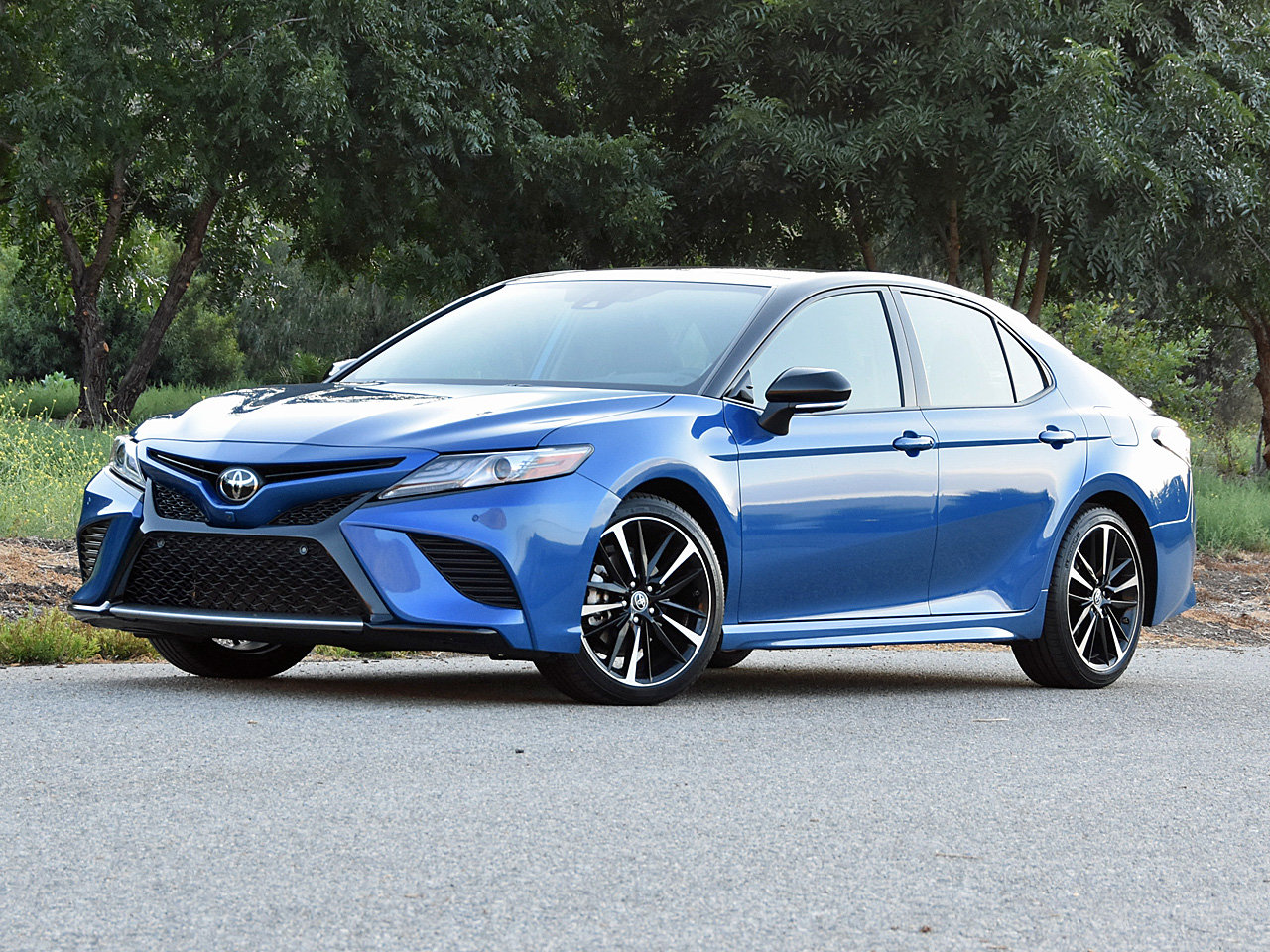
According to CarGurus experts, the overall rating for the 2019 Toyota Camry is 7.8 out of 10, while the 2020 Honda Civic Hatchback scores 7.7 out of 10. Given the higher rating, the Toyota Camry emerges as the recommended choice, offering a well-rounded package with superior safety features and a more powerful V6 engine option.
Choose the 2020 Honda Civic Hatchback if:
- A stylish, practical hatchback with ample cargo space and better fuel efficiency suits your needs.
- You value a blend of advanced technology features without requiring cutting-edge voice recognition.
- Driving excitement with a softer ride and practical daily usability is what you’re looking for.


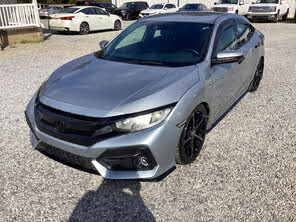
Choose the 2019 Toyota Camry if:
- You prioritize top-tier safety ratings and comprehensive driver-assistance features.
- You prefer a midsize sedan with multiple engine and trim options, including hybrid.
- Enhanced interior materials and comfort features are essential to your driving experience.
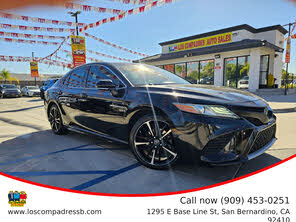

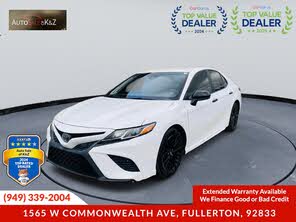

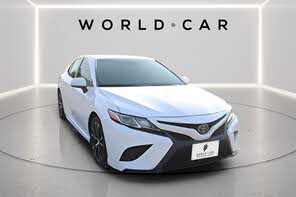
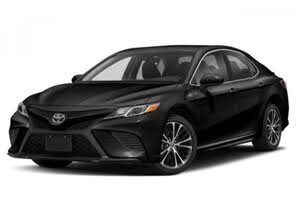
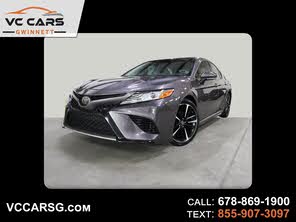
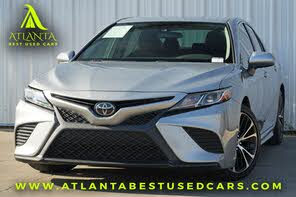
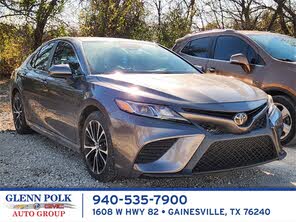
CarGurus highlights
According to CarGurus experts, the overall rating for the 2019 Toyota Camry is 7.8 out of 10, while the 2020 Honda Civic Hatchback scores 7.7 out of 10. Given the higher rating, the Toyota Camry emerges as the recommended choice, offering a well-rounded package with superior safety features and a more powerful V6 engine option.
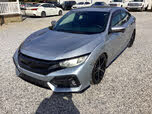
Choose the 2020 Honda Civic Hatchback if:
Shop Now- A stylish, practical hatchback with ample cargo space and better fuel efficiency suits your needs.
- You value a blend of advanced technology features without requiring cutting-edge voice recognition.
- Driving excitement with a softer ride and practical daily usability is what you’re looking for.






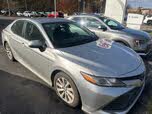
Choose the 2019 Toyota Camry if:
Shop Now- You prioritize top-tier safety ratings and comprehensive driver-assistance features.
- You prefer a midsize sedan with multiple engine and trim options, including hybrid.
- Enhanced interior materials and comfort features are essential to your driving experience.





By: CarGurus + AI
At CarGurus, our team of experienced automotive writers remain at the heart of our content operation, conducting hands-on car tests and writing insightful guides that are backed by years of industry experience. To complement this, we are harnessing AI to make our content offering more diverse and more helpful to shoppers than ever. To achieve this, our AI systems are based exclusively on CarGurus content, ratings and data, so that what we produce is both unique to CarGurus, and uniquely helpful to car shoppers.