2020 Honda Civic vs 2021 Toyota Camry
Overview | |
MSRP$20,000 | MSRP$25,045 |
Listings1577 | Listings1445 |
Ratings & Reviews | |
User Reviews | User Reviews |
Expert reviews8.2 out of 10 | Expert reviews7.8 out of 10 |
Pros
Cons
| Pros
Cons
|
2020 Honda Civic Reviews SummaryMinor design tweaks, more standard safety and convenience features, and more manual transmissions arrive as the standout changes for the Civic's 2020 model year. Last redesigned for the 2016 model year, the Civic keeps outperforming its small-car peers by offering the performance and quality of more expensive cars, while retaining the value and longevity expected of a Honda. Plus, I had a really fun week with the turbocharged Civic Si. | |
2021 Toyota Camry Reviews SummaryThe Toyota Camry has long been many new-car buyers’ default choice—but not because it’s interesting. Reliability and practicality have traditionally been the Camry’s strengths, not sportiness or style. Toyota tried to change that for the 2018 model year, when the Camry was last redesigned. The current-generation Camry adopted more extroverted styling, and engineers tried to make the driving experience more exciting, too. While Toyota’s approach has changed, the Camry still competes against the same array of midsize sedans, including the Honda Accord, Hyundai Sonata, Mazda 6, Nissan Altima, Subaru Legacy, and Volkswagen Passat. Changes for the 2021 model year include subtle styling tweaks, new infotainment displays, an upgrade to the Toyota Safety Sense 2.5+ (TSS 2.5+) package of driver aids, some changes to the dashboard trim, and the discontinuation of the Camry L trim level. That leaves the Camry LE as the new base trim level. The Camry offers buyers more choices than many rivals, encompassing three powertrains (inline-four, V6, and hybrid), six trim levels (LE, XLE, SE, SE Nightshade Edition, XSE, and TRD), and the choice of front-wheel drive (FWD) or all-wheel drive (AWD). Our test car was an AWD SE Nightshade Edition, positioned close to the middle of the lineup. | |
No video found | |
Popular Features & Specs | |
Engine2.0L 158 hp I4 | Engine2.5L 203 hp I4 |
Drive TrainFWD | Drive TrainFWD |
Seating Capacity5 | Seating Capacity5 |
Horsepower158 hp @ 6500 rpm | Horsepower |
MPG City25 | MPG City28 |
MPG Highway36 | MPG Highway39 |
Engine | |
Engine Name2.0L 158 hp I4 | Engine Name2.5L 203 hp I4 |
Torque138 lb-ft @ 4200 rpm | Torque |
Horsepower158 hp @ 6500 rpm | Horsepower |
DrivetrainFWD | DrivetrainFWD |
Fuel Economy | |
MPG City25 | MPG City28 |
MPG Highway36 | MPG Highway39 |
Interior | |
Seating Capacity5 | Seating Capacity5 |
Safety | |
Front Crash Overall5 | Front Crash Overall5 |
Side Crash Overall5 | Side Crash Overall5 |
Dimensions & Capacity | |
Cargo Space15.1 cu ft | Cargo Space15.1 cu ft |
Curb Weight2762 lbs | Curb Weight3310 lbs |
Height55.7 in | Height56.9 in |
Length182.7 in | Length192.1 in |
Width70.8 in | Width72.4 in |
Wheelbase106.3 in | Wheelbase111.2 in |
Maximum Payload1007 lbs | Maximum Payload925 lbs |
Number of doors4 | Number of doors4 |
Overview | ||
MSRP | $20,000 | $25,045 |
Listings | ||
Ratings & Reviews | ||
User reviews | ||
Expert reviews | 8.2 out of 10Read full review | 7.8 out of 10Read full review |
Pros & cons | Pros
Cons
| Pros
Cons
|
Summary | Minor design tweaks, more standard safety and convenience features, and more manual transmissions arrive as the standout changes for the Civic's 2020 model year. Last redesigned for the 2016 model year, the Civic keeps outperforming its small-car peers by offering the performance and quality of more expensive cars, while retaining the value and longevity expected of a Honda. Plus, I had a really fun week with the turbocharged Civic Si. | The Toyota Camry has long been many new-car buyers’ default choice—but not because it’s interesting. Reliability and practicality have traditionally been the Camry’s strengths, not sportiness or style. Toyota tried to change that for the 2018 model year, when the Camry was last redesigned. The current-generation Camry adopted more extroverted styling, and engineers tried to make the driving experience more exciting, too. While Toyota’s approach has changed, the Camry still competes against the same array of midsize sedans, including the Honda Accord, Hyundai Sonata, Mazda 6, Nissan Altima, Subaru Legacy, and Volkswagen Passat. Changes for the 2021 model year include subtle styling tweaks, new infotainment displays, an upgrade to the Toyota Safety Sense 2.5+ (TSS 2.5+) package of driver aids, some changes to the dashboard trim, and the discontinuation of the Camry L trim level. That leaves the Camry LE as the new base trim level. The Camry offers buyers more choices than many rivals, encompassing three powertrains (inline-four, V6, and hybrid), six trim levels (LE, XLE, SE, SE Nightshade Edition, XSE, and TRD), and the choice of front-wheel drive (FWD) or all-wheel drive (AWD). Our test car was an AWD SE Nightshade Edition, positioned close to the middle of the lineup. |
Video | No video found | |
Popular Features & Specs | ||
Engine | 2.0L 158 hp I4 | 2.5L 203 hp I4 |
Drive Train | FWD | FWD |
Seating Capacity | 5 | 5 |
Horsepower | 158 hp @ 6500 rpm | |
MPG City | 25 | 28 |
MPG Highway | 36 | 39 |
Engine | ||
Engine Name | 2.0L 158 hp I4 | 2.5L 203 hp I4 |
Torque | 138 lb-ft @ 4200 rpm | |
Horsepower | 158 hp @ 6500 rpm | |
Drivetrain | FWD | FWD |
Fuel Economy | ||
MPG City | 25 | 28 |
MPG Highway | 36 | 39 |
Interior | ||
Seating Capacity | 5 | 5 |
Safety | ||
Front Crash Overall | 5 | 5 |
Side Crash Overall | 5 | 5 |
Dimensions & Capacity | ||
Cargo Space | 15.1 cu ft | 15.1 cu ft |
Curb Weight | 2762 lbs | 3310 lbs |
Height | 55.7 in | 56.9 in |
Length | 182.7 in | 192.1 in |
Width | 70.8 in | 72.4 in |
Wheelbase | 106.3 in | 111.2 in |
Maximum Payload | 1007 lbs | 925 lbs |
Number of doors | 4 | 4 |
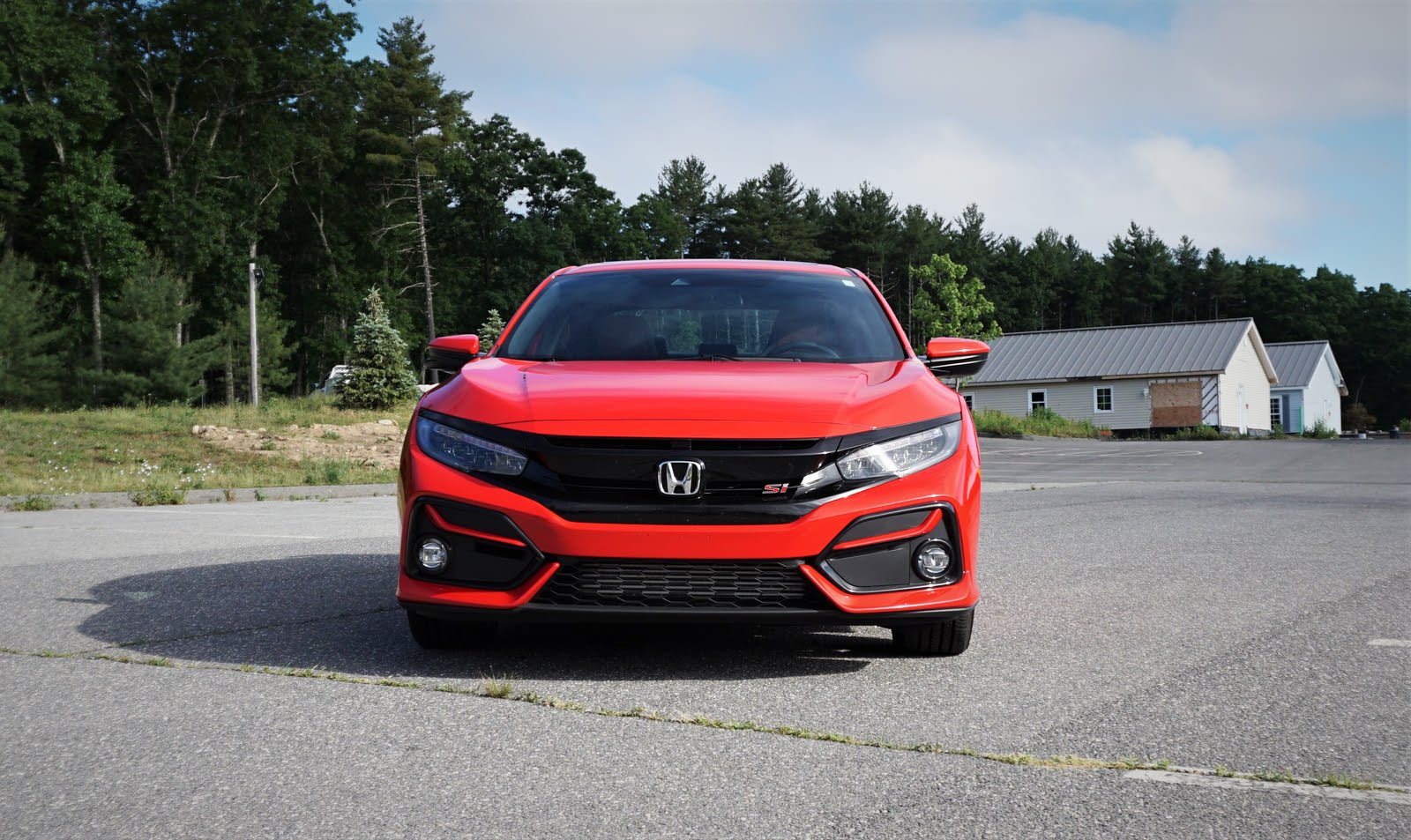
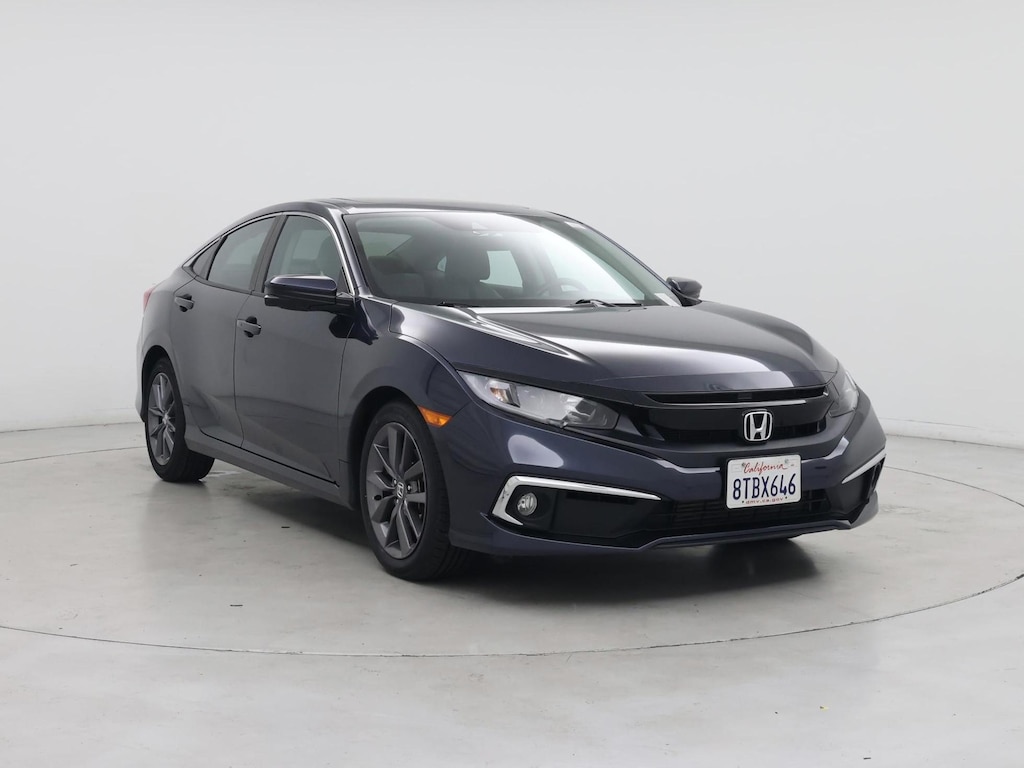
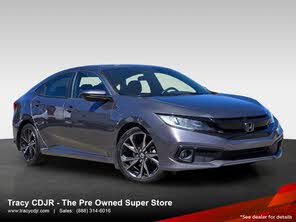
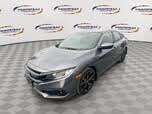
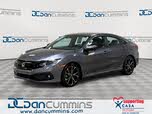
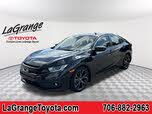
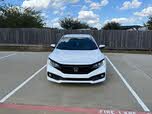
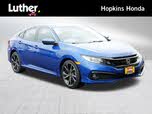
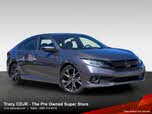
The 2020 Honda Civic was lauded as the crown jewel of Honda's lineup. Despite its status as a $20,000 compact car, it offered a bounty of choices and a level of engineering excellence often attributed to luxury brands like BMW. The Civic came in three body styles—sedan, coupe, and 4-door hatchback—each accentuating its sharp design despite its small footprint. The sedan mimicked the sleek roofline of the coupe, but with an elongated and elegant body. The creases on the body panels, wide arcing headlights, and sweeping LED taillights emphasized the car's low and wide stance. The hatchback's tall rear was a bit quirky, specifically the Type R model, which looked like a car straight out of an anime. Nonetheless, the Civic's exterior was visually stimulating without any hint of cheapness.
The 2019 model year introduced several upgrades to the grilles, bumpers, and wheels, which carried over to 2020. The Civic Si sedan featured new matte-black 18-inch wheels, LED fog lights with gloss black trim, standard LED headlights, an updated grille, and a new rear bumper. The Si coupe had similar upgrades. The 2020 Civic hatchback received new bumper and light changes, plus new wheels in gray or black.
Inside, the Civic's minimalist interior featured a narrow center stack and minimal instrumentation. It was built with soft-touch materials and high-quality switchgear. New gloss-black trims on the steering wheel and dash, along with metal shift knobs and a pulsing red start button, added to its aesthetic appeal. The Si model introduced three new dash accents and revised sport seats with red bands woven into the fabric.
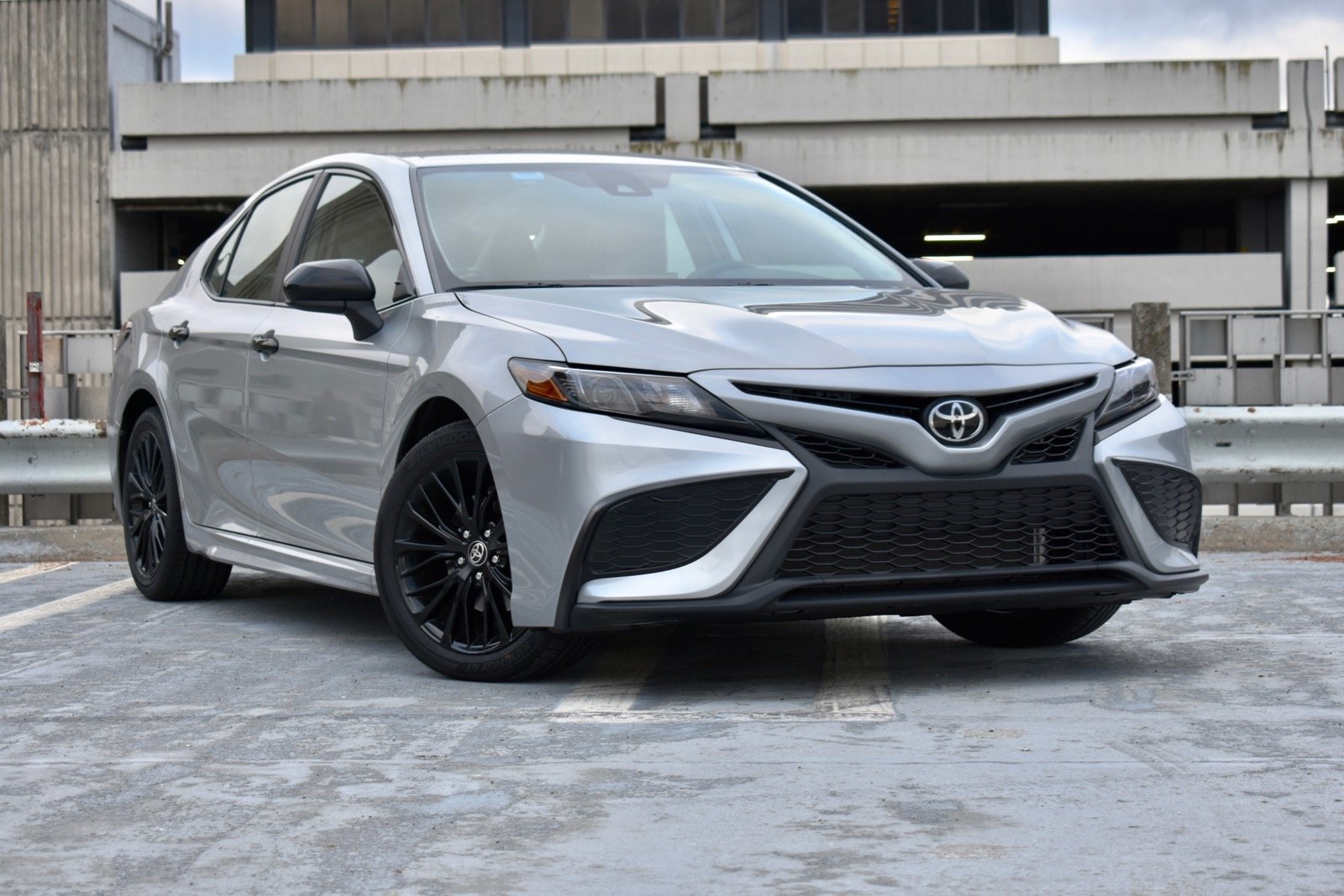
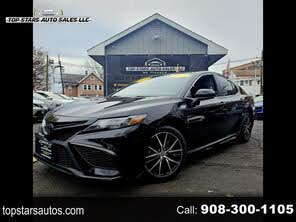
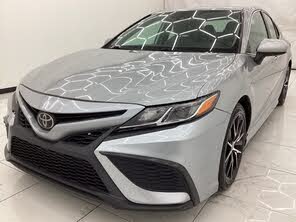
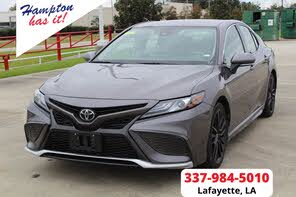
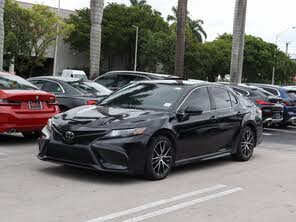
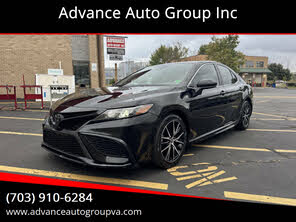
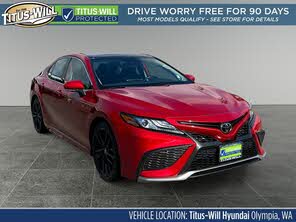
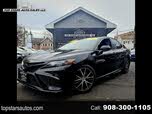
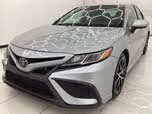
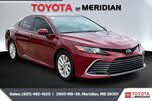
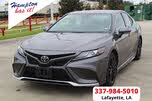
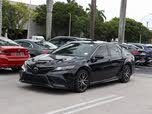
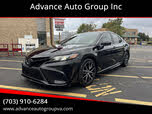
The 2021 Toyota Camry, meanwhile, attempted to distance itself from its legacy of being a bland midsize sedan. Designers worked hard to make the Camry exciting, adding styling details like flared wheel arches and thin headlights and taillights that visually widened the car. However, SE, XSE, or TRD trims included fake vents that cluttered the vehicle visually. The LE and XLE models featured a somewhat cleaner but still massive grille.
Exterior styling updates for 2021 were modest but noticeable, especially on the TRD performance model, which received a larger rear spoiler. The existing Nightshade Edition, based on the SE trim, carried over with blacked-out exterior trim and wheels. Standard 17-inch alloy wheels were found on the base LE trim, while 18-inch and 19-inch wheels were available on other trims.
Inside, the Camry's design was similarly chaotic to its exterior. The dashboard looked stitched together from various elements, with a hodgepodge of trim including contrast stitching, piano black plastic, and faux carbon fiber. Despite the disjointed design, XLE and XSE models were equipped with leather upholstery.


The 2020 Honda Civic offered a variety of powertrain options across its lineup, all front-wheel drive (FWD). The base LX and Sport trims housed a 2.0-liter inline 4-cylinder engine, delivering 158 horsepower and 138 pound-feet of torque. Standard on these trims was a 6-speed manual transmission, although a continuously variable transmission (CVT) was an optional upgrade. Higher trims like the EX were equipped with a turbocharged 1.5-liter inline-4 engine, producing 174 hp and 162 lb-ft of torque. The Sport Touring hatchback upped the ante to 180 hp with a standard manual transmission.
The Si version saw the 1.5-liter turbo engine boosted to 205 hp and 192 lb-ft, while the Type R’s 2.0-liter turbocharged engine reached an impressive 306 hp and 295 lb-ft. Both the Si and Type R were available only with a manual transmission. The Si featured adaptive dampers to minimize body roll, though it rode stiffer than the regular Civic. Nevertheless, the combination of great suspension, precise steering, and a torque-rich engine made it an engaging car to drive.
Fuel economy was commendable. Despite a 6% reduction in the final-drive ratio for improved acceleration, the Si managed 26 mpg city, 36 mpg highway, and 30 mpg combined. Most Civic models with CVT achieved at least 30 mpg city and up to 42 mpg highway.
The 2021 Toyota Camry, on the other hand, began with a 2.5-liter four-cylinder engine aptly named Dynamic Force. It produced 203 hp and 184 lb-ft of torque with FWD, and 202 hp and 182 lb-ft with AWD. The XSE variant’s dual-exhaust system kicked the power up slightly to 206 hp and 186 lb-ft with FWD. This engine was paired with an eight-speed automatic transmission.
Toyota also offered a 3.5-liter V6 engine, producing 301 hp and 267 lb-ft of torque, and a Camry Hybrid combining a 2.5-liter four-cylinder engine with electric assist for a total output of 208 hp. Both the V6 and hybrid powertrains were exclusively FWD.
In practice, the Dynamic Force engine was surprisingly lively, offering a bubbly, eager-to-rev nature. Chassis tuning balanced handling and ride quality, making the Camry fun to toss into corners while maintaining a comfortable ride. The TRD model added sporty elements like stiffer suspension, larger brakes, and available Bridgestone Potenza summer tires, which further enhanced its performance.
Toyota’s AWD system, derived from the RAV4, could send up to 50% of torque to the rear wheels but reverted to FWD when extra traction wasn't required. This system didn’t impact passenger or cargo space, making it a practical addition.
For the 2020 Honda Civic, rear passenger comfort was notable across all body styles except the coupe. Despite the lack of rear air vents, the seating was spacious, with two-stage heated outboard seats as a luxury feature. Cargo space in the sedan offered 15 cubic feet, while the coupe had 12 cubic feet. The hatchback, however, boasted an impressive 26 cubic feet behind the rear seats and 46 cubic feet with them folded down.
The Civic’s three-spoke steering wheel included controls for the central display and instrument panel, which featured a digital tachometer and speedometer flanked by analog fuel and coolant gauges. The center console was versatile with deep storage bins, adjustable cupholders, and ample space for personal items.
The 2021 Toyota Camry, in comparison, prioritized rear headroom and legroom, though front space was slightly below average. The front seats provided enough adjustability for a comfortable driving position, combined with excellent outward visibility. Cargo space measured at 15.1 cubic feet—average for a midsize sedan but less than the Honda Accord’s 16.7 cubic feet. In-cabin storage was limited, with small cupholders and door bottle holders.
The Camry emphasized ease of use with analog controls for key functions, featuring large knobs for audio volume and tuning, and shortcut buttons for touchscreen menus. However, the placement of some controls was less ergonomically friendly, particularly the audio tuning knob.
The 2020 Honda Civic’s infotainment system was often criticized for being outdated, with slow operation and complex navigation. The 7-inch touchscreen became standard on all trims except the base LX and included Apple CarPlay and Android Auto. Higher trims featured a Garmin-based navigation system with fast, accurate voice recognition. New tech for 2020 in the Si included Active Sound Control, push-button start, keyless entry, and a power moonroof. Honda Sensing, standard across all trims, included advanced driver-assist features like lane centering, adaptive cruise control, and auto high beams.
The 2021 Toyota Camry’s technology suite started with a 7-inch touchscreen, Apple CarPlay, Android Auto, Amazon Alexa compatibility, Bluetooth, Siri Eyes Free, and SiriusXM. Upgraded trims received a 9-inch touchscreen, WiFi support, navigation, and a nine-speaker JBL audio system. Available tech included a 10-inch head-up display and dual-zone automatic climate control at higher trims. The infotainment menus were user-friendly, though the system’s graphics were plain.
Honda equipped the 2020 Civic with the Honda Sensing suite, featuring forward collision warning, emergency forward braking, lane-keeping assist, and adaptive cruise control. Improved LED headlights helped the Civic earn an IIHS Top Safety Pick rating for all body styles except the Type R, which wasn't tested. NHTSA awarded the Civic five stars in all categories except a four-star rating for the passenger frontal crash on the coupe.
The 2021 Toyota Camry received the IIHS Top Safety Pick+ rating and the highest five-star rating from NHTSA. The new TSS 2.5+ safety package was standard, adding features like adaptive cruise control, automatic emergency braking, forward-collision warning with pedestrian detection, lane-departure warning, automatic high beams, and traffic-sign recognition. Enhanced capabilities included assistive acceleration for lane changes and improved forward-collision detection. Standard Rear Seat Reminder and available blind-spot monitoring with rear cross-traffic alert added to the safety repertoire.
CarGurus highlights
According to CarGurus experts, the overall rating for the 2020 Honda Civic is 8.2 out of 10, while the 2021 Toyota Camry scores 7.8 out of 10. Based on these ratings and detailed comparisons, the 2020 Honda Civic offers a better combination of engaging driving dynamics, versatile cargo space, and a well-thought-out interior, making it the recommended choice over the 2021 Toyota Camry.
Choose the 2020 Honda Civic if:
- You want more engaging driving dynamics with options for manual transmission and high-performance models like the Si or Type R.
- You prefer a car with versatile body styles and superior fuel efficiency.
- Greater cargo versatility is important, particularly in the spacious hatchback variant.


Choose the 2021 Toyota Camry if:
- You prioritize comprehensive safety features and top-tier safety ratings.
- AWD availability is a must for dealing with diverse driving conditions.
- You prefer an infotainment system that is easier to navigate, even if it lacks standout graphics.




CarGurus highlights
According to CarGurus experts, the overall rating for the 2020 Honda Civic is 8.2 out of 10, while the 2021 Toyota Camry scores 7.8 out of 10. Based on these ratings and detailed comparisons, the 2020 Honda Civic offers a better combination of engaging driving dynamics, versatile cargo space, and a well-thought-out interior, making it the recommended choice over the 2021 Toyota Camry.
Choose the 2020 Honda Civic if:
Shop Now- You want more engaging driving dynamics with options for manual transmission and high-performance models like the Si or Type R.
- You prefer a car with versatile body styles and superior fuel efficiency.
- Greater cargo versatility is important, particularly in the spacious hatchback variant.

Choose the 2021 Toyota Camry if:
Shop Now- You prioritize comprehensive safety features and top-tier safety ratings.
- AWD availability is a must for dealing with diverse driving conditions.
- You prefer an infotainment system that is easier to navigate, even if it lacks standout graphics.





By: CarGurus + AI
At CarGurus, our team of experienced automotive writers remain at the heart of our content operation, conducting hands-on car tests and writing insightful guides that are backed by years of industry experience. To complement this, we are harnessing AI to make our content offering more diverse and more helpful to shoppers than ever. To achieve this, our AI systems are based exclusively on CarGurus content, ratings and data, so that what we produce is both unique to CarGurus, and uniquely helpful to car shoppers.