2020 Honda Civic Hatchback vs 2021 Toyota Camry

Overview | |
MSRP$21,750 | MSRP$25,045 |
Listings388 | Listings1445 |
Ratings & Reviews | |
User Reviews | User Reviews |
Expert reviews7.7 out of 10 | Expert reviews7.8 out of 10 |
Pros
Cons
| Pros
Cons
|
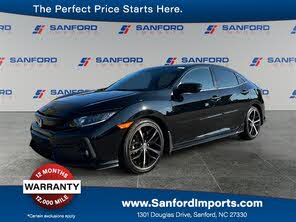
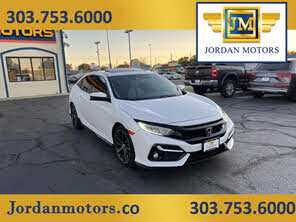
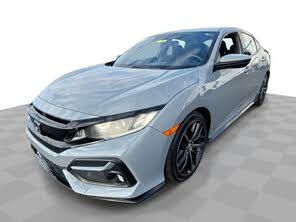
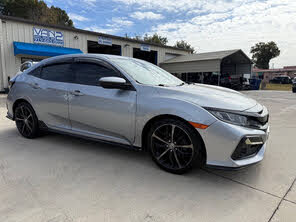
2020 Honda Civic Hatchback Reviews SummaryWhen the Honda Civic first went on sale in the US in 1973, it was a tiny 3-door hatchback capitalizing on concerns arising out of the OPEC Oil Embargo. In other words, it was a safe and smart choice during a period of unrest and uncertainty. Eventually though, years after oil pipelines once again gushed with plentiful crude, hatchbacks became synonymous with economic despair. Judgmental types assumed you couldn’t afford anything better, and soon few people wanted them anymore. Today, hatchbacks are making comebacks, and the 2020 Honda Civic Hatchback is a good example of why. | |
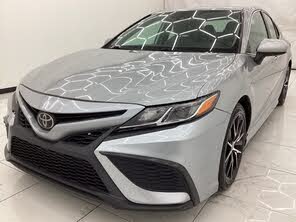
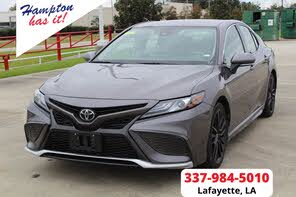
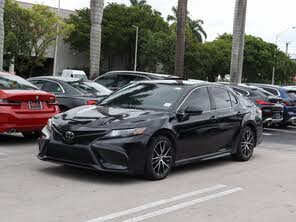
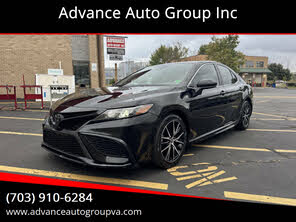
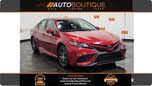
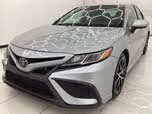
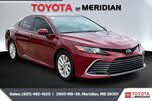
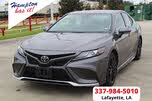
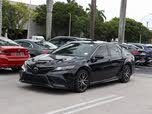
2021 Toyota Camry Reviews SummaryThe Toyota Camry has long been many new-car buyers’ default choice—but not because it’s interesting. Reliability and practicality have traditionally been the Camry’s strengths, not sportiness or style. Toyota tried to change that for the 2018 model year, when the Camry was last redesigned. The current-generation Camry adopted more extroverted styling, and engineers tried to make the driving experience more exciting, too. While Toyota’s approach has changed, the Camry still competes against the same array of midsize sedans, including the Honda Accord, Hyundai Sonata, Mazda 6, Nissan Altima, Subaru Legacy, and Volkswagen Passat. Changes for the 2021 model year include subtle styling tweaks, new infotainment displays, an upgrade to the Toyota Safety Sense 2.5+ (TSS 2.5+) package of driver aids, some changes to the dashboard trim, and the discontinuation of the Camry L trim level. That leaves the Camry LE as the new base trim level. The Camry offers buyers more choices than many rivals, encompassing three powertrains (inline-four, V6, and hybrid), six trim levels (LE, XLE, SE, SE Nightshade Edition, XSE, and TRD), and the choice of front-wheel drive (FWD) or all-wheel drive (AWD). Our test car was an AWD SE Nightshade Edition, positioned close to the middle of the lineup. | |
No video found | |
Popular Features & Specs | |
Engine1.5L 174 hp I4 | Engine2.5L 203 hp I4 |
Drive TrainFWD | Drive TrainFWD |
Seating Capacity5 | Seating Capacity5 |
Horsepower174 hp @ 6000 rpm | Horsepower |
MPG City31 | MPG City28 |
MPG Highway40 | MPG Highway39 |
Engine | |
Engine Name1.5L 174 hp I4 | Engine Name2.5L 203 hp I4 |
Torque162 lb-ft @ 1700 rpm | Torque |
Horsepower174 hp @ 6000 rpm | Horsepower |
DrivetrainFWD | DrivetrainFWD |
Fuel Economy | |
MPG City31 | MPG City28 |
MPG Highway40 | MPG Highway39 |
Interior | |
Seating Capacity5 | Seating Capacity5 |
Safety | |
Front Crash Overall5 | Front Crash Overall5 |
Side Crash Overall5 | Side Crash Overall5 |
Dimensions & Capacity | |
Cargo Space25.7 cu ft | Cargo Space15.1 cu ft |
Curb Weight2906 lbs | Curb Weight3310 lbs |
Height56.5 in | Height56.9 in |
Length177.9 in | Length192.1 in |
Width70.8 in | Width72.4 in |
Wheelbase106.3 in | Wheelbase111.2 in |
Maximum Payload | Maximum Payload925 lbs |
Number of doors4 | Number of doors4 |
Overview | ||
MSRP | $21,750 | $25,045 |
Listings | ||
Ratings & Reviews | ||
User reviews | ||
Expert reviews | 7.7 out of 10Read full review | 7.8 out of 10Read full review |
Pros & cons | Pros
Cons
| Pros
Cons
|
Summary | When the Honda Civic first went on sale in the US in 1973, it was a tiny 3-door hatchback capitalizing on concerns arising out of the OPEC Oil Embargo. In other words, it was a safe and smart choice during a period of unrest and uncertainty. Eventually though, years after oil pipelines once again gushed with plentiful crude, hatchbacks became synonymous with economic despair. Judgmental types assumed you couldn’t afford anything better, and soon few people wanted them anymore. Today, hatchbacks are making comebacks, and the 2020 Honda Civic Hatchback is a good example of why. | The Toyota Camry has long been many new-car buyers’ default choice—but not because it’s interesting. Reliability and practicality have traditionally been the Camry’s strengths, not sportiness or style. Toyota tried to change that for the 2018 model year, when the Camry was last redesigned. The current-generation Camry adopted more extroverted styling, and engineers tried to make the driving experience more exciting, too. While Toyota’s approach has changed, the Camry still competes against the same array of midsize sedans, including the Honda Accord, Hyundai Sonata, Mazda 6, Nissan Altima, Subaru Legacy, and Volkswagen Passat. Changes for the 2021 model year include subtle styling tweaks, new infotainment displays, an upgrade to the Toyota Safety Sense 2.5+ (TSS 2.5+) package of driver aids, some changes to the dashboard trim, and the discontinuation of the Camry L trim level. That leaves the Camry LE as the new base trim level. The Camry offers buyers more choices than many rivals, encompassing three powertrains (inline-four, V6, and hybrid), six trim levels (LE, XLE, SE, SE Nightshade Edition, XSE, and TRD), and the choice of front-wheel drive (FWD) or all-wheel drive (AWD). Our test car was an AWD SE Nightshade Edition, positioned close to the middle of the lineup. |
Video | No video found | |
Popular Features & Specs | ||
Engine | 1.5L 174 hp I4 | 2.5L 203 hp I4 |
Drive Train | FWD | FWD |
Seating Capacity | 5 | 5 |
Horsepower | 174 hp @ 6000 rpm | |
MPG City | 31 | 28 |
MPG Highway | 40 | 39 |
Engine | ||
Engine Name | 1.5L 174 hp I4 | 2.5L 203 hp I4 |
Torque | 162 lb-ft @ 1700 rpm | |
Horsepower | 174 hp @ 6000 rpm | |
Drivetrain | FWD | FWD |
Fuel Economy | ||
MPG City | 31 | 28 |
MPG Highway | 40 | 39 |
Interior | ||
Seating Capacity | 5 | 5 |
Safety | ||
Front Crash Overall | 5 | 5 |
Side Crash Overall | 5 | 5 |
Dimensions & Capacity | ||
Cargo Space | 25.7 cu ft | 15.1 cu ft |
Curb Weight | 2906 lbs | 3310 lbs |
Height | 56.5 in | 56.9 in |
Length | 177.9 in | 192.1 in |
Width | 70.8 in | 72.4 in |
Wheelbase | 106.3 in | 111.2 in |
Maximum Payload | 925 lbs | |
Number of doors | 4 | 4 |


CarGurus highlights
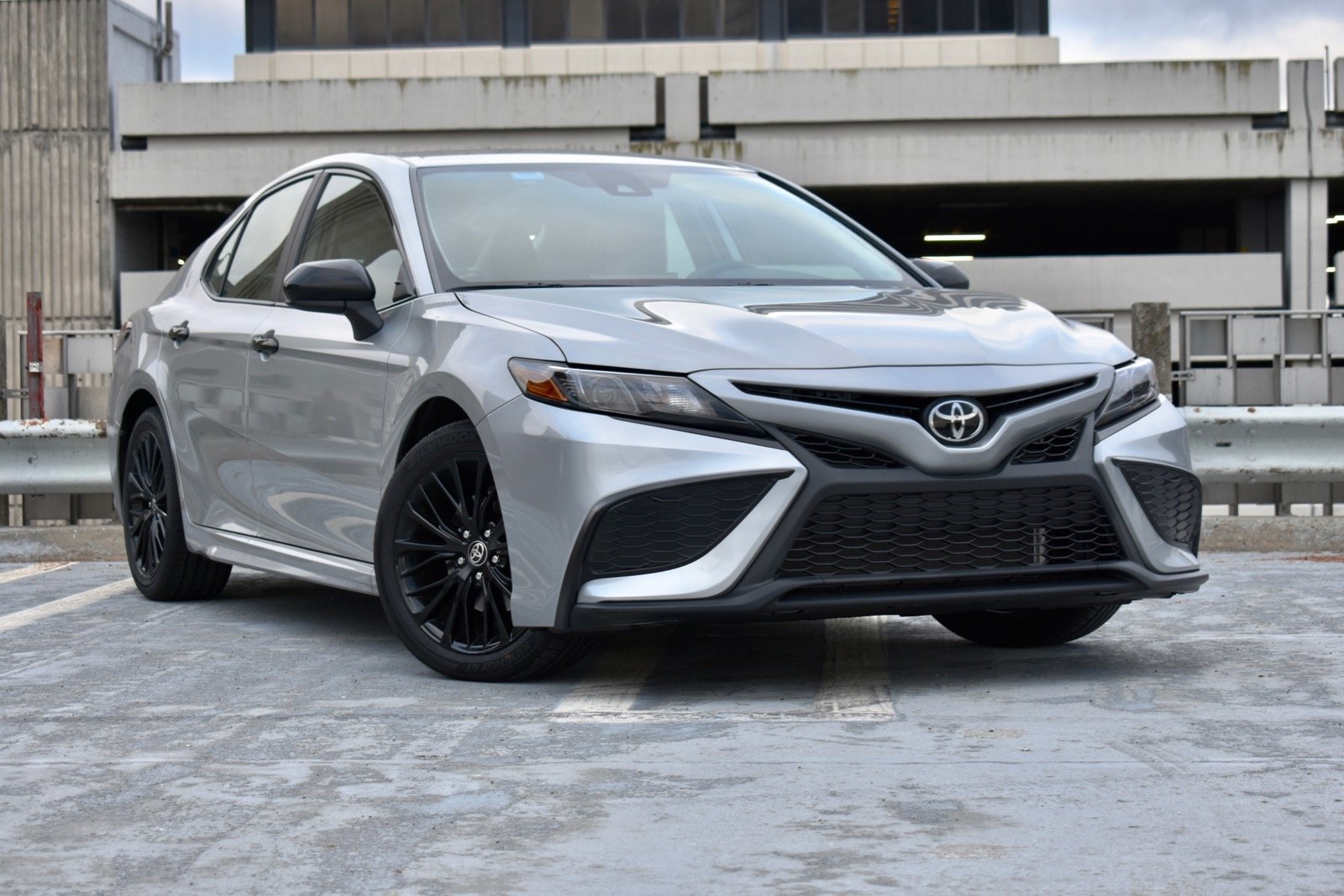
CarGurus experts evaluated the two vehicles in the contexts of their own classes. The overall rating for the 2020 Honda Civic Hatchback is 7.7 out of 10, while the 2021 Toyota Camry scores 7.8 out of 10. As reflected in the very close scores, each has its strengths.
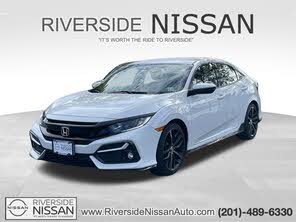
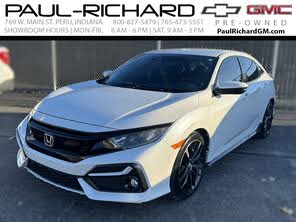
Choose the 2020 Honda Civic Hatchback if:
- You prioritize a compact hatchback with ample cargo space and a sporty design.
- You value an intuitive infotainment system with smartphone integration.
- You seek a balance between performance and practicality for daily driving.

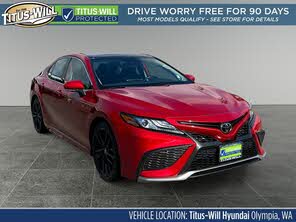
Choose the 2021 Toyota Camry if:
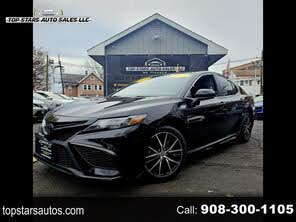
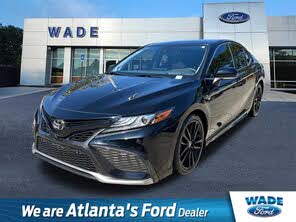
- You prioritize safety and reliability, as evidenced by its impressive safety ratings.
- You prefer a midsize sedan with various engine options, including a hybrid variant.
- You are looking for a comfortable and spacious interior with competitive pricing in the segment.



CarGurus highlights
CarGurus experts evaluated the two vehicles in the contexts of their own classes. The overall rating for the 2020 Honda Civic Hatchback is 7.7 out of 10, while the 2021 Toyota Camry scores 7.8 out of 10. As reflected in the very close scores, each has its strengths.
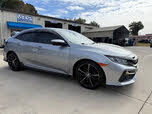
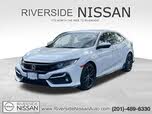
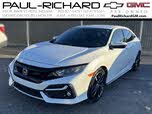
Choose the 2020 Honda Civic Hatchback if:
Shop Now- You prioritize a compact hatchback with ample cargo space and a sporty design.
- You value an intuitive infotainment system with smartphone integration.
- You seek a balance between performance and practicality for daily driving.




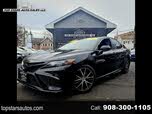
Choose the 2021 Toyota Camry if:
Shop Now- You prioritize safety and reliability, as evidenced by its impressive safety ratings.
- You prefer a midsize sedan with various engine options, including a hybrid variant.
- You are looking for a comfortable and spacious interior with competitive pricing in the segment.




By: CarGurus + AI
At CarGurus, our team of experienced automotive writers remain at the heart of our content operation, conducting hands-on car tests and writing insightful guides that are backed by years of industry experience. To complement this, we are harnessing AI to make our content offering more diverse and more helpful to shoppers than ever. To achieve this, our AI systems are based exclusively on CarGurus content, ratings and data, so that what we produce is both unique to CarGurus, and uniquely helpful to car shoppers.