2019 Toyota Camry vs 2019 Hyundai Elantra
Overview | |
MSRP$24,095 | MSRP$17,200 |
Listings1326 | Listings755 |
Ratings & Reviews | |
User Reviews | User Reviews |
Expert reviews7.8 out of 10 | Expert reviews8.2 out of 10 |
Pros
Cons
| |
2019 Toyota Camry Reviews SummaryBlame the Toyota Avalon for the Toyota Camry’s flaws. In order to put daylight between itself and Toyota’s larger full-size sedan, the midsize Camry is now smaller than some of its competitors, while simultaneously offering fewer of the increasingly expected features in the segment. Still, there are several good reasons to consider a 2019 Camry, from its outstanding safety ratings to its free scheduled maintenance plan. It’s also one of a handful of family sedans that still offers a 6-cylinder engine. | |
2019 Hyundai Elantra Reviews SummaryCustomer satisfaction is dependent on multiple factors. For example, let's say you go out to a new restaurant. Even if the service is great, or the bill is inexpensive, or the restaurant has a lovely ambiance, you probably won't go back if the food doesn't taste good. The updated and upgraded 2019 Hyundai Elantra is like that—unless you buy the turbocharged Sport trim. | |
Popular Features & Specs | |
Engine2.5L 203 hp I4 | Engine2.0L 147 hp I4 |
Drive TrainFWD | Drive TrainFWD |
Seating Capacity5 | Seating Capacity5 |
Horsepower | Horsepower147 hp @ 6200 rpm |
MPG City29 | MPG City26 |
MPG Highway41 | MPG Highway36 |
Engine | |
Engine Name2.5L 203 hp I4 | Engine Name2.0L 147 hp I4 |
Torque | Torque132 lb-ft @ 4500 rpm |
Horsepower | Horsepower147 hp @ 6200 rpm |
DrivetrainFWD | DrivetrainFWD |
Fuel Economy | |
MPG City29 | MPG City26 |
MPG Highway41 | MPG Highway36 |
Interior | |
Seating Capacity5 | Seating Capacity5 |
Safety | |
Front Crash Overall5 | Front Crash Overall4 |
Side Crash Overall5 | Side Crash Overall4 |
Dimensions & Capacity | |
Cargo Space14.1 cu ft | Cargo Space14.4 cu ft |
Curb Weight3241 lbs | Curb Weight2972 lbs |
Height56.9 in | Height56.5 in |
Length192.1 in | Length181.9 in |
Width72.4 in | Width70.9 in |
Wheelbase111.2 in | Wheelbase106.3 in |
Maximum Payload925 lbs | Maximum Payload |
Number of doors4 | Number of doors4 |
Overview | ||
MSRP | $24,095 | $17,200 |
Listings | ||
Ratings & Reviews | ||
User reviews | ||
Expert reviews | 7.8 out of 10Read full review | 8.2 out of 10Read full review |
Pros & cons | Pros
Cons
| |
Summary | Blame the Toyota Avalon for the Toyota Camry’s flaws. In order to put daylight between itself and Toyota’s larger full-size sedan, the midsize Camry is now smaller than some of its competitors, while simultaneously offering fewer of the increasingly expected features in the segment. Still, there are several good reasons to consider a 2019 Camry, from its outstanding safety ratings to its free scheduled maintenance plan. It’s also one of a handful of family sedans that still offers a 6-cylinder engine. | Customer satisfaction is dependent on multiple factors. For example, let's say you go out to a new restaurant. Even if the service is great, or the bill is inexpensive, or the restaurant has a lovely ambiance, you probably won't go back if the food doesn't taste good. The updated and upgraded 2019 Hyundai Elantra is like that—unless you buy the turbocharged Sport trim. |
Video | ||
Popular Features & Specs | ||
Engine | 2.5L 203 hp I4 | 2.0L 147 hp I4 |
Drive Train | FWD | FWD |
Seating Capacity | 5 | 5 |
Horsepower | 147 hp @ 6200 rpm | |
MPG City | 29 | 26 |
MPG Highway | 41 | 36 |
Engine | ||
Engine Name | 2.5L 203 hp I4 | 2.0L 147 hp I4 |
Torque | 132 lb-ft @ 4500 rpm | |
Horsepower | 147 hp @ 6200 rpm | |
Drivetrain | FWD | FWD |
Fuel Economy | ||
MPG City | 29 | 26 |
MPG Highway | 41 | 36 |
Interior | ||
Seating Capacity | 5 | 5 |
Safety | ||
Front Crash Overall | 5 | 4 |
Side Crash Overall | 5 | 4 |
Dimensions & Capacity | ||
Cargo Space | 14.1 cu ft | 14.4 cu ft |
Curb Weight | 3241 lbs | 2972 lbs |
Height | 56.9 in | 56.5 in |
Length | 192.1 in | 181.9 in |
Width | 72.4 in | 70.9 in |
Wheelbase | 111.2 in | 106.3 in |
Maximum Payload | 925 lbs | |
Number of doors | 4 | 4 |
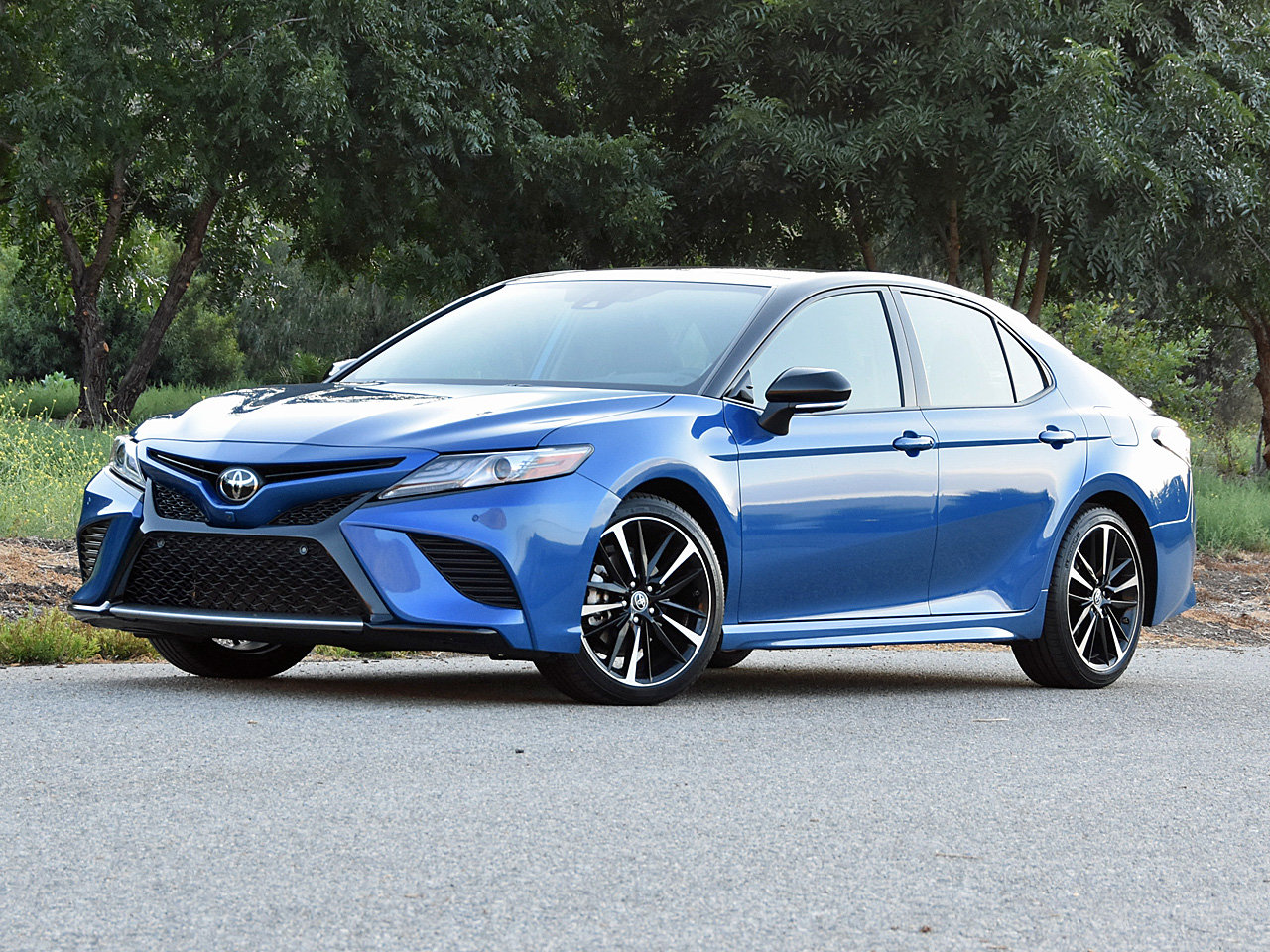
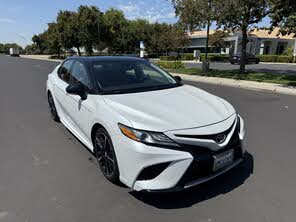
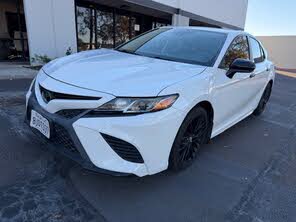
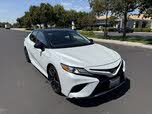
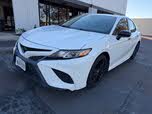
When purchasing a 2019 Toyota Camry, buyers had to choose between standard and sporty styling, and then decide among a 4-cylinder, a V6, and a hybrid powertrain. Trim levels varied based on engine selection, including L, LE, XLE, SE, and XSE. The review focused on the Camry XSE equipped with a V6 engine, featuring Toyota's Driver Assist package, carpeted floor mats, and two-tone Blue Streak paint with a Midnight Black roof, with a sticker price of $39,669 including the $955 destination charge.
While the Camry XSE V6 was quick and entertaining to drive, it wasn’t the recommended trim. For better value, the standard 2.5-liter 4-cylinder engine in LE trim was suggested. The upscale XLE was a favorite, and the Hybrid, despite its excellent gas mileage, was considered less cost-effective due to its higher starting price. Regardless of the version, the Camry's styling was seen as unresolved and oversized, with the interior offering high-quality materials but lacking in some areas like the windshield pillars and switchgear.
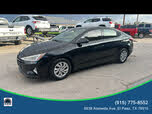
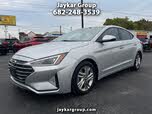
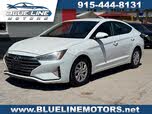
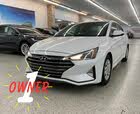
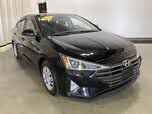
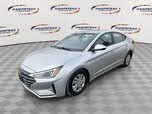
Two years prior, Hyundai redesigned the Elantra, giving it a tailored look inspired by the Genesis G80 sedan. The 2017 Elantra appeared upscale and conservative. For 2019, the Elantra received new styling forward of the windshield and front doors, redesigned wheels, and a new trunk lid, taillights, and rear bumper. The new design was described as kaleidoscopic and less appealing than the previous year.
Inside, subtle changes improved the interior, adding design flair to the air vents, a carbon-texture finish to some plastic housings, new gauges, and revised dashboard controls. The interior quality was high, with robust and solid shifter feel, though some materials felt inexpensive. The Elantra was available in SE, SEL, Value Edition, Eco, and Limited trims, with prices starting at $17,100 plus $885 for the destination charge. The Limited test vehicle, with the Ultimate Package, cost $26,690 including destination charges.


Most people found the Camry’s standard 203-horsepower, 2.5-liter 4-cylinder engine suitable for daily driving. However, the available 301-hp, 3.5-liter V6 engine, offering 83 more pound-feet of torque, provided a thrilling experience. The V6's extra weight over the front end didn’t limit handling, and the 8-speed automatic transmission performed flawlessly, with paddle shifters producing quick shifts in Sport mode.
The Camry XSE, with its sport-tuned suspension and 19-inch aluminum wheels, offered responsive handling without traditional sport-sedan stiffness, making it a comfortable daily driver and a competent canyon carver. Steering effort was firm in normal mode and heavy in Sport mode, feeling natural rather than artificial. The brakes stood up to repeated abuse, though the pedal exhibited a dissatisfying “thunk” when released quickly. Fuel economy was 21.9 mpg, short of the EPA’s 26-mpg rating in combined driving, possibly due to the need for continuous air conditioning.
The Elantra, equipped with a 2.0-liter 4-cylinder engine producing 147 horsepower, relied on a 6-speed automatic transmission to power the front wheels. Acceleration was acceptable, with Normal, Sport, and Smart driving modes available. Sport mode made the Elantra feel livelier but added unwelcome weight to the steering, leading to a preference for Normal mode.
The EPA rated the Elantra at 32 mpg in combined driving, but it returned 29.3 mpg on the testing loop and 32.4 mpg after a week of driving. Handling was decent, with the steering and brakes drawing no criticism but also no praise. The ride quality could be busy due to the inexpensive torsion-beam rear-axle suspension. Overall, the Elantra wasn’t terribly rewarding to drive but didn’t cause much aggravation either.
Toyota carved a bunch of storage into the Camry’s cabin, including a large center console bin and a hidden compartment under the wireless charging pad. The glove box was small and required a stretch to reach, and the door-panel storage pockets were narrow. The trunk, at 15.1 cubic feet, was unexpectedly small for a midsize car, with a short floor and no grab handle to swing the lid shut.
Both front seats provided 8-way power adjustment and were heated, but ventilated seats were unavailable. The rear seat was snug for a midsize sedan, with narrow rear-door openings and a low seating position making entry and exit difficult. Rear air-conditioning vents were included only in upper trim levels. During a heatwave, the climate control system quickly cooled the car, but a ventilated seat option was still desired.
Front-seat comfort in the Elantra was good for a compact car, with height adjustment for both front seats in every trim level, making it easier to get in and out. Most Elantras had heated front seats, a leather-wrapped steering wheel, and dual-zone automatic climate control with a Clean Air ionizer system. Leather was limited to the Limited trim level.
Backseat comfort was less impressive, with hard plastic front seatbacks unkind to the knees and shins of taller passengers. Air conditioning vents and USB ports were missing in the back, though size-13 feet could tuck under the front seats. Interior storage was decent, with a good-size center-console storage bin, a sizable glove box, a tray for smartphones, and big door-panel bins. The trunk offered 14.4 cubic feet of space, with a hands-free Smart Trunk release in most trims.
The Camry’s dashboard layout was dramatic yet smart, with controls easy to find and use. The Entune 3.0 infotainment system, with Apple CarPlay and a 6-month/2GB WiFi Connect subscription, was intuitive. However, Android Auto was missing, expected to be added in the 2020 model year. The Qi-compatible wireless charging pad held the phone securely, even during enthusiastic driving.
The navigation system worked well but took a long time to load traffic data on one occasion. The 9-speaker JBL premium sound system lacked clarity, producing a muddy, bass-heavy listening experience. A 10-inch head-up display (HUD) made it easier to reference important data, remaining visible even with polarized sunglasses.
The Elantra, except for the base SE, came with a 7-inch touchscreen infotainment system running Apple CarPlay, Android Auto, and satellite radio with a free 3-month trial subscription. The Limited trim included an Infinity premium sound system, and the Ultimate Package added an 8-inch display screen, navigation system, and SiriusXM Data Services.
The Elantra’s infotainment system was easy to use, with the right number of knobs and buttons to limit screen interaction. The Limited’s Infinity audio system delivered impressive sound quality, and the switchgear exuded quality and refinement. The Value Edition and Limited trims provided a free 3-year trial subscription to Blue Link services, offering a long list of safety and convenience functions.
The Camry was a crash-test rock star, earning 5-star ratings in every NHTSA assessment and a Top Safety Pick+ rating from the IIHS. It included a standard Toyota Safety Sense suite of advanced driver-assistance systems (ADAS), though not the latest “2.0” version. Standard features included adaptive cruise control, forward-collision warning with pedestrian detection, automatic emergency braking, lane-departure warning, lane-keeping assist, and automatic high-beam headlights. A standard subscription to Safety Connect service for the first three years provided additional safety features.
Most versions of the Elantra included important driver-assistance and collision-avoidance systems as standard equipment. Starting with the SEL trim, the car included forward-collision warning with automatic emergency braking, lane-departure warning with lane-keeping assist, a blind-spot-monitoring system with rear cross-traffic alert, and a driver-monitoring system. The Limited trim added adaptive cruise control, pedestrian detection, automatic high-beam headlights, and a Safe Exit system.
The Elantra received top marks from the IIHS, except for an Acceptable rating for the accessibility of its LATCH child-seat anchors. The NHTSA gave the Elantra a 4-star overall rating, with 4-star frontal-impact and side-impact protection ratings for rear-seat occupants.
CarGurus highlights

According to CarGurus experts, the overall rating for the 2019 Toyota Camry is 7.8 out of 10, while the 2019 Hyundai Elantra scores 8.2 out of 10. Based on these ratings, the 2019 Hyundai Elantra is the recommended choice, offering better value, advanced technology, and a higher overall rating.
Choose the 2019 Toyota Camry if:
- You prioritize top-tier safety ratings and advanced driver-assistance systems.
- You prefer a midsize sedan with a variety of powertrain options, including a V6 and hybrid.
- You value a high-quality interior with plenty of storage options.



Choose the 2019 Hyundai Elantra if:
- You want a compact car with a user-friendly infotainment system and advanced technology features.
- You seek a vehicle with a strong value proposition and a lower starting price.
- You appreciate a hands-free trunk release and decent interior storage in a compact sedan.
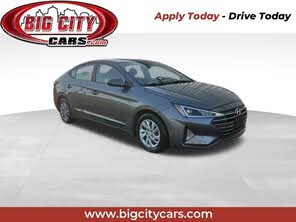

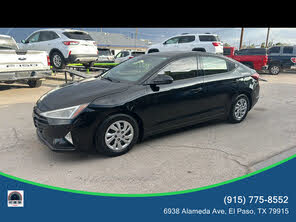
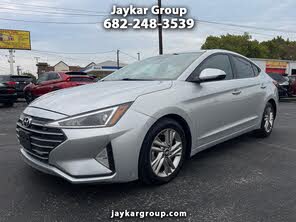
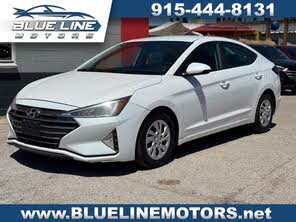
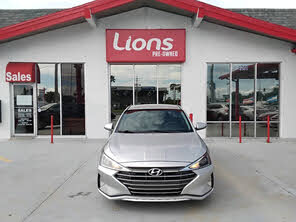
CarGurus highlights
According to CarGurus experts, the overall rating for the 2019 Toyota Camry is 7.8 out of 10, while the 2019 Hyundai Elantra scores 8.2 out of 10. Based on these ratings, the 2019 Hyundai Elantra is the recommended choice, offering better value, advanced technology, and a higher overall rating.
Choose the 2019 Toyota Camry if:
Shop Now- You prioritize top-tier safety ratings and advanced driver-assistance systems.
- You prefer a midsize sedan with a variety of powertrain options, including a V6 and hybrid.
- You value a high-quality interior with plenty of storage options.



Choose the 2019 Hyundai Elantra if:
Shop Now- You want a compact car with a user-friendly infotainment system and advanced technology features.
- You seek a vehicle with a strong value proposition and a lower starting price.
- You appreciate a hands-free trunk release and decent interior storage in a compact sedan.


By: CarGurus + AI
At CarGurus, our team of experienced automotive writers remain at the heart of our content operation, conducting hands-on car tests and writing insightful guides that are backed by years of industry experience. To complement this, we are harnessing AI to make our content offering more diverse and more helpful to shoppers than ever. To achieve this, our AI systems are based exclusively on CarGurus content, ratings and data, so that what we produce is both unique to CarGurus, and uniquely helpful to car shoppers.