2020 Lexus ES vs 2019 Toyota Camry
Overview | |
MSRP$24,095 | MSRP$39,900 |
Listings194 | Listings84 |
Ratings & Reviews | |
User Reviews | User Reviews |
Expert reviews7.8 out of 10 | Expert reviews8.0 out of 10 |
Pros
Cons
| Pros
Cons
|
2019 Toyota Camry Reviews SummaryBlame the Toyota Avalon for the Toyota Camry’s flaws. In order to put daylight between itself and Toyota’s larger full-size sedan, the midsize Camry is now smaller than some of its competitors, while simultaneously offering fewer of the increasingly expected features in the segment. Still, there are several good reasons to consider a 2019 Camry, from its outstanding safety ratings to its free scheduled maintenance plan. It’s also one of a handful of family sedans that still offers a 6-cylinder engine. | |
2020 Lexus ES Reviews SummarySUVs might dominate the luxury car market, but many luxury brands were built on sedans, like the 2020 Lexus ES. While crossovers and SUVs combine added cargo space with all-weather driving capability, sedans are all about driving in comfort. Lower ride height allows sedans to be far more refined in on-road driving dynamics, offer better fuel economy, and still have enough room for a weekend’s worth of bags. SUVs might have the attributes that you might need in certain scenarios, but sedans like the 2020 Lexus ES excel in ways that are relevant in everyday driving. The 2020 Lexus ES is one year off a complete redesign, though it maintains the same comfort-first formula. It is available in a racy 350 F Sport trim level, but don’t expect any major leaps in performance. The ES delivers on a serene ride and a quiet, well-appointed cabin. For 2020, the ES gains some in-cabin tech features, joining a long list of standard technology. | |
Popular Features & Specs | |
Engine2.5L 203 hp I4 | Engine3.5L 302 hp V6 |
Drive TrainFWD | Drive TrainFWD |
Seating Capacity5 | Seating Capacity5 |
Horsepower | Horsepower302 hp @ 6600 rpm |
MPG City29 | MPG City22 |
MPG Highway41 | MPG Highway32 |
Engine | |
Engine Name2.5L 203 hp I4 | Engine Name3.5L 302 hp V6 |
Torque | Torque267 lb-ft @ 4700 rpm |
Horsepower | Horsepower302 hp @ 6600 rpm |
DrivetrainFWD | DrivetrainFWD |
Fuel Economy | |
MPG City29 | MPG City22 |
MPG Highway41 | MPG Highway32 |
Interior | |
Seating Capacity5 | Seating Capacity5 |
Key Features | |
Sunroof/Moonroof | Sunroof/MoonroofOptional |
Safety | |
Front Crash Overall5 | Front Crash Overall4 |
Side Crash Overall5 | Side Crash Overall5 |
Dimensions & Capacity | |
Cargo Space14.1 cu ft | Cargo Space16.7 cu ft |
Curb Weight3241 lbs | Curb Weight3649 lbs |
Height56.9 in | Height56.9 in |
Length192.1 in | Length195.9 in |
Width72.4 in | Width73.4 in |
Wheelbase111.2 in | Wheelbase113.0 in |
Maximum Payload925 lbs | Maximum Payload905 lbs |
Number of doors4 | Number of doors4 |
Overview | ||
MSRP | $24,095 | $39,900 |
Listings | ||
Ratings & Reviews | ||
User reviews | ||
Expert reviews | 7.8 out of 10Read full review | 8.0 out of 10Read full review |
Pros & cons | Pros
Cons
| Pros
Cons
|
Summary | Blame the Toyota Avalon for the Toyota Camry’s flaws. In order to put daylight between itself and Toyota’s larger full-size sedan, the midsize Camry is now smaller than some of its competitors, while simultaneously offering fewer of the increasingly expected features in the segment. Still, there are several good reasons to consider a 2019 Camry, from its outstanding safety ratings to its free scheduled maintenance plan. It’s also one of a handful of family sedans that still offers a 6-cylinder engine. | SUVs might dominate the luxury car market, but many luxury brands were built on sedans, like the 2020 Lexus ES. While crossovers and SUVs combine added cargo space with all-weather driving capability, sedans are all about driving in comfort. Lower ride height allows sedans to be far more refined in on-road driving dynamics, offer better fuel economy, and still have enough room for a weekend’s worth of bags. SUVs might have the attributes that you might need in certain scenarios, but sedans like the 2020 Lexus ES excel in ways that are relevant in everyday driving. The 2020 Lexus ES is one year off a complete redesign, though it maintains the same comfort-first formula. It is available in a racy 350 F Sport trim level, but don’t expect any major leaps in performance. The ES delivers on a serene ride and a quiet, well-appointed cabin. For 2020, the ES gains some in-cabin tech features, joining a long list of standard technology. |
Video | ||
Popular Features & Specs | ||
Engine | 2.5L 203 hp I4 | 3.5L 302 hp V6 |
Drive Train | FWD | FWD |
Seating Capacity | 5 | 5 |
Horsepower | 302 hp @ 6600 rpm | |
MPG City | 29 | 22 |
MPG Highway | 41 | 32 |
Engine | ||
Engine Name | 2.5L 203 hp I4 | 3.5L 302 hp V6 |
Torque | 267 lb-ft @ 4700 rpm | |
Horsepower | 302 hp @ 6600 rpm | |
Drivetrain | FWD | FWD |
Fuel Economy | ||
MPG City | 29 | 22 |
MPG Highway | 41 | 32 |
Interior | ||
Seating Capacity | 5 | 5 |
Key Features | ||
Sunroof/Moonroof | Optional | |
Safety | ||
Front Crash Overall | 5 | 4 |
Side Crash Overall | 5 | 5 |
Dimensions & Capacity | ||
Cargo Space | 14.1 cu ft | 16.7 cu ft |
Curb Weight | 3241 lbs | 3649 lbs |
Height | 56.9 in | 56.9 in |
Length | 192.1 in | 195.9 in |
Width | 72.4 in | 73.4 in |
Wheelbase | 111.2 in | 113.0 in |
Maximum Payload | 925 lbs | 905 lbs |
Number of doors | 4 | 4 |
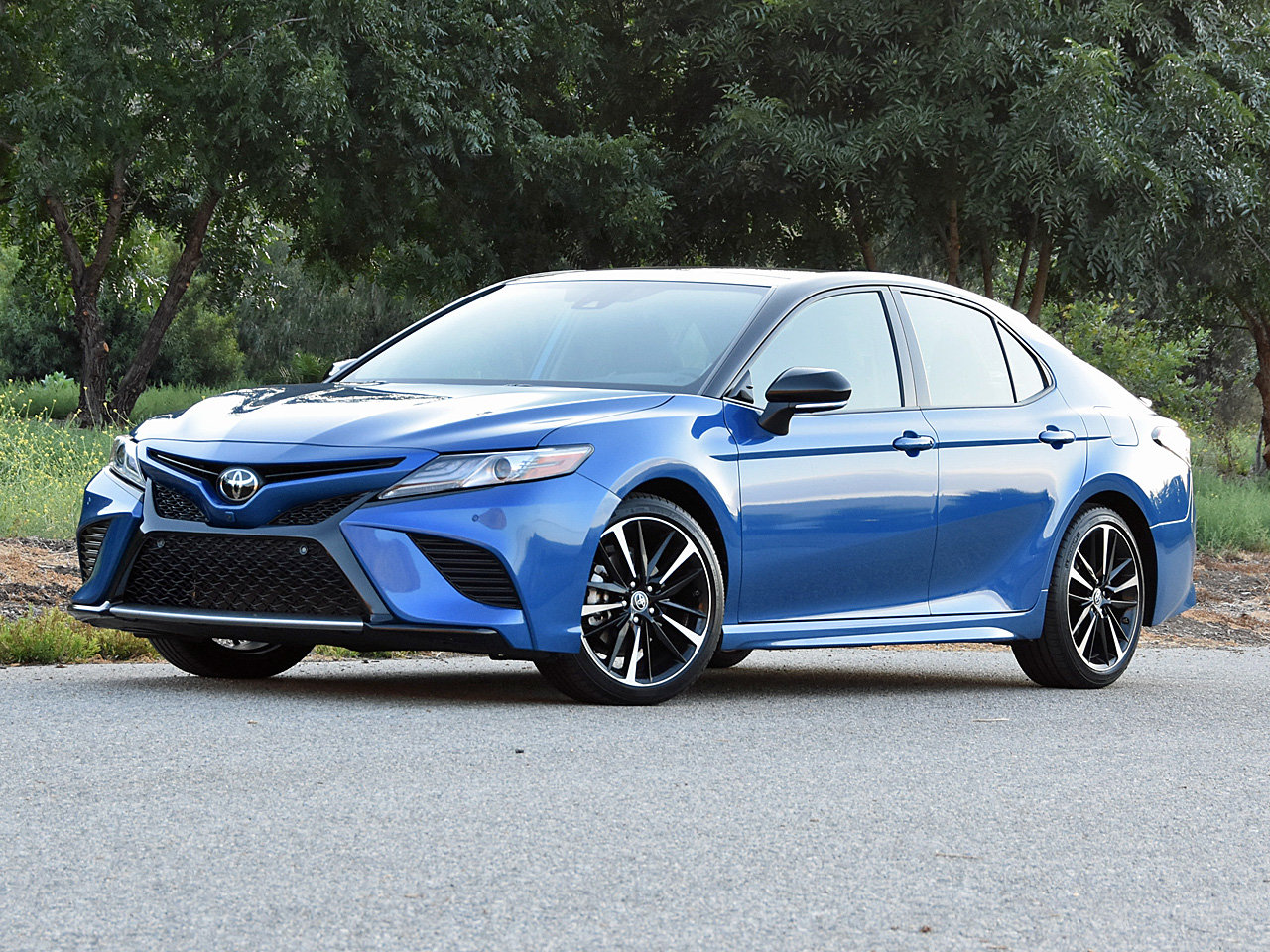
When buyers considered the 2019 Toyota Camry, they had to choose between standard and sporty styling, and then decide among a 4-cylinder, a V6, and a hybrid powertrain. Trim levels varied depending on the engine selection, including L, LE, XLE, SE, and XSE. The review focused on the Camry XSE equipped with a V6 engine, which included Toyota's Driver Assist package, carpeted floor mats, and two-tone Blue Streak paint with a Midnight Black roof. The sticker price was $39,669, including the $955 destination charge.
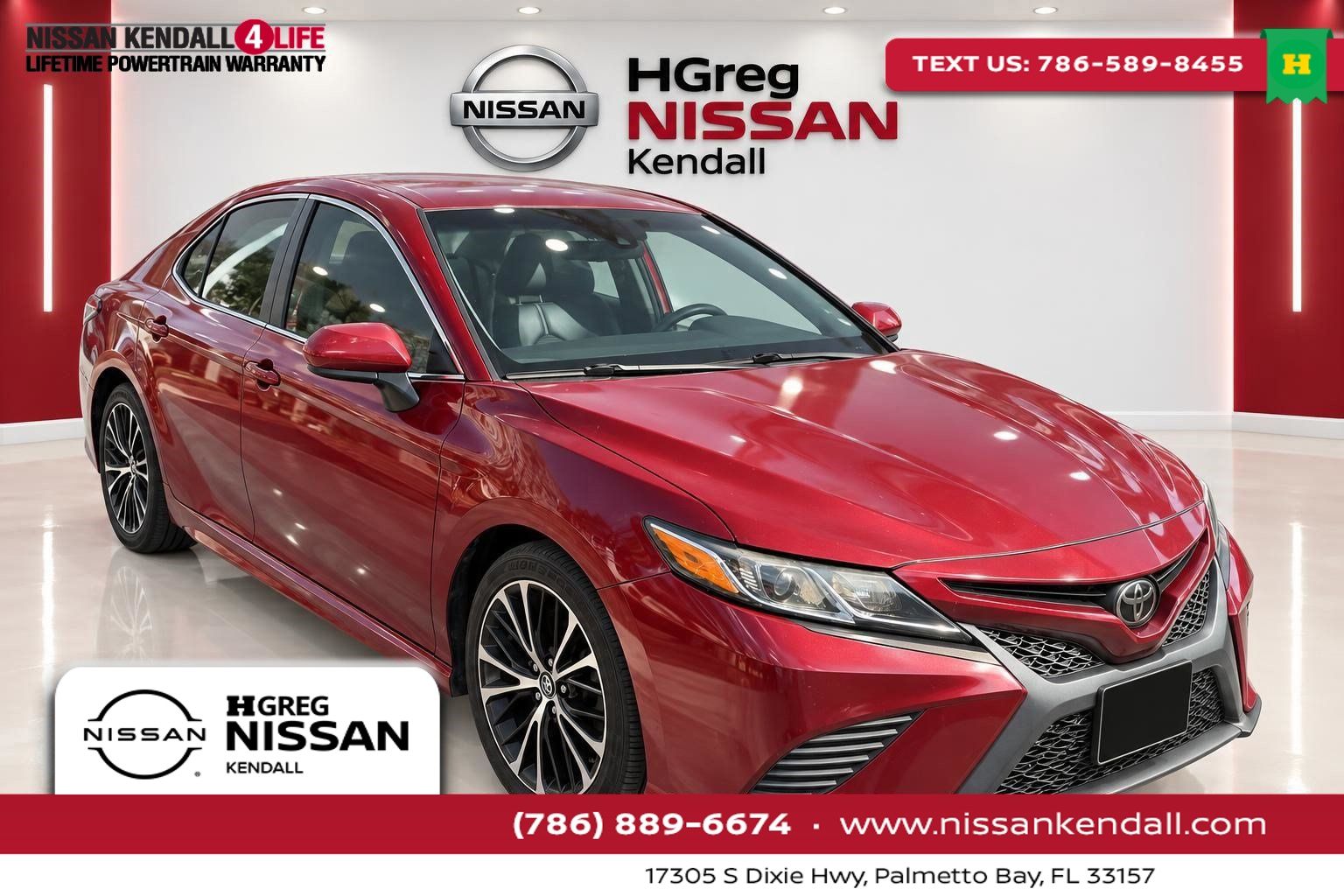
Despite the Camry XSE V6 being quick and entertaining to drive, it wasn’t the recommended trim. For the best value, the standard 2.5-liter 4-cylinder engine with LE trim was suggested. The upscale XLE was a favorite among the trims. The Hybrid, starting at $28,400 for an LE trim, offered excellent gas mileage but required nearly a decade to realize any savings at the pump. The Camry’s styling, especially in XSE trim, was daring but not cohesive, with oversized forms that didn’t appeal to the reviewer’s eyes. Inside, the Camry XSE had high-quality materials but lacked attention to detail, with some switchgear looking out of place and creaky front fascia and side mirrors.
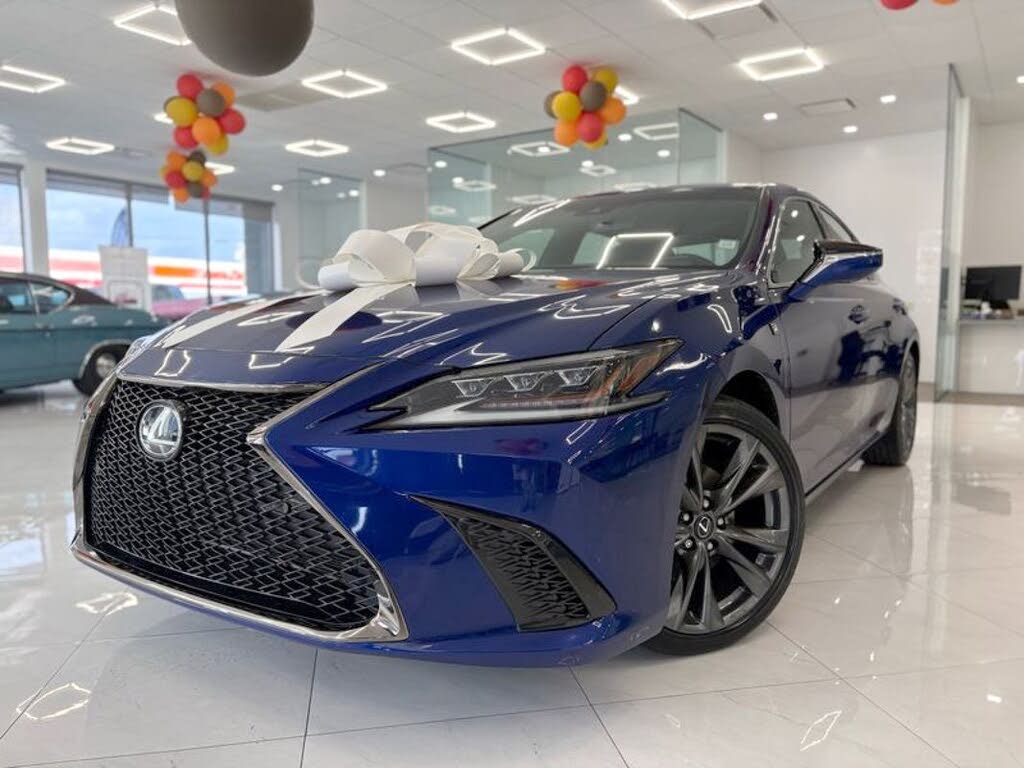
In the early 2010s, the Lexus ES was labeled as “boring” by critics. Lexus responded by making the ES look more aggressive in successive updates, with the large spindle grille arriving in 2016 and growing even larger with the 2020 model. The massive grille meshed well with the new car’s larger proportions. The rear featured thin taillamps echoing the rakishness of the headlights, and a pronounced kink at the back of the side windows visually broke up the low, long sedan. The cabin elegantly blended modern technology with soft-touch materials, with a large infotainment screen dominating the center of the dash.
Trims for the 2020 Lexus ES included 350 FWD (base), Luxury, Ultra Luxury, and F Sport. Standard features on the ES 350 included a power moonroof, synthetic leather upholstery, 10-way power-adjustable front seats, dual-zone automatic climate control, proximity entry, and a push-button start. The ES 350 was available with several options packages, including the Premium Package, Navigation Package, and Navigation/Mark Levinson Premium Audio Package. The ES 350 Luxury trim added perforated leather seats, woodgrain trim, and ambient cabin lighting, while the Ultra Luxury trim added a hands-free power trunk and semi-aniline leather upholstery. The range-topping 350 F Sport featured unique styling elements and interior upgrades, including aluminum trim accents and unique heated and ventilated front bucket seats.


Most people found the 2019 Toyota Camry’s standard 203-horsepower, 2.5-liter 4-cylinder engine suitable for daily driving. However, the available 301-hp, 3.5-liter V6 engine offered a thrilling experience with 83 more pound-feet of torque. The extra weight of the V6 over the car’s front end didn’t limit handling, and the 8-speed automatic transmission provided quick, satisfying shifts in Sport mode. The Camry XSE, equipped with a sport-tuned suspension and exclusive 19-inch aluminum wheels, supplied responsive handling without traditional sport-sedan stiffness, making it a comfortable daily driver and a competent canyon carver. The steering effort was firm in normal mode and heavy in Sport mode, feeling natural rather than artificial. The brakes stood up to repeated abuse, but the pedal exhibited a dissatisfying “thunk” when released quickly. The Camry XSE achieved 21.9 mpg on a testing loop, short of the EPA’s 26-mpg rating in combined driving.
The 2020 Lexus ES came equipped with a 3.5-liter V6 engine, producing 302 horsepower and 267 pound-feet of torque, sent to the front wheels through an eight-speed automatic transmission. Lexus claimed a 0-60 mph time of 6.6 seconds and a top speed of 131 mph. The ES provided confident acceleration, swiftly getting up to highway speeds and allowing easy passing maneuvers. The ride was comfortable and refined, with the suspension absorbing bumps without feeling wallow-y. The steering wheel felt light but precise. The Dynamic Control Shocks contributed to the hushed ride, with the F Sport offering an optional Adaptive Variable Suspension (AVS) for adjustable dampers. The ES wasn’t a hot performer but offered a lively driving experience with upgraded suspension and paddle shifters. For more performance, the Lexus GS 350 F Sport and V8-powered GS F were recommended.
Toyota carved a bunch of storage into the 2019 Camry’s cabin, including a large center console bin and a hidden compartment under the wireless charging pad. The glove box was small and required a stretch to reach, and the door-panel storage pockets were narrow. The Camry’s trunk measured just 15.1 cubic feet, smaller than other midsize cars like the Honda Accord. The trunk’s floor was short, making it difficult to fit larger items. The front seats provided 8-way power adjustment and were heated, but ventilated seats were unavailable. The rear seats were snug, with narrow door openings and a low seating position making entry and exit difficult. The test car included rear air-conditioning vents, but these were restricted to upper trim levels. The climate control system performed well during a heatwave, blasting a strong, ice-cold breeze throughout the car.
The 2020 Lexus ES featured a spacious cabin with plenty of head- and legroom in both rows. The driver and front passenger could slide their seats well back while still leaving ample legroom for rear-seat passengers. Despite the exterior appearance, rear-seat headroom was expanded with the 2019 redesign, accommodating all but the tallest occupants. The front doors had deep pockets, and the center console featured multiple retractable panels for storage. The trunk offered 16.7 cubic feet of space, mid-pack for the midsize luxury segment. However, the rear seats did not fold down, limiting room for larger items.
The 2019 Toyota Camry’s dashboard layout was dramatic yet smart, with intuitive controls and the new Entune 3.0 infotainment system. The system included Apple CarPlay and a 6-month/2GB subscription to WiFi Connect service by Verizon but lacked Android Auto. The test car had a Qi-compatible wireless smartphone charging pad that securely held the phone during enthusiastic driving. The navigation system worked well but took a long time to load traffic data on one occasion. The 9-speaker JBL premium sound system lacked clarity, producing a muddy, bass-heavy listening experience. A 10-inch head-up display (HUD) made it easier to reference important data during the drive and remained visible with polarized sunglasses.
The heart of the 2020 Lexus ES’s technology was the Lexus Remote Touch system, controlling the standard 8-inch or available 12.3-inch display. The Remote Touch pad was intuitive once presets were set, but navigating through menus could be challenging. For 2020, the system gained standard Apple CarPlay and Android Auto, with the CarPlay screen taking up the entire infotainment screen. The ES came standard with a 10-speaker premium audio system, with an available 17-speaker Mark Levinson stereo system. The ES could also be equipped with a head-up display, providing crisp graphics and customization.
The 2019 Toyota Camry was a crash-test rock star, earning 5-star ratings in every NHTSA assessment and a Top Safety Pick+ rating from the IIHS. The Camry was equipped with a standard Toyota Safety Sense suite of advanced driver-assistance systems (ADAS), including adaptive cruise control, forward-collision warning with pedestrian detection, automatic emergency braking, lane-departure warning, lane-keeping assist, and automatic high-beam headlights. The Camry also included a standard subscription to Safety Connect for the first three years of ownership, providing automatic collision notification, SOS emergency calling, and quick access to roadside assistance.
Every 2020 Lexus ES came standard with Lexus Safety System+ 2.0, including forward collision avoidance, automatic emergency braking, lane-departure warning, dynamic radar cruise control, and automatic high beams. The system also featured pedestrian and cyclist detection, lane-keep assist, and lane-tracing assist for limited semi-autonomous driving. Other safety features included a full array of front- and side-impact airbags, traction control, stability control, and a tire-pressure monitoring system.
CarGurus highlights

According to CarGurus experts, the overall rating for the 2019 Toyota Camry is 7.8 out of 10, while the 2020 Lexus ES scores 8.0 out of 10. Based on these ratings, the 2020 Lexus ES is the recommended choice for its superior luxury, advanced technology, and refined driving experience.
Choose the 2020 Lexus ES if:
- You desire a more luxurious and spacious cabin with high-quality materials.
- You want advanced technology features, including a larger infotainment screen and premium audio options.
- You seek a comfortable and refined ride with a bit more performance from the F Sport trim.




Choose the 2019 Toyota Camry if:
- You prioritize a lower starting price and better fuel economy with the 4-cylinder engine.
- You value Toyota’s reputation for reliability and free scheduled maintenance plan.
- You need a midsize sedan with a comprehensive suite of standard safety features.




CarGurus highlights
According to CarGurus experts, the overall rating for the 2019 Toyota Camry is 7.8 out of 10, while the 2020 Lexus ES scores 8.0 out of 10. Based on these ratings, the 2020 Lexus ES is the recommended choice for its superior luxury, advanced technology, and refined driving experience.
Choose the 2020 Lexus ES if:
Shop Now- You desire a more luxurious and spacious cabin with high-quality materials.
- You want advanced technology features, including a larger infotainment screen and premium audio options.
- You seek a comfortable and refined ride with a bit more performance from the F Sport trim.
Choose the 2019 Toyota Camry if:
Shop Now- You prioritize a lower starting price and better fuel economy with the 4-cylinder engine.
- You value Toyota’s reputation for reliability and free scheduled maintenance plan.
- You need a midsize sedan with a comprehensive suite of standard safety features.

By: CarGurus + AI
At CarGurus, our team of experienced automotive writers remain at the heart of our content operation, conducting hands-on car tests and writing insightful guides that are backed by years of industry experience. To complement this, we are harnessing AI to make our content offering more diverse and more helpful to shoppers than ever. To achieve this, our AI systems are based exclusively on CarGurus content, ratings and data, so that what we produce is both unique to CarGurus, and uniquely helpful to car shoppers.

