2020 Toyota Camry vs 2021 Dodge Charger
Overview | |
MSRP$24,425 | MSRP$31,125 |
Listings1363 | Listings1090 |
Ratings & Reviews | |
User Reviews | User Reviews |
Expert reviews7.5 out of 10 | Expert reviews7.8 out of 10 |
Pros
Cons
| Pros
Cons
|
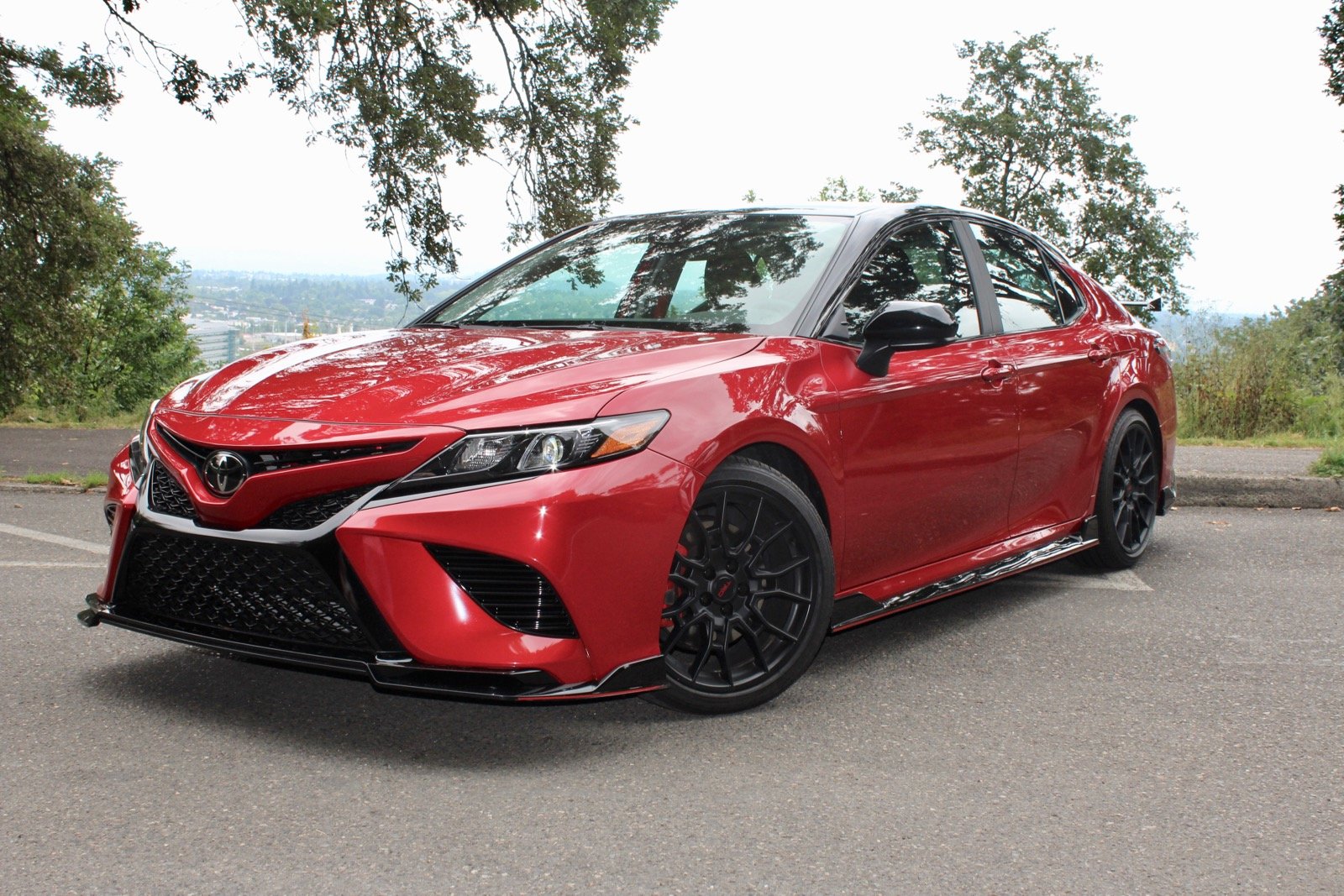
2020 Toyota Camry Reviews SummaryIf you can't beat them, join them. That seems to be Toyota's philosophy in updating the eighth generation of the Camry for the 2020 model year. This latest version of the perennial best seller debuted in 2017 as a 2018 model—and promptly lost its sales crown to Toyota's own RAV4 crossover SUV. As buyers continue to defect from cars, Toyota hopes to entice more shoppers to stick with its midsize sedan by offering all-wheel drive on the Camry for the first time since 1991. Also new for 2020 is the Camry TRD, a sportier version with a 301-horsepower V6 engine that makes its case to a buyer who might never have considered a Camry. | |
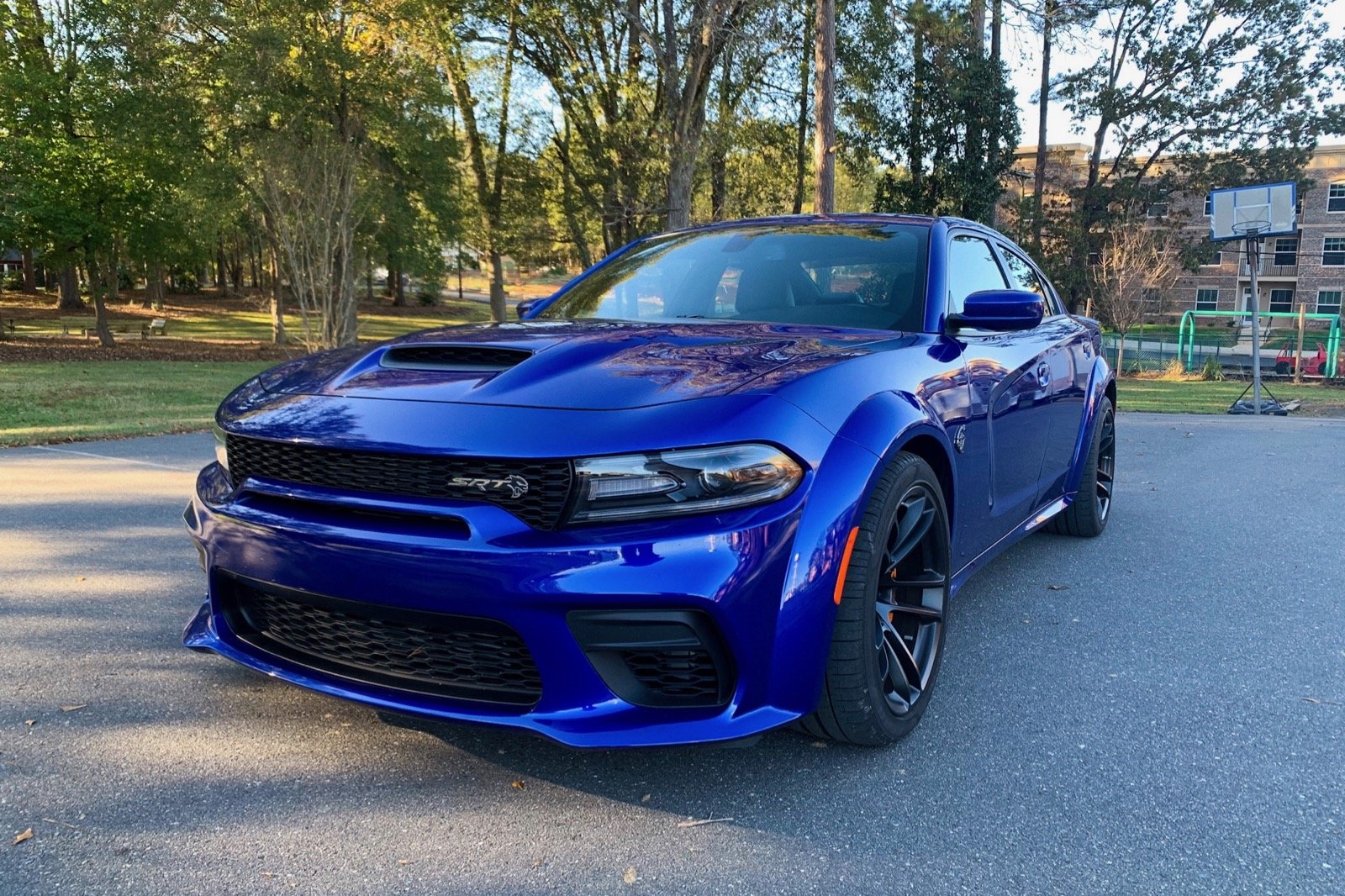
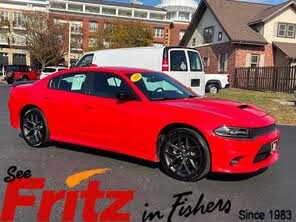
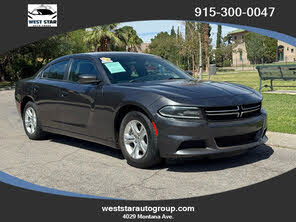
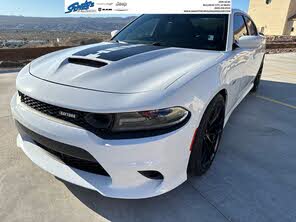
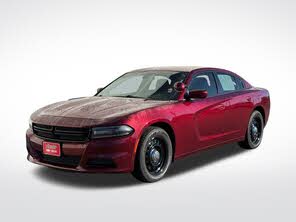
2021 Dodge Charger Reviews SummaryWhen it comes to American muscle cars, few do it better than the Dodge Charger. It’s a unique breed—new four-door muscle cars just aren’t sold in the United States. anymore. There is a new track-ready variant for the 2021 model year that pushes the limits of the car’s Hellcat V8 engine. Tamer versions of the car offer less horsepower but can still fit three car seats across the back of the car’s roomy cabin and have accommodations comfortable enough to make it a daily driver. | |
No video found | No video found |
Popular Features & Specs | |
Engine2.5L 203 hp I4 | Engine3.6L 292 hp V6 |
Drive TrainFWD | Drive TrainRWD |
Seating Capacity5 | Seating Capacity5 |
Horsepower | Horsepower292 hp @ 6350 rpm |
MPG City29 | MPG City19 |
MPG Highway41 | MPG Highway30 |
Engine | |
Engine Name2.5L 203 hp I4 | Engine Name3.6L 292 hp V6 |
Torque | Torque260 lb-ft @ 4800 rpm |
Horsepower | Horsepower292 hp @ 6350 rpm |
DrivetrainFWD | DrivetrainRWD |
Fuel Economy | |
MPG City29 | MPG City19 |
MPG Highway41 | MPG Highway30 |
Interior | |
Seating Capacity5 | Seating Capacity5 |
Safety | |
Front Crash Overall5 | Front Crash Overall4 |
Side Crash Overall5 | Side Crash Overall5 |
Dimensions & Capacity | |
Cargo Space14.1 cu ft | Cargo Space16.5 cu ft |
Curb Weight3241 lbs | Curb Weight3957 lbs |
Height56.9 in | Height57.8 in |
Length192.1 in | Length198.4 in |
Width72.4 in | Width82.7 in |
Wheelbase111.2 in | Wheelbase120.0 in |
Maximum Payload925 lbs | Maximum Payload1143 lbs |
Number of doors4 | Number of doors4 |
Maximum Towing Capacity | Maximum Towing Capacity1000 lbs |
Overview | ||
MSRP | $24,425 | $31,125 |
Listings | ||
Ratings & Reviews | ||
User reviews | ||
Expert reviews | 7.5 out of 10Read full review | 7.8 out of 10Read full review |
Pros & cons | Pros
Cons
| Pros
Cons
|
Summary | If you can't beat them, join them. That seems to be Toyota's philosophy in updating the eighth generation of the Camry for the 2020 model year. This latest version of the perennial best seller debuted in 2017 as a 2018 model—and promptly lost its sales crown to Toyota's own RAV4 crossover SUV. As buyers continue to defect from cars, Toyota hopes to entice more shoppers to stick with its midsize sedan by offering all-wheel drive on the Camry for the first time since 1991. Also new for 2020 is the Camry TRD, a sportier version with a 301-horsepower V6 engine that makes its case to a buyer who might never have considered a Camry. | When it comes to American muscle cars, few do it better than the Dodge Charger. It’s a unique breed—new four-door muscle cars just aren’t sold in the United States. anymore. There is a new track-ready variant for the 2021 model year that pushes the limits of the car’s Hellcat V8 engine. Tamer versions of the car offer less horsepower but can still fit three car seats across the back of the car’s roomy cabin and have accommodations comfortable enough to make it a daily driver. |
Video | No video found | No video found |
Popular Features & Specs | ||
Engine | 2.5L 203 hp I4 | 3.6L 292 hp V6 |
Drive Train | FWD | RWD |
Seating Capacity | 5 | 5 |
Horsepower | 292 hp @ 6350 rpm | |
MPG City | 29 | 19 |
MPG Highway | 41 | 30 |
Engine | ||
Engine Name | 2.5L 203 hp I4 | 3.6L 292 hp V6 |
Torque | 260 lb-ft @ 4800 rpm | |
Horsepower | 292 hp @ 6350 rpm | |
Drivetrain | FWD | RWD |
Fuel Economy | ||
MPG City | 29 | 19 |
MPG Highway | 41 | 30 |
Interior | ||
Seating Capacity | 5 | 5 |
Safety | ||
Front Crash Overall | 5 | 4 |
Side Crash Overall | 5 | 5 |
Dimensions & Capacity | ||
Cargo Space | 14.1 cu ft | 16.5 cu ft |
Curb Weight | 3241 lbs | 3957 lbs |
Height | 56.9 in | 57.8 in |
Length | 192.1 in | 198.4 in |
Width | 72.4 in | 82.7 in |
Wheelbase | 111.2 in | 120.0 in |
Maximum Payload | 925 lbs | 1143 lbs |
Number of doors | 4 | 4 |
Maximum Towing Capacity | 1000 lbs | |
The 2020 Toyota Camry had a renewed focus on quality and appeal, aiming to reclaim its status as a top contender in the sedan market. It featured expressive styling, with a bold front fascia and taut lines that made it the sportiest Camry yet. The design borrowed cues from BMW, with a character line across the doors and an upturned kink of the C-pillar. Inside, the Camry used high-quality materials, with even the lower trims feeling upscale. The TRD model added sporty red trim accents, while higher trims offered leather and wood, aligning with entry-level Lexus standards. Despite not being a luxury or sport sedan, the Camry's starting price of $25,380 made it a compelling choice for those seeking a stylish and reliable vehicle.
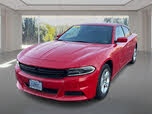
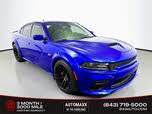
The 2021 Dodge Charger continued to captivate buyers with its wide range of variants, from the SXT to the powerful SRT Hellcat Redeye. The Charger maintained its muscular design, with widebody options enhancing its athletic stance. The interior, though updated over the years, still lacked some comfort and convenience features, with hard plastics and rubberized surfaces reminiscent of the utilitarian Jeep Wrangler. Cloth seats were standard, with Nappa leather available on higher trims. Despite its dated technology, the Charger offered a spacious cabin and trunk, making it a practical choice for families seeking a blend of power and functionality.


The 2020 Toyota Camry offered a variety of powertrains, including a 2.5-liter four-cylinder engine with 203 horsepower and a 3.5-liter V6 producing 301 horsepower. The V6, paired with an eight-speed automatic transmission, provided a smooth and powerful driving experience, though it lacked excitement in the TRD model. The four-cylinder engine, while less powerful, offered a lighter front end and better steering feel, especially in the sporty XSE trim. The Camry also introduced an all-wheel-drive option, enhancing traction in slippery conditions without significantly impacting fuel economy. The front-drive Camry achieved an EPA combined fuel economy rating of 31 mpg, while the V6 models managed 26 mpg.
The 2021 Dodge Charger excelled in performance, offering a range of engines from a 3.6-liter V6 with 300 horsepower to the supercharged 6.2-liter HEMI V8 in the SRT Hellcat Redeye, delivering an impressive 797 horsepower. The Charger provided a connected driving experience, with configurable drive modes and a Performance Pages function for SRT models. Despite its power, the Charger maintained manageable handling, even in high-performance variants. However, the SRT Hellcat Redeye's powertrain was the least fuel-efficient, with an EPA-estimated 15 mpg combined. The Charger offered no manual transmission options, but its automatic transmission delivered smooth upshifts and a connected driving experience.
The 2020 Toyota Camry provided a user-friendly driving experience, with most controls easily accessible. The front seats offered increased legroom and hip room, while the rear seat and trunk space were slightly reduced compared to competitors. The Camry's trunk offered 15.1 cubic feet of cargo space, comparable to the Honda Civic. The addition of all-wheel drive did not compromise interior space, maintaining the same rear seat and trunk dimensions as front-drive models.
The 2021 Dodge Charger functioned well as a family car, offering a spacious back seat and comfortable accommodations. The instrument cluster varied by model, with speedometers ranging from 140 mph to 220 mph. The steering wheel provided easy access to in-car functions, though paddle shifters could be accidentally engaged during spirited driving. The Charger featured a 60/40 split-folding rear seat, expanding the trunk space for additional storage. Compared to other large cars, the Charger offered average cargo space.
The 2020 Toyota Camry included Apple CarPlay and Android Auto as standard, along with Amazon Alexa compatibility and a three-month trial of SiriusXM satellite radio. The infotainment system, though functional, felt dated, with low-resolution graphics. The Camry offered a 7-inch standard touchscreen, with an optional 8-inch upgrade. USB-A ports were available for phone connectivity, and a Qi wireless charging pad was optional. Higher trims featured a 7-inch multi-information display and an optional 10-inch head-up display.
The 2021 Dodge Charger came with standard features like push-button start, a rearview camera, and a 7-inch infotainment touchscreen. Available upgrades included an 8.4-inch touchscreen, premium audio systems, and a WiFi hotspot. The Uconnect infotainment system was user-friendly, though some functions were buried in menus. The Charger lacked a head-up display, making navigation less convenient. The latest version of Uconnect was not yet available, leaving the Charger feeling lower-tech compared to other Dodge models.
The 2020 Toyota Camry featured Toyota Safety Sense, including a pre-collision system, adaptive cruise control, lane-departure warning, and automatic high beams. A one-year trial of Safety Connect was included, with blind-spot monitoring optional. The Camry earned a five-star NHTSA rating and a Top Safety Pick+ from the IIHS. A recall for leaking engine coolant affected some models.
The 2021 Dodge Charger received a four-star overall safety rating from the NHTSA. Standard safety features included brake assist, electronic stability control, and rear park assist. Adaptive cruise control, blind-spot monitoring, and forward-collision warning were available on select models. The 2020 model, structurally similar to the 2021 version, received "Good" crashworthiness ratings but "Poor" marks for headlights from the IIHS.
CarGurus highlights
According to CarGurus experts, the overall rating for the 2020 Toyota Camry is 7.5 out of 10, while the 2021 Dodge Charger scores 7.8 out of 10. Based on these ratings, the Dodge Charger is recommended for those seeking a more powerful and versatile vehicle, offering a blend of performance and practicality.
Choose the 2020 Toyota Camry if:
- You prioritize a high safety rating and comprehensive safety features.
- You seek a reliable and fuel-efficient sedan with a stylish design.
- You value a user-friendly infotainment system with modern connectivity options.


Choose the 2021 Dodge Charger if:
- You desire a powerful performance vehicle with a range of engine options.
- You need a spacious sedan that balances family functionality with muscle car appeal.
- You appreciate a connected driving experience with configurable drive modes.




CarGurus highlights
According to CarGurus experts, the overall rating for the 2020 Toyota Camry is 7.5 out of 10, while the 2021 Dodge Charger scores 7.8 out of 10. Based on these ratings, the Dodge Charger is recommended for those seeking a more powerful and versatile vehicle, offering a blend of performance and practicality.
Choose the 2020 Toyota Camry if:
Shop Now- You prioritize a high safety rating and comprehensive safety features.
- You seek a reliable and fuel-efficient sedan with a stylish design.
- You value a user-friendly infotainment system with modern connectivity options.


Choose the 2021 Dodge Charger if:
Shop Now- You desire a powerful performance vehicle with a range of engine options.
- You need a spacious sedan that balances family functionality with muscle car appeal.
- You appreciate a connected driving experience with configurable drive modes.







By: CarGurus + AI
At CarGurus, our team of experienced automotive writers remain at the heart of our content operation, conducting hands-on car tests and writing insightful guides that are backed by years of industry experience. To complement this, we are harnessing AI to make our content offering more diverse and more helpful to shoppers than ever. To achieve this, our AI systems are based exclusively on CarGurus content, ratings and data, so that what we produce is both unique to CarGurus, and uniquely helpful to car shoppers.