2021 Lexus ES vs 2022 Dodge Charger
Overview | |
MSRP$40,000 | MSRP$32,500 |
Listings80 | Listings357 |
Ratings & Reviews | |
User Reviews | User Reviews |
Expert reviews7.3 out of 10 | Expert reviews8.0 out of 10 |
Pros
Cons
| Pros
Cons
|
2021 Lexus ES Reviews SummaryWhen you think of a Lexus ES, you think of a cushy, comfortable, and reliable car that your parents or grandparents might like. The roomy and quiet cabin, the relaxed driving demeanor, and the relatively affordable price all hearken back to the original Lexus mission. And these stereotypes about the car are accurate. But in F Sport trim, with the 3.5-liter V6 engine, the 2021 Lexus ES 350 shows a different side of its presumed personality. | |
2022 Dodge Charger Reviews SummaryA living fossil is an animal that exists today that resembles a long-extinct species. There are a number of sharks and mollusks that fit this description. And the same could be said for the 2022 Dodge Charger. It has muscular proportions, a similar layout, and an identical name to long-dead forebears, but it carries on in its own way—despite the veracity of any shared DNA. Given how much the auto industry is changing, the Charger is an unlikely car for this decade—or even this century. But perhaps not. As much as the industry is rapidly evolving, buyer behavior might not be so quick to change. For every electric vehicle enthusiast, there are those who truly wish to stick to their guns when it comes to traditional gas vehicles. And certainly many lament the dwindling light of the big, thirsty muscle car. Whether it be nostalgia or a more timeless form of automotive enthusiasm, the Dodge Charger clearly hit a nerve with many over the past two decades. Whether you prefer electric cars, hybrids, 4x4s, or even mass transit, it’s hard to argue the fact that the automotive world is just a better place with cars like the Dodge Charger in it. | |
No video found | No video found |
Popular Features & Specs | |
Engine3.5L 302 hp V6 | Engine3.6L 292 hp V6 |
DrivetrainFWD | DrivetrainRWD |
Seating Capacity5 | Seating Capacity5 |
Horsepower302 hp @ 6600 rpm | Horsepower292 hp @ 6350 rpm |
MPG City22 | MPG City19 |
MPG Highway32 | MPG Highway30 |
Engine | |
Engine Name3.5L 302 hp V6 | Engine Name3.6L 292 hp V6 |
Torque267 lb-ft @ 4700 rpm | Torque260 lb-ft @ 4800 rpm |
Horsepower302 hp @ 6600 rpm | Horsepower292 hp @ 6350 rpm |
DrivetrainFWD | DrivetrainRWD |
Fuel Economy | |
MPG City22 | MPG City19 |
MPG Highway32 | MPG Highway30 |
Interior | |
Seating Capacity5 | Seating Capacity5 |
Key Features | |
Sunroof/MoonroofStandard | Sunroof/Moonroof |
Safety | |
Front Crash Overall4 | Front Crash Overall4 |
Side Crash Overall5 | Side Crash Overall5 |
Dimensions & Capacity | |
Cargo Space13.9 cu ft | Cargo Space16.5 cu ft |
Curb Weight3690 lbs | Curb Weight3940 lbs |
Height56.9 in | Height57.8 in |
Length195.9 in | Length198.4 in |
Width73.4 in | Width82.7 in |
Wheelbase113.0 in | Wheelbase120.0 in |
Maximum Payload905 lbs | Maximum Payload1160 lbs |
Number of doors4 | Number of doors4 |
Maximum Towing Capacity | Maximum Towing Capacity1000 lbs |
Overview | ||
MSRP | $40,000 | $32,500 |
Listings | ||
Ratings & Reviews | ||
User reviews | ||
Expert reviews | 7.3 out of 10Read full review | 8.0 out of 10Read full review |
Pros & cons | Pros
Cons
| Pros
Cons
|
Summary | When you think of a Lexus ES, you think of a cushy, comfortable, and reliable car that your parents or grandparents might like. The roomy and quiet cabin, the relaxed driving demeanor, and the relatively affordable price all hearken back to the original Lexus mission. And these stereotypes about the car are accurate. But in F Sport trim, with the 3.5-liter V6 engine, the 2021 Lexus ES 350 shows a different side of its presumed personality. | A living fossil is an animal that exists today that resembles a long-extinct species. There are a number of sharks and mollusks that fit this description. And the same could be said for the 2022 Dodge Charger. It has muscular proportions, a similar layout, and an identical name to long-dead forebears, but it carries on in its own way—despite the veracity of any shared DNA. Given how much the auto industry is changing, the Charger is an unlikely car for this decade—or even this century. But perhaps not. As much as the industry is rapidly evolving, buyer behavior might not be so quick to change. For every electric vehicle enthusiast, there are those who truly wish to stick to their guns when it comes to traditional gas vehicles. And certainly many lament the dwindling light of the big, thirsty muscle car. Whether it be nostalgia or a more timeless form of automotive enthusiasm, the Dodge Charger clearly hit a nerve with many over the past two decades. Whether you prefer electric cars, hybrids, 4x4s, or even mass transit, it’s hard to argue the fact that the automotive world is just a better place with cars like the Dodge Charger in it. |
Video | No video found | No video found |
Popular Features & Specs | ||
Engine | 3.5L 302 hp V6 | 3.6L 292 hp V6 |
Drivetrain | FWD | RWD |
Seating Capacity | 5 | 5 |
Horsepower | 302 hp @ 6600 rpm | 292 hp @ 6350 rpm |
MPG City | 22 | 19 |
MPG Highway | 32 | 30 |
Engine | ||
Engine Name | 3.5L 302 hp V6 | 3.6L 292 hp V6 |
Torque | 267 lb-ft @ 4700 rpm | 260 lb-ft @ 4800 rpm |
Horsepower | 302 hp @ 6600 rpm | 292 hp @ 6350 rpm |
Drivetrain | FWD | RWD |
Fuel Economy | ||
MPG City | 22 | 19 |
MPG Highway | 32 | 30 |
Interior | ||
Seating Capacity | 5 | 5 |
Key Features | ||
Sunroof/Moonroof | Standard | |
Safety | ||
Front Crash Overall | 4 | 4 |
Side Crash Overall | 5 | 5 |
Dimensions & Capacity | ||
Cargo Space | 13.9 cu ft | 16.5 cu ft |
Curb Weight | 3690 lbs | 3940 lbs |
Height | 56.9 in | 57.8 in |
Length | 195.9 in | 198.4 in |
Width | 73.4 in | 82.7 in |
Wheelbase | 113.0 in | 120.0 in |
Maximum Payload | 905 lbs | 1160 lbs |
Number of doors | 4 | 4 |
Maximum Towing Capacity | 1000 lbs | |
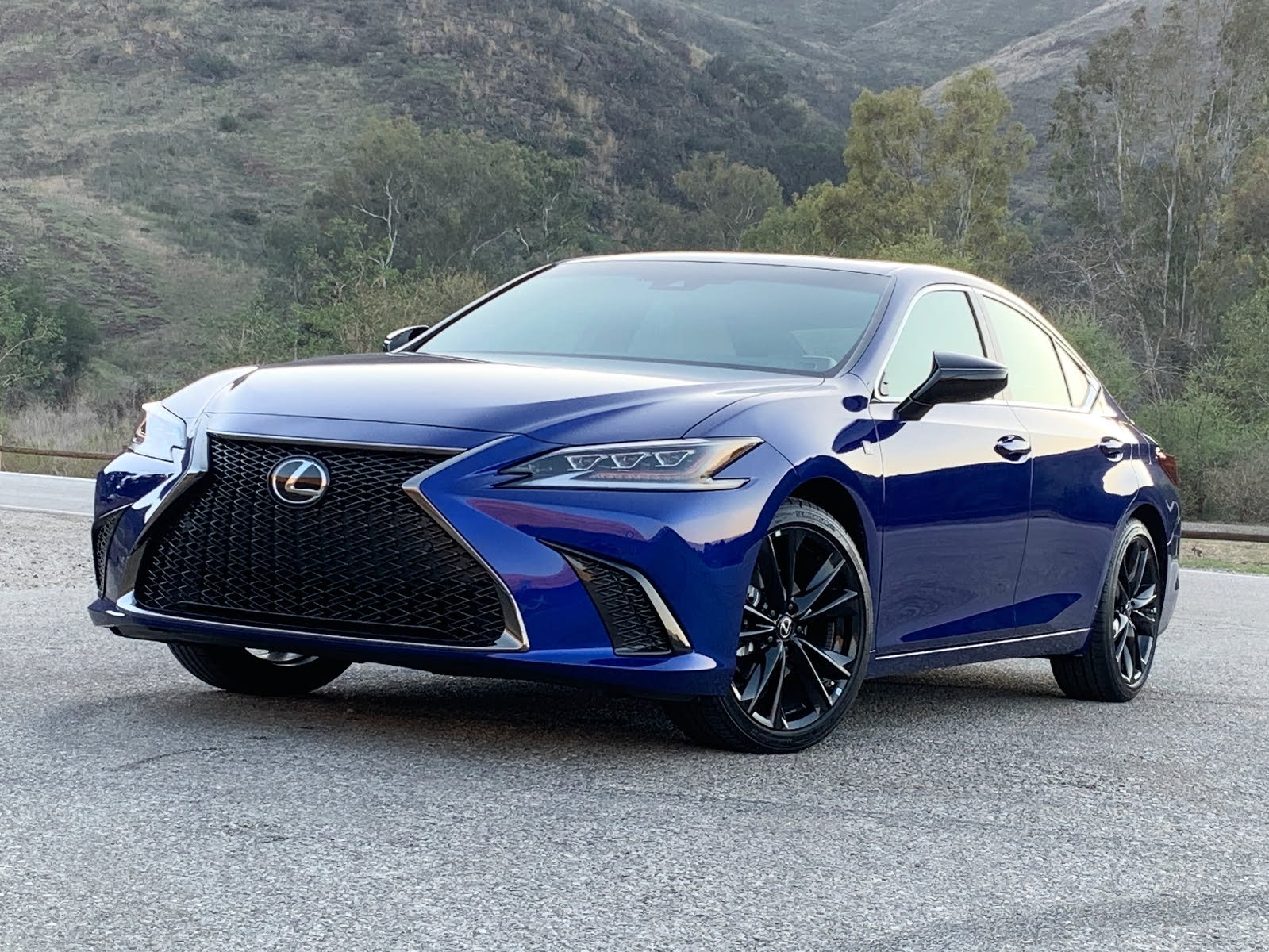
The 2021 Lexus ES lineup had a sleek, refined look that catered to various tastes, expanding to include the new ES 250 series which boasted a 2.5-liter four-cylinder engine and standard all-wheel drive (AWD). Despite sharing the same price point as the ES 350, which came equipped with a 3.5-liter V6 and front-wheel drive (FWD), the additional trim levels—Standard, F Sport, Luxury, and Ultra Luxury—enhanced its appeal.
Lexus also offered the ES 300h, a gas-electric hybrid variant that demanded a premium of $1,910. While more expensive, the 300h provided a substantial boost in terms of fuel efficiency and was available in Standard, Luxury, and Ultra Luxury trims.
Interestingly, blind-spot monitoring and rear cross-traffic alert became standard features, except for the standard trim. Introduced this year was the Black Line Special Edition of the ES 350, a limited-production variant, adding nuances like black wheels, black side mirrors, and a distinct black and white interior. This edition came in black, white, or the Ultrasonic Blue Mica 2.0 paint. Pricing ranged from $40,000 to $50,910, with an additional $1,025 destination charge.
A detailed look at an ES 350 F Sport Black Line Special Edition revealed enhancements like adaptive variable suspension, triple-beam LED headlights, wireless smartphone charging, and a head-up display, among other features. This particular model, fully loaded, had an MSRP of $54,070, destination charge included.
F Sport trim added 19-inch wheels with a gray finish, unique front and rear styling details, a rear spoiler, and aluminum interior trim, creating an appealing overall aesthetic. The Black Line Special Edition had distinctive black elements like wheels, mirrors, and spoilers, and contained a black and white interior, plus a matching Zero Halliburton luggage set.
The ES's dramatic grille, long and lean silhouette, and artful detailing stood out, with the F Sport trim adding a sportier touch. The cabin mirrored the exterior’s striking nature with a black and white interior that offered a sophisticated look, making it distinctly Lexus despite sharing a platform with the Toyota Avalon.
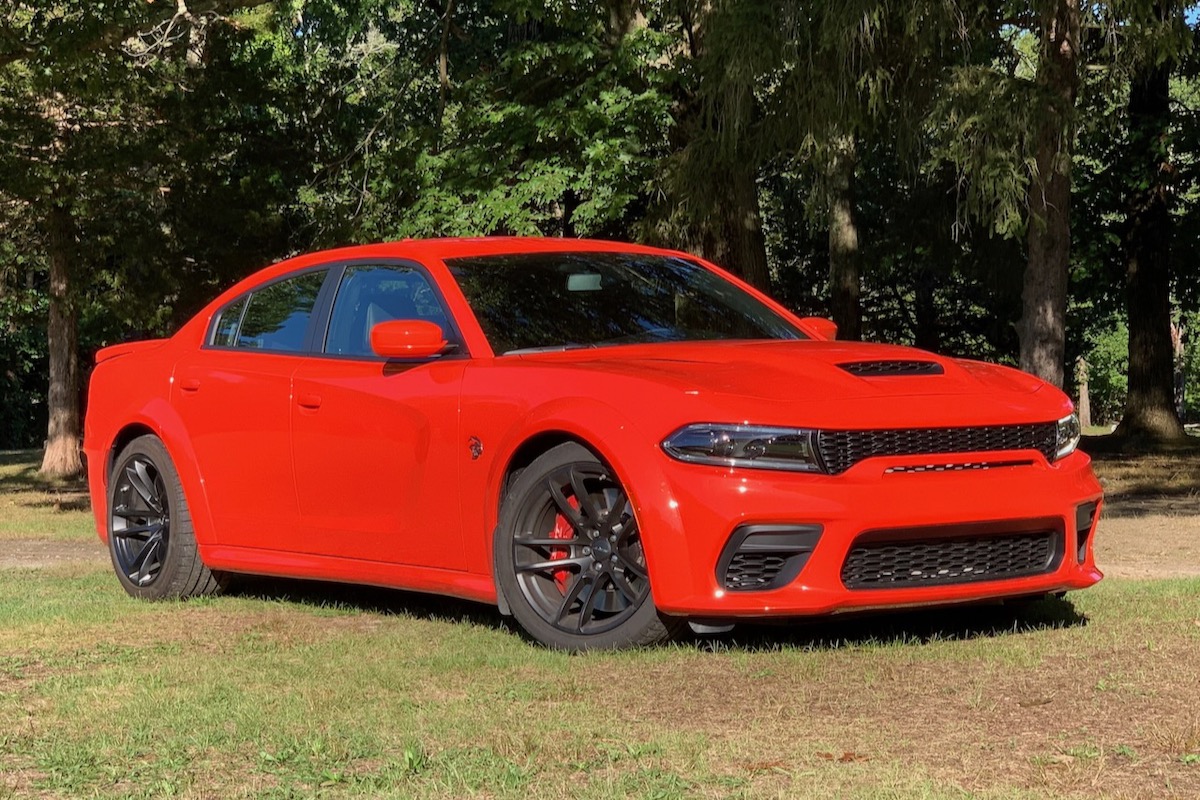
Historically, the Dodge Charger maintained its roots on a platform dating back to 2005, shared with the Dodge Challenger coupe and Chrysler 300 sedan, originally derived from an older Mercedes-Benz E-Class. Although it kept much of the older design, substantial updates in 2011 and 2015 gave the Charger a more modern and menacing presence compared to its muscle-car counterpart, the Challenger.
However, the modernized exterior didn’t significantly influence the cabin design, which began to look dated compared to newer models with thin-screen bezels and minimalist styles. The thick bezels, chunky buttons, and dials imparted a robust, almost small-truck feel, yet proved to be user-friendly.
The Charger in 2022 offered varied trims: SXT, GT, R/T, R/T Scat Pack, Hellcat, Redeye, and Jailbreak. The base SXT had a V6 engine, power-adjustable front seats, rear parking sensors, cloth upholstery, a six-speaker stereo, and a 7-inch touchscreen with Apple CarPlay and Android Auto.
The GT trim retained the V6 but with improved output, adding a rear spoiler, sport-tuned suspension, performance tires, and an upgraded Alpine stereo system along with an 8.4-inch touchscreen.
The R/T trim introduced the more powerful V8 engine, while the R/T Scat Pack enhanced performance with a 6.4-liter Hemi V8, high-performance suspension, and Brembo brakes, not to mention heated steering and driver’s seat memory.
The Hellcat variants elevated performance further with a supercharged 6.2-liter V8 engine, Bilstein suspension, upgraded Brembo brakes, and premium interior features like Laguna leather upholstery. The Widebody setup for the Hellcat was standard from 2020, offering better handling alongside aggressive performance metrics.
Each trim allowed customization with performance and appearance packages, ensuring the Charger catered to a broad audience looking for performance with a hint of practicality.


The 2021 Lexus ES 350 relied on a 3.5-liter V6 engine putting out 302 horsepower and 267 pound-feet of torque, matched to an eight-speed automatic transmission and driving the front wheels. It offered Normal, Eco, and Sport driving modes, with Sport+ and Custom modes available when upgrading to the adaptive damping suspension, as our F Sport test vehicle did.
Acceleration to 60 mph was listed at 6.6 seconds, though the feeling behind the wheel suggested a quicker response. Fuel economy stood at 25 mpg combined per EPA estimates, although our testing showed a slightly lower 22.9 mpg.
The F Sport trim, with its Sport+ mode, provided a dynamic driving experience. The car felt more competent and engaging than expected, leaning towards being a sporty rather than outright sports sedan. Despite being louder than anticipated, its firm ride, precise cornering, and overall athleticism were commendable for a vehicle typically associated with comfort over sportiness.
The base Dodge Charger SXT and GT models featured a 3.6-liter V6 engine, delivering 292 horsepower and 260 pound-feet of torque in standard guise, with a slight increase in AWD models to 300 hp and 264 lb-ft of torque.
The R/T trim upped the ante with a 5.7-liter Hemi V8 producing 370 hp and 394 lb-ft of torque, offering significant value for performance enthusiasts.
These engines, coupled with an eight-speed automatic transmission and rear-wheel drive (RWD), provided thrilling acceleration, especially in the Hellcat, which boasted a 0-60 mph time of just 3.6 seconds and a top speed of 196 mph.
The Hellcat Widebody, with 11-inch Pirelli P-Zero tires, improved traction and handling, making the Charger more than just a straight-line performer. The different driving modes, accessible via the SRT Performance Pages menu, allowed for customization, ensuring an exciting yet composed driving experience, especially in Track mode.
Inside, the Lexus ES 350 F Sport had a daring yet functional layout. The front seats, covered in NuLuxe synthetic leather with 10-way power adjustment, heating, and ventilation, offered excellent comfort and support. Rear passengers enjoyed equally comfortable seating with ample foot and legroom, rear air conditioning vents, and an available power rear window sunshade.
Visibility was excellent, thanks to the thin A-pillars and large side mirrors. Storage, while plentiful, was somewhat oddly configured with numerous small nooks and crannies rather than spacious trays or bins. The wireless smartphone charger was tucked under the center armrest, which some might find inconvenient.
The trunk offered 13.9 cubic feet of space, slightly more than a compact sedan like the Toyota Corolla. The test model featured a hands-free power trunk, adding convenience in loading and unloading cargo.
The Charger, despite its large size, felt cozy from the driver’s seat due to the tall transmission tunnel and snug performance bucket seats. Front and rear legroom were plentiful, but headroom could be an issue for taller occupants, particularly in the rear.
Storage space within the cabin was less impressive compared to newer models, with smaller center console bins and limited space around the shifter. However, the Charger redeemed itself with its practical 16.5 cubic feet of trunk space, which, despite a small lid and high bumper, proved versatile for a performance sedan, combining sports car thrills with sedan practicality.
The tech setup in the Lexus ES was a double-edged sword. The touchpad interface required eyes-on operation to navigate the screen accurately, often leading to overshooting the desired function. However, the separate physical controls for climate and stereo functions were intuitive and user-friendly.
A standout feature was the dynamic voice command technology, which allowed drivers to bypass the touchpad. The optional 12.3-inch widescreen display, while visually appealing, would have benefited from touchscreen capability.
All trim levels included Bluetooth, Apple CarPlay, Android Auto, Amazon Alexa, SiriusXM, HD Radio, and connected services. Free trial periods varied, with Wi-Fi Connect offering three months and other connected services extending up to ten years. The inclusion of a CD player was a nostalgic touch.
The ES also offered an upgrade to a 17-speaker, 1,800-watt Mark Levinson sound system, promising an impressive auditory experience.
The Dodge Charger featured a 7-inch touchscreen running Uconnect, known for its ease of use. The system included a bottom dock area with large icons for essential functions, making it the benchmark for infotainment interfaces. Higher trims enjoyed an 8.4-inch screen, enhancing usability with larger icons.
While not the most high-tech vehicle, the Charger balanced conventional controls and modern tech, setting an example for user-friendly design.
The 2021 Lexus ES came with Lexus Safety System 2.0 (LSS 2.0), including forward-collision warning, automatic emergency braking, lane-departure warning, lane-keeping and lane-centering assistance, adaptive cruise control, road-sign recognition, and automatic high-beam headlights. Blind-spot monitoring and rear cross-traffic alert were standard on all but the base trim.
The system, while generally effective, occasionally had issues with lane-centering and recognizing vehicles cutting in abruptly. Despite these minor hiccups, the car provided a safe driving experience. The Insurance Institute for Highway Safety (IIHS) named it a Top Safety Pick+, and it received a five-star overall rating from the National Highway Traffic Safety Administration (NHTSA).
In contrast, the Charger’s standard safety features were sparse, limited to a backup camera and rear parking sensors. The backup camera image was notably grainy.
Optional safety features included forward-collision avoidance, automatic emergency braking, adaptive cruise control, lane-departure warning, lane-keep assist, rain-sensing wipers, blind-spot monitoring, and rear cross-traffic alert. However, these were not standard, highlighting the vehicle's age in terms of safety technology.
CarGurus highlights
According to CarGurus experts, the overall rating for the 2021 Lexus ES is 7.3 out of 10, while the 2022 Dodge Charger scores 8 out of 10. The Charger edges out the Lexus ES, particularly for those seeking thrilling performance and customizable options. While the Lexus excels in safety, comfort, and luxury, the Charger’s dynamic ride and power make it the recommended choice for those who prioritize performance.
Choose the 2021 Lexus ES if:
- You prioritize a luxurious, comfortable ride with high-end materials and thoughtful design details.
- Safety and advanced driver-assistance features are critical, as the ES excels in these areas with standard Lexus Safety System 2.0.
- A fuel-efficient hybrid option is appealing, thanks to the ES 300h trim.





Choose the 2022 Dodge Charger if:
- You seek exhilarating performance with a range of powerful engine options, from a V6 to supercharged V8s.
- You desire a muscle car experience with modern conveniences and a practical trunk for everyday use.
- Customization with various trims and available high-end features (like the Hellcat’s performance package) is a key priority.


CarGurus highlights
According to CarGurus experts, the overall rating for the 2021 Lexus ES is 7.3 out of 10, while the 2022 Dodge Charger scores 8 out of 10. The Charger edges out the Lexus ES, particularly for those seeking thrilling performance and customizable options. While the Lexus excels in safety, comfort, and luxury, the Charger’s dynamic ride and power make it the recommended choice for those who prioritize performance.
Choose the 2021 Lexus ES if:
Shop Now- You prioritize a luxurious, comfortable ride with high-end materials and thoughtful design details.
- Safety and advanced driver-assistance features are critical, as the ES excels in these areas with standard Lexus Safety System 2.0.
- A fuel-efficient hybrid option is appealing, thanks to the ES 300h trim.
Choose the 2022 Dodge Charger if:
Shop Now- You seek exhilarating performance with a range of powerful engine options, from a V6 to supercharged V8s.
- You desire a muscle car experience with modern conveniences and a practical trunk for everyday use.
- Customization with various trims and available high-end features (like the Hellcat’s performance package) is a key priority.

By: CarGurus + AI
At CarGurus, our team of experienced automotive writers remain at the heart of our content operation, conducting hands-on car tests and writing insightful guides that are backed by years of industry experience. To complement this, we are harnessing AI to make our content offering more diverse and more helpful to shoppers than ever. To achieve this, our AI systems are based exclusively on CarGurus content, ratings and data, so that what we produce is both unique to CarGurus, and uniquely helpful to car shoppers.

