2020 Dodge Charger vs 2020 Toyota Prius

Overview | |
MSRP$24,325 | MSRP$29,995 |
Listings108 | Listings751 |
Ratings & Reviews | |
User Reviews | User Reviews |
Expert reviews7.5 out of 10 | Expert reviews8.5 out of 10 |
Pros
Cons
| Pros
Cons
|
2020 Toyota Prius Reviews SummaryEver heard of an eponym? It’s a brand or product that is so popular that it’s come to define its respective market. Think of Kleenex for tissues or Band-Aid for medical bandages. For hybrids, the Toyota Prius has ascended to near-eponym status. It was one of the first—and remains one of the most popular—hybrids ever made. As automakers across the industry are rolling out more hybrid models, the Prius continues to be the standard-bearer of this genre. This is largely due to the fact that the Prius is a dedicated hybrid, rather than a hybrid variant of an existing model. Throughout the industry, different companies are taking different approaches to alt-fuel vehicles, including full-electric and hydrogen fuel cell powertrains. The Prius endures as the leader in hybrid power due to a focus on fuel efficiency that doesn’t compromise on style, drivability, and versatility. So how does the Prius hold its ground as more players enter the fray? Read on to find out. | |
2020 Dodge Charger Reviews SummaryThe Dodge Charger represents an all-in-one approach to modern performance. Unlike its Challenger coupe counterpart, the Charger is a sedan, providing the usability of four full doors and five-passenger seating. It offers a wide variety of potent powertrains, as well as the availability of all-wheel drive (AWD). The Charger also provides the latest tech and infotainment features. It may be a classic nameplate, but it is a very different approach to the family sedan. This also makes it a breath of fresh air in the modern sedan market. Thanks to its wide variety of performance models, the Charger's exact competition is hard to pin down. V6-powered versions like the SXT and GT compete with the likes of the Toyota Avalon, Nissan Maxima, and Chevrolet Impala. But the available performance on tap with R/T and Hellcat models opens it up to a world of sports cars and muscle cars. Which model you select determines its rivals. No matter the trim selected, the Charger provides a baseline of athleticism paired with a spacious cabin, large rear seats, and a large trunk. Together, these make the Charger a fun and functional new car, with styling that helps it stand out in a crowd. | |
No video found | No video found |
Popular Features & Specs | |
Engine1.8L 121 hp I4 Hybrid | Engine3.6L 292 hp V6 |
Drive TrainFWD | Drive TrainRWD |
Seating Capacity5 | Seating Capacity5 |
Horsepower | Horsepower292 hp @ 6350 rpm |
EV Battery Capacity0.7 kWh | EV Battery Capacity |
MPG City58 | MPG City19 |
MPG Highway53 | MPG Highway30 |
Engine | |
Engine Name1.8L 121 hp I4 Hybrid | Engine Name3.6L 292 hp V6 |
Torque | Torque260 lb-ft @ 4800 rpm |
Horsepower | Horsepower292 hp @ 6350 rpm |
DrivetrainFWD | DrivetrainRWD |
Fuel Economy | |
EV Battery Capacity0.7 kWh | EV Battery Capacity |
MPG City58 | MPG City19 |
MPG Highway53 | MPG Highway30 |
Interior | |
Seating Capacity5 | Seating Capacity5 |
Safety | |
Front Crash Overall4 | Front Crash Overall4 |
Side Crash Overall5 | Side Crash Overall5 |
Dimensions & Capacity | |
Cargo Space27.4 cu ft | Cargo Space16.5 cu ft |
Curb Weight3010 lbs | Curb Weight3964 lbs |
Height57.9 in | Height57.8 in |
Length180.0 in | Length198.4 in |
Width69.3 in | Width82.7 in |
Wheelbase106.3 in | Wheelbase120.0 in |
Maximum Payload825 lbs | Maximum Payload1136 lbs |
Number of doors4 | Number of doors4 |
Maximum Towing Capacity | Maximum Towing Capacity1000 lbs |
Overview | ||
MSRP | $24,325 | $29,995 |
Listings | ||
Ratings & Reviews | ||
User reviews | ||
Expert reviews | 7.5 out of 10Read full review | 8.5 out of 10Read full review |
Pros & cons | Pros
Cons
| Pros
Cons
|
Summary | Ever heard of an eponym? It’s a brand or product that is so popular that it’s come to define its respective market. Think of Kleenex for tissues or Band-Aid for medical bandages. For hybrids, the Toyota Prius has ascended to near-eponym status. It was one of the first—and remains one of the most popular—hybrids ever made. As automakers across the industry are rolling out more hybrid models, the Prius continues to be the standard-bearer of this genre. This is largely due to the fact that the Prius is a dedicated hybrid, rather than a hybrid variant of an existing model. Throughout the industry, different companies are taking different approaches to alt-fuel vehicles, including full-electric and hydrogen fuel cell powertrains. The Prius endures as the leader in hybrid power due to a focus on fuel efficiency that doesn’t compromise on style, drivability, and versatility. So how does the Prius hold its ground as more players enter the fray? Read on to find out. | The Dodge Charger represents an all-in-one approach to modern performance. Unlike its Challenger coupe counterpart, the Charger is a sedan, providing the usability of four full doors and five-passenger seating. It offers a wide variety of potent powertrains, as well as the availability of all-wheel drive (AWD). The Charger also provides the latest tech and infotainment features. It may be a classic nameplate, but it is a very different approach to the family sedan. This also makes it a breath of fresh air in the modern sedan market. Thanks to its wide variety of performance models, the Charger's exact competition is hard to pin down. V6-powered versions like the SXT and GT compete with the likes of the Toyota Avalon, Nissan Maxima, and Chevrolet Impala. But the available performance on tap with R/T and Hellcat models opens it up to a world of sports cars and muscle cars. Which model you select determines its rivals. No matter the trim selected, the Charger provides a baseline of athleticism paired with a spacious cabin, large rear seats, and a large trunk. Together, these make the Charger a fun and functional new car, with styling that helps it stand out in a crowd. |
Video | No video found | No video found |
Popular Features & Specs | ||
Engine | 1.8L 121 hp I4 Hybrid | 3.6L 292 hp V6 |
Drive Train | FWD | RWD |
Seating Capacity | 5 | 5 |
Horsepower | 292 hp @ 6350 rpm | |
EV Battery Capacity | 0.7 kWh | |
MPG City | 58 | 19 |
MPG Highway | 53 | 30 |
Engine | ||
Engine Name | 1.8L 121 hp I4 Hybrid | 3.6L 292 hp V6 |
Torque | 260 lb-ft @ 4800 rpm | |
Horsepower | 292 hp @ 6350 rpm | |
Drivetrain | FWD | RWD |
Fuel Economy | ||
EV Battery Capacity | 0.7 kWh | |
MPG City | 58 | 19 |
MPG Highway | 53 | 30 |
Interior | ||
Seating Capacity | 5 | 5 |
Safety | ||
Front Crash Overall | 4 | 4 |
Side Crash Overall | 5 | 5 |
Dimensions & Capacity | ||
Cargo Space | 27.4 cu ft | 16.5 cu ft |
Curb Weight | 3010 lbs | 3964 lbs |
Height | 57.9 in | 57.8 in |
Length | 180.0 in | 198.4 in |
Width | 69.3 in | 82.7 in |
Wheelbase | 106.3 in | 120.0 in |
Maximum Payload | 825 lbs | 1136 lbs |
Number of doors | 4 | 4 |
Maximum Towing Capacity | 1000 lbs | |
The 2020 Toyota Prius retained its iconic jellybean-like shape, a design optimized for aerodynamics. Over the years, Toyota made subtle changes to the styling cues within this shape, aiming to give it a more sedan-like appearance while maintaining its hatchback functionality. The Prius's futuristic style continued to look contemporary, with its most revolutionary design element being the centrally located instrumentation and gauges. This unorthodox cabin design had been a defining feature since the Prius's introduction over 20 years ago.
The 2020 Dodge Charger, on the other hand, carried forward the muscle car silhouette that Dodge resurrected in 2006. The menacing headlights and gaping grille were key design elements that evolved with the 2015 facelift, which introduced a thin inlet grille and more aggressive headlights. The Charger's cabin honored its retro theme with large vintage-looking bezels housing modern digital displays. The rear-wheel-drive platform required a raised transmission tunnel, creating a cockpit-like feel for the driver and front passenger.


The 2020 Toyota Prius featured a 1.8-liter four-cylinder engine paired with an electric motor and battery, producing a combined 121 horsepower and 105 pound-feet of torque. It came with front-wheel drive, but an all-wheel-drive variant, the Prius AWD-e, was also available. This variant employed a second electric motor for the rear wheels, operating at speeds up to 43 mph. The Prius offered smooth and confident acceleration, especially at lower speeds, with a seamless transition between electric and conventional power. It had three drive modes: EV, Eco, and Power, each catering to different driving needs. The unique shifter design and the "B" mode for engine braking added to its distinctive driving experience. The Prius's low center of gravity contributed to sharper handling than expected, making it ideal for commuting.
The 2020 Dodge Charger offered a range of powertrains corresponding to its trim levels. The SXT and GT trims came with a 3.6-liter V6 engine, producing 292 horsepower in the SXT and 300 horsepower in the GT. Both engines routed power to the rear wheels through an 8-speed automatic transmission, with AWD available as an option. The R/T trim featured a 5.7-liter Hemi V8 with 370 horsepower and 395 pound-feet of torque, along with an upgraded performance suspension and active exhaust. The R/T Scat Pack boasted a 6.4-liter Hemi V8 with 485 horsepower and 475 pound-feet of torque, Brembo brakes, and launch assist. The range-topping Charger SRT Hellcat Widebody had a supercharged 6.2-liter V8, delivering 707 horsepower and 650 pound-feet of torque. The Charger provided a thrilling driving experience, with the widebody models featuring Bilstein adaptive suspension for precise cornering and Brembo brakes for excellent stopping power. The Performance Pages system allowed for extensive customization and performance monitoring.
The 2020 Toyota Prius made excellent use of its compact platform, offering deep door pockets, a large tray area between the front seats, and helpful sub-trays around the center console. The front seats were spacious and comfortable, with good headroom and legroom, and driver visibility was commendable. The rear seats also provided ample space, though taller passengers needed to be cautious when entering and exiting. The Prius offered 50.7 cubic feet of cargo space with the rear seats folded, and 24.6 to 27.4 cubic feet with the seats up, depending on the model. This made it one of the most spacious and versatile options among hybrid and electric vehicles.
The 2020 Dodge Charger stood out among high-horsepower sedans for its generous interior space. The rear seats offered plenty of legroom, even with the front seats slid back. The driver and front passenger enjoyed well-bolstered bucket seats with ample head- and legroom. The doors featured trays and cup holders, and the center console provided quick and easy storage solutions. The Charger also had a large trunk with 16.5 cubic feet of space, which was above average for both performance sedans and large family sedans. The 60/40 split-fold rear bench further enhanced its storage capabilities.
The 2020 Toyota Prius came standard with a 7-inch touchscreen infotainment system, featuring a sensible menu layout, Android Auto, Apple CarPlay, Bluetooth connectivity, a WiFi hotspot, and three USB ports. The Limited trim upgraded to an 11.6-inch screen with a customizable, tablet-like layout, though it lacked Android Auto. The Prius also offered satellite radio, HD Radio, a head-up display (HUD), and a 10-speaker JBL premium audio system. The top-center instrument panel, a defining feature of the Prius, included hybrid drivetrain status and other critical readouts, with many menus accessible via the steering wheel.
The 2020 Dodge Charger featured a 7-inch touchscreen infotainment system as standard, with higher trims offering an 8.4-inch screen. Both sizes ran FCA's Uconnect system, known for its simplicity and logical menu layout. The system included Bluetooth and USB connectivity, available satellite radio, HD radio, Apple CarPlay, and Android Auto. The main screen had a lower dock of icons for easy navigation, even when using CarPlay or Android Auto. The digital display screen at the center of the instrument panel provided trip computer, digital speedometer, vehicle settings, radio station, and phone call information, and presented turn-by-turn directions for the available navigation system.
The 2020 Toyota Prius came equipped with Toyota Safety Sense 2.0, which included automatic emergency braking, forward-collision warning, lane-departure warning, adaptive cruise control, and automatic high beams. Optional safety features included blind-spot monitoring, rear cross-traffic alert, front-and-rear parking sensors, and active park assist. The Prius earned a five-star rating from the National Highway Traffic Safety Administration (NHTSA) and a "Top Safety Pick" accolade from the Insurance Institute for Highway Safety (IIHS), though it fell short of the highest "Top Safety Pick+" rating.
The 2020 Dodge Charger included standard safety features such as front- and side-impact airbags, traction control, and rear parking sensors. Available safety features included forward-collision avoidance with automatic emergency braking, lane-departure warning, lane-keeping assist, adaptive cruise control, and automatic high beams. Other options included blind-spot monitoring, rear cross-traffic alert, and rain-sensing windshield wipers. The Charger's crash prevention technology earned the highest score of Superior from the IIHS, though these features were optional.
CarGurus highlights
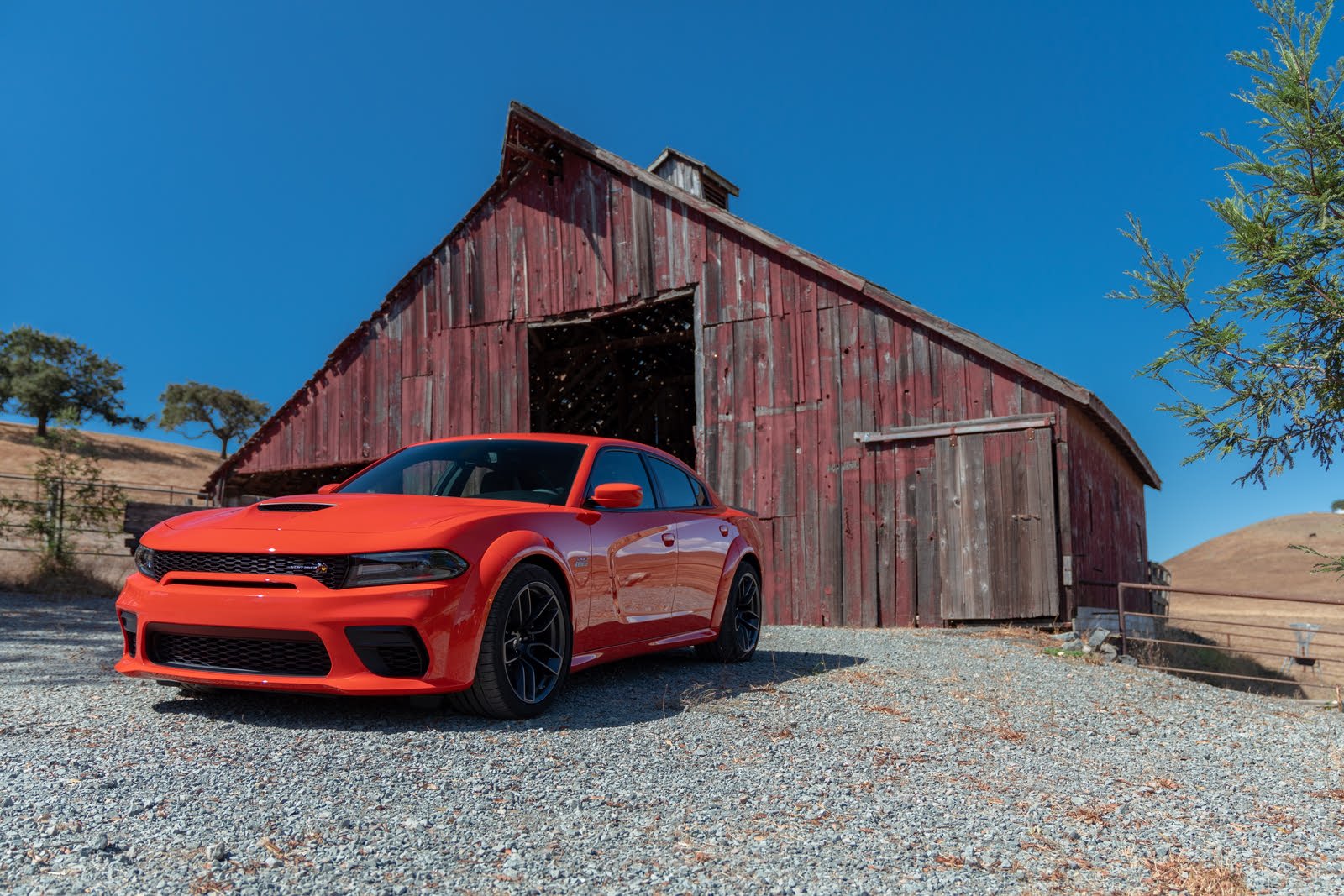
According to CarGurus experts, the overall rating for the 2020 Toyota Prius is 7.5 out of 10, while the 2020 Dodge Charger scores 8.5 out of 10. Based on these ratings, the 2020 Dodge Charger is the recommended choice, offering superior performance, a spacious interior, and a user-friendly infotainment system.
Choose the 2020 Dodge Charger if:
- You seek high-performance driving with powerful engine options.
- You need a spacious interior with ample legroom for all passengers.
- You appreciate a user-friendly infotainment system with extensive customization options.










Choose the 2020 Toyota Prius if:
- You prioritize fuel efficiency and eco-friendly driving.
- You need a spacious and versatile cargo area.
- You value advanced standard safety features.






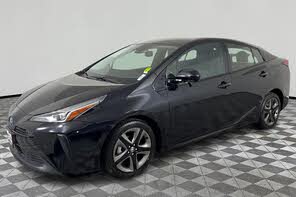
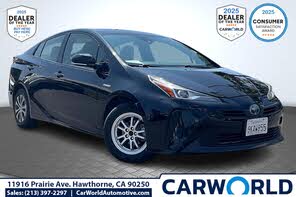

CarGurus highlights
According to CarGurus experts, the overall rating for the 2020 Toyota Prius is 7.5 out of 10, while the 2020 Dodge Charger scores 8.5 out of 10. Based on these ratings, the 2020 Dodge Charger is the recommended choice, offering superior performance, a spacious interior, and a user-friendly infotainment system.
Choose the 2020 Dodge Charger if:
Shop Now- You seek high-performance driving with powerful engine options.
- You need a spacious interior with ample legroom for all passengers.
- You appreciate a user-friendly infotainment system with extensive customization options.









Choose the 2020 Toyota Prius if:
Shop Now- You prioritize fuel efficiency and eco-friendly driving.
- You need a spacious and versatile cargo area.
- You value advanced standard safety features.










By: CarGurus + AI
At CarGurus, our team of experienced automotive writers remain at the heart of our content operation, conducting hands-on car tests and writing insightful guides that are backed by years of industry experience. To complement this, we are harnessing AI to make our content offering more diverse and more helpful to shoppers than ever. To achieve this, our AI systems are based exclusively on CarGurus content, ratings and data, so that what we produce is both unique to CarGurus, and uniquely helpful to car shoppers.