2021 Dodge Charger vs 2021 Toyota Prius

Overview | |
MSRP$31,125 | MSRP$24,525 |
Listings1104 | Listings149 |
Ratings & Reviews | |
User Reviews | User Reviews |
Expert reviews7.8 out of 10 | Expert reviews6.2 out of 10 |
Pros
Cons
| Pros
Cons
|
2021 Dodge Charger Reviews SummaryWhen it comes to American muscle cars, few do it better than the Dodge Charger. It’s a unique breed—new four-door muscle cars just aren’t sold in the United States. anymore. There is a new track-ready variant for the 2021 model year that pushes the limits of the car’s Hellcat V8 engine. Tamer versions of the car offer less horsepower but can still fit three car seats across the back of the car’s roomy cabin and have accommodations comfortable enough to make it a daily driver. | |
2021 Toyota Prius Reviews SummaryTo many people, cars are appliances made to serve a function. These consumers own a car because they need to get from where they are to where they’re going, and with a minimum of hassle, expense, or discomfort. Reliability, efficiency, safety, and economy are the critical deciding factors, and the 2021 Toyota Prius delivers on all fronts. Confusingly, for 2021, the Prius lineup offered a 2020 Edition. Toyota built just 2,020 examples to commemorate the 20th anniversary of the first Prius sold in the U.S. market. It has blacked-out trim, black 17-inch wheels, a body-color rear spoiler, and comes in Supersonic Red or new Wind Chill paint colors. Additionally, Toyota improved the 2021 Prius’s driving-assistance systems by making Toyota Safety Sense 2.0 standard across the board. Android Auto is also standard (joining Apple CarPlay), except for the unique infotainment system in the Prius Limited. | |
No video found | No video found |
Popular Features & Specs | |
Engine3.6L 292 hp V6 | Engine1.8L 121 hp I4 Hybrid |
Drive TrainRWD | Drive TrainFWD |
Seating Capacity5 | Seating Capacity5 |
Horsepower292 hp @ 6350 rpm | Horsepower |
EV Battery Capacity | EV Battery Capacity0.7 kWh |
MPG City19 | MPG City58 |
MPG Highway30 | MPG Highway53 |
Engine | |
Engine Name3.6L 292 hp V6 | Engine Name1.8L 121 hp I4 Hybrid |
Torque260 lb-ft @ 4800 rpm | Torque |
Horsepower292 hp @ 6350 rpm | Horsepower |
DrivetrainRWD | DrivetrainFWD |
Fuel Economy | |
EV Battery Capacity | EV Battery Capacity0.7 kWh |
MPG City19 | MPG City58 |
MPG Highway30 | MPG Highway53 |
Interior | |
Seating Capacity5 | Seating Capacity5 |
Safety | |
Front Crash Overall4 | Front Crash Overall4 |
Side Crash Overall5 | Side Crash Overall5 |
Dimensions & Capacity | |
Cargo Space16.5 cu ft | Cargo Space27.4 cu ft |
Curb Weight3957 lbs | Curb Weight3010 lbs |
Height57.8 in | Height57.9 in |
Length198.4 in | Length180.0 in |
Width82.7 in | Width69.3 in |
Wheelbase120.0 in | Wheelbase106.3 in |
Maximum Payload1143 lbs | Maximum Payload825 lbs |
Number of doors4 | Number of doors4 |
Maximum Towing Capacity1000 lbs | Maximum Towing Capacity |
Overview | ||
MSRP | $31,125 | $24,525 |
Listings | ||
Ratings & Reviews | ||
User reviews | ||
Expert reviews | 7.8 out of 10Read full review | 6.2 out of 10Read full review |
Pros & cons | Pros
Cons
| Pros
Cons
|
Summary | When it comes to American muscle cars, few do it better than the Dodge Charger. It’s a unique breed—new four-door muscle cars just aren’t sold in the United States. anymore. There is a new track-ready variant for the 2021 model year that pushes the limits of the car’s Hellcat V8 engine. Tamer versions of the car offer less horsepower but can still fit three car seats across the back of the car’s roomy cabin and have accommodations comfortable enough to make it a daily driver. | To many people, cars are appliances made to serve a function. These consumers own a car because they need to get from where they are to where they’re going, and with a minimum of hassle, expense, or discomfort. Reliability, efficiency, safety, and economy are the critical deciding factors, and the 2021 Toyota Prius delivers on all fronts. Confusingly, for 2021, the Prius lineup offered a 2020 Edition. Toyota built just 2,020 examples to commemorate the 20th anniversary of the first Prius sold in the U.S. market. It has blacked-out trim, black 17-inch wheels, a body-color rear spoiler, and comes in Supersonic Red or new Wind Chill paint colors. Additionally, Toyota improved the 2021 Prius’s driving-assistance systems by making Toyota Safety Sense 2.0 standard across the board. Android Auto is also standard (joining Apple CarPlay), except for the unique infotainment system in the Prius Limited. |
Video | No video found | No video found |
Popular Features & Specs | ||
Engine | 3.6L 292 hp V6 | 1.8L 121 hp I4 Hybrid |
Drive Train | RWD | FWD |
Seating Capacity | 5 | 5 |
Horsepower | 292 hp @ 6350 rpm | |
EV Battery Capacity | 0.7 kWh | |
MPG City | 19 | 58 |
MPG Highway | 30 | 53 |
Engine | ||
Engine Name | 3.6L 292 hp V6 | 1.8L 121 hp I4 Hybrid |
Torque | 260 lb-ft @ 4800 rpm | |
Horsepower | 292 hp @ 6350 rpm | |
Drivetrain | RWD | FWD |
Fuel Economy | ||
EV Battery Capacity | 0.7 kWh | |
MPG City | 19 | 58 |
MPG Highway | 30 | 53 |
Interior | ||
Seating Capacity | 5 | 5 |
Safety | ||
Front Crash Overall | 4 | 4 |
Side Crash Overall | 5 | 5 |
Dimensions & Capacity | ||
Cargo Space | 16.5 cu ft | 27.4 cu ft |
Curb Weight | 3957 lbs | 3010 lbs |
Height | 57.8 in | 57.9 in |
Length | 198.4 in | 180.0 in |
Width | 82.7 in | 69.3 in |
Wheelbase | 120.0 in | 106.3 in |
Maximum Payload | 1143 lbs | 825 lbs |
Number of doors | 4 | 4 |
Maximum Towing Capacity | 1000 lbs | |
The 2021 Dodge Charger, in its seventh generation, continued to captivate buyers with its array of variants, including the top-tier SRT Hellcat Redeye. Despite the subtle differences among models, the Charger maintained a consistent design, appealing to the "brotherhood of muscle" with its widebody options and distinctive Hellcat badging. The car's exterior featured a range of tire, wheel, brake, and color options, with halogen projector headlights and optional high-intensity discharge lights. However, the design had remained largely unchanged for a decade, making it difficult for casual observers to determine the model's age.
Inside, the Charger had seen updates over the years, but it still lacked in comfort and convenience features. The fit and finish had improved, yet the gauge cluster and climate controls revealed the car's age. The interior was characterized by hard plastic and rubberized surfaces, with cloth seats standard on most trims and Nappa leather available on higher trims. While the Charger offered heated and ventilated seats in some models, the overall interior quality fell short of expectations, especially for models priced over $70,000.
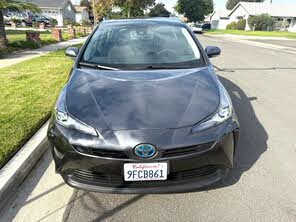
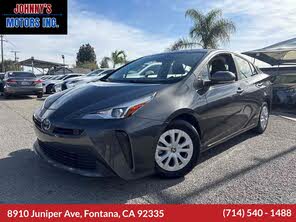
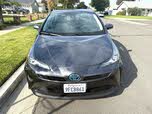
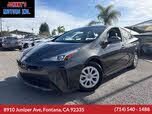
The 2021 Toyota Prius retained its iconic boomerang-shaped hood and roofline, a design choice that had become synonymous with the model. Despite advancements in aerodynamic vehicle design, the Prius continued to embrace its unique styling, which some found unappealing. The interior was equally unconventional, with a central strip of displays for instrumentation, a toggle lever for transmission controls, and a dashboard that wrapped into the door panels. Gloss-black trim, while stylish, attracted dust and fingerprints.
Toyota offered the Prius in several trims, including L Eco, LE, XLE, 2020 Edition, and Limited, with an optional AWD-e system for the LE and XLE. The Prius Prime plug-in hybrid was also available with different styling. As a five-door hatchback, the Prius provided ample utility, with prices ranging from $24,525 to $32,650. The 2020 Edition test vehicle, priced at $31,295, featured trendy blacked-out trim but still fell short in terms of aesthetics and interior design.


The 2021 Dodge Charger excelled in performance, offering a range of engine options to suit different preferences. The SXT, SXT AWD, GT, and GT AWD models were powered by a 3.6-liter V6 engine, delivering up to 300 horsepower and 264 pound-feet of torque. The Charger R/T featured a 5.7-liter HEMI V8 engine with 370 hp and 395 lb-ft of torque, providing a 1,000-pound towing capacity. The Charger Scat Pack models boasted a 6.4-liter HEMI V8 engine, producing 485 hp and 475 lb-ft of torque.
The SRT Hellcat variant came with a supercharged 6.2-liter HEMI V8 engine, generating 717 hp and 650 lb-ft of torque. The top-of-the-line SRT Hellcat Redeye featured a high-output version of the same engine, delivering an impressive 797 hp and 707 lb-ft of torque. Despite its power, the Redeye managed to offer a smooth driving experience, whether on the track or in everyday traffic. However, its fuel efficiency was the lowest among the Charger models, with an EPA-estimated 12 mpg in the city, 21 mpg on the highway, and 15 mpg combined.
The Charger came with an eight-speed automatic transmission across all models, with no manual option available. The transmission provided smooth upshifts but could be clunky during downshifts, especially at high speeds. The car's all-wheel-drive models offered enhanced traction, while rear-wheel drive was standard on most trims. Configurable drive modes and the Performance Pages function in SRT models allowed for in-depth vehicle settings adjustments. The Charger delivered a connected driving experience, with responsive handling and adequate braking performance for street driving.
The 2021 Toyota Prius prioritized fuel efficiency, with the L Eco version achieving an impressive 56 mpg in combined driving, according to the EPA. Other front-drive Prius models earned a 52 mpg combined rating, while AWD-e models managed 49 mpg. The Prius 2020 Edition test vehicle averaged 47.5 mpg, slightly below EPA estimates.
The Prius paired a 1.8-liter four-cylinder gasoline engine with a 53-kilowatt electric motor, an electronic continuously variable transmission (e-CVT), and either a lithium-ion (FWD) or nickel-metal hydride (AWD-e) battery pack. The total system output was 121 horsepower, with 120 pound-feet of torque from the electric motor providing lively acceleration from a stop. The Prius offered electric-only driving capability at speeds under 25 mph, helping to conserve fuel.
Drivers could select from EV Mode, Eco, Normal, and Power driving modes to optimize efficiency or responsiveness. The Prius also featured regenerative braking to capture energy during deceleration. The car performed best in urban and low-speed driving situations, making it ideal for daily commuting in metropolitan areas. The Toyota New Global Architecture (TNGA) platform contributed to the Prius's handling, providing a lower center of gravity and a more athletic feel. However, hard acceleration resulted in powertrain drone, and the steering lacked road feel. Despite these drawbacks, the Prius offered predictable handling and commendable braking performance.
The 2021 Dodge Charger was a four-door, five-passenger sedan that balanced speed and power with practicality. The interior featured dated technology, but the instrument cluster varied by model, with speedometers ranging from 140 mph to 220 mph. The steering wheel was functional, with easy-to-reach buttons and paddle shifters on all but the base model. However, the paddle shifters could be accidentally engaged during sharp turns.
The Charger offered a spacious trunk, with a 60/40 split-folding rear seat for additional storage. Cargo space was average compared to other large cars, but the Charger functioned well as a family car, providing comfortable accommodations and a roomy back seat.
The 2021 Toyota Prius, often perceived as a small car, offered more interior space than expected. It could seat up to five people, with comfortable seats covered in Toyota's SofTex synthetic leather. The test vehicle featured an eight-way power driver's seat, heated front seats, and a heated steering wheel. However, the low seating position made entry and exit challenging, and the SofTex upholstery tended to trap sweat.
Rear passengers had adequate foot room, legroom, and headroom, but the lack of air-conditioning vents could make for an uncomfortable ride. Cargo space varied by trim level, with 24.6 to 27.4 cubic feet available behind the rear seats and 47.9 to 50.7 cubic feet with the seats folded down.
The 2021 Dodge Charger came with basic standard features, including push-button start, a rearview camera, rear parking sensors, a six-speaker audio system, four USB ports, Bluetooth, Android Auto, Apple CarPlay, satellite radio, keyless entry, and a 7-inch infotainment touchscreen. Available upgrades included a sunroof, dual-zone automatic climate control, an 8.4-inch touchscreen, premium audio systems, HD Radio, navigation, and a WiFi hotspot.
The Uconnect infotainment system was user-friendly but had some functions buried in menus. The latest version of Uconnect, with a larger screen, was not yet available on the Charger, making the system feel slightly outdated.
The 2021 Toyota Prius featured a 7-inch touchscreen infotainment system with stereo-volume and tuning knobs, and shortcut buttons to main-function menus. Standard equipment included Bluetooth, SiriusXM satellite radio, Apple CarPlay, Android Auto, Amazon Alexa compatibility, Safety Connect, and WiFi Connect. However, the standard stereo speaker sound quality was poor, and road noise often overwhelmed it on the highway.
The Limited trim offered a 10-speaker JBL premium sound system, navigation, and a natural voice recognition system, paired with an 11.6-inch portrait-style touchscreen. Unfortunately, this system did not include the Android Auto upgrade available on the standard system. The digital instrumentation on the dashboard was dated, with graphics that lacked sophistication.
The 2021 Dodge Charger had not been crash-tested by the IIHS, but the 2020 model received mostly "Good" ratings, with "Poor" marks for headlights. The NHTSA awarded the 2021 Charger a four-star overall safety rating. Standard safety features included brake assist, electronic stability control, hill start assist, rear park assist, rain brake support, and a tire pressure monitoring system. Adaptive cruise control, blind-spot monitoring, forward-collision warning, lane-departure warning, and automatic headlights were available on some models.
The 2021 Toyota Prius came standard with Toyota Safety Sense 2.0 (TSS 2.0), which included adaptive cruise control, forward-collision warning, lane-departure warning, lane-keep assist, lane-centering assist, automatic high-beam headlights, and road-sign recognition. Higher trims added blind-spot monitoring with rear cross-traffic alert. Safety Connect services were also standard, offering automatic collision notification, emergency assistance, roadside assistance, and a stolen vehicle locator function.
The NHTSA had not rated the 2021 Prius, but the IIHS gave it favorable marks. With better headlights and improved front-passenger protection, it could potentially earn a Top Safety Pick designation.
CarGurus highlights
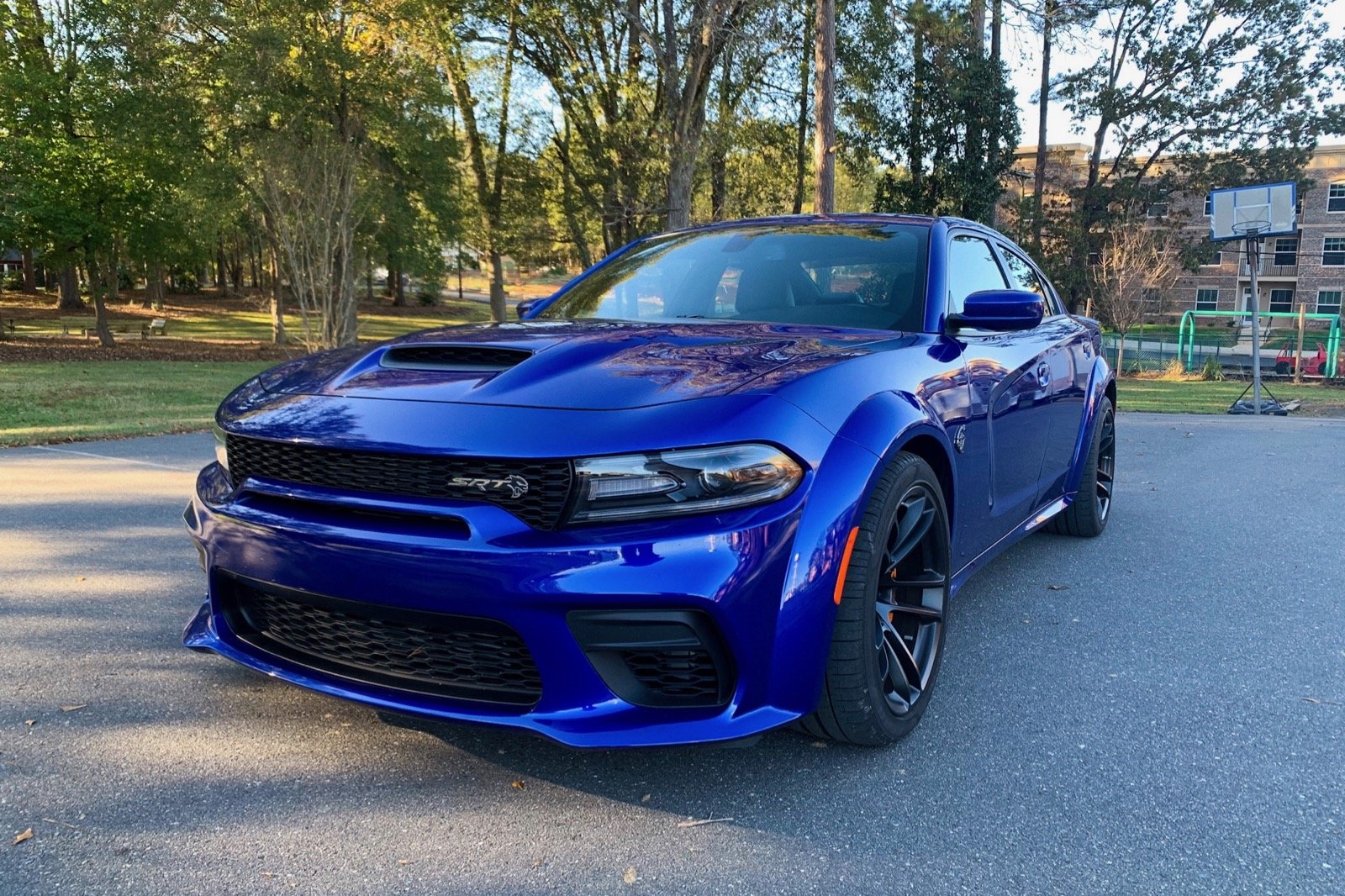
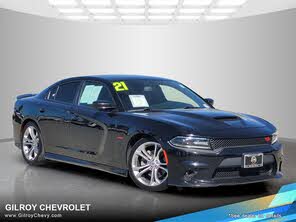
According to CarGurus experts, the overall rating for the 2021 Dodge Charger is 7.8 out of 10, while the 2021 Toyota Prius scores 6.2 out of 10. Based on these ratings, the 2021 Dodge Charger is the recommended choice, offering a better balance of performance, practicality, and customization options.
Choose the 2021 Dodge Charger if:
- You prioritize powerful engine options and high performance.
- You need a spacious sedan that can double as a family car.
- You appreciate a variety of trim levels and customization options.




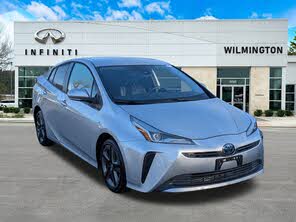
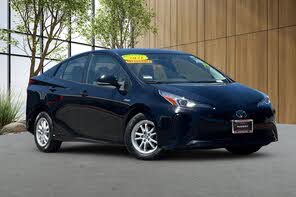
Choose the 2021 Toyota Prius if:
- Fuel efficiency is your top priority, especially for city driving.
- You want a car with a unique design and ample cargo space.
- You value advanced safety features and driver assistance systems.






CarGurus highlights
According to CarGurus experts, the overall rating for the 2021 Dodge Charger is 7.8 out of 10, while the 2021 Toyota Prius scores 6.2 out of 10. Based on these ratings, the 2021 Dodge Charger is the recommended choice, offering a better balance of performance, practicality, and customization options.
Choose the 2021 Dodge Charger if:
Shop Now- You prioritize powerful engine options and high performance.
- You need a spacious sedan that can double as a family car.
- You appreciate a variety of trim levels and customization options.






Choose the 2021 Toyota Prius if:
Shop Now- Fuel efficiency is your top priority, especially for city driving.
- You want a car with a unique design and ample cargo space.
- You value advanced safety features and driver assistance systems.







By: CarGurus + AI
At CarGurus, our team of experienced automotive writers remain at the heart of our content operation, conducting hands-on car tests and writing insightful guides that are backed by years of industry experience. To complement this, we are harnessing AI to make our content offering more diverse and more helpful to shoppers than ever. To achieve this, our AI systems are based exclusively on CarGurus content, ratings and data, so that what we produce is both unique to CarGurus, and uniquely helpful to car shoppers.