2020 Dodge Charger vs 2021 BMW 5 Series
Overview | |
MSRP$29,995 | MSRP$54,200 |
Listings769 | Listings303 |
Ratings & Reviews | |
User Reviews | User Reviews |
Expert reviews8.5 out of 10 | Expert reviews8.0 out of 10 |
Pros
Cons
| Pros
Cons
|
2020 Dodge Charger Reviews SummaryThe Dodge Charger represents an all-in-one approach to modern performance. Unlike its Challenger coupe counterpart, the Charger is a sedan, providing the usability of four full doors and five-passenger seating. It offers a wide variety of potent powertrains, as well as the availability of all-wheel drive (AWD). The Charger also provides the latest tech and infotainment features. It may be a classic nameplate, but it is a very different approach to the family sedan. This also makes it a breath of fresh air in the modern sedan market. Thanks to its wide variety of performance models, the Charger's exact competition is hard to pin down. V6-powered versions like the SXT and GT compete with the likes of the Toyota Avalon, Nissan Maxima, and Chevrolet Impala. But the available performance on tap with R/T and Hellcat models opens it up to a world of sports cars and muscle cars. Which model you select determines its rivals. No matter the trim selected, the Charger provides a baseline of athleticism paired with a spacious cabin, large rear seats, and a large trunk. Together, these make the Charger a fun and functional new car, with styling that helps it stand out in a crowd. | |
2021 BMW 5 Series Reviews SummaryBMW was once known for sports sedans, and the 5 Series was one of the most prolific of those sedans. Sitting between the 3 Series and 7 Series in size and price, previous generations of 5 Series were known for a balance of performance and luxury, with impeccable engineering throughout. Today, the BMW 5 Series is largely irrelevant. The 3 Series is now so big that there is less reason to upgrade, and most buyers are more interested in SUVs anyway. The competition—including the Audi A6, Jaguar XF, Mercedes-Benz E-Class, and Volvo S90—has also gotten better. That doesn’t mean BMW has given up on the 5 Series. The current generation (codename G30) arrived for the 2017 model year, but it gets a midcycle refresh (or LCI, short for “Life Cycle Impulse,” in BMW speak) for 2021. Major updates include a 48-volt mild-hybrid system, a bigger infotainment touchscreen, and subtle styling changes. The 2021 BMW 5 Series is not like the 5 Series models of old. That may drive away hardcore car fans, but the 2021 model makes a strong case to new-car buyers, maintaining sportier-than-average driving dynamics, along with the tech and luxury features expected of a car in this segment. | |
No video found | No video found |
Popular Features & Specs | |
Engine3.6L 292 hp V6 | Engine2.0L 248 hp I4 |
Drive TrainRWD | Drive TrainRWD |
Seating Capacity5 | Seating Capacity5 |
Horsepower292 hp @ 6350 rpm | Horsepower248 hp @ 5200 rpm |
MPG City19 | MPG City25 |
MPG Highway30 | MPG Highway33 |
Engine | |
Engine Name3.6L 292 hp V6 | Engine Name2.0L 248 hp I4 |
Torque260 lb-ft @ 4800 rpm | Torque257 lb-ft @ 1500 rpm |
Horsepower292 hp @ 6350 rpm | Horsepower248 hp @ 5200 rpm |
DrivetrainRWD | DrivetrainRWD |
Fuel Economy | |
MPG City19 | MPG City25 |
MPG Highway30 | MPG Highway33 |
Interior | |
Seating Capacity5 | Seating Capacity5 |
Key Features | |
Navigation System | Navigation SystemStandard |
Sunroof/Moonroof | Sunroof/MoonroofStandard |
Safety | |
Front Crash Overall4 | Front Crash Overall |
Side Crash Overall5 | Side Crash Overall |
Dimensions & Capacity | |
Cargo Space16.5 cu ft | Cargo Space14.0 cu ft |
Curb Weight3964 lbs | Curb Weight3765 lbs |
Height57.8 in | Height58.2 in |
Length198.4 in | Length195.8 in |
Width82.7 in | Width83.7 in |
Wheelbase120.0 in | Wheelbase117.1 in |
Maximum Payload1136 lbs | Maximum Payload800 lbs |
Number of doors4 | Number of doors4 |
Maximum Towing Capacity1000 lbs | Maximum Towing Capacity |
Overview | ||
MSRP | $29,995 | $54,200 |
Listings | ||
Ratings & Reviews | ||
User reviews | ||
Expert reviews | 8.5 out of 10Read full review | 8.0 out of 10Read full review |
Pros & cons | Pros
Cons
| Pros
Cons
|
Summary | The Dodge Charger represents an all-in-one approach to modern performance. Unlike its Challenger coupe counterpart, the Charger is a sedan, providing the usability of four full doors and five-passenger seating. It offers a wide variety of potent powertrains, as well as the availability of all-wheel drive (AWD). The Charger also provides the latest tech and infotainment features. It may be a classic nameplate, but it is a very different approach to the family sedan. This also makes it a breath of fresh air in the modern sedan market. Thanks to its wide variety of performance models, the Charger's exact competition is hard to pin down. V6-powered versions like the SXT and GT compete with the likes of the Toyota Avalon, Nissan Maxima, and Chevrolet Impala. But the available performance on tap with R/T and Hellcat models opens it up to a world of sports cars and muscle cars. Which model you select determines its rivals. No matter the trim selected, the Charger provides a baseline of athleticism paired with a spacious cabin, large rear seats, and a large trunk. Together, these make the Charger a fun and functional new car, with styling that helps it stand out in a crowd. | BMW was once known for sports sedans, and the 5 Series was one of the most prolific of those sedans. Sitting between the 3 Series and 7 Series in size and price, previous generations of 5 Series were known for a balance of performance and luxury, with impeccable engineering throughout. Today, the BMW 5 Series is largely irrelevant. The 3 Series is now so big that there is less reason to upgrade, and most buyers are more interested in SUVs anyway. The competition—including the Audi A6, Jaguar XF, Mercedes-Benz E-Class, and Volvo S90—has also gotten better. That doesn’t mean BMW has given up on the 5 Series. The current generation (codename G30) arrived for the 2017 model year, but it gets a midcycle refresh (or LCI, short for “Life Cycle Impulse,” in BMW speak) for 2021. Major updates include a 48-volt mild-hybrid system, a bigger infotainment touchscreen, and subtle styling changes. The 2021 BMW 5 Series is not like the 5 Series models of old. That may drive away hardcore car fans, but the 2021 model makes a strong case to new-car buyers, maintaining sportier-than-average driving dynamics, along with the tech and luxury features expected of a car in this segment. |
Video | No video found | No video found |
Popular Features & Specs | ||
Engine | 3.6L 292 hp V6 | 2.0L 248 hp I4 |
Drive Train | RWD | RWD |
Seating Capacity | 5 | 5 |
Horsepower | 292 hp @ 6350 rpm | 248 hp @ 5200 rpm |
MPG City | 19 | 25 |
MPG Highway | 30 | 33 |
Engine | ||
Engine Name | 3.6L 292 hp V6 | 2.0L 248 hp I4 |
Torque | 260 lb-ft @ 4800 rpm | 257 lb-ft @ 1500 rpm |
Horsepower | 292 hp @ 6350 rpm | 248 hp @ 5200 rpm |
Drivetrain | RWD | RWD |
Fuel Economy | ||
MPG City | 19 | 25 |
MPG Highway | 30 | 33 |
Interior | ||
Seating Capacity | 5 | 5 |
Key Features | ||
Navigation System | Standard | |
Sunroof/Moonroof | Standard | |
Safety | ||
Front Crash Overall | 4 | |
Side Crash Overall | 5 | |
Dimensions & Capacity | ||
Cargo Space | 16.5 cu ft | 14.0 cu ft |
Curb Weight | 3964 lbs | 3765 lbs |
Height | 57.8 in | 58.2 in |
Length | 198.4 in | 195.8 in |
Width | 82.7 in | 83.7 in |
Wheelbase | 120.0 in | 117.1 in |
Maximum Payload | 1136 lbs | 800 lbs |
Number of doors | 4 | 4 |
Maximum Towing Capacity | 1000 lbs | |
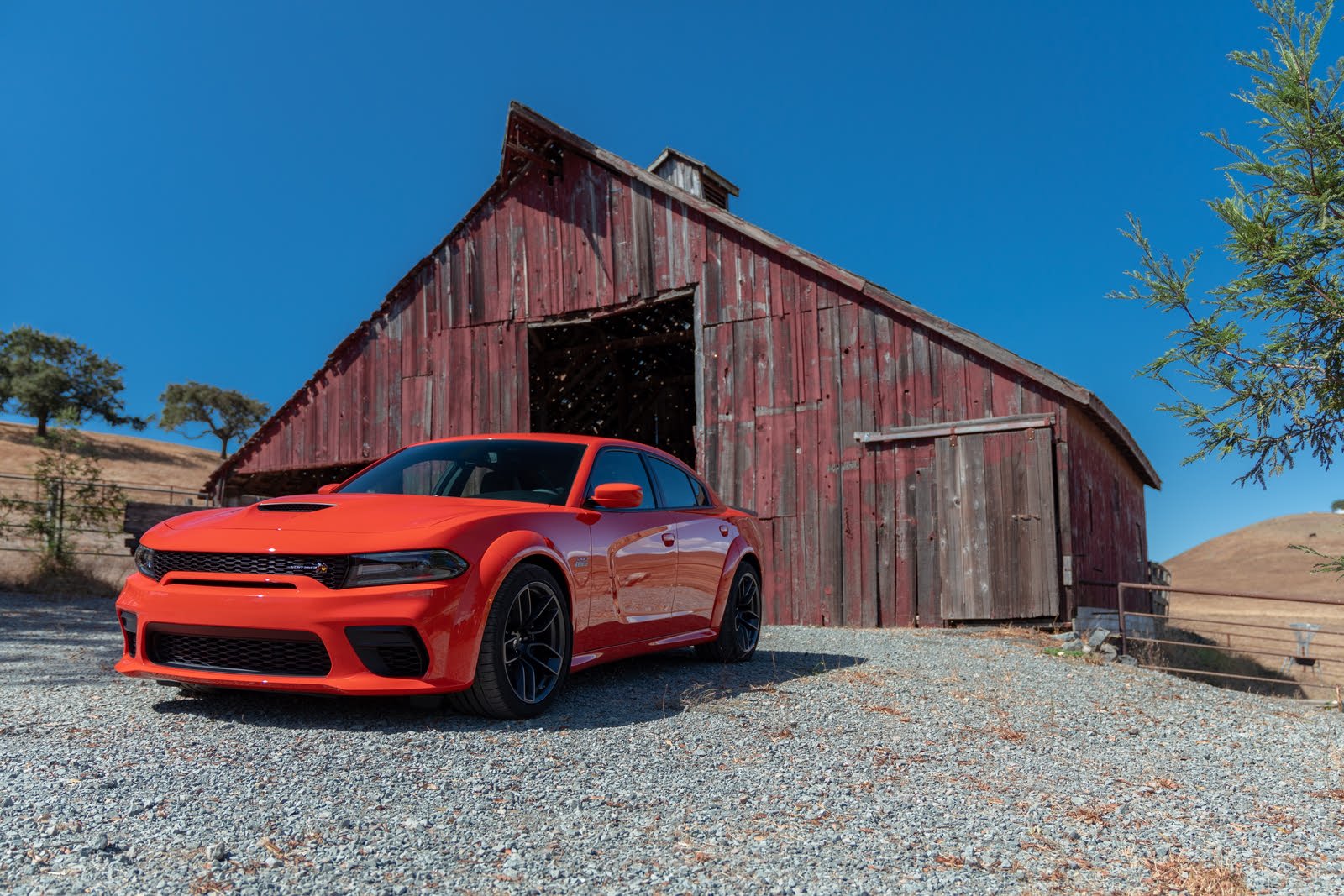
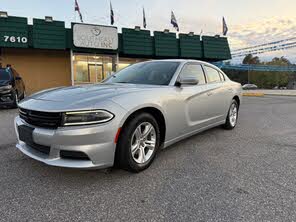
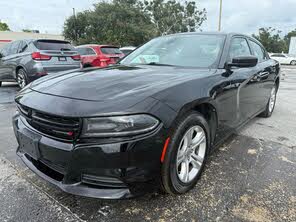
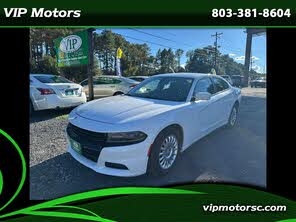
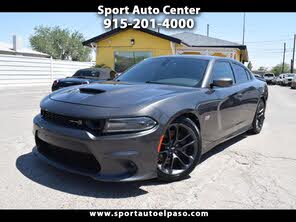
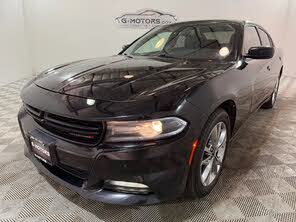
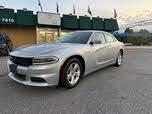
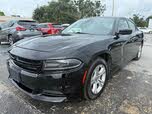
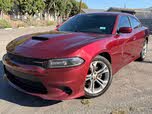
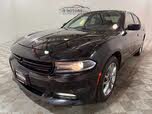
Dodge had resurrected the Charger name in 2006 with a modern take on the muscle car silhouette. The menacing headlights and gaping grille that were key to this car also found their way to the current-generation car, which arrived in 2011. Then, in 2015, the Charger underwent a major facelift, while maintaining the same underpinnings and interior. This 2015 update replaced the large grille with a thin inlet, opening up the lower front grille area below the bumper. Just as significant were the changes to the headlights, taking the "menacing" theme to new places.
The Dodge Charger's cabin still honored that retro theme, while blending old and new. The large vintage-looking bezels housed modern digital displays. The Charger's rear-wheel-drive (RWD) platform required a raised transmission tunnel, lending to the tall center console. This created a cockpit-like feel for the driver and front passenger. Trim levels for the 2020 Charger included SXT, GT, R/T, and Hellcat, with further sub-trims for the R/T and Hellcat versions.
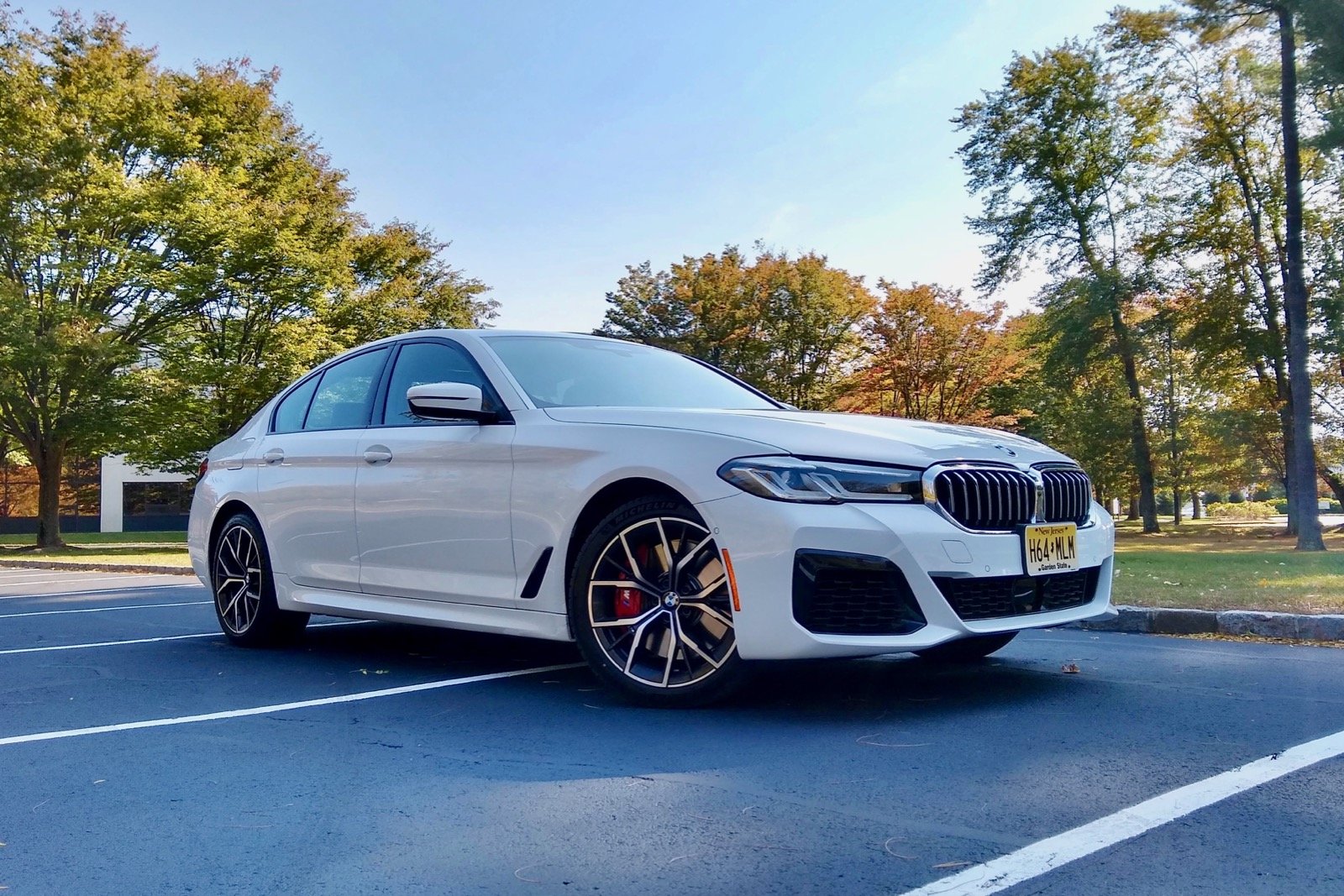
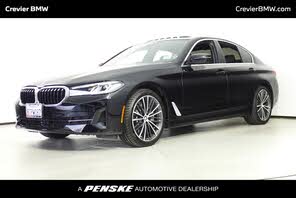
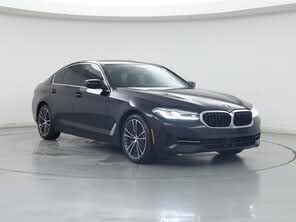
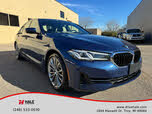
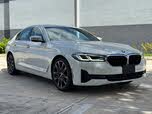
The 5 Series had the most restrained design of any current BMW sedan. It didn’t have the design flourishes of the 3 Series or the imposing size of the 7 Series. For the 2021 model year, the 5 Series got a minor styling refresh that gave the sedan a sleeker look. The standard LED headlights were a bit more streamlined than the old versions, which stood slightly proud of the front end. BMW's signature twin-kidney grille was larger than before but not comically large like the massive protuberance on the 7 Series sedan.
Other changes included trapezoidal tailpipes, new L-shaped taillights, and new front and rear bumpers for the M Sport Package. BMW said the 5 Series was 1.2 inches longer than before, but still with a reasonably-good drag coefficient of 0.27, allowing the car to slice through the air more efficiently. The interior design hadn’t changed much from last year, keeping the familiar BMW layout. From the positioning of the touchscreen to the unusual-looking shifter, to the typefaces and door chimes, everything had a specific BMW style.


The Dodge Charger offered a number of different ways to enjoy the drive, and trim levels corresponded with powertrain selection. The SXT and GT came equipped with Chrysler's 3.6-liter V6. In the SXT, it made 292 horsepower, while the GT bumped that output to an even 300 horsepower. The V6 and all other engines routed power to the rear wheels through an 8-speed automatic transmission with manual tap-shift function. AWD was available as an option on the Dodge Charger SXT and GT.
The R/T came with a 5.7-liter Hemi V8 putting out 370 hp and 395 lb-ft of torque. The R/T also featured an upgraded performance suspension and an active exhaust. The R/T Scat Pack came with a 6.4-liter Hemi V8 making 485 hp and 475 lb-ft of torque. It also featured Brembo high-performance disc brakes and launch assist. The range-topping Charger SRT Hellcat Widebody boasted a supercharged 6.2-liter V8, making 707 horsepower and 650 pound-feet of torque.
BMW offered a wide array of powertrain options for the 2021 5 Series. The base 530i sedan got a 2.0-liter turbocharged four-cylinder engine making 248 horsepower and 258 pound-feet of torque. It could do zero to 60 mph in 5.9 seconds. The 540i, which got a 3.0-liter turbocharged inline-six engine and a 48-volt mild hybrid system, boasted 335 hp and 362 lb-ft of torque, getting it from zero to 60 mph in 4.9 seconds with rear-wheel drive, and 4.6 seconds with xDrive all-wheel drive.
The M550i xDrive sedan got a 4.4-liter twin-turbo V8 making 532 hp and 553 lb-ft of torque, which shaved 1.0 second off the 540i xDrive’s zero-to-60 mph time. The legendary M5 got a more powerful version of the V8, with 617 hp in Competition spec. BMW said the M5 would do zero to 60 mph in just 3.1 seconds. BMW also offered the 530e plug-in hybrid, with a powertrain consisting of a 2.0-liter four-cylinder engine, eight-speed automatic transmission, and an electric motor. Combined output was 288 hp and 310 lb-ft of torque.
There were other high-horsepower sedans out there, like the Alfa Romeo Giulia Quadrifoglio, BMW M5, Audi RS6, and others. Few offered as much space as the Dodge Charger. In many performance sedans, the rear seats were an afterthought. But with the Charger, there was plenty of legroom, even with the seats slid back. The driver and front passenger were treated to well-bolstered front bucket seats as well as tons of head- and legroom. The Charger also boasted a large trunk, displacing 16.5 cubic feet.
In the United States, the 5 Series was available only as a four-door, five-seat sedan. The 5 Series sedan felt as spacious as its generous exterior proportions indicated. Front-seat space was competitive, and while the rear seats appeared a bit less roomy than rivals on paper, they still offered plenty of room for occupants to stretch out. At 14.0 cubic feet, the 540i had more trunk space than an Audi A6 or Mercedes-Benz E-Class, and the rear bench had a 40/20/20 split fold for longer items.
The Charger came standard with a 7-inch touchscreen infotainment system. All other trims of the Charger featured an 8.4-inch touchscreen. Both screen sizes ran FCA's outstanding Uconnect infotainment system. It featured Bluetooth and USB connectivity, available satellite radio, available HD radio, standard Apple CarPlay, and standard Android Auto. This system shined thanks to its simplicity. The main screen featured a lower dock of icons for media, climate, controls, phone, and settings.
For 2021, the 5 Series got a standard 12.3-inch infotainment touchscreen with the latest iDrive 7 system, as well as a 12.3-inch Live Cockpit Professional digital instrument cluster. Apple CarPlay/Android Auto compatibility, Bluetooth, SiriusXM 360L satellite radio, and a built-in WiFi hotspot were also standard. Graphics on both the instrument cluster and infotainment touchscreen were excellent. The layout of the instrument cluster could have been better, however. As with other BMW models, a rotary knob was the default controller for infotainment functions.
Standard safety features on the 2020 Dodge Charger included a full array of front- and side-impact airbags, traction control, and rear parking sensors. Available safety features included forward-collision avoidance with automatic emergency braking, lane-departure warning, lane-keeping assist, adaptive cruise control, and automatic high-beams. During Insurance Institute for Highway Safety (IIHS) crash tests, the Charger's crash prevention technology earned the highest score of Superior.
The Insurance Institute for Highway Safety (IIHS) hadn’t crash-tested the 2021 BMW 5 Series, but the virtually-identical 2020 model received a “Top Safety Pick+” award—the organization’s highest. Standard safety features included lane-departure warning, automatic emergency braking, blind-spot monitoring with rear cross-traffic alert, and automatic high beams. The Driving Assistance Plus Package added adaptive cruise control, traffic-jam assist, lane-keep assist, and emergency stop assist.
CarGurus highlights
According to CarGurus experts, the overall rating for the 2020 Dodge Charger is 8.5 out of 10, while the 2021 BMW 5 Series scores 8.0 out of 10. Based on these ratings, the 2020 Dodge Charger is the recommended choice for its combination of performance, space, and user-friendly technology.
Choose the 2020 Dodge Charger if:
- You want a spacious performance sedan with ample rear legroom and a large trunk.
- You prefer a variety of powerful engine options, including a supercharged V8.
- You appreciate a user-friendly infotainment system with straightforward controls.



Choose the 2021 BMW 5 Series if:
- You seek a luxury sedan with a refined and understated design.
- You value advanced driver-assist features and sophisticated safety technology.
- You prefer a high-tech infotainment system with excellent graphics and multiple control options.








CarGurus highlights
According to CarGurus experts, the overall rating for the 2020 Dodge Charger is 8.5 out of 10, while the 2021 BMW 5 Series scores 8.0 out of 10. Based on these ratings, the 2020 Dodge Charger is the recommended choice for its combination of performance, space, and user-friendly technology.
Choose the 2020 Dodge Charger if:
Shop Now- You want a spacious performance sedan with ample rear legroom and a large trunk.
- You prefer a variety of powerful engine options, including a supercharged V8.
- You appreciate a user-friendly infotainment system with straightforward controls.





Choose the 2021 BMW 5 Series if:
Shop Now- You seek a luxury sedan with a refined and understated design.
- You value advanced driver-assist features and sophisticated safety technology.
- You prefer a high-tech infotainment system with excellent graphics and multiple control options.









By: CarGurus + AI
At CarGurus, our team of experienced automotive writers remain at the heart of our content operation, conducting hands-on car tests and writing insightful guides that are backed by years of industry experience. To complement this, we are harnessing AI to make our content offering more diverse and more helpful to shoppers than ever. To achieve this, our AI systems are based exclusively on CarGurus content, ratings and data, so that what we produce is both unique to CarGurus, and uniquely helpful to car shoppers.