2019 Toyota Camry vs 2020 Mercedes-Benz E-Class
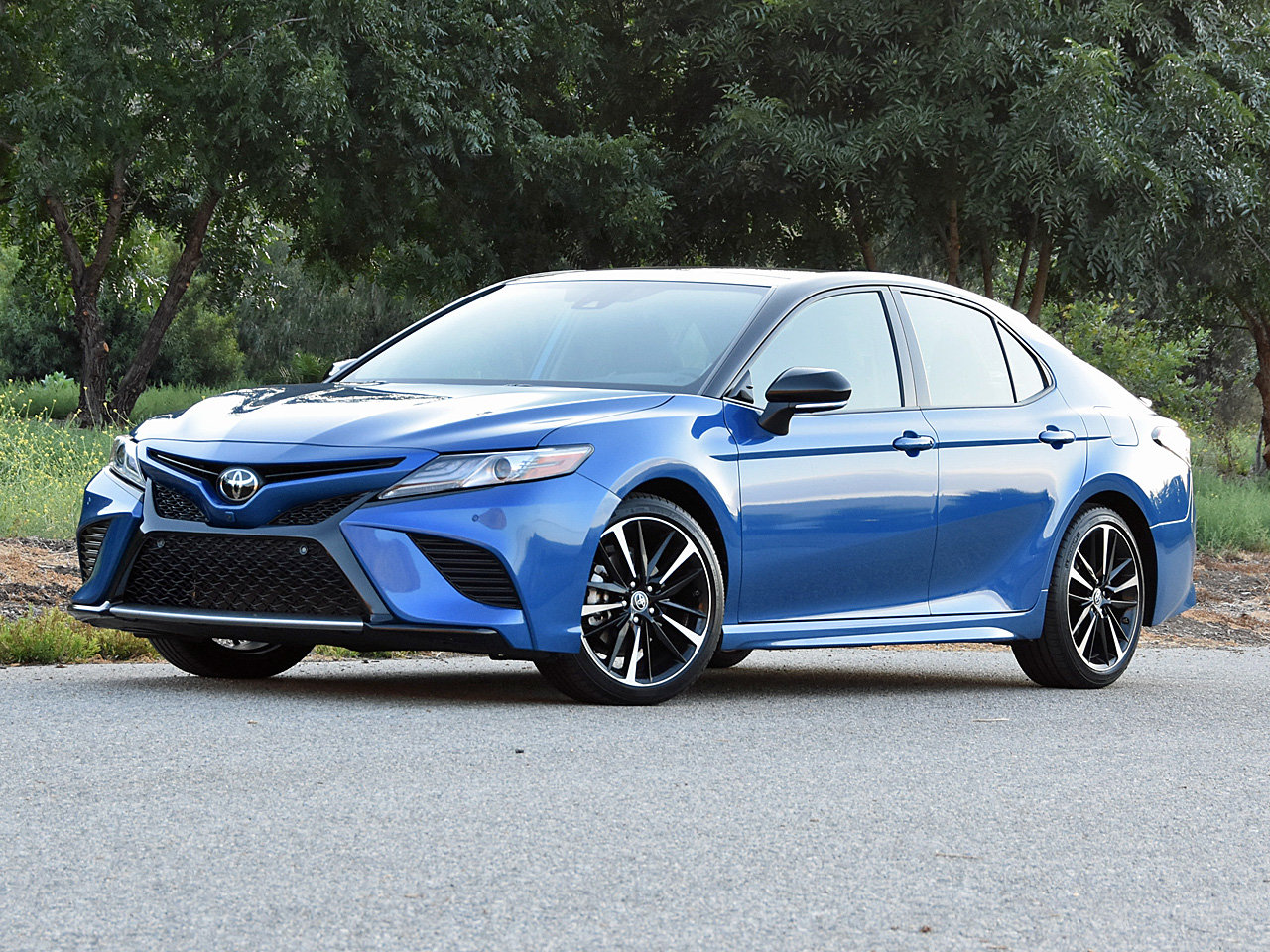
Overview | |
MSRP$24,095 | MSRP$54,050 |
Listings1327 | Listings256 |
Ratings & Reviews | |
User Reviews | User Reviews |
Expert reviews7.8 out of 10 | Expert reviews8.0 out of 10 |
Pros
Cons
| Pros
Cons
|
2019 Toyota Camry Reviews SummaryBlame the Toyota Avalon for the Toyota Camry’s flaws. In order to put daylight between itself and Toyota’s larger full-size sedan, the midsize Camry is now smaller than some of its competitors, while simultaneously offering fewer of the increasingly expected features in the segment. Still, there are several good reasons to consider a 2019 Camry, from its outstanding safety ratings to its free scheduled maintenance plan. It’s also one of a handful of family sedans that still offers a 6-cylinder engine. | |
2020 Mercedes-Benz E-Class Reviews SummaryA Mercedes-Benz is a physical indulgence that gives as much or as little pleasure as your checking account allows. The 2020 E-Class starts off well-equipped in ways a $55,000 Mercedes wasn't just a few years ago, and it becomes decadent and power-drunk once you start adding options. For 2020, a new base engine joins this car's stellar design, technology, and effortless demeanor. | |
Popular Features & Specs | |
Engine2.5L 203 hp I4 | Engine2.0L 255 hp I4 |
Drive TrainFWD | Drive TrainRWD |
Seating Capacity5 | Seating Capacity5 |
Horsepower | Horsepower255 hp @ 5800 rpm |
MPG City29 | MPG City23 |
MPG Highway41 | MPG Highway32 |
Engine | |
Engine Name2.5L 203 hp I4 | Engine Name2.0L 255 hp I4 |
Torque | Torque273 lb-ft @ 1800 rpm |
Horsepower | Horsepower255 hp @ 5800 rpm |
DrivetrainFWD | DrivetrainRWD |
Fuel Economy | |
MPG City29 | MPG City23 |
MPG Highway41 | MPG Highway32 |
Interior | |
Seating Capacity5 | Seating Capacity5 |
Key Features | |
Navigation System | Navigation SystemStandard |
Sunroof/Moonroof | Sunroof/MoonroofStandard |
Safety | |
Front Crash Overall5 | Front Crash Overall5 |
Side Crash Overall5 | Side Crash Overall5 |
Dimensions & Capacity | |
Cargo Space14.1 cu ft | Cargo Space13.1 cu ft |
Curb Weight3241 lbs | Curb Weight3814 lbs |
Height56.9 in | Height57.8 in |
Length192.1 in | Length193.8 in |
Width72.4 in | Width81.3 in |
Wheelbase111.2 in | Wheelbase115.7 in |
Maximum Payload925 lbs | Maximum Payload |
Number of doors4 | Number of doors4 |
Overview | ||
MSRP | $24,095 | $54,050 |
Listings | ||
Ratings & Reviews | ||
User reviews | ||
Expert reviews | 7.8 out of 10Read full review | 8.0 out of 10Read full review |
Pros & cons | Pros
Cons
| Pros
Cons
|
Summary | Blame the Toyota Avalon for the Toyota Camry’s flaws. In order to put daylight between itself and Toyota’s larger full-size sedan, the midsize Camry is now smaller than some of its competitors, while simultaneously offering fewer of the increasingly expected features in the segment. Still, there are several good reasons to consider a 2019 Camry, from its outstanding safety ratings to its free scheduled maintenance plan. It’s also one of a handful of family sedans that still offers a 6-cylinder engine. | A Mercedes-Benz is a physical indulgence that gives as much or as little pleasure as your checking account allows. The 2020 E-Class starts off well-equipped in ways a $55,000 Mercedes wasn't just a few years ago, and it becomes decadent and power-drunk once you start adding options. For 2020, a new base engine joins this car's stellar design, technology, and effortless demeanor. |
Video | ||
Popular Features & Specs | ||
Engine | 2.5L 203 hp I4 | 2.0L 255 hp I4 |
Drive Train | FWD | RWD |
Seating Capacity | 5 | 5 |
Horsepower | 255 hp @ 5800 rpm | |
MPG City | 29 | 23 |
MPG Highway | 41 | 32 |
Engine | ||
Engine Name | 2.5L 203 hp I4 | 2.0L 255 hp I4 |
Torque | 273 lb-ft @ 1800 rpm | |
Horsepower | 255 hp @ 5800 rpm | |
Drivetrain | FWD | RWD |
Fuel Economy | ||
MPG City | 29 | 23 |
MPG Highway | 41 | 32 |
Interior | ||
Seating Capacity | 5 | 5 |
Key Features | ||
Navigation System | Standard | |
Sunroof/Moonroof | Standard | |
Safety | ||
Front Crash Overall | 5 | 5 |
Side Crash Overall | 5 | 5 |
Dimensions & Capacity | ||
Cargo Space | 14.1 cu ft | 13.1 cu ft |
Curb Weight | 3241 lbs | 3814 lbs |
Height | 56.9 in | 57.8 in |
Length | 192.1 in | 193.8 in |
Width | 72.4 in | 81.3 in |
Wheelbase | 111.2 in | 115.7 in |
Maximum Payload | 925 lbs | |
Number of doors | 4 | 4 |
When considering the 2019 Toyota Camry, buyers had to choose between standard and sporty styling, and then decide among a 4-cylinder, a V6, and a hybrid powertrain. Trim levels varied based on engine selection, including L, LE, XLE, SE, and XSE. The Camry XSE with a V6 engine was quick and entertaining to drive, but CarGurus recommended sticking with the standard 2.5-liter 4-cylinder engine and opting for the LE trim for the best value. The Camry Hybrid, while offering excellent gas mileage, was more expensive and took nearly a decade to realize any savings at the pump.
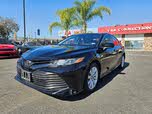
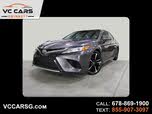
The Camry's styling, especially in XSE trim, was daring but not cohesive, with oversized forms that didn't quite fit the car's proportions. Inside, the Camry XSE featured high-quality materials and soft-touch surfaces, but some elements like the windshield pillars and switchgear felt out of place. The car's perceived quality was further dented by creaking front fascia and side mirrors, and a tinny noise from the front doors.
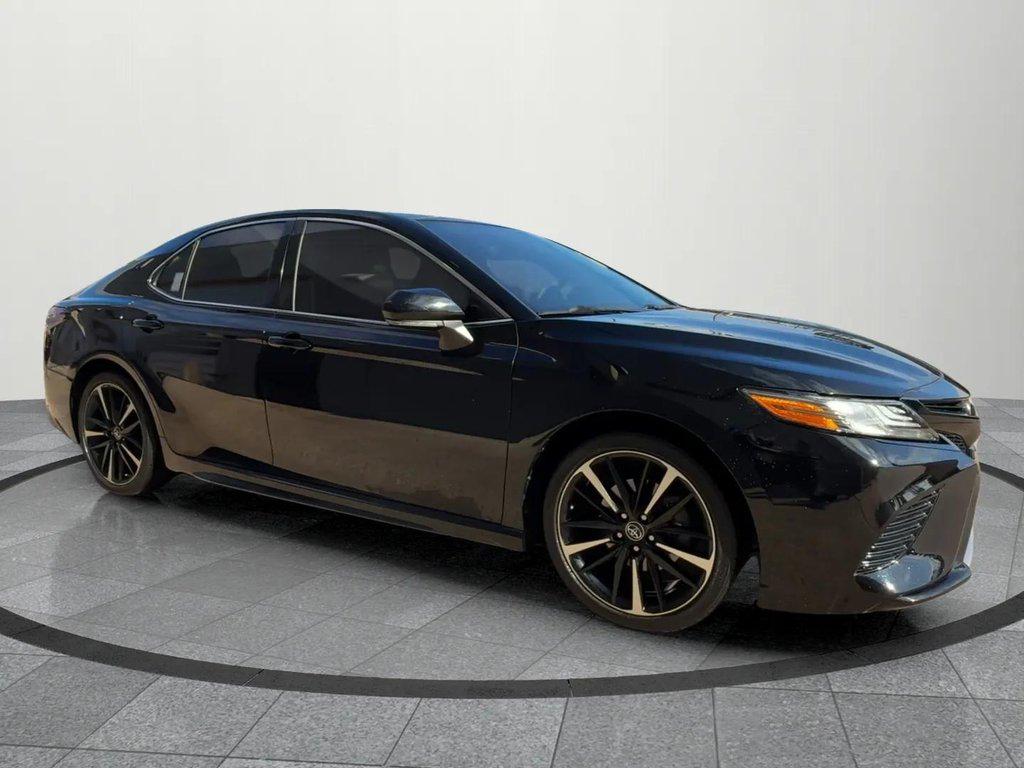
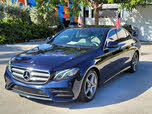
The 2020 Mercedes-Benz E-Class, new for 2017, featured a rounded, smooth body reminiscent of the E-Class from two generations ago. Available in sedan, wagon, coupe, or cabriolet, the E-Class had a versatile design that fit the conservative nature of its buyers. The sedan looked especially rich with the hood ornament and thin-laced chrome grille, while most models had the sport grille with a large Mercedes emblem. LED lighting was delicate, and the car's proportions were always visually appealing, whether on the Luxury model's higher-riding suspension or the sportier versions with ground effects and quad exhausts.
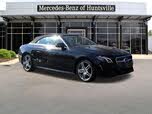
The E-Class cabriolet's fluid, creaseless form worked best with the contrasting soft top, revealing a sumptuous interior. The E350 sedan tester featured multi-tone leathers, aluminum, and deep-polished wood, with two feet of high-res digital screens stretching across the dash. The ambient lighting offered 64 colors with animations, and the car's interior was a place for solitude with heated armrests, massaging seats, and smooth textures. Even the base E-Class felt several cuts above other cars in its segment.


The 2019 Toyota Camry's standard 203-horsepower, 2.5-liter 4-cylinder engine was suitable for daily driving, but the available 301-hp, 3.5-liter V6 engine offered a thrilling experience. The V6 added significant weight to the front end but didn't limit handling, and the 8-speed automatic transmission provided quick, satisfying shifts in Sport mode. The Camry XSE's sport-tuned suspension and 19-inch aluminum wheels offered responsive handling without traditional sport-sedan stiffness, making it a comfortable daily driver and a competent canyon carver.
Steering effort was firm in normal mode and heavy in Sport mode, feeling natural rather than artificial. The XSE's brakes stood up to repeated abuse, but the pedal exhibited a dissatisfying "thunk" when released quickly. Fuel economy was disappointing, with just 21.9 mpg on a testing loop, well short of the EPA's 26-mpg rating in combined driving.
The 2020 Mercedes-Benz E350 replaced the E300, with a turbocharged 2.0-liter 4-cylinder engine producing 255 horsepower and 273 pound-feet of torque. The revised turbo and shorter intake runners provided quicker response, and the 9-speed automatic transmission held gears longer. In Comfort mode, the E-Class was relaxed, but Sport and Sport+ modes kept the engine in its power band. The E450's 3.0-liter V6 with 362 hp and 369 lb-ft offered effortless performance, with light steering and a supple suspension.
AMG models like the E53 and E63 S offered even more power, with the E53's hybrid setup providing 429 hp and 384 lb-ft, and the E63 S's 4.0-liter twin-turbo V8 delivering 603 hp and 627 lb-ft. All-wheel drive was standard on most models, with performance-tuned AWD on AMG versions. Fuel economy varied from 19 to 32 mpg, depending on the powertrain and body style, with the E63 S showing 16/23 mpg.
The 2019 Toyota Camry's cabin featured ample storage, including a large center console bin and a hidden compartment under the wireless charging pad. However, the glove box was small, and the door-panel storage pockets were narrow. The trunk measured just 15.1 cubic feet, smaller than competitors like the Honda Accord, and lacked a grab handle to close the lid.
The front seats offered 8-way power adjustment and heating, but ventilated seats were unavailable. The rear seat was snug for a midsize sedan, with narrow door openings and a low seating position making entry and exit difficult. Rear air-conditioning vents were restricted to upper trim levels. The climate control system performed well during a heatwave, but ventilated seats would have been appreciated.
The 2020 Mercedes-Benz E-Class continued with the complicated COMAND infotainment system, which was not touchscreen and required multiple steps to operate. The system was highly distracting and made sense only after extensive use. However, the E-Class felt functional with seat and climate controls on the door panels and plenty of space in every dimension. The coupe had a usable rear seat, and the wagon featured a rear-facing jump seat for small children.
The digital dash could be reconfigured in various designs, and the coupe had rear window controls. The wagon's rear-facing jump seat was a handy feature. A net in the front passenger footwell helped secure water bottles, and the cupholders and wireless charging pad were neatly concealed.
The 2019 Toyota Camry's dashboard layout was smart and intuitive, with the Entune 3.0 infotainment system offering Apple CarPlay and a 6-month/2GB subscription to WiFi Connect. However, Android Auto was not available. The wireless charging pad securely held the phone, and the navigation system worked well, though it took a long time to load traffic data. The 9-speaker JBL premium sound system lacked clarity and produced a bass-heavy listening experience. A 10-inch head-up display was visible even with polarized sunglasses.
The 2020 Mercedes-Benz E-Class featured advanced tech, including a semi-automated driving system, V2X communication, and multi-contour seats. The Burmester stereo offered surround-sound modes, and the front camera activated automatically when pulling into a space. The Energizing Comfort Package adjusted climate settings and lighting to match preset moods. AMG models had a Track Pace app for race track guidance. The E-Class was overengineered with useful tech and some novelties for fun.
The 2019 Toyota Camry excelled in safety, earning 5-star ratings from the NHTSA and a Top Safety Pick+ rating from the IIHS. It came with a standard Toyota Safety Sense suite, including adaptive cruise control, forward-collision warning, automatic emergency braking, lane-departure warning, lane-keeping assist, and automatic high-beam headlights. The Camry also included a 3-year subscription to Safety Connect for emergency services.
The 2020 Mercedes-Benz E-Class sedan and wagon received 5-star ratings from the NHTSA and a Top Safety Pick+ rating from the IIHS. The coupe and cabriolet were not tested but were expected to perform similarly. The E-Class featured innovations like Pre-Safe Sound, side bolster inflation during a side collision, and crosswind countermeasures. Standard safety features included forward emergency braking, a driver attention monitor, and blind-spot monitoring, with additional driver-assist features available as options.
CarGurus highlights

According to CarGurus experts, the overall rating for the 2019 Toyota Camry is 7.8 out of 10, while the 2020 Mercedes-Benz E-Class scores 8.0 out of 10. Based on these ratings, the 2020 Mercedes-Benz E-Class is the recommended choice for its superior luxury, advanced technology, and versatile design.
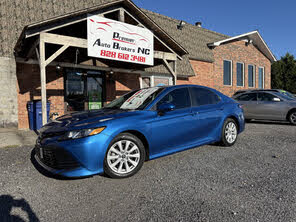
Choose the 2019 Toyota Camry if:
- You prioritize safety and reliability with top crash-test ratings and a comprehensive safety suite.
- You seek a fuel-efficient hybrid option, despite the higher initial cost.
- You prefer a straightforward and intuitive infotainment system with Apple CarPlay.






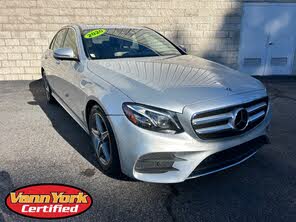
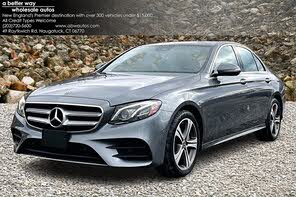
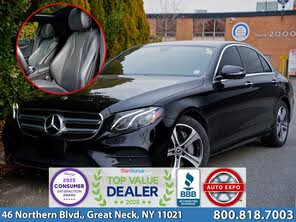
Choose the 2020 Mercedes-Benz E-Class if:
- You desire a luxurious and high-tech interior with advanced driver-assistance features.
- You want a versatile vehicle available in sedan, wagon, coupe, or cabriolet body styles.
- You appreciate powerful engine options, including AMG performance models.




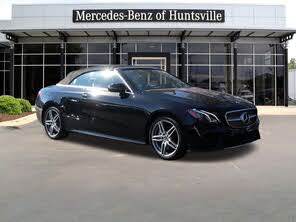
CarGurus highlights
According to CarGurus experts, the overall rating for the 2019 Toyota Camry is 7.8 out of 10, while the 2020 Mercedes-Benz E-Class scores 8.0 out of 10. Based on these ratings, the 2020 Mercedes-Benz E-Class is the recommended choice for its superior luxury, advanced technology, and versatile design.
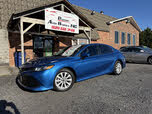
Choose the 2019 Toyota Camry if:
Shop Now- You prioritize safety and reliability with top crash-test ratings and a comprehensive safety suite.
- You seek a fuel-efficient hybrid option, despite the higher initial cost.
- You prefer a straightforward and intuitive infotainment system with Apple CarPlay.





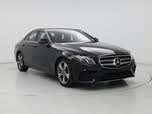
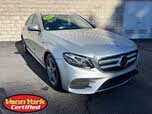
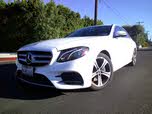
Choose the 2020 Mercedes-Benz E-Class if:
Shop Now- You desire a luxurious and high-tech interior with advanced driver-assistance features.
- You want a versatile vehicle available in sedan, wagon, coupe, or cabriolet body styles.
- You appreciate powerful engine options, including AMG performance models.






By: CarGurus + AI
At CarGurus, our team of experienced automotive writers remain at the heart of our content operation, conducting hands-on car tests and writing insightful guides that are backed by years of industry experience. To complement this, we are harnessing AI to make our content offering more diverse and more helpful to shoppers than ever. To achieve this, our AI systems are based exclusively on CarGurus content, ratings and data, so that what we produce is both unique to CarGurus, and uniquely helpful to car shoppers.